I was born and spent the first five and a half years of my life in the Amazon rainforest, in a deeply committed Catholic family. My father was a deacon, both of my parents served as missionaries, my grandmother was widely regarded as a saintly woman, and several of my closest relatives were priests or religious sisters. When we returned to Italy, I found my place in Scouting, where I embraced a way of life rooted in service to others—a spirit that has remained with me ever since. Today, I work as Production Director for a textile company.
A. lived in several cities and countries throughout her career as a conference interpreter before eventually leaving the profession to devote herself to teaching. We met only a few years ago, and about two and a half years later, during the Covid-19 pandemic, we were married in a civil ceremony after receiving, in private, the blessing of our marriage from the parish priest of our village. We treasure that blessing as an extraordinary gift of grace, one that gave us confidence, strength and hope as we began our life together with our five children.
Our marriage came after very different life experiences.
My first marriage lasted seventeen years. I was twenty-five when I decided to marry, carried away by the enthusiasm of building a family. Whenever doubts arose about our compatibility as a couple, I naïvely reassured myself that faith alone would overcome every hardship and every obstacle.
A.’s first marriage followed a very different path. At the age of twenty-nine, after years devoted to study and with what promised to be a successful professional career ahead of her, she suddenly found herself both wife and mother almost without realizing how it had happened. For many years she had wondered whether consecrated life might be her true vocation. Yet, during a particularly fragile period of her life, she entered into a relationship that served more as an emotional crutch than as the expression of a mature and lasting love.
The separation came very quickly, followed by a declaration of marital nullity. She found herself alone, raising a little daughter while struggling with feelings of guilt and an overwhelming sense of frustration. Life had taken a direction completely different from the one she had imagined and longed for. During those difficult years, after the separation, she gradually drifted away from many of her friends.
My four sons arrived with astonishing ease, and the commitment of raising them often became a way of anesthetizing the growing difficulties in our marriage. Only a few years after our wedding did my wife and I realize how far apart we had become, until our relationship finally reached its breaking point.
After numerous attempts to rebuild what we had lost—convinced that our marriage could still be saved—I eventually had to accept my wife’s decision to separate.
What followed was one of the darkest periods of my life. Loneliness became a constant companion. Anger alternated with guilt, helplessness with discouragement. In the end, I also stepped away from my volunteer commitments, since my personal story had become the subject of constant attention and scrutiny.
Two things sustained me. The first was fatherhood, which compelled me to continue giving my very best to my children. The second was my fragile faith. Though imperfect and often shaken, I clung to it with all my limitations, and it gave me the strength to remain standing.
Meanwhile, A. had moved to a new city—the very city where I was living.
Our paths crossed during the opening celebration of the Scout year. We exchanged a few words, then began writing to each other. Before long, our conversations reached a remarkable depth. We spoke openly about our faith, our past failures, and the hopes we still carried for the future.
We arranged to meet the following month. One rainy night, beneath a gentle drizzle, we set out on foot together on a pilgrimage to a nearby shrine. That walk became the beginning of something much greater than either of us could have imagined.
Over the following weeks, our relationship developed quickly. We felt deeply united and profoundly in love. Those around us found it difficult to understand the speed with which everything unfolded, but we were convinced that, by the age of forty, after experiencing significant failures and disappointments, people possess a deeper self-awareness and a greater capacity to recognize what truly matters.
It was this awareness—and the strength that came with it—that enabled us to face the many challenges that accompanied the beginning of our life together.
Prayer became the foundation of our relationship. Whenever possible, we would visit a shrine or a monastery, seeking to strengthen both our communion with God and our bond with one another. We also embarked on a journey of spiritual discernment under the guidance of a monk and found support in several priest friends with whom we freely shared both our joys and our struggles.
Before long, we decided to build our life together.
Of course, we are very different personalities. Each of us brings strengths and weaknesses, long-established habits, and ways of thinking shaped over a lifetime. Every day offers fresh opportunities to grow beyond ourselves, to forgive, and to learn to see one another with new eyes.
Yet we know that together we are stronger. Rather than diminishing one another, our differences complement each other.
Again and again, we remind ourselves of the Father’s boundless mercy shown toward us. We have also learned that if we truly desire Christ to be present in our relationship, we must be willing to embrace suffering as well, because suffering is inseparable from love—it is, in many ways, love’s other face.
Before beginning our relationship, we received the Eucharist one final time during Mass. Then, having consciously chosen to live together, and wishing above all to avoid causing scandal within the Christian community, we decided not to approach the sacrament of Holy Communion any longer. Only A. resumed receiving the Eucharist, after completing a careful journey of discernment with her parish priest.
Looking back on the years without sacramental Communion, she speaks of discovering a God whose greatness and creativity transcend every expectation: a God who, even in His apparent absence, makes Himself present through longing, desire, and hope.
As for me, my journey is still unfolding. During Mass, after A. receives Communion, we quietly pray together an act of Spiritual Communion, entrusting ourselves to the Lord and asking Him to remain at the heart of our life together.
Through our life together, we have come to experience God as infinitely merciful and wonderfully creative. In His providence, He brought us together so that something good might be born from the brokenness of our past.
We do not always succeed in listening attentively to His voice or in faithfully embracing His will. Like every couple, we continue to stumble, to learn, and to begin again. Yet our deepest desire is to keep walking with Him, trusting that He never ceases to guide us, even when the road becomes difficult.
Recently, after taking part in a diocesan program for separated and divorced people, as well as those who have entered a new union, we both sensed a clear call from the Lord. We felt invited not to keep this gift to ourselves, but to place our own story—together with its wounds, its failures, and the mercy we have received—at the service of others.
For this reason, we have chosen to accompany couples whose journeys resemble our own. We hope to walk alongside them with humility, offering not ready-made answers, but the reassurance that no life is beyond God’s mercy and that every story, when entrusted to Him, can become a place where hope is reborn.
Today, when we look back, we no longer see our past only as a succession of mistakes or disappointments. We see a path on which God patiently continued to seek us, never abandoning us, even when we ourselves struggled to recognize His presence.
Our story is far from perfect, and our journey is still unfolding. Yet we have learned that love is not the reward reserved for flawless people. It is a gift entrusted to those who are willing, day after day, to forgive, to begin again, and to allow themselves to be transformed by grace.
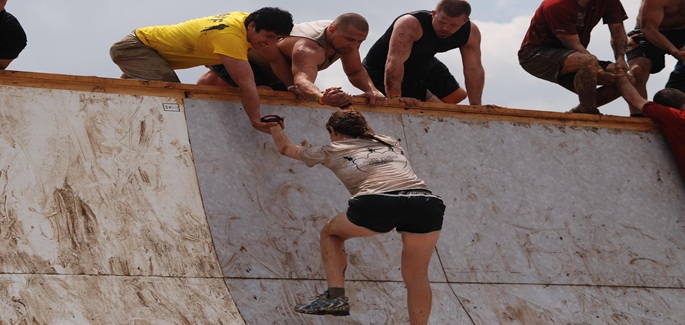
Photo created by AI
(Source: Famiglie in Azione – Ed. Città Nuova)
Questions for Couples’ Reflection
- Looking back on our own journey, where can we recognize moments in which God has transformed our wounds into opportunities for new life and deeper love?
- When difficulties or failures arise in our relationship, do we see them only as obstacles, or can we recognize them as invitations to grow in trust, forgiveness, and mutual understanding?
- How can our personal story—with all its joys and its struggles—become a source of hope and encouragement for other couples who may be walking a similar path?