23 Jun 2017 | Non categorizzato
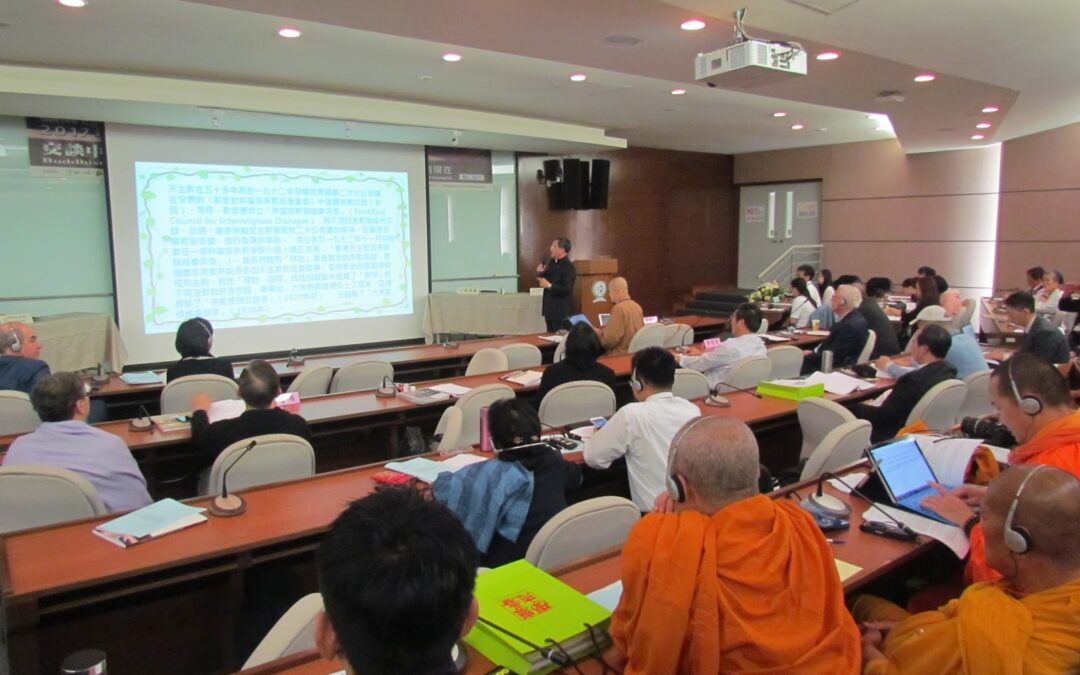
 The event featured a new format punctuated by three distinct elements, the venue and religious context of a pilgrimage of dialogue, a common journey, which is an image dear to the Pope Francis who often invites us to walk together across the vast landscape of interreligious dialogue. Part one of the event was held at Fu Jen University, which is the most prestigious Catholic university on the island. The title of the event was inviting: Buddhists and Christians in Dialogue: from the writings of the missionaries to interreligious dialogue. It provoked reflection on how much has changed in the world of the religions from when the first missionaries arrived in the East at the start of the fifteenth century until today when we are working on one of the fundamental needs of humankind: dialogue between people who believe, whatever their faith may be.
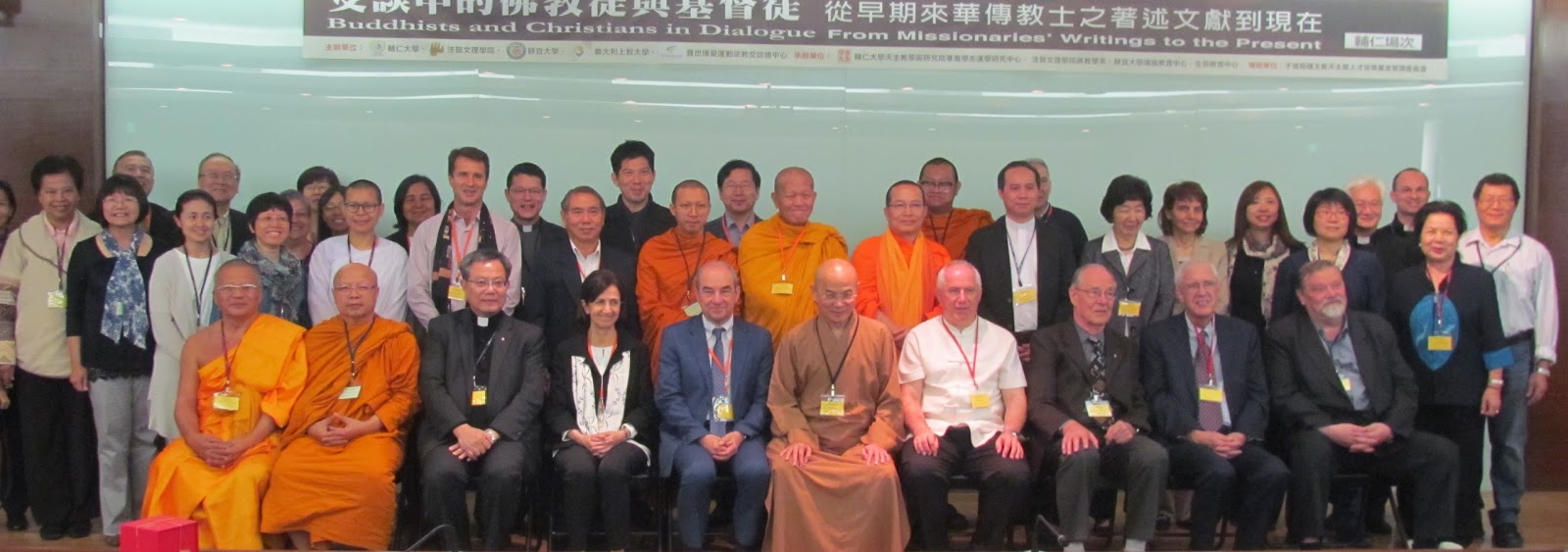
 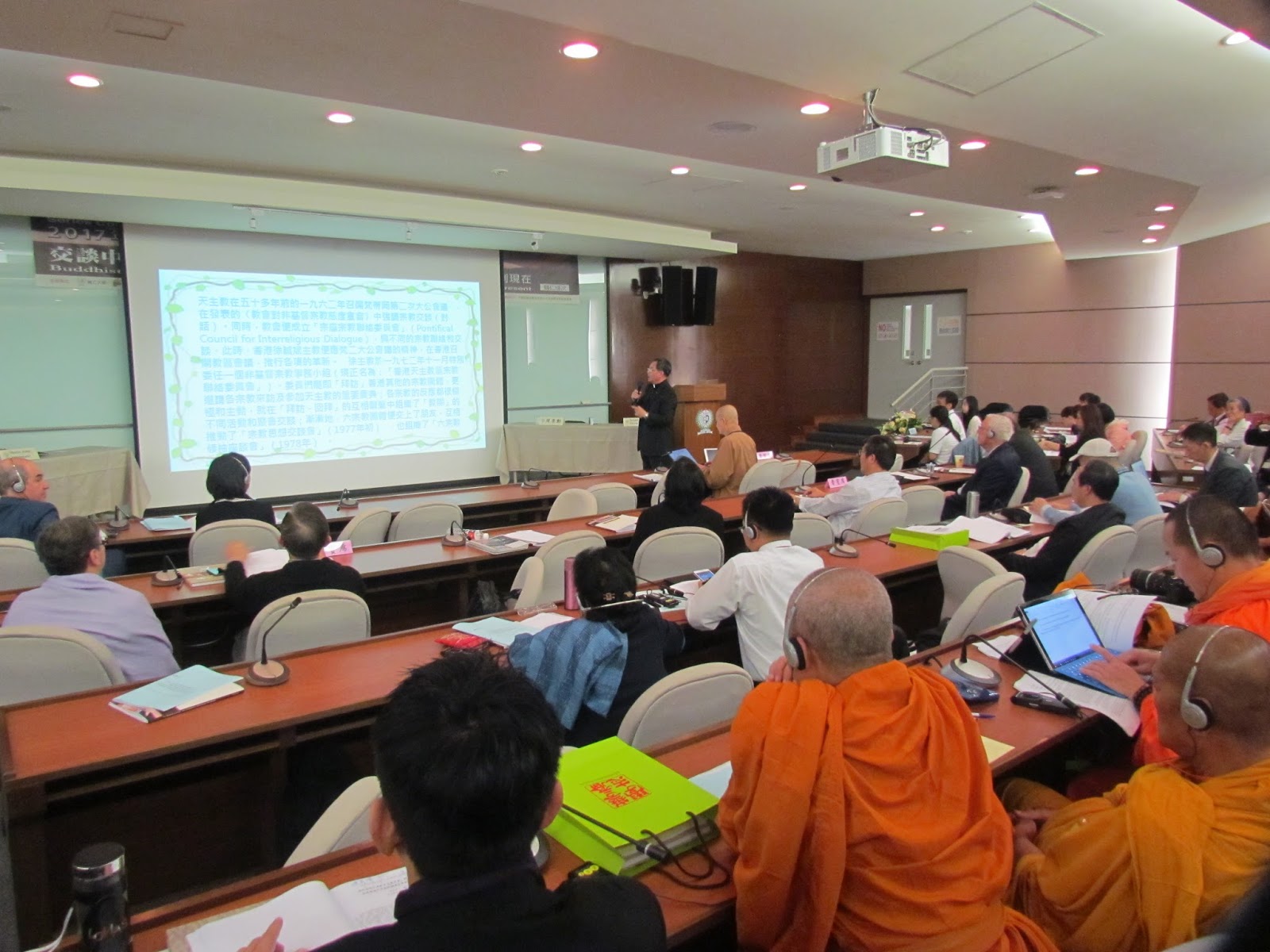 The day of reflection was co-organized by the Catholic University of Taiwan, by Sophia University Institute and the Focolare Centre for Interreligious Dialogue, and by Dharma Drum Mountain Buddhist Monastery and University, one of the renewal centres of Chan Buddhism of China. Seventy of the attendees were experts in the field: a large number of Theravada monks, Buddhist and Catholic lay people from Thailand, a group from Taiwan, the president of the Dharma Drum Institute for Liberal Arts, along with people from the academic world. The topics raised much interest. The presentations that regarded the writings of the missionaries were from between the fourteenth and nineteenth centuries. But the nerve centre of the reflection was Matteo Ricci, the great Jesuit apostle of Christianity in this part of the world, a master of that art of adapting that allowed him to reach the soul of the Chinese people. Yet, precisely Ricci was the centre of interest for his anything but accommodating position towards Buddhism, which he and many of his contemporaries saw as a hodgepodge of rites and pagan manifestations. The missionaries from the fifteenth to twentieth century were anything but open to the followers of Buddha and, in their debates, were set on showing who the followers of the true God and true religion were. The workshops also examined the critical position of the followers of Buddha towards Christians. It came into evidence how such sentiments were quite mutual. This historic context, for which we Christians cannot deny the need for an adequate examination of conscience for the errors committed and discriminatory actions, highlighted the positive value of the experience of the past sixty years. Today, dialogue is soaring with relationships of mutual trust and esteem, even though there are still points that always need to be kept clear and eventually defend against in order to preserve precise identity and avoid syncretism. Over the course of the workshop sessions concrete experiences of dialogue were shared from Hong Kong, Korea, Thailand, Philippines – and new actors were proposed, such as ecclesial movements and protagonists that are recognized pioneers of an experience of dialogue that then followed the tracks they had set. The example of spiritual friendship between Chiara Lubich and Nikkyo Niwano, the respective founders of the Focolare Movement and of the Rissho Kosei Kai, demonstrated how renewal movements that have become part of several religions for a century now, have become vehicles of encounter and friendship among people from different cultures and communities. These two sentiments marked the work of the first day of the symposium/pilgrimage in a serene examination of the journey accomplished over the centuries, opening to the hope for a future of reciprocal sharing and collaboration regarding the great challenges of the human race: social justice, the environment and peace. (To be continued) By Roberto Catalano
22 Jun 2017 | Focolare Worldwide
Listening to one another.This was the spirit with which Gabriela Melo and Augusto Parody of the Focolare International Centre set out on their journey to visit the many communities of the Movement diffused in Latin America. They even reached Esmeraldas in Ecuador, on the Pacific Coast, populated mostly by Afro-Ecuadorians, and where the crystalline blue of the sky merges with that of the sea, making the luxuriant vegetation shine like an emerald. This enchanting landscape changes suddenly the minute you enter the town, and especially the view ends with the conglomerations of bamboo and galvanized iron huts in the poor districts like Isla Bonita, Pampon, and Puerto Limon.. The hordes of children play on the streets and on the beach from morning till night, and if they are not saved on time as adolescents and teenagers, they become drug or alcohol addicts, involved in “pandillerism” (the infamous metropolitan gangs of marauders). The spirituality of unity reached Esmeraldas over 30 years ago, and took root precisely among the Afro-Ecuadorian population of families, youths, priests and children who have made the evangelical news of mutual love the law of their lives. It is a ray of spirituality that has lighted up new hope, putting into action new ideas and forces. And this is what happened around Fr. Silvino Mina, who is also part of the community. Through the Ayudav group that formed in his parish he was able to solve many urgent cases of street children and teens, giving rise to the need of reinforcing these aid actions, also by calling the attention of the Institutions. This was how the Fundación Amiga (1992) was born, and with it, a school for kids at risk, with the aim of making their lives more dignified and helping them to face the future through suitable educational programmes. By focusing on their great sportive talents (Esmeraldas is infact known as the cradle of Ecuadorian athletes), they formed a soccer school, and also handicraft laboratories run by the former street youths themselves. «Today, the school has1,700 children and adolescents from 13 to 19 years of age – Don Silvino explained – and with global educational projects, where one tries to put into practice what one learns, the whole educational community of students, teachers and parents is involved. All the children are offered a good meal a day, which for many is the only meal they can afford, together with vaccinations, medical treatments and education on health and Aids prevention. We also study the Afro culture and traditions, and not only these.» Ecuador, in fact, is a crossroad of millenary cultures (Quito was one of the two ancient capitals of the Incas) where they spoke various Amerinde languages (Quechua, Shuar, Tsafiki and others). The government’s endeavour precisely aims to recover local communities, cultures and religious expressions, to establish a dialogue which valorises their diversities in an enriching intercultural experience. This term appears at least eleven times in the new Constitution approved in 2008.«And if we added the socio-political demands–Gabriela and Augusto observed – we could also highlight what is happening in Esmeraldas, the commitment to live the Gospel, and the building of communities where the different ethnic, linguistic and religious components trigger a daily process of integration which is spreading quickly. This is a process which benefits the big intercultural workshop which is Eduador, a country that can really offer the world a unique and sustainable model of encounter and coexistence.»
21 Jun 2017 | Focolare Worldwide
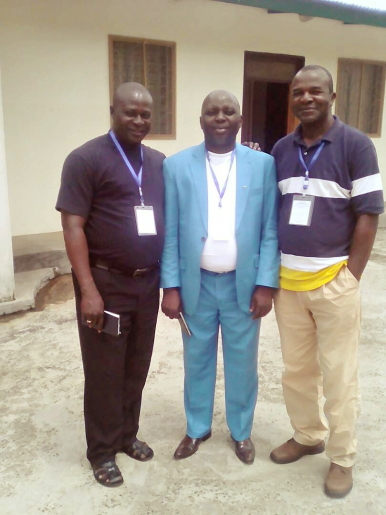
“Even if it is not officially declared, also here we are fighting the ‘third piecemeal war’. The transitional government is trying to rebuild what the recent civil war has demolished, but has to contend with the strife that often breaks out into fratricide struggles.” Martial Agouais a Catholic priest of the Central African Republic, a country where the majority are Christians and 15% are Muslims. In the absence of a national defense body, the UN sent the peacekeepers, called the “blue helmets”, of some foreign contingents, but there are many interests at stake. The perpetration of the guerilla paradoxically acts also as a cover for foreign hoarders, greedy forthe country’s precious mineral resources. Enemy hunts are always ongoing, and often are fatally found in the tribe right in front, or in the village which practices another religion. The recent news reported about a Catholic bishop, Bishop Juan José Aguirre Muñoz who opened his parish in Tokoyo to host 2,000 Muslims under the attack of the anti-Balaka, also called Christian militias, originally formed as a sort of self-defence groups of the Islamic Seleka gangs, but which lately have often become terrorist groups. This has made no difference between the violent groups who had triggered the revolt, and the civil Muslims, peace-loving people of merchants and the Peul tribe (nomadic cattlemen, also called Mbororo). “My parish,” recounted Fr Martial, “dedicated to the Holy Family, is in Sibut, the capital of the KemoInbingu region. Here in Sibut a meeting of all the authorities was held recently, from the prefect to the mayor, the tribe chiefs of the Munisca force to the district chiefs of the Burundi contingent, and the ex-Selekato the anti-Balaka. At a certain point the chief of the anti-Balakaspoke up to say in a loud voice that the pastors of the various churches, priests, religious men and women must no longer speak about social issues in the churches. All were scared and nobody dared to contradict him. Also I didn’t speak, but that threat did not stop my Christian commitment. I had learned from the spirituality of the Focolare that we have to love everyone, and be concerned about the rights of all. And I said to myself, if I have to choosewhat side to take, I will always choose to stand by the weaker people, the most defenceless.” Two days later, the Peuls were attacked by the anti-Balakain the forest where they were pasturing their cattle, at 18 km along the Bangui axis. Four men were killed and seven among the women and children were wounded. The Munisca brought the wounded to the central hospital of Sibut, but for two days they did not receive any treatment or food. Everyone was afraid to approach them to help them, including the NGOs and the humanitarian services. “When I found out about the situation,” the priest explained, “I took courage and went to the chief of the anti-Balakato ask him to accompany me to the hospital. Upon seeing those wounded Muslims left to themselves in a room with an unbearable smell and in pitiful conditions, both of us were moved to tears. I ran to some Christian families living close to the hospital to ask for water for drinking and to wash them, and also food. I then obtained from the diocesan Caritas director, a means of transport that would bring them to Bangui, 200 km away. Thank God, in three weeks all of them were healed and the Caritas was able to bring them home to their families safe and sound.” Abbé Martial Agoua – Sibut (R.C.A.)
20 Jun 2017 | Non categorizzato
June 20: Pope Francis visits two Italian towns,Bozzolo and Barbiana, “to pay homage to Fr Primo Mazzolari and Fr Lorenzo Milani, the two priests who today offer us a timely message. I thank those, especially the priests, who will accompany me with their prayer,” said the Pope at the Angelus on Sunday, 18th June. The visit to the tombs will be a significant gesture as both priests had reputations of being anti-establishment and therefore marginalised. They were precursors of the Second Vatican Council and forerunners of the Church of the Poor, as Pope Francis himself pointed out, holding them up as examples to follow.
20 Jun 2017 | Non categorizzato
In 2000,on the occasion of the 50th anniversary of the Convention related to the status of refugees, the UN established that this Day would be celebrated each year on 20 June. The aim of this assigned day is to make the public aware of the condition of migrants. This concerns millions of people who are forced to escape from wars and violence, leaving their loved ones, homes and all that are part of their life. Behind each one there are stories that are worth listening to, full of suffering, humiliations and the desire to rebuild a future. The Projected Global Resettlement Needs 2017 report affirms that in 2017 the forecasted number of people in need of resettlement will reach 1.19 million, 72% more than in 2014. Along with voluntary return to their countries, this is one of the best solutions for the refugees, including integration into the host societies.
