
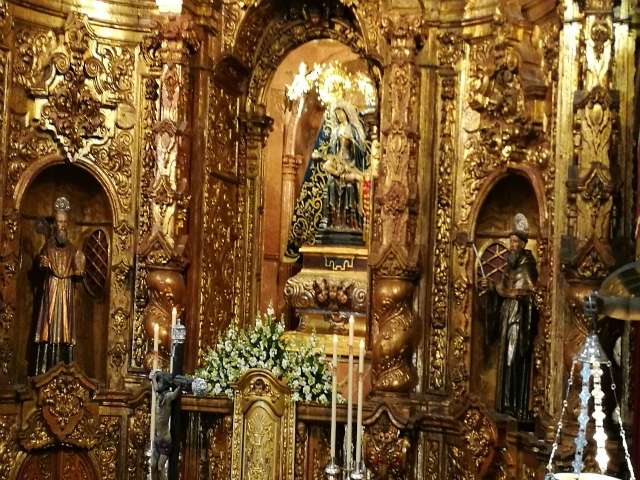
 Facing the Mediterranean, to the southeast of the Strait of Gibraltar – a bridge between the two continents and one time end of the world – the city of Ceuta rises, which, along with the nearby Melilla, represents Spanish colonial remnants on the continent of Africa. Because of its strategic location on a piece of privileged coastland, the two cities have for decades have been considered possible entry ways into Europe, in spite of the dividing wall. Every day, men, women and children from the most diverse collection of African countries, escaping wars, poverty and persecutions of every kind, cross entire countries in an attempt to find a shore near the city on which to disembark. Right on this strip of land which, since 1851 has been under the Diocese of Cadice, which is in the midst of getting ready for the 600th anniversary of the arrival of the one who has been called the “Virgin of Africa,” a single block of wood representing the Blessed Virgin seated with the body of the dead Christ between her arms. In 1949, Pope Pius XII wanted her to be named the patroness of the city.
Wanting to give
Wanting to give

0 Comments