
Pope Francis’ latest trip to Asia and Oceania has so far been the farthest, longest and probably the most physically demanding the Pope has ever undertaken. What does this visit mean for the local communities? We asked Paul Segarra, focolarino of the Indonesian community.
Paul, what was the significance of the Pope’s visit to your country?
“This heroic gesture of the Pope is for me an image of God’s love that knows no limits and reaches out to his most distant children, who are certainly not the least-valued in his eyes. The Holy Father took the time to look at them with love, marvel at their giftedness, share their sufferings and longings for justice and peace, then encouraged them to face their challenges together and transcend their limits.
But he did not only utter words that inspired and encouraged. He also demonstrated, by example, the strength in faith, the openness to fraternity and the nearness in compassion that he invites his listeners to acquire. He did this through his planned choices and spontaneous gestures, he acted and lived from the heart”.
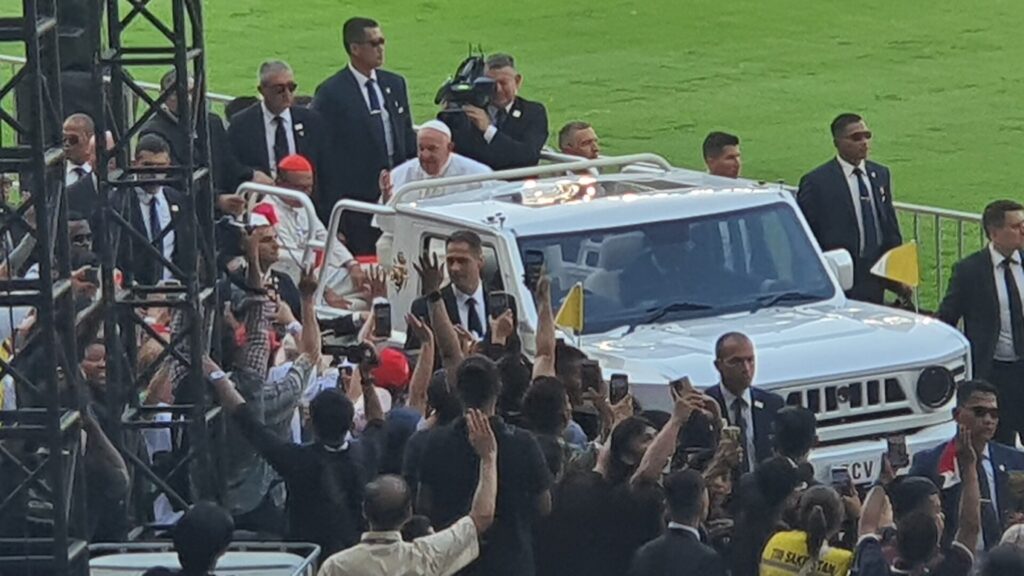
“As news of his arrival spread quickly – Paul Segarra recounts -, there were also many comments on various social platforms about his chosen means of transport: a sober white sedan, in which he preferred to sit beside his driver, instead of taking the usual presidential back-seat, I imagined because he wanted to converse with his driver face-to-face. Seeing this gesture of his, I realised with regret that I could have done the same with the driver who brought me to my accommodations in Jakarta that same evening. But thereafter, my rides became undeniably more enjoyable, as I took to the habit of getting to know my hired drivers through friendly conversation”.

Paul, how did the local Focolare community experience this event?
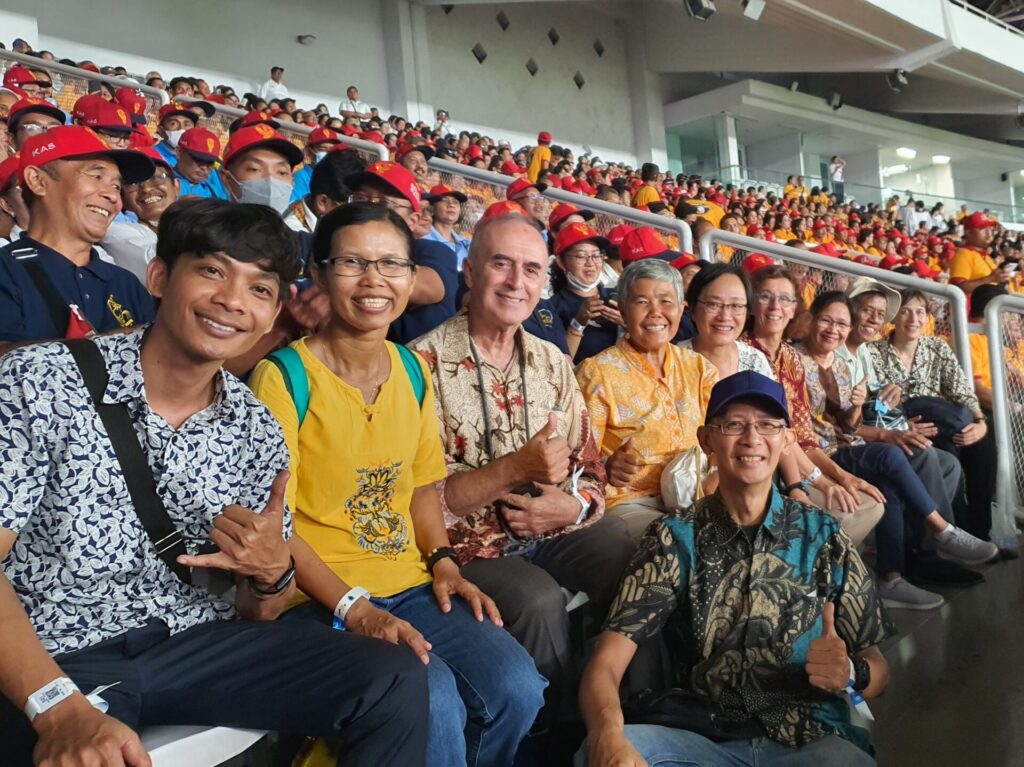
“Some members of our Focolare communities in Jakarta and Yogyakarta had the privelege of participating in some of the events that were graced by the pope’s presence. At the Jakarta Cathedral (dedicated to Our Lady of the Assumption) the Holy Father acknowledged the work of catechists, describing them as “bridges of the heart that unites all the islands”. We were moved as he drew our attention to a statue of the Virgin Mary, and gave her as a model of faith that welcomes everyone, even as she keeps watch over and protects the people of God as the Mother of Compassion”.
Pope Francis and Imam Umar signed the Joint Declaration. What future do you see for Christians and Muslims together after this signing?
“Tomy, one of our photographers who covered the pope’s visit to the Istiqal Mosque and endured long hours of waiting under the city-heat, was visibly touched as the Holy Father finally arrived and greeted them from his car. Assuming a discreet position just outside the entrance to the underground, pedestrian tunnel that physically connects the Great Mosque to the Cathedral across the street, he managed to capture the moment Pope Francis and High Imam Umar signed the Declaration of Fraternity in front of a small crowd of bishops, imams and other religious figures, and said he had high hopes that this visit would create true harmony between all people of faith. And what is faith, if not seeing, acting and living from the heart?
Lorenzo Russo
Photo: © Paul Segarra – ©Tomy Wijaja


0 Comments