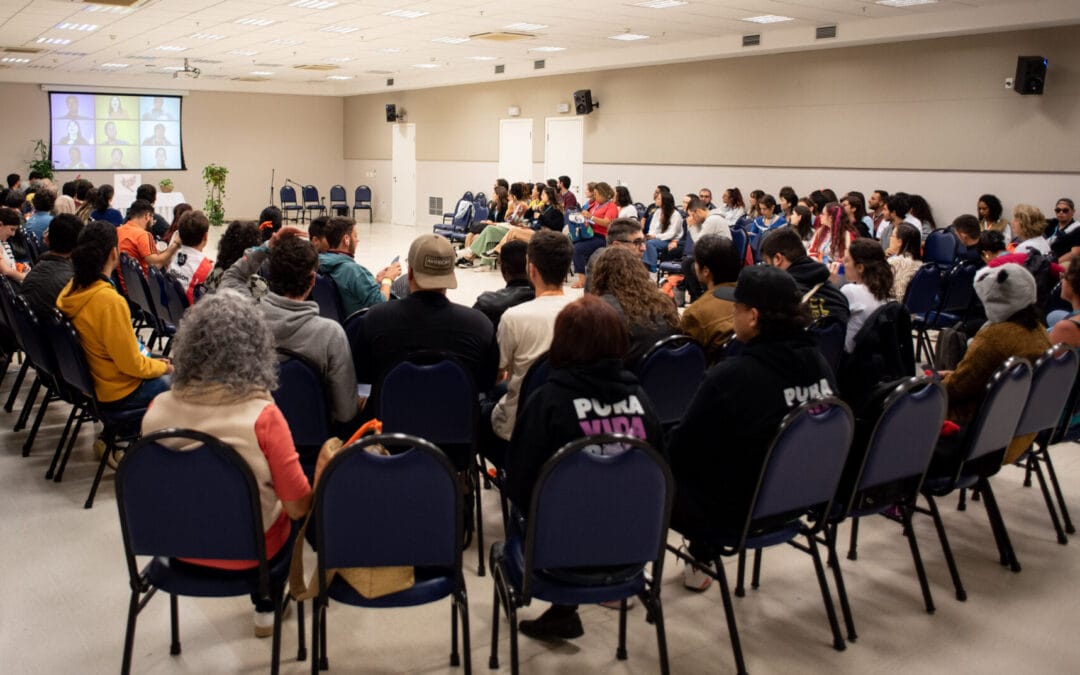
The third phase of Genfest 2024, held in Aparecida, Brazil, included workshops organized by so-called United World Communities – meeting places where young people can share their talents and passions. These communities offer the opportunity to discover talented people, concrete forms of commitment and initiate actions and projects aimed at building a more united world, which seek to respond to the local and global challenges of today’s world; to activate processes of personal and collective change; and to grow fraternity and reciprocity in all dimensions of human life. An important feature of these communitites is that they are the fruits of work between people of different generations.
Continuing the experiences of the previous phases of Genfest, in this third phase the youth were able to participate in workshops in different areas, whose methodology was based on fraternity and dialogue, as a proof for projects and actions that can now be developed in the “glocal” sphere (local projects with a global perspective). Activities were held in the areas of economics and work, cross-culture and dialogue, spirituality and human rights, health and ecology, art and social engagement, education and research, communication and media, and active citizenship and politics. The teams responsible for running the workshops were composed of young people and professionals who worked intensively for months to organize these activities.
From now on, Communities will have a working method that consists of three steps: Learning, Acting, and Sharing. The first (to Learn) is an in-depth exploration and analysis of the most current themes and issues in each community, with the goal of identifying problems and presenting solutions. The next phase (Take Action) is the implementation of actions with primarily local impact, but with a global perspective. Finally, in the third phase (Sharing), it is proposed that the community promote spaces for ongoing exchange and dialogue between initiatives, with the aim of strengthening the global collaboration network. An application-the United World Communities WebApp, -has been created as a tool for sharing ideas, experiences and news, as well as promoting collaborative projects.
“God has visited everyone’s heart.”
Al termine della terza fase del Genfest, le Communities hanno presentato in modo creativo le loro impressioni e alcuni dei risultati delle attività svolte nei giorni precedenti. Da questo lavoro è nato il documento “The United World Community: One Family, One Common Home”, che sarà il contributo dei partecipanti del Genfest 2024 al “Summit of the Future” delle Nazioni Unite del prossimo settembre. Secondo i giovani che hanno presentato il testo, esso non è un documento conclusivo, ma vuole essere un “programma di vita e di lavoro” per le varie United World Communities, oltre che una testimonianza da presentare al “Summit of the Future”.
“With our communities we don’t want to make demands, formulate slogans or complain about political leaders,” the young people said. “Instead, we seek to name our common dreams, dreams of a united world. Personal and communal dreams, which will guide us in our activities in the coming years.” They concluded, “We hope that by living them, ‘together’ and step by step, they will become signs of hope for others.”
Margaret Karram and Jesús Morán, President and Co-President of the Focolare Movement, also spoke at the conclusion of Genfest 2024. Jesús Morán said that although the experience of care has been the most lived experience in human history, it is not the one that has been reflected on the most.
This has begun to change, as was demonstrated at the Genfest, in which care emerged as a response to the need for human dignity. In this sense, he concluded, it is important that young people remain connected to this global network of generative communities. Margaret Karram, for her part, said she has seen throughout the Genfest experience that young people have given tangible witness to their faith and are already in action to build a united world. Regarding Phase 3 in particular, she emphasized the richness of this experience because of its creativity, intergenerational and intercultural imprint, and the fact that, through the communities, there is a concrete possibility of living the same Genfest experience in one’s daily life. She concluded by calling on the young people to be the protagonists of these communities, the foundation of which is unity. “Please do not miss this unique opportunity that we are experiencing here: God has visited the heart of each of us and is now calling everyone to be protagonists and bearers of unity in the various areas in which they are involved”.
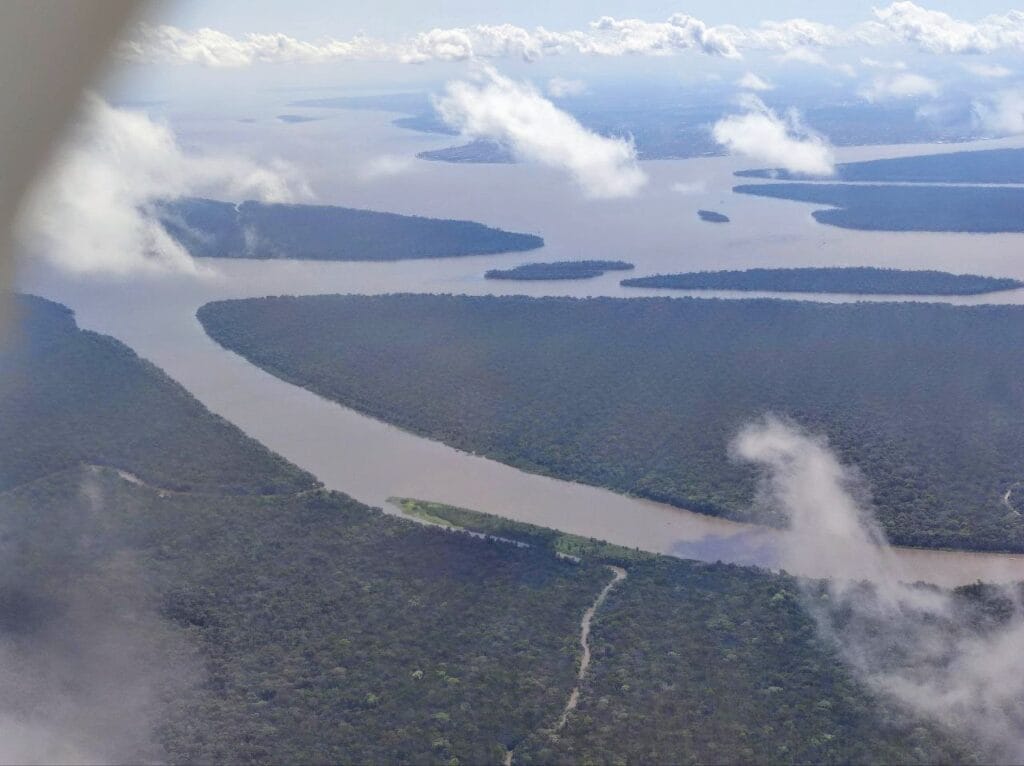
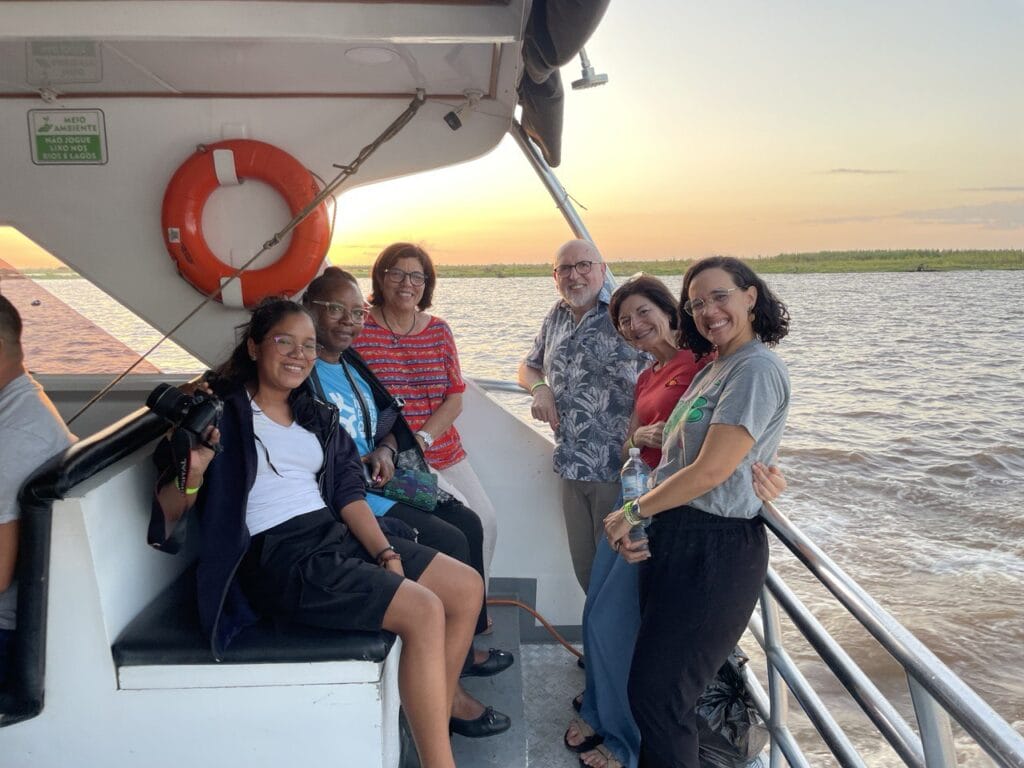
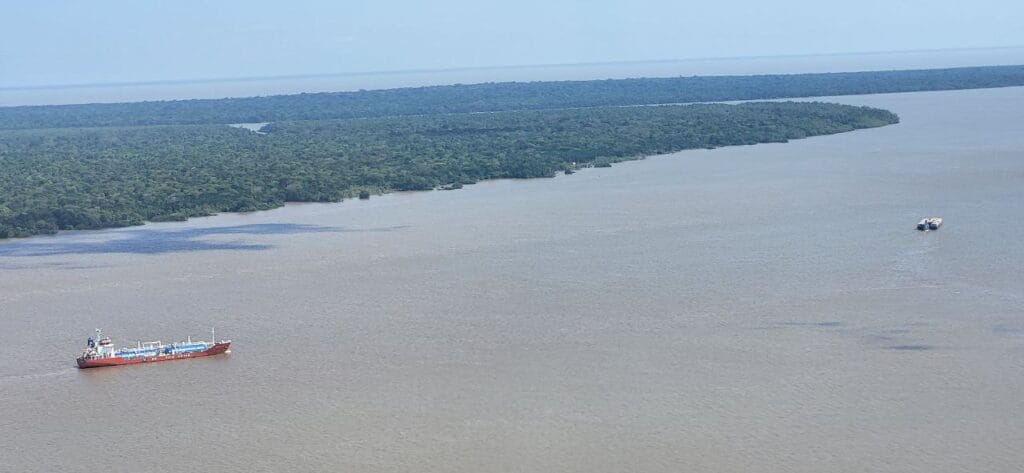
Juruti, in the State of Parà, is reached after seven hours by motorboat, the fastest means of transport, from Santarém. Its inhabitants say proudly that this area is the heart of the lower Brazilian Amazon, where the only connecting “road” is the Amazon River, the “river-sea”, as the local people call it. It is the first river in the world in terms of volume of water and the second by length. It marks time, social life, trade and the relationships between the approximately 23 million inhabitants of this vast region, where 55.9% of the Brazil’s indigenous population lives. It is one of the most precious ecosystems on the planet and yet political and economic interests are the cause of conflicts and violence that continue to multiply daily. Here the disruptive beauty of nature is directly proportional to the problems of quality of life and survival.
Care, the key word for the Amazon
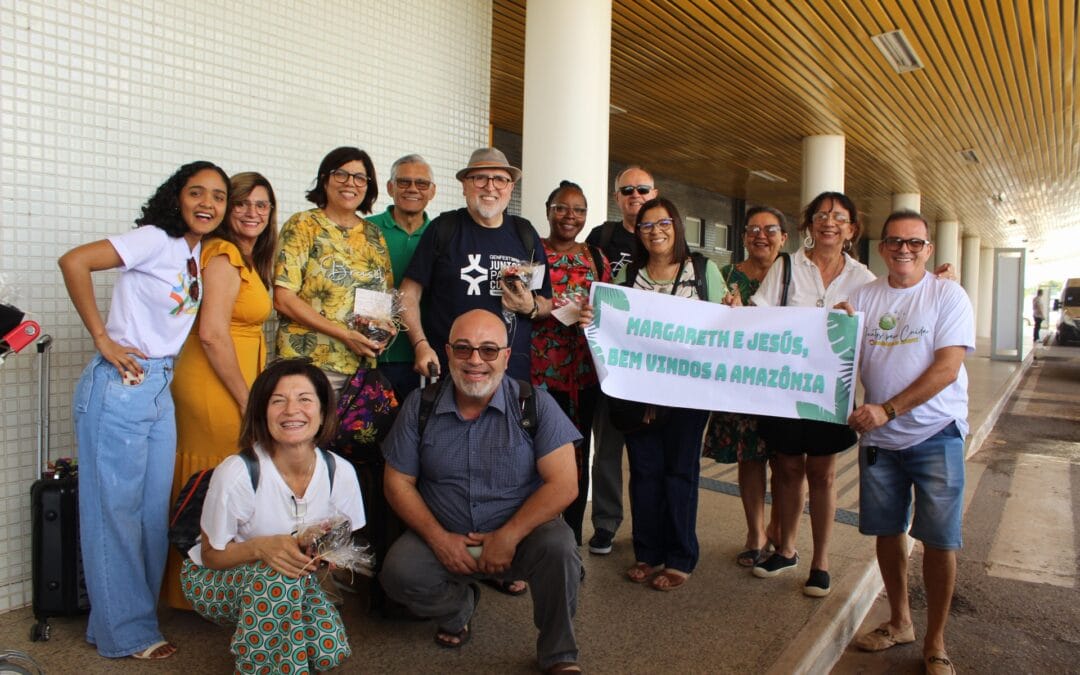
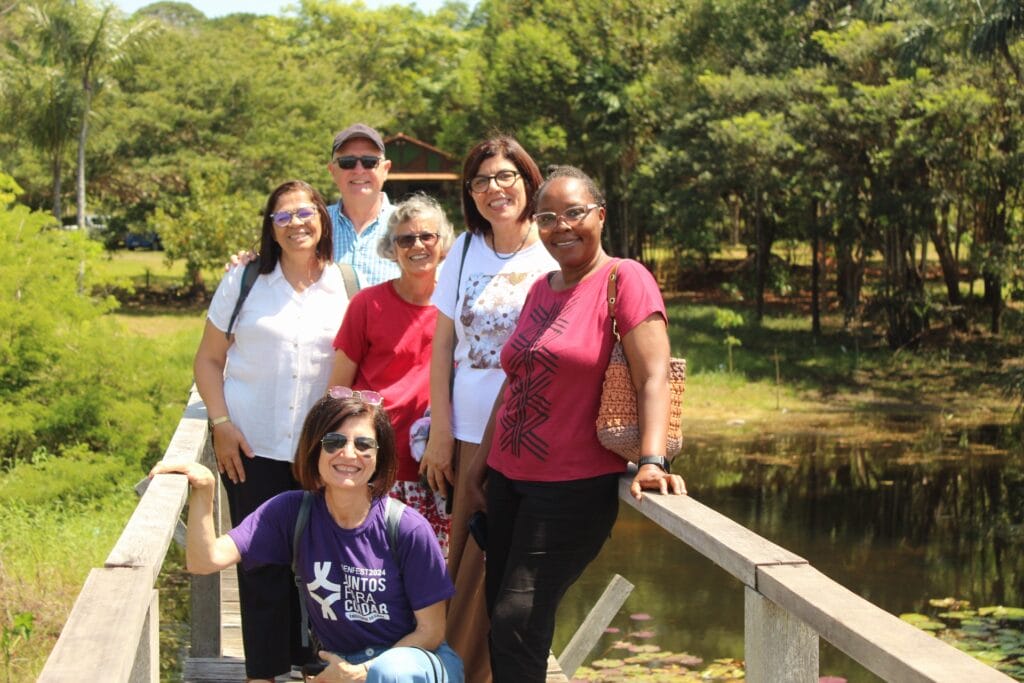
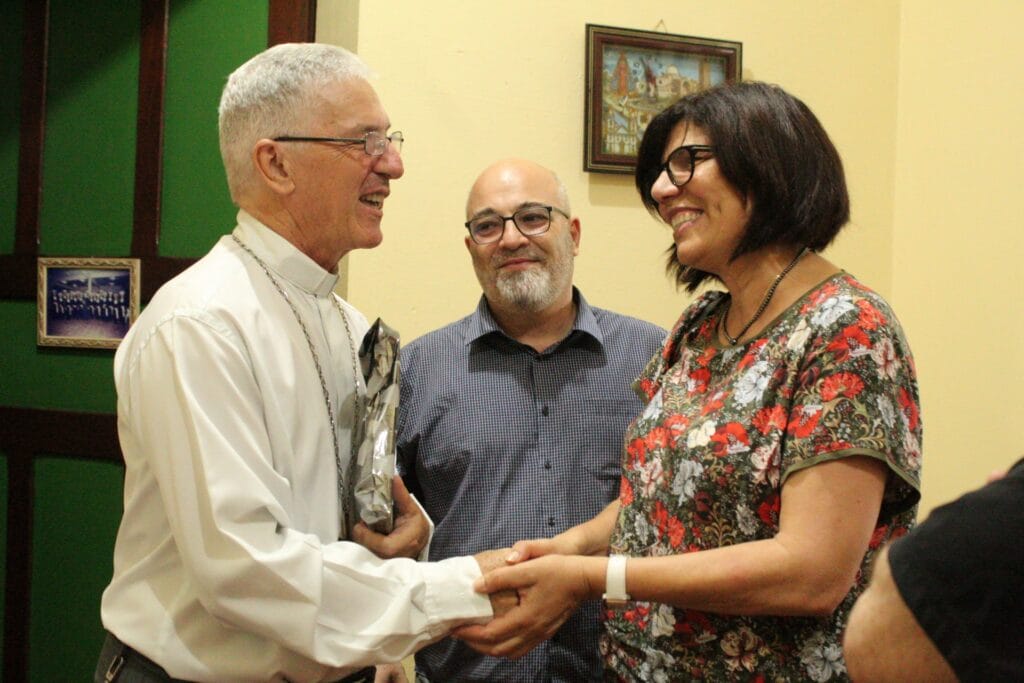
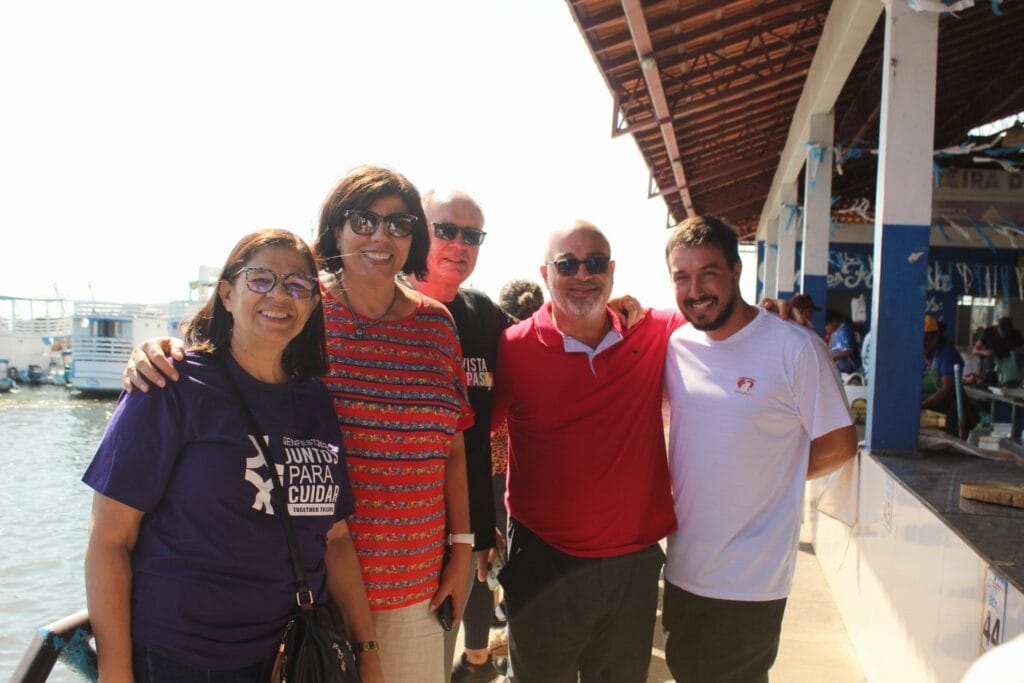
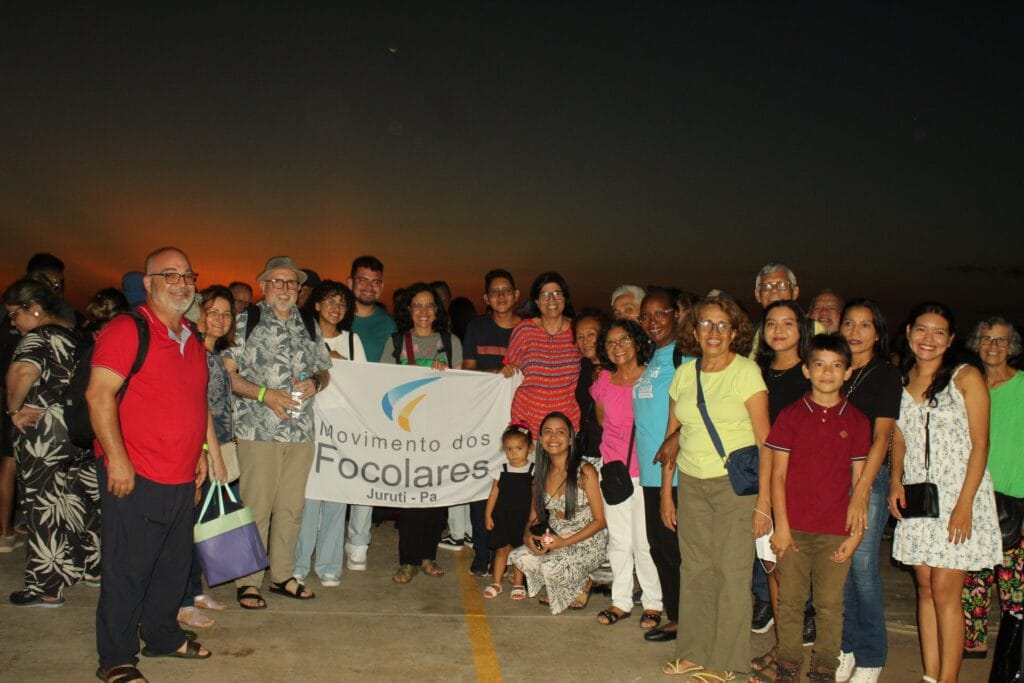
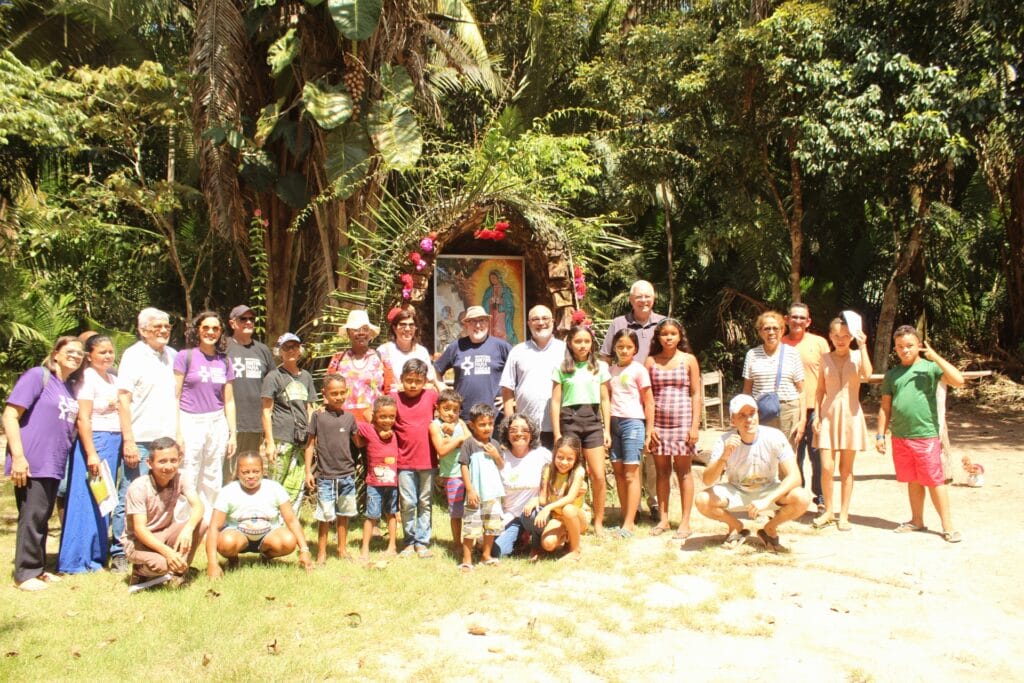
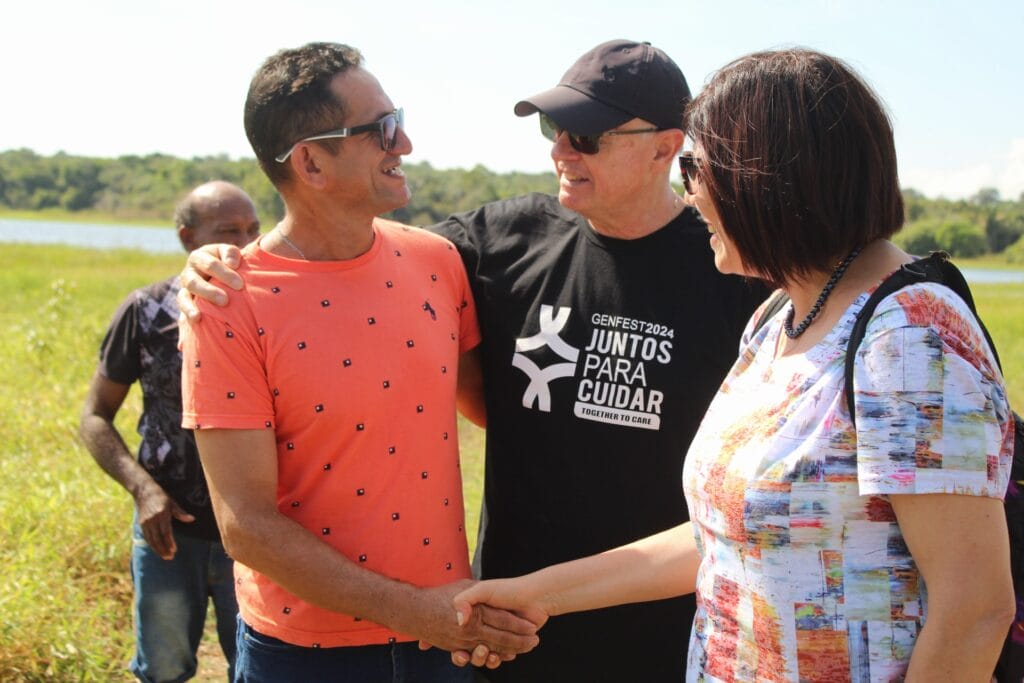
Margaret Karram and Jesús Morán, President and Co-President of the Focolare, Bernadette Ngabo and Ángel Bartol of the Movement’s International Centre and Marvia Vieira and Aurélio Martins de Oliveira Júnior, national co-directors of the Movement came to meet and spend a few days with the Focolare communities of the region. They were welcomed by Msgr. Bernardo Bahlmann O.F.M., Bishop of Óbidos. He said, “Observing and listening is the first thing we can learn in the Amazon”.
He spoke of the differentiated culture of this land, where indigenous characteristics coexist with aspects of the Western world. Social coexistence presents many challenges: poverty, lack of respect for human rights, exploitation of women and destruction of the forest heritage. He said, “All this is a question of rethinking what it means to take care of the riches of this land, of its original traditions, of creation, of the uniqueness of each person, to find, together, a new path towards a more integrated culture”.
Santarém, where the Church is secular
Msgr. Ireneu Roman, Bishop of the Archdiocese of Santarém continued the commentary, saying that this would be, “An impossible task without the involvement of the laity. They are the true strength of the Amazon Church”. There are about a thousand catechists in its parish communities. They support Christian formation, the liturgy of the Word and social projects. Msgr. Roman asked the Focolare community in the Amazon to bring its specific contribution: “unity in ecclesial structures and in society, because what this land needs most is to relearn communion”.
The presence of the Focolare and the Amazon Project
The first men’s’ community of the Focolare arrived in Óbidos in 2020 at the request of Msgr. Bahlmann and six months ago a women’s’ one opened in Juruti. Today in the Amazon there are seven focolarini, including a doctor, two priests, a psychologist and an economist.
Marvia Vieira and Aurélio Martins de Oliveira Júnior explained, “We are in the Amazon to support the great missionary work that the Church carries out with indigenous peoples. In 2003, one of the guidelines of the Brazilian Bishops’ Conference was to increase the presence of the Church in the Amazon region, because the vastness of the territory and the lack of priests made it difficult to provide adequate spiritual and human assistance.”
Thus, 20 years ago, the “Amazon Project” was born where members of the Focolare Movement from all over Brazil went for a period to places chosen in agreement with the Dioceses, to carry out evangelization actions, training courses for families, young people, adolescents and children, medical and psychological visits, dental care and more.
Edson Gallego, a focolarino priest of Óbidos and the parish priest told us, “Perhaps we will not be able to solve the many problems of these people but we can be close to them, share joys and sorrows. This is what we have been trying to do since we arrived, in communion with the different ecclesial realities of the city.”
The women focolarine explained that it is not always easy to change one’s mental categories: “We often delude ourselves to give answers, but it is we who come out enriched by every encounter, by the strong presence of God that emerges everywhere: in nature, but above all in people”.
Building up people and society
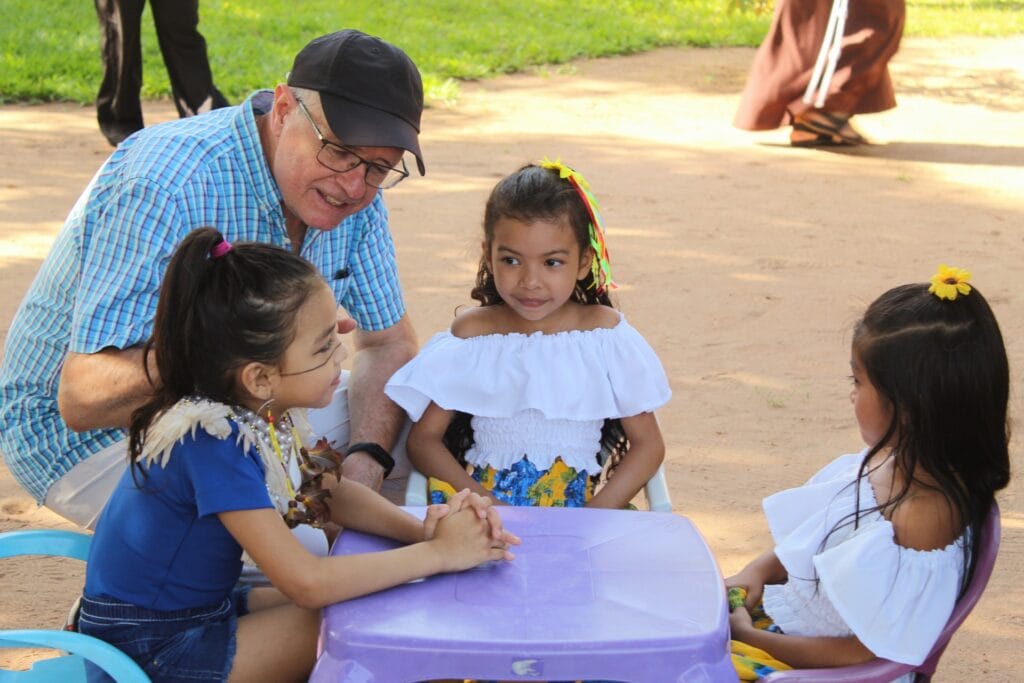
In Juruti the focolarine collaborate with the agencies of the Church that work for development. The “Bom Pastor” “casulo” is one of the 24 kindergartens in the city, which follows a specific pedagogical line that educates children to be aware of their own culture and traditions, to have a sense of community and to be aware of themselves and of others. This is an important choice for an integral and person centred education. The “9 de Abril na Providência de Deus” Hospital is managed by the “São Francisco de Assis na Provincia de Deus” Fraternity. It serves the population of the city (approximately 51,000 inhabitants), nearby towns and river communities, focussing on those who cannot afford to pay for care. The Apostles of the Sacred Heart of Jesus, on the other hand, animate the “Mother Clelia” Coexistence Centre where they welcome a hundred young people annually, creating alternatives for professional training and contributing to personal development, in particular of young people at risk.
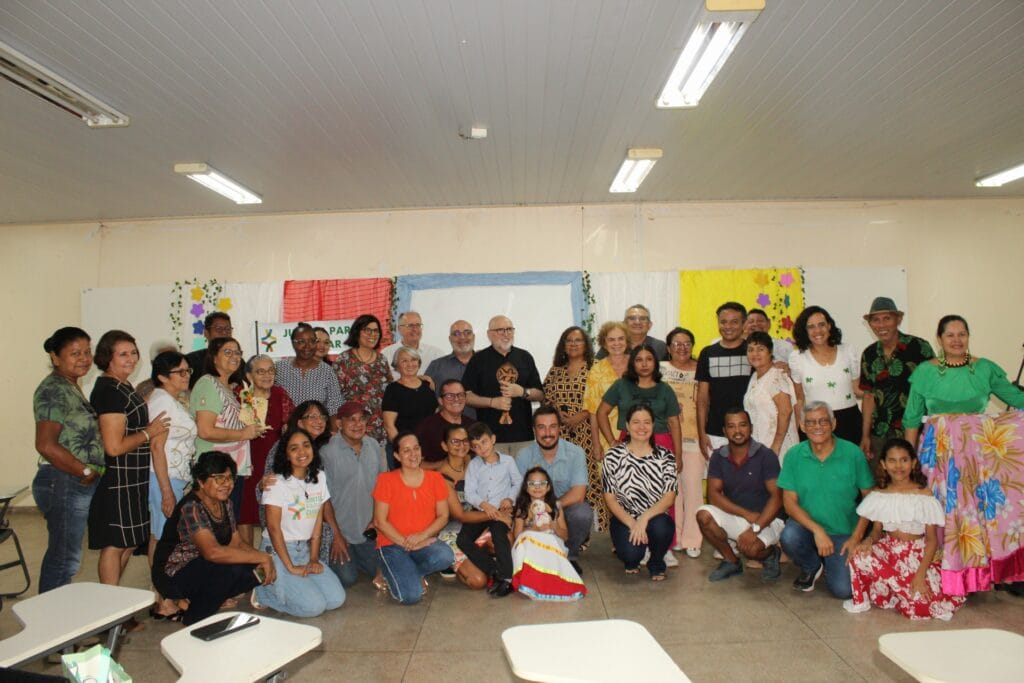
The Focolare community has also been working in synergy with parishes and ecclesial organizations for years. When Margaret Karram met it and other communities from around, she thanked the people for their generosity, evangelical concreteness and welcome: “You have reinforced in all of us the sense of being one world family and even if we live far apart, we are united by the same gift and mission: to bring fraternity where we live and throughout the world”.
Promoting human dignity
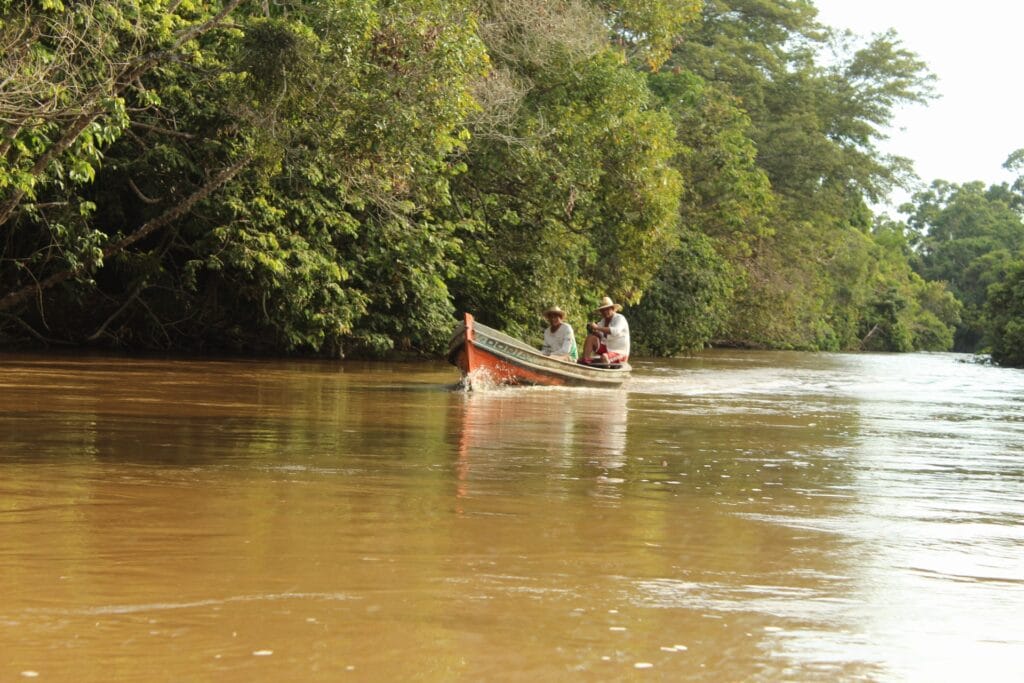
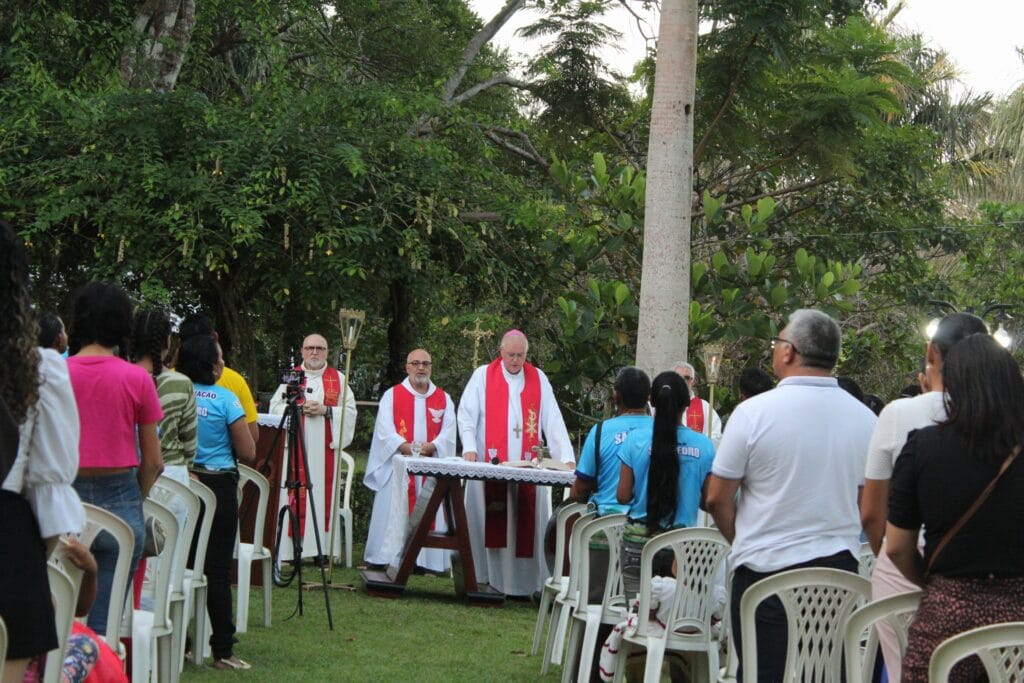
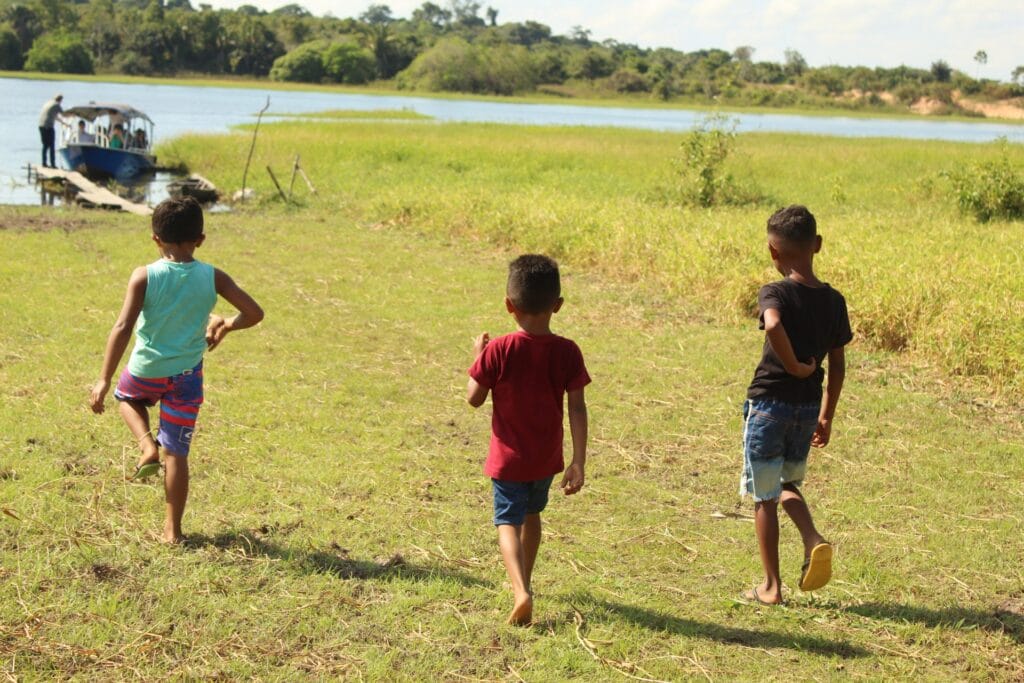
A one hour boat trip from Óbidos, through a network of canals that wind through the Amazon forest brings you to the Quilombo Pauxi Mocambo, an indigenous community of a thousand Afro-descendants. It is linked to Edson’s parish. He tries to go at least once a month to celebrate Mass and, together with the focolarini, share, listen and play with the children. The community is made up of about a thousand people who, although immersed in a paradisiacal nature, live in particularly disadvantaged conditions. Isolation, struggle for survival, violence, lack of equal rights, access to education and basic medical care, are the daily challenges these river communities face. Here too, for two years, the diocese of Óbidos has been running a project entitled, “Força para as mulheres e crianças da Amazônia”. It is aimed at women and children and promotes an integral formation of the person in the spiritual, health, educational, psychological, and economic sustenance fields. A young mother proudly recounted her progress in the home economics course: “I learned a lot and discovered that I have skills and ideas”.
Certainly it is a drop in the great sea of the needs of these peoples. Jesús Morán said, “It is true that alone, we will never solve the many social problems. Our mission, also here in the Amazon, is to change hearts and bring unity in the Church and in society. What we do makes sense if people focus their lives on the good. And that’s the real change.”
Listening to the focolarini in the Amazon highlights the fact that welcoming, sharing and learning is the “evangelical dynamic” that emerges, where each and every one feels personally called by God to be his instrument to “listen to the cry of the Amazon” (47-52), as Pope Francis wrote in his extraordinary post-synodal exhortation Querida Amazonia and to contribute to the growth of a “culture of encounter towards a ‘multifaceted harmony’” (61).
(…) Easter will soon be here. It’s the greatest feast of the year and with it comes Holy Week which is filled with the most precious mysteries of Jesus’ life.
We are reminded of these especially on Holy Thursday, Good Friday, Holy Saturday and on Easter Sunday, the day of the Resurrection. For us,they represent central aspects of our spirituality: the mandate to live the new commandment, the institution of the priesthood and the Eucharist, the prayer for unity, the death of Jesus forsaken on the cross, Mary Desolate, the Risen Lord.
We will celebrate these mysteries with the Church through the sacred liturgies, but because ours is a “way of life” we will prepare ourselves to honour them also with our life. (…)
So what should we live as Holy Week draws near, during these blessed days?
I think the best way to live all of them is to live Easter, to let the Risen Lord live in us.
For the Risen Lord to shine out in us, we must love Jesus forsaken and always be, as we say, “beyond His wound” where charity reigns. Charity then encourages us to be the new commandment in action. Charity urges us to approach the Eucharist which nourishes this divine love in our heart and truly makes us become what we are consuming, that is, the Risen Jesus. Charity leads us to live in unity with God and with our brothers and sisters. It is through charity that each of us can, in a certain way, be another Mary.
Yes, there is no better way to live the various aspects of Jesus’ life recalled during Holy Week than by deciding in each present moment to let the Risen Lord live in us. (…)
Chiara Lubich
(Chiara Lubich, Per essere un popolo di Pasqua, 24 marzo 1994 in Conversazioni in collegamento telefonico, Città Nuova, 2019, pp. 461-2)
Today, January 1st, we celebrate the World Day of Peace. On this occasion, we offer a writing of Igino Giordani (1894-1980) where he recalls how living in peace can make every day Christmas.Since Christmas is considered by most as one of the grand feasts,more sumptuous than sacred, it would be important to reflect on some of the theme aspects of this event, due to which the history of the world was cut into two sections, pre- and post-. (…)
There is an abysmal contrast between the birth of a powerful figure, as the ancient world dreamt of and the obscure birth of Jesus, ignored by many; it is a contrast which in itself characterises the infinite originality of a Christ-king born of a poor woman in a stable. (…)
The start of his revolutiondoes not foresee arrogance, but humility, to draw the sons of God to heaven, starting from those who ate and slept on the ground: the slaves, the jobless, the foreigners, and the scum.
Liberty and love were born with that infant: his liberty is liberty of love. This is the immense discovery. Universal love that he taught aims to disperse a system of coexistence made up mostly of political power, abuse of authority, idle usury, despise for work, degradation of woman, and corrosive envy. (…)
Life, in peace, would allow us to make every day, Christmas.And this is the revolution of Christ:to make us be reborn continually against the curse of death. And so the utmost commandment is to love man, which is like loving God. Love the other to the point of giving one’s life for him.
(Igino Giordani,Christmas as a revolution, New City, Rome 1974, n.24, p.18)
The conference “European Solidarity Corps and Civil Service in Europe” which took place on 24th October 2023 in Brussels (Belgium) expressed a commitment of politicians, institutions, ecclesial movements, organisations of civil society and, at the forefront, young people. Jesús Morán, Co-President of the Focolare Movement, was present at the meeting and shares his impressions. On Tuesday 24th October Brussels was unexpectedly sunny, in contrast with what we experienced on the afternoon of the 23rd, when we arrived in the Belgian capital and were greeted by heavy rain. For the inhabitants of Brussels, who are citizens of several European countries, the sight of a bright sun was a surprise in the middle of autumn. For us it was a good sign of what we would live that morning in the impressive European Parliament building. The meeting held in a seminar room for 30 people began at 9.15 a.m. It was promoted by three very different associations: the European Movement, the Caterinati Association and the Focolare Movement, within the framework of the European Solidarity Corps (ESC), which is an initiative of the European Commission which brings together parliamentarians of all political sectors, thanks to its value-based and constructive background. The event was also a tribute to and in remembrance of David Sassoli – President of the European Parliament who died on 11th January 2022. I was participating for the second time in an event like this. The first one was before the pandemic and was held at the European Parliament in Rome. Providentially just as we were starting the session, the European Parliament’s Committee on Culture approved almost unanimously the report on the activities of the European Solidarity Corps (ESC) for the period 2021-2027. The Focolare Movement was represented not only by myself, as co-president, but also by members of the Political Movement for Unity, New Humanity (represented by three young people) and the ‘Focolare for Europe’, which is based in the city of Brussels and interacts with many people from the European institutions. It also welcomes immigrants and promotes activities in favour of dialogue and the sharing of ideals. I will not speak about the details of the event, which you can read in the various press releases that have been issued in recent days. Instead, I would like to emphasize the enormous importance of these events which are seemingly minor and for few people. They can instead mark a change of direction in international relations and in the dynamics of the social structuring of nations and peoples. These events can offer Europe a different image, one that is more in line with the idea of the founding fathers of the Union than with what we are used to seeing, especially today. They can offer Europe an image that is more consistent with its true identity, founded on values that have undoubtedly Greco-Latin and Christian roots, such as solidarity, openness, tolerance, communion, democracy, transcendency, freedom, fraternity and peace. It is also extremely significant that in initiatives like the ESC young people as are protagonists. They are the ones who will bring about the paradigm shift we are all hoping for. The more than 300,000 young people who have participated in the programme of solidarity of the Commission over the years demonstrate that these are the aims for which they are willing to use all of their intellectual and moral energies. Young people will not draw back if we offer them high goals and we make their journey easier. At this tragic time in the world, hope comes from them and from their desire for change. Young people, who have solidarity in their DNA, can stop the drift of misunderstanding, polarisation, hatred and violence that is plaguing the world. With initiatives like this, these young people create culture – high culture – because they not only work for the most worthwhile causes, but they also build new relationships, share experiences and traditions, and are enriched by their diversity. At the end of the meeting there was a special joy in all the participants, something that isn’t a foregone conclusion, especially among parliamentarians, who are used to endless confrontations and sometimes ruthless power struggles. As we left Brussels, travelling towards the airport, we felt that the sun will melt the mist in our hearts if we are a little more generous and give value to what is really worthwhile. That alone makes everything more beautiful, even this magnificent city.