
Project Lia: Transforming Lives
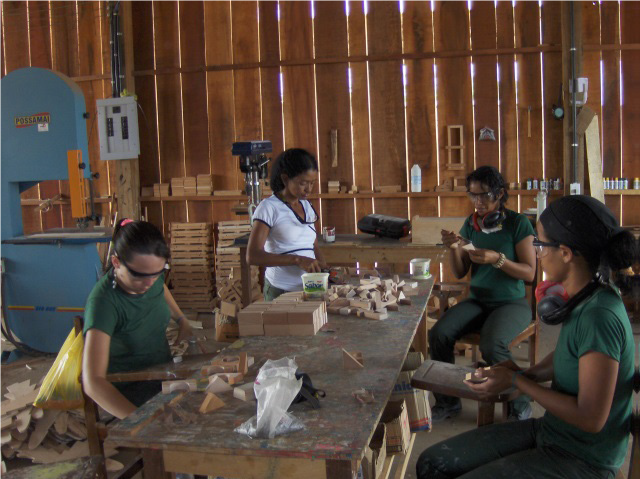
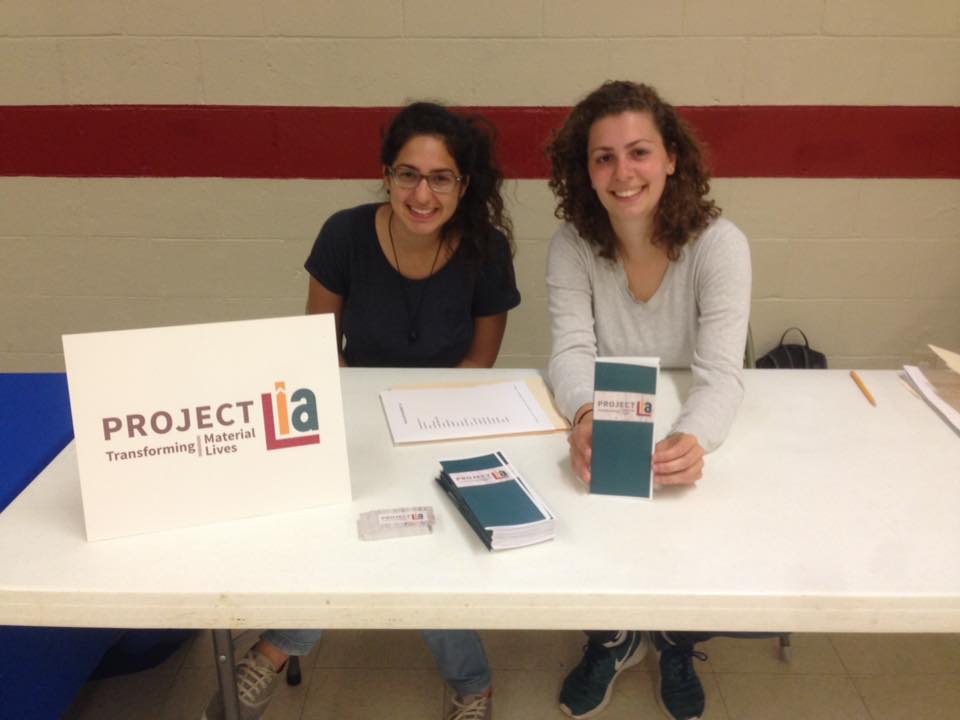 Imagine discovering that a new form can be made from waste material, that is potentially there already, whereby waste is turned into “something” nice, useful and valuable that previously did not exist. Then, think about involving vulnerable individuals into this virtuous process, like women who served time in jail and now are having difficulties reintegrating back into society, finding a job and economic self-sufficiency. This is Project Lia’s mission, a non-profit association and social enterprise established in Indianapolis, Indiana (USA). «Here, these women who are trying to reintegrate back into society, learn how to create home furnishings and furniture, in an educating workplace, which is a space for mutual understanding and respect, where waste material is re-purposed, as well as people’s lives, through relations based on reciprocity and trust,” Project Lia founder and executive director Elizabeth explains. “We also provide learning opportunities about finance, communication, corporate ethics, health and wellbeing, in addition to promoting participation in community and social life.” According to statistics published in their website, taken from Bureau of Justice data, over the last three and a half decades, the female prison population in the US has grown by over 700%. In 1980, there were 12,144 women in State or federal prisons, but their number had risen to more than 100,000 in 2015. If we also add women held in local jails, out on parole or under house arrest, they are more than one million. “When these women get out of prison,” Elizabeth Wallin adds “they need to find a steady job and a home, while they are trying to rebuild their family relations. If we add the stigma that is associated to prison and racial discrimination, then it is very difficult for them to reintegrate into society and avoid recidivism.” For this reason, Project Lia elected to focus on women. By helping women, families and communities are strengthened indirectly: important studies show that these empowered women are “community-minded” and reinvest 90% of their income into their own families. At this point, we wonder what has inspired this project. “During a trip I made to Argentina,” Elizabeth tells us. “I participated in organizing a youth festival called No Te Detengas (“Don’t hold back”). This festival gathered more than 1,000 young people and was about the cages we lock ourselves in, out of fear, social pressure or because of situations of comfort or bias. When I got back to the States, I realized that, there, women who got out of prison were still held back by a bigger and system-wide cage. To me, Project Lia is an answer to the fear, pressure, comfort and bias of a criminal justice system, and a society, which keeps “holding ex-convicts back”, even after they served their sentence, without offering any possibility for real social inclusion.” To sum up, it is an inclusive project that aims to build bridges of true social solidarity. There is one last thing we are curious about: why did you pick Lia for a name? Elizabeth explains to me that: “Lia is the name of a woman who dedicated her entire life to building bridges between people of different race, culture, religion and social background. Her full name was Lia Brunet, she was about thirty years old and was one of Chiara Lubich’s first followers, founder of the Focolare Movement.” In 1961, Lia Brunet traveled to Argentina, where she founded the Focolare little town in O’Higgins, a community in the heart of the Pampas, where Elizabeth too was able to experience the ideal of a united world. Source: United World Project
Living the Gospel: “My grace is sufficient for you”
Eating alone One of my colleagues never joined us for lunch in the staff canteen. No-one really liked him because he was always so bad tempered. One lunchtime I made an effort to approach him, and as we talked, he confided how much he was suffering over one of his sons who had become a drug addict. I listened with an open heart. Then the two of us went into the canteen together. The other staff noticed with surprise how well we were getting on, and after that they began treating him with respect. O.F. – Slovak Republic An honest gift I offered to help a colleague in my office organize the collection for a staff member who was retiring. When the time came to buy the gift, my colleague advised me that we only had to spend half the money collected, dividing the rest between the two of us! I protested that this was not right, but she insisted this was how it was always done. I looked at her in silence, conveying my disapproval. A short while later she came over to apologize to me, and from that day we become friends. F.M. – Italy A rose and a promise For a while now I have committed myself to opening up our parish hall so that our young people have somewhere to go after school. It’s not easy, and there is quite a lot of challenging behaviour. Once, while I was trying to break up a fight, I received a punch aimed at one of them. Shocked at what they’d done, they both fled. But a short while later, the one who had inadvertently hit me came back to give me a single rose and a promise to behave better in future. F.B. – Switzerland The intern During my internship in a hospital, one of the patients with diabetes had already lost a toe and part of his foot, and due to complications was about to have his whole leg amputated. I took his situation to heart, and went to talk to him about the impending operation. He was desperate, and I tried to console him. «Look – I said – I have a present for you, but it’s not a material gift». We read the Word of Life together. The next day, as they were taking him to the operating theatre, he saw me and said: «I have faith. Let’s believe together!». C. – Argentina My sister My sister and I were always arguing. Again and again, I wanted to make things better with her, but I lacked the courage and so never made the first move. The morning after a particularly hurtful argument, I met her in the kitchen and muttered a quick “Ciao”, but so quietly that she didn’t hear it. I knew I should repeat it with more conviction, but I worried it was below my dignity. Then I almost amazed myself as I turned to her and said a loud and heartfelt “Ciao!”. She was amazed too and we both smiled. D.B. – Italy
Young people want heroism
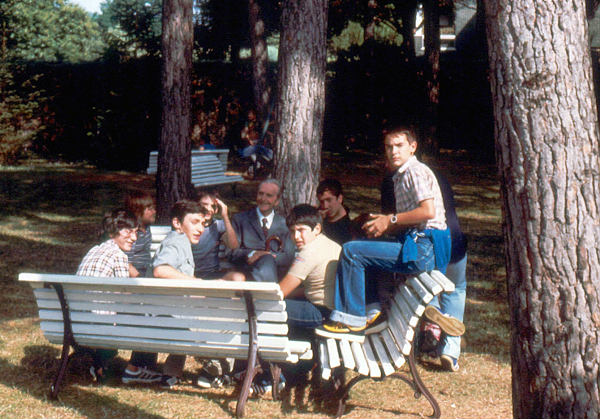
″You need to be young to follow Jesus, or else become young. He even asks that one becomes a child – every day and in every moment, freeing oneself from the sickness of spiritual senility. Because, if the spirit ages, it is held down and it can never soar. Therefore, one always needs to be reborn, begin again, become new: Jesus. It is often said that the youth of today are skeptical, perhaps cynical… if that’s true, it might be a case of posture or style beneath which lies the sense of amazement in front of a generation that was born in the midst of an inhumane waste of energy in the production of death. It is materialism that scares, deludes and arrests today’s youth who, by nature, react to a standard of living made up only of economic calculations and sensorial entertainment, of a singular battle for the stomach … This is the divine lesson behind this human crisis on which we pour so much makeup, tears and Coca-Cola: you can’t live without an absolute. Jesus walks by and the young people see him if the sight of him is not impeded by surgance of proud human beings, that is, people who feel that they are more than others because of their money or political power… Young people can immediately pick out the pure and divine countenance of Jesus, they leave father and mother, fiance and wealth, flattery and comfort – first on the path of the aposotolate and then Calvary. They want Christ and Christ Crucified. Christ in his entirety, all in all: only ideal. And they want his spirit, which is love: this divine blood that conquers death; which is intelligence and wisdom and bond of unity.″ Igino Giordani
Welcoming is the first step
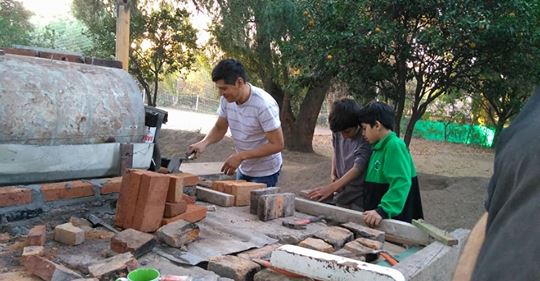
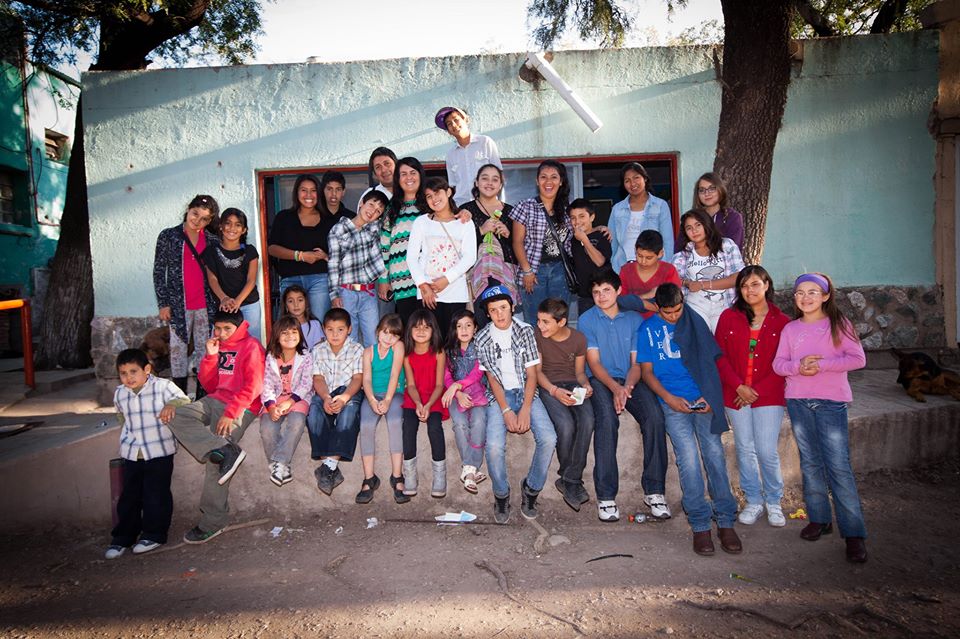 In the foothills of two small mountains in the heart of Argentina, La Falda is a small provincial town near Cordoba, located on a gentle slope that is part of a well-known tourist circuit in the Punilla Valley. Up until four years ago, this is where the Bongiovanni family – Esteban, Victoria and their two sons – used to live. Then unexpectedly things changed, and they moved to San Marcos Sierras, just to the north. It was their generous way to respond to a request to live at Sierra Dorada Home, a refuge for minors who already carry too many serious problems on their young backs. Many of them have stories of being mistreated, violence, being abandoned or malnourishment. At the moment the refuge hosts 28 children. “Before we arrived, we feared the worst about children’s homes. Like the ones you see in the movies, where the kids and infants are beaten or mistreated. Instead, we found it quite different, more like a large family. We make an effort to improve their situations and remove all the violence they have inside and the conditions they’ve lived through, so that they understand that the normal thing at their age is to live in peace, play and study.” Founded close to 20 years ago by Julio and Patricia Lanciar, and supported by a nonprofit foundation that operates with a true Christian spirit in the province of Cordoba, the goal of the home is to improve the children’s living conditions and help them to reintegrate into their families or foster care. The Lanciars had nothing when they started, other than the hope to be able to improve many children’s situations. Little by little, thanks to the support of many, things grew. Today the Sierra Dorada Foundation manages four “home labs.” There is San Marcos Sierras (where Victoria and Esteban are), Embalse de Río Tercero, Rumipal and Salsipuedes, and a number of programs for host families, scholarships for volunteers, etc. Seated at table in the dining hall, Victoria and Esteban explain that “many people show great solidarity, especially when they build a rapport with the children. There are young people from overseas who undertake internships in social work, as well as Argentinian university students. “Our work begins when we take people in. From the moment they arrive, we try to include them, to give them love, just as a mother or father would. With the help of a staff of psychologists, we try to give their lives a certain order. Starting with using a toothbrush, to bathing every day, putting on clean clothes and teaching them to take responsibility for their school homework.” Smiling, Victoria chooses one of the dozens of stories she could tell. “A few weeks ago, we all went to a hotel where we had been invited for the weekend. I hadn’t made my bed, thinking that we were in a hotel. But then I realized that the children had left their rooms completely in order, and even the bathrooms were impeccable. So I ran back to my room to make my bed, because I realized that I was the only one who hadn’t. “We try to live well our calling to serve. Yet it is certainly not always necessary for everyone to leave everything, their city, their home and go and live in a children’s refuge. Anyone can do this anywhere with whoever you find next to you. It can begin with the smallest things, such as giving an elderly person your seat on a bus, or driving without road rage. It’s the small things that start and spread good deeds.” Esteban adds: “We understood that God would never abandon us if we do things well, without expecting anything in return, with humility and trust. “And the truth is that by doing so… it works.” Source: United World Project