19 Jul 2018 | Focolare Worldwide
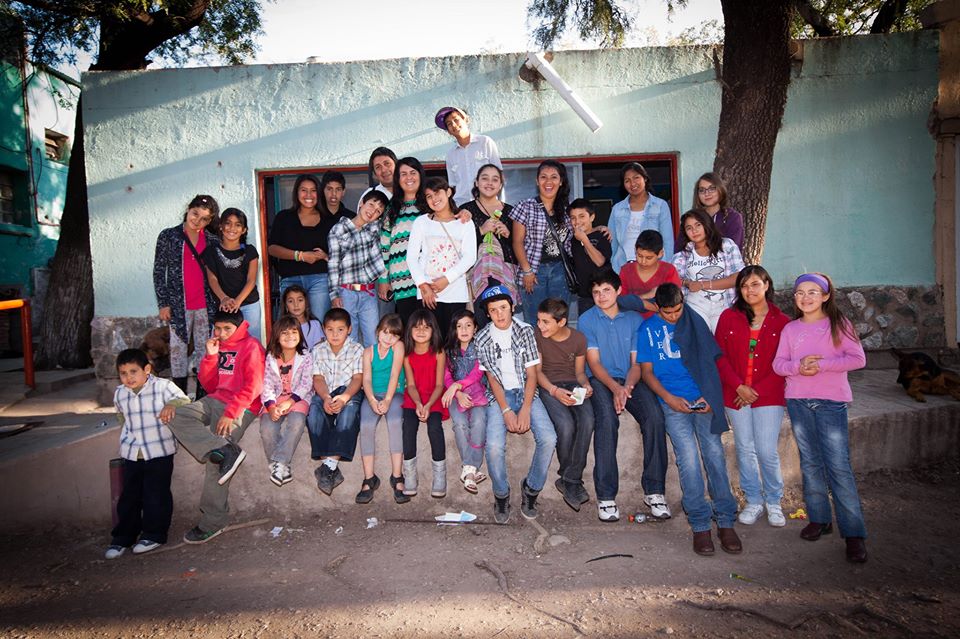 In the foothills of two small mountains in the heart of Argentina, La Falda is a small provincial town near Cordoba, located on a gentle slope that is part of a well-known tourist circuit in the Punilla Valley. Up until four years ago, this is where the Bongiovanni family – Esteban, Victoria and their two sons – used to live. Then unexpectedly things changed, and they moved to San Marcos Sierras, just to the north. It was their generous way to respond to a request to live at Sierra Dorada Home, a refuge for minors who already carry too many serious problems on their young backs. Many of them have stories of being mistreated, violence, being abandoned or malnourishment. At the moment the refuge hosts 28 children. “Before we arrived, we feared the worst about children’s homes. Like the ones you see in the movies, where the kids and infants are beaten or mistreated. Instead, we found it quite different, more like a large family. We make an effort to improve their situations and remove all the violence they have inside and the conditions they’ve lived through, so that they understand that the normal thing at their age is to live in peace, play and study.” Founded close to 20 years ago by Julio and Patricia Lanciar, and supported by a nonprofit foundation that operates with a true Christian spirit in the province of Cordoba, the goal of the home is to improve the children’s living conditions and help them to reintegrate into their families or foster care. The Lanciars had nothing when they started, other than the hope to be able to improve many children’s situations. Little by little, thanks to the support of many, things grew. Today the Sierra Dorada Foundation manages four “home labs.” There is San Marcos Sierras (where Victoria and Esteban are), Embalse de Río Tercero, Rumipal and Salsipuedes, and a number of programs for host families, scholarships for volunteers, etc. Seated at table in the dining hall, Victoria and Esteban explain that “many people show great solidarity, especially when they build a rapport with the children. There are young people from overseas who undertake internships in social work, as well as Argentinian university students. “Our work begins when we take people in. From the moment they arrive, we try to include them, to give them love, just as a mother or father would. With the help of a staff of psychologists, we try to give their lives a certain order. Starting with using a toothbrush, to bathing every day, putting on clean clothes and teaching them to take responsibility for their school homework.” Smiling, Victoria chooses one of the dozens of stories she could tell. “A few weeks ago, we all went to a hotel where we had been invited for the weekend. I hadn’t made my bed, thinking that we were in a hotel. But then I realized that the children had left their rooms completely in order, and even the bathrooms were impeccable. So I ran back to my room to make my bed, because I realized that I was the only one who hadn’t. “We try to live well our calling to serve. Yet it is certainly not always necessary for everyone to leave everything, their city, their home and go and live in a children’s refuge. Anyone can do this anywhere with whoever you find next to you. It can begin with the smallest things, such as giving an elderly person your seat on a bus, or driving without road rage. It’s the small things that start and spread good deeds.” Esteban adds: “We understood that God would never abandon us if we do things well, without expecting anything in return, with humility and trust. “And the truth is that by doing so… it works.” Source: United World Project
18 Jul 2018 | Focolare Worldwide
 The organising committee of the “Italian Week” regarded Chiara Lubich as one of the most admired and respected women in Italy and, therefore, someone who should be remembered. The ten day Italian “carnival” that took place in the Canadian capital of Ottawa between June 6 – 25 focused on a number of famous people from Italy such as Giacomo Puccini, Sophia Loren, Vittoria de Sica and Alda Merini: it was a great surprise that the committee decided to include Chiara Lubich such names. When the Focolare community hear about this proposal, they asked themselves how best to present the charism of unity in a multicultural and multifaith society that is constantly in search of ways to peacefully respect diversity. The community also reflected upon the challenge of relating to the aboriginal people – a challenge that seems to be on going, marked by contradiction and with social consequences.
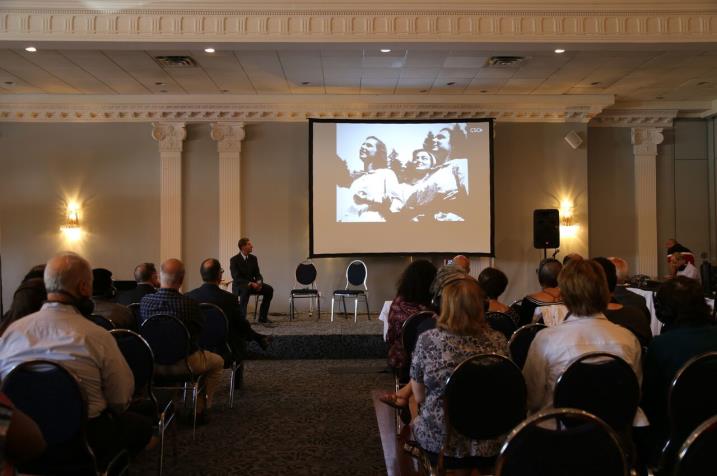
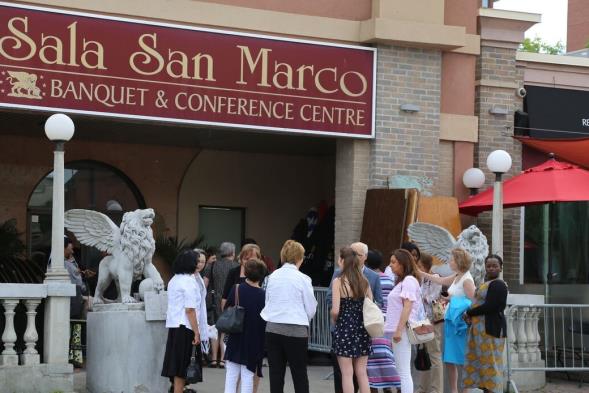
 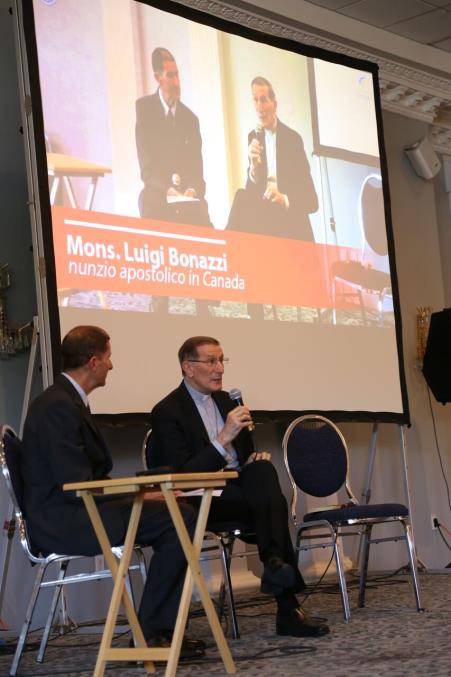 Fernando and Lucie explain, “While we were preparing, we heard that a group of Muslims from Montreal had recently participated in a Congress in Castelgandolfo, organised by the movement. These Muslims are students of Doctor Mohammad Shomali. They were very happy to work together with us and offered to share their experiences.” They continue, “On June 16, the San Marco hall in the centre of Little Italy, Ottawa, began to fill with people of many different origins – from Africa, Asia, the Middle East and, obviously, from Italy and Canada. The Apostolic Nuncio, Luigi Bonazzi, was present as was Minister Fabrizio Nava, representing the Italian ambassador.” A range of experiences illustrated the relevance of the Chiara Lubich’s charism to today’s society. The first to speak was Jacques, a focolarino in Toronto and a “pioneer” in the spreading of unity in Canada. Then there was Anne, the manager of a tour company intriguingly called “Spiritours” who spoke about the economy of communion as a means of putting the gospel into practice at work. She was followed by Maria, a Brazilian focolarina living in Montreal, who recounted an experience of meeting with aboriginal people from Wati in the Gran Nord. Last year, responding to a request by the local Church, she and four other people spent a month with these people. Then there was Edwige who comes from Togo but is now living in Rimouski, in the province of Quebec. She was one of the first students at the Sophia University Institute in Loppiano and now, having completed her course, puts “the person at the centre” of the work she is doing in another university. She recently received a commendation that is normally given only to professors. Then Fatima and Moustafa shared their experience of dialogue between Muslims and Christians and of meeting Chiara’s charism. Fatima said, “One of the most important things I have learned is that unity is a gift from God and that harmony in diversity is an expression of unity.” Lastly, Monsignor Luigi Bonazzi, the nuncio in Canada, spoke. He confided that he had met the foundress of the Focolare movement on several occasions and that, many years ago, in 1975, he had made a pact with her to always “remain up” no matter what difficulties he faced. He said that this pact had sustained him during many years of intense diplomatic activity. The day concluded with the proposal first made by Chiara Lubich in 2000 in Washington, namely, to live the “art of loving.” Through this event – widely publicised by social media – the seed of the spirituality of unity has been scattered in a distant land and promises to bear new fruits.
17 Jul 2018 | Non categorizzato
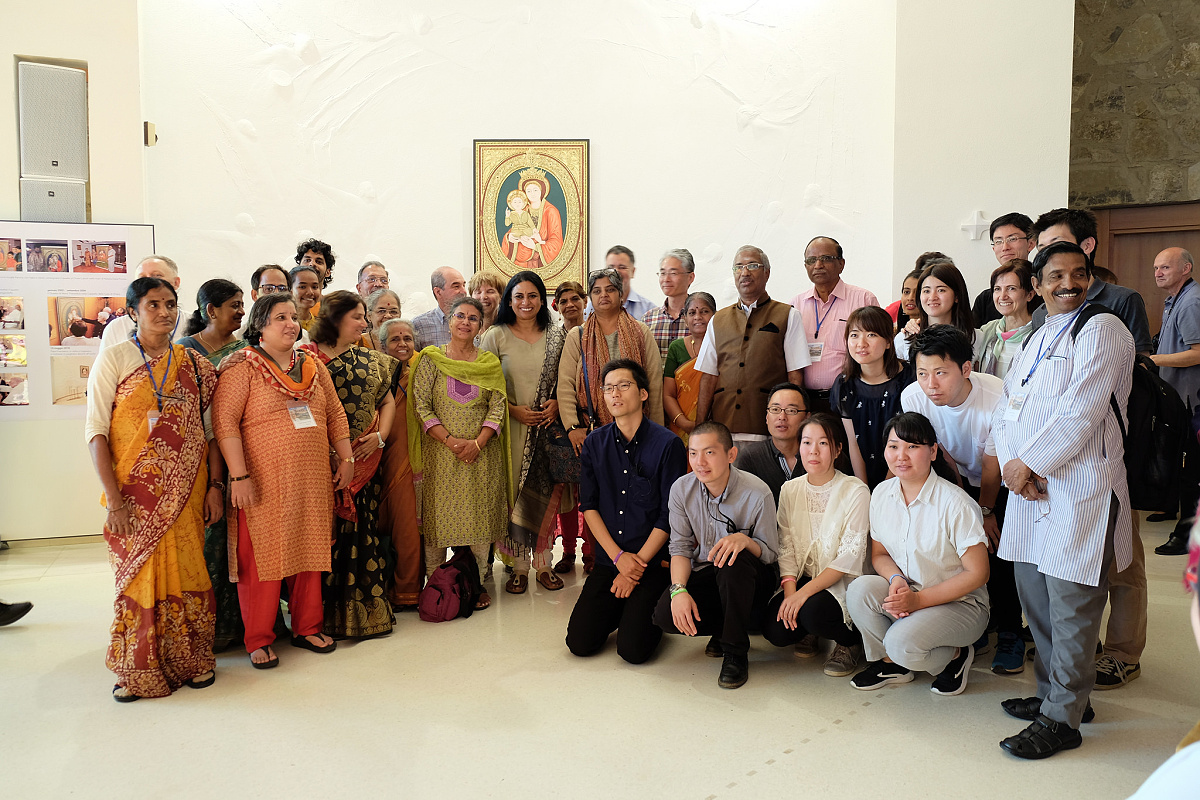
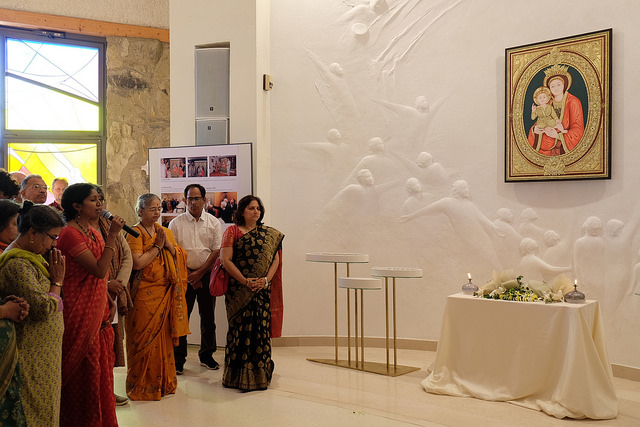 “Our Hindu-Christian delegation had two motives for visiting Loppiano. They hoped to explore and deepen their understanding of the very original experience that the Sophia Institute offers. They also wanted to commemorate the fifteenth anniversary of their presentation to the Movement of a painting of the Virgin Mary. The painting is the work of a Hindu artist and is now adorning one of the walls of the Theotokos Church in the little town. The dialogue with the staff and students at Sophia was deep and enriching. Indian academics have a considerable interest in inter disciplinary formation in dialogue. The exchange and thoughtful comparisons made by the participants increased understanding among everyone present and it became obvious that Sophia Institute is similar to some of the academic centres that inspired Mahatma Gandhi. We hope that we will soon be able to introduce courses on this great apostle of dialogue at the university in Loppiano.
  The seminar on Theology and the Practice of Dialogue was very interesting. There were not only the members of the delegation present but also many students and adults from the little town. Even though the subject is very topical, it was completely new to some people. In the evening, the Hindus came in procession to the Theotokos bringing flowers and garlands for the image of Mary. Gen Verde sang in the background. The reverence and solemnity created a deeply spiritual atmosphere. They spontaneously prayed in Sanskrit, Tamil and English and then there was the sacred moment of silence. Silence is an essential part of being oriental: in contrast, how uncomfortable it is for people from the west! It is as if people are not used to it or they are afraid to think too deeply about themselves. When cultures and religions meet with men and women of true faith, there is no need for compromise, syncretism or anomaly of any kind. Each gesture, each word, each moment of silence speaks of the Absolute. Everyone listens to it on their own wave length but the vibrations – as the Indians say – are always the same and penetrate the depths of the heart.”
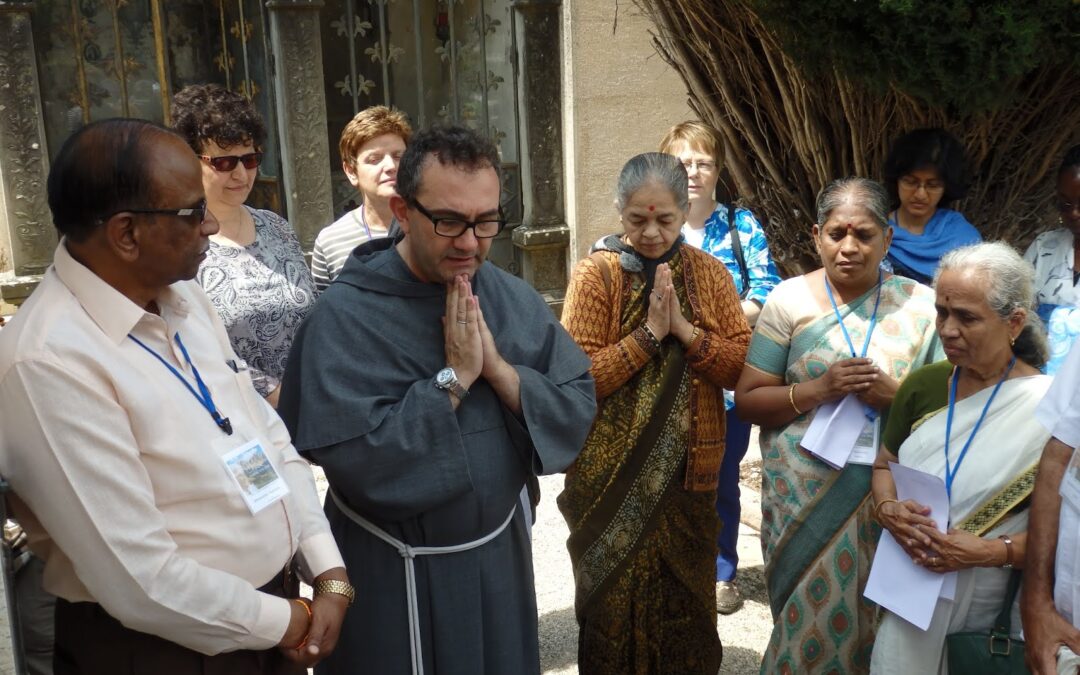
 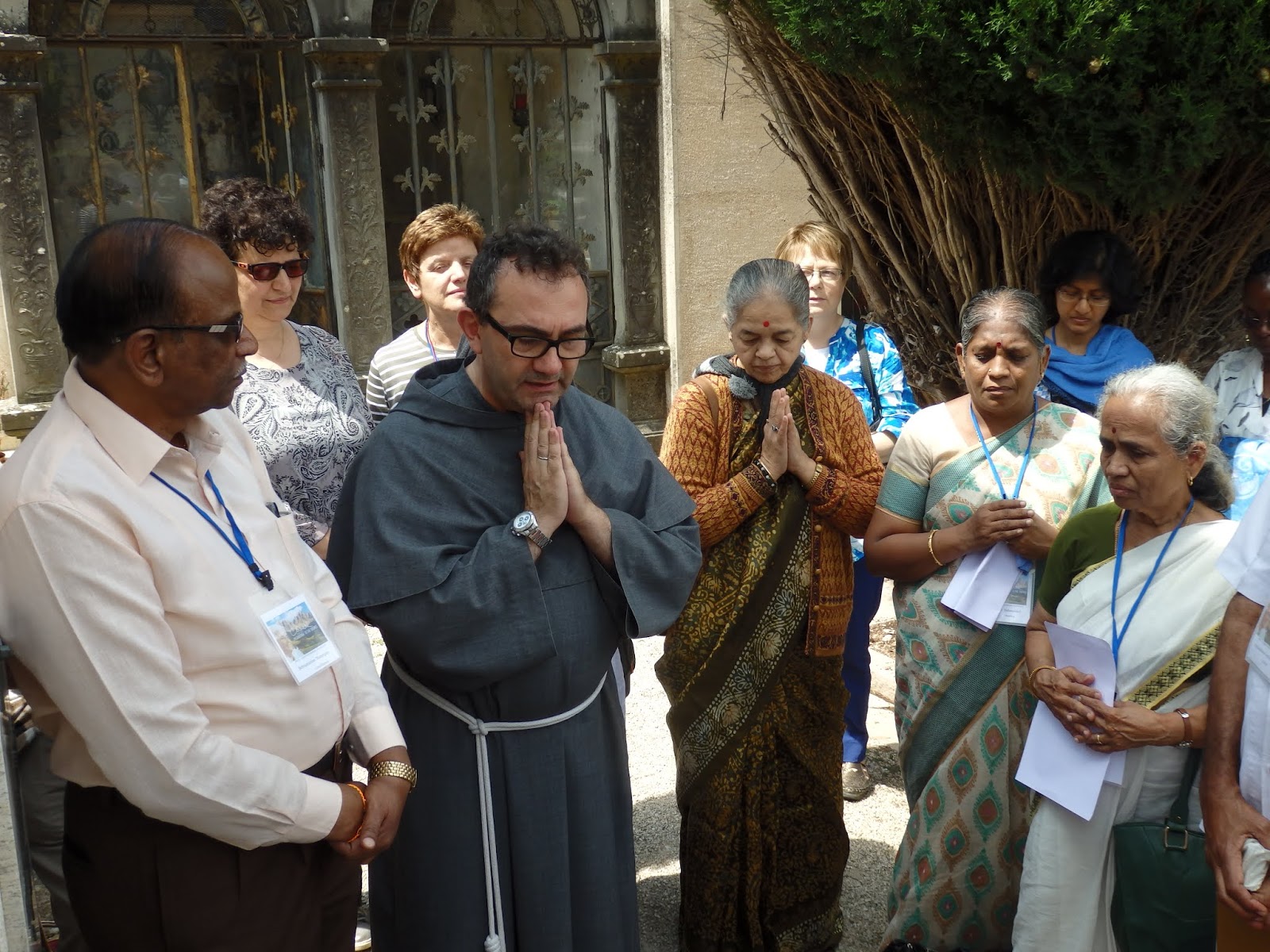 The last stage was Assisi. “We arrived at about 10.30 am. We walked up to the St. Francis Basilica and then on to the cemetery. I could not help but think back to the autumn of 1997 when the town has been hit by an earthquake and many people had been seriously injured. We had climbed to the top of the same hill with Vinu and Ashok, Dr. Aram’s daughter and son. Dr. Aram, a Gandhian teacher, had died some months before and had wanted some of his ashes to be buried in the land of St. Francis who he had greatly admired. Every evening, he used to recite his prayer, ‘Make me an instrument of your peace.’ The pilgrimage then continued to the crypt of the Basilica where we joined the monks as they recited the prayer of the ‘sixth hour’ in front of St. Francis’ tomb. There was a great sense of reflection, fraternity and spirituality. Our friends listened in silence as we prayed: it was a sign that they respected and valued our prayer as much as their own. The story of St. Francis, a man of peace and dialogue, continues to attract people of all faiths and from all over the world. Assisi is the perfect place for dialogue.” Source: blog by Roberto Catalano
16 Jul 2018 | Focolare Worldwide
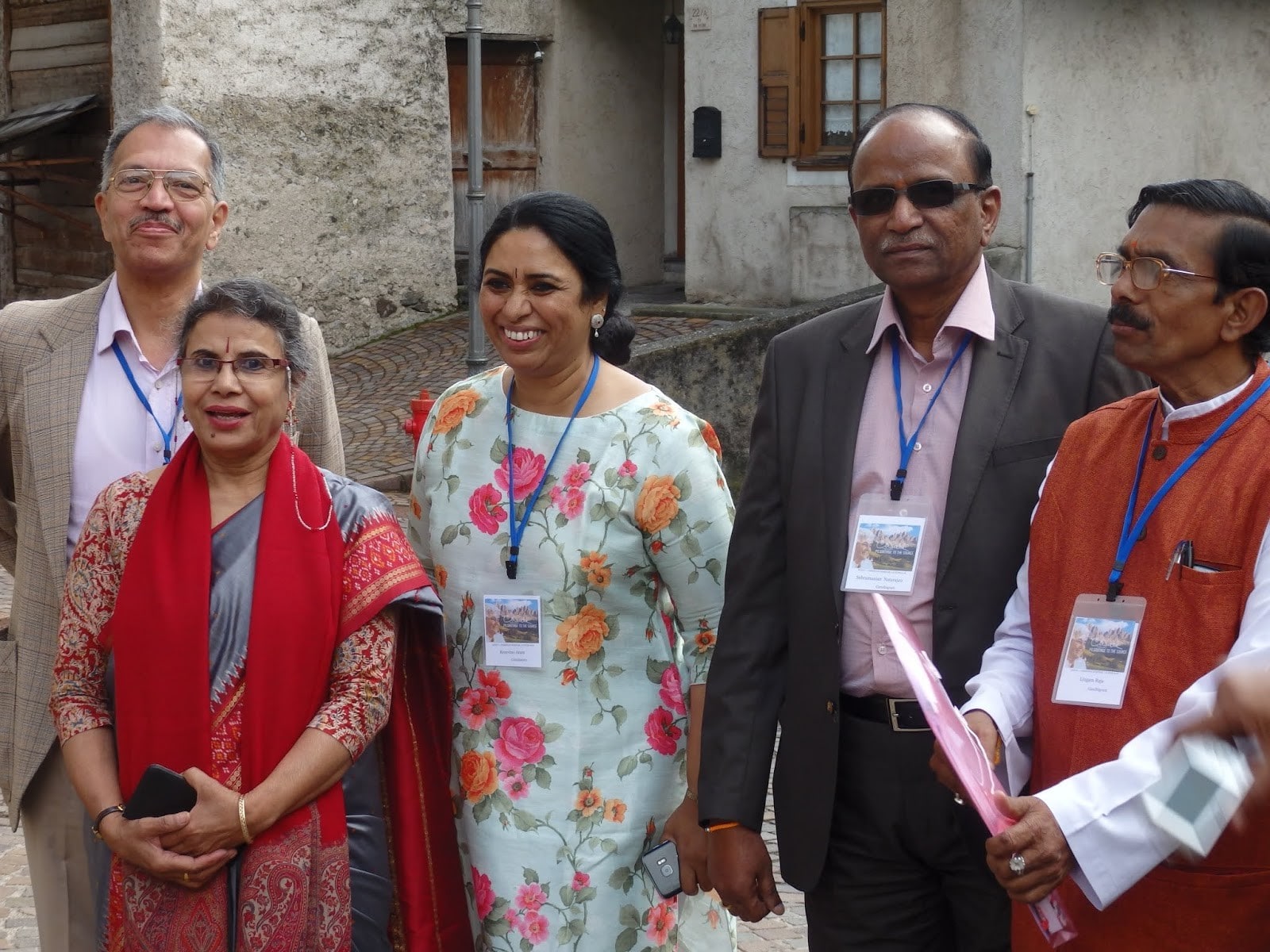 “It’s been three years since I’ve been to Tonadico, in the Primiero Valley (Northern Italy), and here we are again. With us are some Hindu friends, who have come from India for a pilgrimage to the sources of the charism of unity. These are longtime friends, largely from the academic world, with whom we’ve shared moments of study and life for years. The most recent was in January, when I went to Mumbai. It’s a joy to meet again. They are fascinated by Chiara Lubich, and they want to know her mystical experience deeply. And is there any better place than Tonadico, where Chiara had an extraordinary light-filled experience in 1949? Our meeting begins with profound sharing, in a great atmosphere of family. Mysticism unites the great religions at their core. The way that each religion follows, with the means it has available, all lead to the heart of the Mystery, which is the same for all of them. The paths and tools are diverse, but the point of arrival is the same. For this reason, we all converge on mysticism and find ourselves united there. Although the language of the faiths and ways of expressing ourselves are quite different, the symbols are shared: sun, flame, gold, nothingness, everything… through these we understand each other. We know that Jesus is “the Way,” yet he, in ways that only he knows, can be a “wayfarer” with us all and lead everyone to the Father. And then it was time to wish each other a good trip!” Fr. Fabio Ciardi is professor at the “Claretianum” Institute of Theology of the Consecrated Life in Rome and director of the Missionary Oblates of Mary Immaculate Center of Study. He currently directs the Abba School, an interdisciplinary study center that Chiara Lubich founded in 1990 with the contribution of Bishop Klaus Hemmerle (April 3, 1929–January 23, 1994), the renowned theologian and philosopher. Fr. Ciardi aims to go into depth in the charism of unity from different points of view. Source: Blog P.Ciardi
Video summary
15 Jul 2018 | Non categorizzato
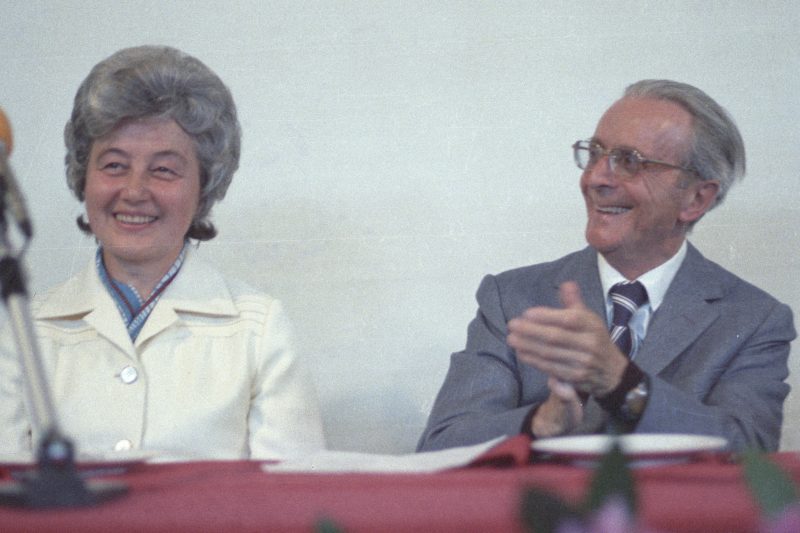 The beginning of a period of major illuminations (of Chiara Lubich) can be said to have begun on July 16, 1949. Igino Giordani had arrived on that day in Tonadico, Italy. He was staying at the Orsinger Hotel and was to hold a conference in the meeting hall of the Capuchins. “Enamoured with Saint Catherine of Siena,” Giordani had always dreamed of finding a consecrated virgin like her whom he could follow. Certain that he had found that person in Chiara, he proposed making a vow of obedience to her, thinking that in this way he would be obeying God. He went on to say that then, the two of them would be able to become saints as a duo like Francis de Sales and Jane Frances de Chantal. Chiara didn’t understand. The Movement didn’t exist and they didn’t talk about their vows. She felt that she had been born for Jesus’s prayer to the Father “May they all may be one”. She was tempted to let go of his idea, but she had the feeling that his words were rooted in a grace that shouldn’t be lost. So, she said to him: “I am nothing. In fact, I want to live like Jesus Forsaken who made himself nothing. You’re also nothing because you live the same way. Well, then, tomorrow we’ll go to church and I’ll say to Jesus Eucharist who will come into my heart as into an empty chalice: ‘Upon my nothingness, you establish unity with Jesus Eucharist in the heart of Foco. And do it in such a way, Jesus, that what comes out is the bond that you have in mind between us.’ And you, Foco, do the same.” That is what they did. Giordani headed for the hall where he had to give his conference, as Chiara felt driven to return to the church. In front of the tabernacle, she was about to pray to Jesus, but, in that very moment, she felt like she couldn’t. She felt that she was totally identified with the Son. She heard herself pronounce the words: “Abba-Father.” She realized that her religious life would have to be different from the way she had lived it up until that moment: no longer turned towards Jesus, but beside Him, her Brother, turned towards the Father. Armando Torno, “PortarTi il mondo fra le braccia. Vita di Chiara Lubich”, Città Nuova, Rome, 2011.
