![The same longing for happiness]()
18 Jun 2018 | Non categorizzato
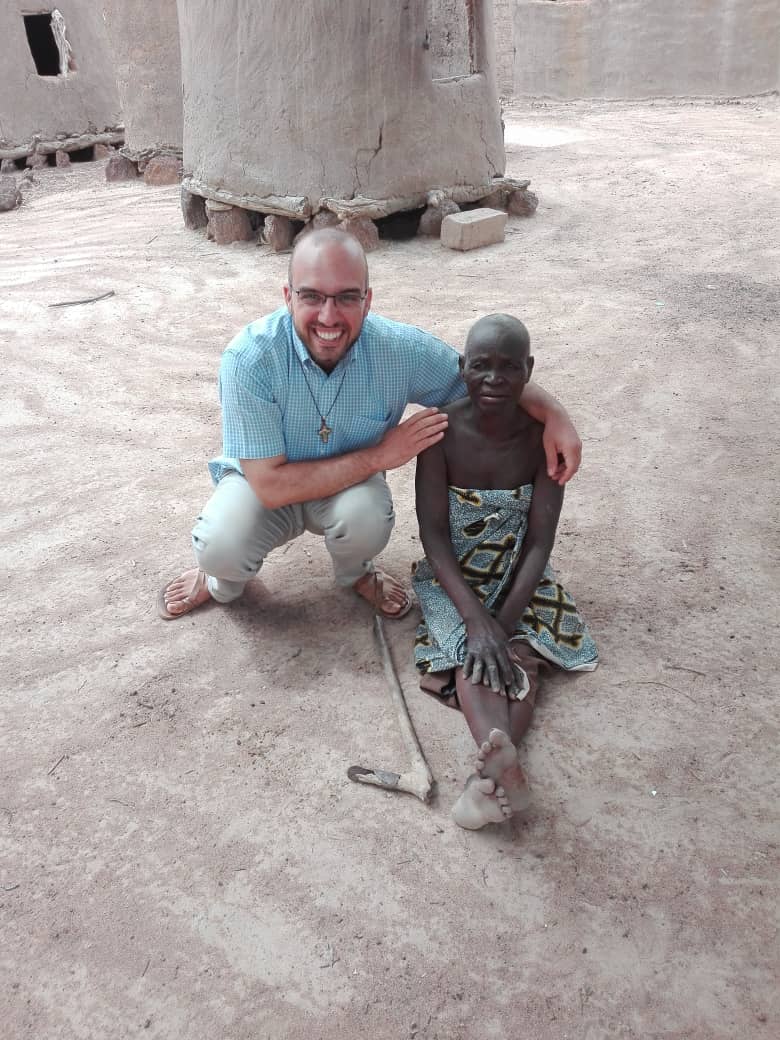 As he often does, a few days ago Fr. Domenico took advantage of a few spare moments and wrote, “I don’t feel I left on my own behalf or even for the Missionary Community of Villaregia to which I belong. I feel I am here on behalf of the whole Church – on behalf of people who are not able to leave their own country for a long period of time. That is why I am writing to you so that we can be ‘missionaries together.’” He wrote a long letter that was full of detail. He said that he was fascinated by a place that was “different from what we know but where men and women have the same desires, fears, worries and hopes as everyone else.” He continued by saying, “If you change the context, you change the problems and the impact they have on life. However, every human being, irrespective of whether they live in Europe or in Africa, longs for the same thing: they want to find themselves and be happy.” He explained what had happened the previous week. At 7 am two girls had knocked on the door. One was eighteen and the other twenty years of age and they both looked really sad. They had become friends a year ago when they were receiving instruction before baptism. The older girl was three months pregnant. The father of the child had disappeared as soon as he had heard the girl was expecting a baby. In that part of the world, to be pregnant without the recognition and support of the father is seen as a serious situation. The woman is labelled as being “no good”, she brings shame to her town, she will lose her job and be rejected by everyone, even her family. In fact, the friend’s sister with whom the pregnant girl had stayed, had said, “Now either you convert to our religion (a widespread sect) or you have to leave.” The two girls had run away together, desperately looking for somewhere to stay. Crying, the pregnant girl said, “I’ve been baptised – I know Jesus. I don’t want to betray him now. What am I going to do?” She didn’t even consider the possibility of abortion or of converting to another faith just to return to her life as it had been before. At just twenty years of age, true to herself as a woman and mother, she is capable of taking responsibility for her actions even though she has no money, home, family or good reputation. Fr. Domenico said that this made him think about his own faithfulness. He said, “Obviously, with the support of the other missionary priests, I tried to help her. At the moment, she is staying with a family from the parish who have given her a room in their poor home. Other people are in contact with her own family and are trying to persuade them to welcome her back. We are covering the costs of all medical checks which must be paid by the individual. Expenses are high for someone who has nothing.”
 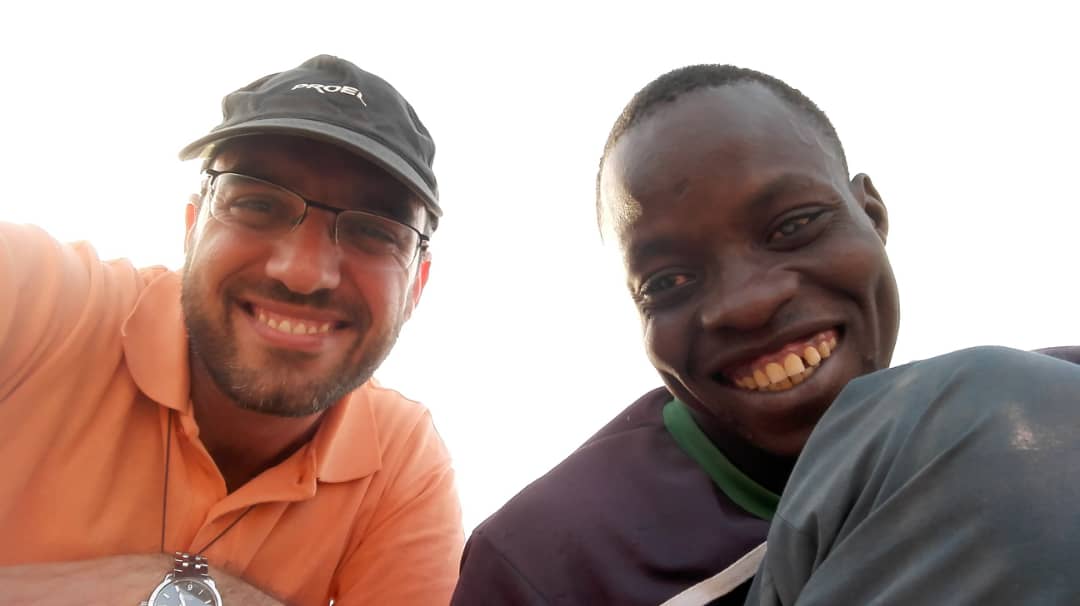 Domenico continues “I have begun to be good friends with Adam too. He is 23 years old. He had lost both his parents by the time he was 7 and he was brought up by a paternal uncle. He managed to continues with his studies as far as high school thanks to funding from a French NGO that operated an ‘adoption at a distance’ scheme. However, at a certain point, he had to stop because the money he had received was stolen. Thus, his hopes of studying ended. Now he lives on his own in a little house made of mud and he often doesn’t have enough to eat. His dream is to open a little office with a computer and sell stationery. He is always happy and never neglects his commitments in the parish. One Sunday afternoon, he was in the house with some other young people. When there was a pause in the conversation, he turned to me and said, ‘Why are you here? What makes a European missionary with lots of things to do in the parish – who knows people who have money, cars and beautiful homes – stay here with us? The only thing we have to offer you is a plate of corn and beans. What’s more, it is Sunday……’ Everyone was waiting for the answer. ‘You are important to God and important to me: that’s why I am here.’ One of them said, ‘OK then. If we are important, then we must celebrate,’ and he went to buy some beer.”
  “The really hot season is over now. Our house was like an oven. The sheets were roasting, the water in the taps was 50 degrees centigrade. Now we are preparing for the rainy season. One young man told me that last year the rain was so heavy that his mud hut was nearly washed away. His wife had their third child a few weeks ago. He doesn’t earn very much, he has three children and a house that is half ruined. There was nothing very positive about his situation. However, when he saw me, he shouted out, ‘You have come to see us – it’s a sign that God is with us!’ That is the beauty of the people in Burkina Faso. It’s not by chance that the name of their country means ’the land of upright people.’” http://www.cmv.it/it
15 Jun 2018 | Non categorizzato
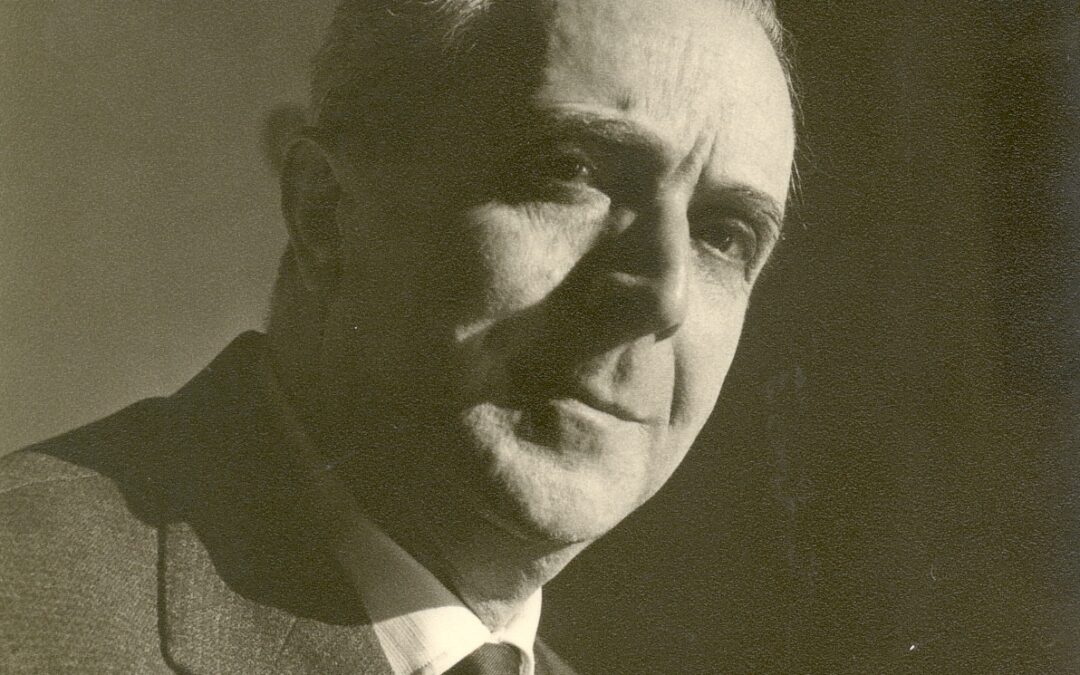
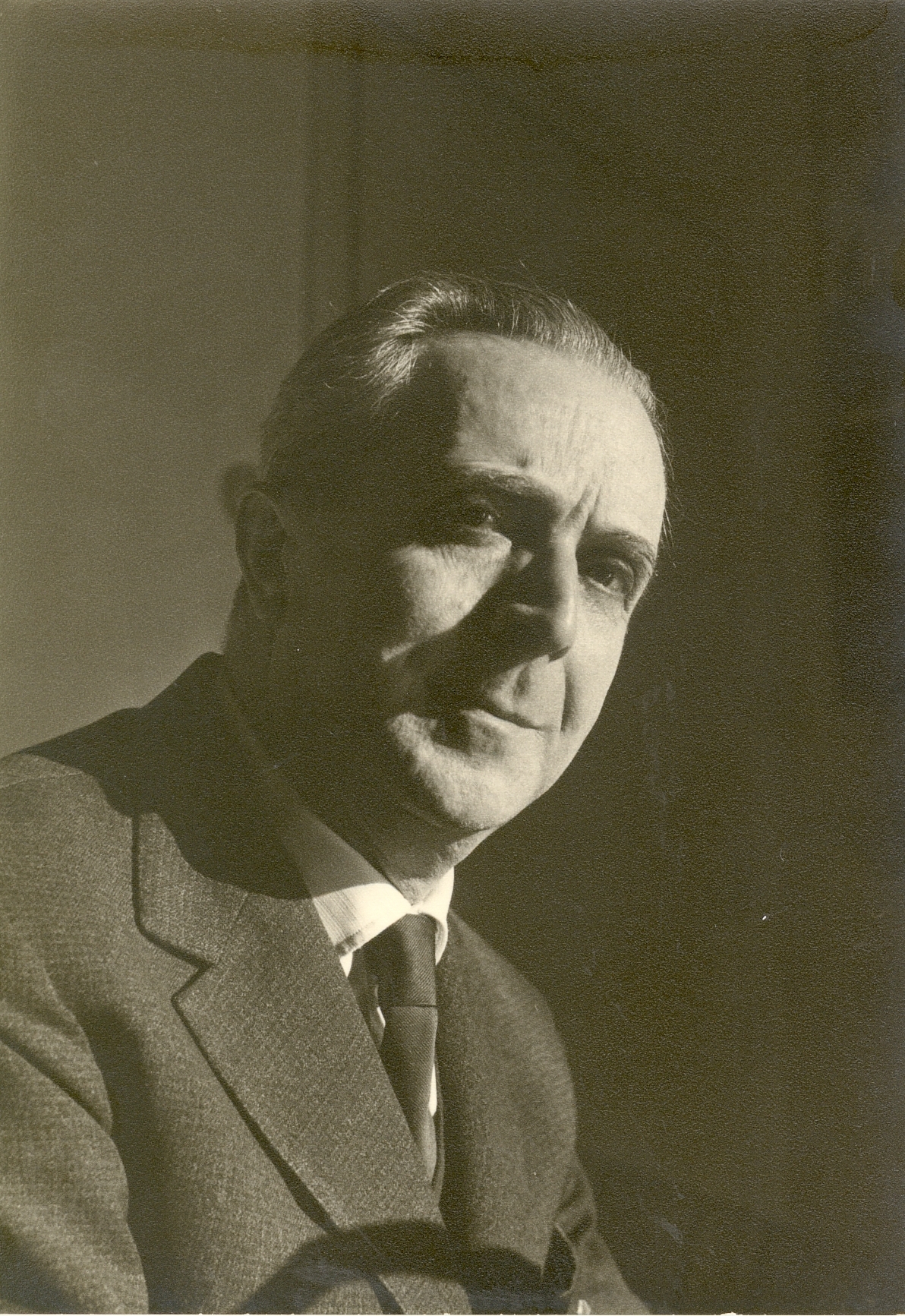 We won’t collect any laurels for what we are doing but we will have a clear conscience. I can’t understand why entering into politics and working in the realms of public life means that a person automatically stops being a Christian. When someone is part of that world, they separate faith from what they do: they reduce doing apostolic works to a denial or rejection of something: today it is anti-communism, in the past it was anti-liberalism or a rejection of Luther…….Denial is valid but once stated, you must take action. Affirmation is even more important. The most essential affirmation is this: whenever I meet another person, whether it be in church, along the road or in parliament, I am meeting a brother or sister, a child of God, redeemed by his precious blood. I must love that person irrespective of class, how they are dressed or what attitude they have. I think that reducing things to denial or rejection is settling upon the absurd idea that there is a right to hate, to avoid positive social action and to impoverish the gospel. Believing that Christianity can be dressed up in such a deformed way, making hatred lawful, is the same as believing that Christianity is a lubricant for human passions of greed and murder. (Igino Giordani. From a letter to Fr. Primo Mazzolari, 2 February 1951.) Serving people is serving God. To serve any citizen – worker, house wife, student or nation – is working for Christ. He told us, “Whatever you do to the least of these my brothers, you do to me.” (Mt. 25:40) If you look at politics in this way, it loses all sense of hostility, hatred and exclusivism. Amidst the variety of opinions that express a richness of ideas, a Christian sees a brother or sister to love even if they belong to a different political party. Even if they reject the opinions, the Christian does not reject the other soul, born of the same Heavenly Father and true heir of his love. (Igino Giordani, The Difficulty of a Christian Today, Citta Nuova, Rome, 1976, p. 129) Catholics in politics should be advocates of the creation of a society inspired by the gospel. This demands an interior poverty, a disregard for wealth and self-importance and a morality that in politics is like oxygen to the lungs. It needs a commitment to power as service, the breaking up of privilege and social classes and to revolution … (Igino Giordani, “The Way” June 1950, p.1) By the Igino Giordani Centre
14 Jun 2018 | Focolare Worldwide
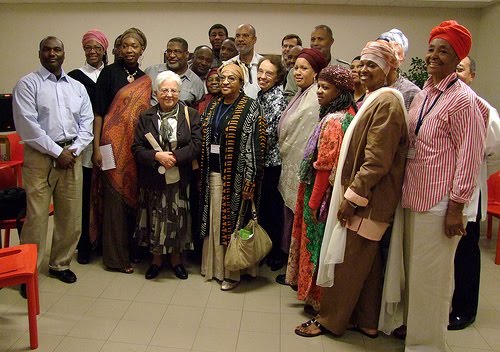
 He has been a civil court judge of the Marion Court in Indianapolis since 1999, and in 2007 he was declared Judge of the Year because of his work among prisoners and drug defendants. David Shaheed is African-American and Muslim. He he shares his passion for law and interreligious dialogue. Since 2019 he has presided over the Interfaith Alliance of Indianapolis. His resume can leave us awestruck, but Dr Shaheed immediately puts us at ease with his simplicity and freedom as he talks about his faith and of the relationship that linked him and continues to link him to Chiara Lubich. She gave me the courage to step beyond our faiths, to help the other and to understand them. But this didn’t remain an abstract concept, because Chiara gave me the means by which to live and show it.” The judge drew inspiration from the experience of destruction of the Second World War that Chiara Lubich went through, to come up with a reform of his court. “The world was under the pressure of this enormous war. And yet this young woman from Trent overcame her personal fears in order to seek out the sufferings of others: Her witness gave me the courage to establish in my workplace on the bench a special tribunal for people with psychological or drug addiction problems.” Breaking a judicial tradition that entrusted the ordinary tribunals with the treatment of defendants with psychic or alcohol and drug dependence, with consequent convictions that do not provide for the rehabilitation of the person, Dr Shaheed asked his colleagues to take note of the impact the prison or probation had on the life of the condemned. In fact many of these returned to court or prison for new crimes without receiving adequate treatment for themselves or for their handicaps. After an initial scepticism and embarrassment, the challenge of “serving the least” has become the common goal of the other judges of the local court which, overcoming the tradition of Common Law that assigns to the courts of appeal expertise on the matter, last year launched a special section for “special” people. In this way the defendants are assisted in accessing cures and specialized advice both in prison and in court, so that the entire judicial system are oriented to the needs of the person and not to conviction and punishment for petty crimes. “I grew up in America where there has been a strong history of racism until now, but meeting the Focolare has helped me to realize that not all the whites and their European ancestors held the same hostility toward Afro-Americans. So it was a liberating experience for me, because I was living under the influence of this mentality and for the first time I had brothers of European descent. I learned from the Focolare that Jesus’s life consisted in showing mercy and compassion to others. I learned to live that way as a judge and to experience compassion. For me, being part of the Focolare community means giving the best proof of how to live the attributes of God as written in the Koran; that is, love, mercy and compassion.” Looking at the Movement’s mission ten years on from the death of Chiara Lubich, the judge from Indiana wishes that “the dialogue goes forward, because the Focolare’s model is one of the best models for encounter among people of different religions, ethnic groups or nationalities. In an atmosphere of strong nationalism such as we are living, where one’s own interests take priority over everything else, our experience is a counter-narrative because it shows that the word of God leads people to encounter one another and not to isolate themselves from each another – and this is an example not only for the faith and the religion: but it is an example of life that can serve our country.” Source: Città Nuova no.6., June 6, 2018

14 Jun 2018 | Non categorizzato
NetOne is an international network of people involved in communication and media. “Media for a united world” is his mission.
It is an international network of professionals, students and media workers, born in Italy in June 2000as a result of the Congress ‘Communication and unity’ promoted by the Focolare Movement.
