12 Mar 2018 | Non categorizzato
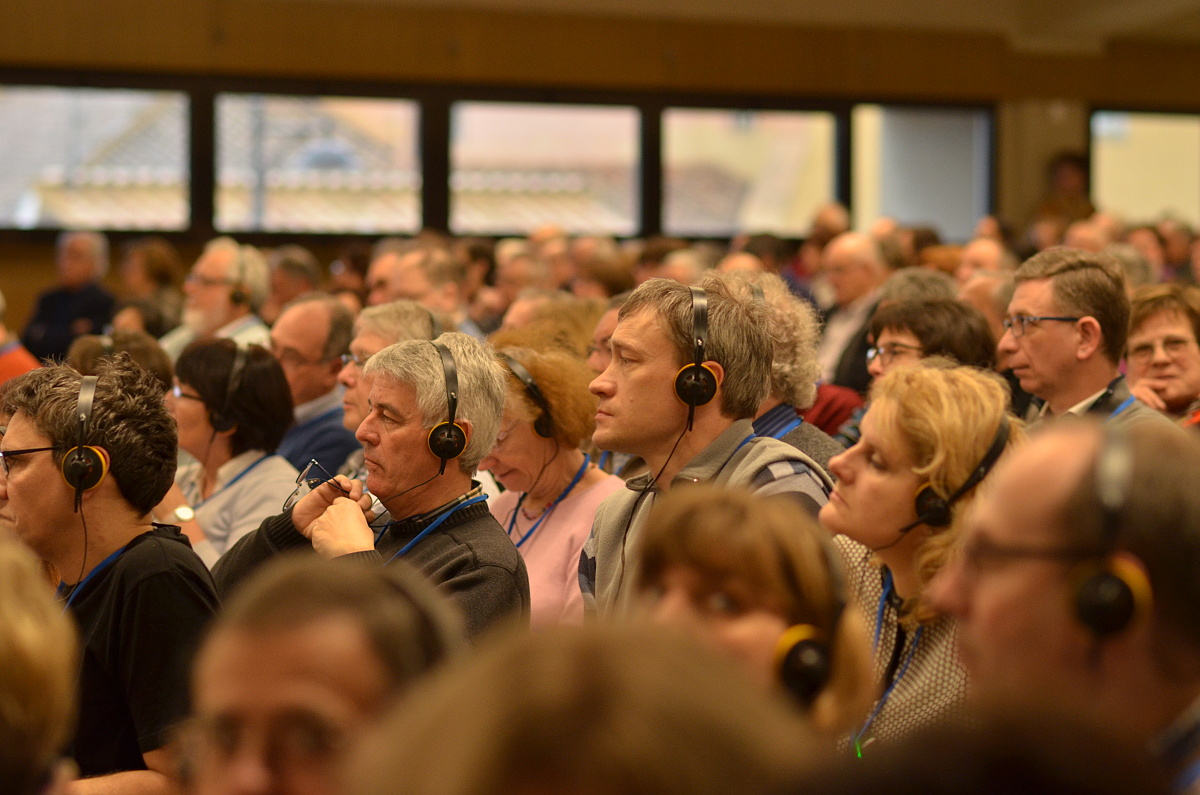 I was there too, with my husband, at the congress for volunteer couples, 600 persons, 14 languages. It was a representation of society, with participants from 5 continents. But let’s start from the beginning. The day before I had a look at the program. I knew that being the 3rd March, there would be at the same time an event dedicated to the tenth anniversary of the death of Chiara Lubich at the congress. And on the other days? The life of the family and the couple, made up of many facets, was to be at the centre of various in-depth moments, with the guide of experts. We have been married for nearly twenty years and we have two children aged 18 and 16 years. Having overcome the tunnel of sleepless nights, of nappies and child centres, having finished the phase of elementary and secondary schools, of geography charts to colour in, and of repeating the story of ancient history, we are sailing through the adolescence of our children and through ours as parents, in search of a serene present and of a future that one uncovers day by day. A web of affections, difficulties and obstacles, amazement in the face of innovation, suffering for the sad events, at times humiliation and the pulling up of our sleeves to start again, but also joys, social passion, a taste for the beautiful, openness towards new things and those unforeseen, racing through difficulties amidst the thousand duties of each one of us. A normal family, at any rate. I read the program and felt a little disappointed. The insistence on the theme regarding the “couple” suffocated me. What about the world? The reality of our times? Art, culture, social relations? Will we be concentrating on looking ‘inside’, to analyze ourselves once again, after so many years? I am a volunteer, used to looking “outside” rather than “inside”, to dream big, to be in close contact with reality and share people’s trials, trying to offer a helping hand, as Chiara Lubich has taught us, to build a more united world. I found the first day of the meeting hard to digest. After all my husband wasn’t there because of work. And in the evening, I confess, I willingly left for the inauguration of an exhibition at the Vittoriano, in the centre of Rome, as a way of refreshing my mind. A little disillusioned I faced the second day, this time as a couple. I tried to reset my thoughts and get more involved, with all my being. I discovered that my husband was making the same effort. This altered attitude helped us to take in the talks that followed with new eyes. It was like for the first time we were receiving insights to inwardly renew our ‘yes’, pronounced many years ago together with our family, the stone on which even we compose society, in this historic moment. I cannot be a good Mum and a professional and give my little contribution if it does not come from the relationship with my first and only companion in life, from the renewed unity among us. How can a house stay upright if its foundations are not deep, solid, strong, healthy?
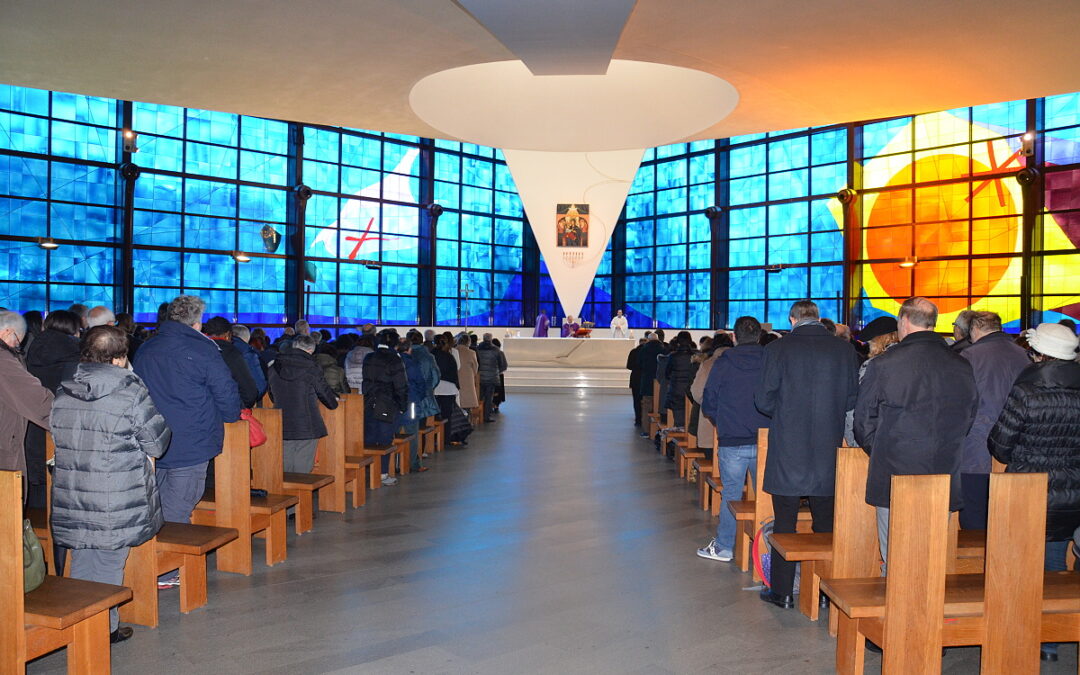
 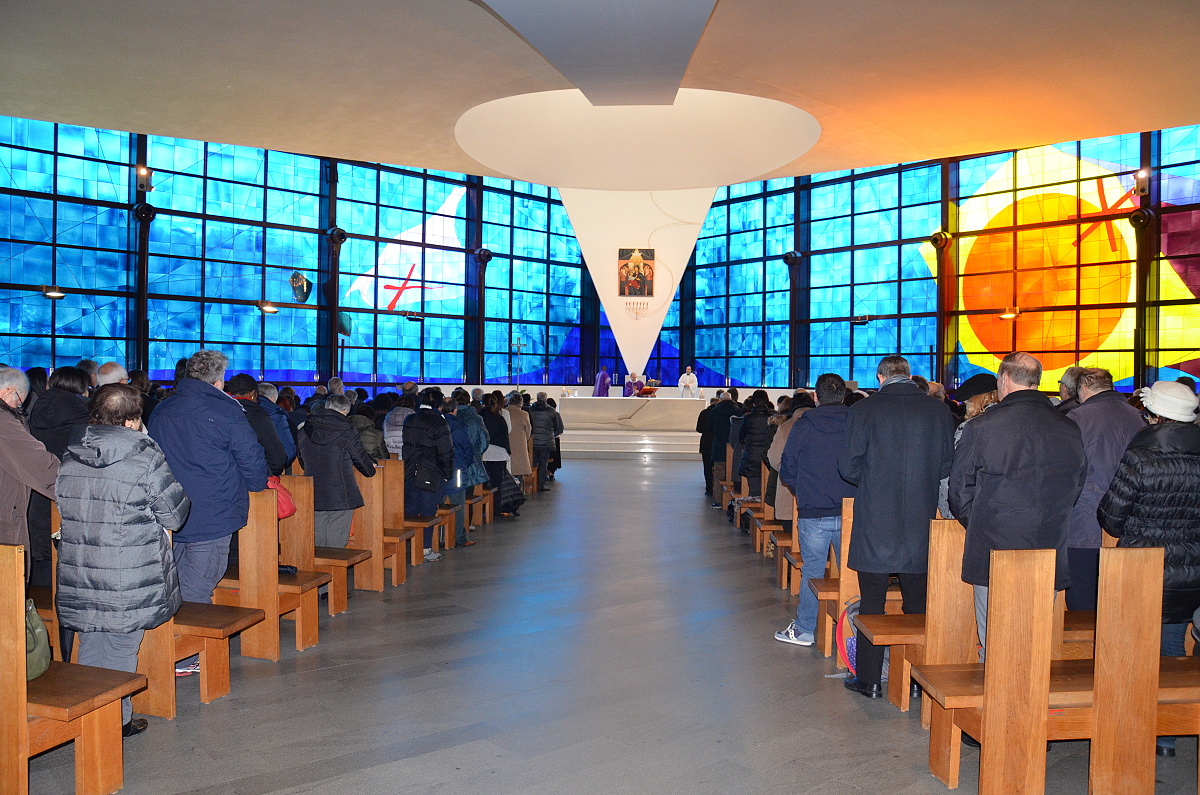 On the third day, together we solemnly renewed our ‘yes’ forever, before the sacred image of Our Lady at the Shrine of Divine Love. It was not a formal act but one that was substantial and free, in the presence of 598 witnesses. In the afternoon, whilst the hall was slowly filling up where the event of the tenth anniversary was to take place, I sat by chance next to two of the participants. They were a couple attending the congress like us. I had not yet seen them. There were a few presentations. I came to know that they had lost a son two years ago. Out comes a photo of him: a splendid boy, with light-coloured eyes, a brown beard. He was only 25 years, in the prime of life. The mother’s eyes welled up with tears. I perceived in that mother the semblance of the Mother, figured in Michelangelo’s Pietà. That’s what a family is: a bulwark, a rock, a heroic foundation of society, without which everything can collapse. It was necessary to stop and focus on the couple. It was indeed necessary. Chiara Favotti
10 Mar 2018 | Non categorizzato
Lord, give me all who are lonely … I have felt in my heart the passion that fills your heart for all the forsakenness in which the whole world is drifting. I love every being that is sick and alone. Even the suffering of plants causes me pain … even the animals that are alone. Who consoles their weeping? Who mourns their slow death? Who presses to their own heart, the heart in despair? My God, let me be in this world the tangible sacrament of your Love, of your being Love; let me be your arms that press to themselves and consume in love all the loneliness of the world. Chiara Lubich – Essential Writings” New City Press, New York, 2007 p. 81
9 Mar 2018 | Non categorizzato
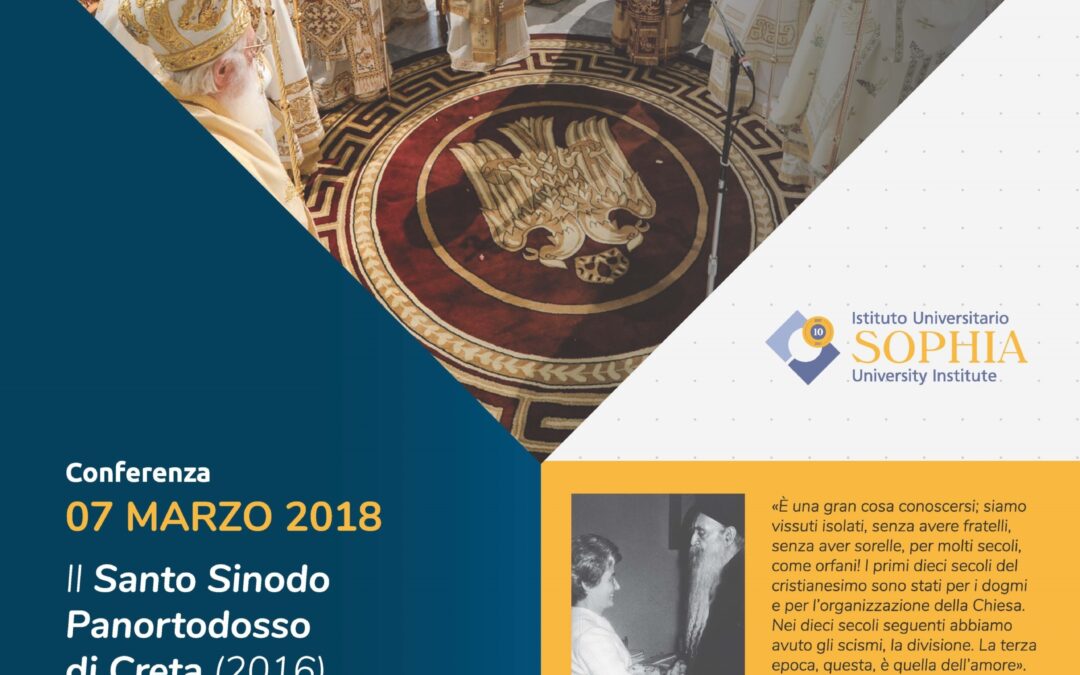
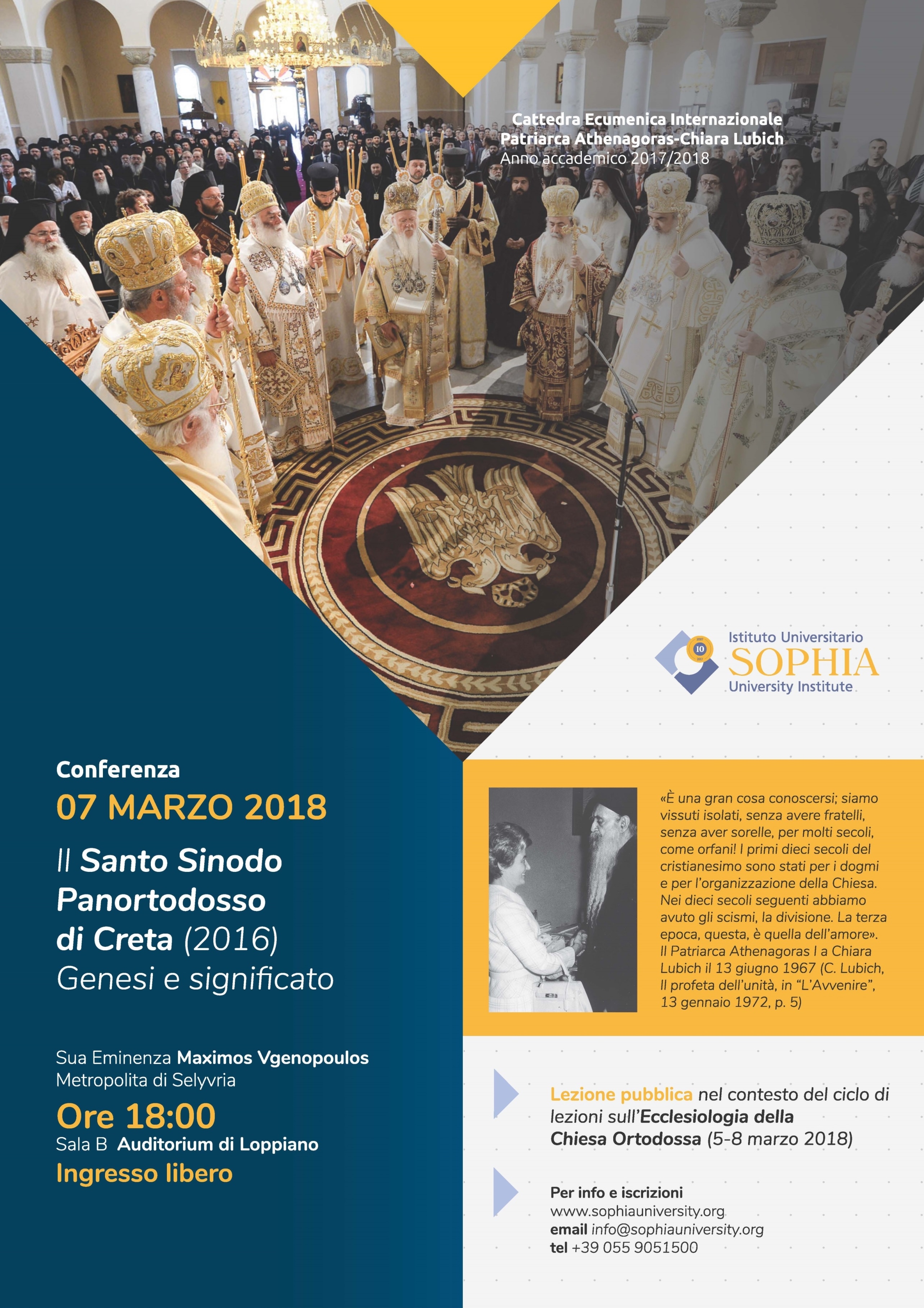 The Patriarch Athenagoras – Chiara Lubich Chair of Ecumenical Studies at the Sophia University Institute has launched its first course. The official inauguration of this international Chair of Ecumenical Studies took place last December14, at the Sophia University Institute of Loppiano, when both Pope Francis and the Ecumenical Patriarch Bartholomew I sent messages of best wishes and encouragement. The first set of lectures, on “The Ecclesiology of the Orthodox Church”, will be held from the 5 to 27 March. His Eminence Maximos Vgenopoulos, Metropolitan of Selyvria and Prof. Piero Coda are the co-directors of the course. This Chair, unique in the international and cultural academic scene, came into being 50 years after the first meeting between Patriarch Athenagoras I and Chiara Lubich. It wants to manifest and focus its attention on the legacy that emerged from that meeting, when the Patriarch confided to Chiara: “It is great getting to know each other; for many centuries we have lived in isolation, without brothers and sisters; we have lived like orphans! The first ten centuries of Christianity were centred on dogmas and the Church’s organization. In the ten centuries that followed we had schisms and division. The third epoch, the present one, is that of love ”. In his opening speech on March 5, Piero Coda, the Dean of Sophia, referred to the specific methodology of the Institute, which is based on the commitment to live mutual love as defined by Jesus’ new commandment. And he affirmed: “We want to prepare ourselves with competence and awe to be servants and witnesses of an ecumenism that gushes from the Trinitarian love, source, pattern and goal of unity in the richness and beauty of diversity. This is the only way that empowers us to receive reciprocally the gifts drawn from the priceless treasures of our Churches’ Traditions and offered to each other. This is the only way we can bridge with love the distances that still separate us. T his is the only way we can enrich ourselves reciprocally; the only way that, with the help of God’s grace, we can achieve full and visible unity”. When one considers the political, social and religious instability in Middle East countries and in the Mediterranean region, this Chair assumes cultural and social importance on an international level, even through the opportunities of study and research it offers to the young generation. Its specific aim is to study the cultural meaning, to review the historical stages and analyse in depth the existential and social implications of the ecumenical journey towards full unity among Churches, while exchanging spiritual, theological and cultural wealth of Christians, both in the East and West. Besides, it wants to offer academically qualified courses to those interested in contributing, through thought, dialogue and life experience, towards promoting unity between the Orthodox Church and the Catholic Church. And thus offer a service towards the encounter between peoples and cultures.
8 Mar 2018 | Focolare Worldwide
 María Cecilia Perrín was a sunny-natured Argentinean girl born in Punta Alta (Buenos Aires) in 1957. After being engaged for two years, she and Luis married in 1983 and she lived intensely with the desire to set solid Christian roots to the emerging family. Two years later, while she was pregnant she was diagnosed with cancer. With the support of her husband and the family, she chose not to heed the suggestion to undergo a “therapeutic abortion.” She died at the age of 28 after the birth of the baby girl. As she expressly requested, her remains were interred in the Mariapolis Lia (O’Higgins, Buenos Aires), a place of joy and hope. Her reputation of sanctity, heroism in accepting her illness, the example of Christian life, and the many graces that have been granted through her intercession started off the cause of her beatification on 30 November 2005.
  Maria Orsola Bussone, born in 1954 in Vallo Torinese, northern Italy, was a generous, open and sportive child. At the age of 11 she participated with her family in a meeting of the parish Movement in Rocca di Papa. She wrote to Chiara Lubich: “I want to love always, be the first to love, without expecting a return. I want to let God use me as He desires and do all I can, since that is the only thing in life that matters.” On 10 July 1970, at 15, while participating as an activities coordinator in a summer camp, she died of an electric shock while drying her hair with a hairdryer. Her fame of sanctity spread and many people went to her tomb to pray for her intercession. Her diary and letters revealed her deep spirituality. The construction of the parish Centre to which she contributed was named after her. On 17 December 2000 the diocesan phase of the cause of beatification ended. On 18 March 2015 Pope Francis authorised the promulgation of the decree which declared her a Venerable.
 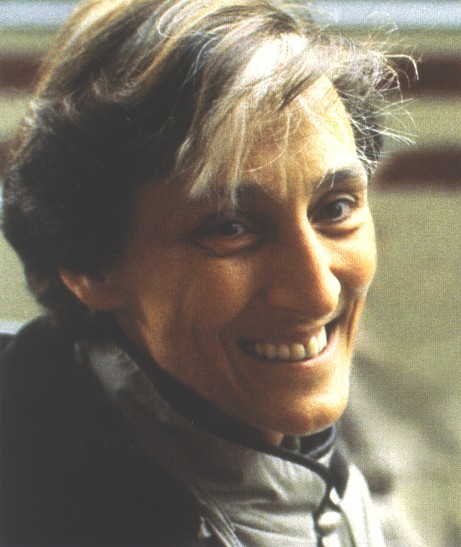 Margarita Bavosi, born in 1941, is the third child of a wealthy family of Buenos Aires (Argentina). She lived a happy life until she was ten, when her mother suddenly passed away. The acute pain pushed her to ask the Virgin Mary to take her place. The meeting with the charism of unity was the answer to her desire for sanctity. She donated her life to God in the focolare, and was known to all as “Luminosa.” She spent some years in Brazil, Argentina and Uruguay, and became the co-director of the Focolare Movement in Spain. At 40 she felt an unexplainable physical decline, and only after three years received a precise prognosis. Soon she was unable to move about but continued to build relationships, taking to heart the motto of St. Aloysius Gonzaga “I shall keep on playing my game.” The night of 6 March 1985, amid the amazement of those present, she said “Here I am Jesus, I have always tried to do everything in your presence.” On 22 November 2008 the diocesan phase of the canonisation phase closed. The center of the Focolare of Madrid and the international town close to New York were named after her. Renata Borlone was born on 30 May 1930 in Aurelia (Civitavecchia, close to Rome). She was raised in a non-practicing but united family, and when she was 10, witnessed the explosion of World War II. Thirsting for truth, she sought it in studies. She enrolled in the Faculty of Chemistry, since she was a science enthusiast. At 19 she came in contact with the evangelical life of some of the first focolare women who had just moved to Rome, and through them, she felt the certainty that God is love! At 20 she entered the focolare and for 40 years served the Work of Mary, with roles of responsibility in Italy and abroad. In 1967 she arrived at the Training School Loppiano where she spent 23 years constantly focused on reaching sanctity. At 59 she was found to have a serious illness and the few months that remained were an acceleration in her thrust toward God. Despite her suffering she transmitted joy and a sense of sacredness and up to the last moment repeated, “I want to testify that death is life.” On 27 February 2011 the diocesan phase of the beatification process closed. Chiara Favotti Also see: Alfredo Zirondoli, “Luminosa continued to play. Profile of Margarita Bavosi,” Città Nuova, Rome. Giulio Marchesi, Alfredo Zirondoli, “A silence that became life. The life of Renata Borlone”, Città Nuova, Rome.
