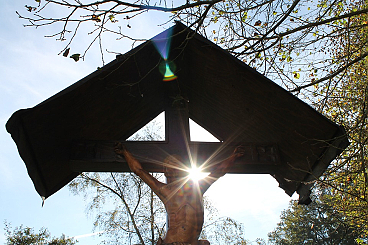
From a Manger to the Cross
Foto: Pixabay

Foto: Pixabay
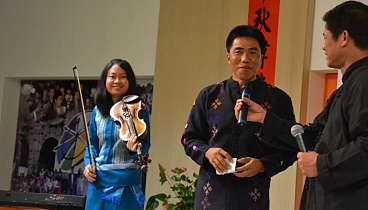
The Spring festival (春節, 春节, chūnjié) or lunar new year (農曆新年, 农历新年, nónglì xīnnián), known in the West as Chinese New Year, is one of the most important and most heartfelt Chinese traditional feast, wherein the new year is celebrated according to the Chinese lunar calendar. The celebrations will start on 16 February and continue for about two weeks up to the Lantern Festival, with numerous activities, shows and markets. On the eve, the families convene for the “dinner gathering,” the most important meal of the year. On this occasion, various generations hang out at round tables to savour food and time together. Every street, house or building is decorated in red, the festival’s main colour. Praying together in a temple during the New Year is believed to be a wish for good fortune for the new year that is about to start. In Shanghai thousands of people crowd in the Longhua Temple, the city’s biggest temple. In Loppiano, the international town of the Focolare where many inhabitants come from the Far East, there will be celebrations for the start of the year of the Dog with a party on Saturday, 17 February, which will be an occasion to delve into the cultures of Asia through games, art, music and dance.
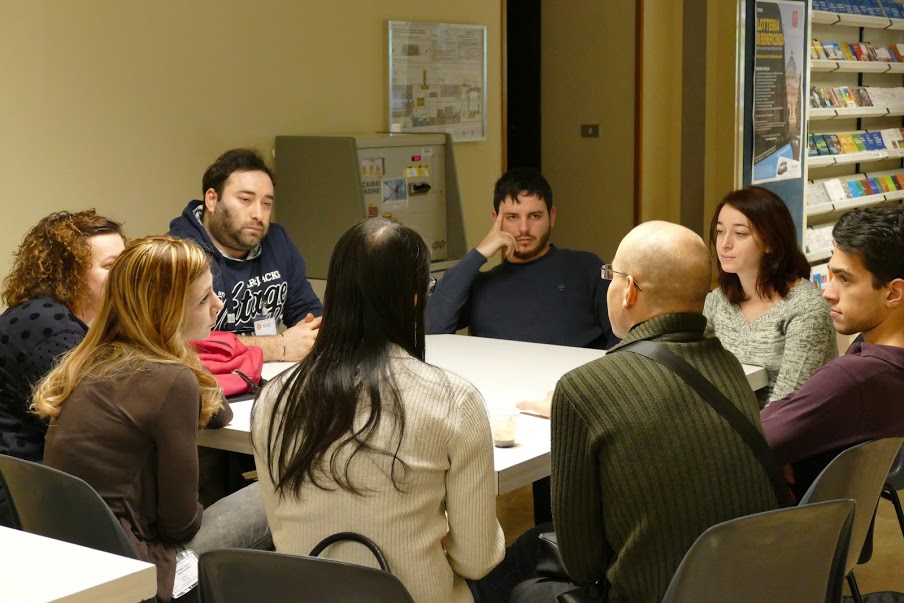
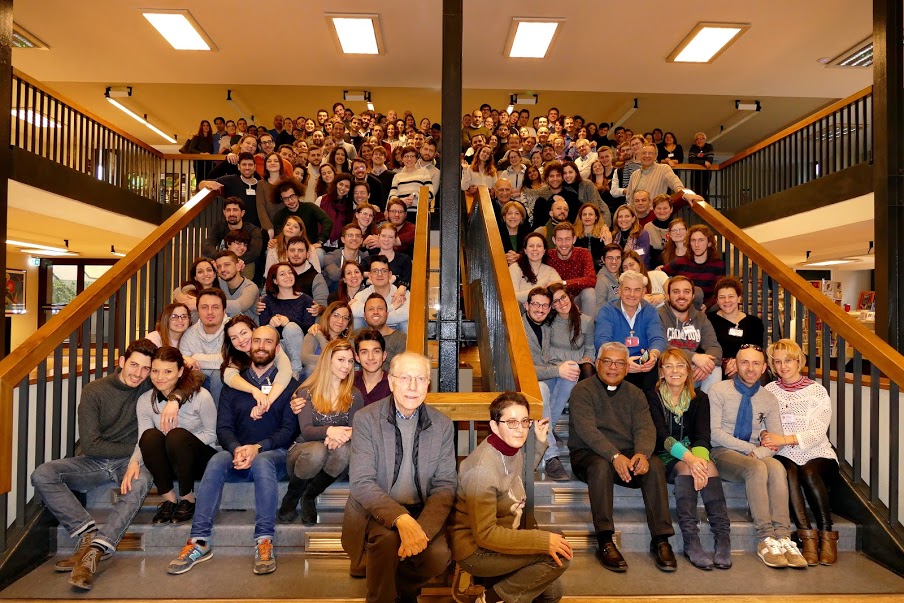 The international conference for engaged couples held in Castel Gandolfo (Rome) has just ended. It was organised by the New Families Movement of the Focolare, and attracted the participation of 65 couples. Besides addressing the issue of personal choice and identifying and overcoming crises in relationships, with a special focus on communication, affection and spirituality, what impressed most were the real-life stories shared by couples. One example was the experience shared by Massimo and Francesca from Rome, married for 17 years, both managers in a Telecom company and the latter, also a teacher of Italian to foreign students. Francesca: According to the doctors, we would not be able to have children, and even if there would be a pregnancy, the certainty of success would not be assured. It was a sentence without appeal. After a prior moment of distress, a reassuring conviction made its way: fertility lies not only in a biological capacity, but in being able to generate love around you. So we continued to bring ahead, with unchanged enthusiasm, the initiatives that had accompanied the choices we had made in our youth to work for others. We would also be open to life, albeit the fear of serial and traumatic miscarriage.
 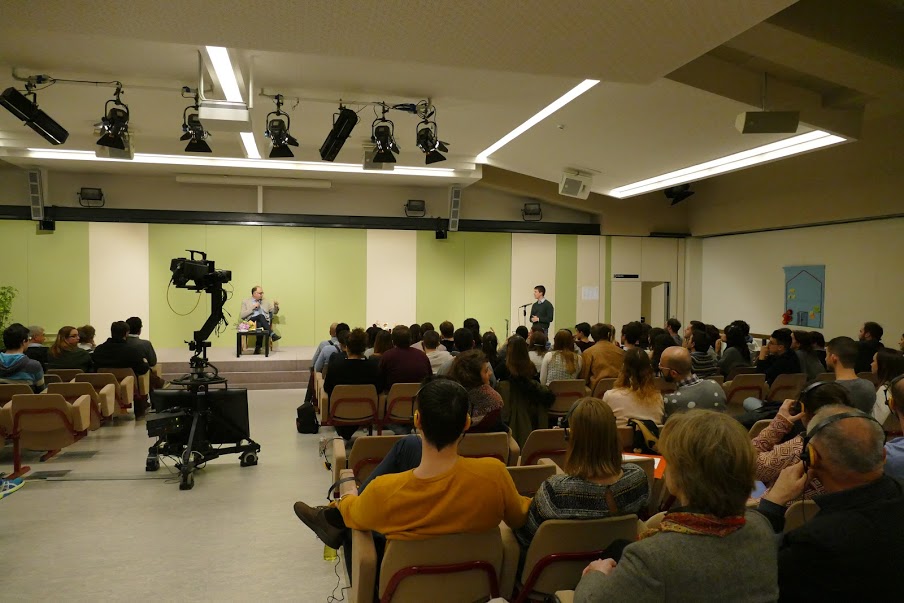 Two years had not passed when we discovered that we were expecting a baby. As foreseen, the pregnancy was difficult, and progressed despite the verdicts of the doctors who continued to remind us of the serious risks entailed and the care we had to take. In those difficult moments we prayed to God, the author of life, which made us even more conscious of the preciousness of that little bundle which wanted to grow inside me despite the severe opinion of the doctors. The doctors were astounded when at the end of term, Alessandro was born very healthy, and I too was well, though they even told us: now you have a child, do not dare venture beyond. Massimo: Instead we were still open to life and after a few years, a new pregnancy came up, followed by a new wave of amazement, skepticism and recommendations of the doctors. At the advanced stage, there was a suspicion of the Down syndrome, to be ascertained through an amniocentesis. Once again, despite the trauma of this news, we felt that the certainty of God’s love was stronger for us and our baby, to whom we wanted to give an unconditional welcome. Those were months of fear and distress which we again overcame by targeting not to remain entangled by the suffering but to live it as an occasion to love one another and all around us. At Matteo’s birth they told us that he did not have the Down syndrome, but a heart malformation which required hospitalization until when he could be operated, at four months of age. Francesca: In those four months, the fatigue, and above all the inability to face the pain of an innocent child, brought moments of misunderstanding between us. That propensity to love one another at times seemed to disappear, also because I wanted to stay in the hospital with Matteo and Massimo at home with Alessandro or at work. We saw each other only in the ward and often a wrong word sufficed to flare up. Massimo: One evening, after visiting them in the hospital, upon saying goodbye in the corridor both of us felt the need for a sincere, beneficial, heart-to-heart dialogue. We understood that among the many worries, the only one which should be heeded was that of loving each other. And even now, when the inevitable daily tensions seem to take the upper hand, we go back to remembering those moments of light in which also as a family, suffering has regenerated us to a truer love.
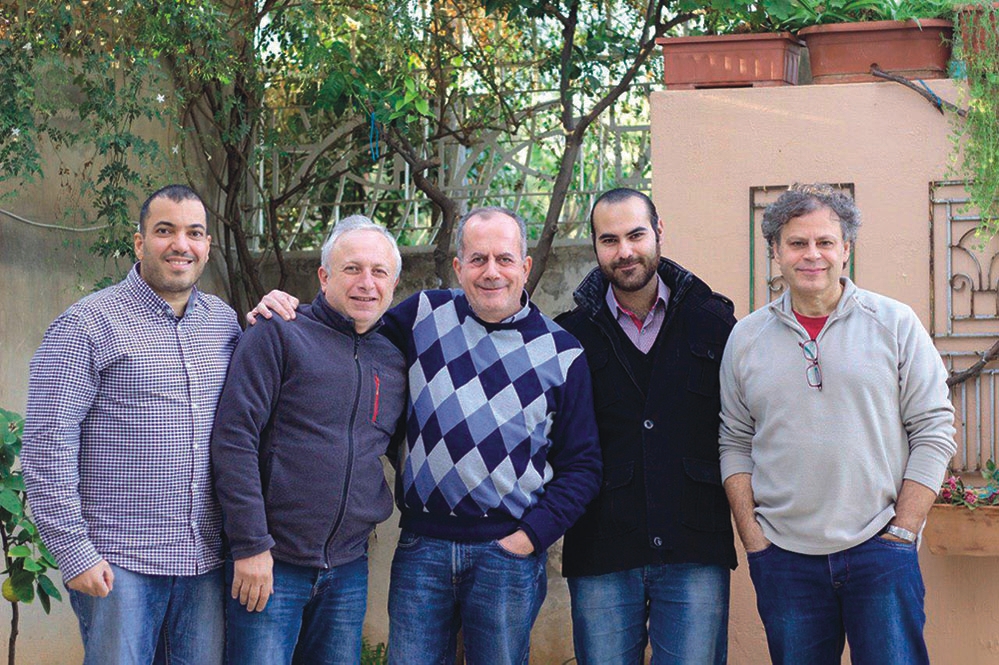
Robert Chelhod (centre) with the focolarini in Aleppo
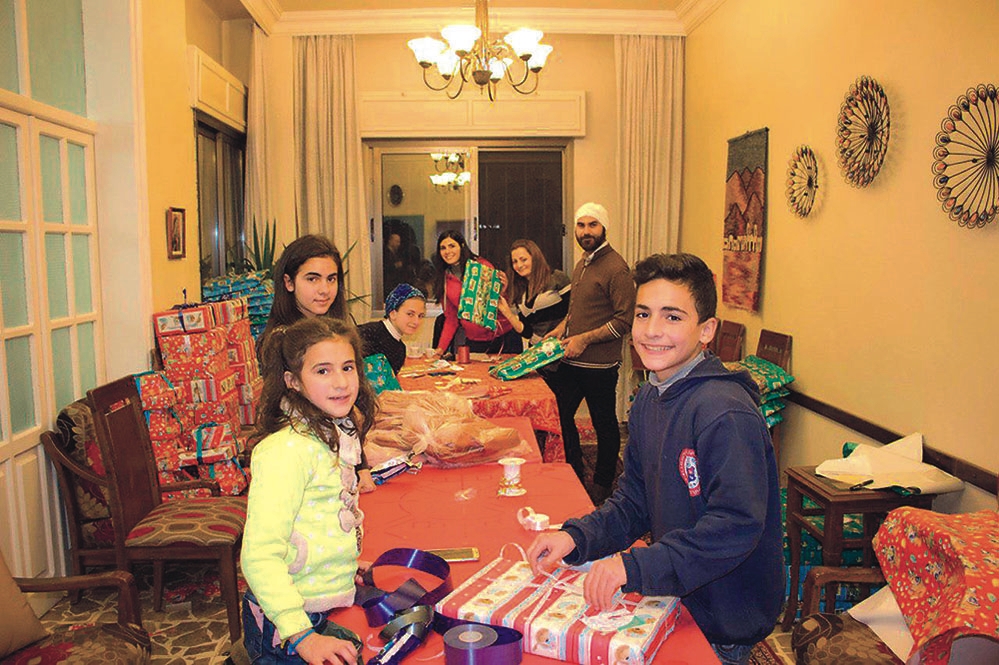
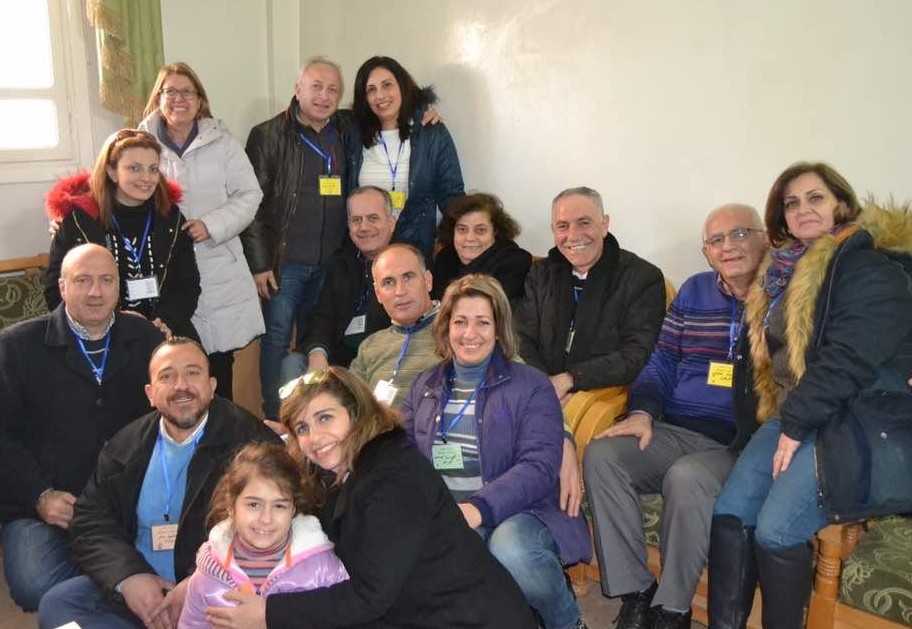 What can we do for Syria today? “For those who have faith, continue to pray. And you can bet with the Syrians that the country is alive. We need support in Syria. Not only from the economic point of view, which is certainly vital, but in believing that with us, this country, the cradle of civilisation, can be reborn. That peace is still possible. We need to know that the world feels our suffering, that of a country that is disappearing.” You coordinate onsite the social projects funded through AMU. How does this come about? “The projects range from aid for food to schooling. Then there is healthcare aid since public healthcare is unable to meet the minimum standards of assistance due to the lack of doctors, medicines and instruments. Besides help for families, there are more stable projects: two after-school organisations in Damascus and Homs with 100 children each, Christians and Muslims; two specific healthcare projects for the treatment of cancer and for dialysis; and a school for the deaf and dumb children, that was already operating before the war. These projects offer the possibility of work for many local youths. The employment issue is fundamental. We are dreaming in the near future of the possibility of working on microcredit to relaunch the activities. Aleppo was a city brimming with merchants who today would restart, but the initial capital is lacking.” Instead many continue to leave… “The exodus, especially of the Christians, is irreversible. The reason is the insecurity, and lack of jobs. The Church suffers in this land which was a land of Christians before the arrival of Islam. And it is trying to do what is possible to help and support all this. But there are few resources. Most of the youths are in the army. You may find some university students, or kids. But the 25-40 age bracket is inexistent. In the city of Aleppo, the estimated further drop of Christians is 140,000 from 130,000, while many Muslims have arrived, evacuated from their destroyed cities.” What impact does this have on interreligious dialogue? “In Aleppo the Christians considered themselves somewhat like the élite of the country. With the war, since the Muslim zones were hit, many took refuge in the Christian zones. So the Christians opened out to the Muslims, and had to accept them. The Latin Bishop Emeritus of Aleppo, Bishop Armando Bortolaso, during the war told me: “Now’s the time to be real Christians.” At the same time the Muslims have got to know the Christians personally. They were touched by the concrete help. There are negative and positive aspects. The positive one is that this war has made us Syrians closer with one another.” Source: Citta’ Nuova Magazine