13 Feb 2018 | Focolare Worldwide
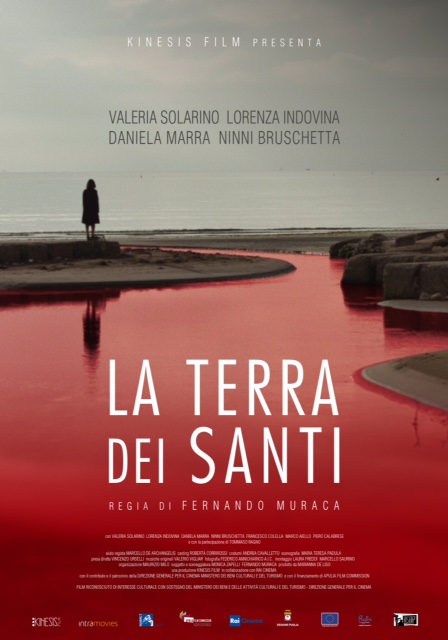
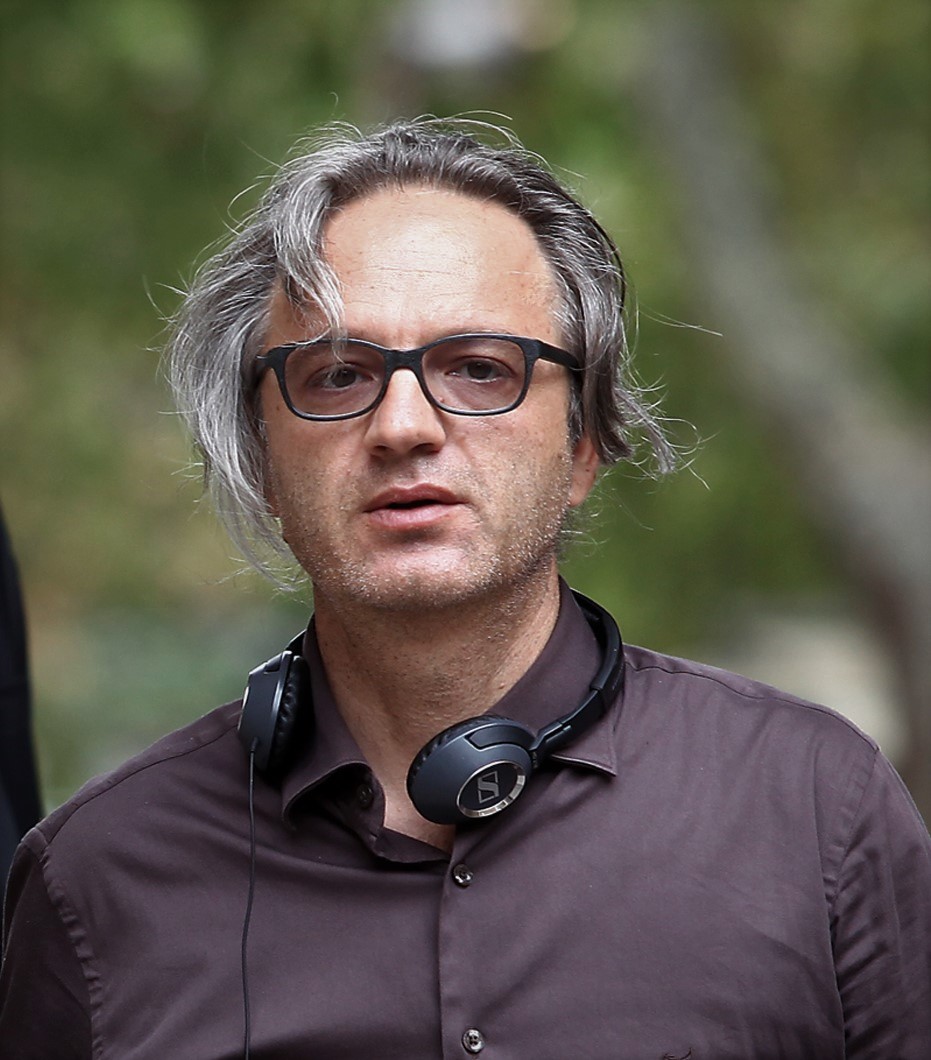 “I was only 12 when I met Chiara Lubich. If it hadn’t been for this friendship with her and for the charism of unity, I would not have persisted in such a strongly competitive environment full of quagmire. I have a deep gratitude for all those with whom I shared this challenge.” Fernando Muraca began his work as a theatre director and author after his university studies in Rome. After the success achieved in the direction of some episodes in two TV series, the debut in the world of cinema came along with a capital C. Among his most recent works we find “La Terra dei Santi” (The Land of Saints), an intense film on the role of women of the Mafia in Calabria, which received numberless awards and recognitions. Before a very attentive audience, Fernando recounted his story.
  “One evening, I received an email from my friend, Giampietro, a missionary in Brazil. A long time ago I had shot for free, a documentary to collect funds for his community which engaged in saving women, men and children living under the bridges of São Paolo. In his email he asked if I was willing to leave my job for some years to document what was happening there. His mission then also addressed people who had fallen into the drug trap. The approach without prejudices and based on evangelical love, had already saved 10,000people destined to certain death. It was a result that really had to be documented.” Fernando continued – “In this email, Giampietro explained a backstory. A very rich man, after having put someone on his trail and having discovered who he really was, had decided to offer him half of his wealth. Having made a vow of poverty, Giampietro could not accept. But he had one wish: that I should go to Brazil to document the work of his mission. And so that man offered to pay for all the expenses, including the house bills in my absence.”
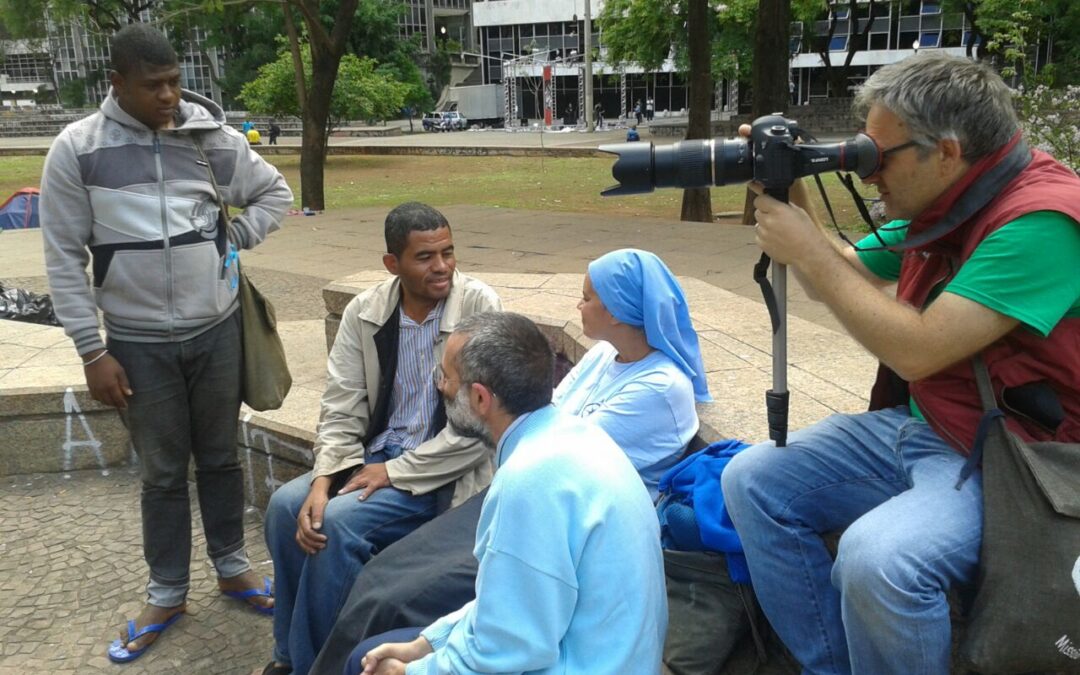
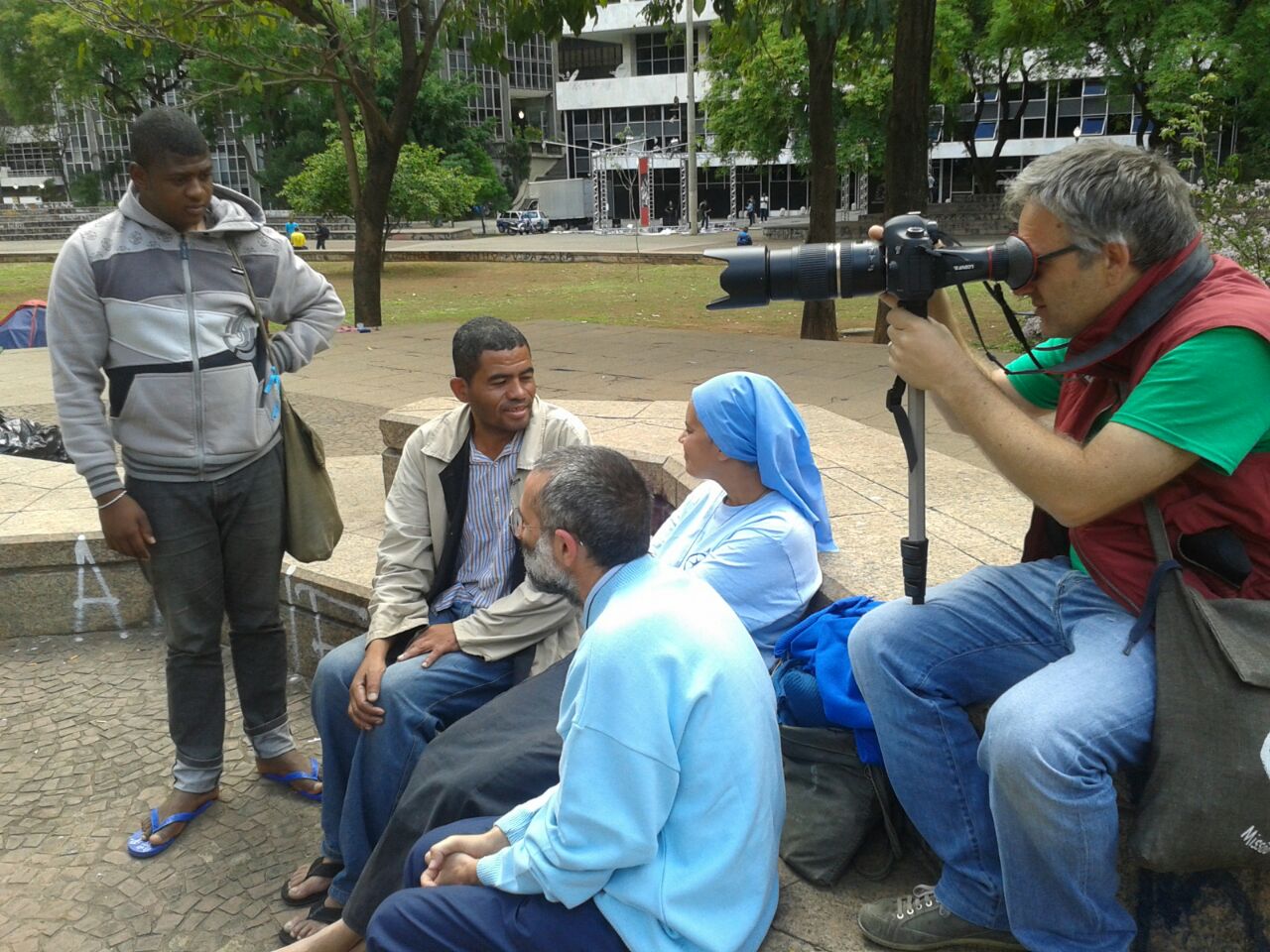
 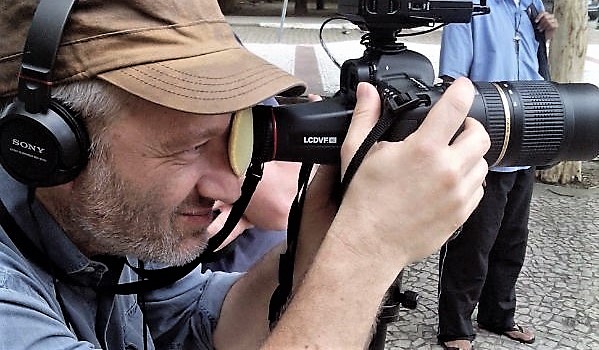 Fernando smiled: “It seems like a movie, I know, but it really happened.” And he continued: “I discussed it with my wife and our kids. It was a matter of leaving my work for two or three years, getting out of the business, putting my career at risk, with my wife having to attend to the family in my absence. She said she was ready to make this sacrifice if it would help to divulge the suffering of those people. And my eldest son said, ’Dad, we cannot look away.’ Also my friends encouraged me to accept. My film was just about to be shown in the cinemas, and I had to leave after 15 days. Pure folly. The feature film had a small distribution circuit. Without my presence to promote it, it may have died and I would have burnt my only chance for a career in the cinema world. But my son’s answer ‘We cannot look the other way’ was decisive for me.” “At the start, in São Paolo, it was almost impossible to shoot the film on the lives of people living under the bridges. They detested being photographed, much less filmed! To make them understand that I didn’t want to exploit their image I had to act like the missionaries. I also started to sleep under the bridges, to share their day, and in this way, they accepted. After a month, I returned to Italy for a break. The impact had been hard. I had to reflect about the material I was shooting and reorganize a new and longer trip. Meanwhile in Italy, all that I had foreseen really happened. Without funds for the promotion and without the presence of the director, my film was quickly disappearing from the cinema halls.
  Then came an unexpected event. In Rome, on the last day of the projection, an important film critic showed up. The day after, on a national newspaper, in both the online and paper editions, two very positive reviews were published. They began sending the film to the film festivals in Italy and abroad. It won many prizes, some of which were very prestigious. Three years have passed since then. Upon terminating the work in Brazil, I started once again to take hold of the reins of my life. I didn’t shoot other films, but have many coming up on topics I had never had the courage to deal with. I wrote two novels and an essay on the experience of the “incarnation” of my ideals in art. I also developed a project to dedicate myself to the youth. In this “trade” one needs comfort, encouragement, and also reference points.” Chiara Favotti
13 Feb 2018 | Non categorizzato
For the Catholic Church and other Christian Churches, the season of Lent is about to begin. Lent is a period of the liturgical year, which comes just before the celebration of Easter. It lasts from February 14th to March 29th in the Roman Rite. Lent is seen as an invitation to conversion toward God. It lasts for 40 days, a number that occurs rather often in the Bible – in the Old Testament, for example, Israel spent 40 years in the desert, the great flood lasted 40 days, Moses spent 40 days and 40 nights on Mount Sinai, and Jesus fasted for 40 days in the desert. In the Roman Rite Lent begins with the rite of ashes, in which the priest or minister places a pinch of blessed ashes on the heads or the foreheads of the faithful, symbolizing the fall of earthly existence and one’s commitment to a penitential life.
12 Feb 2018 | Focolare Worldwide
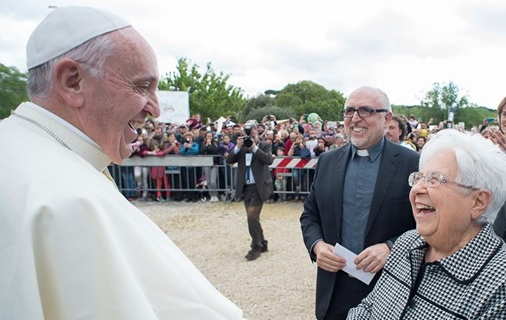
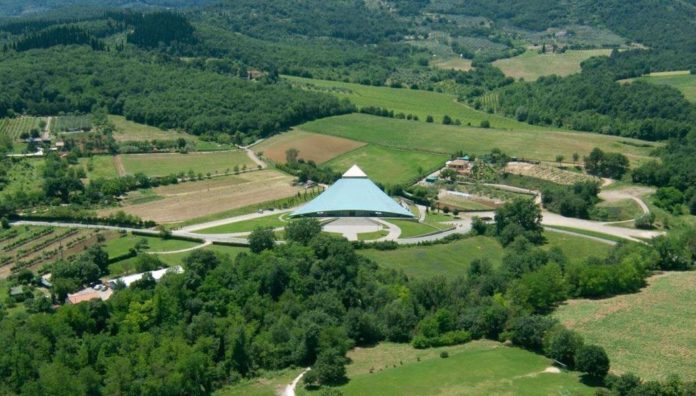 “We’re all enjoying this surprise together,” said Focolare president Maria Voce as she joyfully commented on the news of Pope Francis’s visit to Loppiano on May 10, 2018. The surprising news has raised great enthusiasm among the members and adherents of the Movement throughout the world, beginning with the town of Loppiano that will welcome the pope. Loppiano is located near Florence, Italy. It was the hope of Focolare foundress, Chiara Lubich, that it would be a real city, with schools, businesses, training centres, universities and business parks. It’s a “special” place a laboratory of community Gospel living. A thousand people from 65 countries of all ages, backgrounds and religions live in Loppiano. They strive to build universal brotherhood through daily practice of the Gospel and Loppiano’s “law” of mutual love. It’s a place for putting into practice the charism of unity – which is the spirituality of the Movement – and for responding to Jesus’s testament: “that all be one” (Jn 21). It was sensational news for the little city: “One second after the announcement by Maria Voce,” they tell us from Loppiano, “the news spread among the residents of the little city and was spread on the social networks around the world with a shower of joyful and surprised posts; it was like an atomic explosion that just blew us away.” At the announcement of the visit, Maria Voce remarked: “We’d like the pope to find the people of Chiara who live the Gospel and are bound to each other solely by mutual love, so that he sees a reflection of the Trinity on earth in the little city.” As for preparing the visit, she pointed out that only a hundred days remain to live and intensify our prayers “so that everything goes as well as possible and there won’t be any insurmountable obstacles; but mostly to intensify our life of Gospel love so that we can really be the living Word.” The Focolare president was also overjoyed about the pope’s visit to the Nomadelfia community, founded by Father Zeno Saltini in Grosseto, Italy. The pope will visit them before he visits Loppiano: “We know that the pope isn’t only visiting Loppiano. His visit to Nomadelfia is scheduled for the morning. Since we’re geographically close, our two communities have been linked by years of friendship and we have in common the same belief in the centrality of the Gospel and the commitment to universal brotherhood and working in favour of the least of these.In recent times many joyfully recall the participation of a group of young people from Nomadelfia at the annual youth fest held in Loppiano on the 1st of May, which has traditionally drawn teenagers to Loppiano from all over Italy.
10 Feb 2018 | Non categorizzato
Foto: Pixabay
9 Feb 2018 | Focolare Worldwide
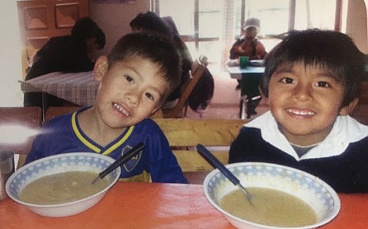
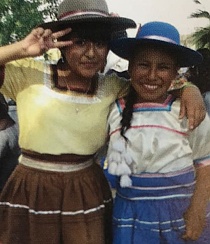 My family is composed of me, my sister and my mother who raised us on her own. We went through some very critical moments. My mother tried hard to find work. Then there was some friction with the landlady, because we didn’t have money for the rent. It was quite a heavy cross for my mother to manage the little money she earned. Therefore, the support we received through the Focolare Movement’s New Families Association was very important. Then the Centro Rincón de Luz was opened on the south side of our city, Cochabamba, in which scholastic support was being offered ever day, along with a hot meal, to children and teenagers who attended the local school. That centre was a huge help to me. It made me smile again and gave me some important formation. We were like one big family where our teachers were often like second parents. Thanks to the people who had faith in me, I can proudly say that I completed my course of study with good results and am in my first semester of university.I’ll soon be a professional, and I’ll try to extend some of the help I received to the to the children who are now at the centre. I’d also like to open a place for the people who live on the streets, helping them to find a way forward. I now know that you can change the life of a child and point him or her in the direction of a better life. That’s why I’m asking everybody to help: Together we can do it! In my case, the most important thing wasn’t just the financial support, but the faith they had in me, which has been a seed of hope, a spark of light that’s lit not only in the children, but also in their parents. Source: Teens
