22 Aug 2017 | Focolare Worldwide
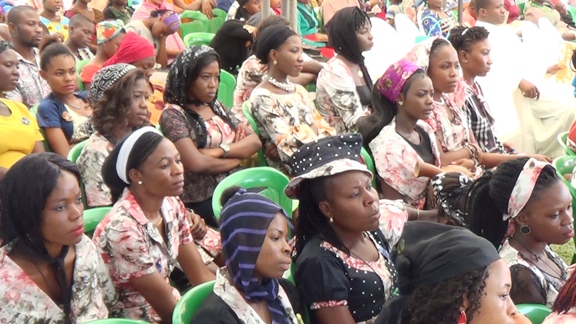
“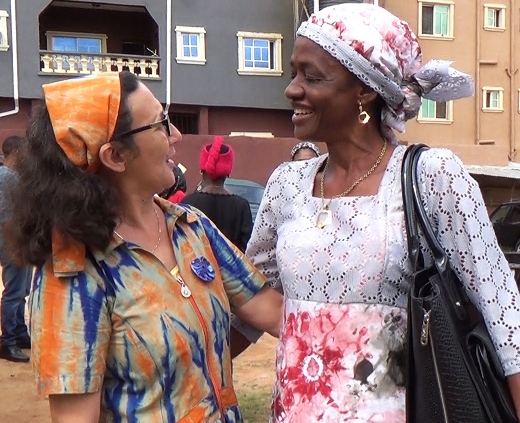 I had only been married a short while when my husband fell gravely ill. At the same time I discovered I was pregnant.” This is how one Nigerian woman’s story begins. Far from her own family and alone, she asked her husband’s family for help, but only found closed doors. “We lived through hell,” she said. Fortunately other doors opened soon after: those of Casa Alba. And for her, like many other young women in difficulty, a new day began. “I don’t know how I would have survived otherwise. Now, thanks to God, things have gotten better.” Casa Alba is one of the Focolare Movement’s projects in Nigeria. For many years, it was once just called a “gen house” (for “new generation”, the young people of the Focolare). Only later did Chiara Lubich propose naming it “Alba” (“dawn”), with the hope that it might become a true house for many vulnerable girls from all over Nigeria. Here many – some were living on the street – have been welcomed and learned a trade. Both sewing work (which became a course in itself) and batik (the art of dying fabric), which at first were just a way to earn some money, have become a true recovery project. Spiritual and ethical training are also integral parts of the program. In May Casa Alba celebrated its 25th anniversary at the Mariapolis Center of Onitsha – an entire weekend with a concluding mass outdoors. Four hundred people were invited, many of whom donned typical brightly colored African coloring, decorated with batik techniques. Auxiliary Bishop Denis Chidi Isizoh, celebrated the mass. “Focolare means fire,” he said during the homily. “It is the fire of encouragement, of evangelization, of love.” He described the times he had met Chiara Lubich personally, when he worked with Cardinal Arinze at the Pontifical Council for Interreligious Dialogue. “A French scholar once wrote, ‘I think therefore I am.’ No African would ever say this. Africans would say ‘We are, therefore I am.’ I am a person because I belong to a community, to a group. This is what the members of the Focolare Movement tell us: when we are united like a community, that is when we find ourselves.” Let’s go back for a moment. Some time ago Elde de Souza, who directs Casa Alba, visited Bishop Denis to inform him of funding difficulties that the project was having and that activities would have to be suspended. In response, the bishop renewed his faith in the program and relaunched it. Instead of its closing, he proposed celebrating Casa Alba’s 25th anniversary in grand style. “The Focolare in Nigeria is too quiet!” he said. His proposal was too good to ignore, and the entire community mobilized. Everyone, old and young, got to work. Bishop Denis’s enthusiasm is contagious. “Nigeria is a happy place. We are happy people. Yet some are not, and are in really difficult situations. This is what life is about,” he says, concluding that we are all able to unite our sufferings to those of Jesus on the cross. At the celebration, all the Casa Alba “girls” are present. Some are teens; others are already grandmothers. The celebration is a chance to retrace paths and stories. “It changed me and my life.” “Before I had a short temper, but here I calmed down.” “It is wonderful to hear how this small seed produced so much fruit,” says Mama Regina, 83, one of the early teachers. The next day, the newspaper of the archdiocese (which has 2 million Catholics), called the anniversary “a colorful spectacular.” “The Focolare Movement has dried the tears of hopeless young people, who today live above the poverty line thanks to the skills acquired at Casa Alba.” The event was covered on radio and television, and the regional newspaper printed a call to raise funds to relaunch the project. A new day is beginning for Casa Alba as well.
21 Aug 2017 | Focolare Worldwide, Senza categoria
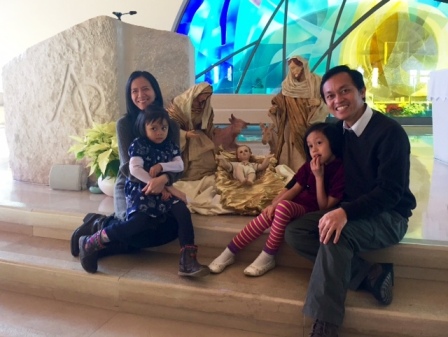
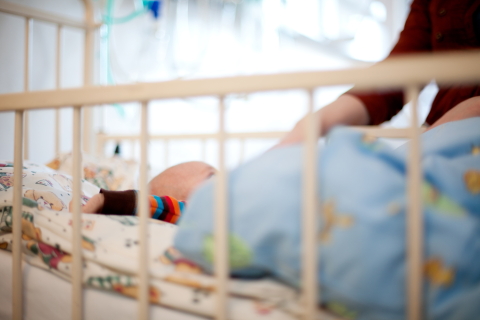 Eugene: My name is Eugene, and this is my wife Ann. We have been married for almost nine years, and have two children; Erin is seven and Anica is almost five. We come from the Philippines and we are here in Italy for a year, to make an experience in the school of families in Loppiano. I am an engineer by profession, and before coming here, I was working in the supply chain department in a power generation company. Ann: I have a degree in Information Technology. When we got married, I was then working in the IT industry. I had what I could say was a successful and flourishing career, and I was going up the corporate ladder. But it was a job that demanded much from me; at a certain point, I felt that to love Eugene and to make our desire of starting a family a reality, I had to put my family above my career. We talked about it together. Around that time, the global financial meltdown was being felt. We had doubts about being able to raise a family with only one income. It was a big risk. But we felt strongly that it was what God was asking from us, and we said our yes, trusting that God would always take care of us. I left my 10-year IT career and became a housewife, and Eugene became the sole provider for our family. Soon after, we found out that we were going to have our first baby and we were very excited. Erin was born. It was a joyful an exciting moment for us. But our joy was short-lived. Two weeks later, on December 6, we had difficulty feeding her. We brought her to the hospital, and the doctor told us that she had sepsis and meningitis, which was potentially fatal. December 7 was a special day for us. We started the day renewing our ‘yes’ to God’s will, believing that everything was part of His great love for our family. Very early that morning, the doctor called to inform us that the infection was apparently at an advanced stage and that Erin was in a very critical condition. That afternoon, we had Erin’s emergency baptism at the neonatal ICU. Eugene: The next day, Erin’s pulse started to drop. She was pale and weak, and her eyes were not responding to movement and light. At once, the doctor advised us to transfer her to a better-equipped hospital, which, naturally, was also more expensive. At first, I was worried because we could not afford the rates of that hospital. But Ann helped me make a leap of faith, and we agreed to do everything for Erin and worry about the expenses later. That morning, I couldn’t accept what was happening to our family. I asked God, “WHY?” but later, entrusting everything to Him, I gave Him my ‘yes.’ In the ambulance on the way to the new hospital, I was asked to stimulate Erin by touching her and singing her favorite lullaby because her pulse was dropping. It was hard to understand why our young family had to go through all this. But we continued to believe that there was a reason for everything, even if we could not understand it at that moment. Once again, Ann and I said our ‘yes’ to His will. Arriving at the emergency room, we watched as Erin was pierced with needles, connected to tubes and surrounded by machines. We watched her go into a seizure. We could not help but cry, seeing everything that was being done to her and realizing the gravity of her illness. I was at a loss and couldn’t understand why our baby had to go through all those painful medical procedures. That day was December 8, the feast of Mary’s Immaculate Conception. We went to the hospital chapel and entrusted Erin to our Lady. Ann: The doctors told us right away that Erin’s condition was very critical, that the infection seemed to have already reached her brain and that she had meningitis. They also told us that upfront that in cases as grave as this, they had only seen two outcomes in the past—either the patient did not live, or the patient survived but with a handicap. They assured us that they would do everything they could, but that we could only hope and pray. Various tests were run on her the entire day. Again, Erin had to undergo the ordeal of being pierced many times with needles while tubes and machines were connected to her arms and feet. Transfusions were ordered for platelets, fresh frozen plasma and red blood cells. She resembled a small Jesus being crucified, suffering and helpless. It was hard to see her go through this, but we also felt how special she was to Jesus, who had chosen her, at such a tender age, to be an innocent victim like Him on the cross. There was really nothing we could do but be there for her, staying “at the foot of her cross” as Mary had done when Jesus was on the cross. Eugene: While Erin was going through physical pain, Ann and I underwent a great deal of emotional pain. Many times, Ann and I would look at each other, assuring one another of our love and unity in this suffering. Though we couldn’t understand why we had to go through this, we continued to believe that it was part of God’s great design for our baby and our family. Absurd as it was, we still believed that this suffering was the immense love of God for us. That night, Ann and I asked ourselves if we were ready for anything: for the possibility of raising a handicapped child, even for the possibility that she would not make it at all, and we would lose her. I asked God, “Are You asking me to give You even my only daughter?” Ann remembered Abraham, who continued to trust, even when he was asked to sacrifice Isaac. She also remembered Job, who remained faithful even when he had lost everything, peacefully saying, “The Lord gives, the Lord takes away.” It was not easy to accept these harsh possibilities, but together, we accepted His will, realizing in that moment that Erin was not ours; she belonged to God. Ann: We prepared ourselves for the worst. But as days passed, we found each day giving us more and more reasons to hope. Erin responded remarkably to the treatment that was given to her. Her color returned, and her skin quality improved. Her eyes started to respond again. She became more mobile. Her cranial ultrasound showed that her brain was normal despite the gravity of the infection. All other tests done on her showed normal results, without a trace of the infection. Soon, the doctors and the nurses were calling her “a miracle baby.” Day after day, she became better and stronger. We watched our little woman bravely fight to live, and as we went through the experience with her, we re-learned important things in life which we might have started to take for granted. In a way, she was teaching us to “BE” more rather than to HAVE or DO more. She was teaching us what life was all about. Eugene: It was Christmas time, and in the midst of the many uncertainties, I was reminded of what Chiara Lubich affirmed one Christmas–that God alone is the source of joy and complete happiness. I also read the Pope’s message–that Christmas is a reminder of that little family of Nazareth, a seemingly unfortunate family that had to go through a lot of difficulties when Jesus was born. As we lived the experience with Erin, it was like a real-life meditation, a constant chance to meet Jesus and choose Him again and again, sometimes on the cross, sometimes in the resurrection. We were not always strong. But what sustained us was the presence of Jesus in our midst, with the Focolare community, and also the support of our family and friends. We felt God’s concrete love through the many people who came forward to help us–practically, financially, emotionally, spiritually–and through countless others who prayed for Erin and for us. Ann: Erin stayed in the hospital for 23 days. We had many celebrations in the hospital: my birthday, Erin’s first month, and our first Christmas as a family of three. But if there was anything worth celebrating and being grateful for, it was the gift of a new life for Erin. We went home on December 29, just in time for the New Year. During her first year of life, we continued to go to different doctors for follow-up check-ups, with consistently normal results. Just before she turned one-year old, she passed her neurological evaluation with flying colors, exceeding her neurologist’s expectations. Now, Erin is seven years old, living life spiritedly with our second daughter Anica who is almost five years old. We are here in Italy for one year to make an experience in the school for families in Loppiano. Like most parents, we also have our concerns, challenges and worries about our children. But we have already entrusted them and their future to God to whom they belong in the first place. We realize that as parents, we are only stewards with a role to accompany these children as they grow up, helping them to correspond to God’s beautiful plan of love for their lives.
20 Aug 2017 | Non categorizzato
The World Day of Prayer for the Care of Creation (September 1) was instituted by the Orthodox Church in 1989. Since then, many other Christian Churches have joined the celebration, including the Catholic Church in the wake of Pope Francis’ Encyclical Letter Laudato Si’ on the care of our common home. The protection and safeguarding of the environment, the care and attention given to all people and to the environment which they inhabit, with particular regard to the poor and marginalized members of society, will be the central theme of the various initiatives and joint prayer meetings that will take place in different countries.

19 Aug 2017 | Non categorizzato
Praying does not consist specifically in dedicating time to meditation during the day, or in reading some passages of the Holy Scriptures or the writings of saints, and in trying to think of God or of ourselves for our own interior renewal. This is not the essence of prayer. Neither is it only the recitation of the rosary or morning and evening prayers. These are certainly expressions that help us to come in contact with God and express this intimate reality, which however never coincides completely with it. At most, a person can do all this during the day and may not have even prayed for an instant. In fact, there’s a substantial difference between prayer and prayers, which I shall try to explain, starting from the prayer that is mostly unconscious, but not less essential because of this. When, at night, we look up to watch the starry sky, we see a universe of unending beauty which enchants and amazes us in its silent obedience to a law: the law of life and harmony which from the beginning created it and sustains it in every moment: This law alone testifies to the Creator. The same goes for the stars in the sky, and the plants and flowers that “know” when it is time to blossom, when to bear fruit and die. A profound rapport thus binds all living creatures to God, a relation that – I dare say – is also a profound prayer because, with their beings and their sole existence, they unconsciously recognise and follow that law, “narrating the glory.” (Psalm 18.2). But this hidden prayer finds its highest expression – because it is free and conscious – also in man. It is that prayer which arises when man, even before entering into a dialogue with God, acknowledges him as the Father who created and sustains his being, on par with the entire universe. The relationship with God therefore stands out in its reality as the vital and together healing fundament all in one. And so, a relationship which man is called to establish daily with him, or to request from him, as some masters of the spirit do, in an original interpretation of the Our Father: “Give us today our daily bread,” is the request. Prayer, in order to be such, firstly demands a relationship with Jesus: to go with him, in spirit beyond our human condition, our worries, our prayers, though beautiful and necessary, and establish this intimate relationship with him. […] Let us now see some other ways through which this relationship can develop. I shall start from a type of prayer which apparently may not seem to such, and this is the prayer of offering. This is experienced by those who, prostrated by physical or spiritual sufferings, are unable to do anything, even to speak, and who offer to God, even if for the span of just an instant, all their existence. This type of prayer may thus be considered as the deepest type, since it embeds the soul in that point where our contact with God is immediate and direct. But also work can assume the type of a prayer of offering. I am thinking particularly of those who, during the day, are overcome by physical fatigue, and are almost unable to gather the necessary energy to dedicate themselves to prayer. Well, also they, if in the morning place an intention to offer their day to God, will feel that they are living in a continual dialogue with him, and in the evening, in the silence of even a brief moment of reflection will find union with him. And in the end, this is what humanity today is particularly sensitive to, the fact that the entire universe and all that it does, can be transformed into an immense, unceasing prayer that lifts up to God. Pasquale Foresi, from “Luce che si incarna” ( “Incarnated Light ”)– Ed.Città Nuova, Rome 2014, p. 31-32-33.
18 Aug 2017 | Focolare Worldwide
 Who like me, while wanting to give the best of themselves, has found it a little difficult at times? We wanted to treat the people around us well, but we spoke badly; we wanted to help, but our egoism got in the way. That’s why several of my friends and I came up with a solution. It all began with two of us who were finding it hard to always give the best of themselves, and they realized they needed to find a way to support one another’s efforts, since it’s easier to love and respect others when you know that there’s someone else on your side that’s trying to do the same. A “pact” was beginning to be born that would help each of us to be more constant with the challenge of giving the best of ourselves in our relationships with other people. But that promise didn’t end with us. In fact, they told others about it, and those people found themselves in the same predicament. At that point we took the promise too, and really put our selves into it. We even found a “sign” that would help ut remember the daily “pact” and that would support us: a wristband of white twine. We interiorized the “pact” and made it part of our life. Since it helped us so much, we decided to spread it around the city, telling everyone we knew about our experience with it. This set off a chain reaction and the news about the “pact” began to spread all over Italy. In recent months we’ve received so many pictures and expriences of people who have accepted the challenge; so now we’d like to invite everyone who would be interested to put on a white wristband and take the challenge with us. If you’d like more information, or would like to tell us about yourself , the good things that have happened when you tried to give the best of yourself in every moment, write to us at: ilpattobraccialetto@gmail.com Some of your testimonies will be published in our Teens Magazine. From: Teens online
