17 Aug 2017 | Focolare Worldwide
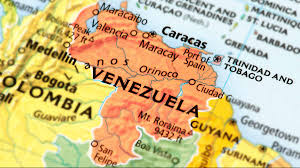
Builders of peace “In a situation of extreme crisis which the country is undergoing, we want to help each other lives as authentic Christians. In Valencia, the city most struck by plunders, we experienced days of confusion and mass hysteria. Many industrial zones were savagely ransacked without the intervention of the police. We even saw the same army incite the plunder of shops, even bringing trucks and equipment. The city is blocked, there are arrests and a tense climate, anger and hunger. In the meantime, in the family and with other friends we are trying to support to one another and convey hope, without judging those who have taken away all sorts of items from the stores, even kitchen appliance and auto components. But we are also witnessing the help of Divine Providence with the arrival of medicine and food for entire families. It is amazing how God’s love watches over us, his children.” (O.T. – Venezuela) Cook “As a cook, I like to imagine life as an exercise to reach the banquet in Heaven, Didn’t Jesus start his public life with a wedding banquet in Cana? Didn’t he take part in many banquets, up to the last supper, and promised a final banquet in which, certainly, many cooks like will find their seats? In my service in the kitchen, the objective is not so much the dish in itself, but the people who will taste the fruit of my work. I try not to work only in view of my career, but to be a good husband and father, but for God.” (V. – Italy) The “trick” «In the apartment I share with other students, cohabitation isn’t always easy t because their habits are very different from mine. One day, discouraged, I was thinking of finding another lodging, when my girlfriend suggested that I take the initiative to do something for my co-boarders. She herself helped me bake a cake. Such a simple gesture! And yet, it helped to ease our relationships, in such a way that a kind of competition to help one another started among us. Now I know the “trick” whenever some difficulties arise: I can start by being the first to love.” (B. C. – Czech Republic) Real poverty “I have a disabled friend who gets a minimum pension and is isolated by his brothers and sisters. One day he told me: “I bought a pair of shoes for G. and every day I offer him breakfast at the bar. Now I am thinking of paying for his denture.” He does such acts daily and yet they say he is antisocial and that he is even short of mind. Instead the goodness of this man, in his conditions, is able to pay attention to others’ needs, always moves me. One day he said “When someone suffers, I feel that he resembles me a lot. And being able to help him makes me feel alive and fulfilled.” (T. – Italy)
15 Aug 2017 | Non categorizzato
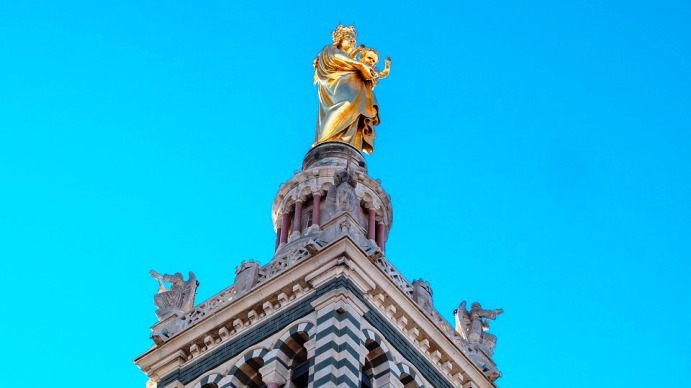
“The very thought of talking about Mary makes my soul tremble and my heart patter. This is a topic that lies beyond our faculties and silence would be more appropriate than words. Mary! The most extraordinary among all created beings, exalted to the point of being clothed with the title and reality Mother of God and therefore Immaculate, Assumed into Heaven, Queen and Mother of the Church. Mary is closer to God than to human creatures, and yet she’s a creature just like us, and that’s how she stands in front of the Creator. This is why it’s possible for her to be like an inclined plane for us, which touches heaven and earth. And so, even in her extraordinary state, she can be: a girl, young woman, fiance, mother, spouse, widow… just like us who at any age or in any condition in life can find a connection with her and therefore a model. […] As for having a true devotion to her – while recognizing the many devotions that have blossomed down through the ages to provide the Christian people with the sense of her maternal love, bearing in mind all the large and small woes in life – I would advise a way that brings to life in our hearts a love for Mary that’s like the kind Jesus has for her. While Mary has all those magnificent and extraordinary qualities that you know about, she’s also ‘the perfect Christian’. And, as you can see from the Gospel, she doesn’t live her own life but lets God’s law live in her. She’s the one who can say better than any other: ‘It is no longer I who live, but Christ living in me” (Gal 2:20). Mary is the living Word of God. If you really want to love her, ‘imitate her’. You be living Word of God! Imitating her makes you similar to her and leads you to love her because, as the saying goes, ‘Love either finds or makes equals,’ and it’s also true that equals love each other. […] So let’s imitate Mary, let’s become like her and love for her will suddenly blossom in our own hearts.” Chiara Lubich “Dialogo aperto”. Pubblicato in Città Nuova, 1976, n. 9, p. 33. See Centro Chiara Lubich
13 Aug 2017 | Non categorizzato
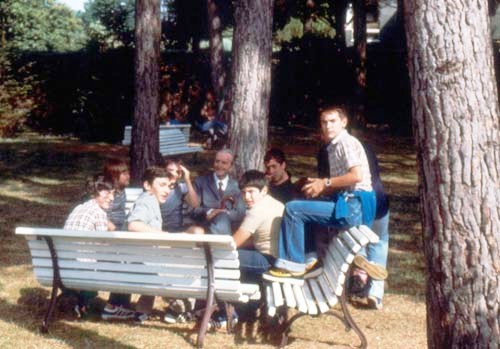
Igino Giordani treated young people with the love that emerges from the unity among generations. He was a brother to everyone, child or grown-up, because fraternity gathers us into one in the sight of the one Father: “Jesus used very vivid words to express his close kinship with people. One can only imagine how he loved his mother and cousins, childhood friends and the confidants of his youth. Yet, one time, when their arrival was announced to him as he was teaching, he responded: ‘Who is my mother and who are my brothers and sisters?’ And extending his hand towards his disciples, he said: ‘There is my mother, there are my brothers: whoever does the will of my Father in heaven is my brother, sister and mother’ (see Mt 12:48-50). The meaning of his answer is obvious: whoever accepts God’s fatherhood, becomes brother, sister and mother of Jesus. Christianity relates us to Christ and, through Him, to God, with the first degree of kinship which is brotherhood” [Igino Giordani, Il messaggio sociale del cristianesimo, 2001, p. 87]. Giordani compared the unity among generations to driving a car: youth is like the engine; old age like a prudent guide; both of them are required for arriving at the goal! From among his many letters, in 1979, a year before his death, there is one from a nine year old boy nicknamed Sandokan, who establishes a profound relationship with Igino, whom he calls ‘Little Grandpa with the heart of a Gen.” “Dear Grandpa, ever since I heard that you were sick, I’ve been trying to pray more for you. Today Mom, Dad and I asked the priest to remember you at Mass. And I asked Jesus in my heart to help and be close to you in this moment. I remember that in one letter I told you I’d visit you at home, but I couldn’t – but the important thing is to have you in my heart and [for me to be] in yours. When you’ve left us all, would you say hi to Jesus for us? You know, I’m sad that you’re going because I love you very much – but I’m glad that you’re going to be able to see Jesus who was everything for you. A big kiss from your Sandokan.” “Dearest Sandokan, also known as Fernando, I remember you very well. You and I are sons of the same Father, Jesus. And I spend my days alongside you, without a care for the fact that we live far from one another. Dad told you well: I’m a grandpa with the heart of a Gen. So that means we’re the same age as brothers. Just remember me to your little brothers who are also Jesus’s sons; and love them as you love Mom and Dad and as you love Jesus… A kiss on the nose from your Grandpa.” On the benches of the Mariapolis Centre, during the congresses that were offered to them by the Focolare Movement, the young people crowded around him, singing, dancing and discussing their lives with him. Each of them felt loved and made pacts with him to follow and live the Ideal of unity that Chiara Lubich had proposed. Giordani made a note of one of those joyful encounters in his diary: “Even though I’m without voice today, they asked me to say something at the school for the Gen boys and girls – three hundred people. I improvised, talking about different things, but focusing them on the mystery of love that is contained in the God-Brother-Me triad. There was an explosion of enthusiasm among the Gen boys and girls that was enhanced by songs and demonstrations of joy and unity among all” [from: Diario di fuoco, April 25, 1979].
11 Aug 2017 | Non categorizzato
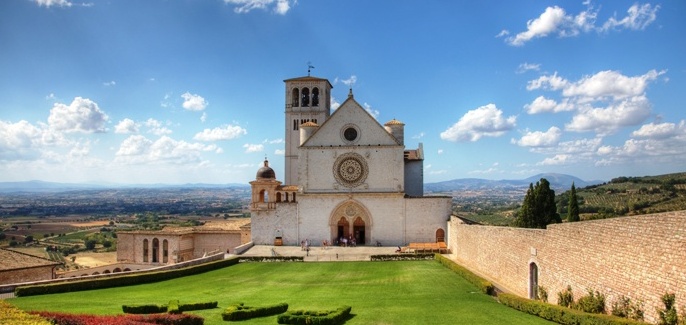
The first event in Mary’s life mentioned in the New Testament is the Annunciation (cf. Lk 1:25ff). Mary had been chosen by God from eternity, but something very special happened to her at the Annunciation. The angel appeared to her with a message from God, and Mary accepted it. Because of her yes, a new reality was immediately born within her: the incarnation of Jesus in her womb. If we try to understand the lives of some saints, we can see that something analogous to what took place in Mary happens spiritually in them as well, when, for example, they come across a charism that God has given for the good of the Church. We know the story of Saint Clare of Assisi, the most perfect disciple of Saint Francis. It sometimes happens that, while visiting the Church of Saint Damian in Assisi, where she lived, the tour guide describes that sacred place by saying, “Here is where Christ was incarnated in the heart of Clare.” And these are not just words; they reveal a profound truth. Even though Clare of Assisi had, we may assume, lived in a state of grace, her meeting with Francis brought about something new in her. Francis was the personification of a word of God addressed to the world anew — the word “poverty.” Meeting him caused Christ to develop and grow in Clare, to the extent that she became one of the greatest saints of the universal Church. And is it not indeed the thought of popes, saints and Church Fathers, that the Word generates Christ in souls? Likewise, when at a certain point in our lives we come to know the charism of unity, through another person, a publication or a meeting, and we feel God’s call to make it our own, if we say our yes, something similar to that which happened to Mary and the saints happens to us. Christ can truly begin to develop and grow spiritually in our hearts, as though by an actualization of our baptism. I read that Clare of Assisi before dying said these marvellous words, “I thank you, Lord, for having created me,” meaning, by creating me you have acquired your own glory. Hers was a death of love. If only heaven would wish something like this for us! If we remain faithful, our own death too will not be simply a physical death, but a death of love. We too will rise up to meet our mother, our saint, our model, the one who on this earth was our head, our queen, and our mother. And we will see the glory of Mary, queen of heaven and of earth. Above all, we will see her surrounded by those who loved her in a special way. From Chiara Lubich, “Mary – Transparency of God”, New City, London, 2003 – pp. 52-53, 67.
10 Aug 2017 | Focolare Worldwide
Arr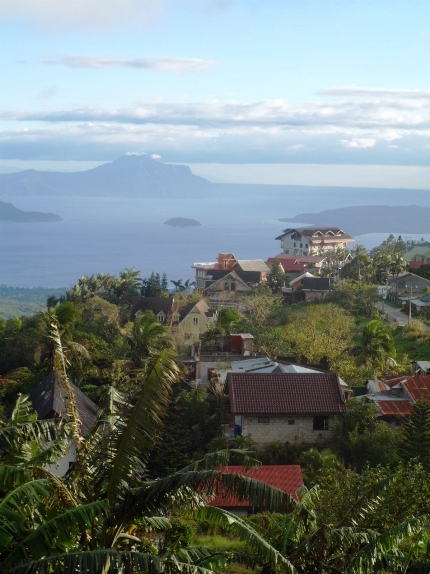 iving from Manila 60 km away, your first sensation as you come upon the region of Lake Taal on the island of Luzon is one of deep peace. Visitors are enchanted by such a unique sight: a lake whose waters have filled an ancient caldera with an island in its midst. That island, in turn, which is set in a more recent crater, has another much smaller lake. And at the centre of that small water mirror sits another island. It has that Russian doll effect with one lake contained inside the other. From the top of the volcano the view extends over green hills of fields and forests, pineapple, coffee and endless varieties of banana plantations and tropical flowers.
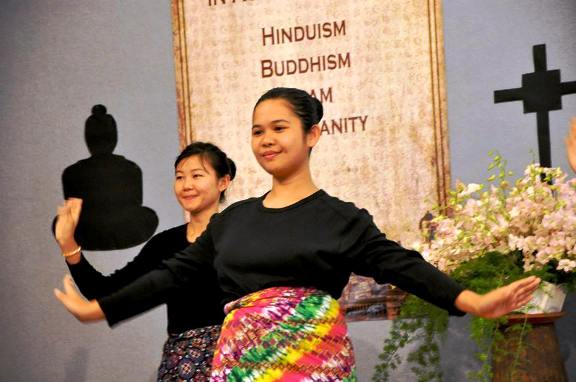
 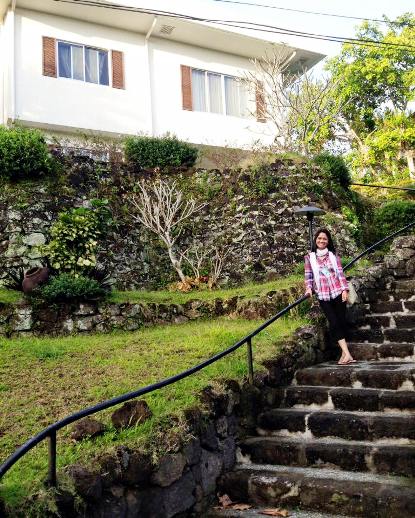 Ever since 1982 visitors have had the same sensation among the streets and buildings of Mariapolis Peace in Tagaytay, which was the first permanent Mariapolis in Asia. “I have a dream,” exclaimed Chiara Lubich that year, as she observed the hills of Tagaytay: “that precisely there, a Focolare town would rise where the Gospel would be lived out in a steady way in order to give a picture of what the world would be like if we all lived the Gospel. The presence of the Focolare in Tagaytay is, however, far farther in time. The Focolare’s presence in the Philippines goes back much further in time. Already in 1966, the first meetings of Focolare members were being held in Tagaytay. Taken by the beauty of the natural surroundings, those members had prayed that one day there would be a centre for gatherings of Focolare members in that place, a “home for all of them”. Thanks to a generous donation the following year, that dream began to come true and take shape in 1975. Then came the events and dream in 1982, with the coincidental invitation to the Focolare Movement by the Philippine Bishops Conference to build, right there in the vicinity of Tagaytay, a “school” for Asian priests. Ever since then the development has been unexpectedly surprising. In particular, among the ten constructions that have been erected, there is a school of dialogue with the Great Religions of Asia, geared particularly towards Muslims and Buddhists, but also Hindus and Shintoists. Every year Buddhist youths from a lay Japanese association converge on the property to experience the joy of living living life together. Recently, in May, 200 members of the Great Religions from 13 Asian countries attended the School of Oriental Religions (SOR). From its founding, Mariapolis Pace has assumed the profile of a centre for human development, becoming one of the venues of the Bukas Palad Foundation, a non-profit NGO, founded near Manila in 1983 to respond to the social and sanitary needs of the poorest sections of the population, especially in rural regions. Entire families live in precarious situations – often in one-room homes with dirt floors and no running water – with little or no access to medical care and scarce job opportunities. With their motto: “Freely we have received; freely we give,” Bukas Palad (with open hands), has been on course for more than thirty years, improving the quality of life for thousands of people, not only medically, but also humanly and spiritualy, with an integrated and holistic approach focused on human health and development. The workshops are currently a highlight of the Mariapolis, which adhere to the Economy of Communion Project, with the hospital volunteer activities in several public health structures, along with the lively testimony of workers in the media and several education projects. The experiences of dialogue and sharing grow and multiply like the water in a lake that is replicated in other mirrors of water. But the reflections of Mariapolis Peace cannot be counted.
