9 Aug 2017 | Focolare Worldwide
As a child, I loved to tune in to Vatican Radio in the evenings, which would broadcast news in various foreign languages. Naturally, I didn’t know any of those languages, but listening fascinated me. It seemed like my heart was expanding to all humanity, its people and their everyday lives. It was during one of these evenings that I happened to hear Pope Pius XII invoke the name of God three times: “God, God, God!” That cry was imprinted on my conscience, even if, with the passing of time, it dimmed and was lost to memory. This was 1956. Nine years later, in January 1963, I found myself in Turin, in the military. A bunkmate invited me to a conference, which, strangely enough, I didn’t ask anything about beforehand. As I requested permission from my superiors, I found myself asking as if my whole life depended on it. When they unexpectedly agreed, I left for Ala di Stura, a small mountain village in a marvelous corner of nature. After having been welcomed by those present as if we had always known one another, it was there that I met Chiara Lubich – the founder of Focolare – and Igino Giordani, a co-founder. It made a strong impression on me to meet people from different cultures and religions. I also was able to meet during that time, since she was also hosted by Focolare, Assunta Roncalli, who was Pope John XXIII’s sister. He died that same year on June 3, 1963. One morning Chiara spoke about a new calling that had started in the movement. It was only when she explained the year and circumstances of how it had begun that something urgently returned to mind: “God, God, God! God will help you, God will be your strength. May this indescribable name resound, the source of every right, justice and freedom, in parliaments, squares, houses and offices…” That was what the pope said in his radio message on November 10, 1956, when the revolution in Hungary was crushed. “There was a society that erased the name of God, the reality of God, the providence of God, and the love of God from people’s hearts,” Chiara commented. “So there must be a society that is able to return him to his rightful place. Is it possible that the devil has his faithful followers, totalitarians, pseudo-martyrs for his cause, and God not have a small army of Christians that give everything to take back the world for him? Chiara responded to that call of the pope with her intuition to gather women and men of all ages, nationalities, conditions, bound by a single link: that of universal fraternity. They would form an army of volunteers, the Volunteers of God, part of the Focolare Movement that today is present in 182 countries. It is a modern, radical calling. Chiara Lubich gives it an additional fascinating touch when she describes it as the “attraction of modern times”: “To achieve the highest contemplation while remaining mixed in the crowd, side by side with people… to shine embellishing light on everyone, and at the same time, share with our neighbors their shame, fame, bruises and brief joys.” Igino Giordani compares it to “sanctity in worker’s clothing, spurred to bring God in parliament, in local councils, in hospitals, schools, offices, shops, studios, home, on the bocce field, but also in the world of art, communication, science, economics…” Because, he adds, “to bring God to these places means transforming them into abbeys, changing them into holy places where each day a special mass is celebrated!” Fifty-four years have passed since that day I heard the call to enroll with the Volunteers of God, who were born from a charism that, because it is genuine, can be measured by its tangible results in culture, society, economics, politics… so that the various areas of life do not remain mediocre, hopeless, divided and callous, but open to welcome the deep presence of God. Gennaro Piccolo, “A way for unity,” Centro Igino Giordani, Andria, Italy
8 Aug 2017 | Senza categoria
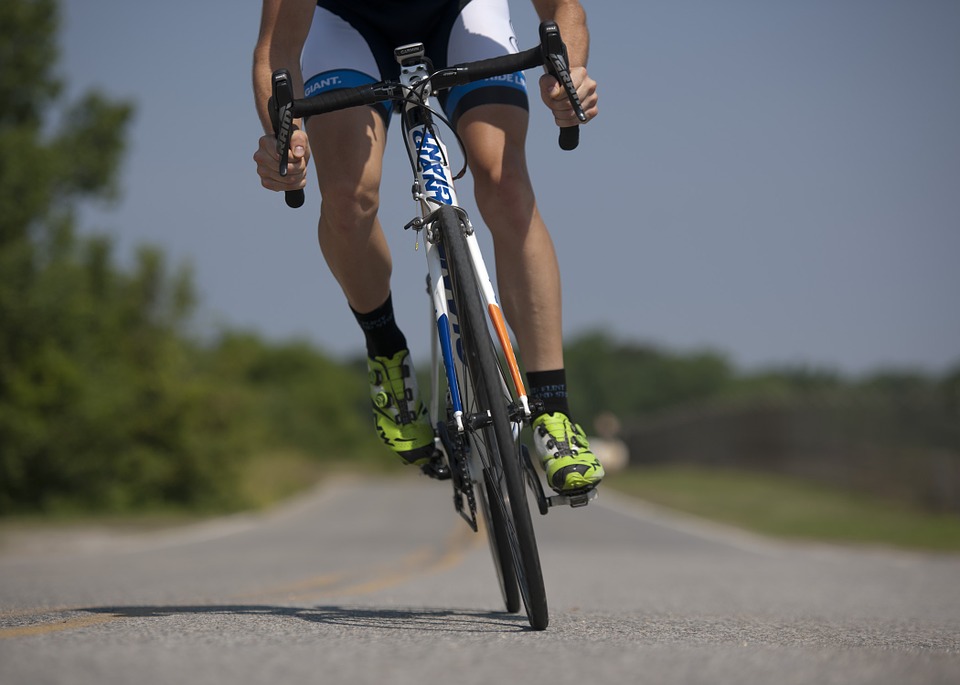 Francesco was a rugged sportsman, especially on his bike. Every day he would ride several kilometres over the tortuous and picturesque paths of the Roman hills, to help keep in shape. He looks young, but it’s already been quite a few years since he decided to give his life to loving God in the neighbours he meets each day – but also in the hard times in his own life as well as in the lives of others. A few days ago, during one of his usual workouts, his bike hit a rock and the steering wheel broke, catapulting him into the air. The landing wasn’t gentle . . . and the first to hit the hard asphalt was his neck, resulting in damage to the C2 vertebrae. In a single second the whole panorama changed: from intense physical training to immobility on a hospital bed, inside an iron “cage” from the neck up, kept in place with screws pressing against the skull. . . That’s also why it was important to him to stay in shape. The apparatus is meant to impede movement and hopefully lead to the soldering of the injured vertebrae. He sends a phone message from his hospital bed: “C2 Vertebrae, you barged in on my day and changed everything. I didn’t even know you were there and, if you were, where? Then came that abrupt landing on the asphalt and amidst all the broken parts you were the one everybody was worried about. You had the power to cause my death, or to render me immobile in a wheelchair. It was enough for you to allow the axis vertebrae to break … that piece of bone which makes it possible for me to move my head. Let’s hope that after this blow, I won’t have to change my vision of the world and that with the help of this futuristic device you will be able to go back to being the fulcrum of all that moves. Big C2, I’m trying to rebuild my relationship with you, not only out of self interest, but to know the amazing things of which we are made. Every little piece matters! May these moments help me to discover how valuable everything is in me, all of it the fruit of Your love.” Francesco (Italy)
7 Aug 2017 | Focolare Worldwide, Senza categoria
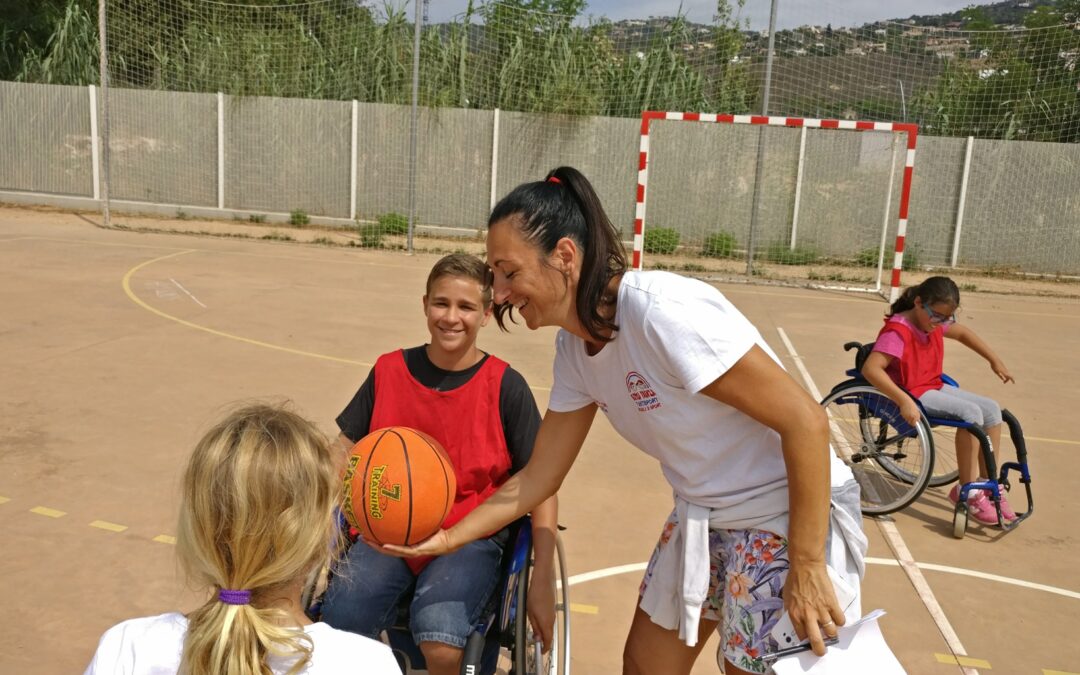
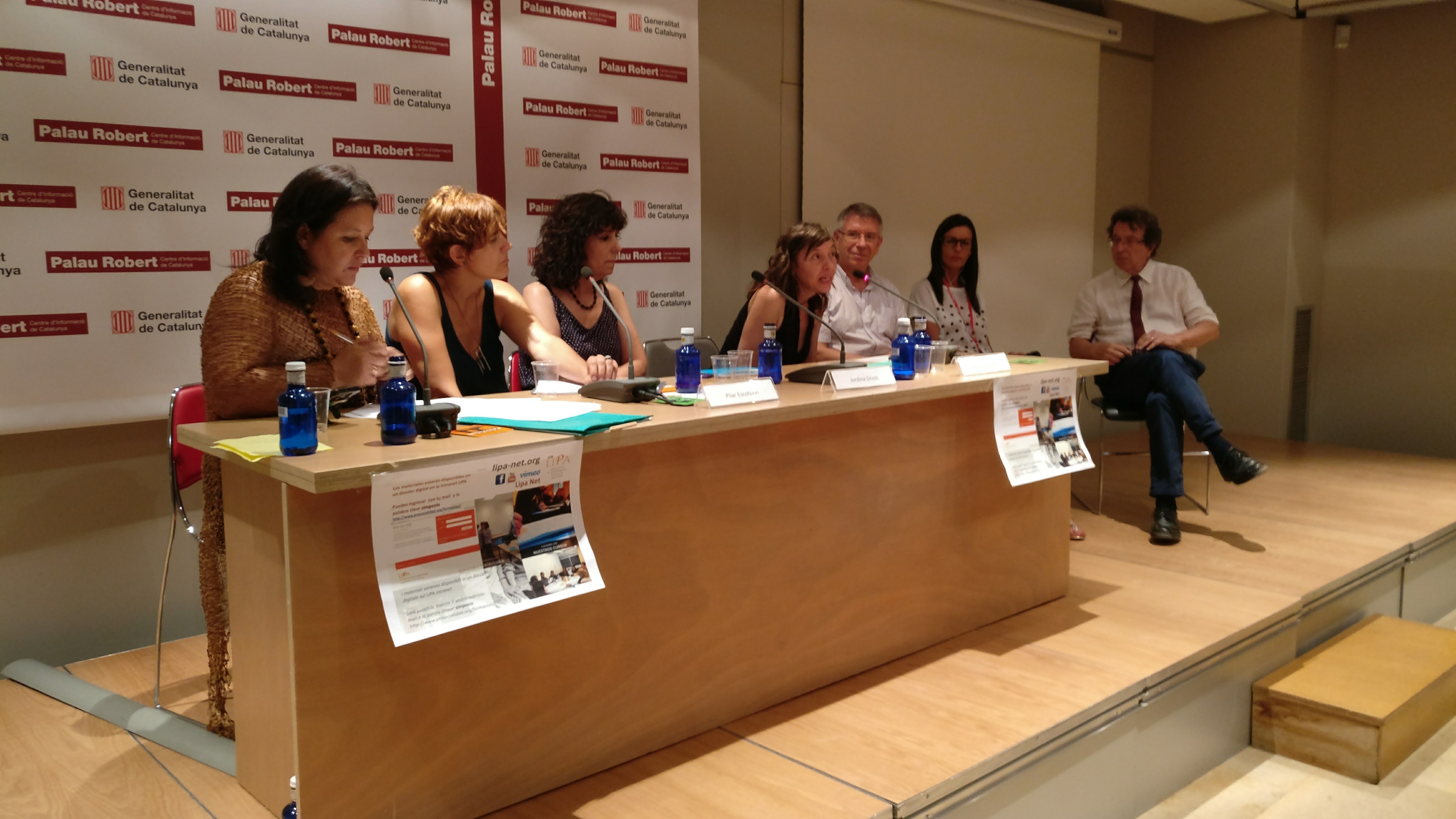 On July 13, 2017, seventy people from various places in Spain, Italy and Croatia attended the “Inclusive Schools, Social Innovation, Childhood and Sport Symposium” which was held at the Palau Robert Gardens of Barcelona. The event was organized by the Laboratorio de Investigación Prosocial Aplicada (LIPA), Universitat Autònoma de Barcelona and by the Sportmeet International Network. Teachers, physiotherapists and sport players took a closer look at projects that promote inclusion, intervention models and disability from the standpoint of inclusion, in the belief that no part of life is not worth living. Life needs to have a place for weakness, to experience, through weakness, one’s own ability to recuperate. In the days that followed, the Mariapolis Centre of Castell d’Aro provided the forum for the Summer School in which topics regarding inclusive sport were examined and discussed. Twenty people attended and were guided through the experience by experts Eugenio Jimènez and Dr Javier Lamoneda. Through games they learned what it’s like to be in the shoes of a person with a disability. By its very nature sport is an everyday opportunity to come face to face with limitations, and offers opportunities for reflection on the obstacles of life, suffering and disadvantage. The reflections that were presented by Paolo Crepaz from Sportmeet led the participants to question the concepts of limitation, barriers, obstacles, suffering and disadvantage from the standpoint of things that can be turned into potential, an opportunity to “constantly tend, by force of habit, towards universal brotherhood” (Chiara Lubich).
 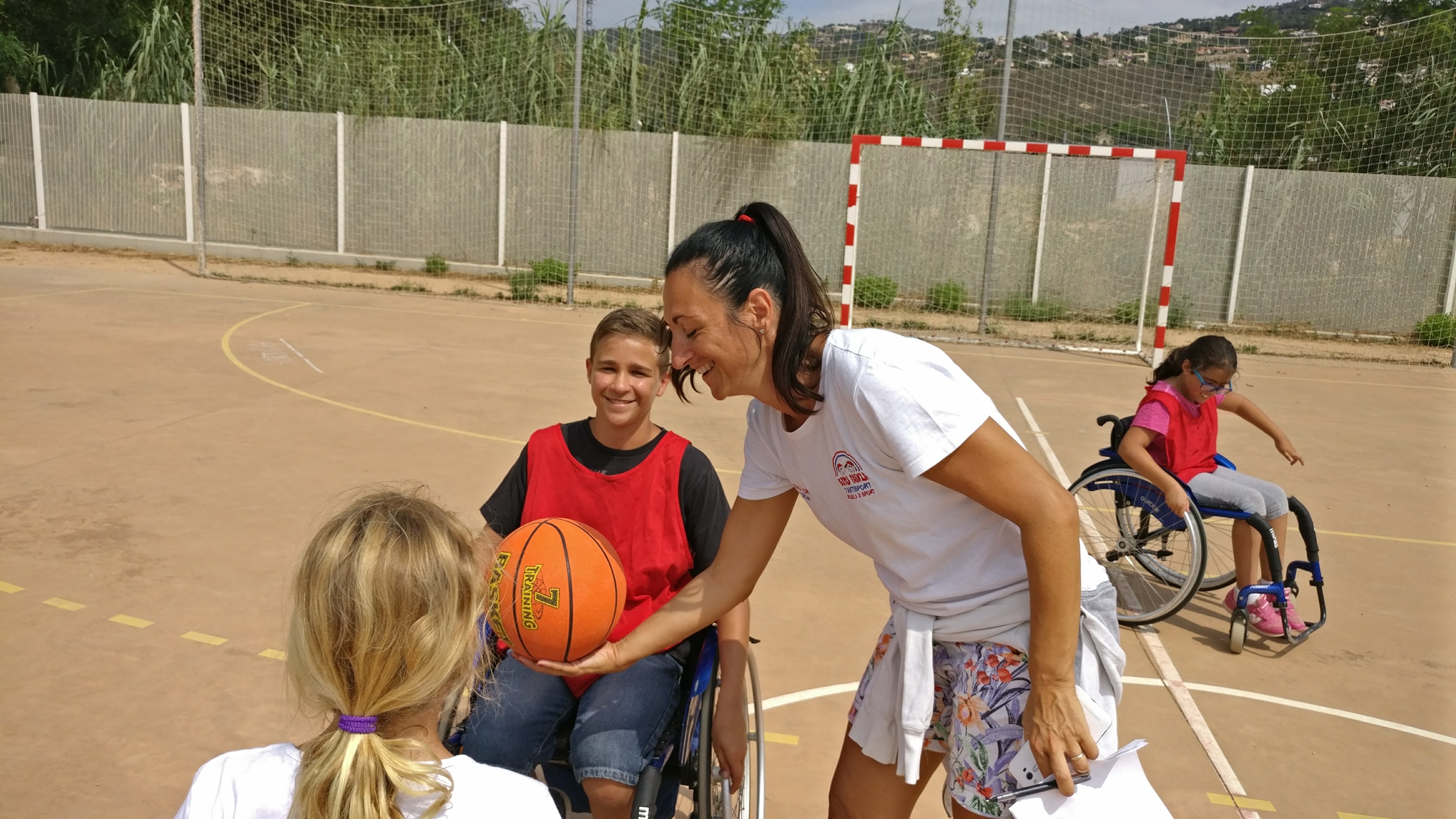 Sport’s ability to get us to face and overcome obstacles, to be inclusive, to struggle against all sorts of barriers and in every social context is quite striking. For example, what a small ball can do in uniting people on an isolated summer field or inside a refugee camp. Players come face to face with one another within an atmosphere of mutual trust and esteem. Javier Lamoneda Prieto, professor of Physical Education, in Jerez de la Frontera, Spain, shared his own experience: “It seems like a team has formed over these days, a team that would like physical activity to become a source of encounter between different actors and sport professionals. It is the first time such a training course has been developed by the public university.” Roberto Niccolis, a sport operative from Verona, Italy: “The limit that I often encounter is that of the distance that separates people from each other; the handicap, I mean. Reducing this distance through sharing, getting to know one another and experiences with one another other make us feel closer.” Roberto Macri, President of the Opera Santa Rita Foundation, Prato, Italy: “Above all, you’ve created an opportunity for reflecting on ourselves and the values that emerge from our work. Not only our professional or volunteer work, but more generally what can give deeper meaning to being men or women.”
5 Aug 2017 | Non categorizzato
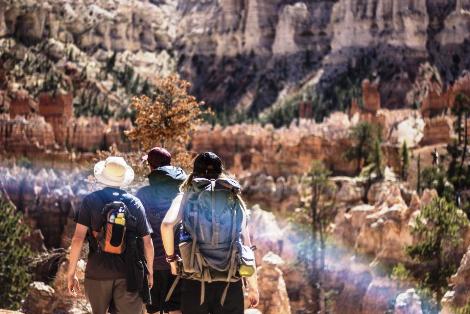
“Contemplating the immensity of the universe, the extraordinary beauty and power of nature, my mind rose spontaneously to the Creator of it all, to a new sort of understanding of the immensity of God. It made a new and strong impression on me; I felt like falling on my knees to adore, praise, and glorify God. I felt a great need of this, as if it were my actual vocation. It was as if my eyes had been opened, to understand as never before who it is that we have chosen as our ideal; or rather, who has chosen us. I saw that he is so great, so great, so great, that it seemed impossible that he thinks of us. This impression of God’s immensity stayed in my heart for several days. Now, saying, “Hallowed be thy name,” or “Glory be to the Father and to the Son and to the Holy Spirit,” is different for me: it has become a need of the heart. (Rocca di Papa, 22.1.87) “… Contemplating perhaps an endless stretch of sea, a high mountain range, an impressive glacier or the night sky dotted with stars. What majesty! The immen¬sity of it! And through the dazzling splendour of nature, we would find our way to its author: God, the King of the universe, the Lord of the galaxies, the Infinite. … He is everywhere: beneath the sparkle of a glittering stream, within the blossoming of a flower, in a bright dawn or a red sunset, on a snow-covered peak. Nature is rarely preserved in our concrete cities, built by human hands in the midst of the noise of the world. Yet, if we want, a glimpse of blue sky between the skyscrap¬er peaks is enough to remind us of God; a ray of sunlight, which does not fail to pierce even through the bars of a prison, is enough; a flower is enough, a meadow, a child’s face. … This will help us go back into the midst of humanity, which is where we belong, strengthened, as Jesus certainly was when having prayed all night to the Father on the mountainside under the starry sky, he went back among people to do good. (Mollens, 22.9.88) From Chiara Lubich – “Cercando le cose di lassù” [Seeking the things that are above]– Città Nuova Editrice, Roma 1992, pagg. 5 – 111,112.
