
3 Aug 2017 | Focolare Worldwide
A book for the exam “I study architecture. I had a very important exam to take, but I was missing a fundamental book. Since I was from Spain, it cost four times the normal price. It was the last day to sign up for that exam and I was desperate. I left the university and ran to a nearby church, where I asked Jesus for help, praying for him to get me that book ‘by midday.’ Shortly after, back at the department, I heard someone calling me: it was a colleague I had not seen for some time. Hearing of my problem, he insisted coming with me to a another student’s house – someone I hardly knew. She had that book, and was even happy to lend it to me. It was midday. Some days later, seeing that there were typographic errors and important pages missing, I wrote to the publishing house via email. To thank me, a week later the publisher couriered me a free copy. How could I not see the love of God in all this?” (S. G., Argentina) Stepping in my husband’s shoes “After work my husband often lays down on the sofa to watch a movie. This creates tension and anger inside me, since I expect a bit of help after a day of being busy with the children and everything else that happens. One day, urged on by advice I received from some friends to start loving him first without expecting anything, I tried to put myself in his shoes. I thought about his work committments and his need to find tenderness and understanding at home. Setting aside everything I was doing, I sat down next to him to watch a film, and we shared our ideas about it.” (G. G., Siberia) Mutual help “My neighbor’s husband was hospitalized. His 70-year-old brother was left alone at home, and he doesn’t cook at all. Despite the fact that during that time my own husband and mother had the flu, I offered to look after him. For 15 days, as I took care of my sick family, I also cooked for him, and on Sunday I invited him to lunch at our house. He responded in turn by bringing some foodstuffs that he had. He became one of the family.” (C., Italy) Asking forgiveness “Since I have a tough, authoritarian and independent character, I typically judge people. This way of being made it difficult to relate to others, especially my husband. Some time ago I found myself participating in a meeting that was about going deeper into the words of the Gospel. There my certainties were shaken. I decided to start living those words at work, where I direct personnel in a large warehouse with more than 30 employees. I had a strong aversion to one employee in particular. When it was his turn to get paid, I used to throw the envelope with the money on his desk. This time? I tried to see him differently, as if I had put on new glasses. Making an effort, I approached him and in front of everyone asked him to forgive me. It was one of the greatest joys I had ever experienced.” (D., Brazil)
2 Aug 2017 | Non categorizzato
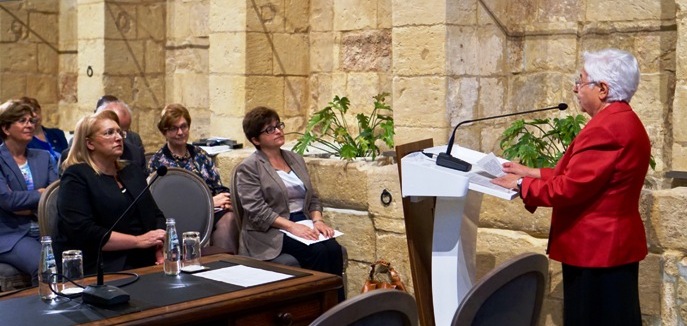
Photo A. Dimech – © CSC Audiovisivi
1 Aug 2017 | Focolare Worldwide
 The term “system” is perhaps among the most used in our language. Almost without realising, it always seems to crop up, whether we’re talking about elections, football pools, stars, units of measure, politics, irrigation, the kids’ algebra homework, security, transportation, medicines or mountain chains. Simple or complex, nerves or finances, a “system” (from the Greek systema, to combine) is always on our lips. In 1937, and more “systematically” in 1945, an Austrian biologist named Ludwig von Bertalanffy (b. Vienna, 1901–d. Buffalo, New York, 1972) was the first to announce General Systems Theory, a method for reading into and interpreting the world as it exists. “Every organism is a dynamic order of processes that reciprocally act on each other.” Jordi Marjanedas, from Catalonia, class of 1940, has scrupulously dedicated himself this theory in his recent volume entitled, Today’s Challenges in the Light of General Systems Theory, published by Città Nuova. The text stretches from biology to the life of the universe, from ecology to anthropology, from history to ethics, to social sciences and religion, searching every field of knowledge for elements of integration and cohesion, according to a unified vision of humanity and creation. Why is systems theory so important? The development of modern science brought about a proliferation of knowledge that is partial, fragmented and hyper-specialized. To the point that, ironically, to the writer G. K. Chesterton it seemed that “eventually they end up knowing everything about nothing.” In medicine, for example, a human being is not just liver or limbs, but a harmonious and unified togetherness of spirit – soul and body. In philosophy, there have been numerous theories and closed systems that claimed to explain all reality with a single meaning (totalitarianism is one example). Aristotle himself admitted that “the whole is more than the sum of its parts.”
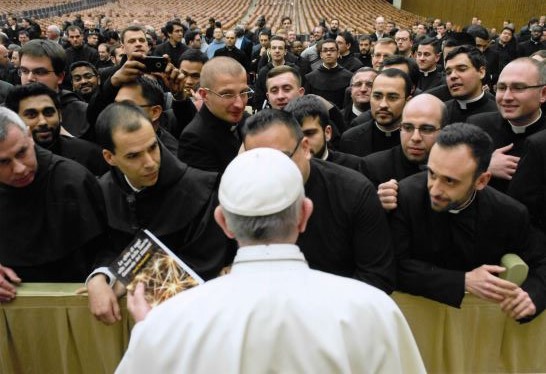
A priest presents the Pope with the book
31 Jul 2017 | Focolare Worldwide
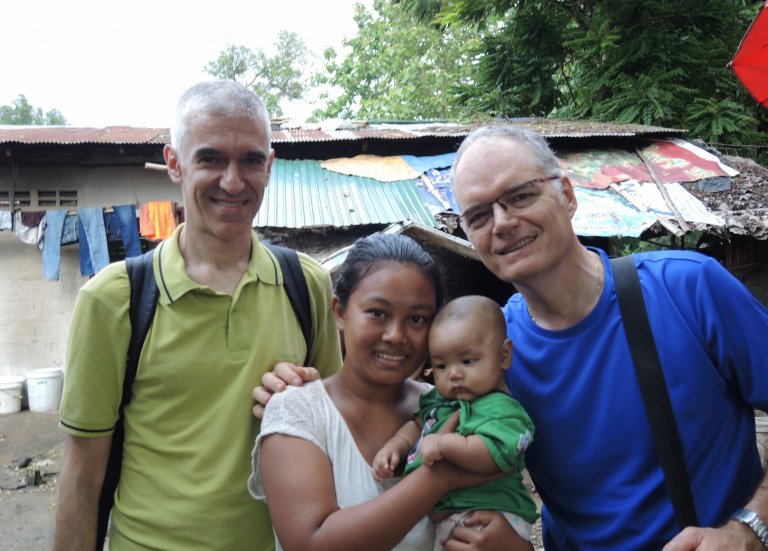 Ever since I began my experience in the focolare in Thailand in 1984 I’ve been in ongoing contact with the poor. In 1985, when we took our first trip to Burma – now Myanmar – I was able to touch the extreme poverty with my own hands; up until then I would never have had the opportunity to see it in person. Then, because the civil war in 1988, refugees began arriving from Thailand, especially in the border regions. Their condition? Illness, lonliness, desperation, exploitation and a great longing for a real life. For us focolarini, they represented a face of Jesus crucified and forsaken who we tried to lift up and love. Over these 32 years our help has surely been insufficient, as one can see from the recent humanitariann distaster that isn’t receiving a lot of reporting. No one is ever prepared for the pain of seeing people die. We’ve taken over a projejct begun by Father Justine, Burmese, who died after a long illness. He provided care for the children of migrants who were being left alone at home all day, and so we gave the last monies we had to be able to provide them hospitality. Now the school is called “Drop By Drop, the Latina Bridge Mae Sot.” It’s a collaborative effort between our children in Mae Sot that are originally Birmian and Karen and her friends from a school in Latina, Italy where several Focolare members work. It’s a bridge of solidarity which connects the two cities that are 10,000 km apart, and it has now involved some hundred poeple from many other places. A multi-national transport company helps us to take the containers of collected goods, paying all the customs and clearance fees (€ 1000) to their destination in Mae Sot on the mountains of Thailand.
 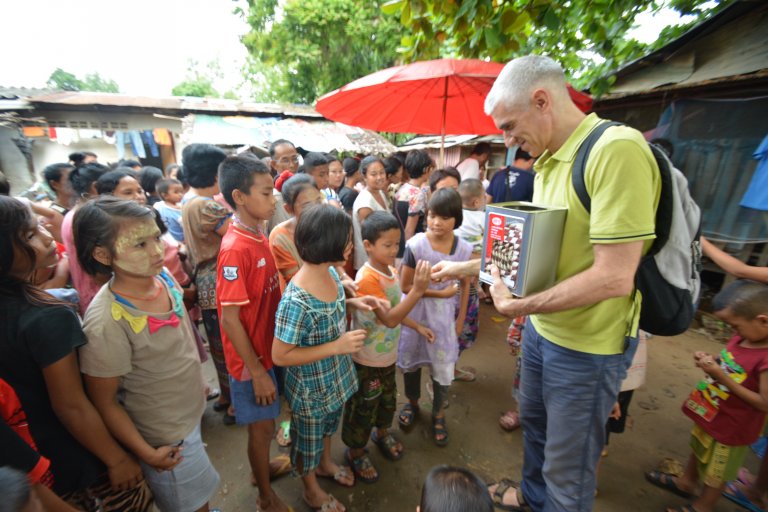 Currently, through Father Joachim from Myanmar, we are helping 200 people who are outside official refugee camps, undocumented and often without food. As Pope Francis puts it, we are experiencing what it means to “touch the flesh of Christ,” one of the many faces of Jesus Forsaken. Besides food, there is great need of love, warmth and affectioin… Chiara Lubich and our spirituality urge us to ‘make ourselves one’ with everyone. One of them said to us: ‘Thank you for everything you get for us,, but especially for making us feel loved. This gives us hope to live.’ There’s an association made up of some friends from Poschiavo in Switzerland, which has been recognized by the government and finances projects that are underway in Thailand, Laos and Vietnam. Six years later it seems like a real miracle!
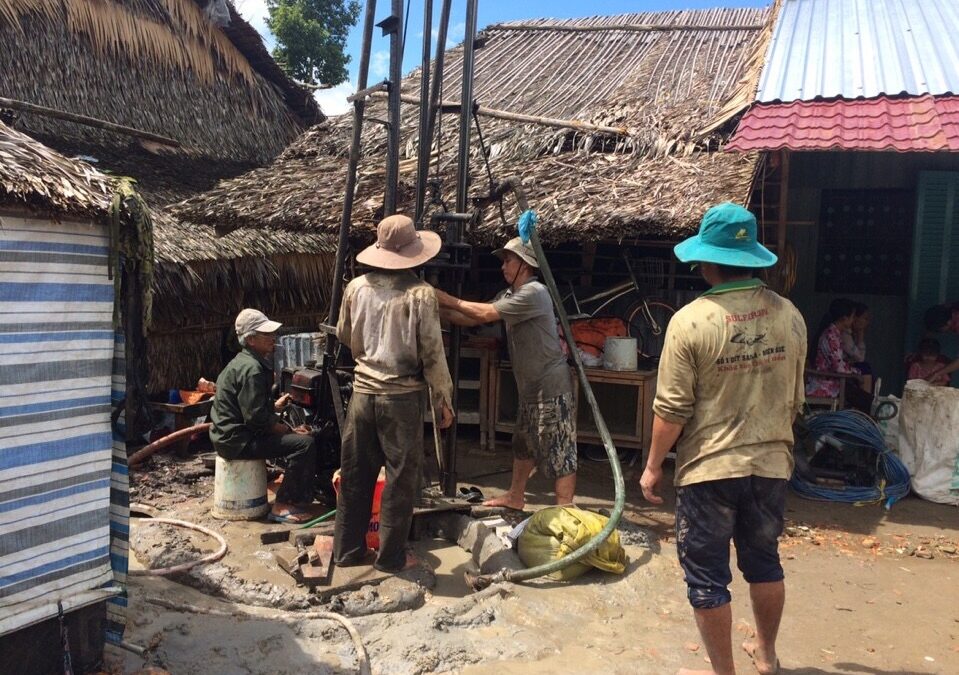
 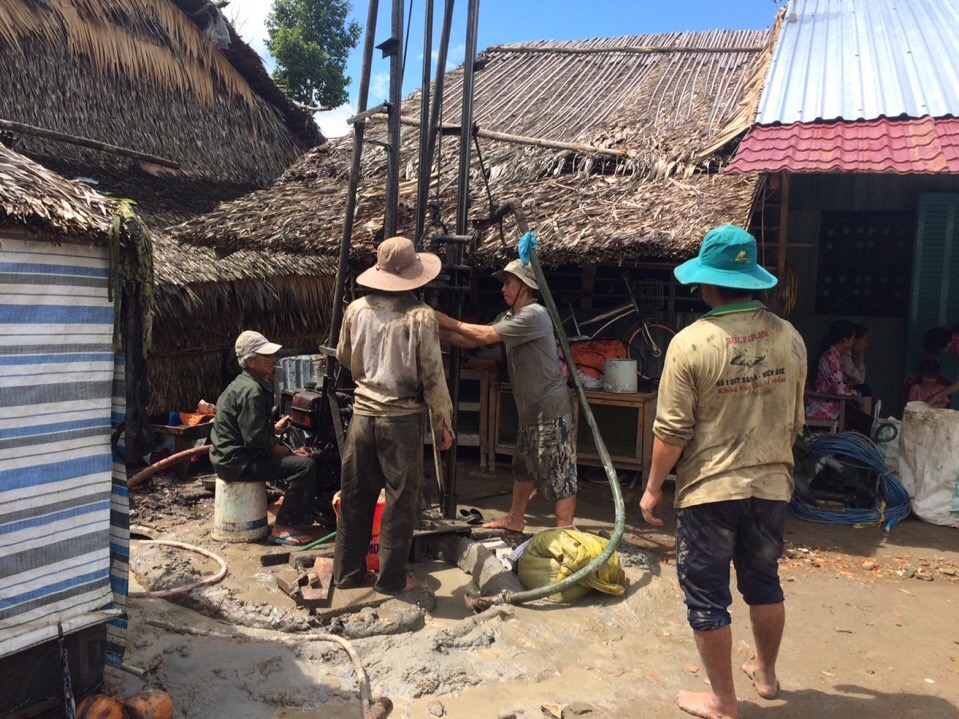 The projects in Vietnam are located in the southern zone, towards the Mekong Delta, in a parish. We build and repair small houses, wells with potable water; and we build bridges that are very useful for communication among the small islands.The so-called monkey bridges, constructed with bamboo stems are substituted with bridges made for humans with iron and cement. Now we’ve begun to work in the mountains too, in central Vietnam, in the zone of Gia Lai, which was known for the battles during the war. The Church is very involved in that zone and the poverty level has really reached levels of high concern in the mountain villages, especially among ethnic populations. In Laos we provide assistance for children through priests who have spent time at the priest school in Taygayta, Philippines. The help is sustained by genuine friendship, much creativity and a willingness to work. Love is like a bridge that joins everyone in a common dream: to live universal brotherhood concretely. Our budget? Free donations from many ordinary and also poor people. We feel that if God wants this project to carry on, he’ll provide for it. Luigi Butori Website: www.gocciadopogoccia.ch Facebook page
