2 May 2017 | Non categorizzato
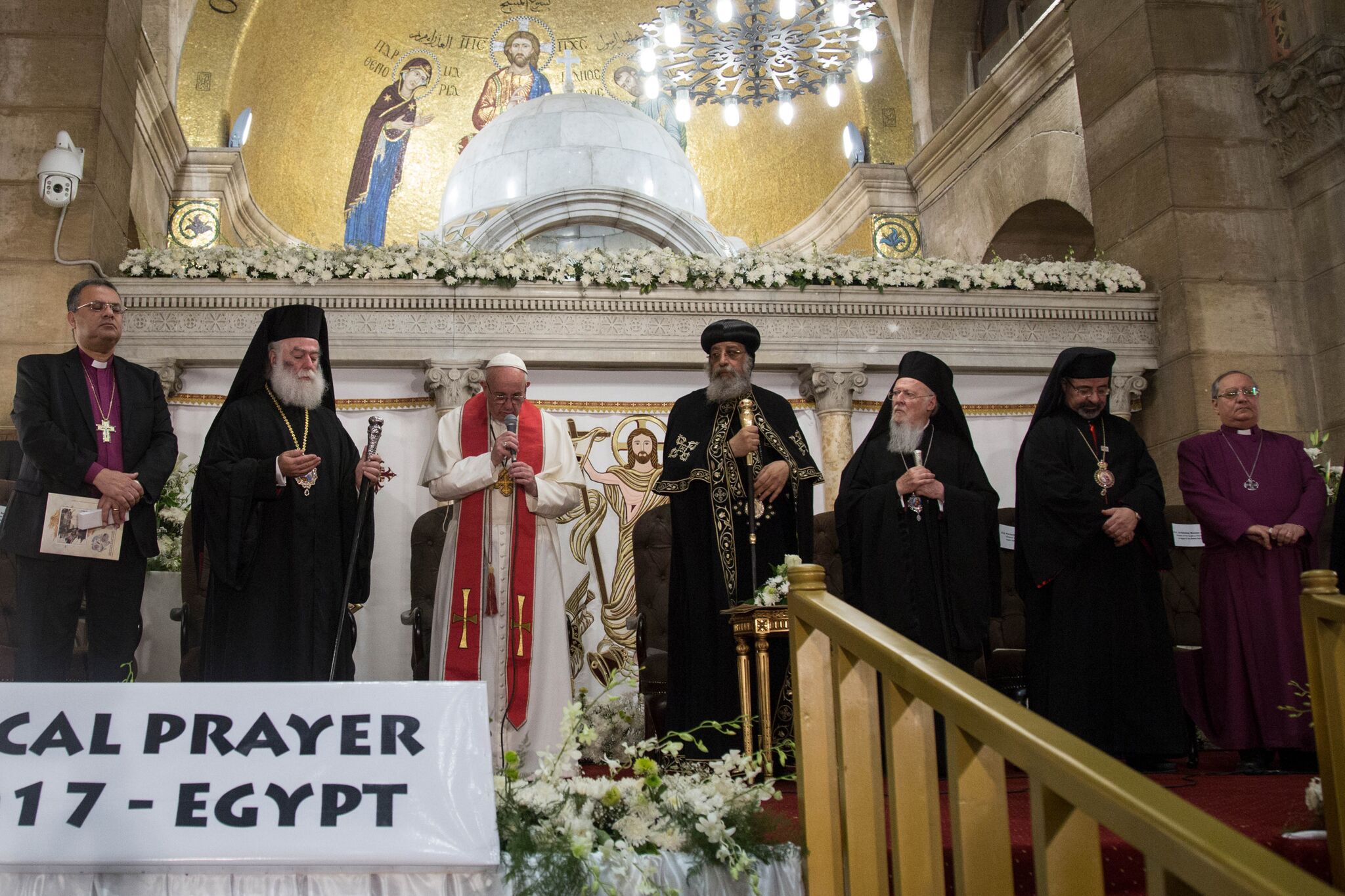
Photo: Roger Anis
 The second invitation was offered by President Al-Sisi when he visited the Vatican in 2014. He’s trying to bring ahead a culture of peace, not without difficulty. But the pope went beyond the politics, in depth. The third invitation came from the Grand Imam of al-Azhar in 2016. On that occasion the pope gave the Encyclical Laudato sii in a gesture of seeking what unites us. In my opinion it was quite courageous of the Grand Imam to offer this invitation, given the precedents. The pope’s speech at al-Azhar University was important, perhaps a beginning. Now I think time will be needed and courage to face the more delicate questions and in order to delve more deeply into the history as well . . . Now it’s up to us Egyptians to get working and moving forward.”
  Besides these important events Pope Francis also met with Catholic men and women Religious, priests and seminarians. “He spoke to them about how a pastor should act. The Catholic community in Egypt is a minority (less than 1%), yet it’s an important reference point when it comes to interreligious dialogue, often because of the Religious: with their lifestyle, their openness to dialogue. Then it is our specific with the ‘dialogue of life’ and the help of the spirituality of unity. The week before the pope arrived, the parents of Blessed Chiara Luce Badano were here. Chiara Luce was a young person from the Focolare Movement who died at the age of 19 because of a tumor. The Catholic Church has held her up as an example of holiness for young people. Her parents travelled around the country presenting the life of their daughter who is now a Blessed. Their visit concluded with a meeting of 1500 young people who were preparing the Mass with the Holy Father. The most powerful moment of the night was getting to know the life of Chiara Luce.” In your opinion, what can change because of this brief but intense visit? I think new inroads were opened for us to follow, especially in interreligious and ecumenical dialogue. Now there’s more faith in the pope and in the Church. So I think it will be easier to move forward. We need to remain open, even though, I think, we’ll need time to ‘digest’ and understand deeply what the pope said in his various speeches. During the mass, in the homily on the disciples of Emmaus, the pope himself underscored how they spent in understanding the Risen Lord event. After this event we also feel like those disciples whose ‘hearts were burning’ because of their great joy.”
1 May 2017 | Focolare Worldwide
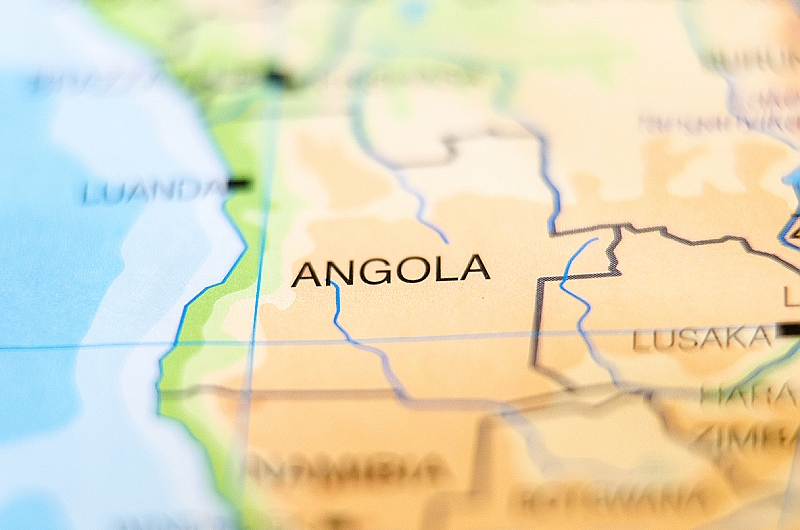
“My brother was born on 12 March 1995 in a city of Bié, south of Angola. He was a cheerful child, loved nature, and enjoyed climbing trees, gathering their fruit and bringing them to others. He had been lively and active since he was a child and had started to work. At the age of 15 he had started to reach his objectives. Not wanting to weigh on his parents, he started working as an assistant bricklayer, and then at 16, as a motorcycle and bicycle mechanic. He dreamt of becoming a doctor to help people, like our dad. Yes, this story is about my brother. Two years ago, he went to the sea with three of his friends. On their way home they were surprised by some policemen. In those days there was a big tension in the city, and a lot of violence. To prevent it, the police had set a curfew: all those who were out and about after 6 pm were arrested. It was a way of frightening criminals and assuring the population. Most of the people, however, had not been informed of this decision, and it was the first curfew day. Among these were my brother and his friend, who found themselves simply in the wrong place at the wrong time. My brother, mistaken for a criminal, was arrested. Time passed and he had not returned home. Anguished we went to search for him everywhere: in the house of our relatives, hospitals, prisons, and at the beach where he had gone. But nobody had any clue as to my brother’s whereabouts. In the end, an uncle proposed looking in the last place we would have ever wanted to go: the orbituary. His body was there. He was only 20 and with all the future before him. It was a really difficult moment, an immense suffering for our family. From the signs on his body it was clear that the policemen had been very cruel and he had suffered greatly before dying. This tragedy provoked a deep crisis, especially in my father. He had chosen to work to save human lives, and now before him was the drama of a son he was unable to help…. I knew the spirituality of the Focolare Movement for a long time, and tried to put the Gospel into practice. In giving myself to the others I had found my fulfillment, but with my brother’s death, a sentiment of hatred grew in me towards the policemen who had done this atrocity. The pain dug an unbridgeable void deep inside me. It was a long internal trial: in the depth of my heart, in fact, I wanted to start a process towards forgiveness. It wasn’t easy. Only God could fill this void and make my heart capable of mercy. In this path, the love of the Focolare community in my city was fundamental. I felt loved, welcomed and helped by all. I thus found the strength within me to make this choice. I have rediscovered the gift of peace, by building it firstly inside me, up to the point of looking at every policeman with my eyes and heart full of mercy.”
30 Apr 2017 | Non categorizzato
“My dear young people … God calls in different ways: he calls many persons and gives them special tasks and missions to accomplish. For example, he calls young men to the sublime vocation of the priesthood, to be other Christs. He calls men and women to the families of Religious Orders, which are like multicolored flowerbeds in the garden of the Church, constantly adorning the Bride of Christ with the most splendid virtues. He calls men and women to the modern ecclesial movements, to give themselves to God individually and in community, or to form model families that are like many little churches. Remember: God’s calling can come at any age. He calls adolescents and children too; he calls people all over the world. How can we recognize our vocation? It is my experience that generally we need to have a particular attitude. Since God’s call is an act of love on his part, if he finds love in people he is freer to call them. What should we do in order to hear God’s voice? We need to love with an authentic love. By doing that, we make God’s task easier and if we already know what our vocation is, then it is by loving that we find the best way to fulfill it. As I said, we need authentic love. Authentic love is so important that if you live it, you start a revolution in the world, which is the Christian revolution. Authentic love has four qualities: it loves everyone, because Jesus died for everyone; Mary is the mother of everyone. Therefore, someone who has an authentic love doesn’t look at whether people are pleasant or unpleasant, whether they are young or old, white or black, German or Italian, a member of one religion or another, if they are friends or enemies. Authentic love is directed toward everyone. Try to live it. Try to live it. Usually, we love our friends, our parents and relatives, and this is wonderful. But do we have love for all in our hearts? Try it, try it. It is a revolution. Because people do not understand and after a while, they ask, “Why are you doing this for me? Why do you love me? Why did you give me that pen? Why did you help me with my homework? Why?” “Why? Because I want to love everyone,” and this opens a dialogue with other Catholics, with people of other Churches or of other religions. A dialogue begins because we start taking an interest in other people. Therefore, especially you young people remember that the first point of authentic love is to love everyone. The second point: be the first to love. When Jesus came on earth we weren’t loving him, we were all sinners. He loved us first. We must be ready to make the first move, not expecting to be loved. Do we love because we are loved? No! we must take the initiative in loving. The Holy Spirit has poured this love into our hearts. It is the same love as in the Holy Trinity and in which we share; but we must put it into practice. Then we need to see Jesus in everyone, because he said that at the final judgment we would be examined on this: you did it to me. This means whatever good we do and, unfortunately, whatever evil we do. So three qualities: love everyone, be the first to love, see Jesus in every neighbor. But this love should not be idealistic or sentimental; it should be a concrete love and to be concrete, as St Paul says, we should make ourselves all things to all people. We need to make ourselves one with those who suffer, make ourselves one with those who are happy, and to share joys, sufferings and needs. We must share. So love everyone, be the first to love, see Jesus, and love concretely. This is what we can do, putting authentic love in our hearts. The calling is his part, it is his task.… Dear young people, God never stops calling especially if we love. It’s up to us to respond and during our life we’ll weave the divine, wonderful design that God has for each one of us for the good of all. Do you know what it means to put God in the first place in your life? Whether he calls you to consecrate yourself to him or to form a beautiful family, putting God in the first place in life means finding happiness already here on earth. This is what I wish for all of you! Aim high, young people, we have only one life, there won’t be another, it’s worthwhile spending it well.”
29 Apr 2017 | Focolare Worldwide
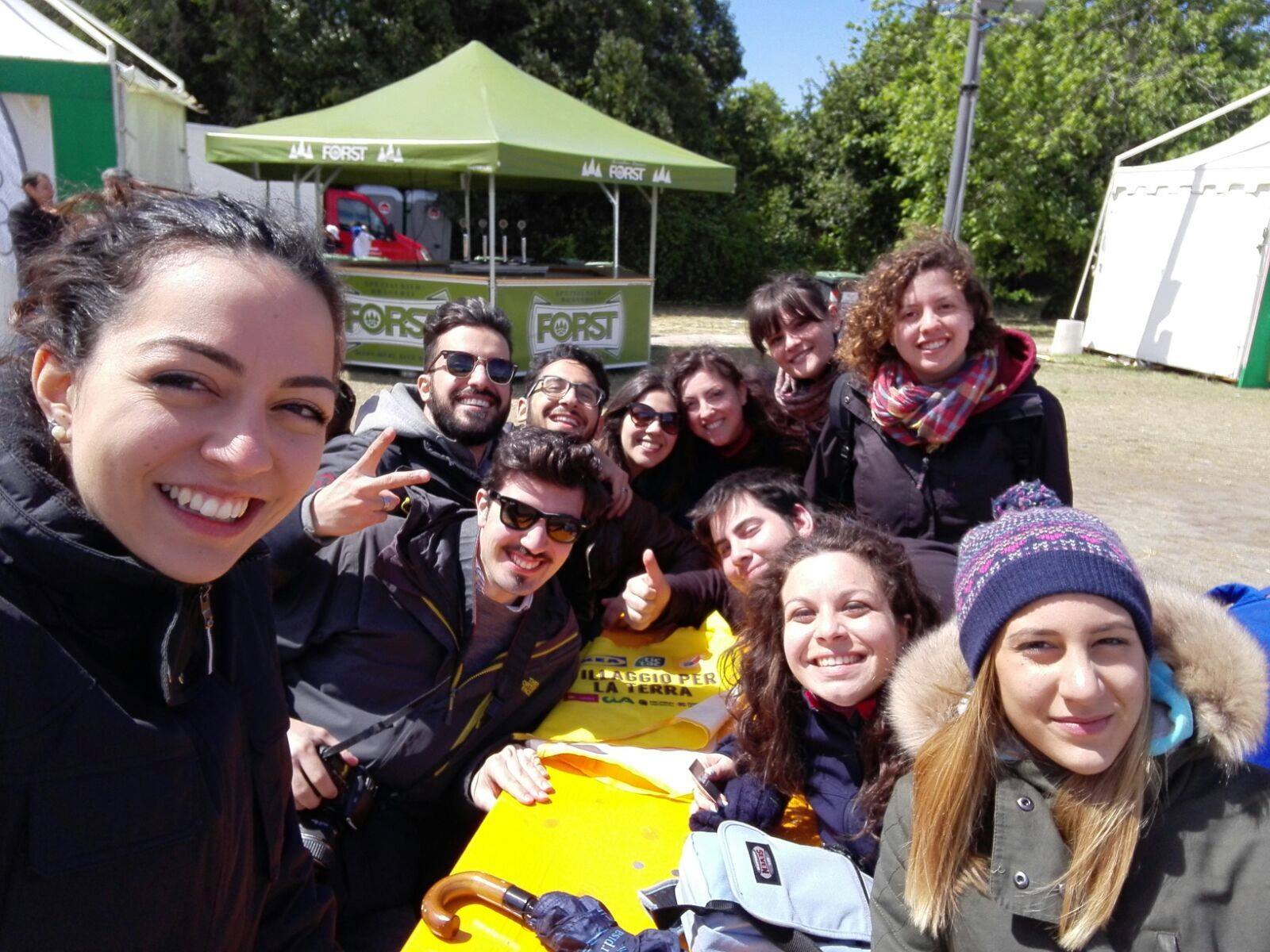 The Pincio Hill is a privileged terrace looking out over Rome, an observation point with a breathtaking view of the city skyline. But from 21 to 25 April a festive population stole the limelight to become an undisputed protagonist: the participants of “The Earth’s Village”, an event organised by Earth Day and the Focolare Movement within the setting of Villa Borghese, the capital’s green lung in the city centre. There were about130,000 visitors, families, children, youth, transiting citizens, but also ministers, key figures in the country’s economic and cultural life, cardinals and heads of various religions. It was a five-day event of institutional meetings, theme forums, courses, shows (also some stars of the musical world), a children’s village – within the context of the celebrations dedicated worldwide to the themes of ecology and respect for the environment – that contaminated also the strolling tourists, who thronged the place also due to the radiant sunlight and festive air. Like last year, the Focolare Movement found in the Earth’s Village the ideal place to hold one of its most important gatherings, the Mariapolis: a temporary but insightful city, whose inhabitants renew their decision to live the Golden Rule which invites to “do to others what you would like others to do to you.” “For us, this rule is the throbbing heart of integral ecology,” explained the organisers of the event, which last year had received the unexpected visit of Pope Francis. The concept was also taken up by Cardinal Parolin, Vatican Secretary of State, during a mass celebrated in the Village: “the spark of interest for the things of God» is like a “spark of interest for our own selves, for the truest, deepest and most essential part of ourselves (…). A new attitude towards creation, the promotion of an integral ecology lived with joy and authenticity, following the example of St. Francis of Assisi.”
 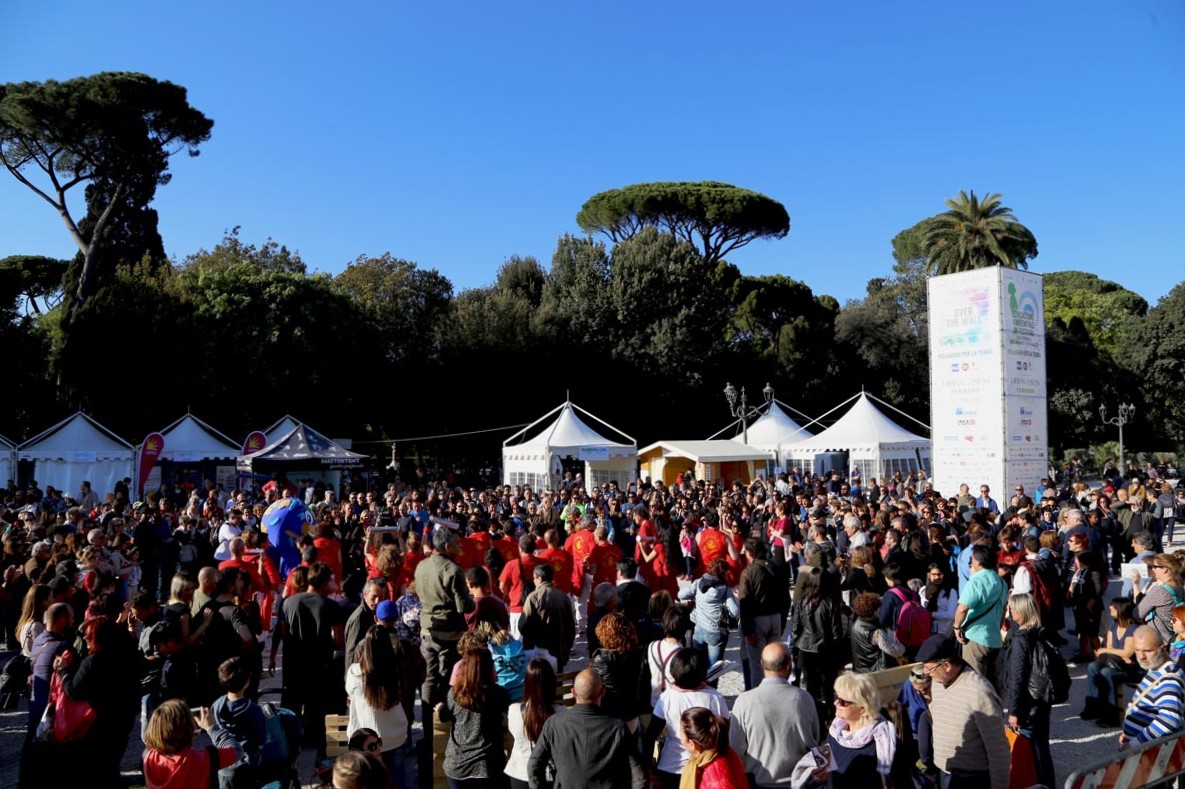 Among the many issues were discussed, a specific theme was Economy of Communion which is based on a market concept which surpasses the logic of savage capitalism and aims to make the economy an instrument for the humanization of relationships. The forums on Economy of the Village, The Community and the Enterprises, also saw the participation of the economist Stefano Zamagni. This educational phase proposed to the participants – citizens and economic and cultural operators – a space for the sharing of ideas, experiences and projects based on peace and economy, a dual term which today seems unachievable, given that behind every conflict, even behind the migration of thousands of refugees, lie enormous financial interests. And yet there are – and we saw them in the Village– economists and businessmen who have chosen to go against the current, to build enterprises that produce profits to be partly allocated to solve situations of poverty. These, in the current panorama, are concrete answers that bring hope. Another central theme was intercultural and interreligious dialogue. There were moving testimonials from Fontem, offered by Maria Bencivenni and Martin Nkafu. In the tiny village, north-west of Cameroon, wedged in the equatorial rain forest, stands the hospital Mary Health of Africa, founded in 1964 by the Focolare. Due to the high infant mortality rate the king of the village had asked for help. In response, the Focolare had sent doctors, nurses, civil engineers and technicians, and thus initiated an extraordinary story of friendship and harmonious co-existence between Christians and the faithful of other traditional religions, Europeans and Africans. Livia Turco, in the past Health Minster and Beatrice Lorenzin, current Italian Health Minister, together with Vittorio Pelligra, professor of Economy, presented the book entitled Creative Fidelity. A Charism’s Implementation Challenges by Jesús Morán, current Co-President of the Focolare Movement. An exchange of ideas on politics and charisms, two apparently distant fields, to the point that Chiara Lubich herself had defined politics the “love of loves,” the tool par excellence that can respond to the present needs. A creative fidelity: ideals and concreteness, novelties and faithfulness, a challenge of identity in every field. “Creative fidelity means not fearing to face challenges but at the same time signifies firmness in one’s own values and principles. In the globalization world, it is not easy to build equality and social justice – affirmed Turco. It is a great and very difficult challenge.” A strong message of peace was launched on the last day. While the children were busy in the Playing together for peace workshop where they learned the differences between the Christian, Jewish, Muslim and Buddhist religions and the various places of worship, and built a mosaic with the words they had just learned, 7 women of 5 different faiths gave life to a panel called “Mothers of the Earth,” a round table of interreligious dialogue on the protection of the environment envisaged by the various religions. “Women,” declared Franca Coen, president of the Jewish Beth Hillel community, “by nature know what it means to take care of and protect a seed so that it can develop into a healthy and harmonious being. Through dialogue between the various cultures and religious faiths, they can overcome the fear of the diverse and operate in synergy honouring the work of the Only Creator.” Lilamaya Devi, of the Italian Hindu Union added: “According to our tradition, God rests on stones, breathes with the trees, sleeps with the animals and awakes in man. Religions have a very important function, that of reminding all of the deep union with the Earth.“ Mervat Kelli, a Syro-Orthodox Syrian said: “Nature is a shrine that teaches us how to create reciprocal relationships and live in profound harmony.” The Earth’s Village closed shop but opened many hearts. The participants returned to immerse themselves again in the reality of the metropolis, with the firm intention to live in full communion with the surrounding environment and humanity.
28 Apr 2017 | Non categorizzato
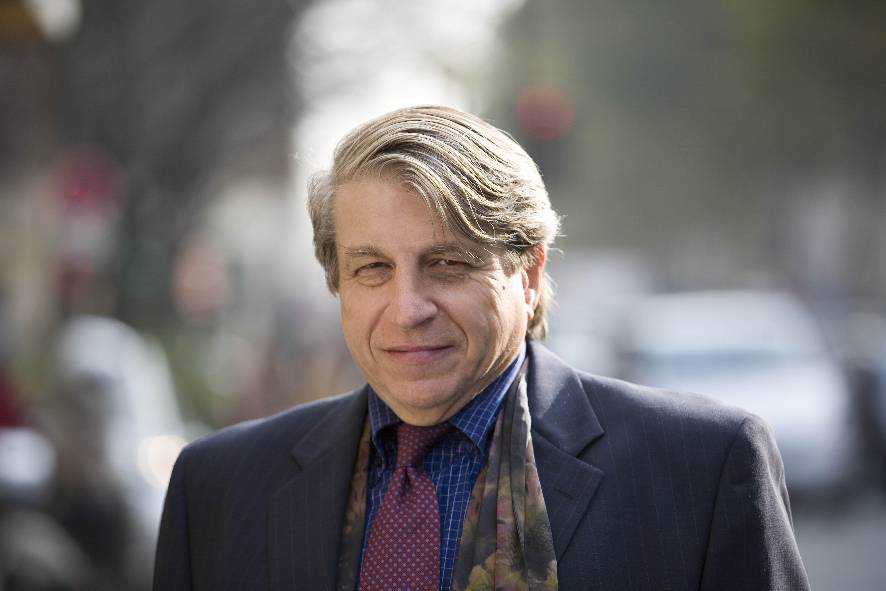
On April 24, 2017, Dr Benjamin Barber passed away at the age of 77, following a brief illness in New York. He leaves behind his wife Leah and daughter Cornelia. A political philosopher, author of several books, including the best-seller Jihad Vs. McWorld, Barber dedicated his entire life to the ideas of citizenship and democracy. He was convinced that the great challenges of interdependance could be resolved in a constructive way if citizens made an effort to live civic virtues and become actively involved in politics. He was sceptical of the ability of the nation-states to give sufficient answers to the contemporary global challenges (from climate change to terrorism; from immigration to poverty). In his last years, Barber emphasized the indispensible involvement of cities. In his book, If Mayors Rule the World, he demonstrated how cities respond in a more efficacious way than states to the problems of our interdependant world. Therefore, in his last years with the tenacity and passion that had always distinguished him, Barber gave life to the Global Parliament of Mayors, which 49 mayors joined, including the Italians Leouca Orlando amd Virginio Merola. I met Barber in the aftermath of September 11th at the New York home of Italian journalist, Antonio Monda. We were at a dinner together along with Leoluca Orlando, and Barber told us about a new project of his: to launch a World Interdependence Day that would be celebrated every September 12th, the day after the anniversary of the Twin Towers and Pentagon attacks. In fact, for Barber, the response to those attacks couldn’t be military, but had to rise from a common commitment to find sustainable solutions to all the great global challenges that could never be faced in an isolated way. Remembering that the United States had been born with the Declaration of Independance, Barber emphasized the need for a new declaration of interdependance. I worked closely with Barber to set up the first Interdependance Day that was symbolically celebrated in Philadelphia. With him, we thought up and put together the second edition of the day in Rome, Italy, in 2004, with the support of the Focolare Movement. It was on that occasion that I had the privilege of introducing Dr Barber to Chiara Lubich and be a witness to the various encounters and discussions that they had between 2003 and 2004. I recall during the conclusion of the first meeting between them, in June 2003 at Rocca di Papa, Italy, where I listened to him closely, Chiara observed that the idea of interdependance was important, but not enough. Chiara told Barber during that first meeting: “Not only do we need interdependance, but then communion. The goods have to move. But goods can’t move on their own, and this is why we need to move hearts. Therefore, I talk about the universal brotherhood that we achieve among individuals and individual groups, but if we begin to remake this brotherhood among the nations, we’ll resolve the problem of terrorism at its roots.” Barber responded: “Yes. The term “interdependance” is the lite version of the word “communion”. It’s the first step towards communion.” He went on to say: “Democracy is also a matter of the spirit; it begins with the habit of the heart and then is expressed in secular terms. So, oftentimes the separation between spirit and secular is a stretch . . .” That dialogue between Barber and Lubich is something that is still vibrating today, beause of its absolute timeliness. What remains of Barber as a most precious legacy is his intellectual and civic commitment to giving life to a global citizenry that leads us nearer to unity.” Aldo Civico Source: Città Nuova

