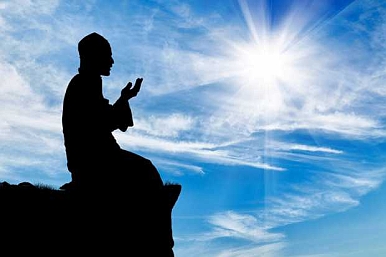
“We’ve known Khalid for more than ten years. One day he rang our doorbell to sell us something, but he mostly wanted to find a job. He had been in Italy for over a year, an illegal immigrant with nowhere to live. He was 24 years old and was from Morocco where he had left behind his mother, a widow with two children. A week later he came back. “I was hungry and you gave me something to eat … I was a stranger and you welcomed me” … The words of Jesus seemed to be calling out to us. In the afternoon we invited him to work in the flower garden and in the vegetable garden. In this way he was able to send a small amount of money to his mother. It was the first time he was able to help his family, and it made him happy. I got to work finding him a job, but the answer was always the same: he’s an illegal, we can’t hire him. Finally, I found him some seasonal work at an agriculture business. He worked nights an dslept with an Indian in a container: he had a hard life, but was happy. One day the telephone rang: his Indian friend told us that Khalid was not feeling well. Jesus was still calling: we went to visit him and took him to a docgtor who agreed to see him. He had a serious ear infection that needed care. We decided to take him in and let him share our son’s bedroom. Sometimes we had to wake up during the night to care for him. Our children were also quite caring towards him. The one who had given him work didn’t intend to obtain legal documents for him. We had become the last hope he could hold on to. The Lord asked us for an even more radical act of love. So we decided to hire Khalid as a domestic, and later the idea came of taking him and letting him stay at our house like another son. We let him some areas of the house for himself so that he could be independent. We respected his religious practices in preparing meals and scheduling around his prayers, especially during Ramadan. This brought our dialogue to a religious level. Our relationship became closer and closer. We spent time together in the evenings discussing our lives and his, along with our traditions. Difficulties and doubts were not lacking, but together with the help of the Focolare community that never failed to support us we found the strength to continue on. Providence was never lacking. A gentleman that we didn’t even know gave us a motorbike which we handed on to Khalid. People from the Movement provided clothing…. Then a job was found that allowed Khalid to help his family and to pay us back for some of the support we had provided for him. Around seven months later a house was left vacant where he could move with some of his friends. Then he went back to Morocco where he married. He returned to Italy with his wife, found a permanent job and is living a serene life. They had three children, two of which go to elementary school. A nice friendship was built with his wife even though she has trouble with the language. One day she wanted to show her gratitude by preparing a totally Moroccan meal at our house for us, which we enjoyed with our children. We’ve become the grandparents of their children who come to our house often! In our sharing with them we continually experience the joy of God’s presence among us.” (G.- Mantova, Italy)
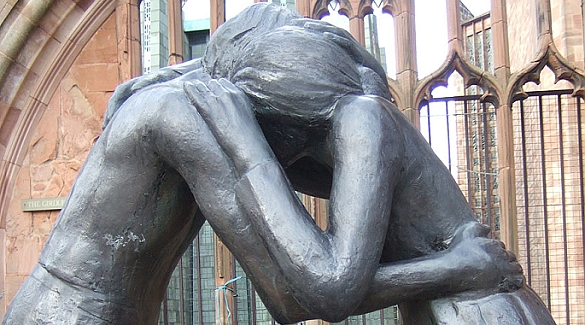
Photo: Reconciliation by Josefina de Vasconcellos at Coventry Cathedral
This month’s ‘word of life’ invites us not to respond to offence with offence, but – as Chiara Lubich suggests – «with clarity of mind and an act of the will, to accept our brothers as they are despite the wrong done to us, the way God accepts us, sinners, regardless of our defects.» Here are some testimonials: The wall that came down “I had a very sad childhood and youth, to such a point that I cannot remember even one positive aspect. Even when I married, the relationship with my own family always left a profound bitterness in me, with only criticisms and disdain. It was not easy to forget, but in the meantime I tried to live the evangelic motto: give without seeking any reward. One day my parents came to pass their holidays with us. I decided to satisfy their demands, without expecting anything. I kissed my mother, a thing that I had no longer done since my childhood. She hugged me and her eyes filled with tears. I felt that the wall dividing us had crumbled. And on his birthday, my father asked me to put on his favourite music and dance with him. This harmony among us was a great conquest!” (Margherita – Switzerland) A quarrel that ended in gentleness “I had learned from my sister that our parents had quarreled. They had not spoken to each other for three days and Dad refused to eat the food Mom cooked. When I got home I immediately felt the heavy atmosphere. Without asking anything I set about serving all concretely, and doing some chores. At the first occasion in which I found myself alone with my father, I tried to ask him what happened. He thus confided in me and so I was also able to tell him that I tried to live the words of Jesus. When I mentioned forgiveness, of which He was an example, he listened attentively. In the end we agreed that when Mom returned he would welcome her. From the kitchen window, I saw her return and my father asking her gently how things had been at work.” (P. F. – Cameroon) A simple “hello” “For some time now, there have been some misunderstandings between me and one of my sisters, to the point that we no longer spoke to each other. One day I decided to take the first step to reconcile with her. But it was not at all easy: in reality I was the elder brother, and I had my own dignity… After a restless night, the next morning in the kitchen I said “hi,” but so softly that she didn’t hear it. I took courage and repeated “hello,” in a stronger voice. She was so surprised and we immediately made peace. Out of joy and the sense of liberation, I started to sing.” (Dolfi – Italy)
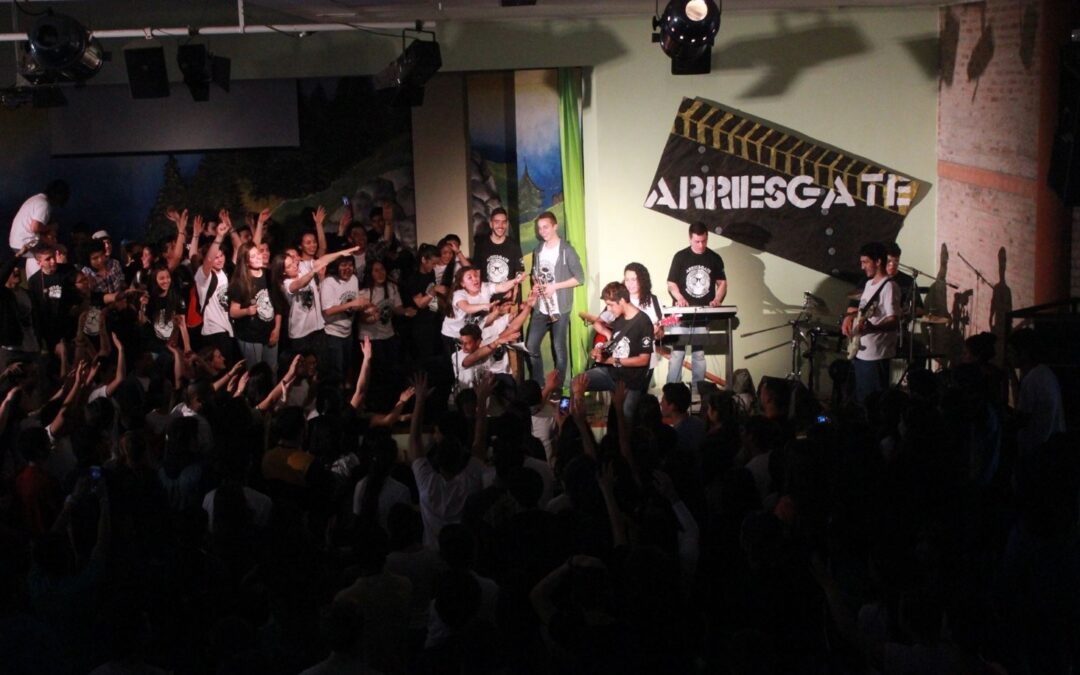
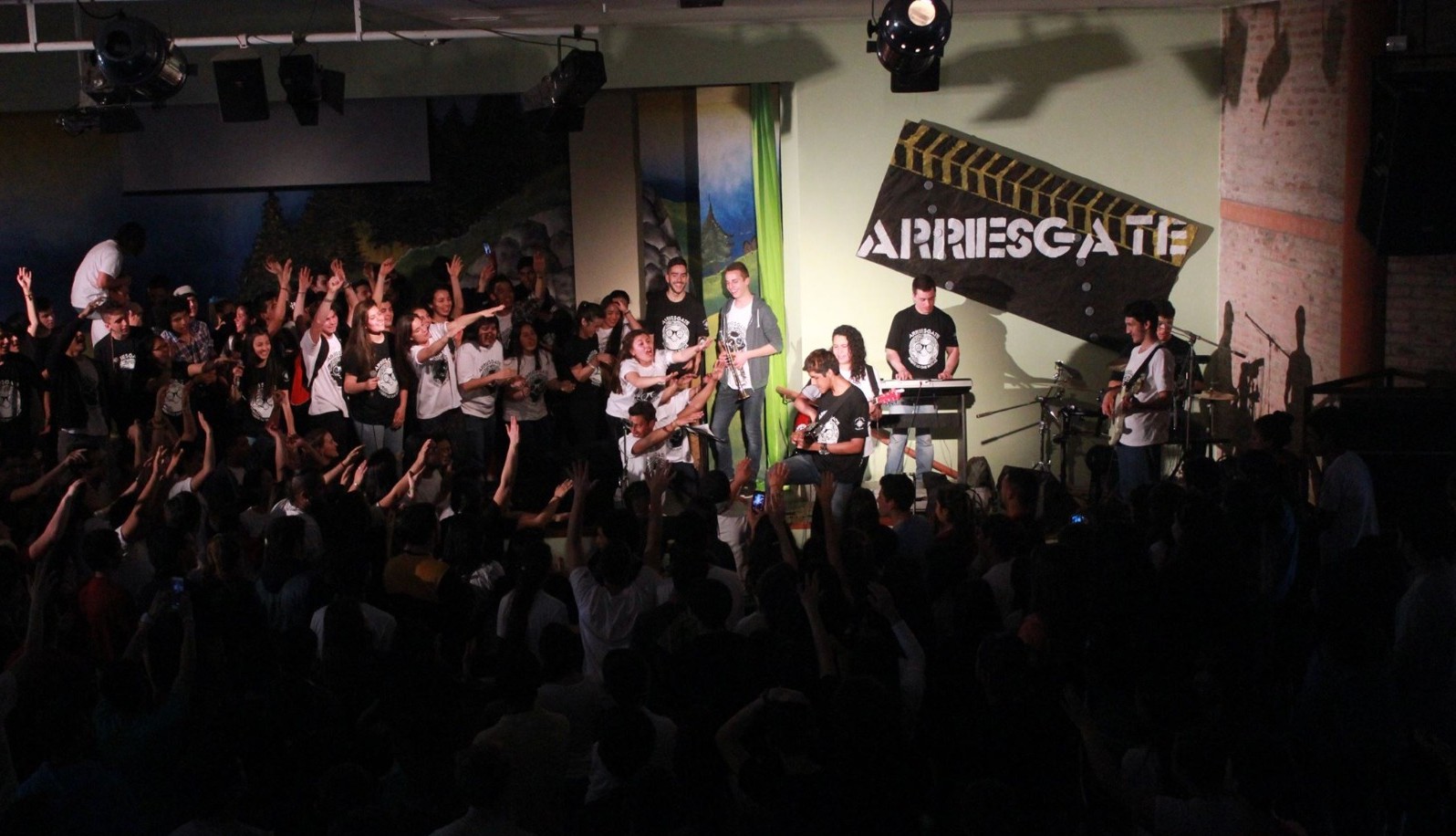
“This festival was an incredible experience! It did its job in my heart and it allowed us to enjoy a very beautiful atmosphere of real brotherhood that recharged the batteries!” “I realized that I can decide to stay inside the cave, or step out of the cave. I discovered how important it is for me to open myself and share with others what is taking place inside me.” “I saw so much vitality, joy and depth in these young people.” “It was a very nice experience. I leave with the certainty that it’s possible to live a different kind of life, that we’re not alone in the effort to be what we really want to be – and to take that risk.” These are only a few of the thoughts that were shared by the thousand young people gathered on September 24-25 for the Youthfest 2016 at the Focolare’s Permanent Mariapolis Lia in the pampas in Argentina. It has become a traditional event that is repeated every year, thanks to the creativity that young people are able to have when it comes to transmitting to their peers the ideals they live for. This year, more than a thousand young people arrived for the event from Paraguay, Uruguay, Chile, Brazil and many cities of Argentina. They were drawn by the title: “Risk it! What you’re looking for exists.” What did the title stand for? An experience of brotherhood, sharing the life of the Gospel for 48 hours, which is the main characteristic of this permanent Mariapolis of the Focolare Movement. Currently 85 young people from 17 countries live there with other families and adults. They share an experience and, through music, theatre and dance also put in common the problems that young people find themselves immersed in: family relations, school, successes and failures in life, addictions, painful moments and, above all, the encounter with a God who is near, who has a personal answer for each and everyone. But the idea didn’t end there: they tried to involve everyone in building a more united world, regardless of one’s religion or belief. This year’s program was a combination of theatre, music and testimonies that happened on stage, beneath the large emblem that stood at the hall’s entrancel. The sign contained a one-word challenge: RISK IT! The language chosen for conveying the experiences and putting together the theatrical pieces, was direct and personally engaged everyone. The songs that were sung with such energy and captivating rhythm, helped to express this commitment in seeking something great to live for. The outdoor program – like the tour of the Mariapolis, lunchtime, strolling – made room for more sharing among the Latin American young people who had demonstrated their desire and capacity to build a more united world, a society that is for everybody. It didn’t take long for the feedback to arrive: “From Paraguay I want to thank all of you who made us live such and unforgettable day. We’re filled with emotion and prepared to accept the challenge!” “This morning, while I was on the bus going to work,” writes another person who attended the event, “the days we spent together came to mind and the desire to live today well, to give that little extra, to risk it.” Source:Southern Cone website
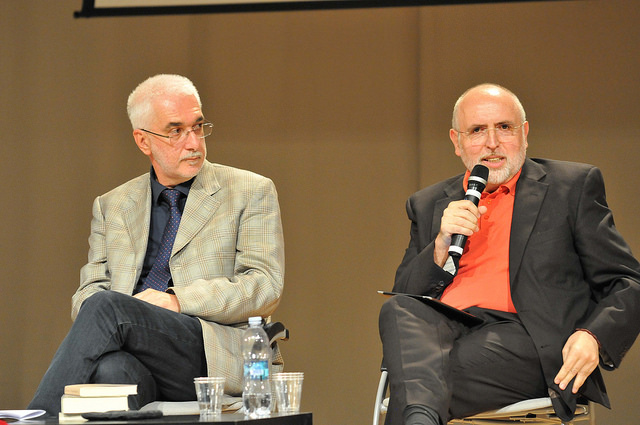
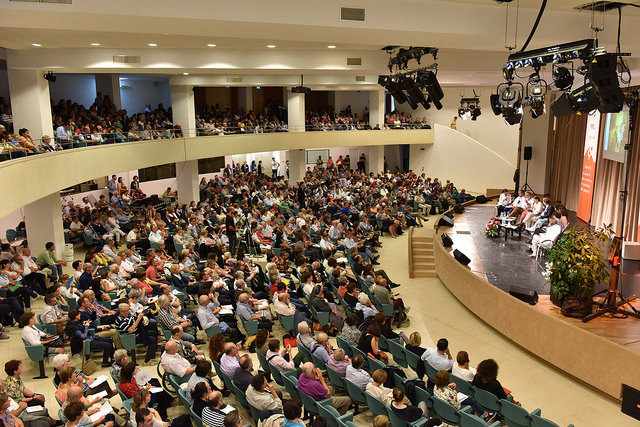
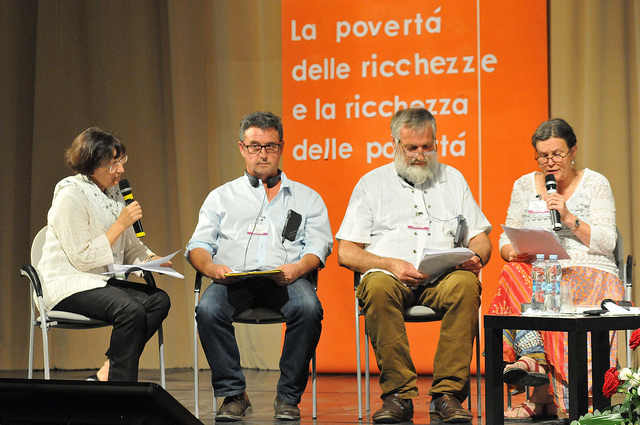
The title of this year’s edition of LoppianoLab was a challenge that was launched by the thousands of people, both in person and via live-screening, who took part in the event. While there is an Italy where the so-called absolute poor have increased by 130% in seven years, where every day its southern shores become a bridge to the hundreds of thousands of migrants fleeing poverty and wars – at the same time there is the desire to be involved: volunteers, associations, young people who want to experience what it’s like to work according to new business models that are able to meet the daily emergency. Involvement is the spirit behind those that brought their experiences and projects to LoppianoLab 2016, from the fields of economy, politics, welfare, immigration, communication, technology and instruction. Theproject, which was promoted byLionello Bonfanti Business Park, the Città Nuova Editorial Group, Sophia University Institute and the town of Loppiano, was begun in 2010 to be a national laboratory that would set in motion “those qualities that have made the Italians great, creativity and industriousness, welcome and solidarity, art and culture,” as Focolare president Maria Voce said in her greeting. Experts from the world of culture, politics and economy presented during the programme together with many other voices from civil society that presented projects from hundreds of associations, individuals and communities that form a close-knit network of people who are eager to translate ideas, projects and lifestyle into praxis. Three days, three focus groups to take on the challenges to peace: the challenge of techno-scientific innovation, development, and poverty. Two important anniversaries were also celebrated at LoppianoLab: the 25th anniversary of the Economy of Communion Project (EoC) and the 60th anniversary of the Focolare’s Città Nuova. Thirty multi-ethnic workshops, three via direct-streaming, along with workshops for children and teenagers: “Loppiano Kids and “Time to Give” with a series of meetings focused on topics related to poverty, solidarity and ecology; and “Loppiano Young” with performances and artistic exhibitions assisted by the international Gen Verde Band. Focolare co-president Jesús Morán offered some remarks at the end of the firest day. He spoke about three challenges that the world faces today: globalization, post-globalization, post-humanism. Also the humanitarian challenge of the sub-human, a challenge that calls for a “culture of resurrection,” in order to totally assume the suffering of the person that suffers. According to Jesús Morán, the question we should ask is how much space should be given in our own lives to the least, the “abandoned ones” of today Finally, during “The Wealth of the Invisible Poverty forum,” a proposal was launched to create an observatory on poverty that would create an information system to monitor the effects of the EoC around the world and study the results and methodologies of specific significant cases. See also:Città Nuova onlineLoppianoEconomy of Communion