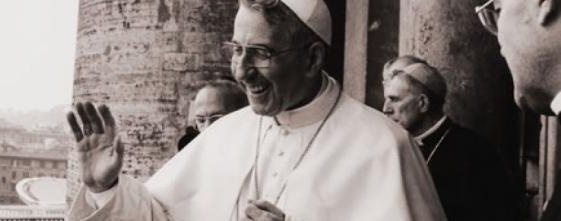
“The “Smiling Pope,” John Paul I, rose to the chair of St. Peter on 26 August, 20 days after Pope Paul VI’s death. Though his brief pontificate lasted only a month, there was time enough for us to receive a smile from him, along with words of benediction.» This is what Chiara Lubich wrote in the book, “The Cry” (1), where she highlighted the uninterrupted rapport established with the successors of Peter, and also with Albino Luciani in the brief stretch of his pontificate. “The new pope has the gift of making himself immediately understood by all – even by children – wrote Guglielmo Boselli (2), then the director of Città Nuova. His language, like that of Jesus, is normal and straight to the point. It is this wisdom coming from the heart that gives the capacity to immediately create a spontaneous relationship: the wonderful gift of one who came from a long pastoral experience, was always in touch with the people, and did not need any difficult speeches typical of professionals of the trade. He is a man of extensive humanistic and theological culture, who has overcome the phase of those still studying Christianity in a laboratory: his words are immediately and exactly what they should be. He just has to open his mouth and there is already communication, real communication.” He was elected after a brief conclave of only 26 hours, and as they said, “an apostolate of the Council” was elected. In fact, at the audience with the cardinals on 30 August, when reference was made to the Lumen gentium 22, he broached one of the key points of the Vatican II ecclesiology. “The Bishops – he said, speaking off the cuff – have to also think of the universal Church… behind you I see your bishops, and the Conferences which in the atmosphere established by the Council, have to give strong support to the Pope… So this is true, but today it is vital that the world sees us united… Have pity for this poor new Pope, who really didn’t expect to rise to this role. Try to help him and let us try together to give the world a show of unity, even sacrificing some things at times since we have so much to lose if the world does not see us firmly united.” On 28 September, after only 33 days, came the bewildering news of his death. “John Paul I – again wrote Guglielmo Boselli (3) – maybe had the task of bringing down the last external evidences of every type of “distance” between the pope, the bishop of Rome, “president of charity” and the people who still could resist: this was by carrying out dialogue as a man among many in a church, in which all is credible, and authentic. Pope Luciani did his share, which he perhaps shouldn’t have and couldn’t have done… The clear continuity with Pope Francis is very evident.”
We can experience a new peace and a surprising joy when we forgive properly, realistically, sincerely.It is our ‘vendetta of love’. In a violent society such as the one we live in, forgiveness is a difficult issue to face. How can you forgive someone who has destroyed your family, committed unspeakable acts of criminality or, more simply, has deeply hurt you in personal matters, ruining your career or betraying your trust? The first instinctive reaction is to get your own back, rendering evil for evil, unleashing a spiral of hatred and aggression, and increasing barbarism in society. Or else it causes a breakdown in relations, nursing grudges and spite, an attitude that embitters life and poisons relationships. The Word of God erupts with force in the most varied situations of conflict and proposes, uncompromisingly, the most difficult and bravest solution: forgiveness. The invitation this time comes from a wise man from the ancient people of Israel, Ben Sirach, who shows how absurd it is to ask forgiveness of God if, in turn, you do not know how to forgive. And in an ancient text from Jewish tradition we read: ‘To whom does God pardon iniquity? To whoever pardons the wrongs done by others.’1 It is what Jesus himself taught in our prayer to the Father: ‘Father … forgive us our trespasses as we forgive those who trespass against us.’2 We too make mistakes, and every time we wish to be forgiven! We beg humbly and hope that we will be given again the chance for a new start, that we will be trusted once more. If it is like that for us, will it not be so also for others? Must we not love our neighbour as ourselves? Chiara Lubich, who continues to inspire our understanding of the Word, commented on the invitation to forgive in this way: ‘It is not the kind of forgetfulness that means not looking reality in the face. Forgiveness is not weakness, which is to say it is not failing out of fear of the strong to take account of the wrong they have done. Forgiveness is not about saying that something serious does not matter, or calling good what is evil. Forgiveness is not indifference. Forgiveness is an act of will and of clear thinking, and so of freedom. It is about accepting our brother or sister as they are, despite the wrong that has been committed, as God accepts us sinners, despite our defects. Forgiveness is about not responding to an affront with an affront, but it does as Paul says: “Do not be overcome by evil, but overcome evil with good” (Rom 12:21). ‘Forgiveness is about opening up for whoever does you wrong the possibility of a new relationship with you. So it gives the possibility for the two of you to begin life again, to have a future where evil does not have the last word.’ The Word of Life will help us resist the temptation of replying in kind, of immediately getting our own back. It will help us to see whoever is our ‘enemy’ with new eyes, recognizing them as a brother or sister. However bad they may be, they need someone to love them, to help them to change. It will be our ‘vendetta of love’. Chiara went on to explain: ‘You will say, “But it’s impossible.” That’s understandable. But here is the beauty of Christianity. It is not for nothing that you follow a God who, dying upon the cross, asked his Father to forgive those who killed him. Take courage. New life starts here. I can assure you, you will have a peace never tasted till now and a huge but surprising new joy.’3
Fr Fabio Ciardi, OMI
1 See Babylonian Talmud, Megillah 28a
2 See Mt 6:12 3 Costruire sulla roccia, Rome: Città Nuova, 1983, pp. 46-58
Manna from Heaven “I’m an Iraqi veterinarian. My work was impacted by the current historic and dramatic situation my country is going through: now, the clients are few and far between. As I tried to find a way to push on, I was promised a job with a high salary in a city far from my own. It would be a favourable solution for my family, but would have placed me far from everyone else. My parents were insisting that I accept what seemed like manna from heaven. I spoke at length with my wife and it seemed to us that it wouldn’t be opportune for us, to leave at that moment, both because of our children and because several friends whose families were in need of our support, at least our moral support. Therefore we let go of the idea, blindly entrusting ourselves to God’s love. Incredibly, already from the day after we made this difficult decision my work picked up. I’m now earning four times more than what I was before.” (Y.K. Iraq) The Unexpected “We had been married for a short time when we discovered that we were expecting our first child. Something quite unexpected was also added to that: a small lump in the breast. Exams revealed a tumour. For me and my husband, who is a doctor, it was a hard blow, the first serious one in our marriage. Just three days after talking with a specialist I underwent surgery. He and his colleagues concluded that keeping the child would only aggravate the illness: we needed to proceed with an abortion immediately, so that I could begin chemotherapy. Finally, we decided on caesarean birth in the seventh month of pregnancy, when the child would be perfectly able to survive. Only afterwards would I begin chemotherapy and radiotherapy. Eight years have gone by since then. Now, we’re expecting our third child.” (M.D. France) More Joy in Giving “I searched for happiness in the wrong way: bad company, discos, cigarettes and alcohol. My boyfriend both peddled and took drugs. I was rebellious and morose both in school and at home, I dressed strangely, always in black with clothing full of studs and spikes. And I was totally indifferent to God. When I realized I had hit rock bottom, by sheer force of will I left that boy and abandoned the friendships. But how could I resolve the sorrow and sense of emptiness that I was feeling? When I began the new schoolyear my new Religion teacher inspired trust in me. Through my conversations with him I received the gift of faith. The encounter with God-Mercy changed me totally and satisfied my longing for love. I began to pray and seek God, getting involved in volunteering, experiencing that ‘there is more joy in giving than in receiving.’ I live a normal life: I go to school and do all the things a girl of my age does, with the only difference that now I have God in my heart.” (A.R. Italy)
“I go back after 5 years. The impact is shocking. I don’t recognize Venezuela. The description given to me by the young man sitting next to me on the plane expresses the suffering of an afflicted but unresigned people. ‘I still have a bit of hope!’ he said to me as he described the beautiful sites in his country and invited to visit them. There’s a sense of emptiness in Caracas. Only the children provide a touch of liveliness to the absurd-looking reality. The journey to Puerto Ayucucho lasts 17 hours. Along the way my gaze is fixed on a girl rummaging in the garbage bins, looking for something to eat. But it is mostly the news of two boys 14 and 15 years old who were killed when caught stealing some mangos from a tree, that highlights the level of fear and non-sharing that has been reached. This is another form of homicide that is caused by hunger. The city is on the Colombia border. Its festering wound is represented in the murders of young people who, in the eyes of those who should protect them, appear to be violent thieves to be served the ulitmate punishment. This is also what happened to Felipe Andrés, a young seventeen-year-old who protected his brother by not telling those who had taken Felipe from his grandmother’s house where his brother could be found. Because of that he was brutally murdered with 17 bullets to match his age. We’re in one of the quarters outside Valencia. I’m surprised by the queue for buying gas tanks. Twelve year-old Angel, candid as an angel, confides with disarming simplicity: ‘I don’t grow because I never drink milk.’ Even powdered milk is a luxury item in this country. I’m left impressed by the lively, simple gazes of the little ones I have met. An evening with the youth. You can feel their strong and palpable desire for redemption. Their experiences strengthen their desire to be carriers of hope, beginning with their friends at school, at work…. La Nuvoletta. A minibus takes us up to the Mariapolis Centre called La Nuvoletta. On the way we pass through some poverty-stricken areas. Here too, we find long queues of people hoping to be able to buy at least something. Gabriel thanks me for the lunch I offered him. ‘You know, I only eat pasta on Sunday.’ ‘And the other days?’ I ask. ‘On the other days, only sopa.’ I ask him if he likes being with people. “Yes,” he tells me, “because here everybody’s happy.” At the departure time, another bombshell: I learn that Fabián, such an innocent and lively child, had lost his father a few months earlier, murded by assassins. It felt like I was reliving my own experience: the illness and death of my father, which led me back to God. We look at each other and seem to understand one another. We arrive in Maracaibo, the hottest city in Venezuela. We look around and travel the 8 or more kilometres across the bridge that connects Maracaibo to San Francisco. A day with theYoung For Unity awaits us in Tamale. Hearing a thirteen-year-old say: “I encouraged my mother to forgive those who had killed my father,” cannot leave you indifferent. The next appointment was in a parish. They greeted us with songs and then the dicusssion began: ‘What do you do when a kid tells you that he doesn’t go home because there’s nothing to eat?’ I try to respond by talking about the suffering and silence on the part of God that Jesus felt on the Cross. We say goodbye with a thought that one of the boys shared with everyone: ‘The strength of love is stronger than suffering’.” (A. S.)
John: “At the beginning of the school year, our son came home after his first day in year 11 and said to my wife that he was not returning to school – he said that he couldn’t stand people! He disappeared silently into his room for over a year, coming out only when he thought we were asleep. He withdrew from me entirely and only talked to his mother sporadically. I felt completely abandoned and lost, but Claire’s love managed to help me accept the rejection. What helped me was the phrase of the Gospel: ‘As I have loved you, so you must love one another’ (Jn 13:34). One night he made a desperate decision to commit suicide. As we called for an ambulance, he climbed out a window and ran away. The next hours were a blur: the ambulance arrived but he was gone; police support came too. He eventually came back and he was rushed to hospital for treatment. A week in hospital intensive care for someone stricken with panic and terror of people and spaces is a pretty scary thing. Night after night, and day after day, we slept in shifts so one of us would be there whenever he woke up. That ‘night shift’ was the only concrete love I could offer him; I could at least be a presence if needed – something I know that he later understood. When he came home, we thought that we could keep up that 24 hour suicide watch, but pretty soon had to accept that this was humanly impossible. We prayed together in a new way seeking God’s will. Together we offered and entrusted to God our son – His son – accepting completely that we could not prevent him trying to commit suicide again. I well remember the fear, pain, emptiness, anguish and hopelessness of this time, and then, in my acceptance of this terrible role, the feeling of real union with God and with Claire. In the year that followed, we managed to get him to reluctantly agree to enter a day therapy program. We hung in with our background support role and I think that God did the rest from the mundane of our ever-extending health insurance cover, to the miraculous – of an incredible group of fractured kids who supported and lived for each other.”Claire: “One of the girls in the group, with her multiple challenges, not the least of which was drug addiction, became part of our family life, and, as time went on, she and our son grew closer together. She hung in with him and helped draw him through his anxious times. And he stood by her rugged attempts at drug withdrawal. But it wasn’t easy.” John: “Their relationship suffered a setback due to our son’s stand on drugs, his personal abhorrence of them. But slowly, over the period after release from her months of involuntary hospitalisation, they tried again and worked at rebuilding their relationship on a firmer ‘no drugs’ foundation. Eventually they decided to marry.” Claire: “But, as everyone knows, wedding preparation is a pretty stressful experience, and our soon-to-be daughter-in-law was still working in an environment where drug taking was a common way to cope with life. So the inevitable happened. Our son rang me a month before the wedding and said bleakly, ‘Mum, she’s on ice again*. What should I do?’ My heart fell through the floor, and my brain went blank. Then I said, ‘I can’t tell you what to do – only the two of you have the grace for that. But I can tell you that, if you look into your heart and you see that you have loved wisely to the very end, then that tells you that it’s time for your part to finish. But if you look into your heart and you see that there is even the smallest bit more of loving wisely that you can give, then you keep trying.’ There was a long, long pause. Then a big, sad sigh. And he said, ‘I guess I can love a bit more’. Eventually they found a place that allowed her to have an extended live-in rehabilitation program with its associated outpatient support systems. It’s now 14 hard months down the track, and she is still clean – a tribute to her continuing efforts in working with her counsellors, fuelled by her incredible love for her husband – our son – in his ‘no drugs’ stand, as well as to his extraordinary love for her through all their struggles. We’re so proud of both of them. It has been a long road for all of us. And I guess one that we’ll all travel or the rest of our lives. But what I have seen shining through all the tears is that God’s love for John and me gave us the wisdom and strength to love our son in the way he needed to the end, and that maybe our love showed our son the way to love his wife in just the way that was right for her.”
Experience shared at Health Symposium “Darkness to Light – Spirituality of Unity in Chronic Disease and Disability” Australia, July 2016

 Listen to the Word of Life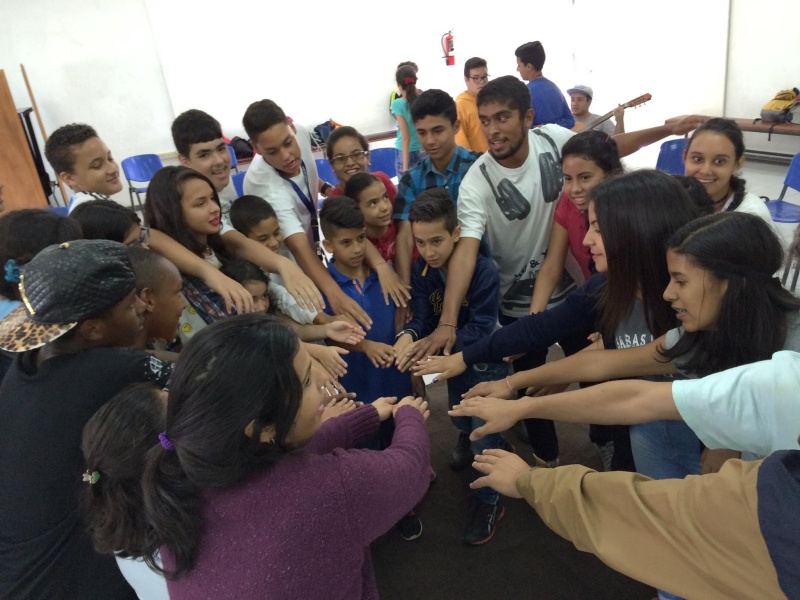
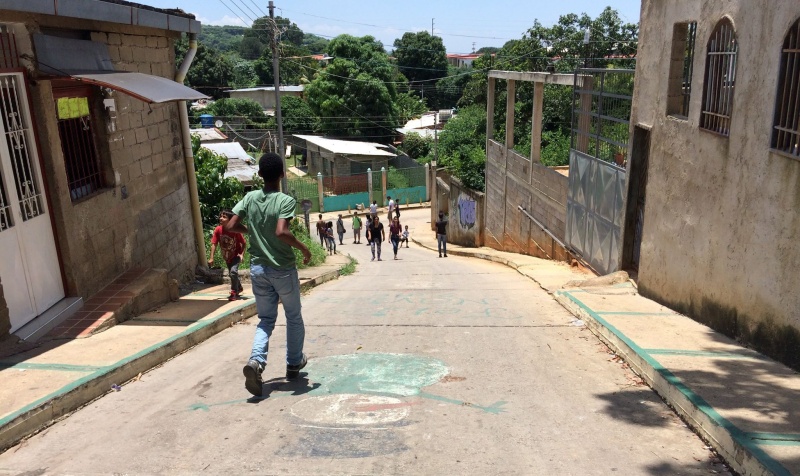 “I go back after 5 years. The impact is shocking. I don’t recognize Venezuela. The description given to me by the young man sitting next to me on the plane expresses the suffering of an afflicted but unresigned people. ‘I still have a bit of hope!’ he said to me as he described the beautiful sites in his country and invited to visit them. There’s a sense of emptiness in Caracas. Only the children provide a touch of liveliness to the absurd-looking reality. The journey to Puerto Ayucucho lasts 17 hours. Along the way my gaze is fixed on a girl rummaging in the garbage bins, looking for something to eat. But it is mostly the news of two boys 14 and 15 years old who were killed when caught stealing some mangos from a tree, that highlights the level of fear and non-sharing that has been reached. This is another form of homicide that is caused by hunger. The city is on the Colombia border. Its festering wound is represented in the murders of young people who, in the eyes of those who should protect them, appear to be violent thieves to be served the ulitmate punishment. This is also what happened to Felipe Andrés, a young seventeen-year-old who protected his brother by not telling those who had taken Felipe from his grandmother’s house where his brother could be found. Because of that he was brutally murdered with 17 bullets to match his age.
 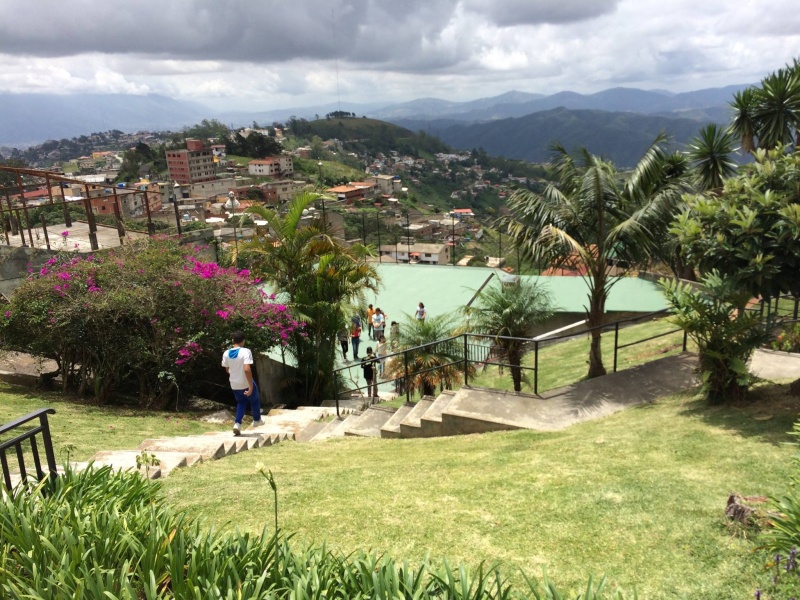 We’re in one of the quarters outside Valencia. I’m surprised by the queue for buying gas tanks. Twelve year-old Angel, candid as an angel, confides with disarming simplicity: ‘I don’t grow because I never drink milk.’ Even powdered milk is a luxury item in this country. I’m left impressed by the lively, simple gazes of the little ones I have met. An evening with the youth. You can feel their strong and palpable desire for redemption. Their experiences strengthen their desire to be carriers of hope, beginning with their friends at school, at work…. La Nuvoletta. A minibus takes us up to the Mariapolis Centre called La Nuvoletta. On the way we pass through some poverty-stricken areas. Here too, we find long queues of people hoping to be able to buy at least something. Gabriel thanks me for the lunch I offered him. ‘You know, I only eat pasta on Sunday.’ ‘And the other days?’ I ask. ‘On the other days, only sopa.’ I ask him if he likes being with people. “Yes,” he tells me, “because here everybody’s happy.”