20 Feb 2024 | Non categorizzato
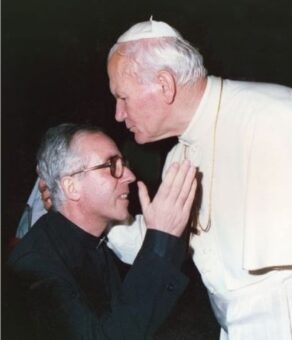
A priest from Gaeta, Italy, who, being a parish priest, not only spent himself for his parishioners, but involved them in service to their city. 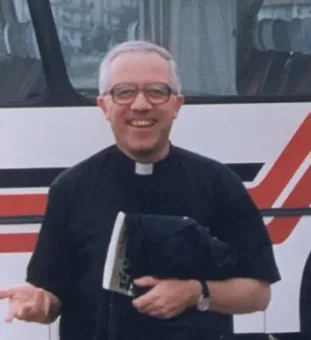 Fr Cosimino Fronzuto was an Italian priest who was born in Gaeta in 1939. He died at the age of 49 in 1989 after an intense life spent serving his neighbor, the needy and the society of his town. He lived near the sea, but disliked swimming and was afraid to go deep. One day, as a child, wanting to overcome this difficulty, he dived in and, to show that he had touched the bottom, he placed his hand in the sand, picking up, to his amazement, a small iron crucifix, which he then carried with him all his life. In 1963 he was ordained a priest and began service as vice-rector of the local diocesan seminary. He came in contact with the spirituality of unity and joined the Focolare Movement. In 1967 he was appointed parish priest of St. Paul the Apostle Parish in Gaeta, a position he held until the last days of his life. In those years the Parish Movement, an expression of the Focolare Movement in the local Church, flourished and generated a lot of fruits especially among the young people, who today are engaged in the city as priests, in the family, in political life and in various civil and professional spheres, in the different realities of the Focolare Movement and who continue to be very active in parish life as well. During the pastoral ministry he exercised in the parish, with his style full of love and attention to all, especially to the least ones (single mothers, ex-convicts, drug addicts, evictees, runaways), he set up the community by simply, but strongly and decisively, aiming only to live the Gospel in all situations and in the most diverse realities. Thus he did not lack opportunities to take a stand even against so many social realities that were far from a truly human and Christian dimension.
  He wrote in his diary, “We observed that during catechesis there were children who were quite unkept, undernourished, I also remembered that in that same family the older children had received neither Confirmation nor Communion, nothing at all. We were around the middle of March, and I thought, if we don’t get them now, we won’t get them again. So I went to that house and realized (it was about 12:30 p.m.) that pasta was simply being cooked and that there would be nothing else for everyone to eat. I noticed that although the head of the family was a small businessman, even the glass was missing from the door that hung over the balcony, and in this room, where the glass was missing, about ten children were sleeping. Immediately I began to talk about catechism, but I also tried to pay attention and look around. Then in the evening, after adoration, I spoke to the community about this situation. As I too became aware of it, I collected all the data: economic instability, seizure notices, children’s health problems. Then the morning was spent thinking only of this family, to see according to different aspects how things were, sharing the work, securing the food and, at the same time, keeping hold of the grown-ups so that they would receive real catechesis. One evening I realized that I had to make a proposal to everyone. Within myself I had decided, but what is the worth of my decision as a parish priest? It could possibly be valuable, but I wanted the decision to come from God, thus, a decision made in unity with the community which gave me the assurance that it was God Himself working. So I proposed to make available to this family approximately two million (liras) we had in the parish to solve the situation until they were able to go back to work again. I can say that from the very first moment everyone was supportive. That was the beginning, then this situation had several developments. Yesterday, I attended a condominium meeting in which they had decided to take away from the father the work that he had started and had not finished. I did everything so that he would complete it and could also have some money. The journey is still going to be very long, it’s more than a month that we have been beside him, close to him, and he says, “My desire to live is coming back, my desire to live is coming back.” But the intervention has not been operated by me alone, the intervention has been a bit of a collective one, many people are continuously bringing things that are needed, however, we are not so much concerned about the lack of things, but we are concerned about not making people lack love, because they have been people who have obviously been unloved, they have in fact been trampled in certain rights(…)”.
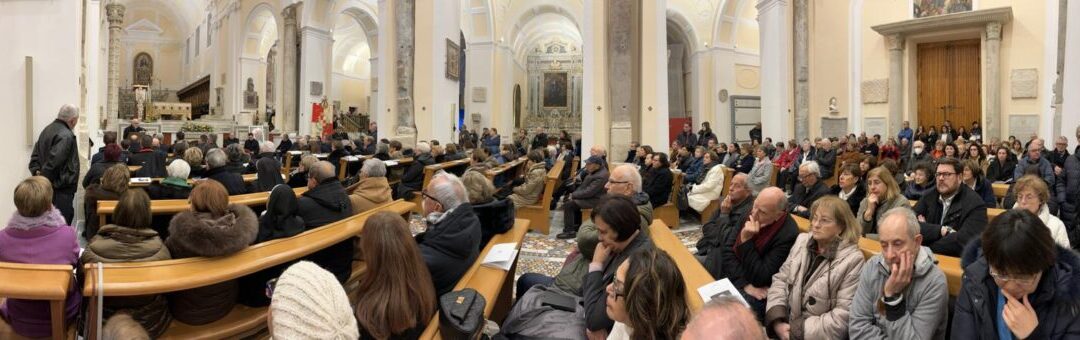
 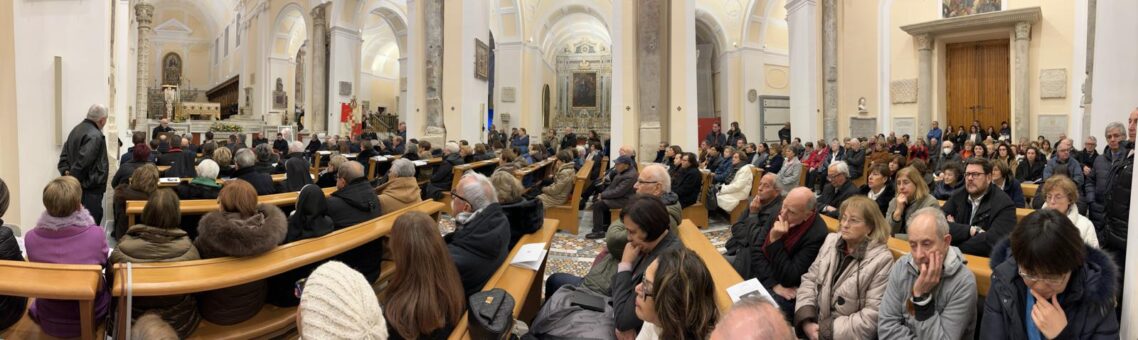 On Sunday, Jan. 21, 2024, the Archbishop of Gaeta, Msgr. Luigi Vari in a cathedral packed with civil and religious dignitaries and the faithful, began the cause of beatification of Don Cosimino Fronzuto.
Carlos Mana
17 Feb 2024 | Non categorizzato
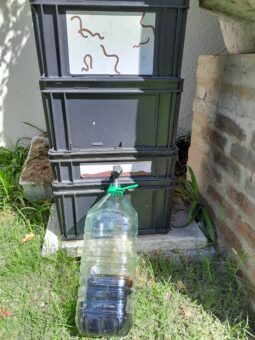
From the Focolare of Montevideo in Uruguay, the daily experience of integral ecology through the transformation of food remains into fertilizer. 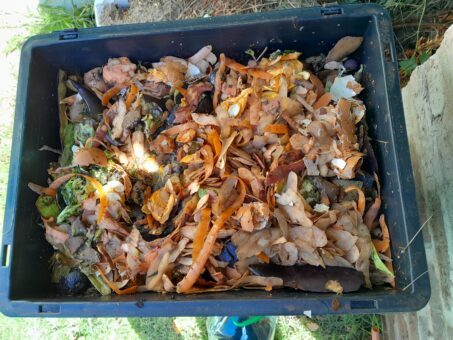 Millions of tons of waste are produced around the world every day. What becomes of this waste? Some is recycled and has new life. Some ends up in landfills or in waste-to-energy plants to produce energy. Yet before throwing away our food waste, have we ever wondered about other options? This is what some members of the Focolare community in Uruguay asked themselves and so they got involved in composting. Maria Florencia is a focolarina from Montevideo in Uruguay where she teaches integral ecology. She said, “I try to live ecology in my daily life. However, I realized that something can always be improved and that something important was missing in how we handled food waste at home: we weren’t making compost. I realized that to undertake composting would require a collective effort and so I tried to involve all the inhabitants of the house”. Soil organisms use plant and animal waste or organic matter derivatives as food. As they break down these wastes, excess nutrients (nitrogen, phosphorus, and sulphur) are released into the soil in forms that can be used by plants. Furthermore, the waste products generated by microorganisms contribute to the formation of
 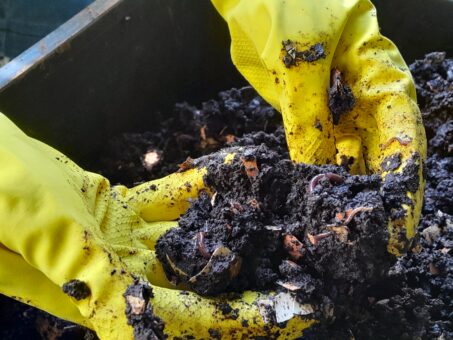 soil organic matter. Composting is therefore a process of decomposition of organic materials that has a high content of useful substances to improve soil characteristics without causing damage to the environment. 30 kgs of compost can be obtained from every 100 kgs of waste and organic materials. Alternatively, vermicompost, an organic product created through the bio-oxidation of organic matter with the assistance of earthworms, is also a sustainable option. Maria Florencia explained, “Equipped with a composter and some Californian worms, I got down to work. Now we have natural fertilizer for our garden plants and all my housemates are happy about this action for the environment. We can also share the compost with our friends, who are interested in the initiative. And it didn’t end there. Since I am a microbiologist I wasn’t satisfied with the information in the usual manuals. I started to do research and to learn more and then I decided to share my experience by writing an article for the Focolare magazine, Ciudad Nueva, in which I encouraged people to try this for themselves”. Both compost and vermicompost enhance soil fertility without resorting to chemical fertilizers. Soil stability improves, water and gas permeability increases as does water retention capacity through the formation of aggregates. It is therefore a valuable natural fertilizer. In this way, leftover food is transformed from garbage into a precious resource that helps nature and reduces levels of environmental pollution.
Lorenzo Russo
10 Feb 2024 | Non categorizzato
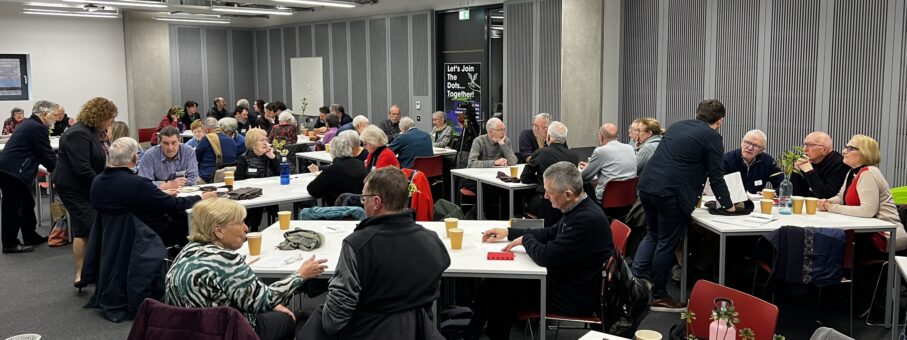
“Join the Dots Together.” This was the title of the initiative involving forty (40) organizations and the Focolare community to combat the climate crisis. Doing something together for climate justice and working collaboratively to have a greater impact on this serious and urgent issue. These were the goals of the event held in January 2024 in Belfast, Northern Ireland, organized by the Focolare Movement community together with the Belfast Jesuit Center, the Ulster University Chaplaincy, Redemptorist Youth Ministry, and the Diocese of Down and Connor. The initiative was attended by sixty people representing forty organizations. It was held at the University of Ulster and was entitled “Join the Dots Together,” meeting to work side by side on the climate emergency. 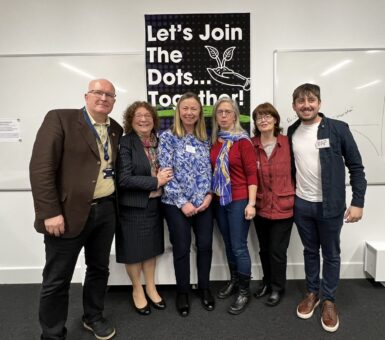 Dr. Lorna Gold, president of the global “Laudato Sì Movement,” – born after Pope Francis’ encyclical of the same name on caring for the Common Home-in her speech addressed thorny issues including the slow progress of the elimination of combustible fossil fuels while at the same time instilling a sense of joyful hope in all present. Reflecting on the COP28 (28th United Nations Climate Change Conference) document, she pointed out that it was important to have confirmed that the primary causes of climate change are fossil fuels. “The genie is out of the bottle now and there is no going back,” she stated. She then spoke about the importance of the Fossil Fuels Non-Proliferation Treaty. The use of the term “nonproliferation,” usually linked to weapons of mass destruction, is in fact related to the risks the world faces from the continued use of fossil fuels. In addition, Lorna Gold was keen to highlight the importance of faith groups as major stakeholders in the planet with billions of dollars invested in global markets, and owners of 12% of the world’s land. “People of faith,” she reiterated, “are in a key position to change the narrative and rewrite the future.”. It is no coincidence that Lorna Gold has just been named CEO of FaithInvest, an organization that focuses on mobilizing all faiths to put their resources, particularly their financial investments, to help move the economy towards a more sustainable one. The event was a powerful testimony for civil society and religious groups in Northern Ireland, with people from the interreligious forum, the Baha’i community, the Gaelic Athletic Association foundation, the Mothers’ Union and Trocaire (Caritas in Ireland), as well as several nonreligious groups such as Keep Northern Ireland Beautiful in attendance. “It is very unusual to find this sort of gathering of groups united for a common cause,” said Lorna Gold, “perhaps it is precisely the climate issue on which we all agree.”. Some testimonies from participants. Georgia Allen and Glen MacAuley, young people of Fridays for Future NI every Friday in 2023 went on strike in front of Belfast City Hall and felt it was important to attend the meeting. “It was positive and interesting, with an inspiring speaker,” said Allen. “It was a call to action, to do something concrete together. At the end they wanted to take a picture with Lorna Gold as a symbol of participation in the climate strike with her! John Barry, professor of Green Economics and Policy at Queen’s University, said, “In this time of climate and ecological emergency we must all come together recognizing that it is already late and worse than people think, but not without hope. Faith communities have an important role to play, so it was good to see such an interfaith gathering of people of faith willing to roll up their sleeves and start repairing our broken world.”. Edwin Graham of the Interreligious Forum commented, “Joining the Dots… Together-an extraordinary initiative that brought together many people from a multitude of organizations and groups that care about the environment. The diversity of those in attendance was impressive, from high-level leaders in faith communities to small organizations made up of dedicated activists.”. Nicolas Hanrahan of Trocaire noted: “It was great to see so many people doing a great job of taking care of our common home. (…) I look forward to the next one!” These sentiments were echoed by Sister Nuala of St. John’s parish: “Today was beyond all our expectations, everyone not only enjoyed it, but found it extremely helpful.”. Finally Finbarr Keavney of the Newcastle Laudato Sì group, “What an exciting and hopeful morning. It is so nice to meet many lovely people of different faiths, all bound together by a desire for climate justice.”. Lorna Gold finally reiterated that connecting the dots and formulating plans to work collaboratively on climate justice is the key: “We can plant the seeds of a new future, but the only way to do it is together.”.
Lorenzo Russo
6 Feb 2024 | Non categorizzato
Three years on, the Association – Città per la Fraternità (City for Fraternity),is issuing a new call for entries for the Chiara Lubich Award for Fraternity, which aims to promote actions for peace and fraternity around the world. fraternità in tutto il mondo. Reaching its 11th edition this year is the Chiara Lubich Award for Fraternity, born of the inspiration of the Associazione Città per la Fraternità and dedicated to the Founder of the Focolare Movement. The Association, Città per la Fraternità, based in Castel Gandolfo (Rome) joins with all agents promoting peace and fraternity to spread in the world, today more than ever , the harmonious coexistence between people and the environment in all corners of the earth. It is meant to be an experience of dialogue, confrontation and networking among municipalities and other Local Authorities that intend to promote, as part of the larger and more complex political administrative work, a permanent laboratory of positive experiences to be disseminated, emphasizing peace, human rights, social justice to better focus on fraternity as a politcal paradigm. The contest is aimed primarily at Local Authorities (Provinces, Regions, etc.) of any part of the world and size. Submissions from Local Authorites, Organisations or individuals who would point out other territorial Administrations in all continents are also welcome. The prize, an original artistic sculpture depicting fraternity, will be awarded by evaluting the implementation of a project or initiative that, throughout its life cycle, represents the declination of one or more aspects of the principle of fraternity applied to public policy, carried out in synergy between government, local communities and organized civil society. The works in question should therefore highlight those activities capable of stimulating citizens to engage for the common good, participate in the life of the civic community, and foster the growth of a culture of active and inclusive citizenship. Participants can submit their projects no later than February 29, 2024: written, hypertext and/or multimedia or audiovisual entries. In addition to awarding the winner, the jury may give one or more special awards and/or honorable mentions to other projects that have particularly distinguished themselves as experiences of universal fraternity in the local community. To know how to proceed and get more information, you can download the notice through the following link or visit the webpage Associazione Città per la Fraternità (cittaperlafraternita.org).
Maria Grazia Berretta
2 Feb 2024 | Non categorizzato
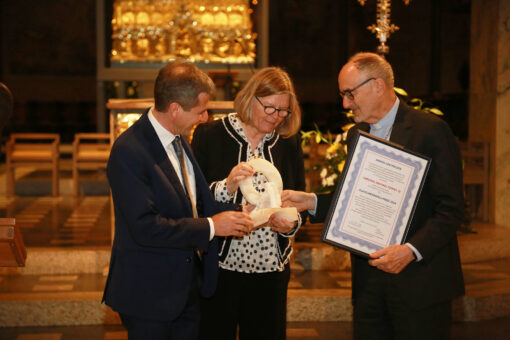
On 26th January, the Prefect of the Dicastery for Promoting Integral Human Development, Cardinal Michael Czerny, went to Aachen, Germany, to receive the 2024 Klaus Hemmerle Prize. Since 2004, the Focolare Movement has presented the Klaus Hemmerle Award every two years, to people who, like the former Bishop of Aachen, have actively contributed to building bridges in the Church and in society. The 11th Award ceremony was held on Friday, 26th January, 2024, in the Cathedral of Aachen (Germany). This year, which marked the 30th anniversary of the death of Klaus Hemmerle (1929-1994), the recipient was Cardinal Michael Czerny, Prefect of the Dicastery for Promoting Integral Human Development. 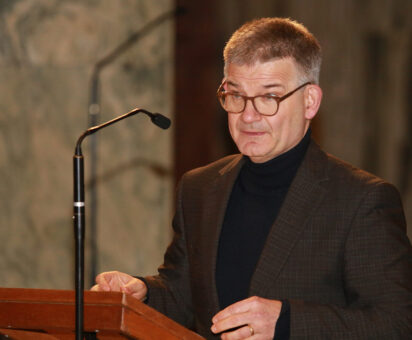 Prof. Dr. Johannes Wallacher, Rector of the University of Philosophy in Munich, presented the award. In his speech, he underlined Card. Czerny’s contributions to theological development and his dedication to implementing the Social Doctrine of the Church in socio-political contexts throughout various phases of his life. Wallacher also spoke of the “vision of global fraternity as a sign of the times and a central key to finding answers to the needs of our times”, a vision to which Czerny is committed and is an inspiring model.
 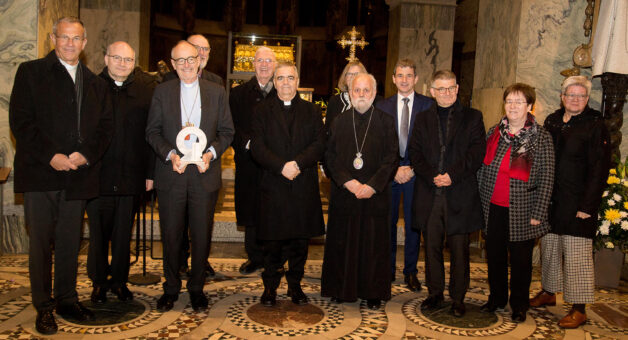 In its decision, the jury emphasized Card. Czerny’s tireless advocacy for human dignity and rights, his call to “accept differences and to learn from other cultures” in order to foster “a more just world”, a commitment praised by the Apostolic Nuncio to Germany, His Excellency Msgr. Nikola Eterović. Mons Helmut Dieser, the current Bishop of Aachen said, “The fraternity of all people is the guiding theme of Pope Francis” and he referred to Cardinal Czerny as, “a supporter and a pioneer of this theme”. Margaret Karram, President of the Focolare Movement, sent a message to congratulate Card. Czerny in which she highlighted his significant efforts in building a culture of unity and dialogue, recognizing him as an ally in the effort to mediate conflicts and to promote mutual solidarity. In his speech of acceptance, Cardinal Czerny focused on the social magisterium of Pope Francis for a socio-ecological transformation. He referred to key texts of the Doctrine, which he considers cutting-edge today and he agreed with the Pope, who in his encyclical “All Brothers”, called for a culture of encounter to replace the “throwaway culture”. Czerny said, “We must shift our attention from profit to prosperity, from economic growth to sustainability and from materiality to human dignity” and he stressed the importance of “rethinking the concept of progress and of restoring a sense of community”, a path that leads from the “I” to the “we”. In conclusion, he thanked those present for their “crucial role in shaping new rationales that can protect our fragile environment and empower our fragmented communities.” He said that receiving this award was an encouragement for him to “continue to focus all the existing forces of good in the sense of a holistic development, for the service and benefit of the entire human family”.
Andrea Fleming Photo di Martin Felder
