Christian hope is not an escape from reality. It is born in a dark place, in the narrow confines of a sealed tomb, where God has already overturned the judgment of this world. Precisely for this reason, it dares to speak in a time of wars (Gaza, Kyiv, Darfur and Tehran) and of hundreds of millions of people who do not know how they will make it to tomorrow.
Our days are woven with justified expectations: health, a secure job, a measure of peace, a justice that is more than words. But when these become our entire horizon, we either treat them as idols or, at the first serious fracture, we take refuge in cynicism and resignation.
Easter does not erase these hopes; it re-centres them. It roots them in Another and in doing so, preserves them. A love stronger than death does not remove the burden of action; rather, it breaks the anxiety of having to save the world through our own efforts alone.
The final word on history is not ours, nor that of the victors of the day. It is the word spoken over the body of Jesus. And the word of Easter already refutes every claim of death to be definitive. For Paul, the resurrection of Christ is not an isolated episode in Jesus’ biography. It is the opening of a new scene into which all humanity is drawn: “For as in Adam all die, so in Christ all will be made alive” (1 Cor. 15:22). The Church Fathers followed this insight without attenuating it: the resurrection is the fulfilment of human nature in its entirety, not the privilege of a fortunate few. In Christ, God already contemplates the fullness of the human family: the faces of refugees in the Mediterranean, of those crossing the Sahara, of civilians hiding in basements in Darfur. For this reason, every wound to human dignity, every discarded body, is not only a social injustice; it is a profanation of a humanity that was conceived and loved within the very light of the Risen One.
Paul widens the horizon further: “the whole creation has been groaning as in the pains of childbirth” (Rom 8:22). It is not only human conscience that groans, but the soil, the air and the seas. In 2026, the language of “labour pains” no longer sounds like pious symbolism: we read it in floods, in uncertain harvests, in villages forced to move because the water has run out. This groaning takes the form of protest; creation refuses to be treated as disposable material and Easter gives it a voice. In the risen Christ, every exploitation of the earth already appears for what it is: a choice against the future of all.
How, then, are we to live between a fulfilment already begun and a history still marked by too many failures? Not with paralysis, nor with superficial optimism. We live knowing that nothing authentically good is lost: a gesture of welcome, a choice to renounce something, honest work carried out under adverse conditions. Pope Benedict XVI reminds us that “every serious and upright human action is hope in action,” and includes among these efforts working for a more humane world, sustained by the great hope grounded in God’s promises (Spe Salvi, 35). We can say even more: it is not an external addition to the Kingdom; it is already a visible fragment of it. Fulfilment belongs to God and yet God insists on passing through us as well. When we commit ourselves to refugees, to disarmament, to more humane working conditions, to a concrete and not rhetorical peace, we are not simply “preparing” something for later. We are allowing the life of the Risen One to take shape—humbly and fragilely—within our time.
Easter hope does not remain an idea or a feeling; it takes flesh. The resurrection teaches us that the logic of death has no power to determine the final outcome. For this reason, every war, every system of exploitation, every calculated indifference is already unmasked and stripped of ultimate meaning by the empty tomb. In the tomb of this world, something has already changed forever: life has begun to rise up through the cracks of history. Not as vague consolation or as a “reward” in some undefined elsewhere, but as a reality that, in Christ, has already been entrusted to humanity and to all creation. In the judgement of God revealed at Easter—a judgment that liberates, not crushes—it is decided once and for all that death will not have the last word over anyone or anything.
This is the great hope.
Happy Easter: a hope that does not remain closed within the church, but engages in history.
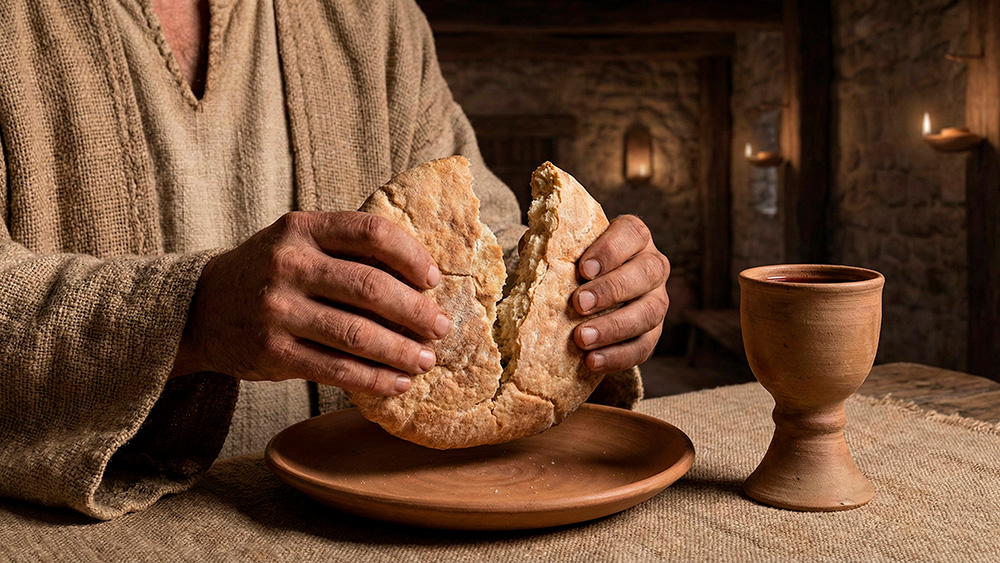
I wish that we could all have Easter eyes capable of looking into death, until we see life, into the hurts, until we see forgiveness, into separation, until we see unity, into the wounds, until we see glory, into the human person, until we see God, into God, until we see the human person, into Myself until I see You. And in addition to this, to see the power of Easter!
(Easter 1993)
Klaus Hemmerle La luce dentro le cose, Città Nuova, Rome 1998, p. 110.
Solitude, silence, do not frighten: they are made to protect, not to cause fear. Nevertheless, one can take advantage of such a suffering. The greatness of Christ is the cross. He was never so close to the Father and so close to the brothers as when naked, wounded, he cried out from the gallows: “My God, my God, why have you forsaken me?”. With that suffering he redeemed: in that fracture he reunited all men with God.
[…] Listen to it. Contemplate it, within the silence wherein God speaks. This is, in the day of life, the hour of dusk of contemplation, when the creatures gather together to assess the work that has been done and to prepare the actions of tomorrow: a tomorrow immersed in eternity. […] Detachment from the world, therefore, and attachment to God: thus not a separation from people, inasmuch as they are brothers, members of the same divine and human family.
(Igino Giordani, Excerpts taken from “Città Nuova” XXIII/13 10 July, 1979, pp.32-33)
This year, Holy Week found a special resonance in me.
Yesterday, Wednesday of Holy Week, I was especially touched by the reading of the Passion of Jesus. I became aware – and this is so important – of the very new value suffering has in our Christian life. I felt as if I was drawn to this most sublime calling amidst the many voices that fill every day and every moment of our life. Jesus, the “man of suffering”: this is the climax of his vocation.
… Today I feel enveloped by a wave of tenderness. It is the day of the New Commandment, of the Eucharist, of the priesthood, it’s the day when we serve one another.
Jesus reserved so many infinite riches for the last day of His life on earth!
How I wish to make every day a Holy Thursday.
Jesus, you who have chosen us for this pathway, which is so close to your heart, help us to follow it well, every day, until the end.
(Translation of the Italian text found in: Chiara Lubich, Diario 1964-1980, a cura di Fabio Ciardi, 2023, Città Nuova, Roma, p. 324)
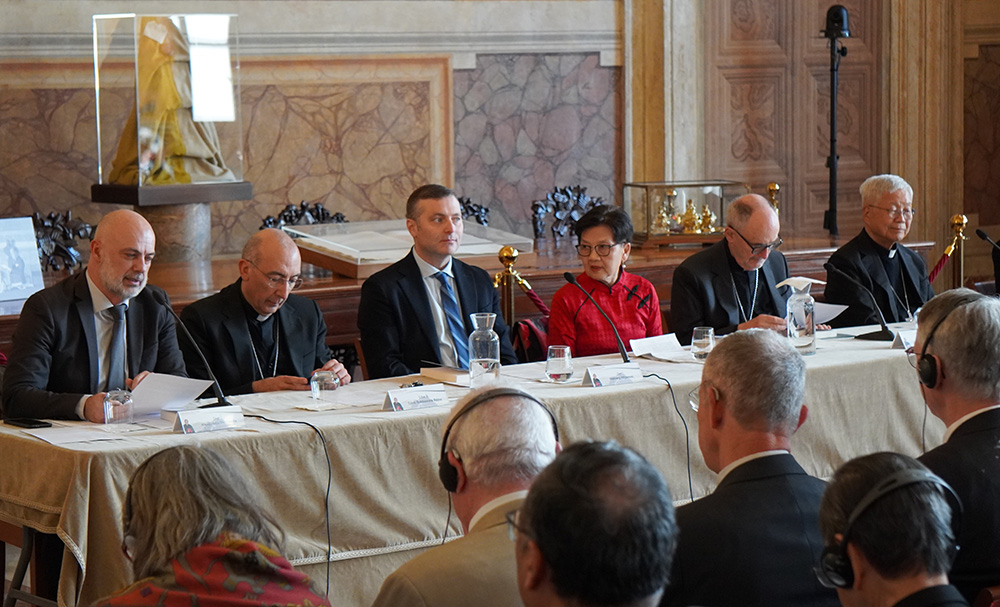
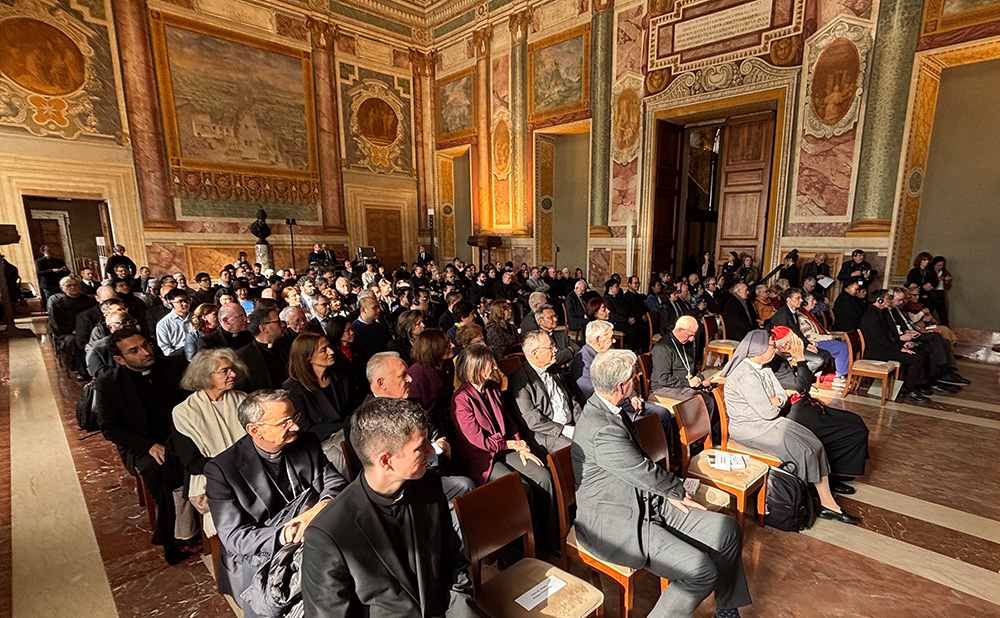
25th March 2026 – The event was held in the Sala della Conciliazione of the Lateran Palace where, after decades of conflict, the Catholic Church and the Italian State signed the Lateran Treaties in 1929. In this same historic place, in 2013, the diocesan phase of the Cause of Beatification of one of the most important spiritual figures of our time concluded: the Vietnamese Card.François-Xavier Nguyễn Vân Thuân.
220 people were present, Cardinals, Bishops, family members, priests, nuns and lay people from Vietnam and other countries. Thousands more were connected via streaming in seven languages on Vatican Media’s YouTube channels. The reason for this gathering was the occurrence of 50th anniversary since Nguyễn Vân Thuân, then a young Bishop, in the first months of his imprisonment that began on 15th August, 1975, managed to send his faithful 1,001 short meditations written on scraps of old calendars. The event was organized by the Cause of Beatification of the Vietnamese Cardinal, together with the Dicastery for Promoting Integral Human Development which is responsible for the Cause, in collaboration with the Dicastery for the Clergy, the Diocese of Rome and Città Nuova Publishing House.
Pope Leo marked the occasion with a Message signed by Card. Parolin, Secretary of State, expressing the hope that “this significant event will foster a renewed appreciation of the fervent witness of such ac courageous disciple of the Gospel and generous Shepherd”. His example – he continued – “is profoundly relevant today because it reminds us that Christian hope is born from an encounter with Christ and takes shape in a life given to God and neighbour”.
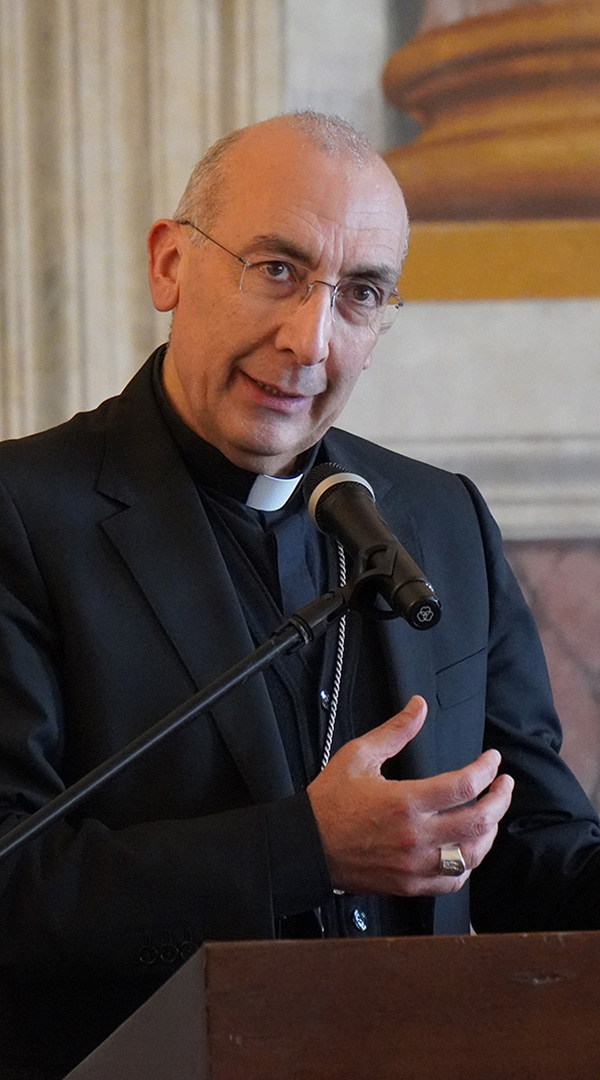
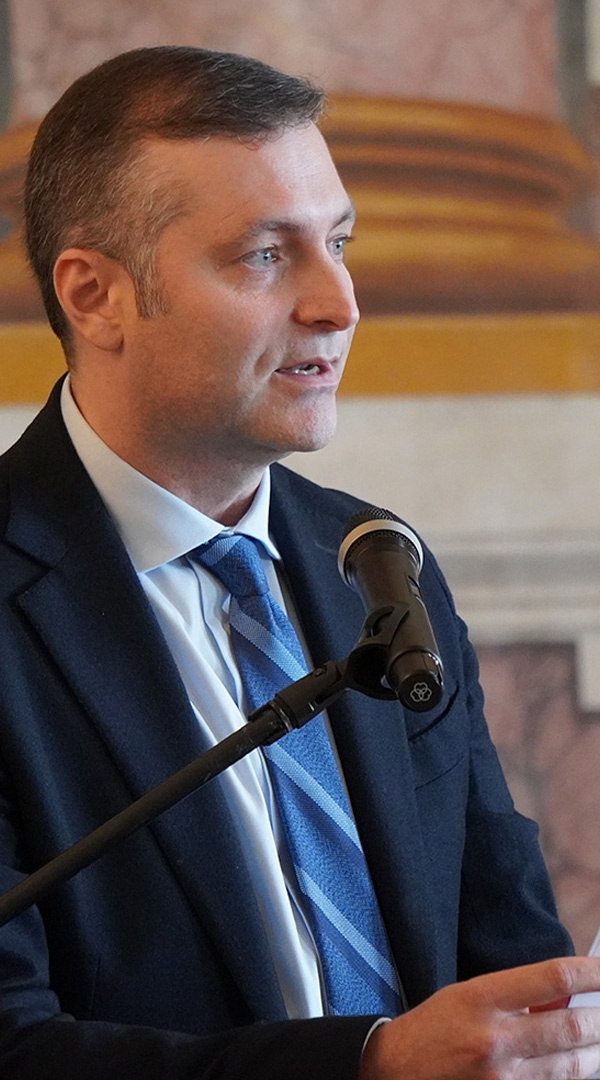
Cardinal Baldassare Reina, the Pope’s Vicar General for the Diocese of Rome, welcomed the participants. He recalled the relevance of Nguyễn Vân Thuân’s life in the aftermath of the Jubilee of Hope, at a time when the Gospel is transmitted above all through witness.
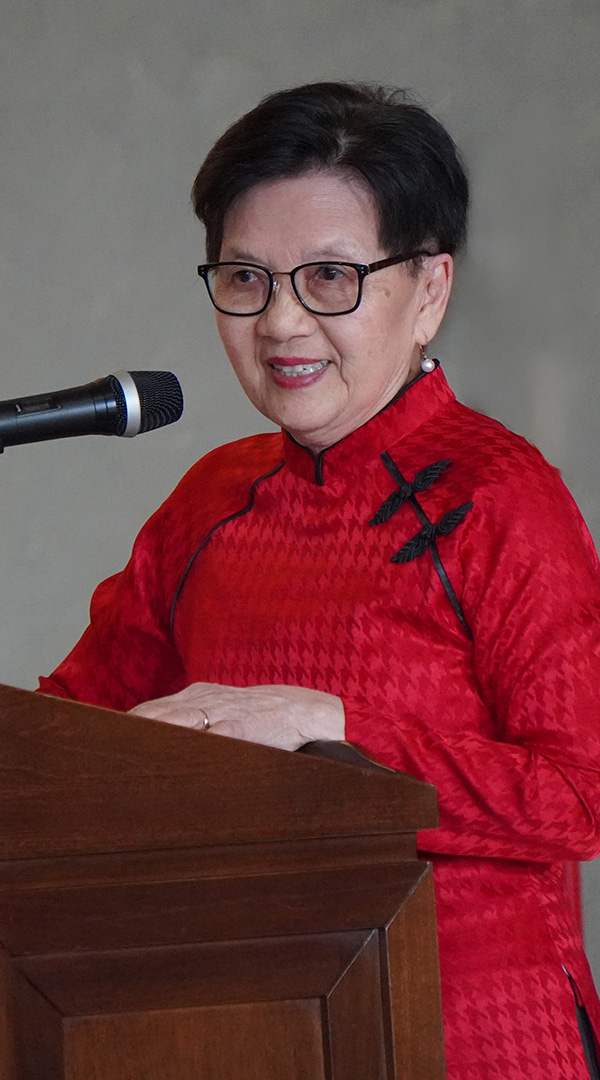
Cardinale Baldassare ReinaDr. Waldery HilgemanSig.ra Élisabeth Nguyễn Thị Thu Hồng
But who was this Vietnamese Cardinal? A brief biographical sketch was offered by Dr. Waldery Hilgeman, Postulator for the Cause of Beatification. A descendant of a family that in the nineteenth century included martyrs among its ancestors, from a young age François-Xavier was attracted by the example of the saints and later to contemporary spiritual movements, including the Cursillos and the Focolare. He entered the seminary, became a priest and obtained a doctorate in canon law. In 1967 he was consecrated Bishop of Nha Trang. When Paul VI appointed him Coadjutor Archbishop of Saigon in 1975, a long trial began: he was arrested and spent thirteen years in prison, of which nine in solitary confinement. He later recounted that there he learned “to choose God and not the works of God”. He understood that God wanted him to be with the other prisoners, almost all non-Catholic, as a presence of God and of His love, “in hunger, in cold, in hard labour, in humiliation and injustice”. He was released in 1988. He lived in Rome from 1991, where John Paul II appointed him first Vice President and then President of the then Pontifical Council for Justice and Peace and in 2001 made him a cardinal.
Elisabeth Nguyễn, the Cardinal’s sister, recounted the remarkable story of the 1001 thoughts. Smuggled out from house arrest, “they began a journey of evangelization from one family to another, from one prison cell to another, before crossing the oceans with the boat people“. Years later, they became the book The Road of Hope.
Powerful and moving experiences, augmented, halfway through the meeting, by a piano piece performed masterfully by Don Carlo Seno: “La Campanella” by Franz Liszt.
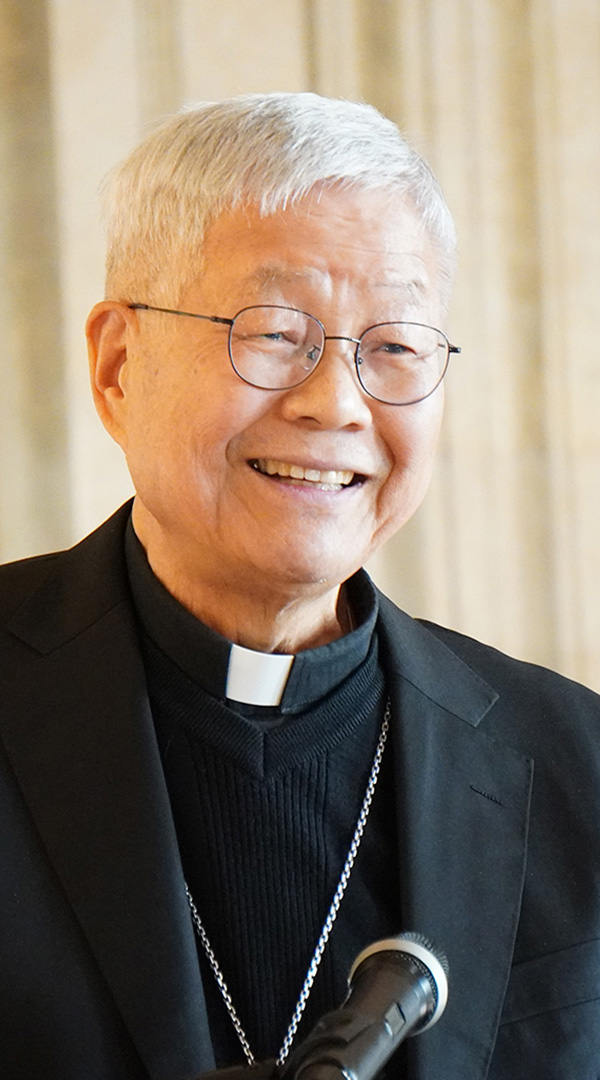
Over the course of just an hour and a half, guided by the journalist Alessandro De Carolis of Vatican Media, additional aspects of Nguyễn Vân Thuân’s life emerged. Cardinal Lazzaro You Heung-sik, Prefect of the Dicastery for the Clergy, spoke of him as an “evangelizer in every circumstance”, recounting the testimony of a Buddhist monk: “It was winter, it was two degrees below zero and we did not have enough blankets in the re-education camp. The Bishop would go out several times every day to collect branches and pieces of wood to heat the camp at night… He was what we Buddhists call a “Bo tac”: a very holy man. ”
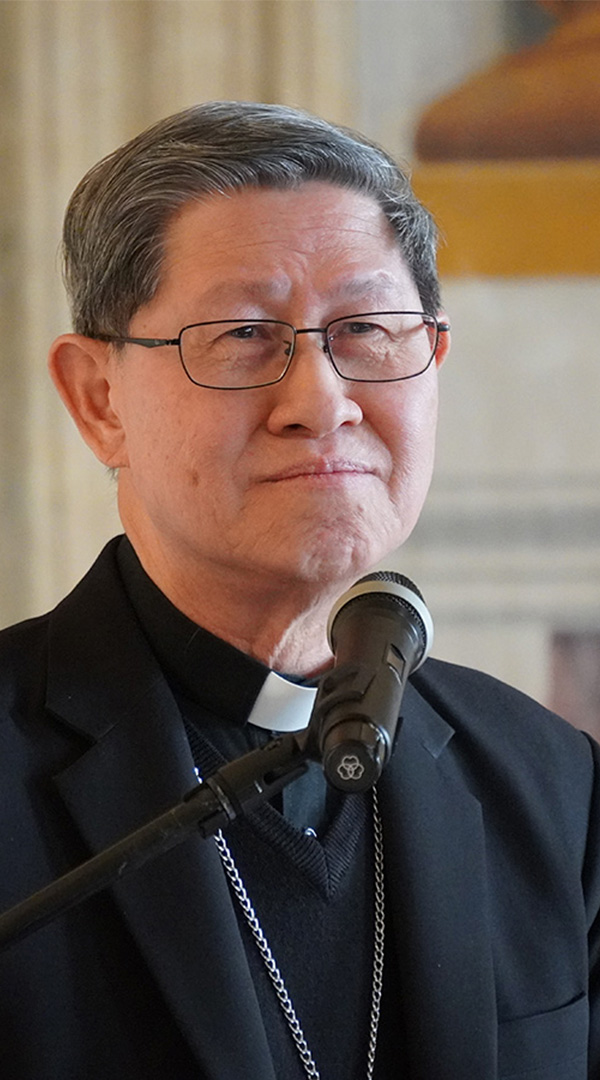
Cardinal Luis Antonio Tagle, Prefect of the Dicastery for Evangelization, recalled how in 1995 a personal friendship was born with Nguyễn Văn Thuận: “I was struck by the fact that, while he recounted painful and even humiliating experiences, his voice remained calm and his face serene. There was no hint of bitterness or hatred in him. I couldn’t take my eyes off his radiant and smiling face. ”
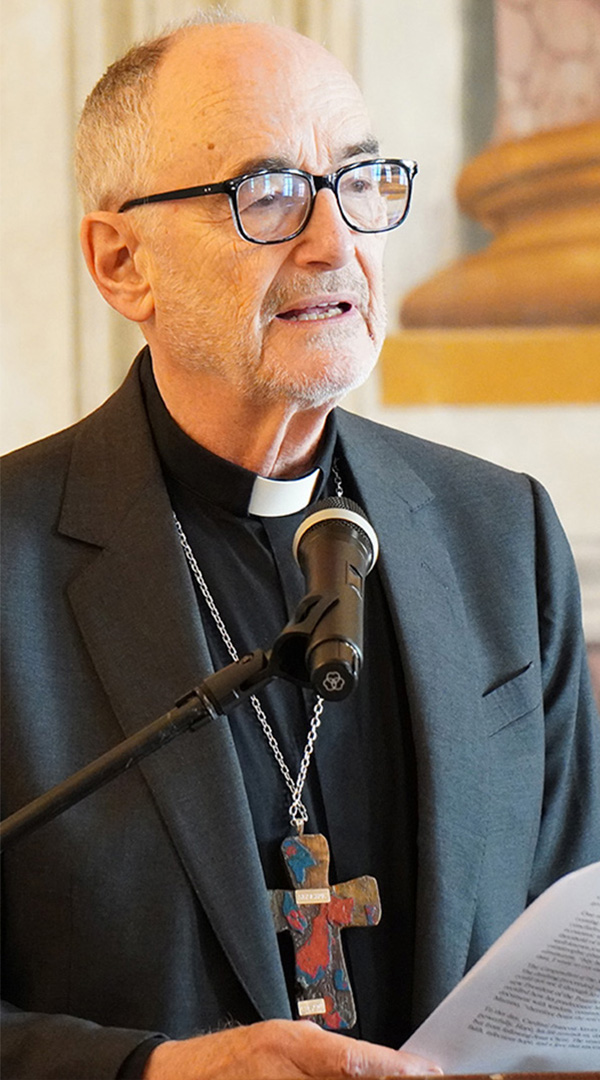
Along with his spiritual stature, his deep concern for global issues of justice and peace emerged. Cardinal Michael Czerny SJ, Prefect of the Dicastery for Promoting Integral Human Development spoke of this. For the occasion, he had published the Italian translation of a new biography of Nguyễn Văn Thuận, written by his sister Elisabeth together with the Belgian priest Stefaan Lecleir.
Cardinale Michael Czerny, S.J.Cardinale Luis Antonio TagleCardinale Lazzaro You Heung-sik
Card. Czerny explained, “His main contribution at a global level was his role in the development of the Compendium of the Social Doctrine of the Church (2004)”. He then referred to a striking question posed by the Vietnamese Archbishop: “Faced with the current political and economic situation, some wonder: will we be able to cross the threshold of the new millennium with hope?” In response, he cited a well-known journalist who predicted “three catastrophic phases” for impoverished societies: exploitation – exclusion – elimination. “When I think of all this,” commented Nguyễn Văn Thuận, “my heart is torn and I would like to shout: ‘impossible’.”
At the end of the event, the actor and journalist Rosario Tronnolone read some passages from The Road of Hope that resound like the golden seal: “You want to carry out a revolution: to renew the world. You will be able to accomplish this precious mission that God has entrusted to you, only through “the power of the Holy Spirit”. Every day, where you live, prepare a new Pentecost. Commit yourself to a campaign that aims to make everyone happy. Sacrifice yourself continually, with Jesus, to bring peace to souls, development and prosperity to peoples. Let this be your spirituality, discreet and concrete at the same time. “