4 Oct 2018 | Non categorizzato
Also the scientists say that smiling does us good. It lengthens life, reduces stress and brings people closer. At times it can also change your life. The World Smile Day created by Harvey Ball has been celebrated every first Friday of October since 1999. He was also the creator of the “smileys” that inspired the emoticon. Giving a smile is not always easy, but necessary. “I do not know of any other sign of superiority in man except that of being kind,” Beethoven affirmed. And according to Plato: “Every person you meet is fighting a battle you know nothing about. Be kind, always.” Hunter Doherty Adams called “Patch” is a doctor, activist and writer who is known worldwide for his practice of and support for clown therapy. Strongly convinced that joy and creativity are integral parts of the therapeutic process especially for children, Patch and his colleagues fight against suffering and disease by wearing a red clown’s nose, now the distinctive element of a new way of practicing the medical profession. Adams dedicated his life to the study of the human being under ever aspect and in the creation of a healthcare system within everyone’s means. His philosophy of healing starts with the mind, and the action which stimulates in the patients the construction of positive thinking that can make our lives better.
4 Oct 2018 | Focolare Worldwide
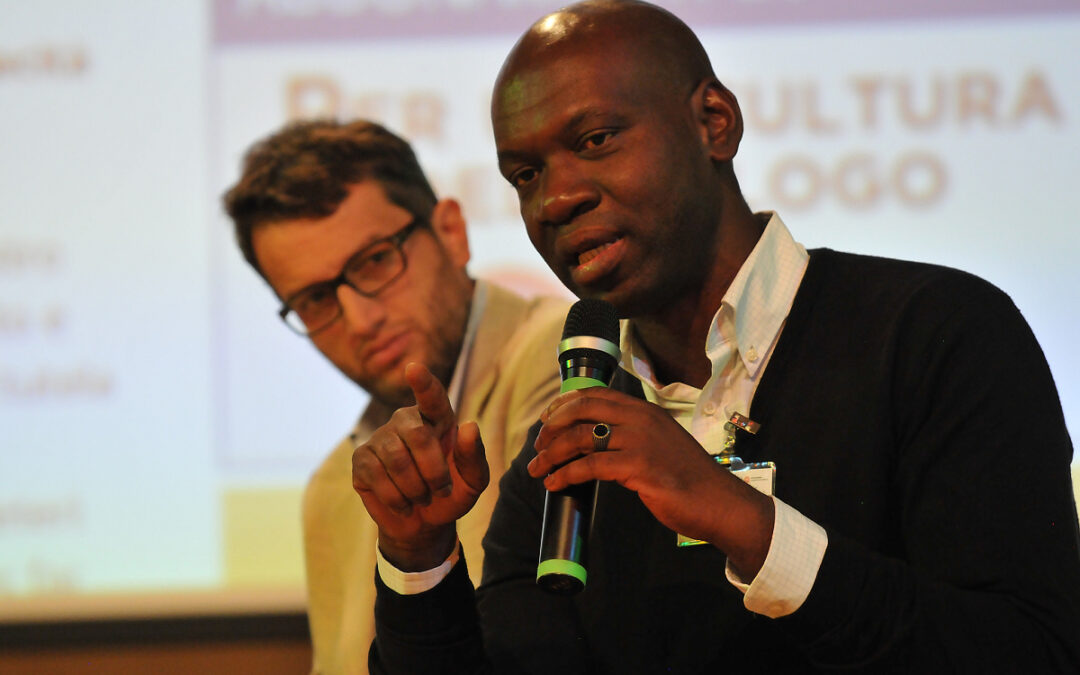
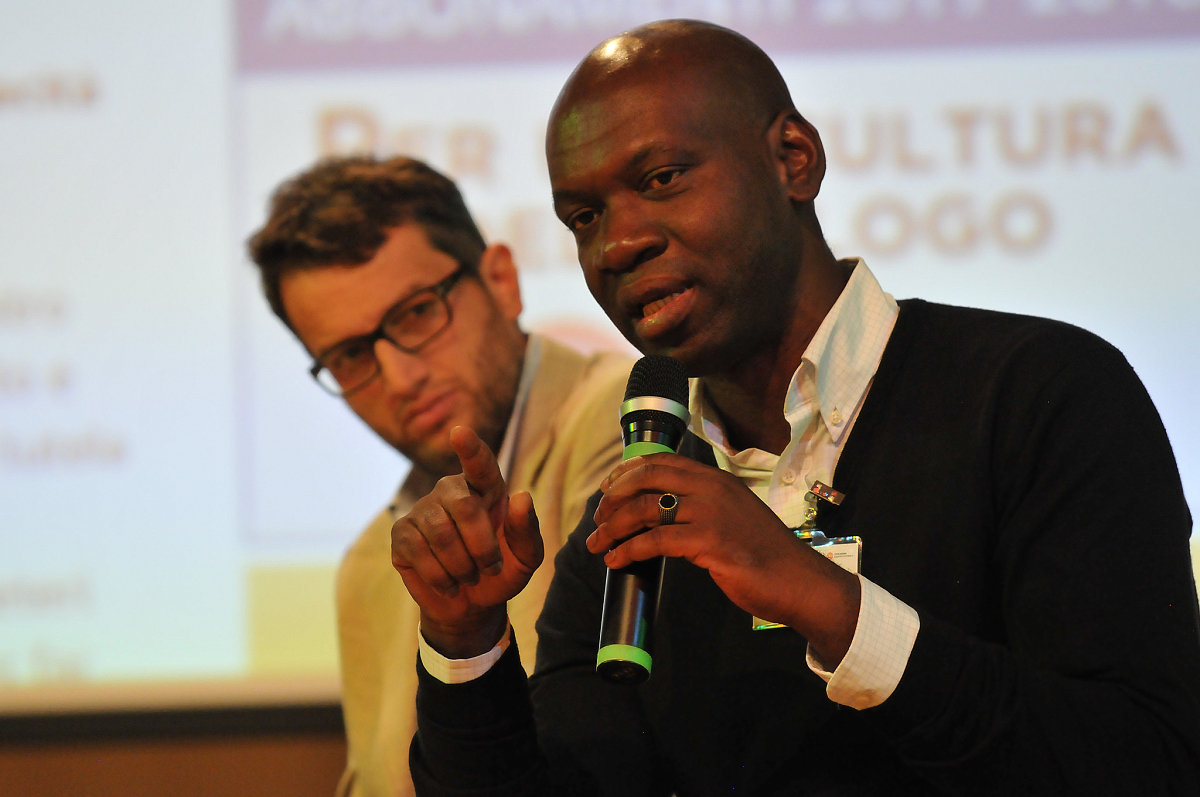
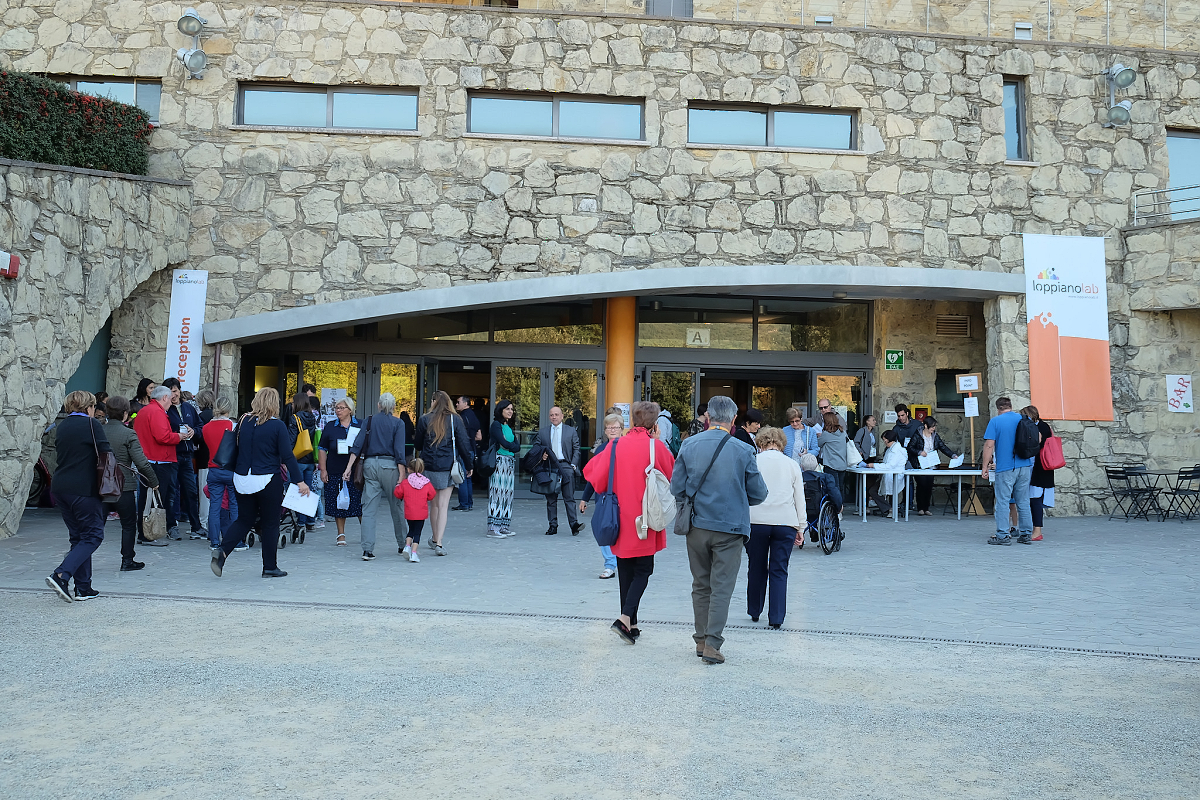 “There were more than 1,000 participants, a quarter of which belonged to the age bracket of the youth, adolescents and children; three central themes on employment, education, and participation, starting from the heritage of the 1968 youth movement; almost 50 workshops for adults and children; and around 10 speakers.” Aurora Nicosia, New City Director expressed her great satisfaction at the conclusion of the event. The title of this year’s LoppianoLab held in the International town of Loppiano recalled the anniversary of the youth protests: “From the dream to commitment, education, participation, and work fifty years after 1968.” Each of the three themes – education, participation, and employment were central to the plenary session which was followed by a series of workshops open to the contribution of everyone. The morning of Saturday, 29 September was dedicated to the theme of employment, and focused on “Why work will never end.” A dialogue was set up and participated in by Carlo Petrini, founder and soul of Slow food, Sr. Alessandra Smerilli, economist, and Fr. Antonio Loffredo of the Social Cooperative La Paranza, and was moderated by Atty. Flavia Cerino. The round table involved Mario Capanna, politician and essayist, Brunetto Salvarani, theologian, and Rosy Bind, former Congresswoman. It focused on the heritage handed down by the 1968 movement, was emceed by Marco Luppi (Historian, Sophia Univ. Inst.) and Federico Rovea (doctoral candidate in the Science of Education, Padua Univ.), and centred on the title: From the dream to commitment: beyond the revolution and the 1968 protest.
 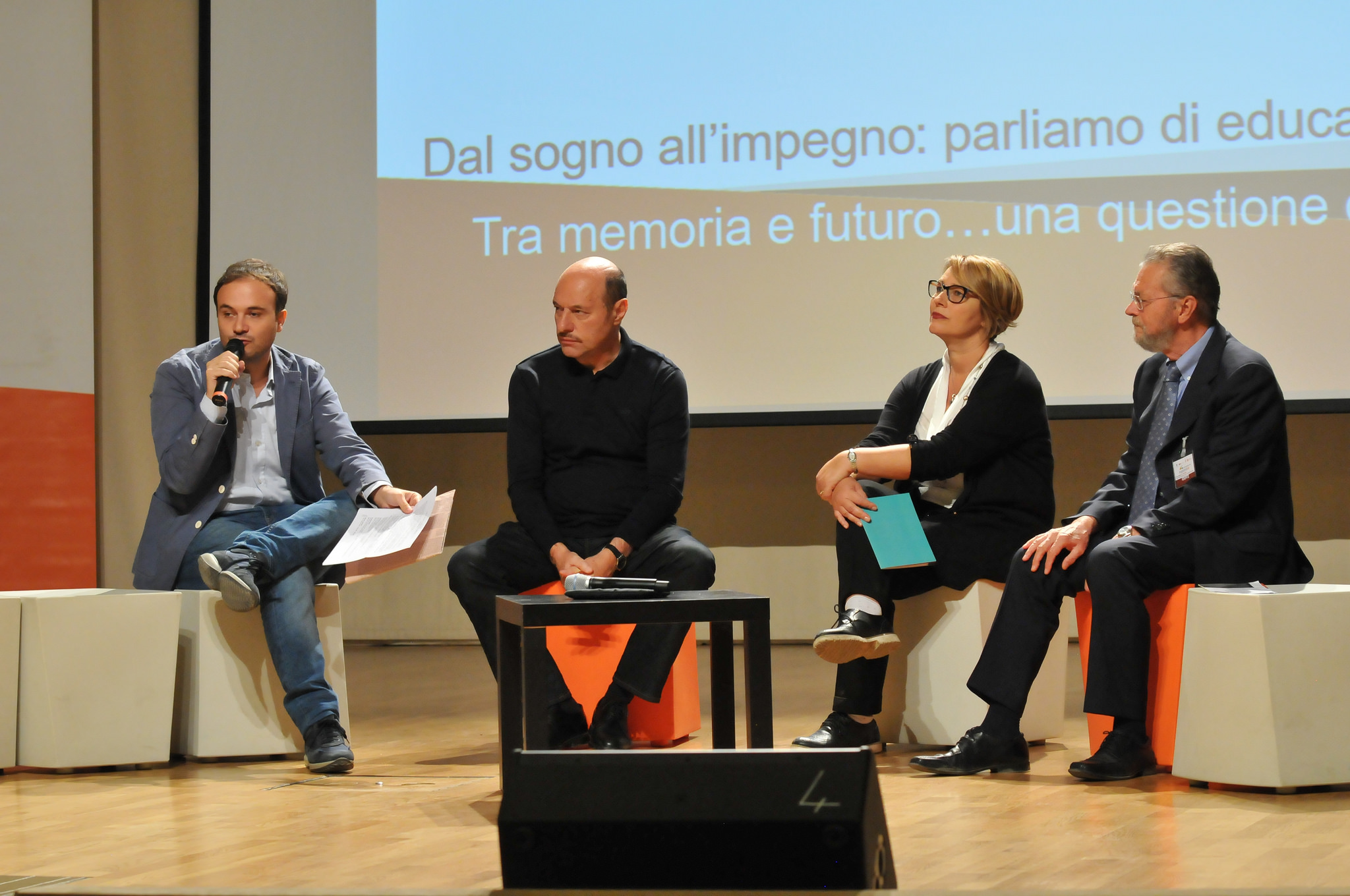 Instead, on the morning of Sunday, 30 September, the theme of education was taken up, highlighting “From the dream to commitment: let’s talk about education 4.0 Between memories and the future… a matter of sense.” The discussion was moderated by Paolo Di Paolo, writer, and involved Eraldo Affinati, teacher and writer, Emma Ciccarelli, vice president of the Family Associations Forum, and Michele De Beni, educationalist and Professor of the Sophia University. Among the themes taken up were the situation which the schooling world is undergoing today, and more extensively, the world of education. “The importance of LoppianoLab was that it re-emphasised some priorities: work, the need to participate in the many shared settings across society and politics, the central role of education …” commented Marco Luppi, Professor of History of Contemporary Politics at the Sophia University Institute. “Passing from the dream to commitment, I would like to start with ‘emphasis’ on a collective job awaiting all of us, believers and non-believers as highlighted in all the workshops, towards the construction of the common good, in not only a possible dialogue, but also an urgent one.”
  As in the last years, the laboratory formula characterising the event, set a dialogue among the citizens, entrepreneurs, communication operators, students and teachers, politicians, members of associations, youths, and intellectuals of all the Italian regions and beyond. “To conclude,” Aurora Nicosia underlined, “we can say that the title of this edition, “From the dream to commitment,” did not remain a slogan, but became something vital, a push not to give up our “dreams,” as Pope Francis often stresses, but to give concreteness to these dreams, with an individual and collective commitment.” Tamara Pastorelli
Photos on Flickr 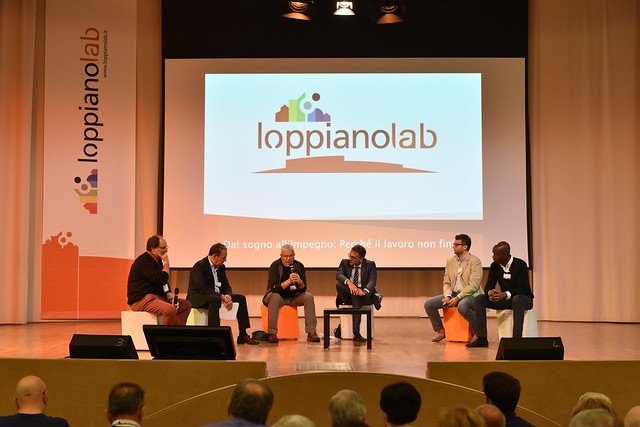
3 Oct 2018 | Focolare Worldwide
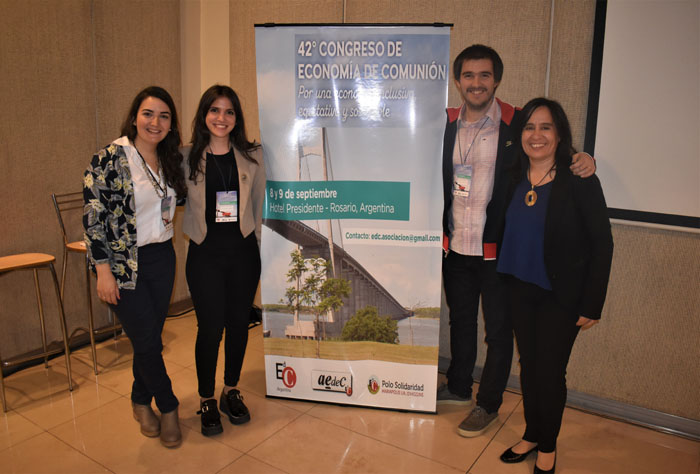 Carolina Carbonell was one of the organisers of the Economy of Communion Congress in Rosario, a populated city in the province of Santa Fe, 300 km from Buenos Aires. She defined the event as “a marathon,” maybe because it all started with a race against time. “It was February 2018. A few months earlier, we had received the proposal to organise the Congress in our city. It was very hot. Walking along the sidewalks of the city, I came across an old university friend, today the director of a series of hotels. I immediately stopped him and told him of our dream: so we found the place for the Congress. On 6 September, 70 people, “not only a few, considering that those were the days in which the faculty was the object of a student protest,’ attended the opening event, with a conference entitled, ’What’s the Economy of Communion?’”
 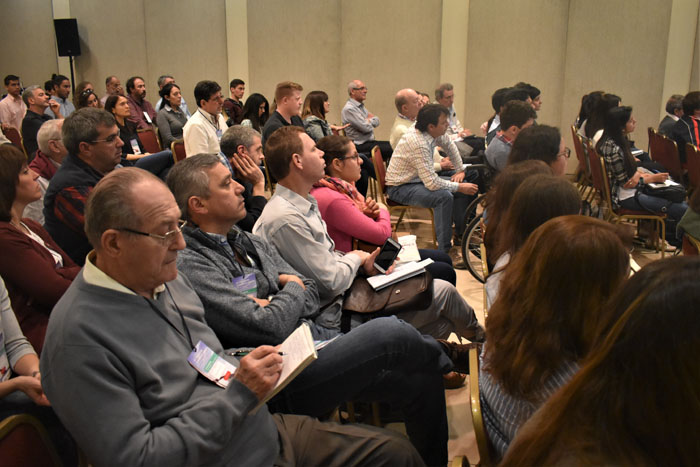 On the second day, the “marathon” continued. “The entire team” – recounted Carolina – “woke up early to meet over 300 students of the fourth and fifth year of 12 schools in Rosario, who gathered at the ‘Colegio Natividad del Señor’ to participate in a workshop. The kids put all their creativity to ‘create’ businesses and ‘make decisions’ over various situations regarding competition, crises, distribution of profits and selection of the personnel. The most important part, however, was that they subjected the EoC entrepreneurs present to a test, and who responded with their own life experiences. In the afternoon we went to the After Unplugged ‘Empresas de un solo tiempo’ session in La Maquinita Rosario. It was a co-working setting where Gonzalo Perrín, Leandro Simeoni and Lucas Longhi narrated about their own experiences as entrepreneurs for a common project. On Saturday, we welcomed the 120 participants from 30 cities of 8 provinces and 4 different countries. It was a big group, highly assorted by age and profession. The innovative presentation, tracing the present to the origins of the EoC, was followed by testimonials of the employees of some companies that were a part of the project. There were different experiences, from a family business that produces sustainable benches to a contact center with 1,200 employees, ’Nomines,’ an inclusive company which hires only disabled people.” After lunch, an original game, musical chairs, was proposed but in a different and even more enjoyable version: instead of eliminating those who did not find a seat, the chairs were eliminated. “It required cunningness and balance to sit on top of the others without getting hurt. The most difficult moment was when only one chair remained, and all had to sit without letting anyone fall. This same intelligence is also needed by all those who work for the elimination of poverty.” With great depth we then presented some of the saddest realities of current society, to recall the reasons for which the EoC was created. “Lastly,” Carolina concluded, “when you think that the goal is not too far away since we are always dealing with a marathon, and that nothing else could happen at that point, the unforeseeable occurred. On Sunday, some 8-year-old children recounted their experiences: a small business to earn money to share with kids of other nations at war, or the visit to a home for the aged where they learned to appreciate them. Last was the interview of Martina, 9 years old: The questions, but above all the answers show the prophesy underlying the EoC: those who have lived the culture of giving since their childhood are those who will one day be able to change the economy.” Source: www.focolare.org/conosur
2 Oct 2018 | Non categorizzato
Economy is a Greek word that directly refers to the home (oikos nomos, rules for running a house), on the family. But the modern economy, especially contemporary economy, is governed by other principles, distinct and in many ways opposed to the ones that govern a family. A founding principle of the family, perhaps the primary one that underpins all the others is gratuitousness, which is the farthest from a capitalistic economy that is more familar with the surrogates of gratuitousness (discounts, philanthropy, sales). These serve the purpose of immunizing the markets against true gratuitousness. The family, in fact, is the main place where we learn from childhood on and for the rest of our lives, what Pavel Florensky calls the “art of gratuitousness”. It is especially in the family that we learn as children to work, and that no work can be done well without gratuitousness. But our culture associates gratuitousness with “for free,” the discount, the half-hour of overtime without pay, the zero price ( Saint Francis instead told us that gratuitousness is an infinite price: it can’t be sold or bought, because it’s unpayable). Gratuitousness means giving freely; it is a type of behaviour and a lifestyle that consists in approaching others, oneself, nature, God and things – not to use them in a utilitarian way for one’s own advantage, but to acknowledge their “otherness” and in their mystery, to respect them and serve them. To say gratuitousness means, therefore, to recognize that a certain way of acting done because it is good, and not because of recompense or sanction. […] If the family wishes to cultivate the art of gratuitousness as it should, it should be careful not to import into the home the logic of incentive which is rampant in today’s world. […] One of the tasks of the family is the formation of a person’s work ethic, which is precisely the result of gratuitiousness. If, instead, you begin to practice the logic and culture of incentives, and money becomes the reason for doing things, children will not be good workers when they become adults, because the work well done of tomorrow will always depend on the gratuitousness that is learned especially during the first years of life and especially in the home. The absence of gratuity in the economy also depends a lot on the absence of a feminine gaze. […] Women look at the home and at the economy and first see the connections of human relationships that that are happening. The first goods they see are the relational ones and the communal goods, and within these they also see the economic goods. It is certainly not by chance that the Economy of Communion was the result of the vision of a woman (Chiara Lubich), nor that the first theoritician of the common goods was Katherine Coman (1911), or that Elinor Ostrom was the only woman so far to receive a Nobel Prize in ecomony because of her work on common goods. And there are two women at the root of the theory on relational goods: Martha Nussbaum and Caroll Uhlaner. When the feminine gaze is missing from the economy, the only relations that can be seen are instrumental ones where it is not the relation that is the good, but where relationships with people and with nature are seen as the means used for obtaining goods. If the feminine gaze and genius of the home (oikos), had perhaps been present in the theoretical foundation of modern economy, we would have had an economy that was more attentive to the relationships, to the redistribution of revenue, to the environment and perhaps to communion. Communion is the great word that the family has to pass on to the economy. The prophetic role of the family in today’s world, to be believed, must take on the form of the children and the form of the economy and, therefore, of sharing, welcoming and communion. Because the children and the economy are nothing more than the ordinary life of each and of all, which is the only place where prophecy is nourished and grows. Source: www.avvenire.it, “Così lo sguardo femminile può cambiare l’economia”, 23 August 2018.
1 Oct 2018 | Focolare Worldwide
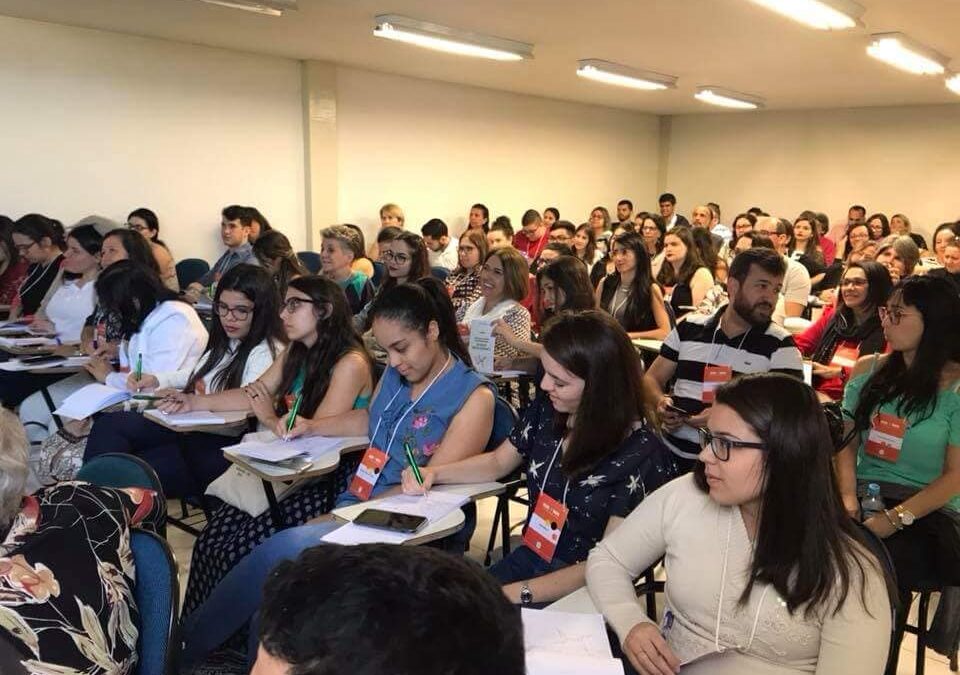
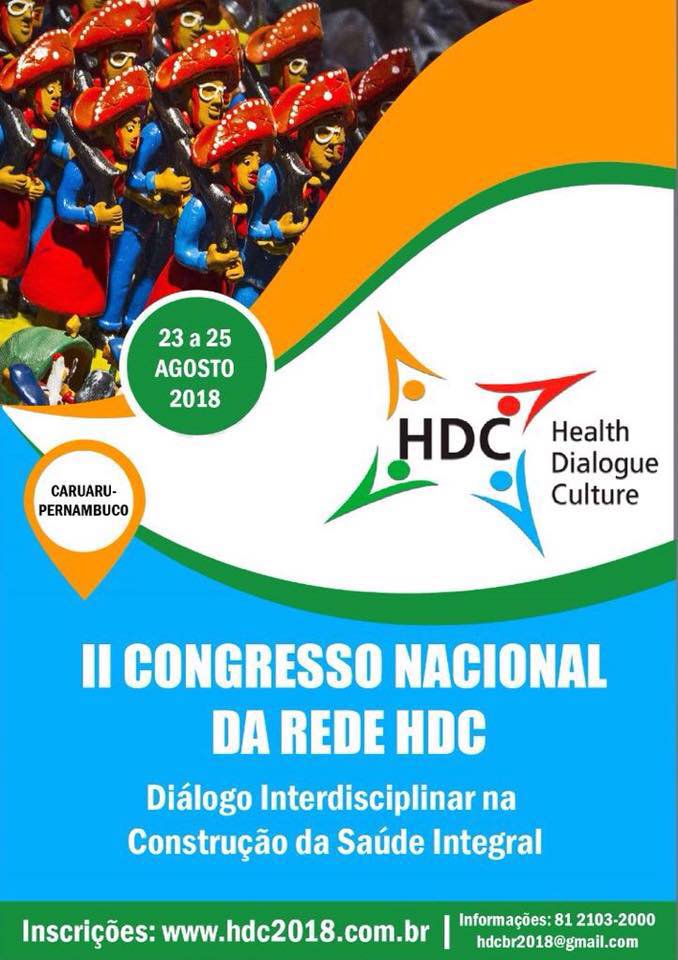 “Years ago, the doctor-patient relationship used to be called ‘a silent story.’ It was held that a good patient would follow a doctor’s orders without objection, without asking questions,” said Flavia Caretta, geriatric doctor at the A. Gemelli clinic in Rome and spokesperson for Health Dialogue Culture. She was also one of the organizers of its most recent conference at Caruaru, in the state of Pernambuco, Brazil, titled “Interdisciplinary dialogue in building holistic health” (23–25 August). Health Dialogue Culture connects medical professionals who, taking inspiration from Chiara Lubich’s spirituality of unity, started a series of reflections and knowledge sharing about curing the sick and considering them holistically. Close to 400 professionals attended the conference from every part of Brazil. “Patient dissatisfaction because of poor communication,” observes Caretta, “results higher than almost any other dissatisfaction about technical competence. Technological culture has caused those in the know to specialize, yet this often fractures the patient’s identity and the interpersonal relationships between those getting cured and those doing the curing. The risk is losing, or never even obtaining, the ability to see the infirm in their entirety… “Each call for a cure brings with it a need for relationship. To ignore this aspect means to reduce medicine to simply applying techniques or offering a service, when above all it is a meeting with a person.
 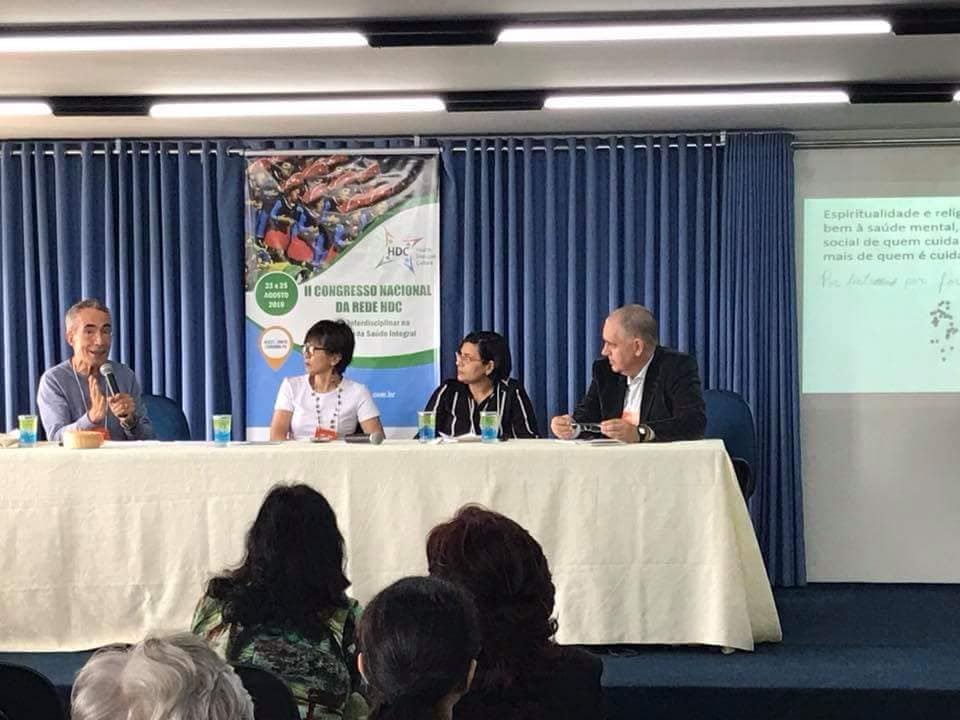 “The quality of the clinical conversation should not only depend on the application of scientific knowledge or the ‘ability’ of someone to communicate, but also their ability to enter in to what the patient is going through. The process of assisting them cannot just be considered a protocol to break down into procedures, because it implies a human dimension that is unpredictable and cannot be standardized, all mutually at play within the relationship. “No healing gesture has its complete effect without entering into relationship with the other … Among the new trends in medicine, in addition to communication and personalized cures, there is a new emphasis on lifestyle, to the role that community and society play in health, especially its spiritual side. “I would like to offer some processes that have been trialed and shared by many professionals in different fields, different places in the world and cultures. They instill their lives, as well as their professions, with the values found in the Focolare spirituality… “These strategies have been proven to be effective in relating with patients. For example listening, which requires setting aside worries, judgements, hurried diagnoses, in order to make space for what the patient wants to communicate with words, expressions, and silence. “Silence, too, is communication, and is sometimes more eloquent than anything to be understood in a conversation. There is also the commitment to succeed in identifying with the present moment, free from the hurry and conditions that could cloud the choices to make.”
 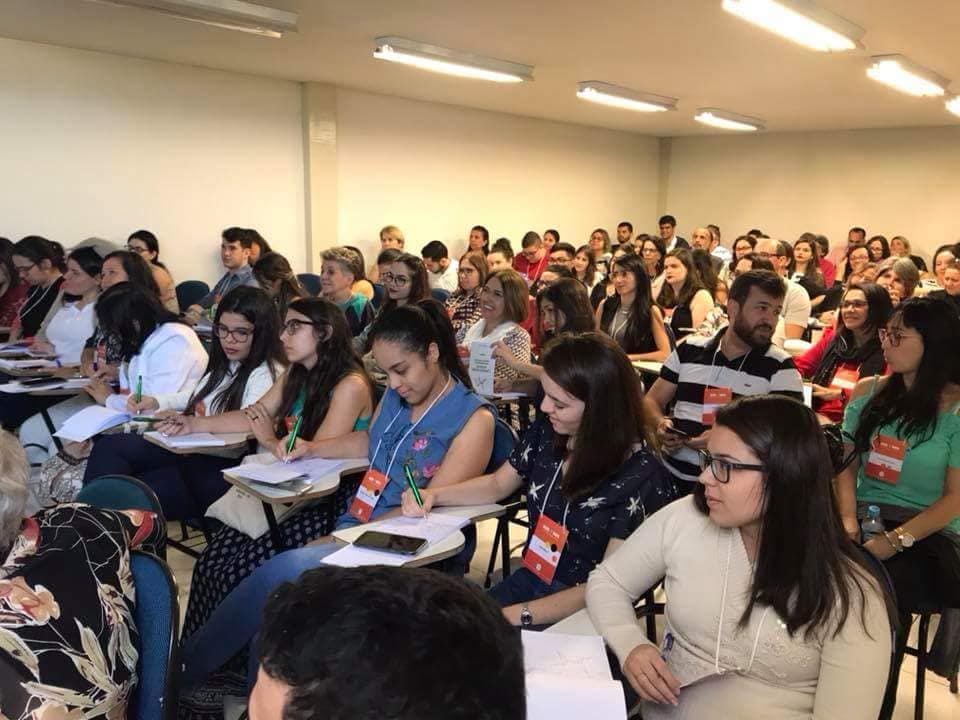 The consistency between spiritual values and applying them in a profession, highlighted Caretta, “does not only concern our rapport with patients. It is more essential than ever to act together with other disciplines. Especially in the last few years, scientific journals aimed at improving health services and the quality of care emphasize a care team, teamwork, and a multidisciplinary approach… “I remember something Vaclav Havel, poet and the first president of the Czech Republic, said: ‘Hope is not believing that things will change. Hope is believing that you can make a difference.” Reciprocity can transform every part of the health world, whether a health professional or patient, and every part of the academic world, whether student or scholar, to be agents of change.” For contacts, news and research, see healthdialogueculture.org.
