
Worldwide Linkup on 15 September 2018
Replay streaming event

Replay streaming event
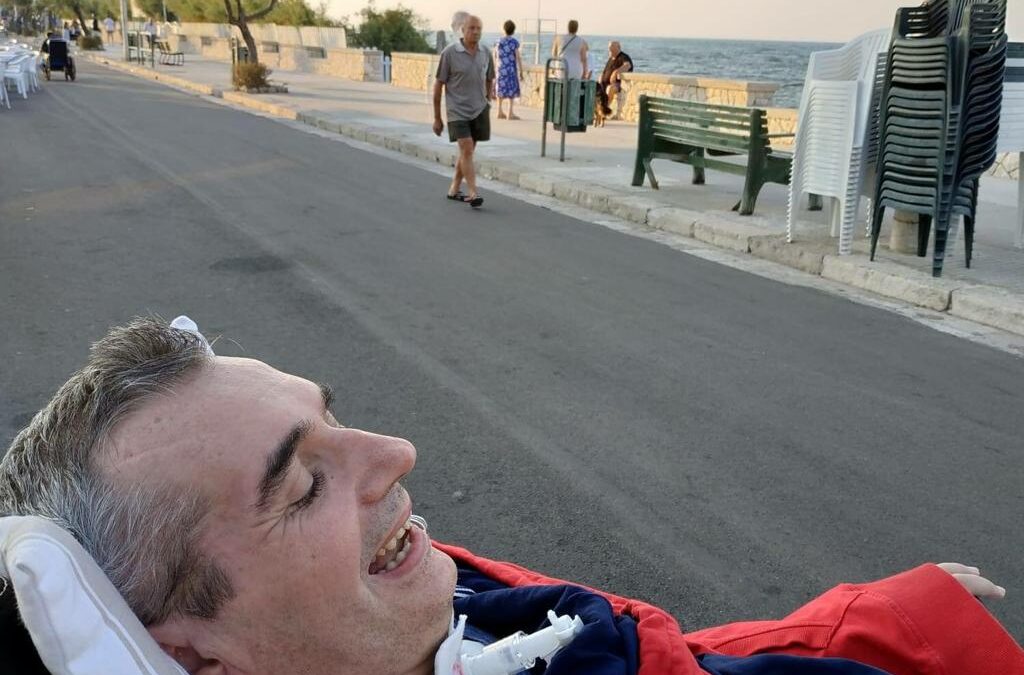
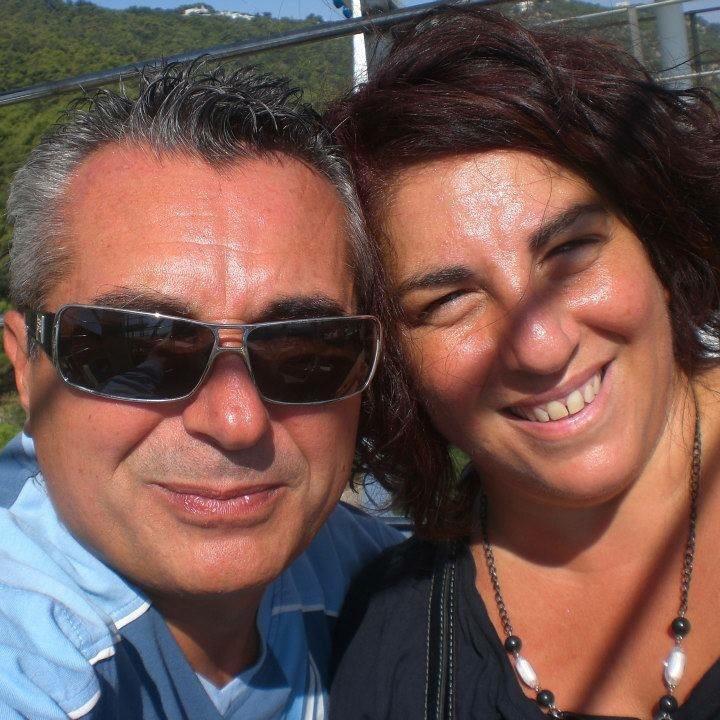 “The year was 1975. I was at high school in Sicily. Learning about Cicero’s denunciation of Cataline in ancient Rome sparked a lively discussion among me and my schoolmates about the hot topic of freedom. Our class teacher wisely channeled our increasingly heated argument into a formal debate between the supporters of Cicero, expressed by one of my companions, and those of Cataline, for whom I was the spokesperson. My passionate defense of freedom became so ardent that they all applauded me. And from that day, the idea of freedom has characterized my whole life. But what is freedom? And am I free?” Francesco is Italian; he is 59 and is married to Paola. The progressive nature of his illness means he can no longer move his body or speak. But he can move his eyes. Last year he started a blog, at the suggestion of a journalist who contacted him for a brief interview. At first Francesco used his thumbs and later began using an eye-gaze device, which may be slow but allows him to communicate the strength and dynamism he is finding within himself even as his body is becoming less active. His blog is entitled: “SLA: io Sono Libero d’Amare”. SLA = Sclerosi Laterale Amiotrofica translates as “ALS. I am Free to Love”. “I’m no author. But a voice within suggests what words to put down. I’ve found I’m watching a film of my life that I never knew of before. This is my strength and I’ve been able to start communicating in this way. I receive messages that are deeply moving. I’ve simply expressed some of my thoughts and I receive back so much love. People communicate their emotions, sufferings, joys and most of all, life!”
 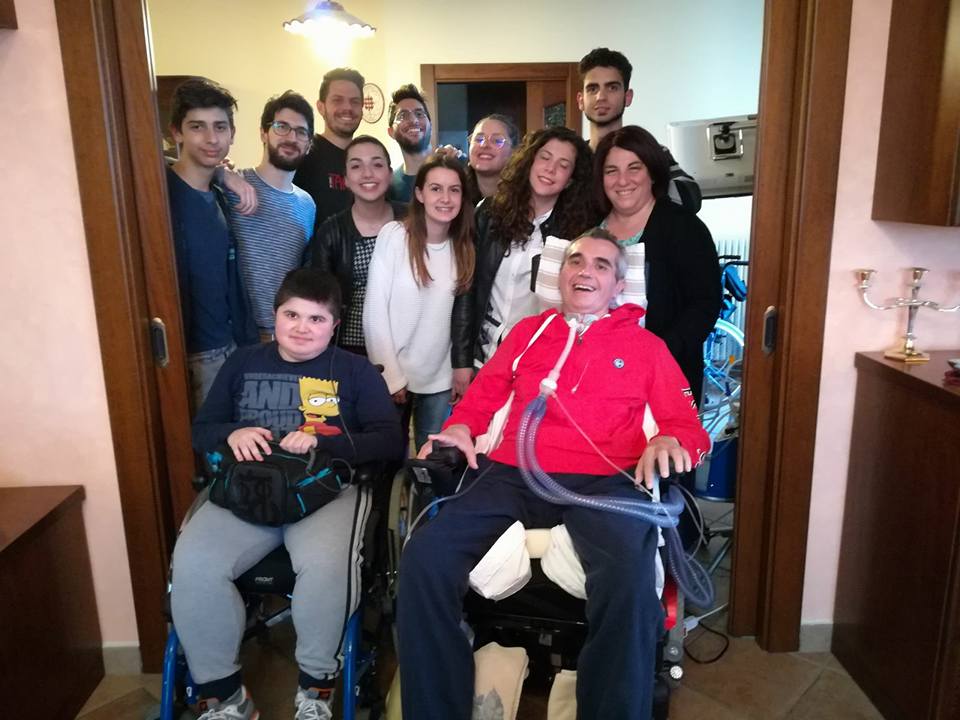 “In my life, I’ve always tried every day to find time for a personal and intimate moment with God. It’s not always been possible, but every time I passed a church, I’d say “Ciao” to Jesus present in the tabernacle. Often I would actually go inside the church just to dedicate a little bit of my time to God. I’d try to silence myself so that He could speak to me. And before leaving I’d entrust the difficulties of the day to Him, sometimes joking ‘Jesus, this one is yours because I certainly can’t solve it on my own’. And I have to say, He’s never let me down.” “How often, no matter how full our life may be, do we detect a feeling of emptiness or apathy inside us which covers our life with a veil of unhappiness?” “One man brought me a glimmer of light: Augustine of Hippo. Reading his Confessions prepared me for an event in August 1976 which changed my life: my meeting with God who is Love and who loves me immensely. How can I correspond to this infinite love? It was the Gospel, which I’d read but not actually lived, that gave me the answer: how can you love the God you do not see, if you don’t love the neighbour you do see? This was my Copernican revolution. I found myself among a group of friends living this experience: we would read the Gospel together and try to put it into practice. My heart practically exploded with joy, and I began to appreciate that even suffering can be life!”
 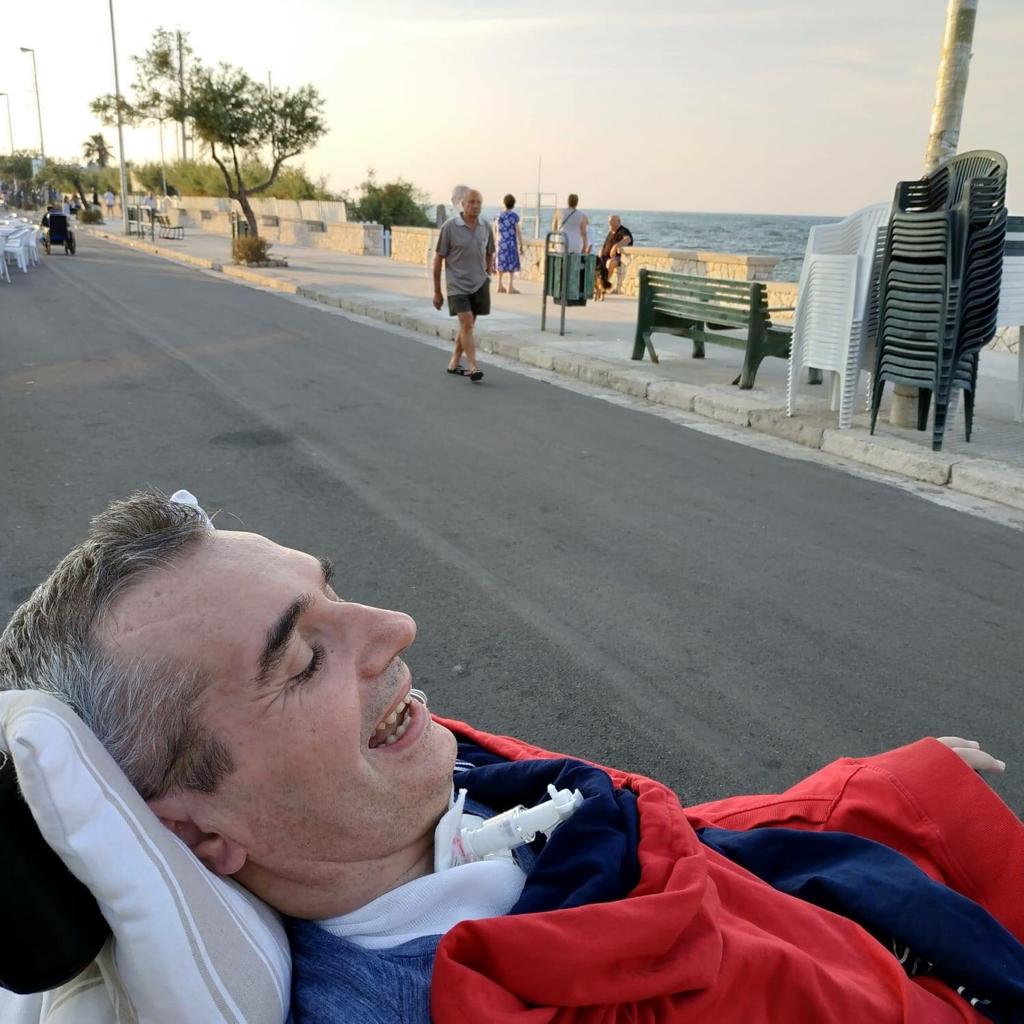 “I can still remember the smell of the sea, even if my illness has left me with no sense of smell, (…) I can feel the sensation of water on my skin, even if I’ve not been able to swim for the past three years. But this is not nostalgia. I’m not suffering over what I used to be or what I’ve become. I close my eyes and my body is floating. It’s not a dream or fantasy; it’s my Lord who continues to say to me ‘Do not fear’.” “This disease – ALS – was written in my heart from when I was born, but I didn’t know it until a few years ago. My tax code actually starts with ALS, and I don’t think it’s just coincidence! I don’t believe in fate, but I trust in one who has chosen me as her son and has never abandoned me. Mary, the mother of Jesus is my safety net, like the one a trapeze artist has (…).” “It is an experience that keeps on repeating itself, every time I’m assailed by doubt and I feel my hope sinking. Mary is always there, so I can’t be afraid! (…) Mary has marked out the way for me, and Chiara Lubich has taught me every day to point my interior compass on Jesus Forsaken on the cross. He is the secret to finding the Truth.” “Living the present moment perfectly brings us into God eternally. That’s what Chiara has taught me. And in the present moment I can cry out loud, maybe not with my voice but with my heart: I am FREE TO LOVE!” (In Italian = “SONO LIBERO di AMARE!” SLA – Sclerosi Laterale Amiotrofica). Extracts from Francesco’s blog (in Italian)
This year’s Islamic New Year’s is celebrated on September 12th, the first month of the Muharram calendar, (المحرم in Arabic), and one of the four holy months of the year. According to some, this feast celebrates the passing of Moses as he fled from Pharoah through the Red Sea. Others say that Adam and Eve, Heaven and hell and life and death were created on the tenth day of Muharram. This feast is celebrated in different parts of the Sunni world, such as North Africa where it has a particularly joyous character. The Shiites fast during the first ten days of Muharram; whereas for the Shunni, it is a voluntary fast as it is for Ramadan.
“…On the day set by you, God, I will come towards you… I will come towards you, my God (…) with my wildest dream: to bring you the world in my arms.” (The Cry, New City Press). Ten years after Chiara’s death we are once more astonished by the prophetic vision for society of this extraordinary woman who, with her ideal of “may they all be one” (Jn 17:21) starting from her own town of Trent, reached the whole world. However, one cannot understand her prophetic nature without considering the historical context in which she was born and lived, and her sharing in the destiny of humanity. She was born in Trent, an existential periphery with great historical and social significance; she experienced poverty and the tragedy of world wars. Set amongst the affairs of her day, a specific charism began to manifest itself in her, the charism of unity: “Above all, each of us must keep our gaze fixed on the One Father of many children, and then consider all people as children of that One Father. Our thoughts and affections should always go beyond every human limitation and acquire the habit of aiming constantly towards being on family in our one Father: God.” In these notes, written on the 2nd December 1946, it is possible to grasp key pillars in Chiara Lubich’s prophetic vision for society. In fact, Chiara was not a social reformer, just as Jesus was not one. Her dream in fact aims higher and goes into greater depth, to the anthropological and theological foundation underlying any kind of social reform: one universal family and unity as envisaged by the man-God, Jesus. This is why we could say that the first social project that Chiara founded was in fact the first community of the Focolare that began in Trent immediately after the war. This community took the words of the Acts of the Apostles literally Acts 2:42-48). They practiced a radical communion of goods and did all they could to care for the poor and the thousands of suffering people the war had left in its wake. This underlying experience has never been lost. Indeed, it is the inspiration behind all the activities and social projects that have been undertaken over the years by Chiara herself and all those who, in following her, have made their own the Ideal of unity. In all of this Chiara’s human and ecclesial genius is clear. Her human genius is clear in the context of resolving social problems. Despite appearances and technological progress there is a scandalous and growing number of people all over the world who are deprived, marginalised and forced to flee or migrate. These ever more serious social problems are the outcomes of iniquitous systems and a type of globalisation put at the service of the dominant powers in this world. Resolving these problems does not in fact depend, according to the most enlightened minds of both past and present, on sociological strategies and actions effective only at the most superficial levels of human reality (accepting that these are relevant and necessary) but rather they are resolved through the fundamental options and the deeper values that motivate consciences. Chiara’s ecclesial genius is evident because the Church’s mission cannot be summed up in charity and care for the least (however necessary they are). Rather its mission is to proclaim, in the light of the incarnation of the Word of God, the dignity of each and every person as a child of God.Without these two driving forces, the anthropological and the ecclesial, we cannot grasp the true social dimension of Chiara Lubich’s charism, which is informed by an intrinsic sociality that develops into life, action and study (see the Social Schools of the Sophia University Institute). What are the practical consequences of this perspective, for all of us? If we want it, a story is awaiting us. We too have a story ahead of us. Chiara takes us out of anonymity to make us the main characters in a dream: all of us are main characters, no one is excluded. Guislain Lafont, a great Dominican theologian, speaks of the “principle of littleness” that in his opinion sums up the practical philosophy of Pope Francis. It concerns the belief that “salvation comes from below rather than from above”. Chiara knew how to apply this “principle of littleness” magnificently, in commitment to true social renewal, set in motion by the paradigm of unity. This is her greatness. From: Italian New City n. 6, June 2018
On 10-11 September, the Jewish communities worldwide celebrate the festival of the Rosh Hashanah, the Jewish New Year of the year 5779, with festivities starting on the eve, 9 September. “The atmosphere of the feast – explained the UCEI, Union of Italian Jewish Communities – differs greatly from that in force in the ’civil’” New Year. It is considered a day of reflection, introspection, self-examination and spiritual renewal. It is the day on which, according to tradition, the Lord examines all of mankind and takes into account the good or bad deeds each has done in the previous year.” In fact, the Talmud says, “During Rosh Hashanah all creation is judged before the Lord.” It is not by chance that in Jewish tradition it is also called “Yom HaDin,” Day of Judgement. Divine justice will be sealed on the day of Kippur, Day of Atonement. These two dates are separated by seven days which sum up to two of the Rosh Hashanah, and those of Kippur are the so-called “ten days of penance.” Rosh Hashanah regards the single individual, the relationship one has with one’s neighbour and with God, and each one’s intentions to improve.”