9 Sep 2018 | Focolare Worldwide

Maurizio Certini
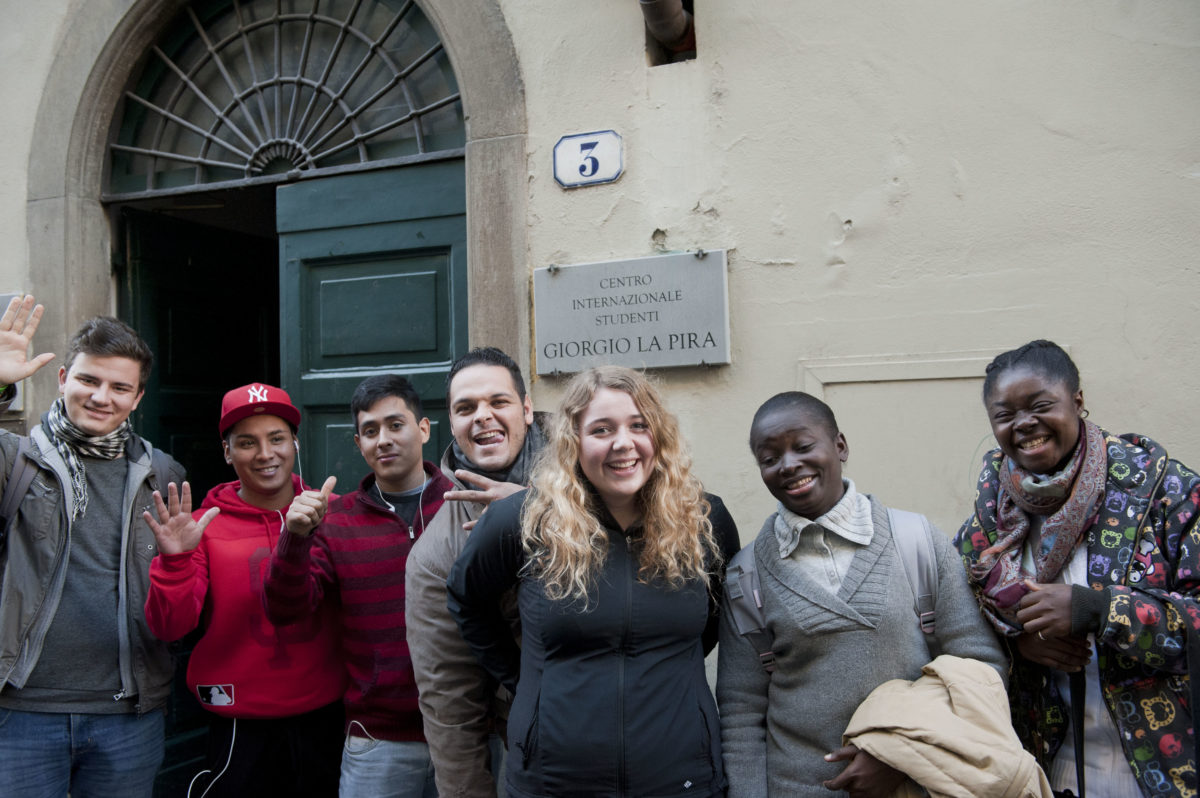 What is the situation now, forty years later? Of course, living conditions for overseas students, who are very able but without much financial support, have certainly improved, thanks to their being exempt from taxes and to the availability of accommodation and canteens. Nonetheless, coming here to study still poses significant challenges. They are far from home and have to look after themselves; it is hard to study in a cultural context they know very little about; there is a great deal of bureaucracy and also the attraction of consumerism. When you get to know the stories of these young people, you are struck by their courage and fortitude in tough times and their perseverance in facing difficulties. More serious problems can arise in the second or third year when, even though they are willing and highly motivated, they don’t get enough credits to stay in the university residences. Suddenly, it is as though they are standing on a precipice, and that can make them start going downhill, which eventually leads to them abandoning their studies and their dreams being ruined. How many young people have passed through the Centre? A huge number. We were keen to address their needs and find solutions, so as to give them hope. Many of them were disappointed and discouraged but managed to pick themselves up and finish their studies. Studying at an overseas university is a unique opportunity both culturally and professionally. However, special attention is needed to link the academic aspect with their need to connect among themselves and with others. This needs to be coordinated and be sensitive to cultural and religious differences, putting the students themselves at the centre, accompanying them in an integral way. Can an association supported mainly by volunteers have an impact on politics and society? Giorgio La Pira often quoted the words of the great renaissance architect, Leon Battista Alberti: What is a city? It’s a big house for a big family”. Today the whole world is a global city. Through our work, we look at the world’s cities through the eyes and stories of our many “guests” and we are open to reciprocity. The word “ospite” in Italian means both host and guest. At the Centre we seek to generate community knowing that we are in an ever more pluralistic social context. We need people who are open to dialogue and who can integrate with one another reciprocally. Today people’s need for community is particularly strong: the world is always in a rush, it’s alienating; there is growing violence, lies, suspicion and fear. Our little ‘field of action’ broadens out every day to the level of citizenship, both national and international. We believe we can win only if we generate community, wanting to build up society as a civil body, putting the human person and their dignity at the heart of everything we do. By Chiara Favotti
7 Sep 2018 | Non categorizzato
“The Old and the New Testaments form a single tree. The flowering comes about in the fullness of time, and the one flower is Mary. The fruit that follows from it is Jesus. The tree of humanity was created in the image of God. In the fullness of time, at the flowering, there comes about unity between heaven and earth, and the Holy Spirit weds Mary. We have therefore a single flower: Mary. And a single fruit: Jesus. But Mary, although she is one, is the whole creation in synthesis at the apex of its beauty when she is presented as bride to her Creator. […] Thus Mary is the flower blossoming upon the tree of humanity, born of God who created the first seed in Adam. She is daughter of God her son. Looking upon a small geranium plant that bloomed with a red flower, a question came to my mind and I asked: “Why are you flowering in red? Why do you change from green to red?” It seemed so strange to me! Today I understood that all of humanity flowers in Mary. Mary is the flower of humanity. She, the Immaculate – the Unstained One, is the flower of the ‘maculate’ – the stained. Sinful humanity flowers in Mary, the All Beautiful! And as the red flower is grateful to the small green plant, with its dirt-covered roots, that brought it to bloom; so is Mary because it was sin that constrained God into thinking of Mary. To her we owe our health; to us she owes her life.” Source: Chiara Lubich, Mary Flower of Humanity
5 Sep 2018 | Non categorizzato
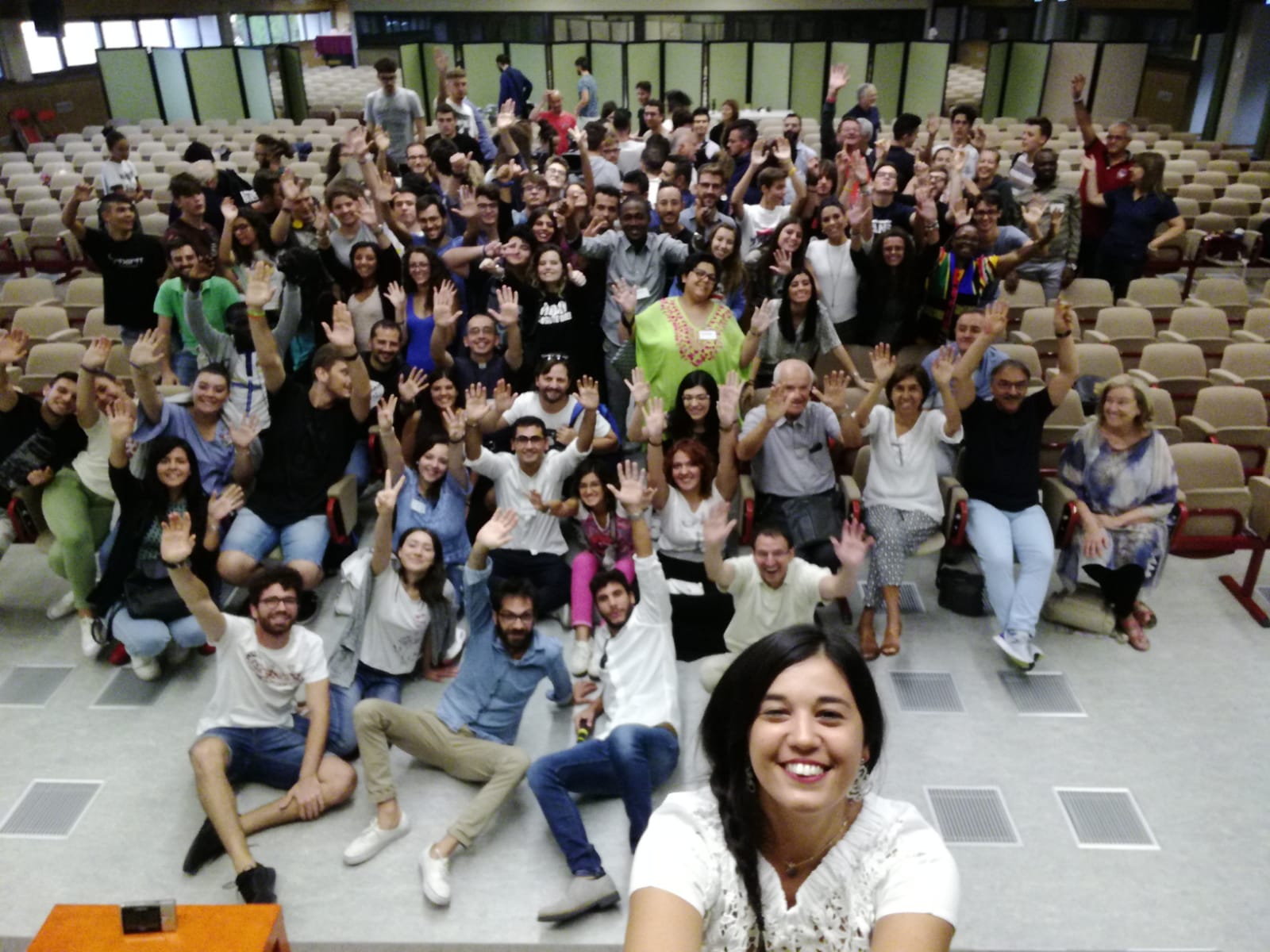 “I remembered a phrase of my friend: ’The idea of God has to grow with us.’ I haven’t tried to understand something about God for a long time now. I really needed to find out from others who knew more than me.” Three years ago, Andrea, a university student left his homeland where he had a reference group in the parish, and moved to a big city. But here he didn’t immediately find a precise reference point for his faith. In the Congress he met many. “I am still searching and am discovering new aspects of this adventure, but I have certainties, strong points. One of these is surely the awareness that the road opened out before me is a community path, to be experienced with others. At times I forget this and so I need to be corrected, but inside me I know that it shall be this,” Nicolas confirmed. “Committed to the ‘We’” was an initiative that was held in Castel Gandolfo (31 August to 2 September) and promoted by the Diocesan and Parish Movements, branches of the Focolare Movement addressing the youths active in the local Church. These movements aim to irradiate the charism of unity in the parishes and dioceses in which they offer their services, and to work together with other ecclesial organisations in the building of a “Church of communion,” as aspired to in the Novo Millennio Ineunte, the Apostolic Letter John Paul II addressed to the priests and all the laity, at the end of the grand jubilee of 2000. For this purpose, it promotes and nurtures an ever deeper unity of the faithful around the parish priests and bishops cooperating in the various dioceses and promoting a new evangelisation in the parishes, according to a community style.
 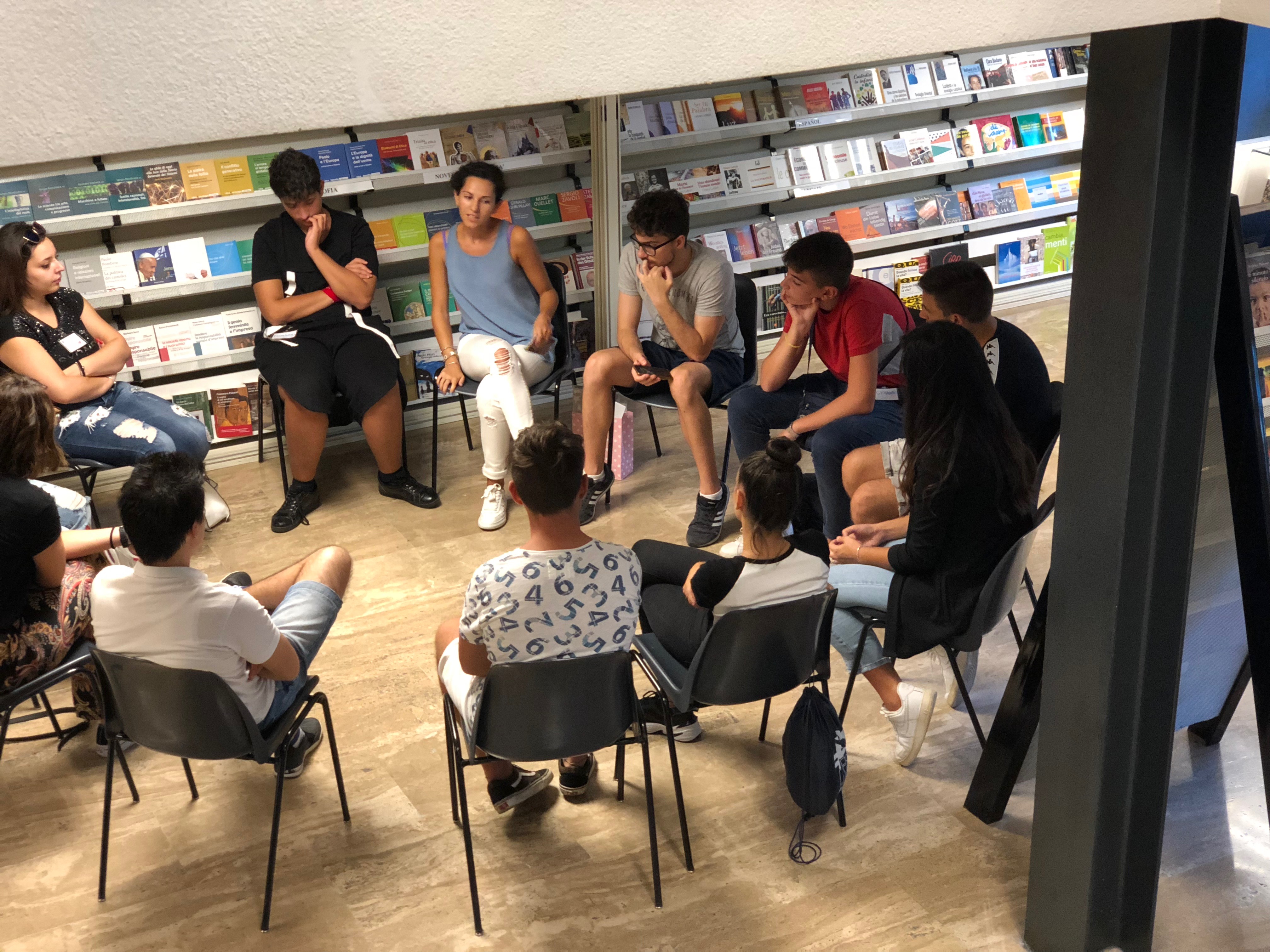 “We chose this title – the organisers pointed out – to contribute in fulfilling what Pope Francis often invites us to do: pass from the ’I’ to the ’we,’ through a community discernment which helps us to grow and make common decisions. During the days they spent together, the participants discussed their own faith, but above all the mission they feel called to, that of spreading the ’good news’ of the Gospel. The life experience based on the spirituality of Chiara Lubich acted as a background, since every charism of God is for the entire Church and humanity. The methodology was the culture of encounter: taking time to get to know one another and being together, to feel as ’people of God,’ a community in which one can grow, helped by those who are moving on with us.” The experience of the congress is fully part of the path towards the bishops’ Synod on the youths, to be held next October. “The words that Pope Francis said?? to the Italian youths gathered together last 11 August in Rome resounded strongly in us: ‘Do not be content with the cautious steps of those who settle down at the end of the line.’ We need courage to risk a leap ahead, a courageous and fearless leap to dream and fulfil, like Jesus, the kingdom of God, and commit ourselves to a more brotherly humanity. We need brotherhood: take the risk, and move ahead!”
4 Sep 2018 | Non categorizzato
Emigrants We live in a country unwilling to welcome migrants. One day, while talking about this topic in our family where we try to live the words of Jesus, we realized that even the marginalized are emigrants. Not long after, we learned of a boy who came from the world of drugs and had no one to take care of him. So we welcomed him into our home until he got stabilized, overcoming his addiction and finding a job. Even later we stayed in contact with him. Now he’s a happy father, with a happy family. R. H. – Hungary The Granary Old and childless, Marie spent many afternoons with us. One day, alluding to the barn behind our house, she told us that she would be happy to live there. We talked about it with our children and decided to make her happy. After obtaining the necessary permits, we transformed the granary into a little house connected to ours by an internal door. Not only for Marie, but for our whole family a door has opened, a new way of understanding the solitude of so many people. We feel genuinely enriched. C. J. B. – Belgium Shining For many years I have been paralyzed and bed-ridden. Last Thursday two members of the Focolare came to see me, which gave me great joy. Later, they told a friend of mine that they had found me “shining” and their comment surprised me very much. I thanked God, asking him to help me to always be like that. The next day I woke up with severe back pain. It was an opportunity to stay “shining” even in suffering. The same thing happened a few days later. This is the attitude I try to have now, even if I don’t always succeed, at least I try. N. P. – Venezuela The Milk Amidst the difficult economic conditions across the country, everything was being rationed and markets were empty. Due to a severe bone decalcification, Rosa needed to drink a lot of milk, but it was hard to find. One day a neighbour went to her house, asking for some milk for her baby who had not been drinking for days. Rosa immediately offered her what was left in the bottle, despite her own children’s protests. Just before evening, eight litres of milk arrived. With tears in her eyes, Rosa exclaimed: “God never allows himself to be outdone in generosity!” M. C. – Mexico The Mother-in-Law Rosita and I had taken in my mother-in-law who was living in a home for the elderly and had problems walking. My sister-in-law was with us too. Grateful for the beautiful sunny day, we went for a walk and to have breakfast at a restaurant in the square of a neighboring village. There was an atmosphere of joy and harmony among us. When we asked for the bill, we were told that it had already been paid by another customer who admired the way we cared for the elderly. My mother-in-law, Felice, confirmed it. R. Switzerland
