9 May 2022 | Non categorizzato
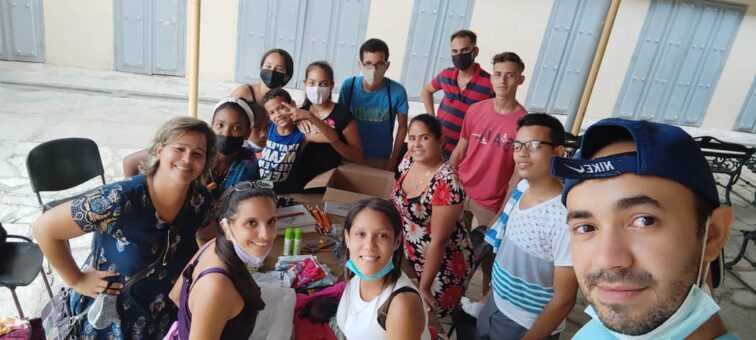
This year too, the United World Week (UWW) gave space to global events and actions for peace and fraternity that focused on “Caring”, with a particular focus on integral ecology. The #Daretocare Campaign will continue for another year.
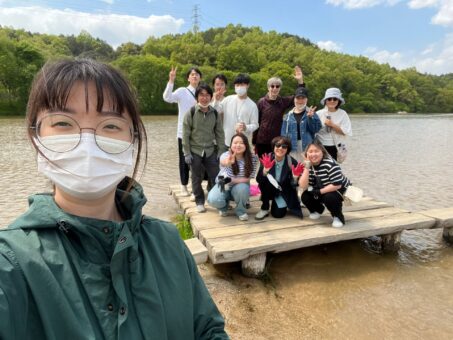
Korea – © UWP
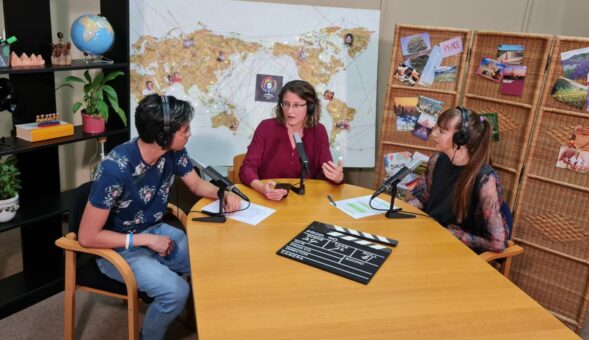
United World Week Podcast – © UWP
Cuba – © UWP
Paolo Balduzzi
9 May 2022 | Non categorizzato
In his first letter, St John states: Anyone who does not love their brother or sister who they see, cannot love God who they don’t see.(1Jn.4,20) In this extract, Chiara Lubich reflects on how love for each neighbour, brother or sister whom we meet is an obligatory passage for going to God, for feeling union with him. There is a system which is typically ours so we can be sure that we are walking on a right path that will certainly take us to our goal which is God. It has an obligatory passage, and this is called our brother or sister. Let’s throw ourselves into loving every brother or sister we meet during the day. Let’s set alight in our hearts the ardent and praiseworthy desire that God surely wants. It’s the desire to love every neighbour, making ourselves one with him or her in everything, with a disinterested love and without imposing limits. (…) Love will give new life to relationships and to people, and it will prevent us from being selfish. In fact, love will be the best antidote. (…) In this way we will be able to prepare a gift for Jesus. This will be abundant fruit and our heart that is filled with fire and consumed with love. The motto then that will help to remind us of this decision could be: to God through my brother or sister!
Chiara Lubich
(Chiara Lubich, Conversazioni, Città Nuova, 2019, pag. 100)
2 May 2022 | Non categorizzato
The word of life for May 2022 suggests that we put into practice the new commandment of Jesus: mutual love. By looking beyond differences- which are so emphasized in the present time- we can give life to real communities that reveal the great novelty of the Gospel You know that Jesus is present, for example, in the sacraments. In the Eucharist, for instance, he becomes truly present. Jesus is also there wherever mutual love is lived. He said: ‘Where two or three are gathered in my name’ (and this is possible through reciprocal love) ‘I am there among them.’[1] And also in a community where life is deeply rooted in mutual love, he can continue to be actively present. And through the community, he can continue to reveal himself to the world and influence the world. Isn’t this wonderful? Doesn’t it make you want to start right now to live this love with your fellow Christians? According to Saint John,(…) mutual love is the foremost commandment of the Church, whose vocation is, in fact, to be communion, fellowship, to be unity. (…) If, therefore, you want to find the true mark of the authentic disciples of Christ; if you want to know their distinctive characteristic, you will find it in the mutual love they live. Christians are recognized by this sign. If it is missing, the world will no longer be able to find Jesus in the Church. Reciprocal love creates unity. But, what does unity achieve? ‘That they may all be one’ – Jesus continues – ‘so that the world may believe…’[2] Unity, by revealing the presence of Christ, draws the world to follow him. When people see mutual love and unity being lived, they believe in him.
Chiara Lubich
Chiara Lubich, in “Parole di Vita”, [Words of Life] Citta Nuova, 2017, pages 171/2 [1] Mt 18:20. [2] Jn 17:21.
30 Apr 2022 | Non categorizzato
On 30th April 1982, 7,000 priests, religious and seminarians from all over the world, united by the spirituality of unity, gathered in Rome for the event “The Priest Today, the Religious Today”. Forty years later we look back at that day. Priests who feel called to be first and foremost witnesses of the Gospel and men of dialogue; religious who have found in the spirituality of the Focolare Movement an incentive to embody more fully the charism of their founders; seminarians who have understood that they want to choose God and to confirm their own calling. These are the experiences of many of the participants at the International Congress entitled “The Priest Today, the Religious Today”, held on 30th April 1982 in the Nervi Hall, in the Vatican. 7,000 people took part in that Congress. Through testimonies from all over the globe, they highlighted the fruits of the encounter of the charism of unity with ministers of the Catholic Church and other Churches and the renewal brought to many religious communities. In her speech that day, Chiara Lubich stressed the two focal points of this experience: Jesus crucified and forsaken as the model of the priest and the religious; mutual love and unity as the style and purpose of their mission. To be men of “dialogue”. This is the mandate that, even then, contained the desire of an outgoing Church, as can be seen from the words of the foundress of the Focolare, more relevant than ever today: “Never as in today’s times, is the Church called to look beyond herself to all Christians, to those who have different beliefs or who do not believe at all. Never before is it so evident that what some call “the missionary mandate of the Fourth Gospel” comes to the fore. John expresses it in these terms: ‘By this everyone will know that you are my disciples, if you love one another’. (…) Today Christians are called to evangelize in this way too: loving one another and offering the experience of their new life to others. This cannot fail to touch, to amaze and to provoke questions. And hence dialogue flourishes”. On that day the then Holy Father, John Paul II, presided over “the greatest concelebration since the institution of the Eucharist,” as the Roman Observer called it. It was a moment of joy and sharing, an opportunity to take stock, a starting point for new developments. Today, 40 years later, let’s hear the story of some of the participants.
Edited by Maria Grazia Berretta
https://youtu.be/4Y-PNuJGN4A
28 Apr 2022 | Non categorizzato
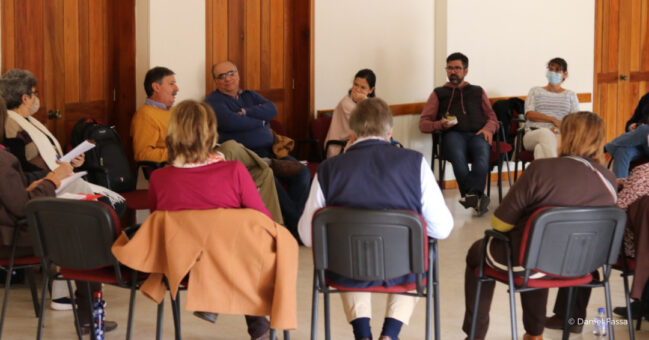
Expanding horizons of learning. From 27 March to 2 April in Colombia a meeting on “University, knowledge and wisdom: a perspective for Latin America”. A seat in Latin America for Sophia UI. Openness and graduality. These were the guiding principles of the meeting “University, knowledge and wisdom: a perspective for Latin America”, held at Tocancipá, Colombia from March 27 to April 2. It brought together Giuseppe Argiolas, Rector of the Sophia University Institute, with the members of a multi-disciplinary intercultural commission which over the past ten years has been working to build the foundations for a Latin American seat of the university. The General Council of the international Focolare Movement was represented by Francisco Canzani and Renata Simon. 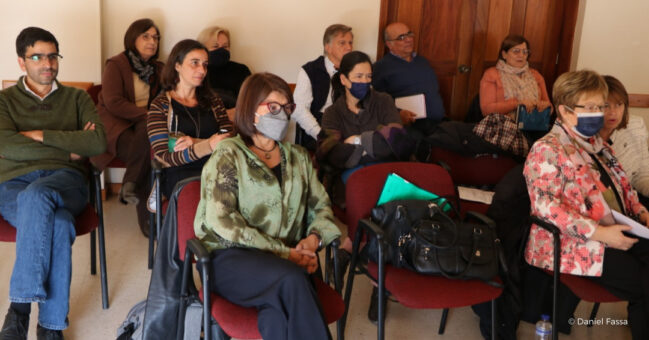 At the heart of their considerations were the guidelines from the Congregation for Catholic Education for the development of a project unprecedented in the history of pontifical universitities. Namely, that the individual units of the Sophia University Institute, even if situated in different continents, can be considered part of a single global university, with its headquarters based at Loppiano, near Florence, Italy. If approved, the Sophia ALC (Latin America and Caribbean) project will be the first step in the formation of this “university network”, with three geographical branches. In Argentina a proposed Master in “Integral Ecology and Interculturalism” delivered in hybrid modality (in person and online); in Brazil a degree course in “Education directed towards Integral Human Development”; in Mexico university extension courses, available mainly online. Over the six day meeting, the commission members concentrated on forming strategies for the gradual implementation of this complex project in all its aspects, including conforming to ecclesial norms as well as to local legislation, economic sustainability, fundraising and publicity, infrastructure and curriculum development. The result was a growing certainty that the moment has arrived to extend even further the horizons of “unity in diversity” experienced by the Sophia ALC team members, who come from Argentina, Brazil, Colombia, Costa Rica, Mexico and Uruguay, and from academic disciplines as diverse as administration, communications, economics, education, history, law, philosophy, sociology and theology. It is clear that the future of the project will depend on a continuing and deepening dialogue between the rector and academic staff of Sophia, the Focolare Movement leadership team, and above all with the Congregation for Catholic Education to indicate the channels along which this dream of Chiara Lubich can be gradually brought to fruition, in this case in the Latin American continent.
Daniel Fassa
