17 Oct 2020 | Non categorizzato
We visit different parts of Nigeria, where some people from the Focolare Movement show us their initiatives and projects offering care, sustainability, education and entrepreneurship locally. Full length version in English will be available soon. https://vimeo.com/464140739
16 Oct 2020 | Non categorizzato
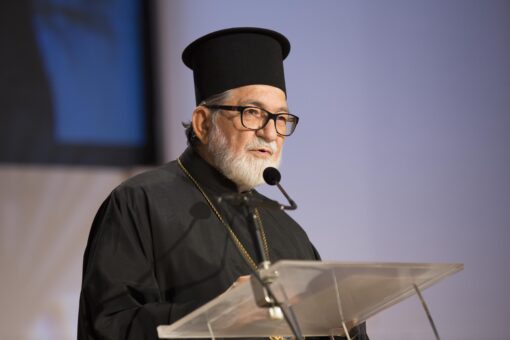
A brief profile of the Metropolitan who was a great friend of the Focolare; it is also an expression of Maria Voce’s prayers and closeness to him, on behalf of the whole Movement. Today 16th October, the Orthodox Archdiocese of Italy and Malta (Patriarchate of Constantinople) announced that Metropolitan Gennadios has “passed into heaven” [1]. He lived in Italy for 57 years, first as a parish priest in Naples, in 1970 as Bishop of Kratea and then from 1996 as archbishop of the diocese of Italy and Malta and exarch of Southern Europe, the seat of which is in Venice. Metropolitan Gennadios had a great love for the faithful of his Archdiocese that emerges from a recent letter (dated 3rd October), in which he wrote: “You are in my heart. You are my life!”[2]. In 2007 Patriarch Bartholomew said of him: “with immense love […] you have worked for many years in a missionary way for your flock, distinguishing yourself as having many and various charisms, which express the personality of your Eminence. The following can be singled out from your character as being the greatest: humility, gentleness, tranquility and wisdom. But the greatest of all is your love and faith towards the Mother Church”[3]. He was a man of dialogue who actively participated in ecumenical activity in Italy and beyond, as can be seen in this interview with Vatican Radio in 2015: “Praying means walking together and, as Pope Francis once told me, ‘walking it means union. When we walk together, unity is closer to us ‘” [4]. Speaking of the division of Christians, he said “We must now be crucified, we must climb onto the cross, to make our passions, our defects and our errors all disappear. Jesus Christ no longer comes to be crucified but we must be on the cross to erase fanaticism, hatred, selfishness”[5]. A great friend of the Focolare Movement, the Metropolitan often recalled an interview with Patriarch Athenagoras in 1970. “He received me for 48 minutes! Numerous bishops, priests, theologians and others were in the corridor waiting for the blessing of the Patriarch. Everyone was amazed that I had been in audience for so long […] What had happened? The Patriarch had talked about me for 2 minutes, about Pope Paul VI for 5 minutes and about Chiara for 40 minutes! “[6] He took part in many events of the Focolare: from the meetings of the bishops who are friends of the Movement, to the schools of ecumenism and the ecumenical weeks organized by the Centro “Uno” [7]. During the last edition, in 2017, he gave Maria Voce a medal in recognition and gratitude for the ecumenical work of the Focolare. It was his idea to found the “Patriarch Athenagoras – Chiara Lubich International Ecumenical Chair”, of which he was joint holder, at the Sophia University (Loppiano, Italy) and in 2017 he held the inaugural lecture entitled “Patriarch Athenagoras and Chiara Lubich, protagonists of unity”[8]. Metropolitan Gennadios was able to meet Chiara a few days before her death when he visited her, together with Patriarch Bartholomew, at the “Gemelli” Polyclinic hospital in Rome. Of that last meeting he remembered: “She was full of joy, smiling as always, gentile, serene and her “Charism” was very much alive. In fact, her last words before leaving us were “Always united!” [9] Metropolitan Gennadios seems to have fulfilled what Patriarch Athenagoras prophetically told him in 1960: “You will go to Italy, we need new priests for the times to come, times of reconciliation and dialogue with the Catholic Church” [10].
Joan Patricia Back
[1] website ortodossia.it [2] website ortodossia.it [3] website ortodossia.it [4] Interview with Vatican Radio 23rd January 2015 on website ortodossia.it [5] Interview with Vatican Radio 23rd January 2015 on website ortodossia.it [6] Talk at the 50th anniversary of Centro “Uno”, Trent (Northern Italy) 12th March 2011 [7] Centro “Uno” for the unity of Christians promotes and follows the Focolare Movement’s ecumenical commitment. [8] www.sophiauniversity.org/it [9] Talk at the 50th anniversary of Centro “Uno”, Trent (Northern Italy) 12th March 2011 [10] website ortodossia.it
15 Oct 2020 | Non categorizzato
Chiara Lubich once wrote, “To be humble does not mean only avoiding ambition; it also means being aware of one’s own nothingness and to realise how small we are in front of God and thus place ourselves in his hands, like children.” The school of life During the pandemic, like so many people all over the world, I was forced to isolate at home. Although the relationship with some of my clients continued via the internet, the real “work” that needed to be done during that period regarded me and the behaviour patterns I had acquired. I no longer had a reason not to help my children with their homework, or find things for them to do, or care for elderly parents, or help my wife in the kitchen by inventing new menus…. Prior to that time, I had underestimated the value that these small daily gestures have in helping us understand ourselves: suddenly, I had the opportunity to discover fundamental dimensions of our existence. But perhaps prayer – the one-to-one relationship with God – was the most important discovery I made during this period. I had begun to neglect it because I was so busy with my research and work: it had become one of the many things I tried to fit into my day alongside so many others. Suddenly, there were no limitations on my time and I began to reflect on life, death, hope…. I don’t know what it is like for other people, but for me this forced exile has become a real school, more effective than many books I could have read or courses I could have followed. (M.V. – Switzerland) Growing old together After decades of a happy and loving marriage, I realized that I was becoming intolerant towards my wife. She often doesn’t agree with the things I do and always tells me so. One day, after hearing her repeat the same thing twice, I felt angry and firmly told her that I knew what I had to do because she had already told me. Naturally, she was upset by my attitude but so was I. I told her I was sorry, but inside of me I felt a great pain because I hadn’t respected her or accepted that she was ageing. I wondered how many things I say and do that hurt my wife. Soon afterwards, our niece and her partner came to visit and we told them what had happened. As they listened, for no apparent reason, our niece began to cry and her partner took her hand and began to caress it. After a few moments silence, they confided to us that they had decided to split up because of their differences in character. However, listening to our story, they were moved by the beauty of growing old together and always trying to rebuild love. (P.T. – Hungary) To listen and understand When I think back over 25 years of caring for my patients, I feel like I’ve done nothing more than listen to them. I always remember the woman who came to see me when I first began to work as a GP. She had previously visited so many other hospitals in Switzerland and Italy. She described one detail about her personal history and I realised that this could be the key to the ailments from which she had suffered for over 15 years. When I asked her if she had ever spoken to other doctors about this, she said that it had never come to her mind before. She added, “It’s only now that you are listening to me that I’ve remembered it.” Her visit was more useful than any professional training could have been. Yes, because listening, especially today when everything is done quickly, should always correspond to “understanding”. I have been learning this for the last 25 years and the lesson is not finished yet! Listening is an expression of the love which Christ exemplified: to be empty of yourself so as to be able to welcome the other person. (Ugo – Italy) To savour each moment When, after the last tests, the doctor told me that the cancer had reappeared, my first thought was for the family – for our children and grandchildren. My husband and I talked about the situation calmly and we decided to live whatever time I have left in the best possible way and so leave them with the legacy of a love lived faithfully till the end. We have begun to experience days that are certainly marked by pain but are also filled with a new colour and warmth. Not only has love increased among all, but I would say that we are learning to live the time by “savouring each moment”. Every gesture is unique because it could be the last, and so could every phone call, every word said. The attention we give to each other, the tone of our voices, the attempts to create harmony between us… everything has taken on a new value. My husband is surprised at how much joy we are experiencing at the moment and he often says, “It is the only good we can leave to our children!” In the moments dedicated to prayer, we feel heaven opening up, because it has become a real act of thanksgiving. (G.C. – Italy)
edited by Stefania Tanesini
(taken from The Gospel of the Day, Citta Nuova, year VI, no.5, September-October 2020)
14 Oct 2020 | Non categorizzato
In Ascoli Piceno, in central Italy, a number of associations have decided to unite to combat the economic and social hardship of their city. Thus, a few years ago PAS was founded, which means “Welcome and Solidarity”. It’s an experience of networking that found a home a few months ago. https://vimeo.com/465826402

13 Oct 2020 | Non categorizzato
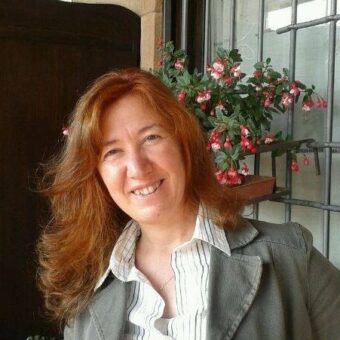
A special event for all stakeholders in education on October 15 brings together formation and social agencies, institutions and organizations from around the world to forge an alliance promoting a more fraternal world, an aim close to Pope Francis’ heart. Focolarina Carina Rossa is part of the organizing team.  “Never before has there been such need to unite our efforts in a broad educational alliance, to form mature individuals capable of overcoming division and antagonism, and to restore the fabric of relationships for the sake of a more fraternal humanity”. Pope Francis used his message for the launch of the Global Compact on Education to invite us to promote “a more open and inclusive education, including patient listening, constructive dialogue and better mutual understanding”. An international event will mark the Compact. An actual physical event has been postponed due to the pandemic. However, a virtual meeting will take place on 15 October at 2.30 pm (utc+2) in live streaming on Vatican News Youtube channels with simultaneous translation in English, Italian, French, Spanish and Portuguese. We speak with Carina Rossa, a Focolarina from Argentina, who is part of the team organizing this event: The Pope invites us to join an alliance on education to produce a change in mentality. How do you see this new way of thinking? “The Pope underlines that education is at the basis of all social and cultural change, and he calls us to dedicate ourselves in this field. So the first change lies in conferring dignity to education. He goes on to attribute a goal to education, that of “changing the world”, and invites us to think of study as an instrument to tackle the challenges of our times: peace and citizenship, solidarity and development, dignity and human rights, care for our common home. The Pope denounces the fact that the educational Compact between family, school, society and cultures has broken down and needs to be fixed. So the change of mentality here involves educational agencies, social activists, international institutions and organizations, who must form alliances in order reach common goals and help to create a more fraternal world. To this end, the Pope has proposed a three step methodology: to place the human person at the centre, to capitalize on our best energies and to train individuals who are ready to offer themselves in service”. Educating young people in what direction? Cultivating which values? “The new generations are at the centre of the educational plan, because children, adolescents and youth are the ones who will change the world. The hope is for ‘new men and women’ who will be ‘united in diversity’, in constant dialogue, serving the values of peace, solidarity and universal fraternity, respecting human rights and the dignity of the human person”. The international event launching the Compact was originally scheduled for 14 May. Because of the pandemic it was postponed to 15 October and will now be an online event. How are the preparations going? “The pandemic forced us to rethink all our plans. So now, the October program will be the first step towards another worldwide event we hope to celebrate in the future with Pope Francis. He appointed the Congregation for Catholic Education to promote it, and the Alta Scuola Educare all’Incontro e alla Solidarietà (High School for Education to Encounter and Solidarity) of the LUMSA University of Rome is coordinating establishing relationships and getting the process underway. For example, a committee of organizations representing the world of education and formation on a global level has been set up. We are also selecting experiences on education from around the world which will be published on the event website, forming an Observatory of the Compact on Education. We are also collating the contributions presented throughout the preparatory meetings for publication.”
Claudia Di Lorenzi
12 Oct 2020 | Non categorizzato
The pandemic has not only had serious immediate consequences, but has often brought to light many pre-existing personal, social and political problems. In the following text Chiara Lubich emphasises the first essential step for those who really want to change the world. A great psychologist of our time said: “Our culture rarely seeks to learn the art of loving and, despite our desperate search for love, we end up considering everything else more important: success, prestige, money, power. We devote almost all of our energy to achieving these goals and make no effort to learn the art of loving.”[1] We find the real art of loving in Christ’s gospel. Putting it into practice is an indispensable first step to setting off a revolution. It is a peaceful revolution, but one so forceful and radical that it will change everything. It affects not only the sphere of the spirit but the entire human sphere as well and renews every field it touches, whether cultural, philosophical, political, economic, academic or scientific. This revolution is the secret that enabled the first Christians to spread all over the entire known world. … It is a love not made up only of words or feelings; it is practical. It requires that we “make ourselves one” with others, that “we live the others” in a certain way, that we share their sufferings, their joys, in order to understand them, to serve and help them in an effective, practical way.
Chiara Lubich
From: Chiara Lubich, The Art of Loving, New city Press, Hyde Park, New York, 2010, p. 25-26. [1] E. Fromm, L’arte di amare, [The Art of Loving] Milano 1971, p.18.

 “Never before has there been such need to unite our efforts in a broad educational alliance, to form mature individuals capable of overcoming division and antagonism, and to restore the fabric of relationships for the sake of a more fraternal humanity”. Pope Francis used his message for the launch of the Global Compact on Education to invite us to promote “a more open and inclusive education, including patient listening, constructive dialogue and better mutual understanding”. An international event will mark the Compact. An actual physical event has been postponed due to the pandemic. However, a virtual meeting will take place on 15 October at 2.30 pm (utc+2) in live streaming on