10 Sep 2020 | Non categorizzato
The Focolare Movement’s annual conference for international delegates and members of the General Council will take place by video-conference, 10 – 12 September. We report the President, Maria Voce’s thoughts. “We should avoid thinking about ourselves and – as a Movement – be more willing to accept the sufferings of the world.” President Maria Voce’s strong appeal has given a clear direction to the participants of the Focolare’s international leadership conference that will begin this Thursday, 10 September, by video-conference. In a talk during a recent meeting with the Focolare General Council, Maria Voce spoke of her dismay at the extent of suffering that is reported each day by the media, especially during this time of pandemic. She spoke to her closest collaborators about a question she has often asked herself recently: “Who can absorb all this suffering and pain? I think God is asking us to be closer to this suffering in the world, more willing to welcome it, to love it, to pray … but also to do something more.” Her answer is a programme of both spiritual and practical action. The programme for the video conference (10 – 12 September) will be characterized by time for the participants to speak extensively about local challenges, specific to their geographical area. These challenges are often shared by others and are often linked to this particular period of pandemic which has given rise to enormous suffering but also new potential. The dialogue and sharing will provide a means of identify the specific contribution that the Focolare can make to during this time of change both now and in the future. It will certainly not be possible to exhaust this theme during this three day meeting: it will remain on the agenda in view of the next General Assembly of the Movement. This was initially scheduled for the first half of September 2020, but due to the Covid-19 emergency has been postponed until the beginning of next year: from 24 January to 7 February 2021. During the coming meeting, the delegates will also learn about the proposals drawn up by the Preparatory Commission of the General Assembly in order to make use of the time “gained” with a view to increasing involvement of all the members of the Movement in the preparation of the Assembly.
Joachim Schwind
9 Sep 2020 | Non categorizzato
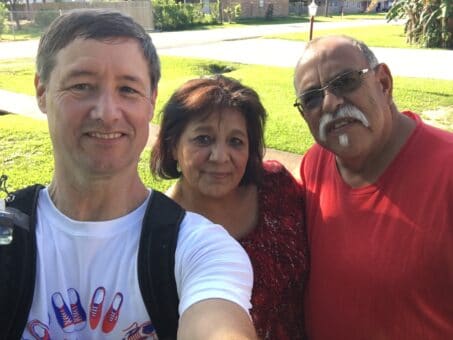
For months, every day, a priest has been travelling miles by bicycle or pickup to be close to his community. This experience, lived together with a team of parishioners, is uniting and broadening horizons, while leaving also its post-pandemic effects. If lockdown and social distancing rules oblige us to keep away as much as possible from assembly places, such as the parish church, why can’t the priest bridge the gap between us all? This is what Father Clint Ressler, a Catholic priest at the St. Mary of the Miraculous Medal Parish in Texas City, USA, is doing. Since the beginning of the pandemic, he has been travelling every day, far and wide all over the territory of his parish to visit his parishioners . Father Clint, how has life changed in your parish during this pandemic? It’s true that the pandemic dramatically changed how all of us maintain and grow our relationships. I have a greater sense of how God calls us to co-responsibility. As a pastor, I feel lifted up and surrounded by a strong and dedicated team. Perhaps because we are more focused on the essentials of our mission there is a corresponding experience of joy and gratitude in seeing these efforts and their fruits. Prior to the pandemic my days were filled with people. Sometimes I would be too focused on projects or getting to my next meeting or ministry to truly notice, greet and be present to each person. Now, also because we all need and thirst for communion, authentic relationships, I am feeling more like a human ‘being’ and not a human ‘doing’. Many parish groups and ministries are connecting to one another more personally, whether by phone, social media and brief personal visits. I have the sense that our God-given need for communion finds its own ways around the difficulties. What have you been doing to maintain a close relationship with your parishioners? Perhaps because there are fewer meetings and a greater focus on the essential mission of the parish I have not felt as rushed as before the pandemic. I have also heard God inviting me to ‘slow down’, to trust Him and to be patient. Early in the pandemic I was visiting many parishioners on a bicycle or a pick-up. During those early months I would see sometimes as many as a dozen homes in a day. Now, I am going at a slower pace, so to speak, fewer visits but staying longer. Can you share something with us about the most beautiful moment and the most difficult one you have lived during these visits? It is difficult to choose just one moment. One family had lost their home to a fire just a few days before I happened to visit them. The little children had lost their home but also all their toys. Their neighbor next door welcomed the family into their home. It was both the saddest but also the most uplifting visit. It continually strikes how this experience has suddenly changed Pope Francis’ call to be ‘missionary disciples’ from beautiful words to something that could and needed desperately to be live. Would this experience leave a positive impact on the life of your parish community, even when the pandemic is over? The pandemic brought many people to become more familiar with ‘faith online’. Parishioners have become more ‘tech savvy’ in general but also as regards to nourishing their faith. I have been personally edified by witnessing how our parishioners have cared for one another. I believe that after the pandemic we will see the fruits of this greater connectedness and concrete expressions of mutual concern. The pandemic has brought about a greater sense of solidarity, not only with the neighbors who live close but also a greater awareness and concern for the whole world. There is a universal sense that ‘we are all in this together’ and I hope that endures in the hearts and actions of everyone after the pandemic subsides. You met the Focolare spirituality and you live it. How does it influence your life as a priest and a pastor, especially now during this pandemic? Leading a parish can seem overwhelming and complex, requiring discernment and tough decisions. However, if I just try to refocus on concrete love it doesn’t seem so overwhelming. Of course, it all starts with union with God As a priest, especially as a pastor, I have been entrusted with a position of great influence and authority. At times, being the leader of others, I can fall into a ‘business approach’ that values efficiency, avoiding risks and valuing measurable ‘achievements’. The spirituality of the Focolare, and of the witness of Jesus, calls me back to service, humility and faithful patience. I have understood that the fundamental starting point for discovering God’s will is for us to live with Jesus in our midst. In other words, we have to be ‘Church’, the mystical body of Christ. As we live and grow in these mutual relationships with God’s grace, we can hear the little voice of the Holy Spirit. I think my life in the Focolare, ingrained in me over the years, a desire to bring this kind of discernment into the parish, with the parish staff, with the pastoral council, with every group and committee.
Anna Lisa Innocenti
7 Sep 2020 | Non categorizzato
We’re all connected like members of one body. If one member is weaker, the other takes over. This is the simple, but striking gospel logic that Chiara Lubich presents to us in the following text, which is more relevant today than ever In a hospital ward I once saw a man with a plaster cast. His chest and right arm were immobilized. With his left hand he tried to do everything… as best he could. The cast was extremely uncomfortable, but his left arm, although it was more tired than usual by the end of the day, grew stronger by doing twice its normal work. We are members of one another and mutual service is our duty. Jesus did not merely advise us to serve one another, he commanded us to do so. When we help someone out of charity, let us not believe we are saints. If our neighbour is powerless, we must help them and do so as they would help themself if they could. Otherwise, what kind of Christians are we? If, in future, when our turn has come and we need our neighbour’s charity, let us not feel humiliated. At the last judgement we shall hear Jesus repeat the words: ‘I was sick and you visited me … I was in prison…, I was naked…, I was hungry…[1]”. Jesus likes to hide precisely in those who are suffering and needy. Therefore at those times too, we should be conscious of our dignity, and with our whole heart thank the person who is helping us. But let us reserve our deepest gratitude for God who created the human heart to be charitable, and for Christ who, by proclaiming with his blood the Good News, and especially ‘his’ commandment, has spurred on countless hearts to help one another.
Chiara Lubich
Based on “I was sick”, in Meditations, by Chiara Lubich, New City London-Dublin 2005, p. 54 [1] Matt. 25:36
5 Sep 2020 | Non categorizzato
At work, with the family, in every situation, for Omar and Lina, who are Muslims, the values of dialogue and encounter even between different faiths are central. By Stefania Tanesini and Dalma Tímár. https://vimeo.com/430370744

3 Sep 2020 | Non categorizzato
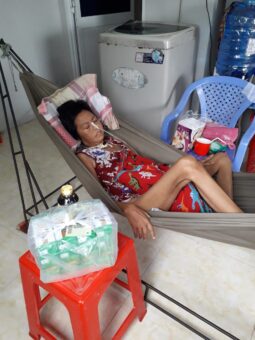
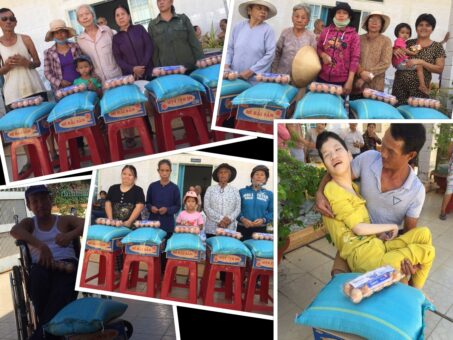
Solidarity projects initiated by the “Goccia dopo goccia” (drop by drop) Association in collaboration with other organizations operating in Southeast Asia.  The number of victims of coronavirus around the world is still very high. But even higher is the number of people who, whilst not having contracted the virus, find themselves in conditions of extreme poverty due to the economic and social situation created by the virus; deprived, in some cases, of even the basic necessities to live. Yet even in these situations, initiatives of solidarity are multiplying which are the result of networks that are sometimes crossing national borders. In Vietnam, for example, the Long An area, south of Ho Chi Minh city, has large pockets of poverty. Here, the most vulnerable members of society have been indirectly affected by the pandemic. Many, especially among the elderly, who were living off lottery ticket sales, have had to stay in their homes, very often facing starvation. This is precisely the area where the Swiss-based association “Goccia dopo goccia” operates, coordinated by an Italian focolarino, Luigi Butori, who has lived in Asia for many years. Included amongst those who volunteer and support the project in different countries around the world are many friends of the Focolare Movement. “Goccia dopo Goaccia” has been working for some years now to implement more than 20 solidarity projects in Thailand, Myanmar and Vietnam. In Long An the association distributes about 40 rations of milk and food every month which helps many people including the elderly, those who are disabled, adults on their own, abandoned children living with grandparents and people suffering as a result of serious accidents, such as An, 14 years old, who is paralyzed and forced to live in a bed. The association has someone who intervenes at a local level whenever necessary. Thanks to these local volunteers, it tries to reach the “least of the least” bringing not only material help but also moral support that makes them feel that they are not alone in facing this dramatic period of history. For those responsible for “Goccia dopo goccia” this is a very important element of their activity: making people feel that they have not been abandoned but that there is someone who is taking care of them, starting with a smile. The Long An project has been going on for about two years and is supported with the help of schoolchildren and families in different countries around the world. They are people who send small amounts of money and who, as the name of the association says, as numerous small drops enable large quantities of help to be provided. “Goccia dopo goccia” also operates along the border between Thailand and Myanmar, with another project that supports Karen children in different villages in Mae Sot, the Mae La refugee camp and the Heavenly Home orphanage, even though during these times of pandemic, “Goccia dopo goccia” volunteers recently had to face a long journey to visit them and deliver material aid. “Three beautiful days,” they say, “during which we received much more than we gave. And finally, when Covid-19 was rapidly spreading, “Goccia dopo goccia” managed to collaborate with Caritas Singapore, Caritas Vietnam and other Associations that operate in Southeast Asia on a project aimed at distributing 1,200 food packages to families in the Binh Thanh area, in Ho Chi Minh City.
Anna Lisa Innocenti
Click here for a video about the initiative

2 Sep 2020 | Non categorizzato
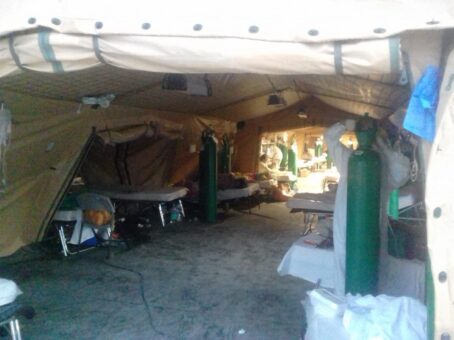
Combining fatherhood and professional life according to Gospel values: here’s the testimony of a Peruvian doctor at the forefront of the fight against COVID-19. I have been a doctor for 25 years and a father for 17, but I realise that I have not yet learned to be both and keep to the values I believe in. These pandemic times are proving to be a real lesson for me to grow in both roles, especially in parts of it that have so far been underestimated not only by me but by most people. Since the beginning of this pandemic I have worked in a Covid field hospital for patients in the city of Piura in northern Peru, the first in the city. I look after those who are hospitalised and have seen more patients die in the last 3 months than in all my 25 years of medical practice. I trained in one of the best medical schools in the country, with its academic prestige and scientific rigor. Yet this terrible disease has uncovered the limits, impotence and frustration of medical science in the face of this previously unknown virus. In spite of administering oxygen massively and the therapies provided by science, I have seen my patients suffer quite a lot and die of asphyxia. Every day we are faced with the lack of staff and equipment in a hospital like ours, in a poor country. How many times have I felt powerless and frustrated facing my patients, when the disease became aggressive! In the midst of general bewilderment, you could hear them shouting: “I am thirsty! Water please! Give me some water! Water!” Other times people would complain and, only when approaching them, asking if they wanted to drink, would they nod their heads. That’s how, in addition to my medical work, I started to give drinks to everyone who asked me, fix their pillows, hold their hands between mine, caress their foreheads, massage their backs when they asked me, or pass them the bucket to urinate. Or I would simply help them walk, pray with them or for them and, in the end, try to comfort them in their last moments. I understood that there are two dimensions to the medical profession: an authority supported by science which often heals, as well as the human dimension, based on mercy and love, which come from God and can be expressed in simple, everyday acts which often heal the soul. Science and humanity, knowledge and mercy, body and soul, man and God, reason and faith: it is a two-faced coin that makes our giving and living full. It is a delicate balance to be achieved. Between the exhausting work in the hospital, the overload of intense emotions and my weaknesses, I went home for dinner just hoping to rest and let off steam. My eldest son, in the midst of adolescence, frustrated by the lockdown and with all the energy of youth, started arguing with everyone, especially with me. He treated me like an adversary or an enemy, and at the table it was like being on a battlefield. Initially, falling victim to my passions and impulsiveness, we clashed in bitter fights with offensive tones. For the umpteenth time I saw my authority compromised. My attempts to impose it by force made things worse. I rediscovered other aspects of being a father, such as mercy and humility, and so I began to remain silent and offer God my forgiveness in the face of the offenses, as well as express it and ask forgiveness when I realized I had gone too far. I tried to read in my son’s aggressive attitude a cry for help and affection, keep silent more often and tone down the discussion, and continue praying alone and at home even when it all seemed useless. Little by little our relationship has been normalising and returning to the usual father-son dynamics. Once again, there are these two main pillars: authority and mercy. Are they not expressions of divine life?
Edited by Gustavo E. Clariá

 The number of victims of coronavirus around the world is still very high. But even higher is the number of people who, whilst not having contracted the virus, find themselves in conditions of extreme poverty due to the economic and social situation created by the virus; deprived, in some cases, of even the basic necessities to live. Yet even in these situations, initiatives of solidarity are multiplying which are the result of networks that are sometimes crossing national borders. In Vietnam, for example, the Long An area, south of Ho Chi Minh city, has large pockets of poverty. Here, the most vulnerable members of society have been indirectly affected by the pandemic. Many, especially among the elderly, who were living off lottery ticket sales, have had to stay in their homes, very often facing starvation. This is precisely the area where the Swiss-based association “Goccia dopo goccia” operates, coordinated by an Italian focolarino, Luigi Butori, who has lived in Asia for many years. Included amongst those who volunteer and support the project in different countries around the world are many friends of the Focolare Movement. “Goccia dopo Goaccia” has been working for some years now to implement more than 20 solidarity projects in Thailand, Myanmar and Vietnam.