19 Sep 2020 | Non categorizzato
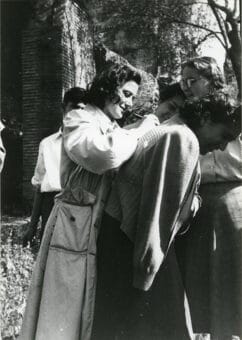
Trento, Chiara Lubich’s birthplace, will soon host a conference dedicated to the value of the Focolare founder’s texts, both spoken and written, from a linguistic and literary point of view. The event, which takes place in the Centenary of Lubich’s birth, is coordinated by an international study and research group and can be followed via web.
© CSC Audiovisivi
edited by Anna Lisa Innocenti
17 Sep 2020 | Non categorizzato
Jesus reveals that something new in the Gospel: the Father loves each of his children personally with an “overflowing” love and gives him/her the ability to enlarge their heart to their brothers and sisters. These are urgent and demanding words: to give what is ours; material goods, but also a welcome, mercy, forgiveness, and to give extensively in imitation of God. Powdered milk In a satellite city near Brasilia, there is a very poor neighbourhood where for years we have been bringing not only material aid, human promotion, but also trying to spread the good news of Jesus. It is always amazing to see how these people discover God’s love and begin to help each other, sharing what little they have with those who have even less. They even offer their own hut. Faithful to the “give and it will be given to you”, a lady to whom we had delivered powdered milk for her children told us that she shared it with her neighbour who had nothing to give her children. That same day, to her surprise and joy, she received more powdered milk. (H.I. – Brazil) The wound On certain festivals I give my four children some money to buy gifts for poor children. This year my youngest son asked me for more money: he had heard that his father was unemployed and could not give presents to his children with another woman. For me it was like a cold shower. My husband had abandoned us years earlier and the wound had remained. That night I cried a lot, I felt betrayed even by my boys. But maybe it was me who was wrong and the little one was teaching me a lesson. The next morning I increased his pocket money. Sometime later my children asked me to help their father find a job. It was the ultimate blow . They had never received a gift from him and now they were asking me to do this! Despite the painful memories, I understood that I had to put into practice Jesus’ command to love one’s enemies. It cost me but I did it. The joy I saw in the boys was indescribable. I thanked God for their generosity but also because they had given me the opportunity to remove from my heart a resentment that had tortured me for years. (C.C. – Colombia) Dismissal Some months ago, when the major computer company I work for announced the laying off of 40% of its employees, I got a real shock. Thanks to that job, we didn’t lack anything in the family, not even the extras. How were we going to meet the house payments? What about health insurance? And so on… With Jennifer and our daughters we felt more responsible about our family economy. We were ready to sell the most valuable objects and make other possible sacrifices, we assumed we would become self-employed, considering our personal skills… Above all, we entrusted ourselves to God the Father, continuing to hope. On the day of the layoffs, 6500 of my colleagues lost their jobs. I would have liked to disappear so as not to watch; but then I stayed to share that moment with those who left. I do not know how it will end for me, but one thing is certain: this trial has united us more in the family. It has created a deep bond with other couples and has opened our eyes to the problems of others. We now experience what it is that really matters in life. (Roger – USA) I forgave my son’s killer After my son was killed during a robbery, nothing made sense in my life anymore. Desperate for help, I attended a Gospel meeting. There I listened to a commentary on Jesus’ phrase: “Love your enemies”. Those words were like a rock for me. How could I forgive those who had killed my son? But in the meantime, a seed had been sown within me. As I attended that group, I felt the urge to forgive became more and more urgent. I wanted to find peace of heart. The Gospel still spoke of peace: “Blessed are the peacemakers, for they shall be called children of God”. In the midst of my family’s tragedy, the decision to forgive finally prevailed. Now I can truly call myself a “daughter of God”. Recently I was invited to meet with my son’s killer, who had been arrested. I knew him. It was hard, but grace intervened. I did not feel hatred or resentment towards him. In my heart as a mother there was only great pity and the desire to entrust him to God’s mercy. (M.A. – Venezuela)
edited by Stefania Tanesini
(taken from Il Vangelo del Giorno, Citta Nuova, year VI, n.5, September-October 2020)

16 Sep 2020 | Non categorizzato
The story of Javier, a young man from Chile, starts with getting interested in the environment, an unexpected proposal and the beginning of an ecological commitment that today has reached vast proportions. I have always loved nature and had a special relationship with it. In 2017, I became aware of the serious damage that humanity is causing to the planet. “But what can a simple teenager do to change the reality of the planet?” I used to say to myself. One day, however, my aunt invited me to participate in a sustainable development forum at the headquarters of Cepal (the Economic Commission for Latin America and the Caribbean). I was surprised, but she encouraged me, saying how teenagers should take on important decisions and make their voices heard for our future. I decided to participate and got other classmates who were interested in social and environmental issues involved, with the help of the school. During the forum we were able to learn about Social Development Goals (SDS) and the actions that are being carried out in order to achieve them in some Latin American and Caribbean countries. We were also able to express our thoughts in front of the authorities present. Among the initiatives, we were impressed by “Concausa”, which is part of the America Solidale NGO. It works specifically to put an end to child poverty and trains adolescents to be true change agents. Together with two partners, we decided to propose a project at our school linked to Concausa, but we were not successful. After some time, given our interest in these issues, Concausa decided to set up a workshop in our school called “Actuators” to help us better develop our project. In classes we saw a lot of rubbish thrown on the floor, so we set out to encourage better waste management and recycling to create a pro-environmental culture. The “Eco-Education” project began. The waste was mainly tetrapacks, so we re-used them to create “eco-containers” where we could sort the waste and reuse it to make eco-blocks. Thanks to our work, many of our classmates have learned how to recycle. They have now even convinced their parents to do this in their homes. In the meantime, together with boys from the Focolare unit that I am a part of, we introduced workshops and in-depth analysis of environmental issues during our regular meetings. After a year of work with our “eco-education” project, we were chosen to represent Chile in a Concausa Continental Camp that takes place each year in our country. Project teams from all over the continent participate. I went along as well, and it was an unforgettable experience. I met people from many countries, each with their different culture. Getting to know each other made us feel the same. We were and are a family, a generation fighting for a more united and supportive future. On the last day we were invited to give a speech to officials from America Solidale, Unicef and Cepal about the different realities we have in our countries, and how we are doing our part to defend the environment. Now we continue to work together with camp participants through video calls. This is how we conceived the “1000 Actions for Change” project, which aims to spur ecological actions and mitigate the climate crisis. To achieve this, I was chosen to represent my country. Here is Javier’s testimony during the launch of the Pathway 2020–2021 “Dare to Care” campaign.
Edited by Anna Lisa Innocenti
14 Sep 2020 | Non categorizzato
Christian love is not only an inner attitude, but is shown by concrete facts, by acts that can be seen, starting simply with a smile. This is the invitation Chiara Lubich launches in the following writing. And even if during the pandemic our smile may be hidden behind a mask, there are a thousand other ways to show our love “Love one another”.[1] This is the vocation of every Christian, but we could also say it is our vocation in particular. In the last few days I was struck by what was said of the first Christians: “See how they love one another and are ready to die for one another.”[2] Therefore people could see that each of them was ready to die for the others. This might have been because in times of persecution it was not unusual for one of them to offer to die instead of another. Nonetheless, the fact remains that this measure of love among Christians could be seen. Generally speaking, we are not actually asked to die, even though we should always be ready to do so. Every act of mutual love should be based on this foundation. … May all we do show that we are ready to die for our brothers and sisters; whether it is simply a smile, or a gesture, or an act of love, a word or some advice, our appreciation, or a correction given at the right moment. May our love be seen, certainly not to show off but to make sure we have the powerful weapon of witness. We too, like the first Christians, often find ourselves in a world without God, a world that is de-Christianized. Therefore we must bear witness to Jesus.
Chiara Lubich
(Taken from a telephone conference call, Rocca di Papa, 11th May 1989) [1] Jn 13:34. [2] Tertullian, Apologeticus, 39:7.
13 Sep 2020 | Non categorizzato
With three days of video-conferencing involving Focolare delegates in different areas of the world and the General Council, a further preparatory phase has begun towards the Focolare General Assembly to be held in January 2021. The meeting of Focolare Delegates from around the world, held this year in video-conference, ended on September 12th; a date which, under normal conditions, would also have marked the last day of Maria Voce’s (current President) term of office. However, these times – which are anything but normal – have meant an extension of the President’s term of office because, due to Covid, the General Assembly, which also has the task of electing all the governing bodies of the Focolare Movement, has been postponed from the beginning of September 2020 to January 24th – February 7th 2021. How, then, can this time of waiting be transformed into a time of grace? This is the question that initiated and guided the conference of delegates and to which Maria Voce answered in a profound and concise way: “We are called to bear witness to the possibility of Trinitarian relations! This simply means: each one does everything so that the other person may emerge”. The sessions dedicated to sharing the life of the Focolare communities in the different geographical areas of the world highlighted the global commitment to face the challenge and the new “off-spring” due to the Coronavirus pandemic: the impossibility of attending meetings in person has led to an increase in digital conferences that often reach more people and break down territorial or participatory structures which in the current situation have been identified as constraints. The economic difficulties, then, require new reflections in search of solutions for a moderate and sustainable lifestyle and in favour of suitable activities and structures. In addition, the climate of growing personal and community insecurity urgently requires a new evangelical life choice in view of a more united world. The third day of the conference marked the beginning of a further preparation for the Movement towards the 2021 General Assembly. The extra time gained will serve to encourage a more participatory and widespread preparation, a synodal journey. The members of the Movement will have until October 24th, the opportunity to deepen their knowledge of the themes gathered so far in order to identify people’s preferences which will then be included in a working document. Before Christmas, the participants in the Assembly will have the opportunity to meet possible candidates for President and Co-President. And in a series of Webinars the main themes will be deepened with the help of external experts. The preparation will then be concluded in the first weeks of January with group work among the participants.
Joachim Schwind
12 Sep 2020 | Non categorizzato
Emmanuel and Annick from the Focolare Movement dedicate their free time to the French Red Cross. Since the beginning of the health crisis caused by the coronavirus, operations have been launched throughout France to support people in need. This married couple has helped in two of them. The first operation consisted in organising the delivery of medicines or food to people who were unable to do their own shopping. Emmanuel, an engineer at the University of Strasbourg, worked almost full time as a volunteer coordinating the operation for the entire Bas-Rhin province (area around the city of Strasbourg). “Organising the teams and facilitating the flow of information,” he says, “was an immense logistical job. Even if sometimes I couldn’t get out of the house for three days, I didn’t feel alone. On the contrary I was rather frustrated given that I was working hard without hardly ever seeing the beneficiaries of my work”. During that period, demand rocketed, especially for food. In fact, many social welfare associations had to close because most of their volunteers were forced to stay at home because of their age. The other operation was launched from April 29th to July 31st 2020 by the European Parliament in Strasbourg. It decided to reopen its kitchens to prepare 500 meals a day. The Prefecture was responsible for finding the beneficiaries of the meals at a local level and the French Red Cross for the delivery. Annick, who continued her work as a nurse also volunteered. She says: “We saw people were happy to receive something. Although some were surprised and incredulous – imagining the background checking that was done – people were anxious to have those meals”. “The institutions invested enormously at the heart of the crisis,” Emmanuel notes. What does this commitment mean for Emmanuel and Annick? “I am nourished by the spirituality of the Focolare Movement, but our life is lived out in society, it is in giving (and giving of ourselves) concretely in the world,” answers Annick. Emmanuel adds: “It is important not to remain in our corner, among Focolare people, but to act in the world. In addition, the seven principles of the Red Cross which are humanity, unity, universality, neutrality, independence, impartiality and voluntary service are very much in harmony with the “art of loving” and “The Golden Rule”. “The crisis was a time of great tension and the quality of human relations between volunteers and beneficiaries in the field and in the organisation has been important. For example, I mediated between the volunteers when tensions arose. The Focolare’s charism of unity has been of great help to me in understanding situations, losing my idea, living the present moment well”, Emmanuel shares. “This crisis has brought out the good or the bad in us,” Annick notes. Her husband is pleased to see that it has generated new ideas for action, particularly in relation to the digital divide or relational poverty. “The great lesson of the pandemic for many is the awareness that we cannot live without each other,” she says. ” Interdependence was Chiara Lubich’s great battle at the end of her life … My optimism leads me to believe that more people will be involved in associations and develop their sense of volunteering”.
Émilie Tévané
Source: Nouvelle Cité, N°604, July-August 2020, p. 41.