
28 Nov 2019 | Non categorizzato
With the motto “Celebrate to meet”, the opening, next December 7th of Chiara Lubich’s centenary was announced to the press. The launching in Trento will inaugurate the international exhibition “Chiara Lubich world city “.

© CSC Audiovisivi
© CSC Audiovisivi
Claudia Di Lorenzi
27 Nov 2019 | Non categorizzato
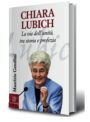
Published by Città Nuova and entitled ” History and prophecy: Chiara Lubich’s way to unity”, this book will be presented in preview on November 30 in the Auditorium of the Gemelli Clinic, Rome. At the moment, it is available in Italian only. The author, Maurizio Gentilini who is an Italian historian, has chosen the title “History and prophecy: Chiara Lubich’s way to unity” for his work. This is the latest biography written about the foundress of the Focolare Movement on the eve of the hundredth anniversary of her birth. Translations into English, Spanish and Korean are planned. For those who live in the Rome area, it will be possible to meet the author on November 30 at 4.20 pm, in the auditorium of the Gemelli Clinic. The book is one of the publications prepared by the Città Nuova Publishing House for Chiara Lubich’s centenary year. This begins on December 7 – a symbolic date because on that day in 1943 Chiara consecrated herself to God, thus beginning the adventure of the Focolare Movement. The volume represents an attempt to reflect upon the biographical journey of the foundress of the Focolare Movement one hundred years after her birth and twelve years after her death. The biographer’s aim was to produce a book which would appeal to a wide range of people but would also provide a deeper presentation of individual aspects and major issues related to the person of Chiara and the Focolare – the laity in the Church, Vatican II, the world, ecumenism and peace. It wants to offer a presentation of her life within the context of the many and complex historical events that she witnessed, thus enriching this aspect of the many editorial works which have already been produced. The author, who likes to define himself as a “simple baptized person”, tries to read the events he describes by making constant reference to sources and by applying a historical-critical method. He understands everything that has happened with the sensitivity of a believer and through the hermeneutical key that finds its synthesis in the relationship between spirituality and action, between history and prophecy.
Stefania Tanesini

25 Nov 2019 | Non categorizzato
An important anniversary was celebrated at the ecumenical little town of Ottmaring, then sealed with a ceremony in the city of Augsburg, Germany. There was a renewed commitment to be ambassadors of reconciliation and signs of hope in the various churches and society.

Foto: © Ursula Haaf
Foto: © Ursula Haaf
Andrea Fleming
More info: https://www.together4europe.org/en/

24 Nov 2019 | Non categorizzato
“In a divided world, united in Christ” was the title of an annual meeting, which for the past 38 years has been bringing together bishops from various Churches. This ecumenical event, from 21st to 25th October, has been termed historic for the island of Ireland. “Powerful reflections across the ecclesial spectrum on witnessing hope in division. Prophetic … Holy Spirit breathe!” This tweet from Darren O’Reilly, co-leader of the Koinonia community based in Belfast, gets right to the heart of some exceptional days, between 21st and 25th October in Northern Ireland, for the 38th meeting of Bishops from different Churches, friends of the Focolare Movement. This year’s focus was on sharing reflections and testimonies on the challenge of unity in Christ, in a world as divided as it is today.  These meetings, promoted by the Focolare Movement, offer bishops a space of dialogue and sharing on the spirituality of unity. This year 30 Bishops, belonging to 18 different Churches, from 14 different countries, were welcomed to the cities of Larne and Belfast. As every year, the location was selected for its symbolic meaning, this time for the “peace process”, an experience of commitment towards reconciliation within a divided society. The participants got to know something of the history and current state of the ecumenical journey in Ireland. They could not but be impressed by the constructive relationships and noteworthy fruits they saw. Bishop Trevor Williams of the Church of Ireland, delivered a well-received presentation of the history of Christianity in Ireland, and afterwards commented, “It was heartening to hear the Bishops’ concern for our ‘unfinished business’ of peace building and their joy at witnessing so many activities undertaken by Christians from different traditions to heal the divide”. The local Catholic Bishop of Down and Connor, Noel Treanor gave a significant contribution by outlining the ecclesial, social and political panorama. The Bishops visited significant places in the peace and reconciliation process, such as the East Belfast Methodist Mission, where they were welcomed by pastor Brian Anderson, currently President of the Irish Council of Churches. They participated in liturgical services in Presbyterian, Anglican and Catholic churches. In the Catholic church of St Patrick, in front of a congregation from different Churches, the Bishops witnessed to how they live the New Commandment of Jesus, renewing a “pact” among themselves: a solemn commitment to love the other’s Church as their own. This pact is always one of the highpoints of these meetings. But it was in the afternoon of 23rd October, that an open session at Larne touched the hearts of many and has been termed “historic”. The Catholic Bishop of Limerick, Brendan Leahy, described it as such, “It was like the experience of the disciples on the road to Emmaus who felt their hearts burning as Jesus was among them and explained and talks with them”. Over one hundred people participated from all over Ireland, from many different Churches (Apostolic Armenian, the Church of Ireland (Anglican), Orthodox – Patriarchate of Antioch, Presbyterian, Catholic, Methodist, Moravian, Lutheran and Syrian Orthodox). The President of the Methodist Church in Ireland was there and a representative of the Moderator of the Presbyterian Church in Ireland, representatives of the Irish Council of Churches, the Irish Interchurch Committee, the Dublin Council of Churches, as well as different movements and groups. The participation of Bishops from different Churches highlighted the fruits of the “dialogue of life” which was always encouraged by Chiara Lubich: a dialogue exercized by the people, including its pastors, a people united in Christ through the love lived by everyone. For example, the witness of true friendship in Christ and collaboration between the two Archbishops of Armagh, Eamon Martin (Catholic) and Richard Clarke (Anglican), both primates of all Ireland. This “dialogue of life” finds expression in the commitment to address, in the most varied of ways, the challenges, social and civil wounds of Ireland. Such as “Embrace Northern Ireland” – assisting refugees; the “Four Corners Festival” – promoting encounters and friendship across the geographical and sectarian divides which still affect Belfast; the Dublin Council of Churches involving 14 Churches. Rev Ken Newell, a former Moderator of the Presbyterian Church in Ireland, described the meeting as a “new Pentecost, where Christians of different Churches from all over the world were one in the Spirit, where the unity of the Church was felt … for the well-being of the world”.
Stefania Tanesini
21 Nov 2019 | Non categorizzato
“To love in a Christian way we must “make ourselves one” with every neighbour […] We can enter as far as possible into their hearts and minds in order to truly understand their needs and share their sufferings and joys. It means ‘bending towards’ others, somehow becoming them, making ourselves them. This is Christianity. Jesus became man, he became like us to make us like God. In this way, people feel understood and supported” . (Chiara Lubich) Pupil to be excluded One of my colleagues confided in me her concern about a particular pupil we both taught whom she felt should be excluded from school. I asked her if there were any subjects he was doing well in: “Shouldn’t we try to help and support him?” She started to change her viewpoint: “Well, he’s actually quite good in some subjects”. Together we discussed what we could do for him. We invited the pupil to have a chat with us and explained the situation. Within a few weeks, things changed in a way we could never have imagined. One day, when I was with that same colleague, she said to me: “This story has also done me good with my children. I was awfully angry with the eldest one who wastes time on his guitar and neglects everything else. After the effort we made with this pupil, I started encouraging my son and one day he sang me two poems that he had set to music. It was a complete surprise to me and my husband but his siblings, knew how talented he was. When you do something for someone, your heart dilates and you see things you didn’t see before. (C.A. – Poland) Wife and mother-in-law One of my friends shared with me how hard it was for him that his wife and mother-in-law didn’t get on: their quarrels and resentments were affecting the whole family and the children were suffering because of it too. I listened to him for a long time. All I managed to say was not to take sides but to listen to both of them. I also tried to stay close to the family by offering them cakes or other gifts. After some time my friend came to see me at work. Everything had been resolved in a most unexpected way. “It was the way you listened to me that gave me the strength to do the same”. (J.F. – Korea) Give and there will be gifts for you I had recently offered a homeless man the bottle of water that I used to fill every day and take with me in the car. One day, feeling thirsty, I stopped to take a drink at a fountain but it was proving very difficult: a bottle would have made things much easier but of course I had given mine away. Just as I was leaving, an elderly gentleman who was putting some bottles in his car asked me if I was thirsty. “Yes but as you can see, I can’t drink from this fountain”. At that moment, wanting to make me happy, he gave me one of the bottles he had just put in his car. This filled with joy because it reminded me of the phrase “give and there will be gifts for you”. (R.A. – Albania) The strength of a friendship One day as I speaking to a friend from the parish, I was surprised to hear her say I should give more time to my family. What would she know? She’s not even married was my first reaction but her words turned around in my mind. I started to think about my relationship with my four children. Everything seemed to be fine but… something wasn’t quite right with M. One day he was listening to music in his room, so I decided to go in with some excuse and asked him what he thought about a certain matter. After a while he just broke down in tears. It was so unusual because he was normally such a strong, confident lad but after a while he started to tell me what was wrong; how he had been badly let down by his girlfriend and had come close to committing suicide. I was completely shocked. My friend had opened my eyes, and I decided I needed to pay the same “attention” to my other children. I had always thought I was the perfect mother. I had always taken care of everything but something was missing: the love of the present moment; that love that is ready for the unexpected. (F.G. – Philippines)
by Stefania Tanesini (taken from Il Vangelo del Giorno, Città Nuova, year V, n.6,November-December 2019) _____________________

18 Nov 2019 | Non categorizzato
The Focolare Movement’s contribution towards dialogue between Christian Churches. Maria Voce spoke at the Angelicum, in Rome, on the 25th anniversary of the Encyclical Ut unum sint “It all started from discovering that God is Love”. Maria Voce, President of the Focolare Movement indicated this as the starting point that led to the progressive intuition and definition of the spirituality of unity, that animates the Movement founded by Chiara Lubich. She was speaking at the St Thomas Aquinas University in Rome, where a monthly cycle of conferences is being held to mark the 25th anniversary of the Encyclical Ut unum sint.  During her speech she highlighted the contribution towards unity among Christian Churches offered by the charism God gave to Chiara Lubich and the spirituality of communion derived from it. The key ideas of this spirituality indicate the steps that lead to the unity of the human family, to the realization of Jesus’ prayer “…that all may be one”, “the goal of the Focolare Movement”. The discovery of the Love of God, Father leads to the awareness that we are all brothers and sisters. And, therefore, as Chiara Lubich used to explain “loving God as children means loving our brothers and sisters”. So, love towards our neighbour is another key idea of the spirituality of unity – Maria Voce affirmed. In other words, this means that one is to follow the path of the Gospel. Quoting Chiara’s words, she said: “Immediately, we perceived that the charism of unity is […] a light to understand the Gospel better, to see it as a source of love and unity and a strength to live it with determination”. She related that soon they realised that Jesus’ new commandment, “… love one another as I have loved you” (Jn 13:34), indicated the measure for their love. They had “to be ready to give their life for one another”, as Christ did. Thus, the first focolarini started to live mutual love, and they made a pact of unity among themselves. This was “the beginning of a particular lifestyle suggested by the Holy Spirit: it had a communitarian dimension”. Whilst putting mutual love into practice, Chiara and her companions experienced the presence of Jesus among them. The Focolari President quoted Lubich: “We saw our lives take a qualitative leap foward: we felt a new peace […] We realized what was happening, when we read the Gospel words: ‘Where two or three are gathered in my name, I am there among them’ (Mt 18:20). Mutual love united us […] Jesus present among us sealed our unity”. Maria Voce explained that seeking to have the presence of Jesus in the midst contributed to the name “Work of Mary” by which the Focolare Movement is also known. This name expresses the Movement’s commitment to imitate Mary; just as she gave birth to Jesus, the Focolare members live to give birth to the spiritual presence of Jesus in the midst through mutual love . It was soon realized that the spirituality of unity could be lived in various situations. Maria Voce related: “At the beginning of the 1960s, Chiara Lubich met brothers and sisters of the Lutheran Church; then she met Anglicans, Baptists, Methodists, Orthodox and members of the Eastern Orthodox Churches, and it was discovered that this presence of Jesus in the midst could also be established among Christians of different Churches”. This discovery opened the path to dialogue, both on a theological level and on the level of “life”. It was supported by the experience of unity among Christians of different Churches , already a reality within the Movement. However, experiences of lack of unity may also occur. Focolare members consider these as an opportunity to “work” for unity and rebuild it. While quoting Chiara Lubich’s words, Maria Voce explained that the road to unity is Jesus foresaken: “Since Jesus covered himself with all our evils, we can discover his face behind every pain […], we can embrace him in all sufferings […] and say our yes as he did. […] and He will live in us, as the Risen Lord”. She continued: “Later, Chiara discovered the face of Jesus foresaken also in the divisions between the Christian Churches. Even here, ‘the main work of the Focolare Movement’ is to heal the divisions and work for unity”. Then, she highlighted the contribution that an experience of unity among theologians of various Churches “could offer to ecumenical dialogue”: “If theologians let themselves be guided by being one in Christ”, Jesus “will facilitate the understanding of the different theological points of view” and “together they will rediscover the truth”. The last part of her speech was dedicated to the charism of unity as a road to holiness. Maria Voce recalled that the diocesan phase in the cause of the beatification and canonization of Chiara Lubich has been completed, and the process now goes to the Congregation for the Causes of Saints in the Vatican.
Claudia Di Lorenzi
