3 Nov 2019 | Non categorizzato
The Focolare’s “culture lab” came to a close on October 27 at Castel Gandolfo, Italy. Its objective: create synergies between professions and disciplines in order to understand how to build a more united society in a world that is continually evolving. Try imagining tomorrow’s world. Try projecting yourself forward into the future and asking yourself what our planet will be like 20 years from now. Dare to have the most utopian ideas, and dream of changing the world today. There is an ancient African proverb that says, “If you want to go quickly, go alone; if you want to go far, go together.” It does well to express the challenge of managing the world’s complexity together, not as individuals, but by creating a network of singular talents. It is a challenge being taken up by an international, multicultural group of adults and young people, academics and professionals, who gathered at Castel Gandolfo, Italy. Coming from more than 40 countries, participants got into things straight away, taking in proposals from various experiences and reflections. By opening up a wide dialogue, each will sustain and develop tangible proposals in their own fields. “Change the changing world” was the title of the final day and a half, which was run by young people and aimed at their age group. A number of them signed up to the call to attend “The economy of Francesco” event in Assisi on March 26–28, where the pope will address young economists, entrepreneurs and change-makers. The idea is to make a pact together with them, beyond any differences in beliefs or nationality, to change the current economy and give a soul to tomorrow’s, so that it is more just, sustainable, and with those excluded playing more of a lead role. Speaking of taking a lead role, Adelard Kananira, a young Burundian, showed how the Together for a New Africa project (T4NA) is driving towards creating the foundations for a new ruling class and a new model of leadership in Africa. The first training sessions for this project were held in Kenya this year, with more than 150 participating – young people, educators and professors from East Africa. Their goal is to tear down the walls that exist between tribes, political parties, ethic groups and countries, in order to reach the common good of development and peace. Giada and Giorgia, instead, hope to bring change through their commitment to the reality where they work. Giada, 23, works in the film industry as an assistant director, which is extremely demanding work that she wouldn’t trade for anything else in the world. She hopes one day to make films that transmit harmony, which she works to create every day with her colleagues, sure that cinema can be a powerful means that can truly contribute to changing the world. Giorgia, 32, is a member of a local council in Italy with a mandate for youth, innovation, participation and the local economy in her district. Her dream has already become reality: in her town there are shared financial statements, the objectives of Agenda 2030 are front of mind, new development models are sought out, and projects to safeguard the environment such as urban gardens are progressing. Through their commitment, both young people and adults are already influencing the future by fulfilling their ideas and spreading and instituting best practices. They are already aiming to change, at this very moment, a changing world.
Patrizia Mazzola
1 Nov 2019 | Non categorizzato
A serious illness and unexpected hospitalization in a foreign country led to a deep bond of friendship and sharing between two Focolare communities in Colombia and Venezuela. We never envisaged that a telephone call we received one evening would lead to an unthinkable chapter in our lives. We were informed that a relative of a Focolare member in Venezuela was admitted to one of the hospitals in the city of Bogotá (Colombia). This Venezuelan, who arrived in Colombia as a migrant, in precarious conditions, worked as a bricklayer. He had to be hospitalized because he was seriously ill. The next day, two Focolare members, who both felt God’s call to show love to this brother, who was a stranger to them, met at hospital when they went to visit him. They introduced themselves to him and assured him that he could count not only on the two of them, but also on the larger family of the Bogotá Focolare community. He told them that he was in Bogotá with his son, who was now replacing him at work. The doctors warned that his condition was very serious. When we contacted his son, we found out that they were living in a poor hut. Through an appeal to our community, we managed to provide clothes and shoes for them. Later, the son had to stop working to dedicate more time to his father. So, some of us started to see to his breakfast, his lunch, his need to rest; we wanted him to feel the warmth of a family. Others took turns to visit the father in hospital, so that the son could be relieved. Meanwhile we continued to see to their basic needs. The time came when the father expressed his wish to return to Venezuela. He shared with us that his experience in Colombia made him feel God’s love and brought a true conversion in his life. He wanted to see his little daughter again, to be with his wife and die in peace. He could not travel by land, so money was needed for the necessary documents and for the flight. The doctors and nurses were also greatly touched by this situation, so they helped in various ways and collected a large sum of money. In the meantime, he needed specialized care and despite difficulties, after some time he was admitted to a specialized medical centre. Here, the doctors realized that there was nothing more they could do. He should have been discharged out hospital, but considering his situation, they decided to keep him there until his departure for Venezuela. We asked a priest to visit him, and he was able to confess and receive the anointing of the sick. On the day of their departure from Bogotá, there was a blackout in Caracas (Venezuela) so the plane could not leave. They had to wait for three more days; they stayed in a hotel near the airport, until finally they were able to depart. When the son contacted us, he expressed a lot of gratitude for the love received; he told us that his father managed to arrive home and passed away very peacefully after some time.
The Bogotá Community(Colombia)
29 Oct 2019 | Non categorizzato
How are things in Fontem? Many people are asking for the latest news from this the first Focolare small town in Africa, in South East Cameroon, an area afflicted by an ongoing armed conflict. Here is a recent letter from Etiènne Kenfack and Margarit Long, the Focolare coordinators for Fontem, who are currently living about 300km south, in Douala. Dearest friends of Fontem all around the world! Our thanks for expressing such concern about our situation. Your participation gives us joy, comfort and the courage to carry on. The socio-political crisis of this region, which has led to acts of violence, remains unresolved. The sound of gunfire has ceased at present, but the situation remains tense. Life goes on. People are still arriving at our hospital looking for help, even though now we are only able to offer a much reduced service. Over the past few months 1,894 people have come for a consultation. 644 of these were admitted for treatment, including 36 pregnant women who have since given birth. It’s now the rainy season, so we’re trying our best to keep up with essential maintenance on the electricity sub-station which supplies power to all the main infrastructure in Fontem. A small group has remained looking after the Mariapolis Centre, and together with others they’ve formed an amazing team taking care of the grounds in order to prevent the tropical forest from taking over the land. Recently, to everyone’s great joy, Bishop Nkea sent a priest to Fontem once again. This is an unequivocal and tangible sign of the Bishop’s care for the Bangwa people. The new priest is in close contact with the local leaders of our Focolare community there, and of course his presence has facilitated participation in the sacraments, especially Sunday and daily Mass. Also in this most recent period, the anniversaries of two Fontem pioneers – Pia Fatica and Fides Maciel, both buried in our cemetery – were solemnly commemorated. We are very concerned about the exploitation of the media for political gain. All too often we’ve noticed news being circulated which is most definitely incorrect. So we’re appealing to you to regard any news about Fontem, including on personal social media platforms, with the greatest responsibility and prudence. Please try to verify the original source of any such news before sharing. Our own “strategy” in this crisis is to increase the communion and collaboration between everyone who has remained in the little town, in order to achieve joint decision-making. As you can imagine, this is not always easy! It can take time and effort, again and again, to listen to one another really well. However, it’s clear to all concerned that this is the only way to go ahead together and continue witnessing to the life Chiara Lubich brought to this land. Aracelis and Charles are responsible for the Focolare community in the first little town in Africa. They tell us about the current situation and explain how life is going on in Fontem today. https://vimeo.com/363570844
27 Oct 2019 | Non categorizzato
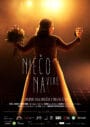
The story of Dorotka and her family “An eXtra Something” is a film telling the story of Dorotka, a teen from Bratislava, Slovakia. She has Down syndrome, a genetic anomaly. Despite the difficulties this brings, it soon proves to be an “added value” for those around her. Her mother Viera explains what happens at the heart of a family when they learn they are expecting a child with Down syndrome. 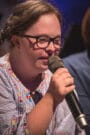 “It was a shock! We didn’t expect it that and we had never even seen someone with Down syndrome before. But Dorotka looked just like our other four children. We knew that panicking about an unknown situation doesn’t help, although keeping a cool head does. “Yet secretly, somewhere in my soul, I was afraid we would not be able to love her. In the time that followed, extraordinary things began to happen. Many precious people came into our lives, they helped us a lot, and they still help today. And our relationships in the family have become stronger. Our four older children have become more sensitive, loving, and the whole family is united as never before.” How does feeling surprised change to feeling gifted? The name Dorota means God’s gift. She already had this name during the pregnancy, and we believed that God never gives bad gifts. We just received something we don’t understand yet, and we felt it was a little test of our trust in God. At the time we began to hear many ideas and reflections, in which we sought God’s will in the present moment. It helped us a lot, as we clearly felt that this was God’s will for us. A friend of ours sent us a note that read, “This is true happiness, because it is built on pain”. How did you decide to share your experience with other families? Early on a doctor introduced us to other families who had children with Down syndrome. Together we did different therapies, we shared our experiences and eventually established an association called “Up-Down Syndrome”. We longed for the children to grow together, so that they were not only attached to their own family, and prepare them so that they can continue together on the road to some independence. We then founded the “Dúhadlo“ theatre, which opens new horizons for children through drama therapy. How did the collaboration with the University of Bratislava begin? A friend of ours teaches medical ethics at the Faculty of Medicine. Nine years ago she invited me to tell our story to students and get them more acquainted with the Down syndrome diagnosis. I am very grateful to have had this possibility. We felt that young doctors could still be influenced positively, and over the years we have always had positive feedback from students. “An eXtra Something” is the name of a documentary film that tells the story of Dorotka in her daily life, her joys and struggles. Why this title? Our original intention was to make a short video for World Down Syndrome Day. Pavol Kadlečík had no experience with Down syndrome and was so amazed that he decided to make a longer film. None of us knew that such a beautiful documentary would eventually be produced. Down syndrome is a genetic disorder in which the 21st chromosome does not form a pair, instead it forms a triplet. Therefore, this diagnosis can also be called Trisomy 21. This means that these people have one extra chromosome, and often it is called the chromosome of love. There’s something extra in them, and they have this special ability of unconditional love. There is no fiction in this film. It shows the daily life of the main character and her family, classmates, friends from theatre and music, and includes the struggles, joys, successes and disappointments. It bears witness to the love in this family and their “yes” to life. Dorotka, did you enjoy shooting a movie about you? When I was standing in front of the camera, sometimes I was a little anxious, and I had stage-fright. It was hard not to look directly into the camera. But the cameraman was great, and I enjoyed it. Palko made everyone happy with the idea of this film, and I would like to continue with a new one. What would you say to people reading this interview? I became an actress to make you happy. Try to love others.
Claudia Di Lorenzi
25 Oct 2019 | Non categorizzato
Youth for Unity from Oceania went to Lake Mungo to find out about the life and culture of the aboriginal people. It was a unique experience that opened hearts and minds. https://vimeo.com/362748693
23 Oct 2019 | Non categorizzato
Beating an addiction to gambling is possible, but not alone. Here’s the story of Christian Rigor from the Philippines, who found God at Fazenda da Esperança, as well as his life’s deepest meaning. The idea of “aiming high brings to mind various things: work objectives, personal projects, dreams worth fighting for. They are often all-embracing challenges that we dedicate a good part of our lives to. Yet there are goals and then there are goals; some have a more subjective value than collective. To reach loftier goals you have to follow a path of growth, put yourself in question, develop a sense of responsibility for the collective and open your horizons to faraway worlds. Then there are lesser goals that turn us inwards, that close a person within their own self-interest, isolate them and eventually become destructive. The objectives we choose guide our way of life. Although you can always change which path you’re on. Christian Rigor, a 30-something from the Philippines, knows this well. A peaceful childhood in a well-off family allowed him to study and specialise in Europe. As a teen he had a full social life, but he wanted to make “easy money”, without working for it. His taking things lightly was fatal from the first moment he entered a casino. Thus began his road to gambling addiction, caught in his need to recover his inevitable losses. It was a dark chapter of his life, aiming for misplaced goals. Along the way he lost friends, work, a fiancé, and the trust of his relatives. He also lost his personal wellbeing, which from the edge of the 24th floor of a building, reached its lowest point. The turning point came when, encouraged by his mother, he decided to move to Fazenda da Esperança, a project with houses set up throughout a number of countries around the world. In its DNA is the Focolare’s spirituality of unity., which inspired its founders. The rehab programme there is dedicated to people who suffer from various forms of dependency. “During the programme I learned to look beyond myself, beyond my egotistical and superficial worldly desires, and live for a greater goal. I learned to aim high and found God. That’s how I learned how to love God and those around me, in everything that I do in the present moment, even when it is painful or difficult.” At Fazenda da Esperança, life is organised in three dimensions: spiritual, collective, and work. Each provides an opportunity to grow personally. “As a Catholic, I learned to go deeper in my personal relationship with God, to listen to his word and live it, to look for unity with him at Mass and to pray as if speaking with a friend.” Collective life taught him that to “love God fully, I need to love those around me, to see the presence of Jesus in them.” It trained him to go beyond differences to serve each neighbour – sharing food, listening to friends who were down, taking care of things at home. At work, whether particularly heavy or just normal, Christian learned to give the best of himself. “I didn’t care how difficult, physically taxing, boring, dirty or gross it was.” Along his road to recovery, he was called upon to be a coordinator for his group. “It was difficult for me to be both gentle and firm, especially during arguments. One time I was unjustly accused of stealing, and I did not feel appreciated. I wanted to give up, but then I decided to stay because I wanted to heal my addiction and be a new person. I dove into loving in each moment, despite others’ judgement. I asked God for help and I felt closer to him.” Today Christian takes on the challenge of his life beyond the protected space of the Fazenda, and when faced with the temptation of gambling, he finds refuge in God. In reality he’s discovered that true happiness lies in aiming for other goals. “I realised that I find happiness when I love God, when I feel his presence during prayer, in the people that I meet, in my activities, and when I love in the present moment. To aim high, you don’t need to accomplish who knows what; you just need to do everything with love. Today, this is my lifestyle.”
Claudia Di Lorenzi
