2 Oct 2019 | Non categorizzato
Only weeks before the Pan-Amazon Synod, Gustavo E. Clariá traveled to a Peruvian village in the Amazon rainforest. He tells the story—not of fires, deforestation, oil companies, or precious-metal seekers—but of Jenny and Javier, who chose to live in the South American Amazon with the desire to bring, as a family, the light of the Gospel to “poorest of the poor.” 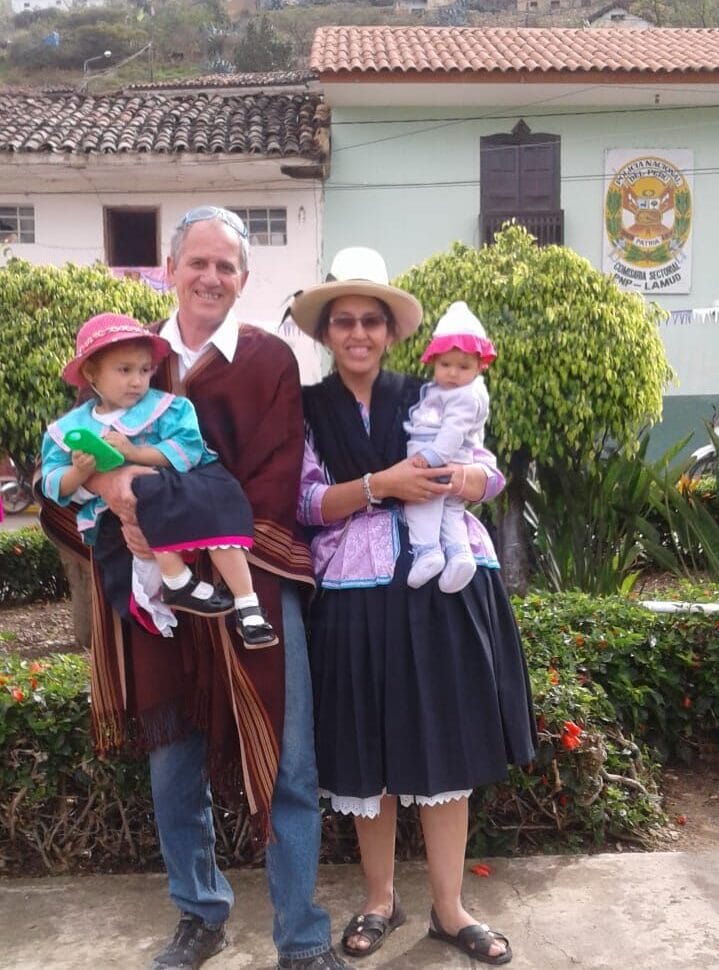 “From Argentina, we decided to move to Lámud, Peru,” said Javier, “the town where Jenny was born, in what is called ‘Ceja de Selva’ (half jungle, half mountain). It’s located near to where the great Marañón and Amazon rivers begin. We wanted to be close to her parents, who are now elderly and in delicate health.” Javier is Argentinian. He met Jenny while she was studying in Rosario, Argentina. They have three daughters, aged 2, 4, and 17. They sold “what little they had” and left for the Amazonas, Peru’s poorest region, 1,600 kilometers from Lima and 14 hours from the nearest Focolare house. Moving from a big city like Rosario to a town with 2,500 residents at 2,300 meters elevation was a big change for the family. “We knew we wouldn’t be making a return trip,” he said. Moving from a big city like Rosario to a town with 2,500 residents, at 2,300 meters elevation, was a big change for the family, and it was especially challenging for Javier. At a young age, both Javier and Jenny met the Focolare’s spirituality of unity; they now wanted to live the Gospel as a family. That’s why “their biggest concern” was to get to a place where they “would be alone,” with no one with whom to share this ideal of unity. They decided to do everything they could to bear witness and proclaim the Gospel with their lives, so that even in the Amazon, a seed of the spirituality of unity would be planted. They decided to live the commandment of reciprocal love so that Jesus would always be spiritually present in their family, according to his promise: “Where two or three are gathered in my name, there am I in their midst” (Mt 18:20). With the conviction that, as Chiara Lubich once said, “one of the fruits of Jesus in the midst is giving birth to a community,” they left for Peru. A few days after arriving, the local bishop visited their town. They introduced themselves as a “Focolare family.” The bishop blessed them and encouraged them to continue in their commitment. They began by touring the periphery of the village by visiting “the poorest of the poor.” They went to people’s houses—if you want to call them that—where they found elderly people who “didn’t even have a decent bed to die in, such was their poverty!” They met many families and children who could afford to eat only once a day. “We would bring them something to eat, hug them, look them in the eye, and give them a word of encouragement,” said Jenny. Sometimes, they would stay two or three days with them, “sharing their pain, their poverty, their brief joys and hopes.”
 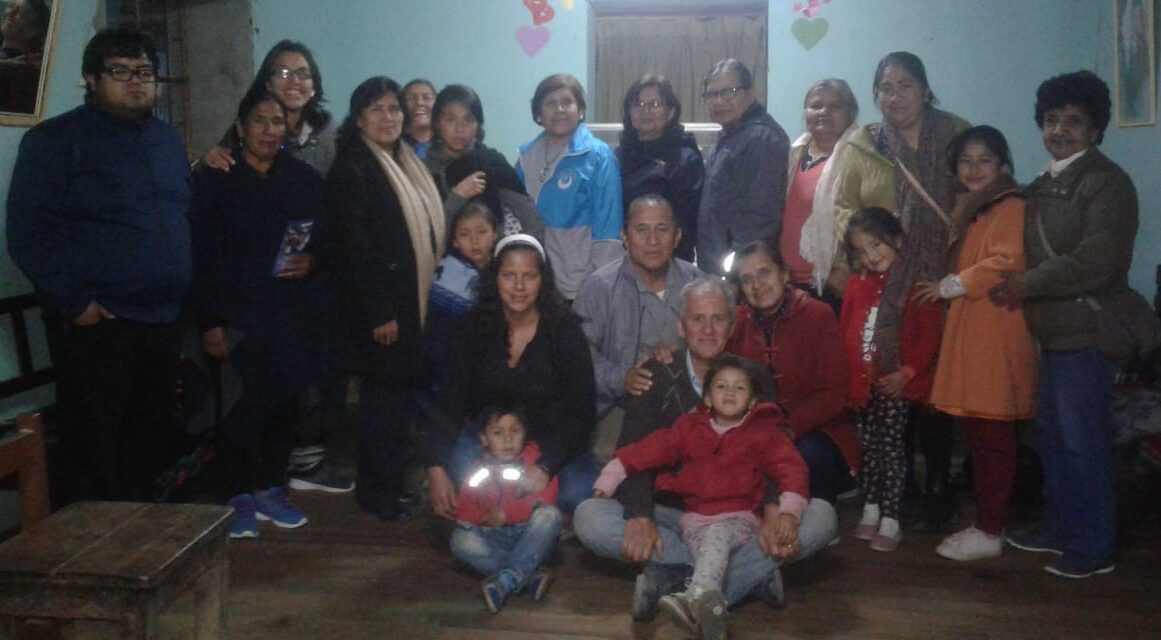 Hopeful that they could help bring to life a small community in their town, they began to organize meetings of the “Word of Life,” but with no success. They changed tactics several times. “We never got discouraged,” said Javier. “We knew that Jesus has his time and the important thing was to stay in the game.” They invited their neighbors again to meet about the Word of God, and gradually some people joined, including some of the mothers of the children in kindergarten with their daughters. They also organized a children’s program. This felt like the beginning to them, a small calling. Then the parish priest asked them to take on the family catechesis of the village and ten other surrounding villages, including some located two hours away. Recently welcomed their first visit from the Focolare community of Talara, a city located 650 kilometers and 12 hours by car from Lámud. It was a visit that marked them in a special way, “a before and after in the life of our community.” Jenny and Javier share in the joy of those who have found their place in the world. “We are few, but something was born!” they say. “We don’t want to set expectations, but we believe that Jesus has a soft spot in his heart for the Amazon, for the poorest of the poor. This is so perhaps because he was also born among the poor, and he stayed with them. We don’t know the roads he wants to take us, but they’re the only ones on which we want to travel! Like Him, we want to give our lives for our people.”
Gustavo E. Clariá

30 Sep 2019 | Non categorizzato
The annual meeting of the delegates of the Focolare Movement concluded in Rocca di Papa. Among the priorities for 2020 is a new commitment in the field of human rights and justice, the centenary of Chiara Lubich and the next General Assembly of the Focolare Movement. 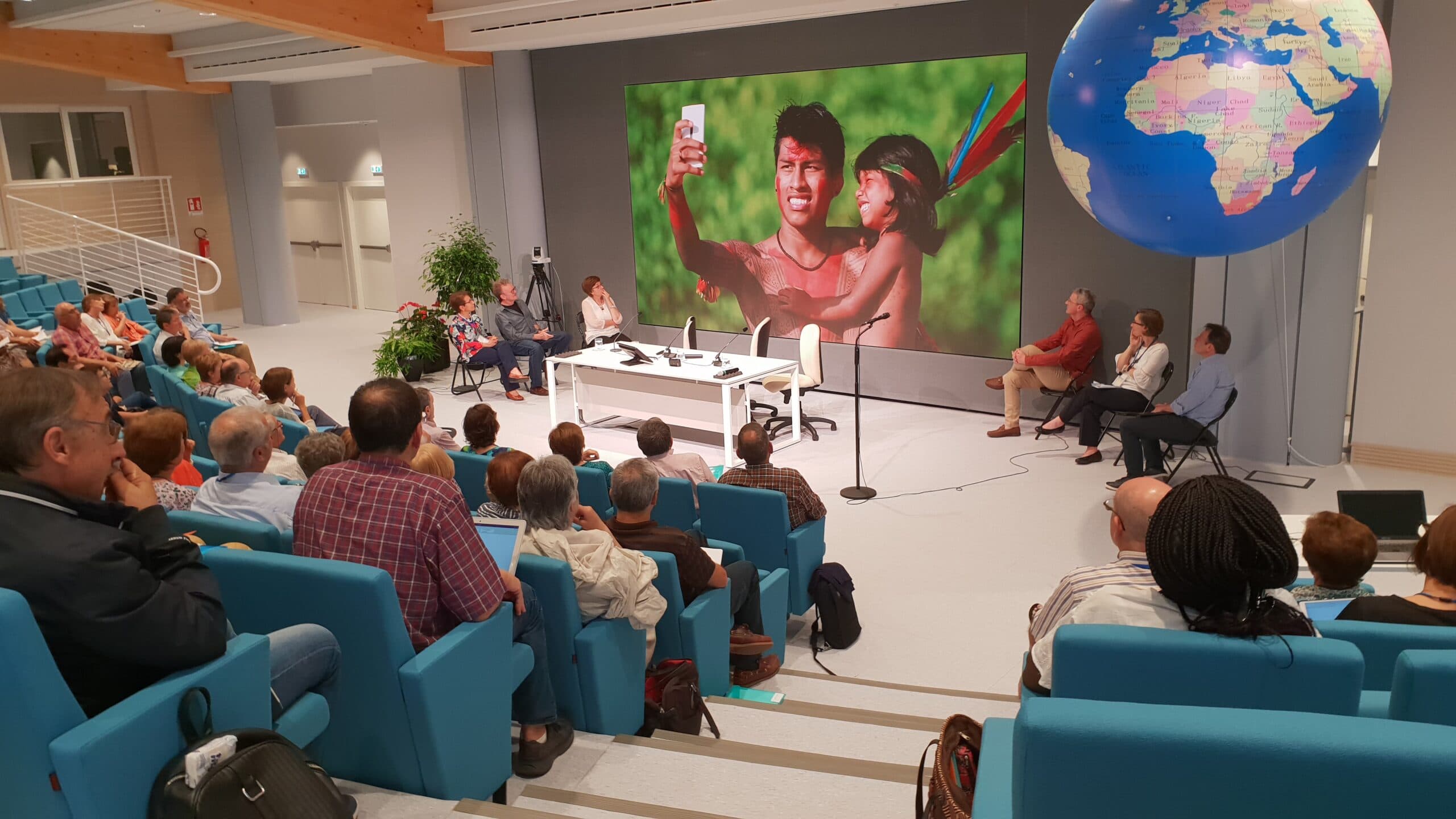 Finally we made it! An extended communion among the participants of the annual meeting between the delegates of the Focolare Movement worldwide and the General Council, was held from September 14th to 28th 2019 in Rocca di Papa. It highlighted the principle that had got the conference underway and that will be the guiding principle for the entire Movement in the coming year: everything that is done in the name of the Movement in the ecclesial, social or cultural fields, as an activity for children or adults, families or those engaged in politics, makes sense only if it is characterized and guided by the presence of Jesus in the midst of those who love one other as He taught. This does not mean that the Focolare is becoming entirely spiritual. In fact, the first part of the meeting was dedicated to gathering the life of the Movement. With the distinctiveness of the different ecclesial, political and cultural environments in which the Movement is located, social and educational projects were presented, as well as the commitment to refugees in areas receiving little media coverage, artistic initiatives and actions promoting human dignity.
 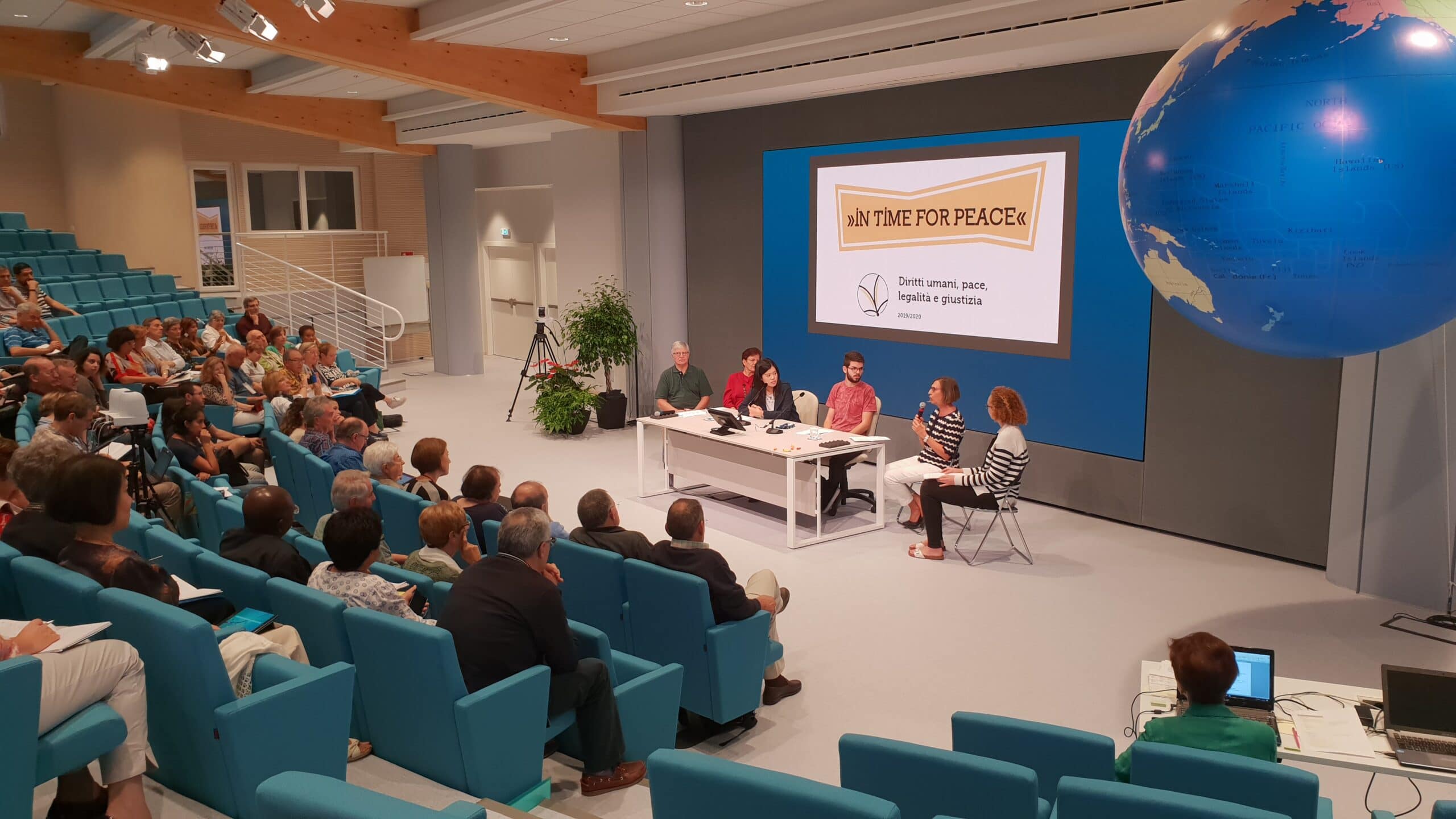 During this exchange it was clear that the reform, which has been underway for some years under the title “New Set Up”, is bearing its first fruits. In many parts of the world, leaner structures seem to release new creative energy. New forms of proclamation and evangelization have developed, synergies between the various branches of the Movement and with other ecclesial and lay realities. There is also a new balance being achieved in the relationship between central government and geographical areas, that is, between global sensitivities and local action. While respecting the diversity present within the Movement – such as those of cultures, confessions, strengths and resources- in this balance it has been possible to identify together the priorities to be addressed in the coming year 2019/2020.
 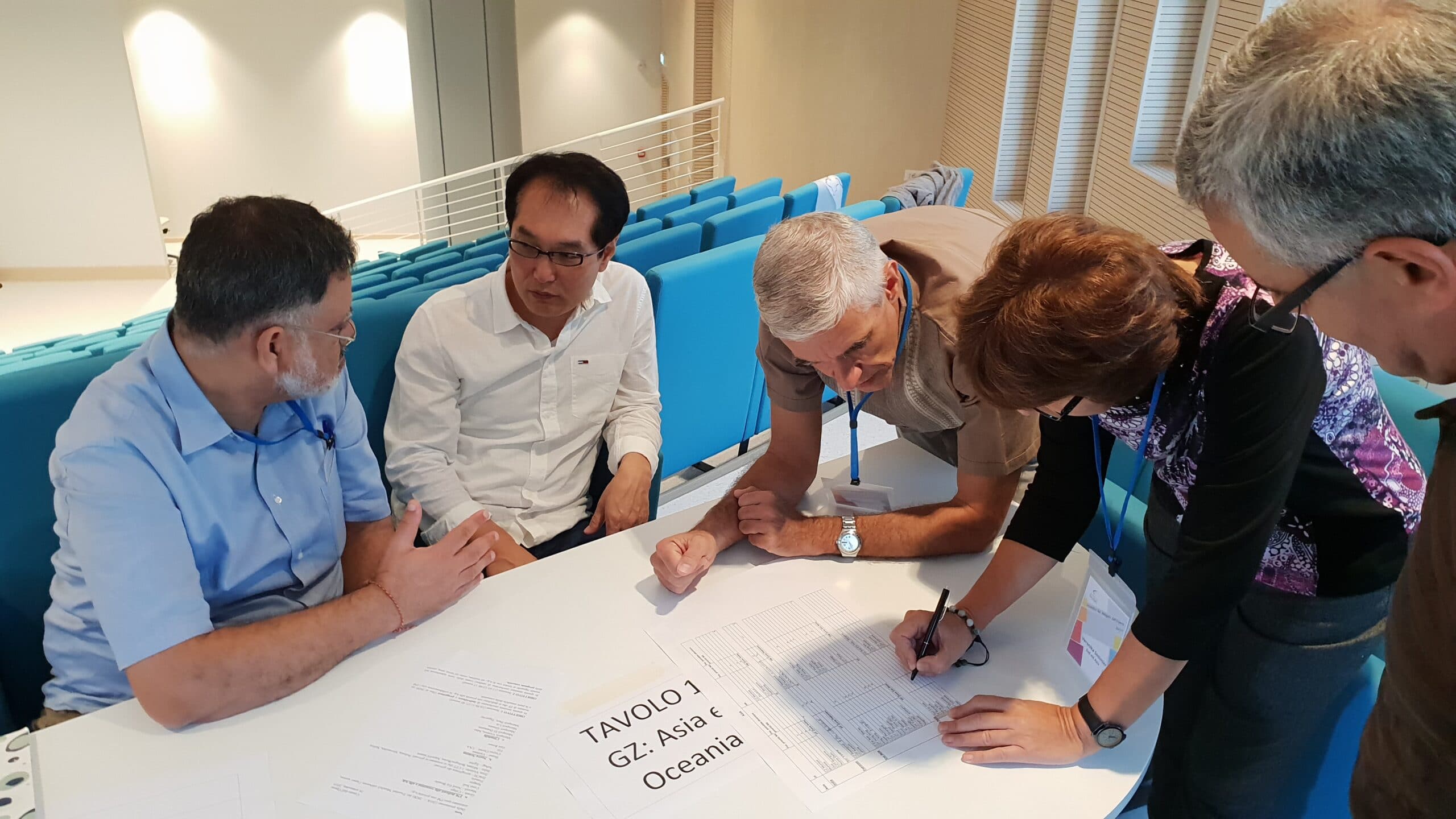 Under the motto “In time for Peace” the Movement will commit itself in the fields of human rights, peace, legality and justice following a pathway proposed by young people. Efforts will be made to try and involve other people and institutions to take concrete and important steps in these fields. The centenary of the birth of Chiara Lubich will take centre stage in the coming months. The activities that begin on December 7th , 2019 with the title “Celebrate to meet” want to offer the possibility of a living encounter with the foundress and her charism. Finally, 2020 will also be marked by the General Assembly of the Movement , which takes place every six years, offering new perspectives. “But everything we do has a single purpose” – said Maria Voce, President of the Focolare, at the end of this meeting. “We want to transform the world, giving visibility to the presence of Christ in it, through the mutual love among us”. This is – so to speak – the typical “soft skill” of the Focolare, its “transversal expertise” . It is not produced with methodologies and programming, but it is the foundation of everything , the starting and finishing line.
Joachim Schwind
29 Sep 2019 | Non categorizzato
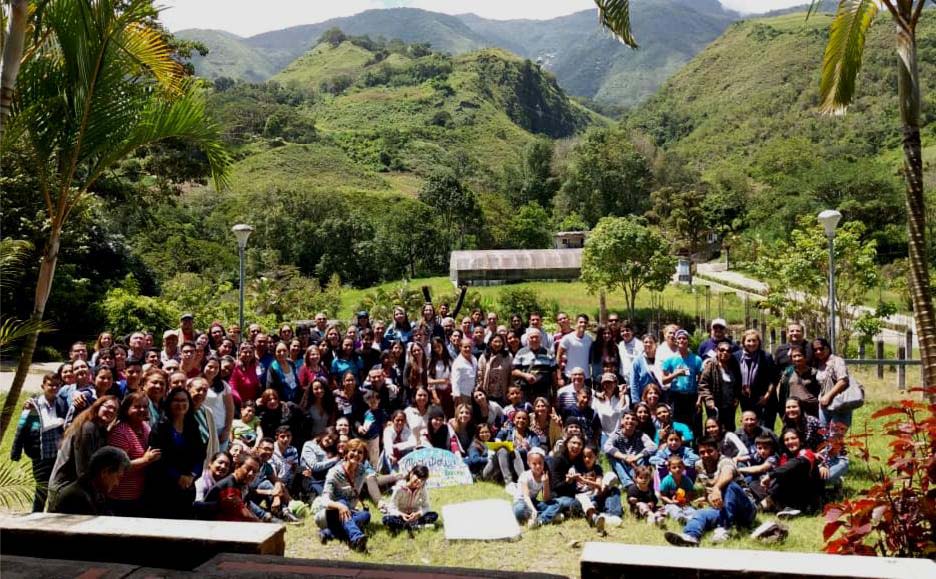
This year once again the Focolare Movement all over the world invited men and women, young and old, people of every background to experience the Mariapolis – whereby a temporary ‘city’ is created which is built on fraternity. 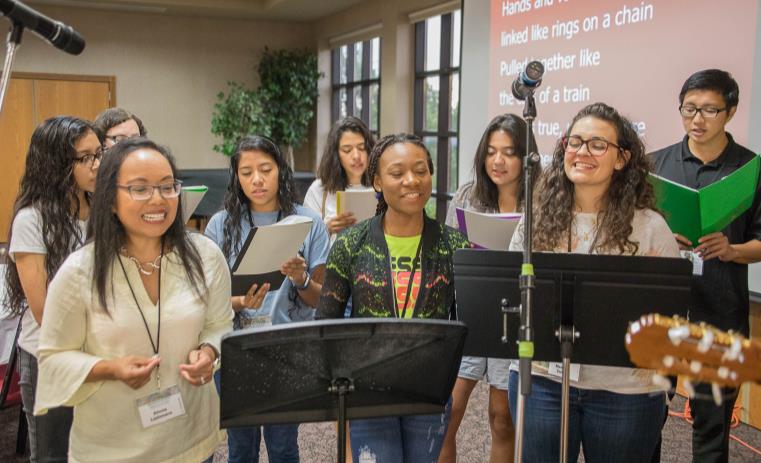 While the settings may be different, the experience is the same: the Mariapolis is the typical expression of the Focolare Movement where those who participate in these gatherings – usually held in the summer – are invited to experience a few days of utopia: a society based on living the reciprocal love of the Gospel. A very big European Mariapolis was held in Fiera di Primiero this summer where the very first Mariapolis took place sixty years earlier. It ran in four stages, each lasting a week. In many other parts of the world the Mariapoli attracted people from very different backgrounds. This year there were 235 Mariapoli around the world with bringing together around 46,000 people. Our editorial team has received letters and reports from Wales, Vietnam, Peru, Canada, Finland, Italy, Bulgaria and Brazil.
 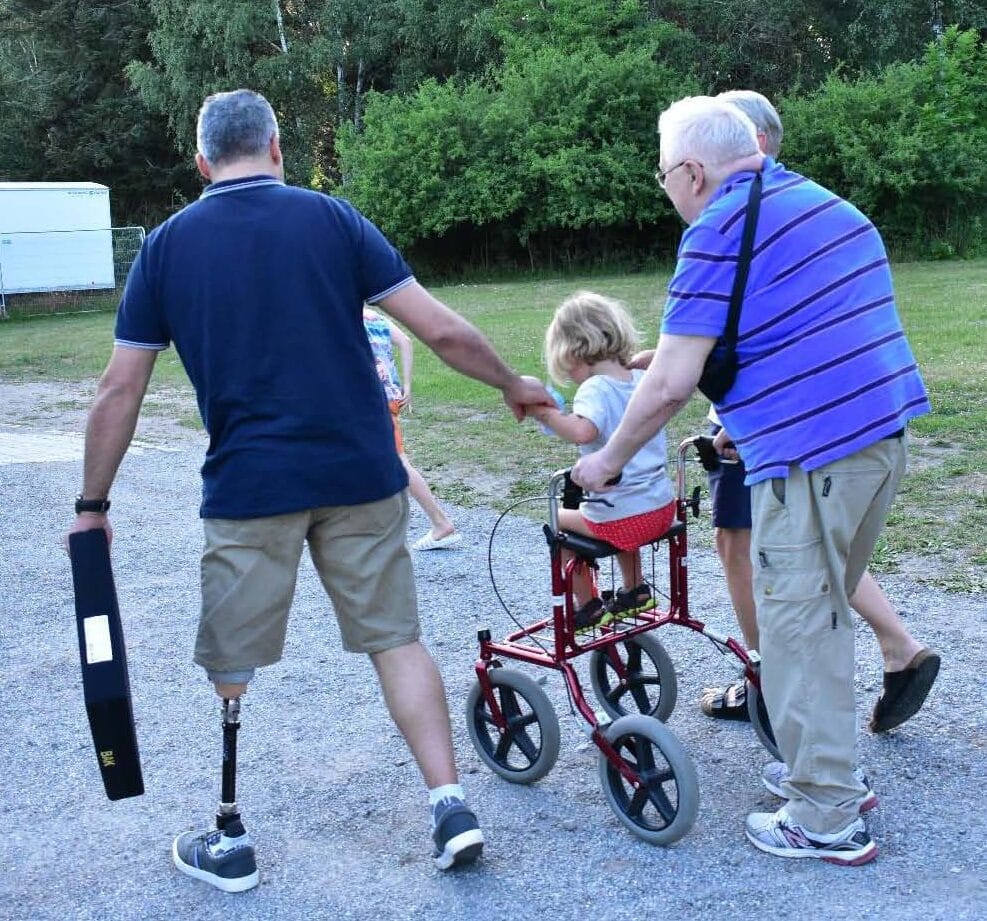 In Turkey the Mariapolis took place in Şile, a little town on the Black Sea near Istanbul, a resort that provided a holiday atmosphere which everyone appreciated. The 70 participants came from Ankara, Iskenderun, Izmir as well as other countries. The main theme – personal and collective sanctity – was developed by presenting some of Turkey’s best-known saints: St. John Chrysostom, St. Ephrem, St. Helena and St. Thecla whose lives have had a great influence on the Church of the early times. In Kerrville, Texas (USA), the theme of the Holy Spirit and the Church was explored which has guided the life of the Focolare Movement all over the world this year. Out of the 350 people present, 100 were participating for the first time in a Mariapolis perhaps because studying the Church was particularly attractive to people at a time that has been marked by so many scandals and sufferings. The same subject, presented with an focus on ecumenism, was at the heart of the Mariapolis in Sweden held in Marielund-Stockholm with Lutherans and Catholics taking part. Two Buddhists as well as those who do not profess a
 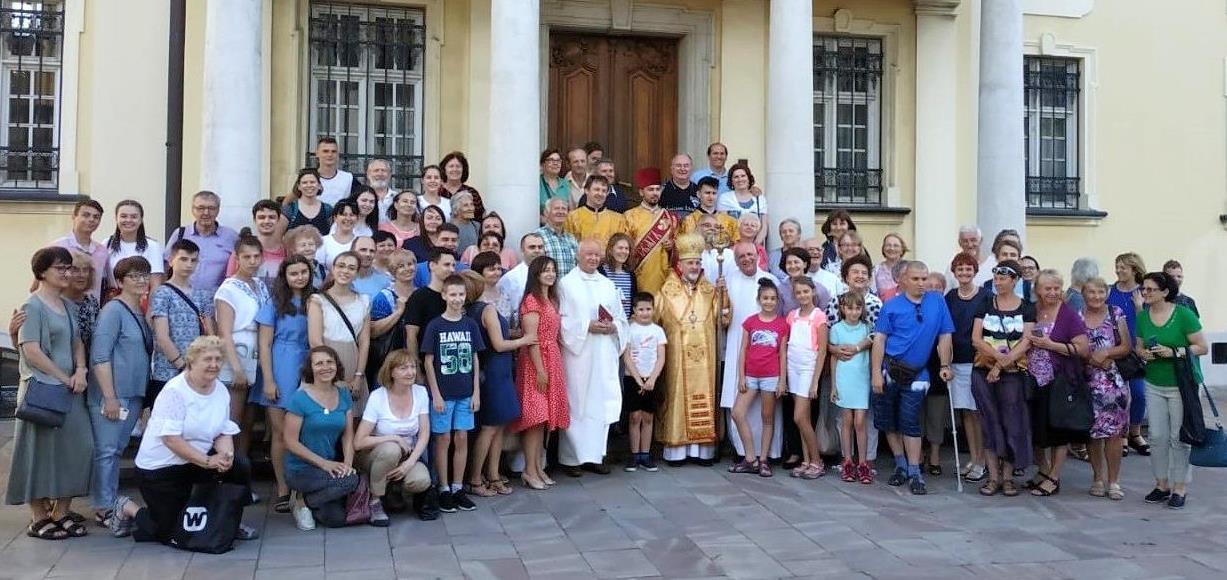 specific faith were also present. The participants came from different cities in Sweden and a good representation from Norway. Despite the diversity it was possible to deepen the idea of “the Holy Spirit as the one who is the Church’s vital energy and who gives each person the particular grace to realize their own calling through the unity of all the members of the mystical body of Christ”, in their own words. The participation of newer generations to the program gave the Mariapolis in Lviv, Ukraine, a joyful touch. Young adults, teenagers and children were entrusted with the preparation and running of an entire day which they did in a lively and engaging way. At the start of each day it was the children who “taught” the adults by telling them how they had lived the words of the Gospel of the previous day. The Mariapolis in Penang, Malaysia, was characterized by the diversity of languages, cultures, ethnic backgrounds and people travelling great distances with participants from Singapore, for example, travelling 700 km. “The effort made to keep mutual love alive among us” – they wrote – “and thus give space to the presence of Jesus in our midst, the commitment to face and overcome difficulties and the willingness to give up one’s own ideas, made this undertaking possible”. The Mariapolis of Boconó in the west of Venezuela was intended to offer participants the opportunity to rest, in view of the difficulties of daily life which is exhausting because of extended periods without electricity, interminable queues for fuel and economic hardship. At least twice as many people as were expected responded to this attractive offer – both physically and financially. However, on the first night, a hurricane with hail, rain, trees being uprooted and strong winds caused a power cut that lasted until the end of the Mariapolis which meant that everything collapsed: no water in the bathrooms, no facilities for cooking or no way to keep the food cool. However, through the deepening of spirituality, the invincible love of God became a real, existential experience: they found a way to cook with wood, a neighbour offered the participants their generator and everyone’s attention for the needs of others grew. “God is never outdone in generosity,” they wrote at the conclusion of this wonderful experience.
Joachim Schwind

27 Sep 2019 | Non categorizzato
Twelve songs which are part of the history of this music group become a collection, taken from their world tour “Life”, a tour that will continue in the coming months. Among their plans for the future Gen Rosso will also be involved with delivering courses, educational projects, co-productions and the third edition of “Gen Rosso Music and Arts Village”. 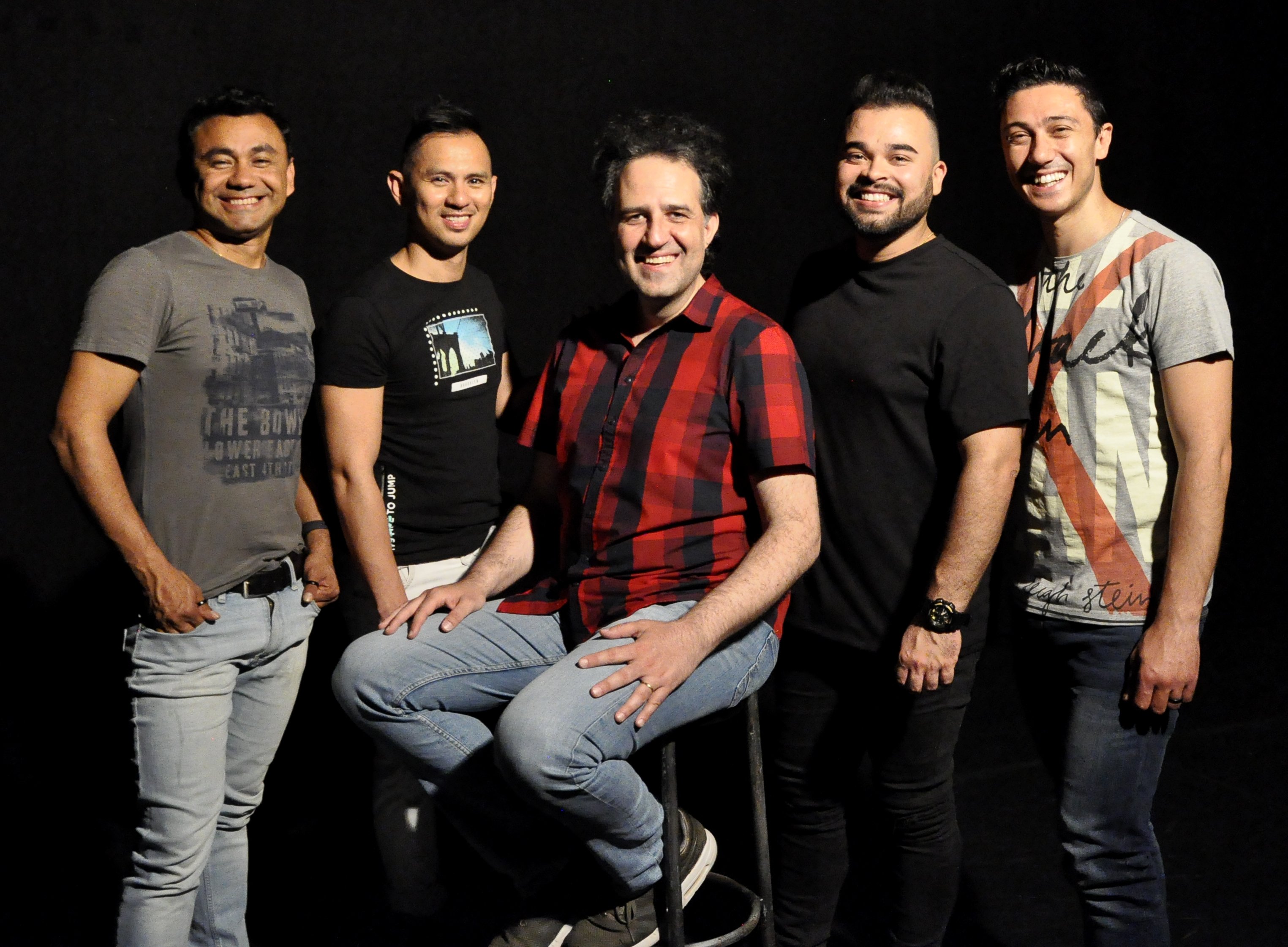 After more than fifty years of life theirs is an artistic proposition capable of continuous renewal. At the same time, they keep the compass fixed on some key points: a life lived under the banner of fraternity, a collaborative production between artists of various nationalities that speaks of unity between peoples and nations, a message that proposes a culture of giving and sharing – attentive to the challenges of our planet. This is Gen Rosso an international music group, made up of musicians and technicians of different vocations from Europe, Asia and Latin America. Recently their “Life” tour became an album with eighteen tracks chosen from the songs recorded by Gen Rosso over the years. We talk about it with one of the group, Michele Sole. – On July 1st your live album from the “LIFE” Tour was released. How was this new album conceived and what are its characteristics? From the autumn of 2018 until today we have had some beautiful concerts all over Italy with our production “LIFE” and since the audiences were enthusiastic, like we were ourselves, from there we had the desire to create a cd ‘Life – live’. Once the recordings made on stage were re-created, we mixed them trying to keep all the energy and emotion that we breathe in our concerts. You can hear the audience singing with us, their applause and their voices, giving the listener the feeling of being right there with us on stage. In short, a real live recording! –
 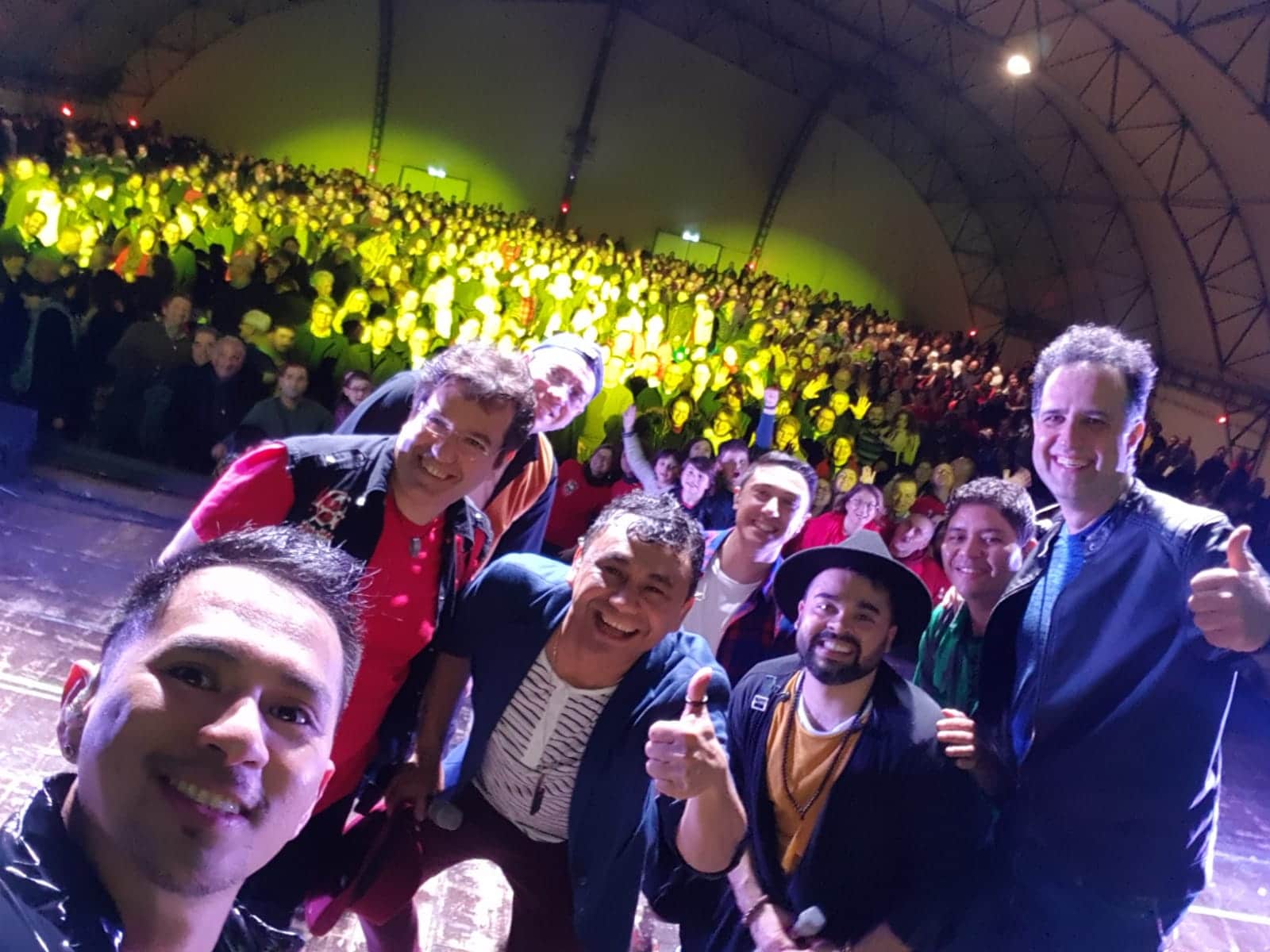 Recently you have created, in the international little town of Loppiano where you are based the “Gen Rosso Music and Arts Village”. What is this and what are the objectives? The “Gen Rosso Music and Arts Village” will be held this year from December 27th 2019 until January 5th 2020, this will be the third edition. It is an artistic experience, the sharing of values from the perspective of the charism of unity. It involves young professionals and students, aged 18 and above, from different disciplines such as music, dance, singing, theatre. The teaching methodology is designed by Gen Rosso tutors together with teachers who have recognized artistic skills and experience. The program includes an in-depth study of specific themes from the art world, the exchange of experiences, creative spaces and practical workshops that will converge in a final performance. You can register at village@genrosso.com. The programme will start on December 27th 2019 and will end on January 5th 2020.
 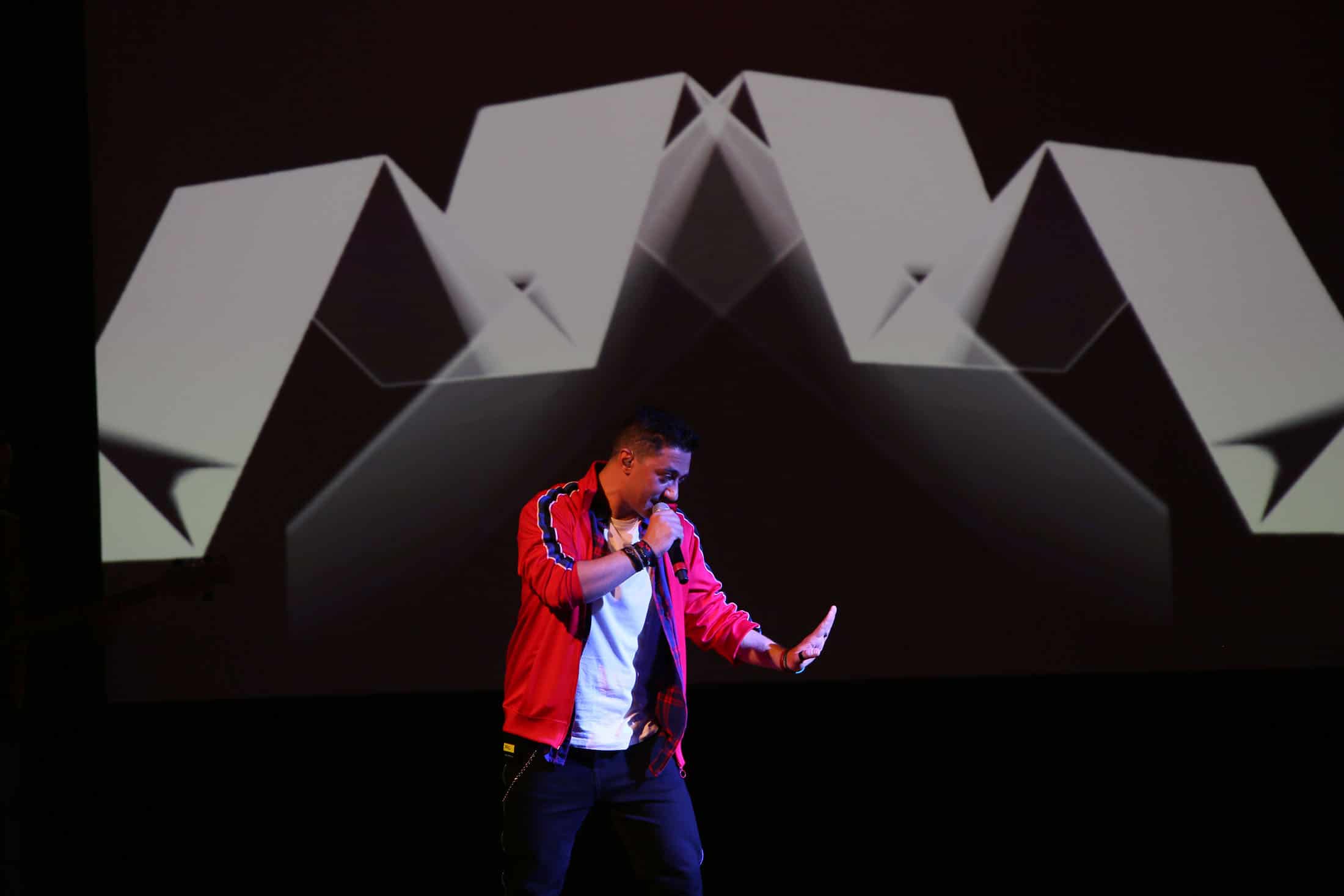 – In your travels, you participate in events that promote peace and friendship between peoples and universal fraternity. Is there a recent one that you remember in particular and why? Yes, in the spring we had the joy of being in Jordan, thanks to “Caritas Jordan”, to carry out the project “Be the change” . We worked with hundreds of students from different social classes, different religions and different nationalities, It is a project to foster dialogue and promote a culture of peace and friendship, with the participants themselves being the promoters of a change in their lives and in their cities for a better future. – What are your plans and future appointments? First of all, we will resume the world tour with the concert “Life” along with educational projects and the inclusion on stage of young people prepared during various workshops. The tour will begin in Italy (September 28th in Venosa; October 12th in Piacenza; October 23rd and 24th in Acerra; October 26th in Prato, November 1st in Teano). Then an Asian tour in Indonesia for almost the entire month of November 2019.
 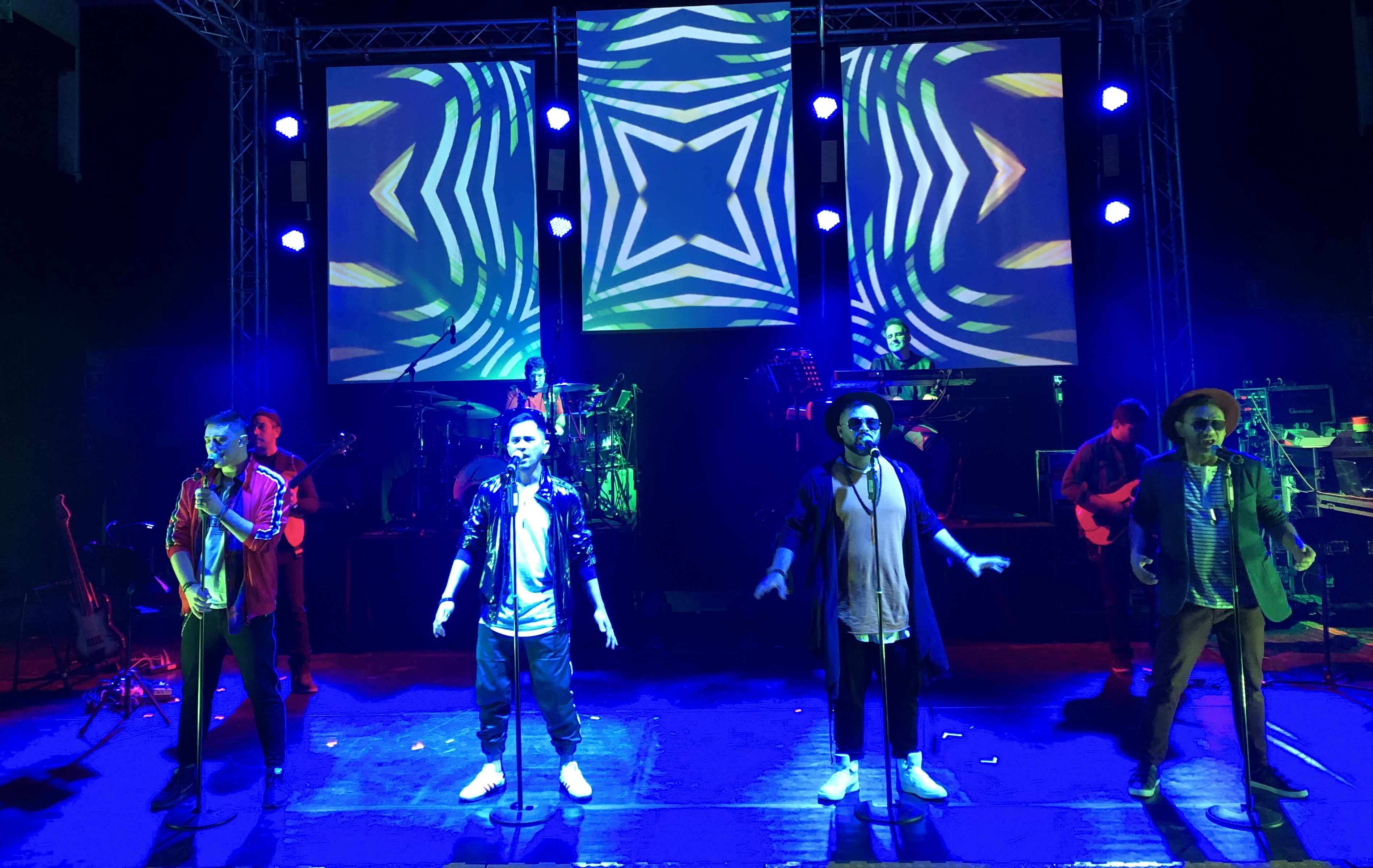 Meanwhile, we will continue with courses in the little town of Loppiano, sharing experiences, training and art. From October 15th to 17th we will examine in depth light design, a course intended for people interested in expanding their knowledge of the use of light and colour. In addition, to support young emerging artists, we have started co-productions. The first is Stabat in Silentium, the staging of a play by the young writer Francesco Bertolini. This play is the result of a profound experience of solidarity that emerged after the earthquake in Amatrice (Italy). “How can one still believe in God after an earthquake?” is the “uncomfortable” question which is the starting point of this work. The protagonists are the young victims, but also the volunteers who leave their quiet life to go where tragedy has occurred.
Anna Lisa Innocenti
25 Sep 2019 | Non categorizzato
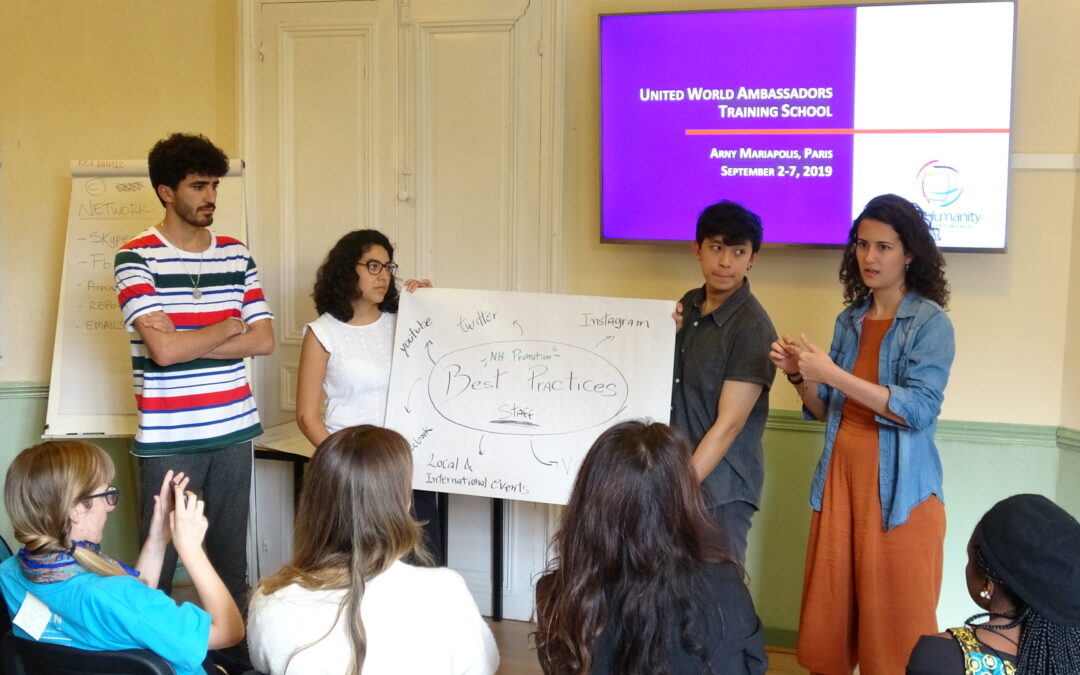
At the Mariapolis in Arny, 35km south of Paris, the first “Ambassadors of a United World” course was held from 2–7 September. There were 16 young people from 14 countries who participated. 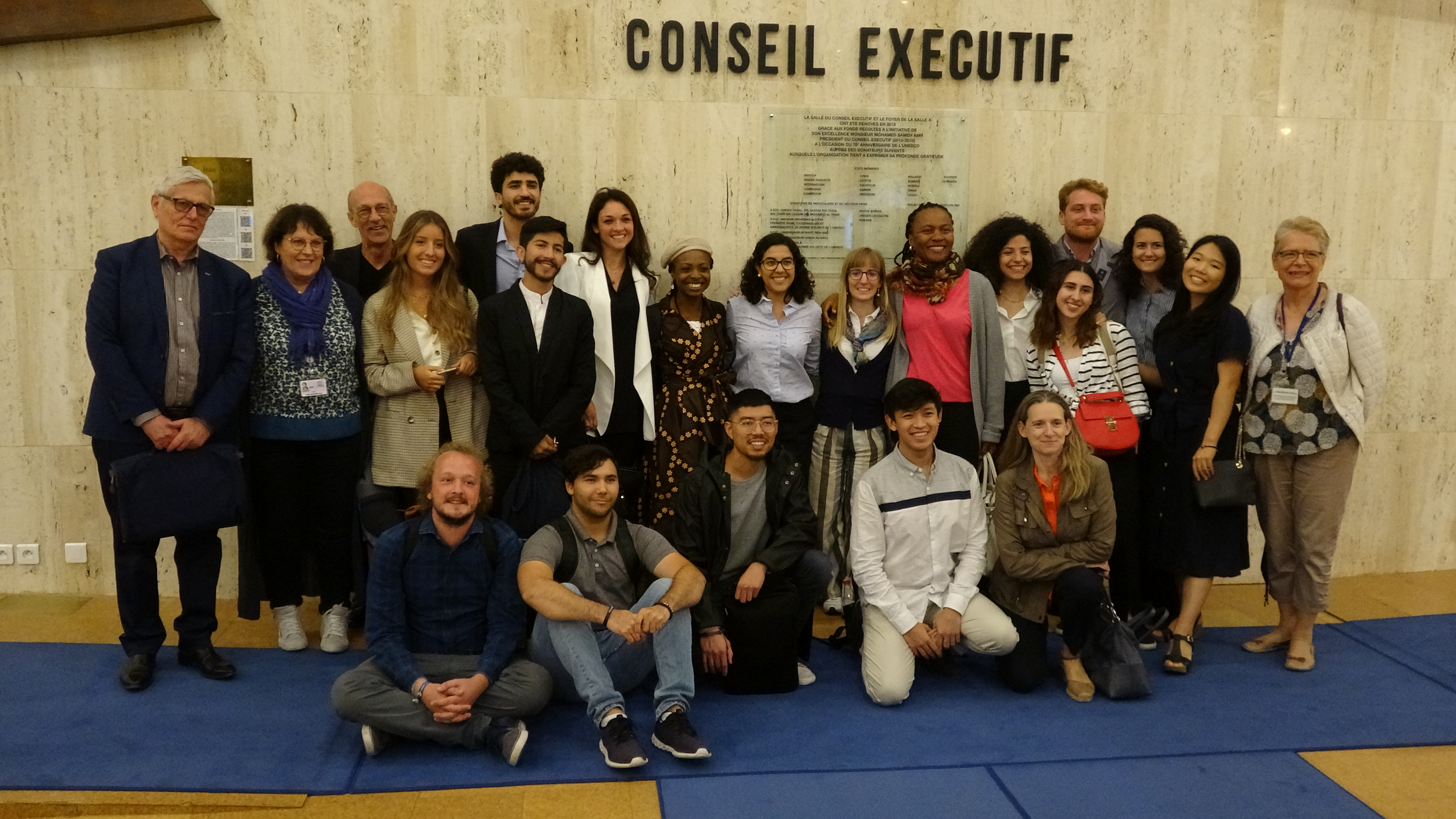 “Better Together” was the catchphrase that guided them. The programme was sponsored by New Humanity, an international non-profit organisation, which is an offshoot of the Focolare Movement and takes its inspiration from the spirit and values behind it. The goal was to strengthen the expertise of a group of young change makers, peace builders and community leaders, training them in the culture of unity, peace and fraternity, in order for them to become true “ambassadors” of a united world, capable of being spokespeople for the NGO nationally and internationally. The 16 who participated were from Belgium, Brazil, Cameroon, Colombia, South Korea, Ecuador, the Philippines, Kenya, Iraq, Italy, Lebanon, Mexico, Nigeria, Spain and the U.S. “This was New Humanity’s first training course,” said Chantal Grevin, New Humanity’s main delegate at UNESCO in Paris. “It was an effective experience that allowed us, in just one week, to give them the necessary skills to become active workers in our NGO.”
 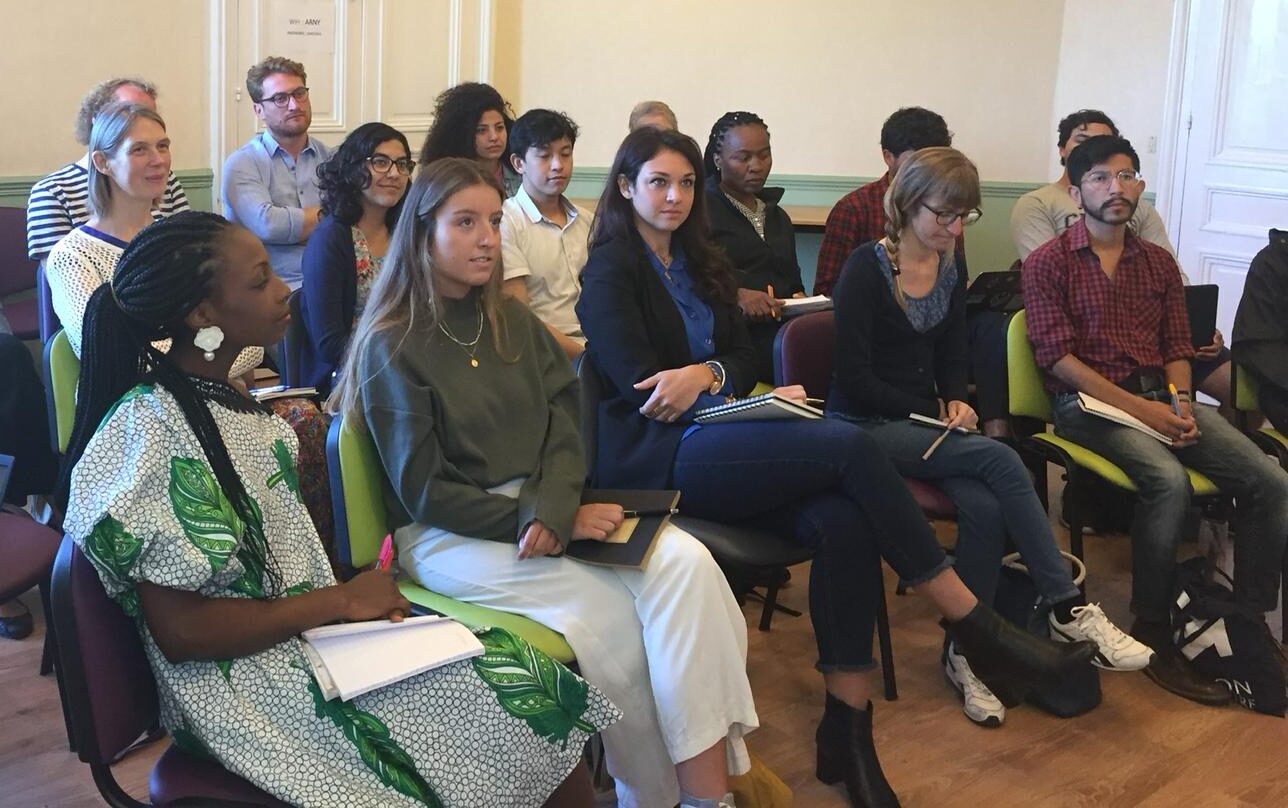 “We talked about what we mean by a ‘united world’, what peace, human rights are, and as a result what we mean by ‘person’”, explained Marco Desalvo, the NGO’s president. “We made an effort to translate all the best practices that our young people promote each day in the world, into a language that can inspire the international institutions, to spread the spirit of universal fraternity in every area of society at every level, just as the Universal Declaration of Human Rights proclaims.” The young ambassadors were welcomed by UNESCO officials from the humanities and social sciences (youth branch) and the education sector (global citizenship and culture of peace). “An open and free dialogue sprang up, allowing these delegates to discover New Humanity’s activities in a better way, through experiences from the young ambassadors, who were able to act as one, seeing all they had learned in recent days and their positive experiences of global citizenship,” added Grevin. Each young person was given the possibility of personally meeting the UNESCO delegate from their country and express their vision regarding the huge challenges of peace, the environment and fraternity.
 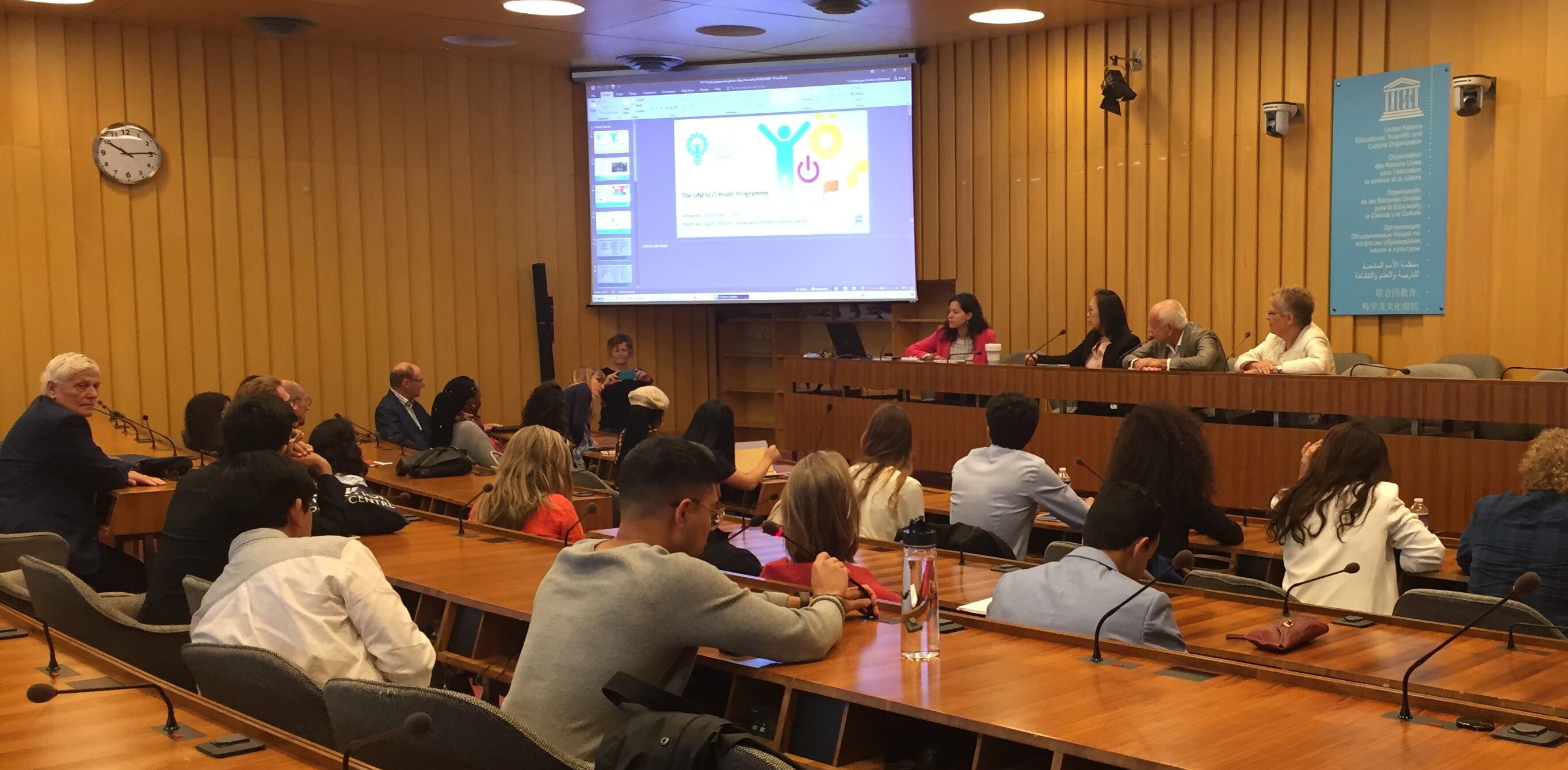 During the training course, the young people also had the opportunity to meet and speak with Monsignor Follo, a permanent observer to the Holy See, and Marie Claude Machon, Philippe Beaussant and Patrick Gallaud, who are the president, vice president and ex-president respectively of the liaison committee between NGOs and UNESCO. “Thanks to this course I learned so much about the United Nations system and NGO activities worldwide”, said Luciana, an Italian lawyer, at the conclusion of the experience. “Yet above all I rediscovered the true motivators that drove me towards this world. As an ambassador of New Humanity, I would like to promote the idea that supporting each other can make a great difference in creating a more united world. I understood that small
 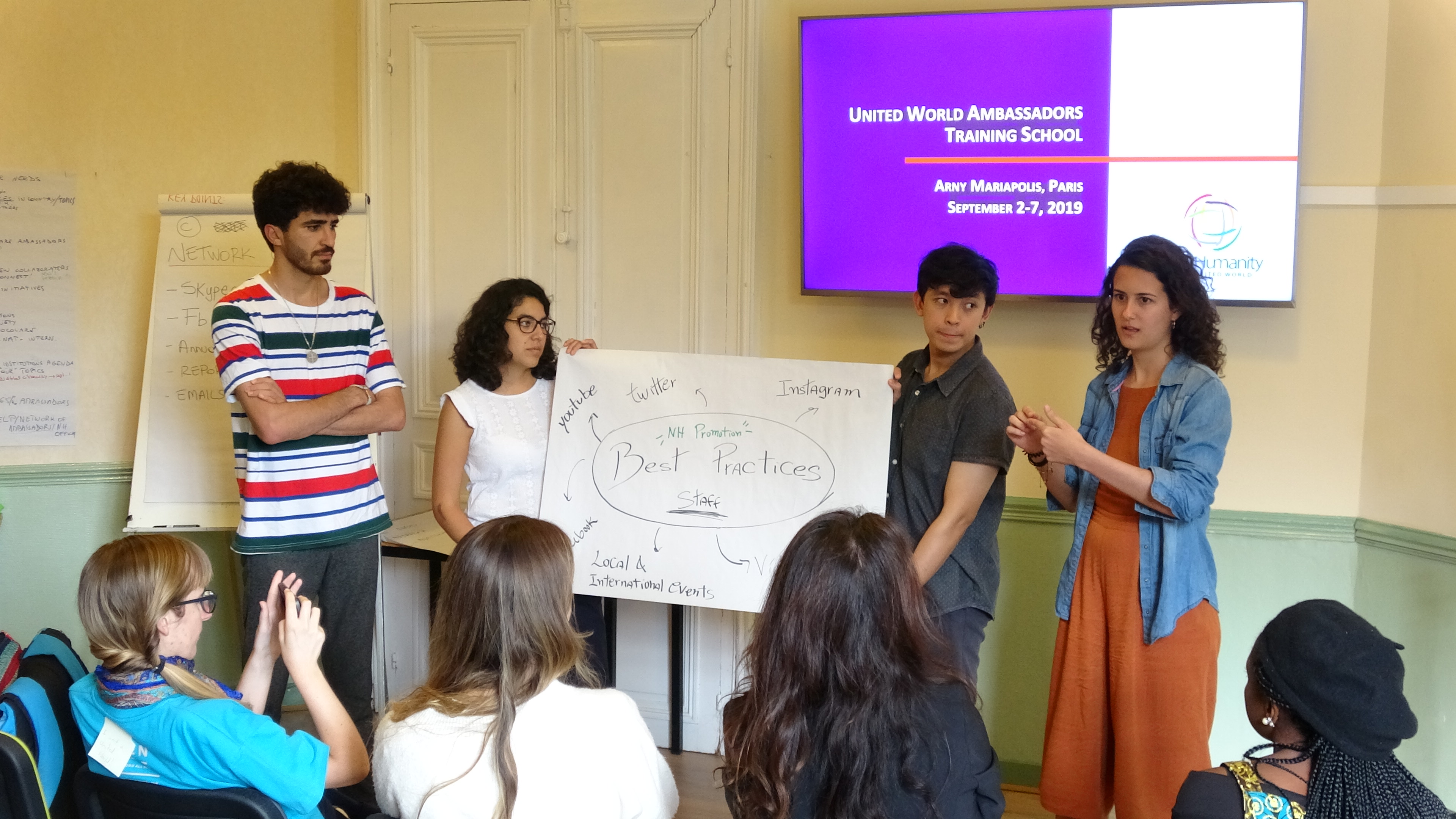 gestures can have a great impact on people’s wellbeing. This is why I feel so privileged to be a part of this fantastic project!” Pascal, who is Lebanese, shared: “When I first arrived, I was discouraged at not being able to find solutions for my own country. Then I found courage and hope, and I understood that we can persevere, we can truly work to reach a united world. I know it will happen! I am quite happy to be going back to my country and start working.” And Noè, from Mexico, said: “I arrived here with my friend Josef from the U.S. We live just a few kilometres from the border separating our countries. We are already working together on projects to help migrants. When we go back, we’ll be able to put into practice what we learned here.”
Tamara Pastorelli
23 Sep 2019 | Non categorizzato
Communication and Evangelization Today – a seminar promoted on 1 October in Rome by the Pontifical Salesian University of Rome and its Faculty of Social Sciences and Communication, the Chiara Lubich Centre of the Focolare Movement and the Editorial Group Città Nuova. Speakers: Mauro Mantovani, Rector of the Salesian Pontifical University, Rome; Paolo Ruffini, Prefect of the Holy See Dicastery for Communications; Fabio Pasqualetti, Dean of the Faculty of Social Sciences and Communication; Giulia Paola Di Nicola, Sociologist, Leonardo da Vinci University, Chieti; Cesare Borin, IT manager – Focolare Movement; Michel Vandeleene, editor of the book “Conversazioni. In collegamento telefonico”; Cristiana Freni, professor of the philosophy of language at the Salesian University; Marco Aleotti, RAI television director. Moderator: Alessandro De Carolis, Vatican Radio. Throughout its history, the Church has always felt the urgent need to spread the message of faith and the Word of God, and this commitment led to the use of its oral and written tradition, various expressions of art, the liturgy, and also the modern means of mass media. How does this commitment change when the modern means of communication are constantly changing? This question will be dealt with during the Seminar; and the “world-wide” experience and spiritual doctrine in the book Conversazioni. In collegamento telefonico by Chiara Lubich, published by Città Nuova, in 2019, will provide some source of inspiration. In this book, one finds the text of telephone conference calls made by Chiara Lubich, the founder of the Focolare Movement, who availed herself of this advanced technology in communication to dialogue, share, encourage and inspire thousands of people to do good. It was clear to her that a concrete and positive response to the urgent questions of our times can only be given by people who come “together” and have a strong relationship between them, and whose commitment to change the world starts with “changing themselves”, and not “for themselves”. On the occasion of the publication of this book Works by Chiara Lubich “CONVERSAZIONI in collegamento telefonico” (Conversations during telephone conference calls) Vol. 8.1 – by Michel Vandeleene (Città Nuova, 2019) Chiara Lubich made use of the modern means of communication, and since the early eighties, she started a monthly or bimonthly telephone conference call. The most important centres of the Focolare Movement in the five continents were connected for the conference call through a service provider in Switzerland, hence the name Collegamento CH. During the conference call she shared a spiritual thought, fruit of her life and her charism. Thus, a very original experience of Christian community life on a global level was born. It helped people walk together and support one another on the road to holiness. The book contains 300 spiritual thoughts that Chiara Lubich shared between 1981 and 2004 and some other unpublished ones.
Focolare Communication Office
