4 Mar 2019 | Non categorizzato
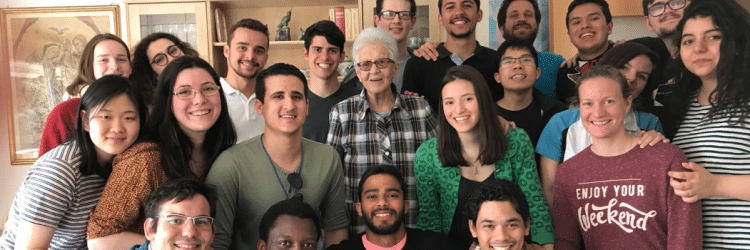
This focolare little town in Switzerland has two schools for young people: one for the formation and training of focolarini and the other for young people who wish to deepen their understanding and experience of the spirituality of unity. Dialogue and exchange between generations and cultures are distinguishing features of life in Montet. Michael, a boy from Mali, described life in this little focolare town as follows, “It is a community that works together – body and soul – to show to the whole of humanity that diversity is not a fault or failure but a grace from God to unite the world.” He was a part of a group of thirty young people from thirteen different countries who followed a year long course of human, spiritual and professional formation. Gospel teachings and Chiara Lubich’s charism of unity underpinned this time of study, work and communitarian life during which people experienced that it is possible to build deep relationships with people of different ages, cultures, traditions and ways of thinking. 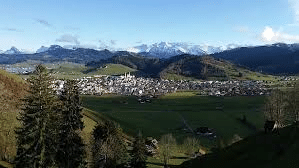 Montet began in 1981 and is situated in a peaceful location, surrounded by green hills and three beautiful lakes, Bienne, Morat and Neuchatel. It is extremely international: its population of about one hundred people comes from thirty-five different countries. About half are young people who stay for a year and the other half are adults who live there permanently and guarantee the continuity of the life of the little town. It is a meeting place for people from five continents, coming from different cultures, religions, Christian Churches and of all generations. It was in Switzerland in the 1960’s that Chiara Lubich first began to envisage and understand what would eventually become the focolare little towns. There are now twenty- five in the world and they are places of witness to the unity of the entire human family. “In Einsiedeln, looking down from the hillside at the basilica and the surrounding area, I understood that the Movement should have a town but that it should not have an abbey and guesthouses but should be made up of homes, work places, and schools like ordinary towns.” There are two formation schools for young people in Montet. One is for the focolarini who are preparing for consecrated life and the other is for young people who want to spend a year living in community and are searching for their vocation. Alejandro from Cuba said, “Being at the school in Montet with people from so many different countries is like the confirmation that, irrespective of our diversity, a united world is possible if we all want it. It means learning from each other every day and trying to build unity with love. It’s a marvellous adventure.” Andre from Brazil explained, “In the little town, young people can study ethics, sociology, theology, intercultural dialogue and deepen their understanding of the spirituality of unity. This study can form the basis of their attitudes in the work they do now but is also a preparation for professional life. It will help them show responsibility and consistency in all areas of society in the future.” He continued, “In addition, thanks to the respect between generations, you understand that no one is superior to anyone else but you are actually responsible for one another. As a consequence, older people become younger in their outlook on life and younger people become more responsible.” For Gloria from Argentina, the intercultural aspect – namely, dialogue, exchange and cultural enrichment – is the distinctive feature of the little town. “We have had to learn to do something really important with our diversity. It was difficult because it seemed that we couldn’t understand one another but by loving we came to a solution regarding practical matters and we understood one another in transcendent things. Living with other people has enabled me to discover the best in them but also what is really good in my own culture. I’ve discovered how important other people are in my life and I think we shouldn’t be afraid to open up and discover their ‘world.’” In Montet “there are the answers to the questions we ask every day” said Ivona from Serbia. The little town is “a gift from God.” And as Larissa left for Brazil, she said, “It is a multicultural, multigenerational family.”
Claudia Di Lorenzi
3 Mar 2019 | Non categorizzato
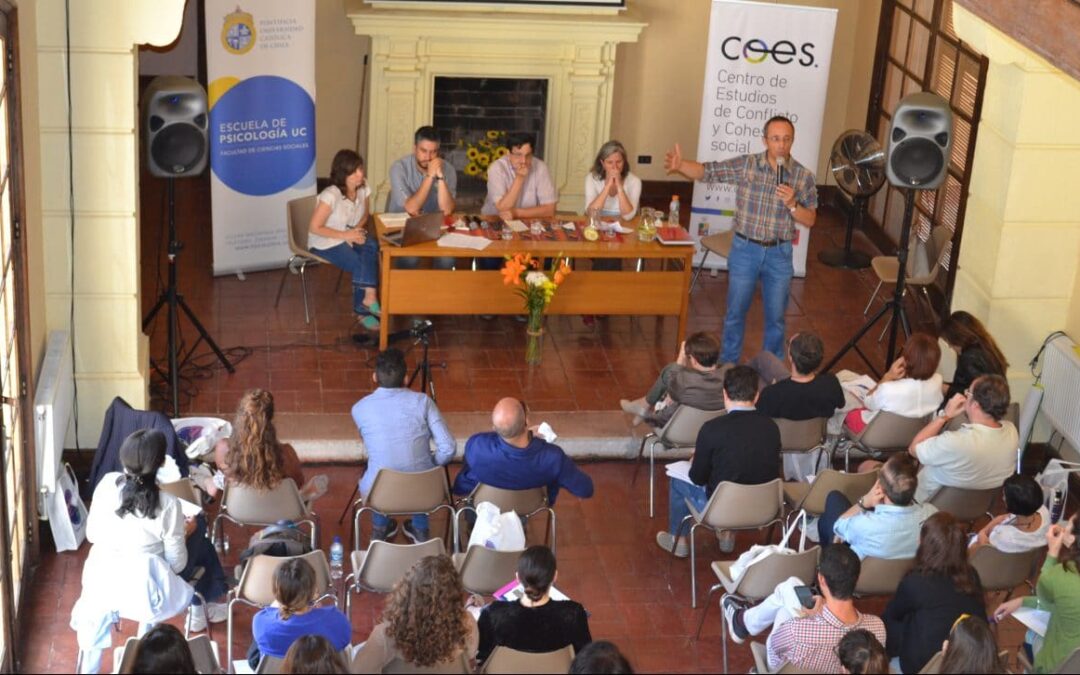
A Summer School offers its contribution through researchers and lecturers from nine American and European countries. Equality is one of the basic principles of democratic societies. Yet, discrimination persists in many countries of the world. We spoke about this with Paula Luengo Kanacri, a pyschologist and lecturer at the Catholic University of Chile, a scholar at the Research Centre for Conflict and Social Cohesion. You have been involved in the social exclusion issue for a number of years. What led you to become so interested? I would say it has been the history of my people and my own personal story. Chile is a country of 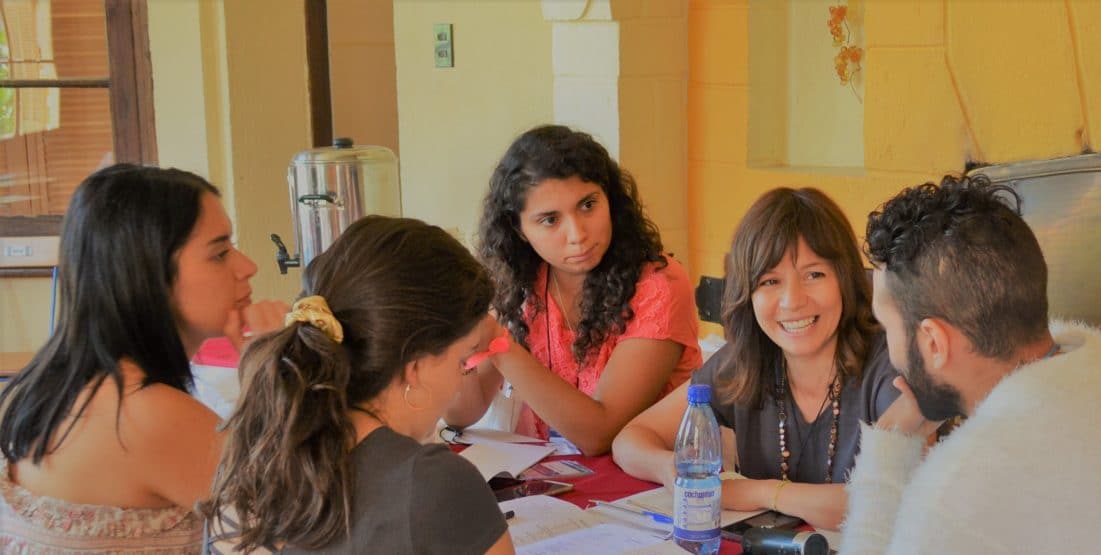 great contrasts: substantial economic growth and considerable inequality. Then, my mother came from a rich family while my father’s family was a poor. I have experienced the pain of inequality. I studied pyschology, and when I met the youth of the Focolare Movement, I started to embrace the idea that a different world is possible. After my graduation, I began to nurture an interest in prosocial behaviour and empathy; both are a support to social inclusion. An experience with the homeless, in Rome, left a strong impact on me. I have touched the pain of many who are marginalized, not only through invisible situations but also through others that are made to be invisible. To understand the mechanisms that favour inclusion or deny it, one needs to look into its different perspectives, disciplines and lines of thought. This is what we tried to propose during the Summer School recently held in Chile. The theme was: “Human development for all: social sciences in dialogue for an inclusive society”. How did the idea of a Summer School come about? Student movements in Chile, active since 2011, managed to obtain a historical reform through which the most disadvantaged students are today granted free university education. But a more creative effort is also required from academics. The idea of the Summer School originated from the fact that I participate in “Psychology & Communion” and “Social One”, international networks of researchers and scholars in the fields of psychology and sociology, inspired by Chiara Lubich. The Research Centre for Conflict and Social Cohesion (COES) and the Catholic University of Chile supported the idea. Who participted? And how was it?
 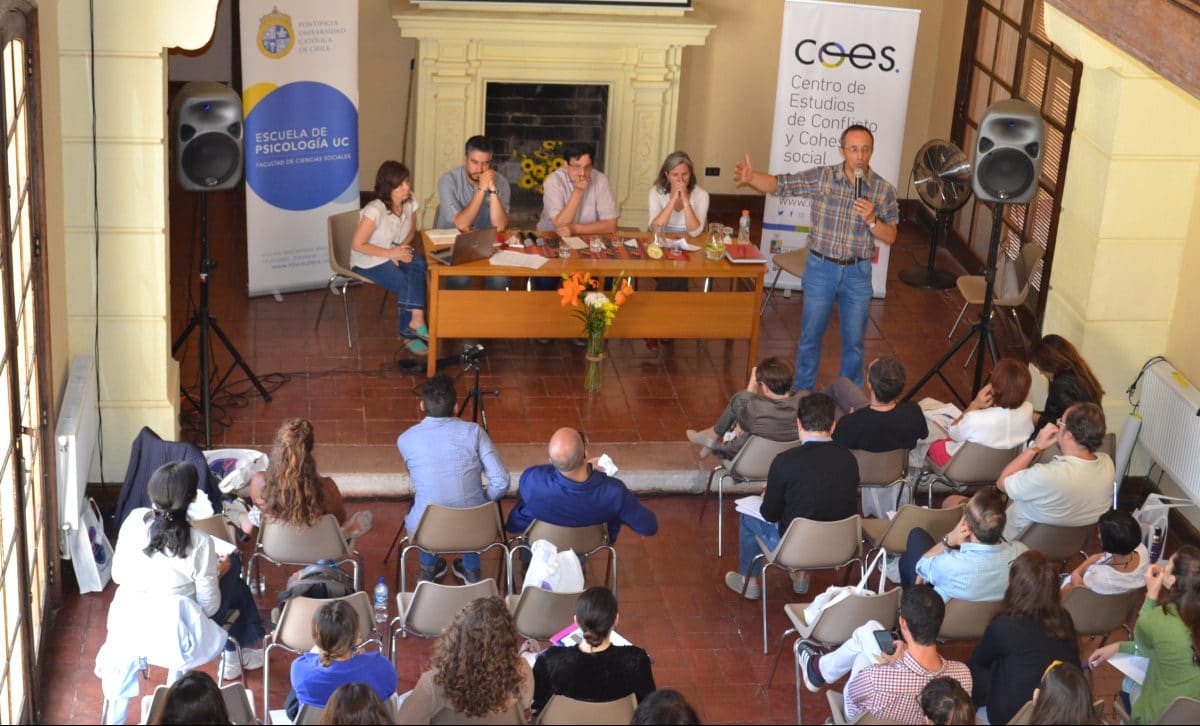 The school brought together 67 young people and 21 professors involved in 8 different social subjects; they came from 9 American and European countries. Four Chilean civil society organizations participated as well. The four research lines we dealt with were: inclusion and fairness, inclusion and migration, inclusion and inequality, inclusion and violation of rights. We offered 8 workshops on survey techniques regarding the study on inclusion from a unitary point of view. Dialogue with civil society proved to be a very important item on our programme. More than half of our young participants presented research projects. We wanted the Summer School itself to be an experience of social inclusion, capable of initiating a dialogue that is scientifically oriented and that goes beyond polarization.The people who participated had different ideas and orientations, even politically. We tried to ensure that the different topics were not discussed polemically or in a polarized way; but we aimed at being together on the common path to social inclusion, thus leaving no space for discrimination and segregation of gender, race, ethnicity and class. An inclusive society needs responses that integrate the individual level with the micro, meso and macro social levels. During our next Summer School we would like to discuss the environment issue from the inclusion point of view.
Claudia Di Lorenzi
1 Mar 2019 | Non categorizzato
“A life for unity”: with this headline, the Schönstatt Movement announced the death of Fr Michael Johannes Marmann, their former Superior General, on the evening of 26 February 2019, at the age of 81. He has long been a key figure for this apostolic movement which had its beginnings in Germany in 1912. Michael Johannes Marmann was born in 1937 in Berlin, Germany, the oldest of three brothers. He studied Philosophy and Theology and was ordained in 1963 in Cologne. He then continued his studies in Tubinga and Ratisbona. Interestingly, in 1973 he completed his doctorate under the tutelage of a certain Professor Josef Ratzinger, who never lost contact with his student, even after becoming Pope Benedict. They continued to meet every year – often in recent years at the Focolare Mariapolis Centre in Castelgandolfo – to discuss current theological issues. At the time of his priestly ordination, Fr Marmann learned about the Schönstatt Movement and its founder, Fr Josef Kentenich, who at that time was living in exile in Milwaukee (USA) at the request of the ecclesial authorities. After a personal meeting with him, Fr Marmann decided to enter the Secular Institute of Schönstatt Fathers. He was appointed as a spiritual director for youth, and was later involved in pastoral work for priests, families and mothers. From 1983 to 1991 he was responsible for the Movement in Germany. In 1990 the Schönstatt Fathers elected him as their Superior General and Moderator of the Presiding Council. Fr Marmann’s service in these roles was characterized by his great openness to dialogue and his dedication to the quality of relationships both within the Movement and beyond. His commitment to strengthening the unity of the large and varied work founded by Fr Kentenich, led him naturally towards increased communion with other Movements, firstly within the Church in Germany and then most notably as part of the “Together for Europe” network. He was at the heart of those deep friendships and the spiritual unity which developed between representatives of different movements, including Helmut Niklas of YMCA in Munich, Germany, Andrea Riccardi of the Sant’Egidio Community and, of course Chiara Lubich. In her message of condolence, Maria Voce, Focolare Movement President, recalled the “significant steps on this journey”. One of these was the Alliance of love affirmed by Chiara Lubich, Andrea Riccardi and Fr Marmann in 1999 at the Schönstatt Shrine in front of Fr Kentenich’s tomb. Maria Voce said she was certain that “Mary, Mother Thrice Admirable, will have accompanied Fr Marmann to the joyful encounter with Christ in his reign of peace”.
Joachim Schwind
28 Feb 2019 | Non categorizzato
In our personal and social lives we can find ourselves in an atmosphere of growing hostility and competition. As Christians we can go against this current by initiating attempts to rebuild damaged or broken relationships. Separation After two years of marriage, our daughter and her husband decided to separate. We welcomed her back into our home. In moments of tension we tried to keep calm. With forgiveness and understanding in our hearts, we tried to maintain a relationship of openness towards her and towards her husband. We especially tried not to make judgments about anyone. After three months of continuous listening, discreet help and many prayers, they got back together – with new awareness, trust and hope. (M.L. – Malta) As a sign of forgiveness I thought I had always done my duty as a Christian, as mayor of my town and as a father. When, however, my 33-year-old son, the father of two young children, was killed during a robbery, I rebelled against God. Why had all this happened? Later, I started on a journey of true conversion, during which I understood that God himself had given his Son out of love for us. Five years later the trial began. In the courtroom I avoided even looking at the defendants. Unexpectedly, I met the eyes of the youngest of the killers. I approached him. I held out my hand to shake his, as a sign of forgiveness. (C.S. – Italy) New atmosphere in the department I am the manager of a company department and at the end of the year I have to do annual reviews of my employees. One employee had not given me much information for her evaluation, so I asked her to come in for an interview. Thanks to this, I discovered that I knew hardly anything about her. This meeting opened my eyes. It prompted me to change things, to promote various initiatives to show that we appreciate our employees – by celebrating their birthdays, and by organising parties with their families. Not only has the atmosphere in the department improved, but the output has also increased. (M.T. – Hungary) The ball We have two very lively children. One morning I saw Nathan crying and Claire holding his ball. I immediately took it and gave it back to him. Nathan stopped crying, but Claire started to cry. So I took her aside to explain to her that Jesus taught us to love and to share. Even though she is still a child, she understood and let her little brother keep the ball. There have been many situations in which I was just about to punish her, but instead I managed to find love and patience within me. Now she is always ready to help me. (J.N.J. – Philippines)
26 Feb 2019 | Non categorizzato
The image of a country saturated by political and ideological conflicts, widely portrayed in Brazilian media in general, tends to hide the reality of those who act for the common good. Through dialogue and tangible acts of solidarity, they are able to take on diverging opinions. Though marked by strong political and ideological polarization, Brazil is silently growing seeds of a society that is renewed and open to dialogue, solidarity, and moving towards building relationships of fraternity. This is occurring in political spheres, as well as in civil and cultural ones as well. After having covered ventures put forward by various organisations, religious or not, to promote political reflection built on dialogue – a response to the growing question of the new culture of participatory democracy – we now want to put the spotlight on the commitment of many in the field of solidarity and volunteering. Typically, political action is guided by a sense of solidarity with those who suffer. In 2016, the government of the State of Rio de Janeiro began delaying its paying public servants’ salaries. Beyond the struggles in court and the numerous political protests against such measures, a network of solidarity has arisen since then supporting those workers and their families, who suffered the most because of the situation. These gestures, both by individuals and groups, multiplied throughout the state. To help the families in difficulty, an array of organisations mobilised to collect funds, make food baskets, buy medicines and cover other elementary needs. The archdiocese and other Catholic dioceses of Rio de Janeiro, like other churches and Christian communities, worked in collaboration with Muspe, the Movimento Unficado dos Servidores Publicos Estaduais. A similar situation saw close to 40 Brazilian civil and religious agencies work together to take in refugees, mostly from Venezuela. Some of these agencies carried out emergency actions (providing food, medicine, medical and psychological help), while others helped refugees obtain Brazilian residency by preparing the necessary documentation, Portugese language courses, housing and employment. These agencies were especially active in the border region between the two countries, as well as other areas where refugee families were sent in an attempt to offer them better housing and employment opportunities. Projects of this type reflect the hopes of many Brazilians to continually reach those most in need of help. Perhaps it is this urge that supports the data from the “Other Forms of Work” survey, which was carried out in 2017 and recently published by the Brazilian Institute of Geography and Statistics (IBGE). According to the study, 7.4 million people volunteered that year, the equivalent of 4.4% of the 14-and-older population. The researchers define “volunteer” as any non-obligatory work that is carried out at least an hour a week, without receiving any compensation or benefit in exchange, by people who do not live in the same family and are not their family. According to this research, volunteers in Brazil are typically women who, in addition to their volunteer work, have their professional and domestic work as well. Another example that comes from the Focolare Movement is Milonga, a programme that joins non-governmental organisations, who carry out social work in seven towns, with young people who want to combine their training with volunteering, giving their time and talent. As of October 2018, 75 volunteers with the project have worked in 19 organisations in Brazil, Argentina, Bolivia, Mexico, Paraguay, Venezuela, Uruguay, Kenya and Jordan. “I learned that the essence of life is not having, but being. Sometimes we are full of many things, but what truly counts are those things that remain for eternity in the present moment,” said Rarison Gomes, 30, originally from Manaus. The experience of volunteering coincides with young people taking up key roles, a trend that is growing among Brazilian teens who hope to progress from political deliberation to action. One significant example is the experience of the Coletivo Juventude Campo Cidade, which began more than 10 years ago with a conversation among friends in the small town of Poço Redondo, in the state of Sergipe in Northeast Brazil. Some of these young people were already active in social movements in an area called Alto Sertão Sergipano. Spurred on by the election of 2008, these young people decided to create a political training programme for other young people in the area. Despite being without funds and having little support, the group organised a course with 11 steps that lasts a year and a half. At the beginning of the project there was clear awareness: what was needed was training and getting to know the situation in order to take on social action in the region. “There was this feeling of wanting to change society, and this grew at every stage of the course,” says Damião Rodrigues Souza, part of the group who came up with the idea. At the end of the first course, the young people concluded that the experience they had begun there needed to continue, based on three pillars: training, organisation, effort. The last of these pillars took shape within a series of projects that produced effective results. The course was included on a campus of a public federal university in the region. The young people themselves built a public theatre that can hold 200 people at Poço Redondo. The federal government donated a previously unused piece of land to be used by the young people to grow organic products. These and many other examples of dialogue and political participation are isolated and spread throughout Brazil’s more than 8 million square kilometres. But just like other tangible actions that build a more just and fraternal society, they bear witness to a picture that is much healthier than the simple political polarization that the greater part of Brazilian society is being led by. For those playing a key role in these actions, hope lies in their conviction that the examples and the real results are able to attract “followers” and to give strength to their role. It will be fundamental to unite people and favour the common good, beyond any political or ideological divide.
Luís Henrique Marques

26 Feb 2019 | Non categorizzato
The image of Brazil in the world today, partly thanks to the media, risks being a country saturated by political and ideological disagreements. Luís Henrique Marques, editor-in-chief at Cidade Nova magazine, shows us around Brazilian society, uncovering an often-unknown truth: many there act in favour of the common good. Going by what the commercial media broadcast each day, Brazil seems immersed in political and ideological polarization, much like other areas around the globe. But what the mainstream media does not show is that the situation in Brazil is not just made up of political or ideological conflicts. The quiet actions of many “pioneers” of this still-young, inexperienced democracy show that there is the potential to make political relationships a space to dialogue and a place to build up its citizenry. Cidade Nova magazine is one of the channels committed to covering this unknown side of the Brazilian situation, which is still a bit new and limited to isolated facts. Yet altogether, it shows a Brazil beyond the political and ideological divide. Space for dialogue To start we need to recognise that despite the crisis created by polarized positions in the political and ideological debate, many experts tend to see Brazil hopefully and optimistically. The main reason for this is that many Brazilian citizens are interested in understanding and discussing political questions and those relating to governing. They are convinced they need to take on their roles as citizens, fully knowing and participating when it comes to “public stuff”. “Dialogue groups”, as they’re called, have increased and multiplied. They have been promoted by parishes or Catholic pastoral groups, groups from other Christian churches and other religions (including ecumenical and interfaith projects), nongovernmental organisations, collectives and other organisations in civil society. The goal is to promote political reflection through dialogue and an exchange of experiences. This particularly increased during the second half of 2018, following the election cycle. These are small “islands”, yet they reflect the potential of Brazil’s citizens to participate in democracy. This is definitely the case for Focolare groups throughout the various areas of Brazil. Driven by a specific issue, young people and adults of various religious and political beliefs, and from a number of social backgrounds, began a discussion on the current political situation, its hurdles and possibilities. Many of these meetings went beyond the discussion about the electoral process and opened up to practical actions promoting politics that favour the local community. The “Citizenship School”, also promoted by Focolare, is an online course whose topics respond to the wider questions of a new culture of participatory democracy. The first block of lessons covers the subject of dialogue (focolares.org.br/escoladecidadania). Another project – the “Pact for Democracy” – came out of a collaboration between various civil organisations in Brazil, including the for Movement for Politics and Policies for Unity. It began with the aim to support pluralism, tolerance and coexistence in diversity throughout society, and works in three directions. Firstly, it reaffirms dialogue as a virtuous comparison of ideas. Secondly, it defends fair elections so that they can effectively represent citizens and restore the foundations of trust and validity to the political context. Thirdly, it aims to establish wide political reform at the end of the electoral process. Finally, the traditional “fraternity campaign”, which is promoted annually by the Brazilian bishops conference during Lent, has become a space to dialogue and promote real action in parish communities concerning religious, cultural, social, economic and political issues in Brazilian society. This year, the campaign proposes the faithful reflect on the theme of “public politics and fraternity”. (continues)
Luís Henrique Marques
