24 Feb 2019 | Non categorizzato
The project “Why fai il bullo?”(Why are you a bully?) aims at training teenagers help their peers deal with this phenomenon. Teenagers are trained to understand bullying, to prevent it and also to be upstanders in bullying situations. 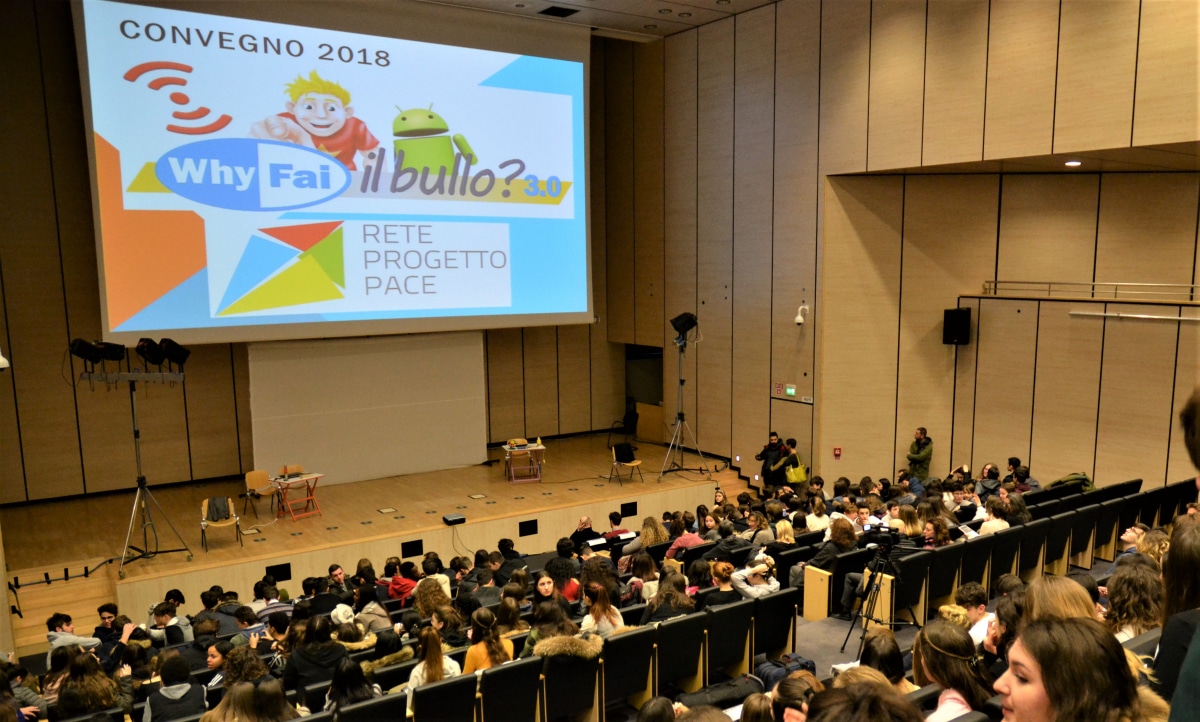 Bullying is repeated aggressive behaviour through which school-aged children intimidate and abuse their peers. This is a widespread phenomenon among teenagers, both on a personal level and also through cyberbullying.It involves the bullies, the victims and groups of friends,who are often either frightened or become accomplices. What can be done? A project set up by the bNet Association, a branch of “Rete Progetto Pace” (Peace Network Project),which is an international network of schools, bodies and associations that collaborate to promote a culture of peace, aims at training children and empowering them against bullying. Marco Provenzale, president of the Association spoke to us about this project. – What does the project “Why fai il bullo?” consist of? Bullying is the product of conflict, and we believe that the best way to stop it is to make children understand its origin, and give them the necessary tools to understand conflicts and solve them through the support they give one another. At the core of this project one finds the “Peer Mediation Group”, set up in each school. The students in this group are trained to manage and resolve conflicts. Lessons and role-plays help them acquire well-developed skills not only to solve conflicts, but also to prevent them. They are trained to detect potentially damaging situations in their daily school life in order to address them before these degenerate into more serious ones. The group also offers a mediation service through techniques and rules agreed upon by each school. We deal with students aged between 11 and 15 years. This European project was set up in 2015 after some associations answered the call to “Join Forces to Combat Cyberbullying in Schools”. It can also be implemented in other countries.
  -Does the project also include parallel activities? Yes it does; it offers monthly training sessions and organizes annual events, amongst which is an intercultural and humanitarian journey. Training sessions for teachers and parents are also being planned. We consider the joint effort of the association, school and families as one of the added values of this initiative. -This project is promoted by bNET Association, a branch of “Rete Progetto Pace”. What are the objectives of this network? For almost thirty years, “Rete Progetto Pace” has been contributing to an integral education for children. It promotes collaboration between schools and associations, at a local and international level; it studies young people’s views on current issues and promotes experiences of voluntary work. The project also encourages artistic and expressive talents, leadership skills and and technical skills in postive use of the media. Further information may be found on: www.reteprogettopace.it or by writing to: direttivo@reteprogettopace.it.
Anna Lisa Innocenti
20 Feb 2019 | Non categorizzato
Full of good sense and good humor, Klaus Purkott knew better than most the value of listening to others. A man of few words, throughout his life Klaus Purkott forged relationships through his exceptional capacity to listen deeply. He helped and accompanied countless people, wherever he was, and lived to fulfilment his dedication to God as a Focolarino. For more than twenty years he worked as a legal practitioner around Berlin’s Civil Court, where he was well known for accepting the cases of people who could not afford legal fees. He was held in high esteem by clients and colleagues alike for his ability to resolve even the most problematic cases, often in surprising and unconventional ways! He was always particularly happy to get involved in those situations which seemed impossible to solve. Klaus attributed this preferential love for those people who found themselves in real trouble to his communist upbringing. He was born on 31 December 1936, in Upper Silesia, a largely German-speaking region which became part of Poland at the end of the Second World War. Undeterred by his congenital blindness (his eyes had only about 5 per cent vision), Klaus, after completing his high school education, went on to university to study Marxist philosophy. His father, a basket-maker, had been one of the founders of the Polish Communist Party, and like him, the young Klaus hoped to find the truth of life in Communism. But, as Klaus later explained, “Through my blindness, God soon made me understand how ineffective all my efforts were, and He prepared me to meet Him”. Klaus found a particular light in the figure of Jesus on the cross, who while experiencing the greatest interior darkness, entrusted himself to the Father. This discovery which he made in meeting the Focolare spirituality, transformed his life and led to a new and radical life choice: as a consecrated Focolarino, living his life for others. Apart from in his professional role, Klaus lived his vocation in many other environments: accompanying the many people who turned to him for help, support or advice; offering the benefit of his deep Biblical knowledge through talks and articles; personally sharing his experiences of life. He had that rare combination of a wide-ranging cultural knowledge together with a clarity of expression and a ready sense of humour which he employed so effectively to reduce tensions! In 1999, Klaus had retired from his legal work, and was called to Ottmaring, the ecumenical Focolare village in Germany. His moral authority was immediately recognized by the citizens there. “He was a real senior brother to us,” some of the Focolarini recalled. “He knew how to build relationships, and was someone you could trust.” Remembering Klaus, people say: he was so well-balanced, full of good common sense, so sincere. People sensed his deep relationship with God. In 2008 Klaus returned to Berlin. Then just over two years ago, he suffered a serious accident and the extent of his injuries meant he had to move to a nursing home. This was a new environment for him to witness to living the Word of God. And it was not long before a “Word of Life” group formed around him. Here, he is remembered for his exceptional way of living in the present moment. Not least on January 18, 2019, when he quietly and unexpectedly passed to the next life, during his afternoon nap.
Joachim Schwind
19 Feb 2019 | Non categorizzato
Small things can change society around us The condominium A very tense situation arose in my condominium after one of my neighbours, who hadn’t been at the last residents’ meeting, sent everyone a formal notice complaining about work carried out on the building which he considered to be illegal. To clear up the situation, I tried to convince the administrator to hold another meeting. Finally, after a lot of trouble, a meeting was held, and the issue was resolved. Since then the situation has really changed. This neighbour is on good terms with everyone and there is a better atmosphere in the condominium. (Alessandra – Italy) My grandfather My grandfather has come to live with us because he has a problem with his eyes and needs a check-up every month. One day, while we were at the doctor’s, I opened my handbag and realised I had left my purse at home. Not knowing how I would pay for the appointment, I entrusted myself to God. Just as I was leaving, the doctor took me aside and said, “There is no charge this time”. He also offered me some free medicine samples. I understood that God does not abandon me if I do things out of love. (Arze – Lebanon) The parcel One day a parcel was delivered to the halls of residence where I live containing jams, conserves and various items of clothing. My parents hadn’t told me they were going to send me a parcel like this. Together with other students who also try to live the Gospel, we decided to give everything to the students we felt needed it most. A few days later, in the porter’s lodge, I overheard a student asking about a parcel that had been sent to him. I suddenly realised the mistake what had gone wrong and that it was because our surnames are nearly the same. I told him everything and we really laughed together. When I told my family what had happened they sent me a parcel for him that was even bigger. That day a real friendship began between us. (C.d.F. – Czech Republic) The supermarket trolleys When I had finished my shopping in the supermarket and was putting back my trolley, I noticed some plastic gloves and vegetable bags in the other trolleys that hadn’t been used. I decided I could take them out and put them in the recycling bin. A little act of love for the next customers. (Annalisa – Switzerland)
Edited by Chiara Favotti
17 Feb 2019 | Non categorizzato
During the End Poverty Week, many members of the New Youth Movement are taking part in practical activities and campaigns promoting social equality. “The tendency today is towards a slowdown in the reduction of extreme poverty and an increase in the concentration of wealth in the hands of the few. There are a few who have too much, and too many who have too little. Many do not have food to eat and live hand to mouth, while there are a few who are drowning in the superfluous. This perverse current of inequality is disastrous for the future of humanity.” These words sent by Pope Francis last week to the International Fund for Agricultural Development are an accurate description of the struggle against poverty in the world today. The figures quoted in the 2018 United Nations’ report on poverty paint a very grim picture. 821 million people in the world suffered from hunger in 2017, 6 million more people than in the previous year; one person in every ten lives in a situation of extreme poverty with less than $1.25 per day to live on. However, poverty could be overcome if decisive action were taken. What are the causes? Conflict, disease, drought and unemployment. As part of the “Pathways of Economy, Work and Communion” project, members of the New Youth Movement have designated 17 – 23 February, the End Poverty Week, as a time to raise awareness of the problem of poverty. This initiative is part of the United World Project and will consist of actions to overcome inequality and poverty in local areas and education sessions promoting greater understanding of consumerism and the importance of ethical investment and finance. Andres Piccinini, an Argentinian spokesperson for the New Youth Movement said, “We dream of a world in which no one is in need and everyone has the possibility to develop their full potential – in the human, spiritual, economic and professional sense.” There is a formation programme for the people who would like to become more involved. A series of meetings will take place at Polo Lionello Bonfanti, Loppiano, Italy, entitled Economia, Lavoro e Comunione – Economy, Work and Communion. The proposal – to promote and support small initiatives either personally or with others that influence public opinion. The method – to act and then share the experience on social media at #Pathways4unitedworld, #pathway2018, #endpoverty, #unitedworldproject or by writing to Giovani per un Mondo Unito on Facebook or Instagram.
Patrizia Mazzola
16 Feb 2019 | Non categorizzato
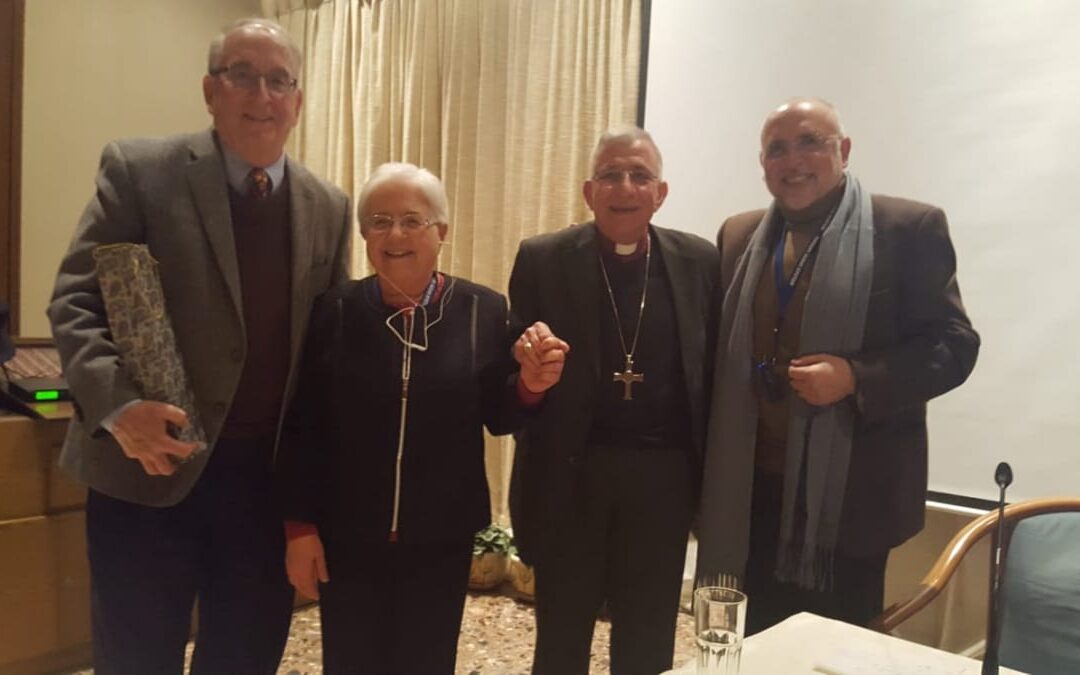
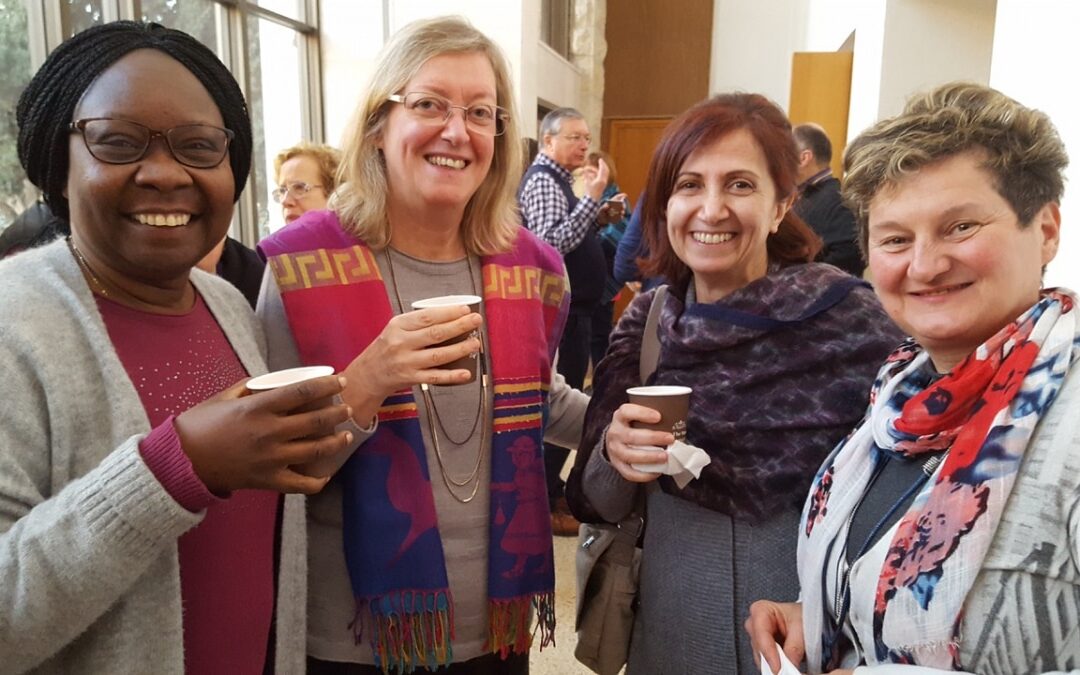
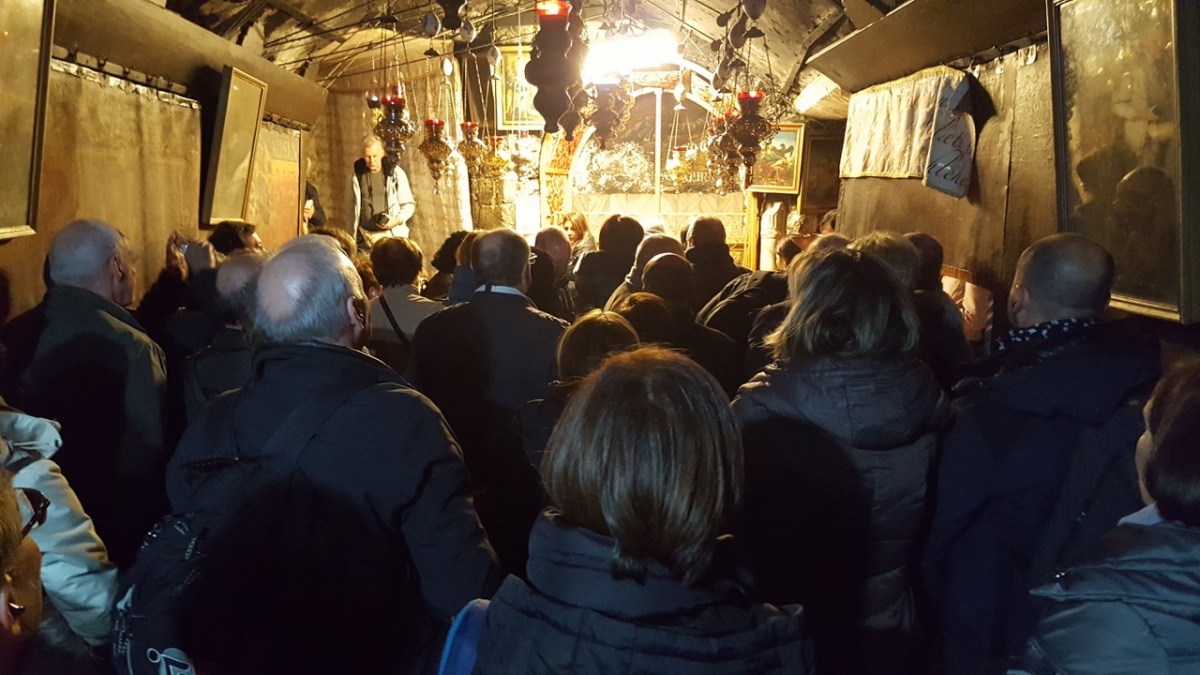
Two days of visits for the General Council of the Focolare to the holy sites – from the Church of the Nativity in Bethlehem to the Cenacle, from the Garden of Olives to Calvary. Highlights included meetings with local leaders to delve into issues of great relevance for the Holy Land.
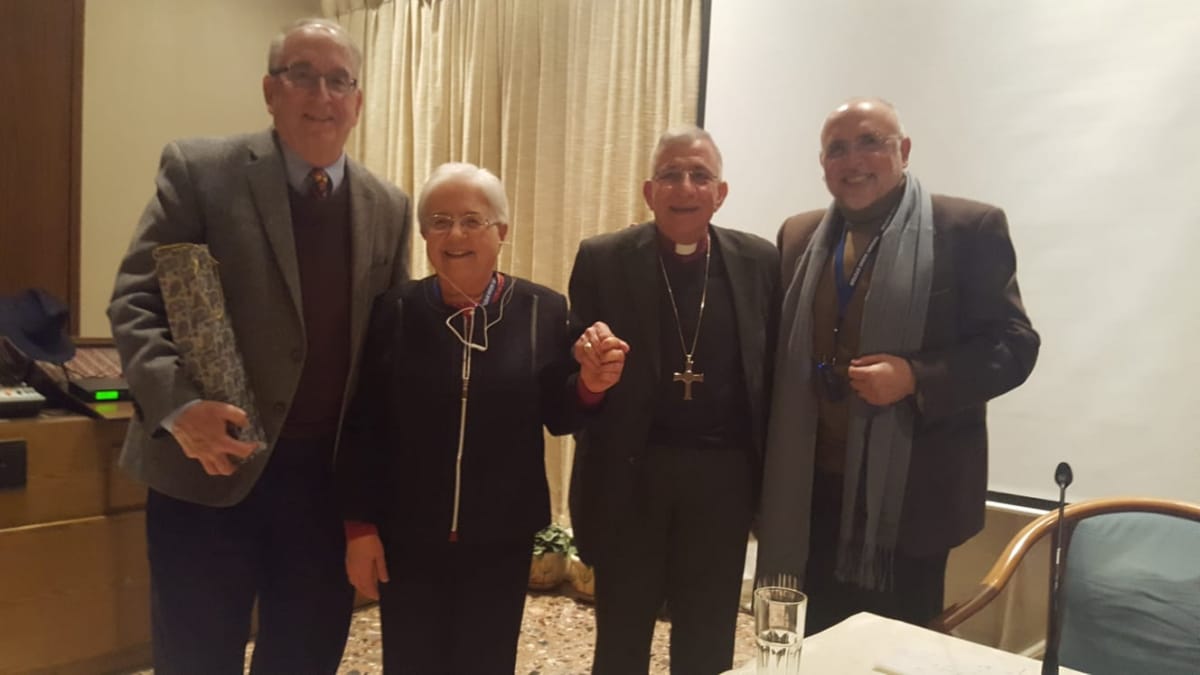
Rabbi Ron Kronish and the emeritus Lutheran bishop, Munib Younan.
Joachim Schwind
15 Feb 2019 | Non categorizzato
The Focolare’s General Council, on retreat in the Holy Land, has just finished three days’ work on the communion of goods, the new generations and the 2020 General Assembly. 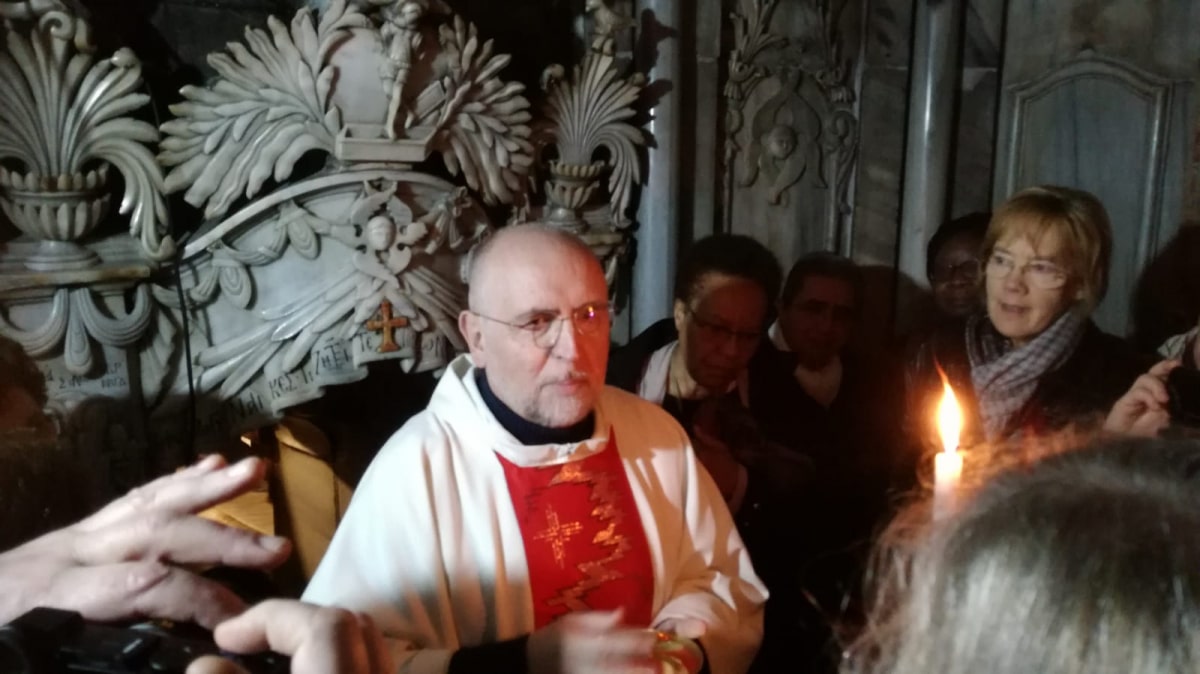 “Jesus, who was buried here and rose from the dead, wants to live in our midst so that we can bring his presence throughout the world.” Those are the words of Jesús Morán, Co-President of the Focolare Movement, after celebrating Mass for the General Council in the Church of the Holy Sepulchre. Everyone rose at dawn to be able to enter that extraordinary place – one that seems deeply connected with their week-long retreat in the Holy Land. Standing before the tomb left empty by the Risen Jesus, they too posed questions about the future, just as the disciples must have done. Where is the Risen Lord leading the Focolare Movement today? Where should the Movement focus its strength, energy and resources?
  These questions permeated discussions on the three key subjects addressed in Jerusalem. Concerning the “communion of goods, economy and work”, the General Council noted that in all the various parts of the Movement there is a great desire to go back to the radical life of the early days and live the communion of goods with new consistency and commitment. Ways in which this could be enabled concretely were discussed. Consideration of the new generations of the Focolare Movement, the second main subject, was enriched by evaluating the Genfest held last year in Manila and the recent World Youth Day in Panama. Those two events highlighted the great potential of young people and teenagers. This is also seen in their work for the “Pathways for a United World” project and their commitment to “Zero Hunger” by 2030. Thought was given on how to give continuity to individual initiatives.
  The third subject was preparations for the upcoming General Assembly in 2020. The General Council studied ways in which the Assembly can reflect the various vocations within the Movement and their geographical and cultural diversity. They also discussed how to reconcile the need for continuity and the need for innovation that characterise the Movement at present. A commission will shortly be formed to organise the Assembly and their work will be based on these two areas. While the retreat may seem to be made up of questions without answers, that was not the case. While it was agreed not to draw up a statement or guidelines, what came to light is the journey being travelled now, the fruit of the Movement’s life throughout the world. Posing questions about the journey; being challenged by the issues of the day and seeking answers; drawing on the past to look to the future: all this can yield unexpected effects. All this can enable us to meet the Risen Lord on unexpected roads, just as happened to the two disciples who, leaving the empty tomb behind them, set off towards Emmaus.
Joachim Schwind
