8 Feb 2019 | Non categorizzato
A mild-mannered yet decisive man, profoundly convinced that the Gospel is one of the most revolutionary books ever written containing the power to change the world, Marco Aquini lived all his life for this. He left us a month ago, on 4 January. Meeting Marco left its mark. He was one of those rare people whose gaze reached right inside you and touched your heart. A man of few words, he would approach any problem you had with a gentle, practical approach. Any advice he gave was never imposed on you, rather it served to help you draw out solutions from within yourself. Marco was born in 1958 in Udine, Italy. He was one of the first young people to get to know the Focolare Movement in the Friuli region, where the people are known for being serious, industrious and self-disciplined. From a young age he experienced the hard blows that life can bring when his father was killed in a serious accident. But his encounter with the spirituality of the Focolare Movement proved to be a turning point in his life. In 1978, during a summer program with the Gen (the young people of the Focolare Movement), Marco discerned the calling to give himself to God as a Focolarino. At the same time, together with others, he responded to Chiara Lubich’s invitation to sign a pledge to remain faithful to God to the end of his life, which has become known in the Focolare Movement as the “Pact to be faithful right to the end”. On that occasion, Marco wrote to Chiara, “Before I got to know the ‘Ideal’ (the Focolare spirituality), I was closed within my own gilded world. Living the Ideal, I’m now coming out of myself. I go back home conscious of having the powerful potential to change the world in which I live”. From his early years as a Focolarino, his contribution was always whole-hearted and passionate, firstly in Germany, then back in Italy at the Movement’s Centre, where he was involved in establishing two organizations to assist those most in need and to promote peace: AMU (‘Associazione Mondo Unito’/ ‘United World Association’), and ‘New Humanity’ the Focolare’s NGO accredited to the United Nations. For many years he served as counsellor for the aspect of “Communion of Goods, Economy and Work” at the Focolare’s international centre, and was for some years co-responsible for the Youth for a United World movement. From 2000 he sat beside Chiara and Eli to read news stories in the regular “Link Up” video conference calls with the whole family of the Focolare Movement worldwide. Another personal tragedy was to profoundly affect Marco’s life: the unexplained disappearance of his sister, Chiara, who had long endured fragile health. Together with his mother, he suffered greatly as the search continued until, sadly, her body was found. Even in this situation, Marco managed to hold on to his belief in the love of God, which gave him the strength to support his family. Later, together with his mother, Franca, Marco helped to set up a day centre, named after his sister, to provide support and social integration for people with physical and psychological disabilities, as part of the “Associazione Insieme Si Può” / “Together We Can Association”, which Marco never ceased to accompany, even at a distance. In Rome, at the Pontifical University of St Thomas Aquinus in Urbe, he was Visiting Lecturer on courses in International Cooperation for Development and Sociology of Development. Most recently, he joined the team of Città Nuova, bringing his economic expertise to the administration of the Focolare magazine. Throughout his life, he never failed to find ways to love the weakest and suffering neighbours, including regularly offering the benefit of his skills and experience to a Caritas outreach group near Rome. In November 2018, he communicated to his friends the discovery of a life-threatening illness. He faced this new step on the journey with a renewed choice of God, and despite being in great pain, he also expressed finding great joy. Maria Voce in her telegram to the worldwide Focolare community, chose to emphasize his vocation as a Focolarino, as well as his sober, honest and straight forward nature which was expressed so well in the Gospel phrase Chiara offered for him to live: Let your word be ‘Yes, Yes’ or ‘No, No’ (Mt 5:37), and how he lived his illness in such an extraordinary manner. The last phase of Marco’s life left those around him speechless as they witnessed the rapid unstoppable deterioration of his health over two months, until he reached the heavenly goal on the morning of 4 January. His funeral was attended by people of all kinds, all linked to him in different ways and all somehow “roped together” with him to climb, no longer his beloved high mountains, but the highs and lows of this life, accompanied by his luminous and authentic example.
Patrizia Mazzola

8 Feb 2019 | Non categorizzato
What do Medellín, Katowice and Kingersheim have in common? Despite their cultural distance, what connects them is their social and civil planning. They are located on two different continents and in three distant cultural areas. Medellin, Colombia; Katowice, Poland; and Kingersheim, France are cities that have risen to the challenge of putting the common good at the center in a most authentic way, and not just as the sum of private interests. Administrations and citizens have worked to find a way to break through the ego, poverty and isolation to recognize each other as brothers and sisters. Those playing a lead role in this field are Federico Restrepo, Danuta Kaminska and Jo Spiegel, who told their stories, which were different but with similar themes, at the “Co- Governance, Co-Responsibility in Cities Today” conference. The first story was told by Federico Restrepo, an engineer who is already a director at EPM, or Medellín Public Enterprise. Together with other friends, he did not give up in the face of the inevitability of the situation, which seemed beyond his strength. Medellín, a city that counts almost 3 million residents, like many South American cities was showing a strong tendency for growth in urban areas to the detriment of the rural population.  “There are people in some areas of Medellín who try to build their own cities in the suburbs,” says Restrepo. For some years a pilot experience to carry out urban integration projects was started in neighborhoods that were started due to forced migration. Immigration, which has been increasing in Colombia partly due to the crisis in Venezuela, cannot be solved by building walls. “We have the responsibility,” he continues” to build relationships between cities to be able to resolve these social issues that our society is going through.” But it’s not just a question of urban planning – there are other challenges that have emerged to rediscover the heart of the city and make it beat.
  The experience that Danuta Kaminska tells links the Americas and Europe. A public administrator at the Upper Silesia Council, in Poland, she presents everyday stories that are extraordinary at the same time. They tell of citizens of Katowice welcoming migrants, mostly from the Ukraine. Just in the past year their number reached 700,000. “In order to start the shared governance of our city, we understood that we needed to support our citizens. We have been collaborating with religious communities and nonprofit organizations to help them assimilate, such as supporting the Jewish and Muslim communities.” Katowice, which has 2 million inhabitants, underwent profound changes these past years, transforming itself from an industrial city to a UNESCO site, and hosting the 2018 United Nations Climate Change Conference (COP24). For cities to be a transformational space, for democracy to be fraternal, engagement and spirituality need to be nurtured. This means public servants who become facilitators of decision-making. Jo Spiegel, who is the mayor of Kingersheim, a French town with close to 13,000 residents, continues to spend all her strength bringing back a multifaceted approach to her city, where different cultures and generations can coexist. “Twenty years ago,” says the mayor, “we founded an ecosystem of participatory democracy, starting a “citizens house” – a privileged place where citizens and politicians learn to live together.” More than 40 projects have been completed, such as revising the local urban plan, planning parental leave, and creating a space for Muslims to worship. “Fraternity cannot be delegated, it cannot be decreed. It’s inside us, it’s between us. You build it.”
Patrizia Mazzola
6 Feb 2019 | Non categorizzato
Members of the music group share their experience of visiting Great Britain, Luxembourg and then Panama for the World Youth Day. They are now on tour in Cuba, Guatemala and El Salvador. Your most recent album “From the inside outside” expresses a very positive attitude towards other people. It seems to be saying that everyone can find a light within themselves which can be shared with others. Is that right? 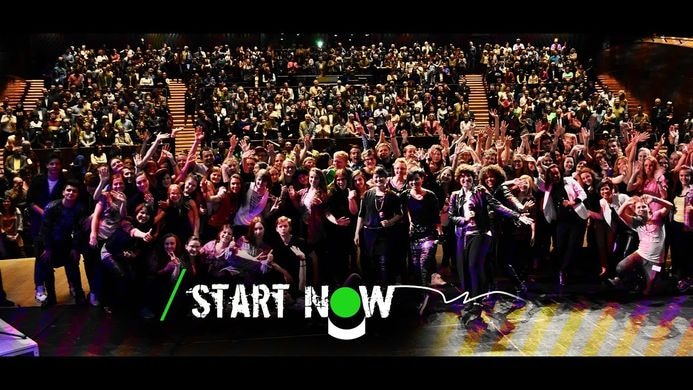 Adriana: Nowadays we often hear that society is passing through a cultural night, so to speak, and that “darkness” and division are very evident. We want the message of this album to be an invitation to draw out and rekindle the hope that is often hidden beneath ashes inside many of us. The album has evolved from the experiences we have had with thousands of young people during our tours. Thanks to the “Start Now” project which consists of a series of workshops and a final concert, we have the opportunity to live in close contact with the new generations. We are aware of the challenges that they face but also of the fact that they are wonderful people. Sometimes we share our experience with them but not as adults who have worked out all the answers. Often we look at the challenges with them, try to face up to them and to find a solution. They often say, “Nothing will have changed when I go back home but I will deal with the situation in a different way.” Do you think that music, singing and dance are means of relating to young people? Sally: This is a particular characteristic of performing arts: they create dialogue and openness. The results are often really surprising. In a school where we were running a project, there was a student who suffered from selective mutism; that is, she had decided not to speak any more. When she signed up for the singing workshop we really wondered what she would do. The first day she didn’t open her mouth at all, the second day she just thanked us but the third day she offered to sing a harmony. She went home and, in tears, told her mother that she had found her voice again. The teachers were really moved and said, “This is really unbelievable. She always used to be on her own and now she is beginning to speak to other students…..” This is just one example; there would be so many more to share. The song “Not in my name” focuses on the relationship between Muslims and Christians. How did that begin? Adriana: We wanted to show solidarity with our Muslim friends and emphasise the values that we have in common. We knew that many of them were suffering because a mistaken image of Islam was becoming widespread and because the very heart of their religion is different from what was being portrayed in the media. The actual process of creating the song was an experience of dialogue. We were inspired by the words of Doctor Mohammad Ali Shomali, Director of the International Institute for Islamic Studies in Qum, Iran, who we had met in Loppiano. He had said that we are all like little drops that reflect the face of God and that together we can be an ocean of love. When he read the words of the song, he said that he felt totally expressed by them. We worked with Rassim Bouaballah, a Muslim member of the Focolare in the musical arrangement. He played the violin for the recording.
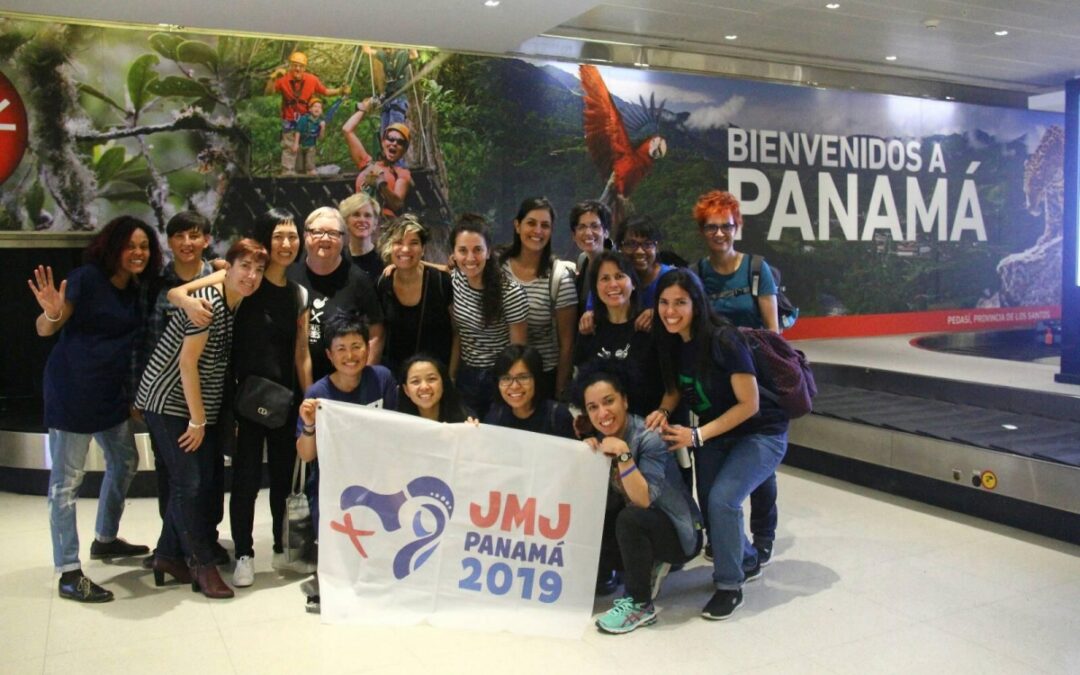
 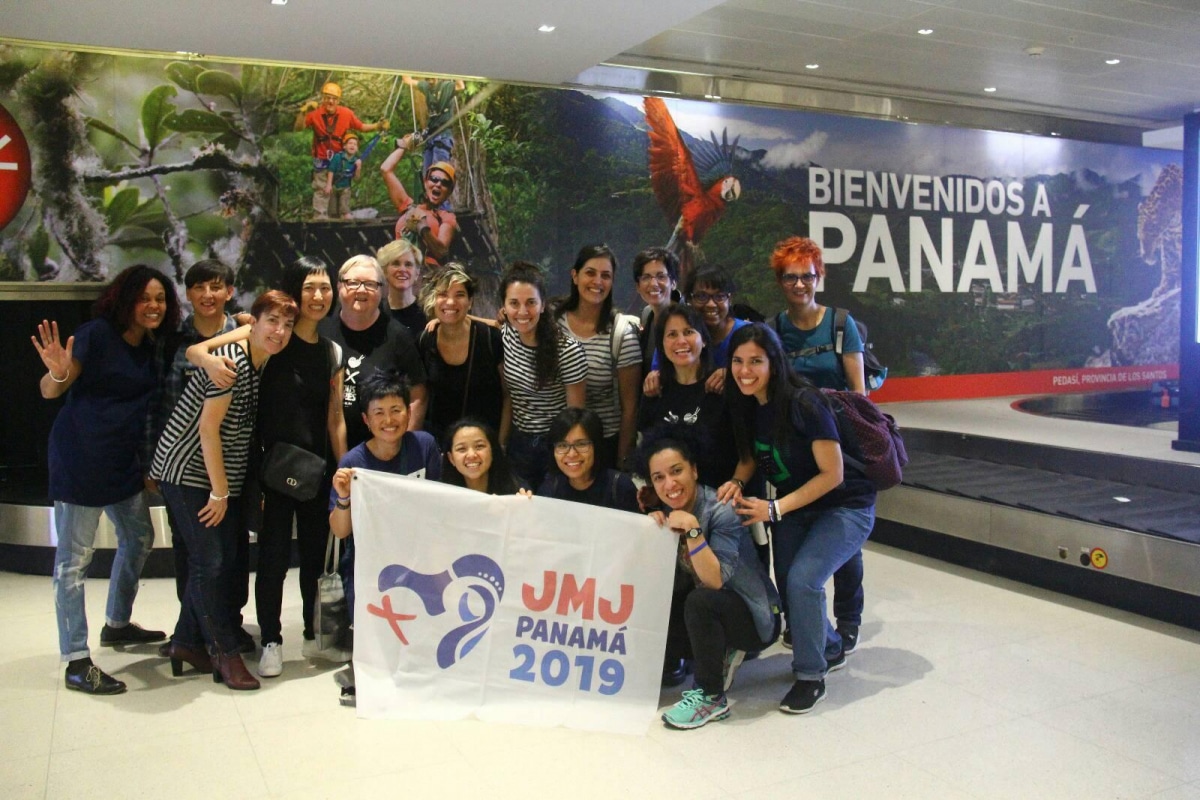 Now you are in Central America and have taken part in the World Youth Day. How is this trip going? Alessandra: In Panama, in the cities of Chitre and Colon, we worked with young people to hold concerts for the thousands of pilgrims at the World Youth Day. Being on stage with these young people made us both experience and say to others that together we can hope. We also had an unforgettable experience at the Women’s Prison in Panama City. Life is very difficult for these women but they listened so attentively: they often applauded spontaneously and cried when they heard the songs. At the end, many of them told us that they felt that it was as if we had all experienced the same things; they felt that together we can begin again and look to the future even in a place where this could seem impossible. It was seeing that God’s mercy can work in our lives irrespective of the circumstances.
a cura di Anna Lisa Innocenti
5 Feb 2019 | Non categorizzato
Do something yourself to heal broken relationships in your city The beating Since the battle against drug trafficking started in Mexico, there have been many victims, not always because of criminal violence. Some time ago, I was on my way home from school when a young guy asked me for a cigarette. Just then, some policemen arrived and they searched us. Then they started beating the other guy and insulting him, leaving him injured and bleeding in the middle of the road. I had witnessed this without being able to do anything, but then I helped him get up and gave him the few coins I had in my pocket. He thanked me and said, ‘This money means my family will have a meal today.’ (Abraham, Mexico) The exchange of letters In our young people’s catechism class, we studied the Works of Mercy. To put them into practice we thought of writing to women in prison. I outlined the project to the Prison Governor who did not agree at first. However, later, when he had consulted other staff, he saw it was a good idea and could help the women. So, the project was approved and the young people got to work preparing drawings and letters to send to the prisoners. (Prisca, Switzerland) Bazar I knew a few poor families and wanted to help them. In the office a colleague asked me if I was interested in some good quality clothing she no longer needed and toys that belonged to her children who were now grown up. I told her about my desire to help the families and she decided to get others involved. Very soon we had gathered so much stuff in a garage that we either gave away or sold at a bazaar. With the proceeds we have been able to help a lot of families in difficulty. After this experience another colleague who is often very grumpy said we couldn’t stop there so we keep looking around to see who else we can help. (R.A.R. – Brazil)
Edited by Chiara Favotti
4 Feb 2019 | Non categorizzato
Many humanitarian projects seek to alleviate the difficulties populations have to face. Since 2012, even the Focolare Movement has been offering its support and assistance through the non-profit organizations AMU and AFN. High currency devaluation, a continuous increase in the cost of living together with a constant decline in public services, are only a few of the problems that mark the social and civil state of affairs in Syria after seven years of war. The effects of this war are becoming more and more unbearable. Those who lost their jobs have been forced to spend all their savings in order to survive and pay for medical care, in a country where doctors, teachers and many other professionals have been constrained to emigrate abroad. But, as reported by those responsible for projects carried out in Syria by the Focolare community, through the non-profit organizations AMU and AFN, “marvellous values such as solidarity, hospitality, generosity and fraternity” flourish in this extremely arduous situation. “God is with us; He sustains us and encourages us”, they affirm. The “Emergency Syria” project supports more than 200 displaced families from Damascus, Homs, Aleppo, Kafarbo and other coastal localities. These are visited regularly by teams of volunteers, who at various moments, such as births, birthdays and particular phases of school life, have never failed to support them, always respecting their sensitivity and dignity. Through this project, families have been helped with payments of school expenses and with buying necessary appliances, food and blankets. But what they appreciate most is the fact that they feel accompanied in this difficult phase of their life.  For the last six years activities have been programmed and carried out in the fields of health care, education and family income support; recently other programmes have been added, especially in the field of vocational training and education. “This commitment emerges not only from wanting to meet the urgent material needs of the people supported, but also from wanting to offer work opportunities to many others, especially to young people, who would otherwise be unemployed because of the country’s current situation”. Last year, in Dueilaa, there were more than 90 children who attended after school activities and this gave excellent results. The centre remained open even during the summer months and it could cater for an intake of 115 children. “Some mothers tell us that their children opt to come to the centre even when they are sick or when there is some other family programme”. “A Generation of hope” is the name of another centre located at Homs.The students who attend this centre have successfully passed their school exams. Here, the possibility of psychological support is also offered to both children and parents. “We target mainly the traumas suffered because of war, and this helps to restore confidence and to find solutions for their many problems”. Just over two years ago, at this same place, and also at Kafarbo, a health care project has been set up. More than a hundred people, who needed special medical care, have already benefitted from this project. “We try to collaborate with other organizations to be able to help the patients even when the cost of treatment or surgery exceeds our means”.
Chiara Favotti
4 Feb 2019 | Non categorizzato
70 years after the first Mariapolis was held in Italy’s Dolomites, 2019 sees the Mariapolis returning to its place of origin and inviting participants from all over Europe. We interview Peter Forst, director of the Focolare Movement for Central Europe and one of the organizers of the event. Today’s Europe appears very divided – with Brexit on one side and walls against immigration on the other. What is the point of having a European Mariapolis? It was the realisation of how divided Europe really is that gave birth to the idea of the European Mariapolis. We realised that here in Europe we hold very different opinions, sometimes opposing opinions, about developments in Europe with regard to migration, values, etc. The primary purpose of the Mariapolis is to strengthen relationships, to create spaces for communion and sharing and to encourage all humanity to set out on the pathways of universal fraternity – of unity between individuals and between peoples. So we hope to be able to witness that it is possible to remain united – even if there are many differences between us. How has the Mariapolis changed – from 1949 to 2019? The first Mariapolis was very spontaneous. Today more logistics are involved in the organisation and preparation of the programme. But we want the spirit of this European Mariapolis to be the same as that of 60 or 70 years ago: we want to experience and give witness to the fact that humanity is a family. How do we do it? Unconditional love. Why have it in the Dolomites? The idea of having this Mariapolis in the same place as the first Mariapolis immediately felt right to all of us. Seventy years ago, in the summer of 1949, Chiara Lubich was on holiday with her first companions at Tonadico in the Dolomites. Together with the Italian parliamentarian Igino Giordani, they lived an experience of light, of extraordinary union with God and of profound unity. It was from this experience that the Focolare Movement grew. It was not nostalgia that prompted us to choose the Dolomites, but the conviction that it is important in this period “after Chiara” to go back to our roots – to find the way forward and to find answers for today. Who will participate? What is the programme? What do you mean by the title “Aim High”? The Mariapolis is open to everyone. There are 600 places for each of the four weeks. Registration is open until January 31st (www.mariapolieuropea.org). The programme will offer trips, sports, games, music, spirituality, prayers, creative workshops and forums on various themes – all to provide participants with opportunities for real encounters. We thought that “Aim high” seemed to be a suitable title, reminding us to try to live all our relationships on higher levels – both spiritually and humanly speaking. Then, of course, once we are there in the mountains, we will aim high automatically!
Lorenzo Russo
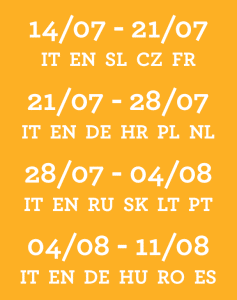
THE DATES:
