
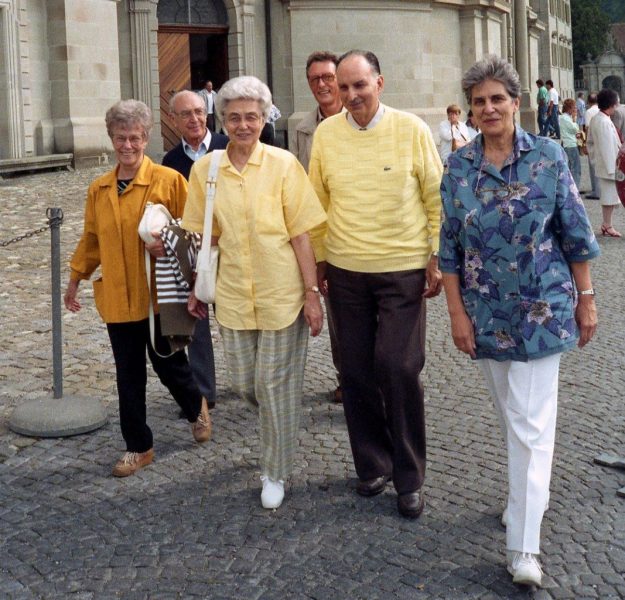
 It felt like living in a divine adventure. At the beginning, Chiara always used to say that she never intended to found a movement: the last thing on her mind was to draw up a schedule or an action plan. So what was it like to live beside her? It was like one long race to catch up with her. With Chiara, there was one surprise after another – all the work of the Spirit whose actions are always unpredictable. I am not going to say that there was a surprise every day every day but they often happened. God led her to discover a new “reality” through circumstances, an act of love or a meeting (…) Every meeting had a meaning. She felt that the people she met were waiting for something and she used to tell us this. “Let’s begin to dialogue with these people, let’s do something for them.” Her ideal was ut omnes unum sint (Jn.17:21), the fulfilment of Jesus’ testament. The whole world, beginning with the people closest to us, was contained in that “may they all be one.” What is your life like now after Chiara’s death?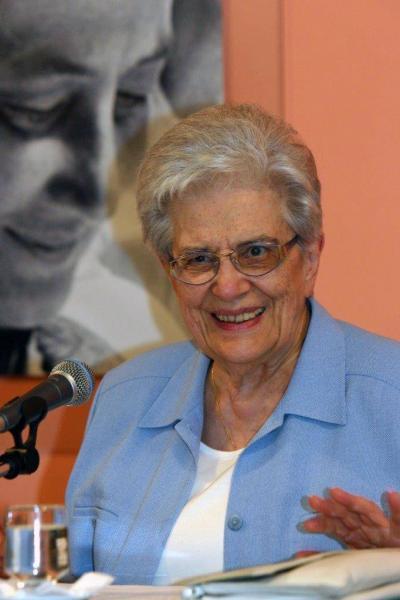
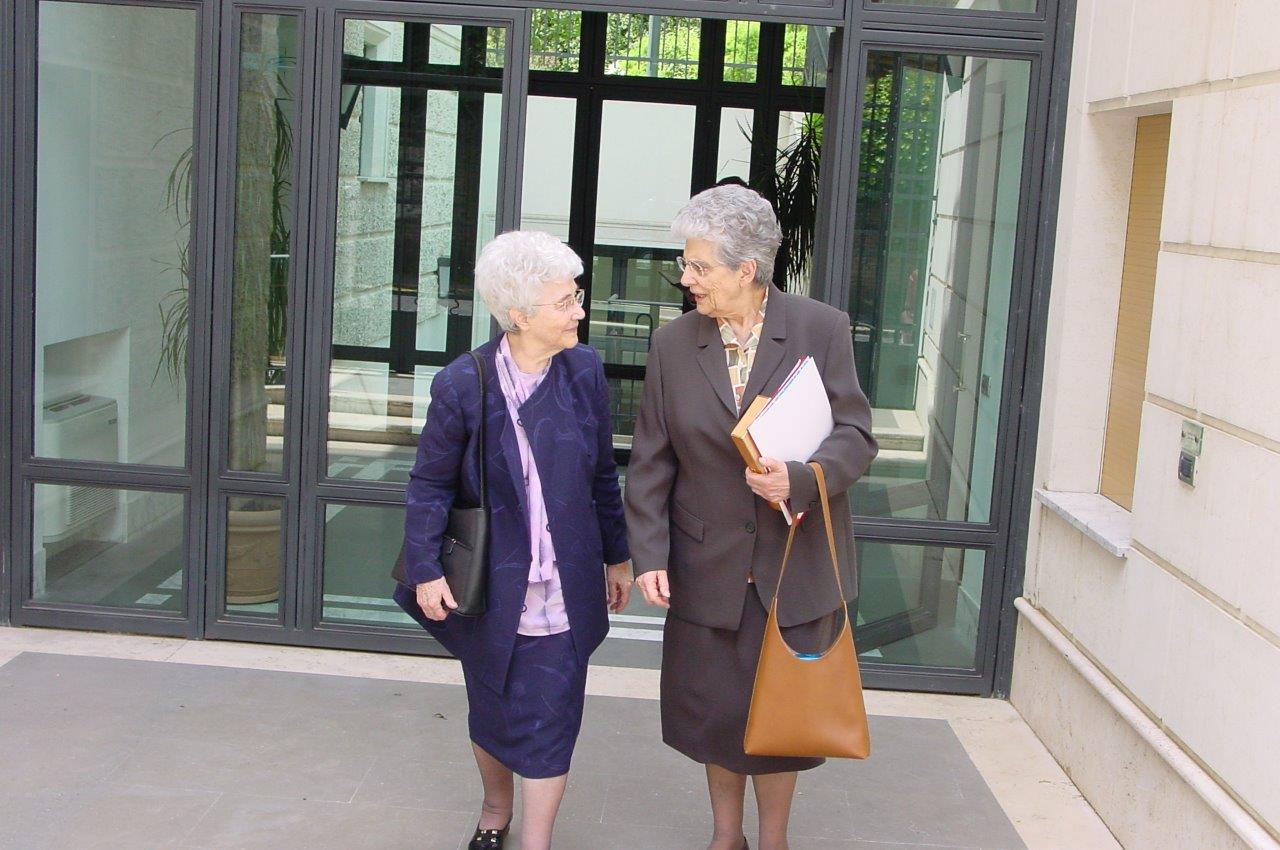 Eli always accompanied the founder of the Focolare Movement on important encounters with the great dignitaries of our time: from Pope Paul VI to John Paul II, from Mother Teresa of Calcutta to Vaclav Havel and the Ecumenical Patriarch of Constantinople, Athenagoras I. Her testimony as a direct witness to these events is contained in the book Lo spartito scritto in Cielo. Cinquant’anni con Chiara Lubich (“The Score Written in Heaven. Fifty years with Chiara Lubich” (Città Nuova, 2012). Giulia Eli Folonari was the Director of the Chiara Lubich Centre since its foundation in July 2008, right up until 2014. This institute aims to be a custodian of the thought of Chiara Lubich, to assure its authenticity and to help spread her charism, as well as to preserve the history of the Focolare Movement through meetings, conferences and a dedicated website. The Centre ensures that the rich patrimony of paper-based archives and multimedia documents that the founder of the Opera di Maria left behind is made available to scholars and the public in general.
 Belgium: it’s the time of the “we”
The Focolare contributes in the complex path of integration and dialogue between Christians and Muslims in Belgium, a land that was also wounded in the 2016 terrorist attacks. “The time of the ‘we’ has arrived”, “we are a community, a ‘prophetic minority’”. This was what Maria Voce, President of the Focolare Movement, and Jesús Moràn, its Co-President, have expressed during their meeting in Brussels. An appointment that convened Christians and Muslims in the said country, who for years have been trying to live fraternity in diversity, as well as the respect for each one’s cultural and religious identity. Present were about 50 persons, half of whom were Muslims and the other half Christians, but all actors of dialogue. It has begun with festive greetings over a cup of Moroccan tea, creating a family atmosphere. “We experienced profound unity—said Jesús Moràn—because God is so great and is present everywhere in our life.” The story of Islam in Belgian land started fifty five years ago with the arrival of immigrants from Morocco and Turkey, followed later by those from other countries. Today, it is enriched by the new generations born in Belgium. After the Brussels attack on March 2016, dialogue with Muslims has become a political priority. There is a new awareness about the problems related to integration, or rather, of the non-integration of a minority of Muslims. Oftentimes, the accent is placed on diversity, on the “we” and the “you” that is fostered by the fundamentalist current. In the said country are living a minority of believing and practicing Muslims, who manifest their identity even in public spaces, and a majority of citizens who refuse their Christian heritage, most of whom are agnostics or are indifferent to the faith. This materialistic and strongly secular society often confuse fundamentalism with the essence and beauty of Islam. The friendship between the Focolare and the Muslims in Belgium started years ago when a focolarina came to teach in a predominantly Islamic district. A profound rapport was born with many of the inhabitants. Bit by bit, some of them wanted to know the inspiration behind this generous teacher’s life. Thus, a nucleus of persons desiring to walk along with the Focolare was born, and they also participated in the international meetings of interreligious character. The dialogue that begun is, and remains to be, a “dialogue of life”, weaving a network of fraternity that is lived, renewed, and appreciated, especially in this difficult time of widespread fear.
Chris Hoffmann