20 Sep 2018 | Non categorizzato
A Hidden Letter The wife of a friend of mine, Sandra, had fallen into such a depression that she didn’t want to talk to anyone. The family was feeling it. I didn’t know how to help her. One morning I asked God to give me an opportunity to do somethin. That afternoon I received a very fancy gift, a ceramic plate with fine chocolates. Thinking that this would be something that Sandra would appreciate, I sent it to her. After a while, Sandra telephone me laughing: “You send me a recycled present: in the middle of the dish I found a note addressed to you.” I starte to laugh too and the telephone call went on for a long time with hearts open wide. Sandra confided he fear to me and I encouraged her to share it with her family. A few days later my friend said that Sand had begun a new dialogue with the mother and sisters, and something melted away in her. T. M. – Slovak Republic Quality Pots I had come to know of a young married couple, just arrived from Candada. They didn’t have anything to live on and were working for work. On day asked myself what I could give them, which would be useful to them. Opening the kitchen cabinet I saw my favorite pot that cooks so well because of its fine quality. I felt Jesus inviting me to detach myself and, after polishing it, I invited the couple over for supper and gave the pot to them. They were both very happy. A few days later my father dropped by to see me. In the back of his car there was a gift for me. He had no idea what it was, becausse it was from my sister. Opening it, I saw a set of three fine quality pots, and the bigger one was the same exact size as the one I had given away. C. K. – Australia Hope I was a woman of the street. The hardest times to put up with were the holidays. That’s when I felt the most solitude that no one could fill. On day, as I was rushing to thte bus stop, the winow of car went down and a young man asked me if I needed a ride. He assured me that he hadn’t stopped with any alternative motives. That gesture overwhelmed me and I accepted. In the car, I asked him why he had done it and he replied by giving me a small copy of the Gospels. When I got home, I felt urged to read it and, the more I read it, the more I felt a new hop growing in me. Then, I went to ask a priest if I could talk with him. That’s how I began my ascent. N. N. – Italy Rent Not having the money to pay for the rent, my husband and I began to pray with faith. That same night our landlord came looking for the money. It was Thursday. When I asked him to come back on Saturday – becuase I wasn’t sure we’d get paid that day – he agreed. We prayed some more, together with our six children. Friday morning, a friend came to visit us, our fellow-countryman. As he said goodbye, he handed us an envelope. It contained four thousand shillings. We were thrilled and overwhelmed: besides the money for the rent, we were also able to buy something to eat. F. P. – Kenya
20 Sep 2018 | Non categorizzato
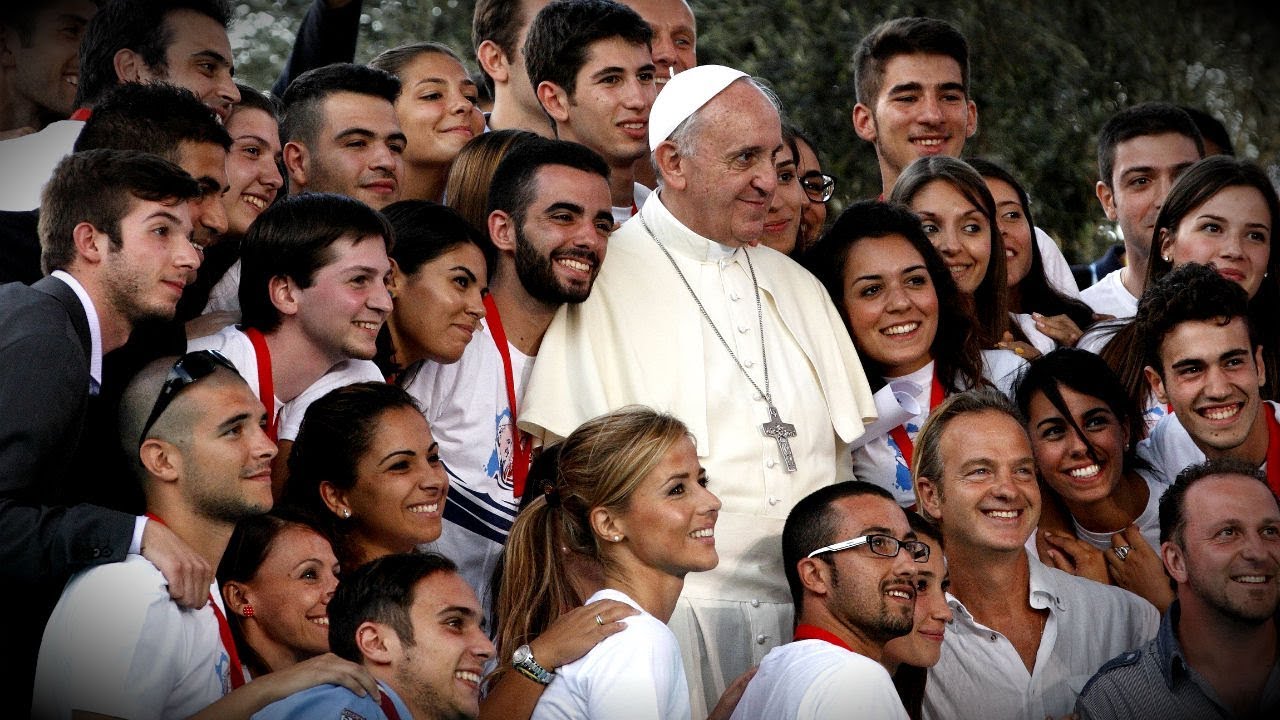 During the press release for the presentation of the Apostolic Constitution “Episcopalis Communio,” on 18 September, a new encounter of the Pope with the youth was announced, to be held at the start of the next Synod. “Once again the Pope wishes to meet the youth together with the synodal Fathers – affirmed Cardinal Lorenzo Baldisseri, secretary general of the Bishops’ Synod – to listen to them and receive their proposals to be used in the Synod’s final document.” The meeting will take place on 6 October, at 5 pm in the Paolo VI Hall.
19 Sep 2018 | Non categorizzato
Following a decision made last July, on 6 September, the Eritrean President Isaias Afewerki and Ethiopian Prime Minister, Abiy Ahmed Ali, signed a peace agreement called the “Gedda Pact.” The agreement which came about under the mediation of Saudi Arabia, the United Nations, the African Union and the United Arab Emirates, puts an end to a state of war between the two nations which continued also after the end of the conflict which lasted from 1998 to 2000 for territorial issues. The peace pact furthermore foresees, as per official communications, the opening of the embassies in the respective capitals, the resumption of road connections and use of Eritrean ports by Ethiopia and normal relations between the two countries “on the basis of the close geographic, historical and cultural bonds between the nations and their respective peoples.” The UN Secretary General, António Guterres, highlighted the importance of the Agreement, and defined the event as a “strong wind of hope in the Horn of Africa.” Meanwhile, a few days ago, the border between the two countries was reopened and many families, divided for twenty years were able to reunite.
14 Sep 2018 | Non categorizzato
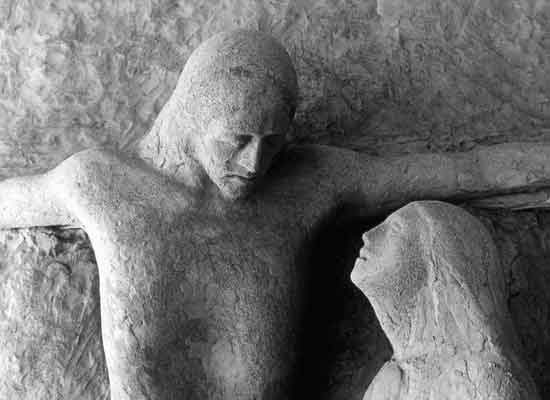
© Ave Cerquetti, ‘Crocifissione’ – Lienz (Austria) 1975

12 Sep 2018 | Non categorizzato
Replay streaming event
