31 Aug 2018 | Non categorizzato
“In 1984, I was with a group of bishops who came from a number of different Churches. We visited the Basilica of Saint Sofia in Istanbul and were very impressed by this imposing building which seemed to tangibly embody the history of the Church and of humankind. This building dates back to the time of ancient Christianity, to a time when Christians were united and Asia Minor was the centre of the Christian world: it is also the very building where unity was broken through the division between the East and the West. In the sections of the dome that were visible, we saw enormous inscriptions taken from the Koran – a sign of the domination of another religion over lacerated Christianity. There were several signs saying “Prayer is forbidden” right in front of us. It was a museum in which people were wandering around with cameras and binoculars admiring the artistic treasures. The absence of religion in a place that had previously been so sacred was terrible. We felt overwhelmed by this sequence of events: unity, unity broken, the diversity of religious faith, no religion at all. We gazed around in search of help when, all of a sudden, we saw it! Above the dome, quietly glistening, there was an ancient mosaic of Mary offering her Son. Looking at it, I clearly understood that this is the Church: to simply be here and be the first to generate God, that God who seems to be absent. I understood “Theotokos” – the mother of God, the one who generates God – in a completely new way. I understood that we cannot organise faith in the world. If no one wants to hear about God any longer, we cannot hammer on saying “Woe to you!” We just have to be there and be the first to bring the light of God to the world, that God that seems to be absent. We cannot “create” God but we can only shed light upon him; we can’t use argument to prove that God exists but we can be the chalice that contains him, the heaven from which he almost imperceptibly shines forth. I understood not only our task in the Church but also how the Church exists in the figure of Mary and Mary exists in the figure of the Church – how both the figure and the reality are the same.” Klaus Hemmerle, Partire dall’unità. La Trinità e Maria, pp. 124, 125.
31 Aug 2018 | Non categorizzato
“Holy Father, you can truly count on our full unity and fervid prayer facing these attacks aimed at discrediting your person and your action of renewal,” Maria Voce wrote these words in a letter that was sent to Pope Francis on August 30th in which she expressed prayer and support, following the various attacks that have recently been levelled against him. The Focolare president expressed gratitude to the Holy Father for the recent World Meeting of Families held in Ireland which, among other things, highlighted the rapport that was established between the Pope and those who attended. On behalf of the whole Focolare Movement, Maria Voce acknowledged the Pope’s heartfelt and repeated request for forgiveness from the families of the victims, and also the way his message of love was embraced. “In every wound of the Church and of humanity,” Mary Voce says, “we recognized the crucified and abandoned Christ, and, together with you, we look at Mary in order to live with courage your example as authentic disciples.” Finally, Maria Voce thanked the Pope for his recent “Letter to the People of God” which, in addition to expressing the solicitude and love of the Holy Father for humanity, indicates “how to share in the “cry” that rises to Heaven from those who suffered and still suffer, as well as how to work so that such evils are not perpetuated. Let us embrace both his words and his concern.”
30 Aug 2018 | Non categorizzato
The World Day of Prayer for the Care of Creation is celebrated every year on 1 September which is running its 13th edition this year. The initiative started among the Orthodox Churches to which other Christian Churches adhered in their commitment to rediscover ecumenical cooperation in the care of creation. In 2015, also the Catholic Church joined the call to all of mankind to take up their responsibility towards creation and the safeguard of the lives of all the peoples of the earth. In 2017, in a gesture to seal this common commitment, Pope Francis and the ecumenical Patriarch Bartholomew I of Constantinople signed a document which states among other things, that: “ the human and natural environments are deteriorating together, and this degradation of the planet weighs on the more vulnerable people. The impact of climate change affects, above all, those living in poverty in every corner of the globe. Our duty to use the assets of the earth responsibly implies the recognition and respect of every person and all the living creatures. The urgent call and challenge to take care of creation is an invitation to all of humanity to work for a sustainable and integral development. […] We are convinced that there cannot be a genuine and long-lasting solution to the challenge of ecological crises and climate changes without a united and collective response, and without a shared responsibility that can give an account of the actions taken, giving priority to solidarity and services.”
29 Aug 2018 | Non categorizzato
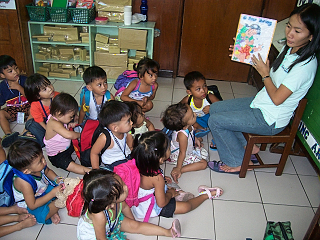 “When I was 6, my mother made me sign up to the daily social assistance program at Bukas Palad, which is a social project put on by the Focolare through its AMU (Action for a United World) and AFN (New Families) organizations. She had met a teacher who worked there. I remember her telling me, ‘There you will learn to have a smile that shines.’ My mother also participated in formation meetings and started to commit herself as a Volunteer. Initially I thought that she did it because she had nothing else to do, other than housework, but then I changed my mind when I saw that she also went on Saturdays. My father and brothers noticed she was happier. I was also attracted by the spirit of reciprocal love and unity that there was between staff members. Thanks to the project I was able to complete all my studies and graduate. I can testify that Bukas Palad had a fundamental role in most of my experiences and life choices. I remember quite well all the activities that we had at school and during the weekends with all the students. The training we received helped us become people who were sensitive to others and consider being poor not as an obstacle to doing what we want, but a gift. Through the project I met Chiara Lubich and the young people of the Focolare. Growing up in this environment, I learned that dreams can be reached if we believe that God’s love has a plan for each of us in our lives. I graduated with a degree in education from the University of Cebu, and then I passed the teacher’s entrance exam. Immediately after graduating I started working, continually accompanied by my Focolare ‘family’, who were always at my side, even when I had to face the world of work and life in general. Whether in moments that were satisfying or those that were more difficult, I had one of Chiara Lubich’s sayings with me: ‘Be family.’ When I think of Bukas Palad, I know well what it is to be a family. At first I taught in a private school for five years. Then in 2014, I requested a change to teach in public school. I was assigned to a school in Mandaue, a city that is part of the Cebu metropolitan area. Here things were completely different; there was not the same structure or systems in place that I was used to. When I had been teaching in private school, I thought that being a teacher meant having a huge heart and a brave soul. Now that I work in a public school, I believe I need a heart that is even larger, a soul that is even more courageous, and even more strength. Each time I’m tempted to leave this work behind, something keeps me here – especially the children. I see in them myself and my friends, many years ago, when we dreamt of becoming what we are now. Perhaps I will not be able to give them the same help and support that my family and I have received, but I try my best to transmit that same love to them.”
28 Aug 2018 | Non categorizzato
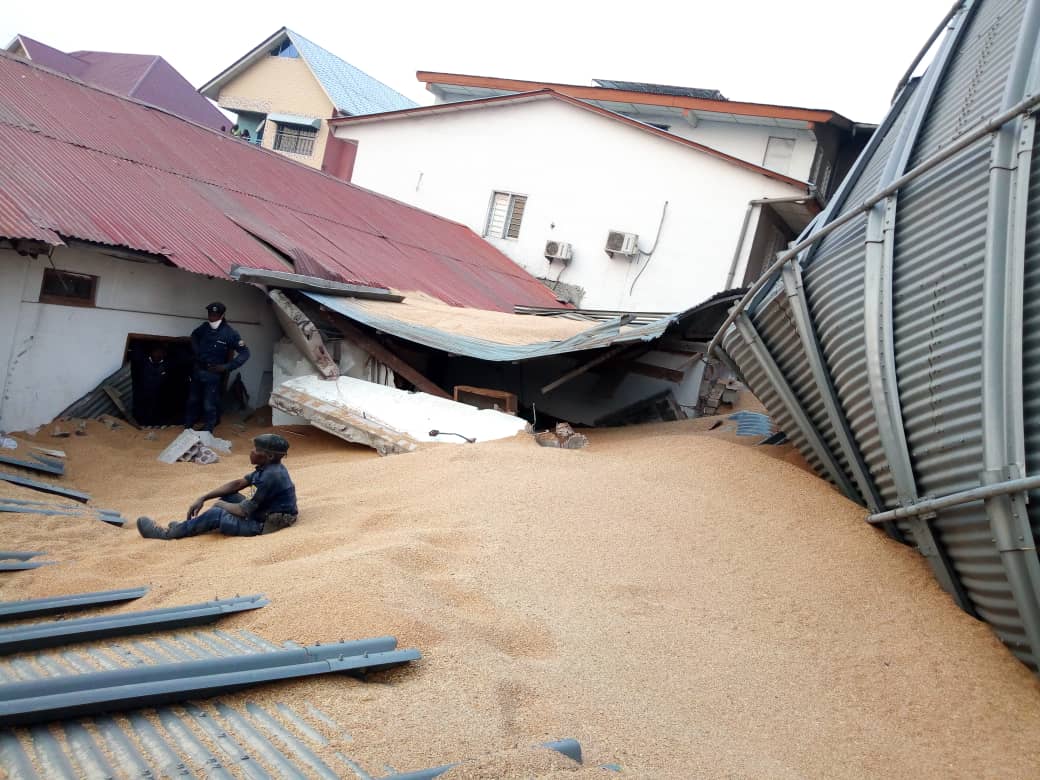
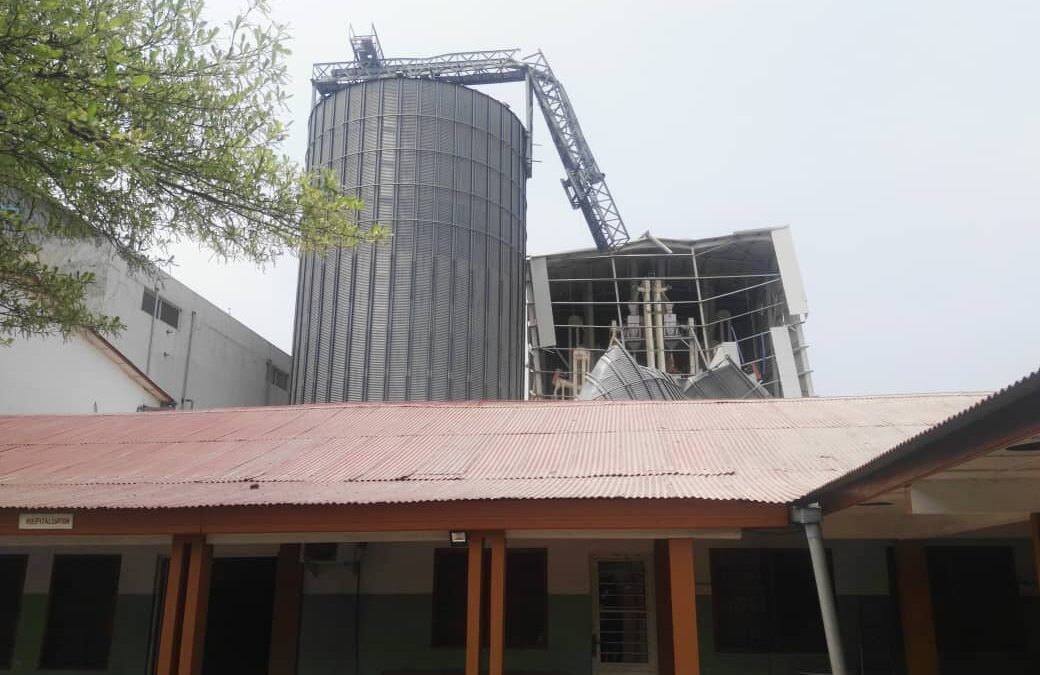
In a communication issued by the local headline “Actualite.cd”, the hospital’s health department reports that “seriously ill and severely injured patients were urgently transferred to the nearest hospitals” and that the priority at this time is to rescue those people “who are still under the rubble” and to give support to those who have been affected. Significant damage has been caused to facilities, such as the destruction of the radiology department, the centre for diagnostics and other sectors.
The maternity department and pediatrics, as well as an operating theatre were inaugurated two years ago. The collapse of the silos owned by the FAD Congo company caused damage to surrounding buildings including a factory, where there have been other casualties. Several authorities, including the mayor of the municipality of Limete, have arrived on the scene.
The Focolare Movement expresses its solidarity with the victims in their suffering and assures its spiritual closeness to all families involved.
28 Aug 2018 | Non categorizzato
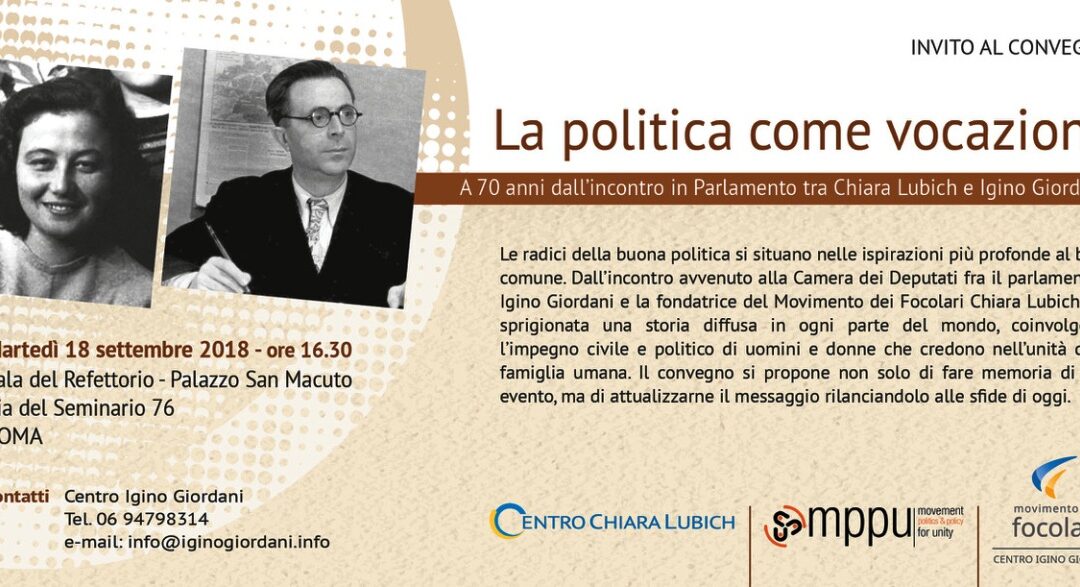
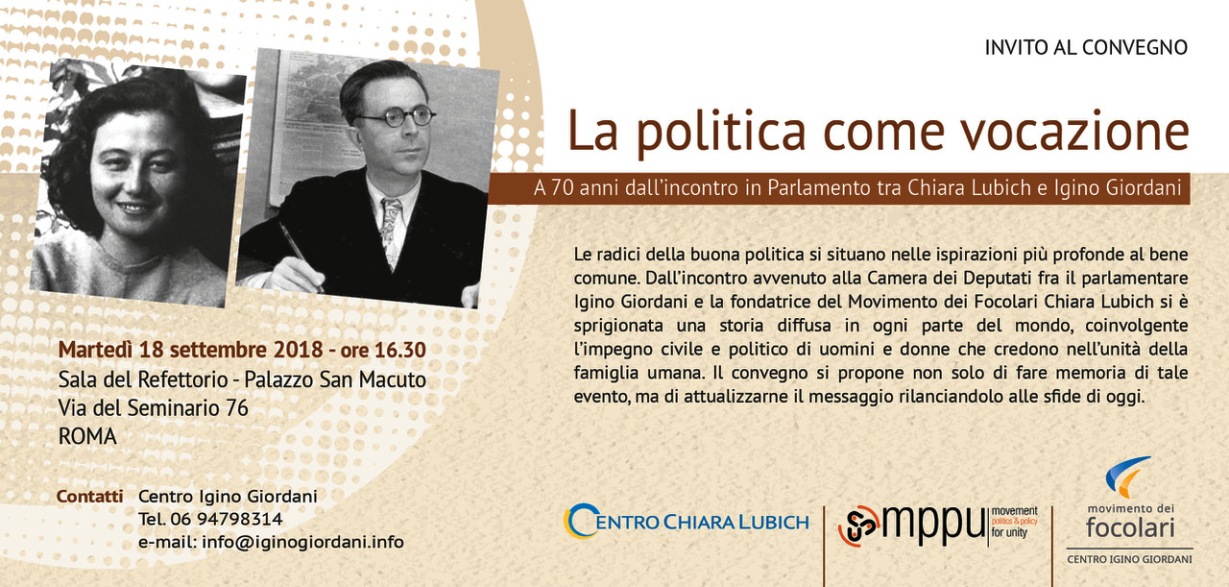 Politics as a vocation 70 years from the encounter between Chiara Lubich and Igino Giordani in Parliament. The roots of good politics lie in the deepest aspirations for common good. From the encounter at the House of Representatives between Igino Giordani and the founder of the Focolare Movement, Chiara Lubich, ensued a story that spread to every part of the world, involving the civil and political commitment of men and women who believe in the unity of the human family. The convention aims not only to commemorate this event but to actualize its message, and relaunch it to meet the challenges of today. Tuesday, 18 September 2018 – 4.30 pm Sala del Refettorio – Palazzo Dan Macuto Via del Seminario 76 ROME Contacts: Centro Igino Giordani Tel. 06/94798314 Email: info@iginogiordani.info

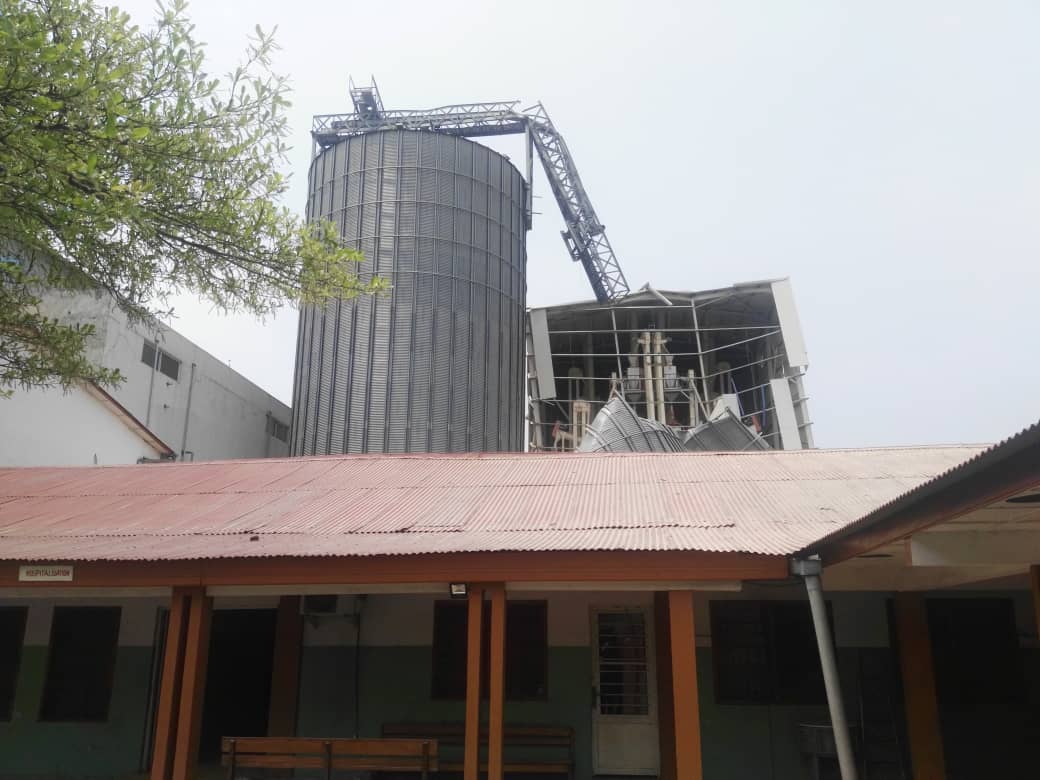 The Focolare Movement is closely monitoring the situation in the town of Limete, north of Kinshasa, capital of the Democratic Republic of Congo. This afternoon there was