21 May 2018 | Non categorizzato
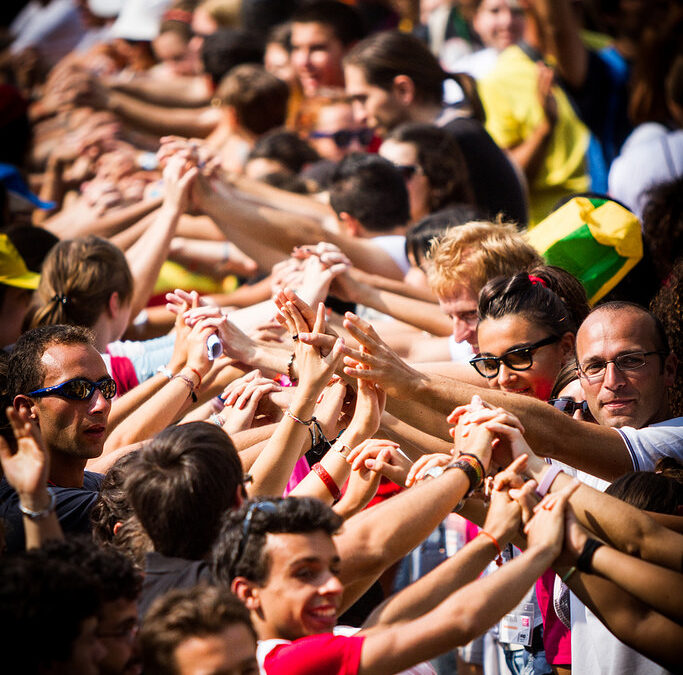
“I went to Budapest because my aunt suggested it and I trusted her. She was special, and had always been there for me throughout my most difficult years. My problems flared up when I started high school. This new phase of my life was very demanding. I started to experience the problems of adolescence, some of my friends were going off track and I didn’t feel understood by my family. Maybe I tried to grow up too quickly. I got to know a boy who I felt was my only real friend. And even so, inside I seemed to be always on the brink of anguish. I became more and more isolated, except for the rare moments when someone would listen to my silences and, without posing many questions, simply share in something of what I was going through. By the time the school year ended, I had very few friends and was always arguing with my family. I was also losing weight. I had been trying to hide my eating disorder but it was taking hold of me more and more. It was making my life joyless, draining it of all colour, light and love. I had turned inwards and imposed a state of near total solitude on myself. This was the moment when my aunt, who is a member of the Focolare Movement, invited me to go with her to Loppiano, the Focolare town in Tuscany. I thought to myself, “three days staying who knows where, without school or studying, far from the confines of my normal life; three days in which I can just concentrate on hiding food! Why not?” Actually, it proved to be a kind of caress which reached through my defences. Everywhere we went, I was included and welcomed with respect and delicacy. Someone, after listening to me for a long time, told me about Chiara Lubich. Afterwards I realised that I had somehow stopped thinking about myself and my problems, and – most amazingly – I’d stopped thinking about food! I felt free. As I travelled back home, I ardently wished I could always live like this, like being part of one big family. But the complexities of daily life soon threatened to bring me down again. 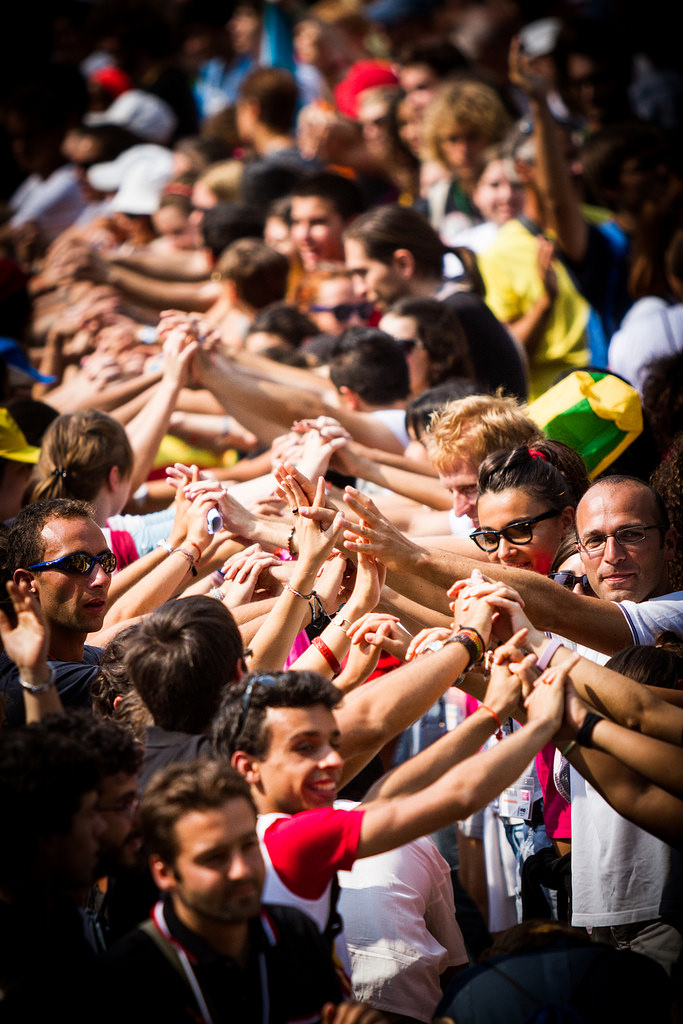 In fact, I hid behind my books while continuing to fill my head with calculations and ways to deceive those around me. I lost even more weight. My family didn’t know what to do with me. But I knew someone was praying for me. I began to go to Sunday Mass, with the excuse of taking a walk or just to get out of the house. I had always believed in God but for the first time I began to consider the possibility that Jesus could understand me and welcome me without condemning me. However, during the next two years at school, things continued to get worse. I became more and more intolerant of my family and other people. I did not respond well to the psychological therapy I was receiving. I continued to weave a web of lies and go my own way. The only time I felt any relief was during the summer holidays when I went far away from home with friends. But the summer was short and I couldn’t go on just feeling fine one month in the year. So at the end of the summer of 2012, my aunt made a new suggestion: to go to the Genfest in Budapest. I agreed and set off with five other young people from my city, including a girl from my class. It was an emotional roller-coaster for me. All those thousands of young people expressing themselves as one. It really was a bridge, not only between countries and cultures, but also a bridge between me and a new life I could embrace. I saw this sea of faces – 12,000 of them – of people ready with me to share in the beginning of a new life. I was part of the “flashmob” on the bridge over the River Danube, each of us writing a personal message on a scarf to exchange with someone from another country. I took part in the peace march. I even took part in the lunch queues. I felt part of an experience of unity, I could go anywhere because anywhere I would be at home. This time when I went back I was with my classmate and together we got in touch with the Focolare community in our home town. By now I knew that I wanted to walk the path of Jesus. It wasn’t going to be easy, my problem with food had very deep roots and the tensions within my family would not just disappear. But I felt I too was a bearer of a new light. Living the words of the Gospel one by one, I found I could begin to take control of my life. Giving of myself wholeheartedly to others, I began to discover how God loves me immensely and has a great plan on my life.”
19 May 2018 | Non categorizzato
The Christian celebration of the outpouring of the Holy Spirit upon Mary and the disciples of Jesus is celebrated at Pentecost, that is, on the fiftieth day of Easter. We read in the Acts of the Apostles: “When the day of Pentecost came, they were all together in one place. Suddenly a sound like the blowing of a violent wind came from heaven and filled the whole house where they were sitting. They saw what seemed to be tongues of fire that separated and came to rest on each of them. All of them were filled with the Holy Spirit and began to speak in other tongues as the Spirit enabled them.” (Acts 2:1-4). Chiara Lubich wrote when referring to the charism of unity: “The Holy Spirit is the gift that Jesus gave to us so that we might be one as He and the Father are one. Of course, the Holy Spirit was in us to begin with, since we were Christians; but here there was a new illumination, a new manifestation of the Spirit among us, which made us participants and actors in a new Pentecost, along with those ecclesial Movements renew the face of the Church.”
18 May 2018 | Non categorizzato
“When Jesus was no longer physically present on earth, Mary lived with the Church, the continuation of Jesus. To outward appearances, she would have seemed to be the mother of John, representing all disciples, rather than the mother of Jesus who was no longer to be seen. So Mary was found in the heart of the Church, in the cenacle, the “upper room”. She had withdrawn there from Mount Olivet with the Apostles, disciples and pious women after the ascension. The Apostles “were constantly devoting themselves to prayer, together with certain women, including Mary the mother of Jesus” (Acts 1:14). The first Church – according to Saint Luke – formed “one heart and one soul” and “none of them was in need”, all gathered around the one table. How was such communion possible, making them all one? It was because Mary was there, hence the Holy Spirit was there. So the ideal of the Son was fulfilled and the Father reigned there. His kingdom had come, with the presence of “our Father who art in heaven” and “our daily bread on earth”. The Magnificat was being expressed again and diakonia – service, was being lived out. The function of Mary – a function of love, and therefore of the Holy Spirit – was and is that of unifying, putting heavenly and earthly goods in common. In this way the mystical body of Christ is raised to life; generating Jesus for the world; and in him she unifies souls together, setting them in wisdom. She is the model for mothers of Christian homes, with a heart that unifies, a mind that enlivens […], igniting the atmosphere of warmth (of “focolare” = fire place), where all feel as one, cells of the one body. Aware of this mission, which is to participate in the work of Christ, woman – associated more than any other creature with the work of creation – finds it easier to turn to the Creator. She can confide more tenderly with Mary. Following her example she can endow her intimate home life with both virginal purity and maternal warmth. In this way she can come to resemble the Virgin Mother. In the cenacle, Mary represented Jesus and hence bore the highest dignity, spiritually sustaining the juridical pre-eminence of Peter. But what came to light in her way of being was a soul who completely identified herself with the Church, making it her own, blessed fruit of her womb, hidden, losing herself within it, as a true ancilla Domini, handmaid of the Lord. In fact, all the faithful, laity included, must live the Church, in the Church, with the Church, always with this same sentiment. In this way the Church will no longer seem to be something extraneous, but will be their own, their life, the centre of their sanctification. Neither words nor special attire are needed. It is sanctity that needs to be lived within the Church. And the first fruit will be its unity. Mary inspires “many different forms of apostolate by the laity. … There are souls yearning to live the doctrine of Jesus more openly and more completely. There are souls burning with the desire to make him known to others, particularly to their work colleagues. There are those desiring to re-establish justice and charity within social institutions and to introduce into the temporal order of society a reflection of the perfect harmony that unites the children of God. To all these souls, Mary obtains the grace of the apostolate. She places on their lips words which can convince without wounding …” (Pope Pius XII). Mary is a social reformer, a credible model of apostolate, a symbol of charity, font of justice. No small number of lay movements look to her in order to contribute towards building unity, that ideal testament of Jesus, in a “Mary-like” manner, preparing for the city of God on earth. Mary, in fact, has been viewed by the saints as the “city of God”. Igino Giordani, Maria modello perfetto, Città Nuova, Roma, 1967 2012, pp.150-152.
15 May 2018 | Non categorizzato
The month of Ramadan started on 15 May and will end on 14 June. In this period of 29 or 30 days, the Muslims recall “the month in which the Koran was bestowed on mankind as a guide with clear teachings showing the Right way and a criterion of truth and falsehood” (Koran, Sura II, verse 185). During this period, prayers and acts of mercy are intensified. All those who are able shall fast from dawn to sunset, constituting the fourth of the five pillars of Islam. According to many theologians the spiritual meaning of fasts, together with prayer and meditation, sexual abstinence and renouncement in general, refer to the capacity of man to exercise self-control, patience and humbleness and remember to help the needy and less fortunate. Ramadan is thus a sort of exercise of purity against all the worldly passions, the benefits of which fall on the faithful all year long.
14 May 2018 | Non categorizzato
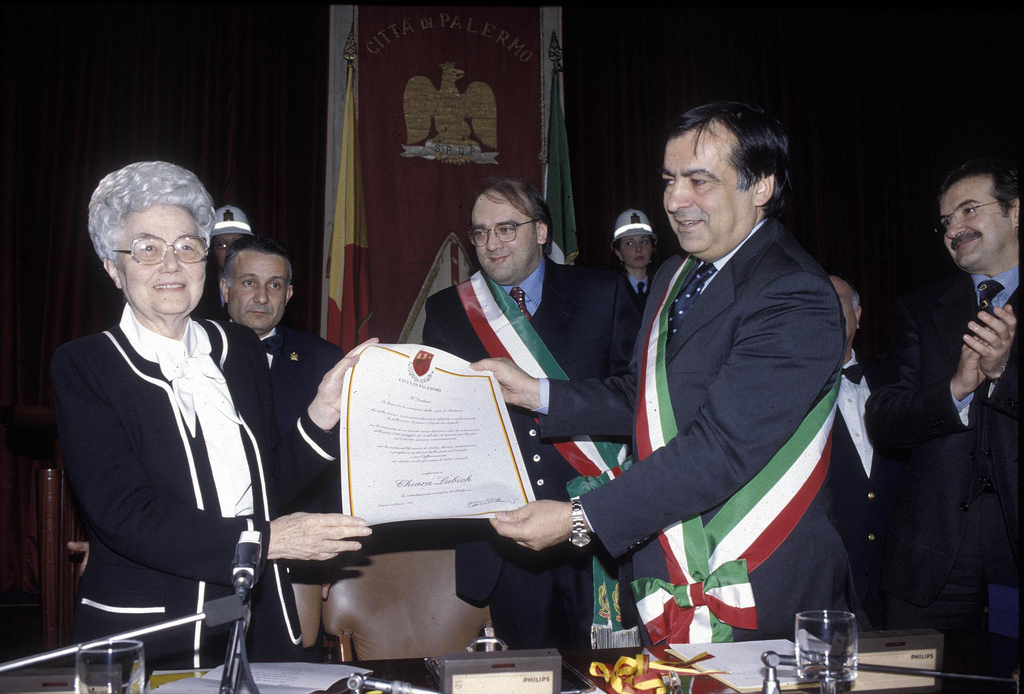
20 January 1998: Chiara Lubich is awarded the honorary citizenship of Palermo
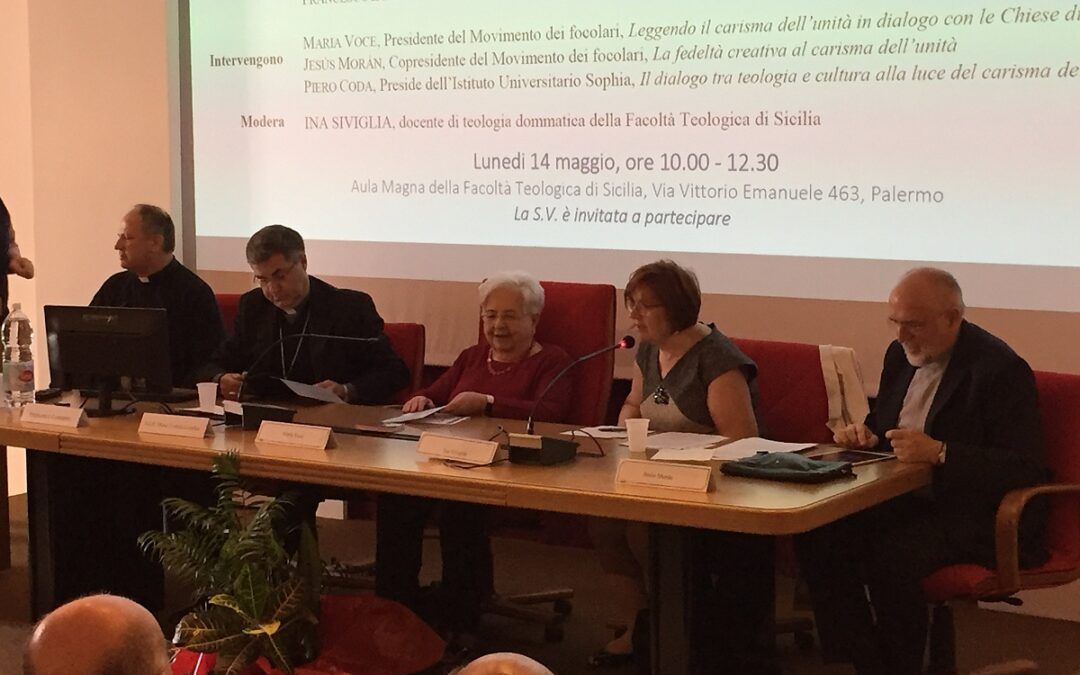
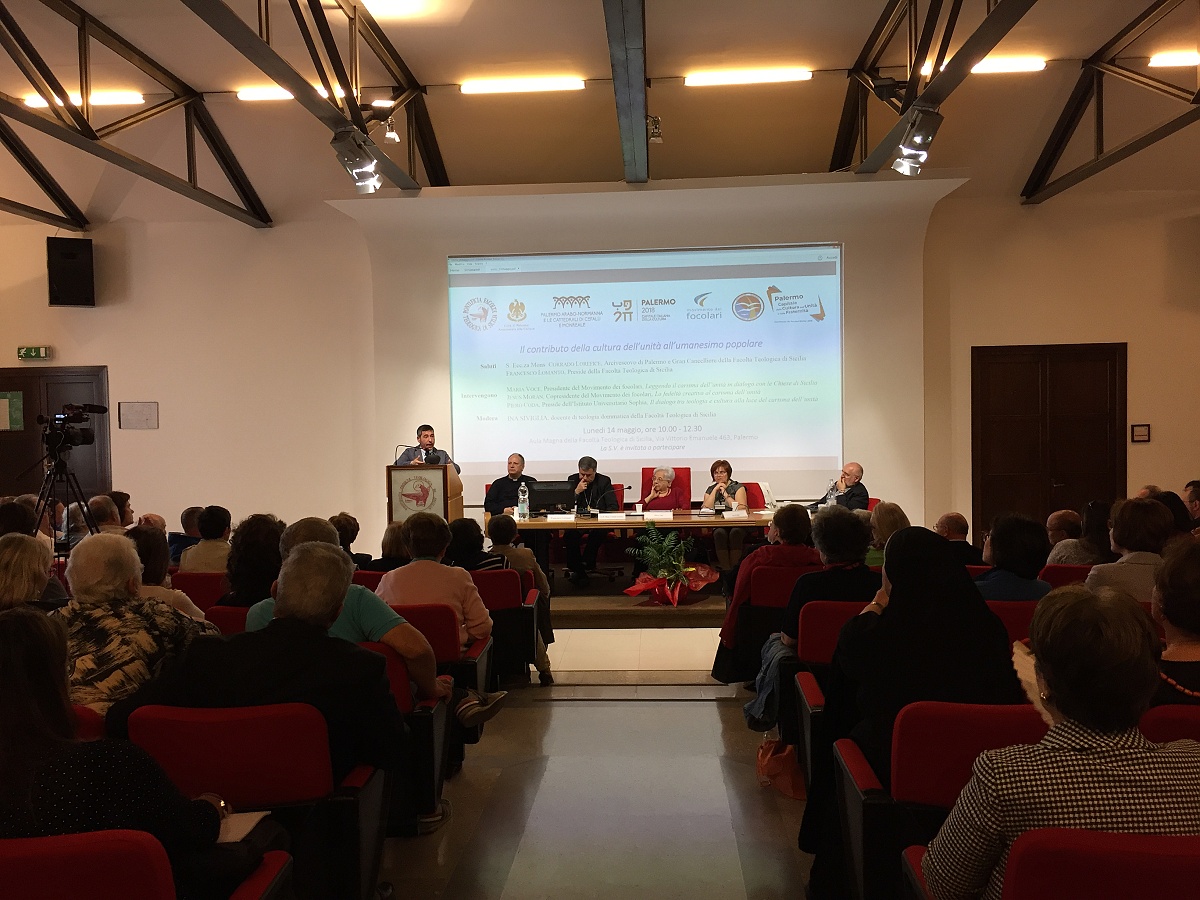 Maria Voce went on to say: “Chiara Lubich left an indelible mark with her efforts in favour of communion in the Church, for ecumenical dialogue and for brotherhood among peoples. As far back as the 1940s Chiara expressed her longing in words that were charged with zeal and urgency. “Look around: we’re all brothers [and sisters] – no one excluded!” This was how she exhorted us “to live out our universal brotherhood in one only Father: God who is in Heaven.” This was a plan that could be carried out in every city, but a plan that found particularly fertile ground in Palermo, a place “of encounter over the centuries among peoples, cultures and different civilizations,” a plan rooted in “the values of diversity, acceptance and solidarity.” What has this charism contributed to the Universal Church and to the individual Churches in Sicily and beyond? Maria Voce responded: “With the charism of unity, a “new way” has been opened in the Church,” a spirituality that is in perfect harmony with the Second Vatican Council. “From this spirituality of communion we have seen communion blossom within the Church among the different ecclesial Movements that enrich it, among the variety of ancient and modern charisms. We have seen how useful it is in contributing to the unity of Christians and opening dialogue with people of other religions, which represents one of the most urgent and challenging frontiers of the third millennium. And these are things that are also experienced at the level of the local Church.”
 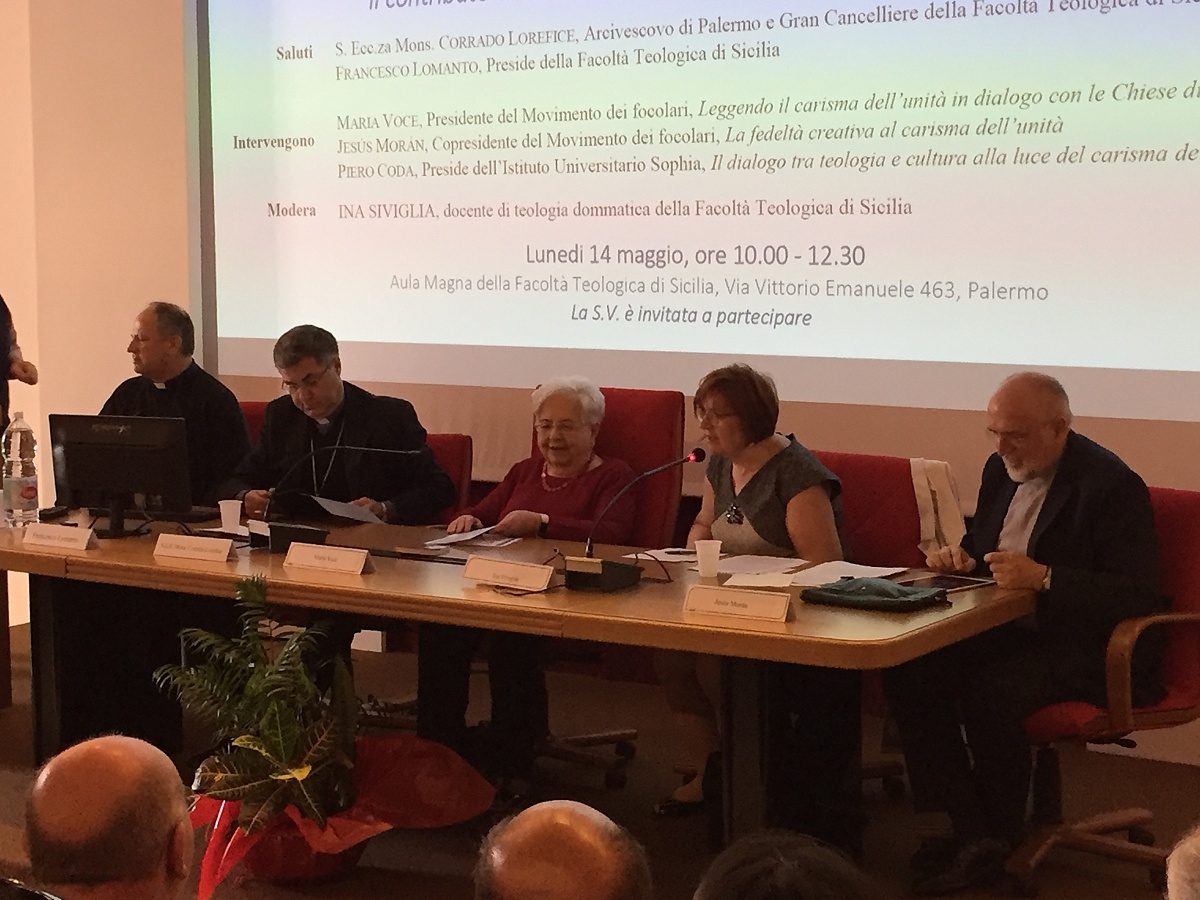 “Despite the many emergencies in recent years – indeed, because of them – the Movement in Sicily is deeply focused on witnessing to unity and building it among the members of the human family wherever that family may be threatened. This is the way they respond to Chiara’s appeal when she urges all of us to “build a new culture that would be a culture of human rights, a culture of law and order, a culture of love, a culture of life and never of death.” Maria Voce went on the say: “I think I can say something has already begun towards that goal. Certainly there is still a long road ahead, but it is a goal that with the entire Movement we renew today: to do our part at creating that ‘new civilization’ which contains all those values that are often trampled on . . . and to grow more and more – as Chiara says – all our Christian brothers and sisters, without leaving out the other religions, without leaving out anyone.” In so doing, we will truly be able to give life to a ‘culture of unity’ which Chiara more than once defined as the ‘culture of the Resurrection’.” Read full speech
14 May 2018 | Non categorizzato
While preparations are underway for the 9th world meeting of families, to be held from 21 – 26 August 2018 in Dublin, Ireland, on the theme, “The Gospel of the Family: joy for the world,” the International Day of Families, instituted in 1994 by the United Nations General Assembly, will be celebrated on 15 May all over the world. Given the difficulties the family today encounters in carrying out its functions, we hope that the Day will serve to promote policies and actions in support of the family, recognizing its essential role as the “first cell” of society. “Saving the family,” wrote the politician and writer, Igino Giordani, considered by Chiara Lubich to be the cofounder of the Focolare Movement, “means saving civilization. The State is composed of families; if these degenerate, also the State falters.” And he continued: “The spouses become cooperators of God in giving life and love to humanity. Love which is from the family expands to the professions, the city, the nations and humanity.”
