Focolare Movement
Balance sheet of gen 4 initiatives

Balance sheet of gen 4 initiatives

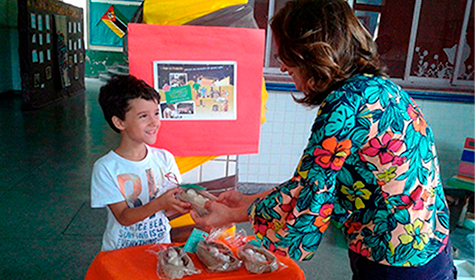
MontaggioArticoloHSG3EnA letter of thanks was sent to the gen4 worldwide, with the publication of the balance statement of the initiative “They’ve dislodged Jesus,” undertaken each year by the children of the Focolare Movement during the Christmas season. Last Christmas, thanks to the offers gathered by the sales of the chalk statues of “babes” portraying Baby Jesus, the gen4 with the support of the adults and in some cases also of local institutions, collected 3,627.60 euro that were allocated to eight projects in Brazil, Mexico, Colombia, Venezuela, Peru, Argentina, Burundi, Uganda and Syria. In addition to this, a donation was allocated to medical care, foodstuffs and schooling material for four projects in the Central African Republic, Cameroon, Egypt and Iraq. What comes to the fore, beyond the figures, is the “culture of giving” from which the gen4 draw inspiration.

Happy not just for a day

Happy not just for a day

20180320-01

Foto: Pixabay

The joy of the early Christians – and this is true of Christians in all ages who understood the essence of Christianity and lived accordingly – was a truly new joy, one never experienced before. It had nothing to do with merriment, cheerfulness or light-heartedness. Nor was it “the exultant joy of living and being alive” – as Paul VI said, or “the calming joy of nature and silence”. It was not the joy or “satisfaction of a job well done” nor simply “the transparent joy of purity” or that of “chaste love…” These are all wonderful examples of joy. The joy of the early Christians was different: it was like the exhilarating joy of the disciples at the descent of the Holy Spirit. It was the joy of Jesus. For just as Jesus has his peace, he also has his joy.  He said, “I have said these things to you so that my joy may be in you…” (Jn 15:11). The joy of the early Christians, which welled up spontaneously from the depths of their being, truly satisfied them. They had found what people of all times search for: God, who – as we have seen – satisfies them completely. They had found fellowship with God, the essential element for self-fulfilment. In fact, love, charity, with which Christ enriches the hearts of Christians through baptism and the other sacraments – can be compared to a little plant. The deeper its roots go into the ground of fraternal charity (that is, the more people love their neighbours), the higher the stem grows up towards heaven and love of God and fellowship with him grows in their hearts. It is not something simply believed in through faith, but is a real experience. This is happiness: loving and feeling loved. This was the happiness of the early Christians, both old and young. It was expressed in liturgical celebrations filled with hymns of praise and thanksgiving. Joy grew in their hearts also because, with love and through love, they received light. They could see; they could begin to understand the things of God that in themselves are impenetrable (cf. 1 Cor 2: 19-16). Mysteries that they accepted through faith were not as obscure as one might think. They were able to enter into these mysteries, savouring them and seeing them in a light that made them feel they understood and possessed them. This made them rejoice even more, and the joy of truth was added to the joy of love. Armed, therefore, only with love and light, and clothed with joy, they spread throughout the entire known world in a short time. As Tertullian wrote, “We were born only yesterday, and we have already invaded the world…” (Apologetics 37:7). … The early Christians even rejoiced in being persecuted and sang even as they went to martyrdom. They had understood a paradox of Christianity: that joy, the supernatural joy of Christ, can be found precisely where there is no joy, in suffering, but in suffering that is loved.   Source: Chiara Lubich Centre

Cardinal Parolin speaks about Chiara Lubich

Cardinal Parolin speaks about Chiara Lubich

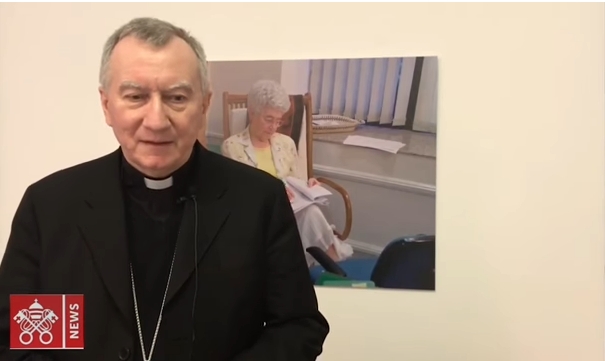
VaticanNewsVideoA great spiritual force capable of drawing crowds of different ages, social backgrounds, cultures: this is what animated Chiara Lubich and the fruits are still seen today, even in the Church. Cardinal Pietro Parolin, recalling the obedience and docility shown by the Focolare towards the Church – even in the most difficult moments – remarked how the Pontiffs, from Paul VI onwards, always gave their support and encouragement to the Movement. “A constant commitment to communion within the Church, in ecumenical dialogue and in  striving to build the human family”, Benedict XVI spoke in the telegram sent on the occasion of Chiara’s funeral, whose “existence”, he continued, “was spent listening to the needs of contemporary society in full fidelity to the Church and to the Pope “. The specific contribution that Chiara has offered to the Church, according to the Vatican Secretary of State, Cardinal Parolin, is having deepened and brought to the fore the “Marian profile of the Church, as well as the apostolic one” and the strong and innovative call to unity: “May all be one for the world to believe”, built and made possible by the “secret” of mutual love found in the “Golden rule” that Jesus himself taught us in “not doing to others what you would not want done to you“.

The secret for getting up again

Christians are not allowed to despair; they’re not allowed to accept defeat. Their homes can fall apart, their wealth can be lost, but they get up and continue to fight against all adversaries. Lazy spirits, nestled in their comfortable ways, become frightened at the idea of a struggle. But Christianity will be around for as long as faith in the Resurrection resists. The Resurrection of Christ, which inserts us in Him and makes us sharers in His life, obliges us to never despair. It gives us the secret for getting up again after every knock down. Lent is also an examination of conscience, through which we can consider what is buzzing around in the depth of our soul and of our society in which Christianity has become business as usual for many of us, without any pulse or impetus, like a sail without wind.   Lent prepares us for the Resurrection of Christ, which is the reason for the rebirth of our faith, hope and charity: the victory of deeds over negative tendencies. Easter teaches us to overcome our mournful passions in order to be reborn, each one of us, in a unity of affections with our neighbor and with every population, in a harmony of good works in order to establish ourselves in the kingdom of God. This is translated into a social constitution that has authority, laws and sanctions, actions in favour of the good of the people. It reaches to Heaven, but passes through the world. And it is modelled on the Divine Order. It’s law is the Gospel that contains unity, solidarity, equality, paternity,service, justice, rationality, truth, the battle against the abuse of power, against enmity, error, stupidity… Seeking the kingdom therefore means seeking the happiest conditions for the free expression of the life of individuals and of society as a whole. The reason is obvious: Wherever  God reigns, the human person is like a son of God, a creature of infinite value who treats others and is treated by them as a brother [or sister]. And he treats them as he would like to be treated. The goods of the earth are shared in a brotherly way. Love and forgiveness flow. Barriers don’t matter, because they don’t have any meaning within the universality of love. Putting the kingdom of God first, therefore, means raising the goal of human life. Those who seek first the kingdom of Man, seek a goal that is subjected to rivalry and dispute; whereas, the Divine objective draws people higher than their fights, and unites them in love. Then, within that unification, in that higher vision of the things of the earth, matters such as eating, clothing and enjoying take on the right proportions. They’re coloured with new meaning, are simplified in love, and you have the full life. Also in this sense Christ has conquered the world for us. Igino Giordani. Le feste, S.E.I. (Società Editrice Internazionale), Turin, 1954, pp. 110-125.

Living the Gospel: “Your paths”

Living the Gospel: “Your paths”

20180316-01

Foto: Pixabay

Cast every worry We have learned to cast every worry to God. When I was hospitalized it became an opportunity to strengthen the relationships of love in our family and to create them with people I didn’t know. The hospital and therapy cost a lot, and we didn’t know what we would do to buy wood for heating or pay the school fees. After a few days of not knowing, someone became a vehicle of God’s providence and the money we needed reached us. R. – Serbia Mr. Nobody When I was the director of a health agency I was accused of having paid kickbacks for an important consulting job. Without the district attorney even allowing me to explain, I was forced to leave all public and private work. In a flash I became Mr. Nobody. Everything around me went on as if I was guilty. I felt death within, and I even wished for it. God himself seemed to have disappeared. My only support came from a dear friend who drew close. “Jesus Forsaken wanted you to be a bit like him. This trial will pass, but what will remain in your soul will be the richness of your love for him.” After eight years of desert and anguish, I my innocence was recognized. Those moments of hell turned out to be the most fantastic and valuable experience of my life. M.B. – Italy Strongly believing I experienced the meaning of Jesus’ phrase, “I am with you always, to the end of the age.” My husband, the only breadwinner in our family, was let go right when our children were still school age. One of them could not sit for an exam because we did not have the money needed. I strongly believed that God would take care of us. That same day I received the amount we needed as a gift. Y. – Croatia I can hear! For many years, our son has had hearing problems, and to cure him we moved to another country. I set out to look for work and do something for those around me, and the weight of the situation lightened. We needed specialist examinations. Providentially, instead of the expected wait time of months, it only took a week! My son was then able to start treatment. Just after this, a moving and transport company called me for a job. After a week of treatment, as they were giving him his drops, my son said, “Dad, I can hear in this ear!” S. – Italy Sad eyes I had just gone out. A man came up to me; he was dirty and had immensely sad eyes. It was one of those moments when you think that you can’t change the world or take on all its problems. But those eyes were looking at only me. “It’s been three days since I’ve eaten,” he said. I asked him to wait a moment and ran home to warm him something up quickly. When I went back to him, he devoured it all in a second. Then I invited him to the cafe on the corner. People were looking at me a bit surprised, especially when I ordered coffee and four croissants – one for me and three for him. My friend devoured them all too. He told me his story of pain and suffering. At one point I was wondering if it was all true, but what counted was to listen. It was a river of stuff. More coffee, a milk, and I soon ran out of money. I gave him the address of a homeless shelter. “This is the first time that someone takes an interest in me, so I’ll go,” he said. “This was worth waking up for today.” From Urs Kerber, “La vida se hace camino” (our translation)

The young people’s point of view

The young people’s point of view

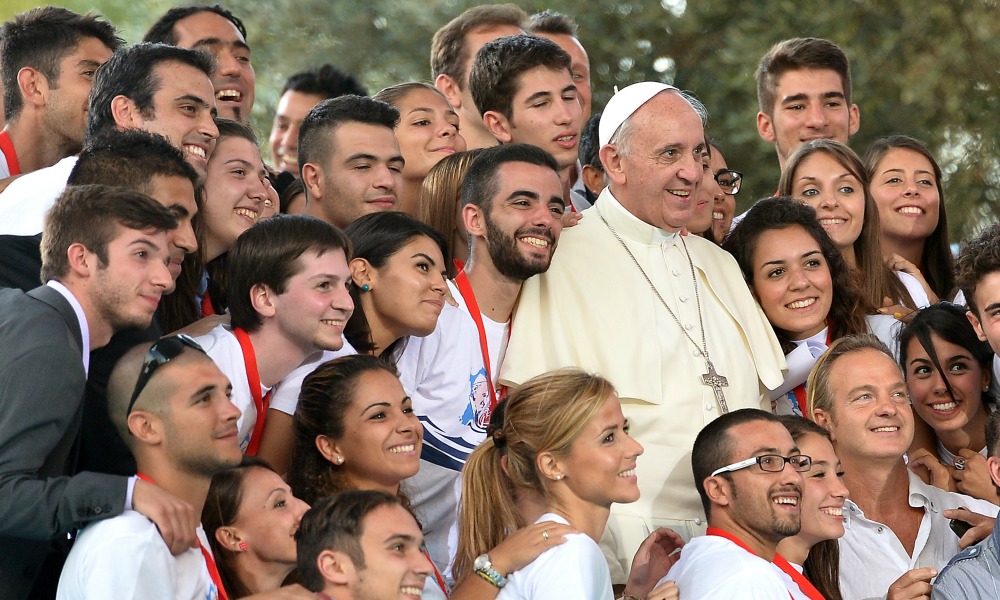
SynodYouthIf you are between 16 and 29 years of age, you can contribute to the next pre-synod Meeting to be held in Rome from 19 – 24 March. How? Through the site www.synod2018.va. From the site you will be able to sign up on the Facebook group under one of the  6 languages. Within these groups the members will have the chance to express their own ideas on the themes proposed by questions – that will “launch” the discussion of the youths present in Rome – each of which will be matched with a hashtag. In the end, a final document will be drafted with these ideas, containing the view points and proposals that emerged, and will be presented to the Synod Fathers who will gather in Assembly in October  2018 on the theme “The youth, faith and vocational insights.”