23 Feb 2018 | Non categorizzato
Chiara Favotti
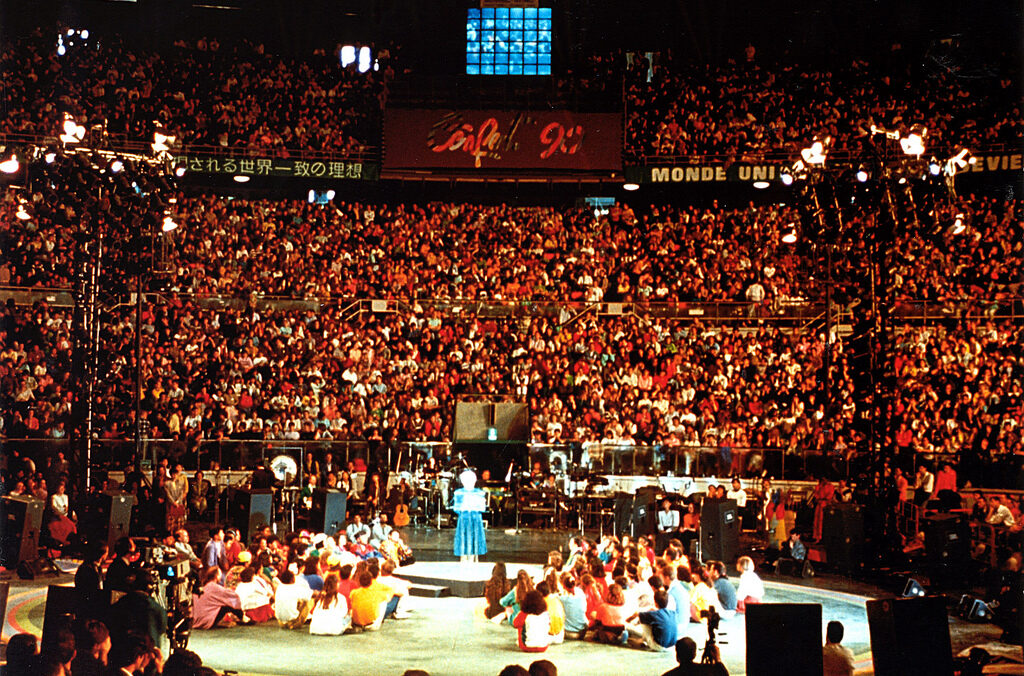
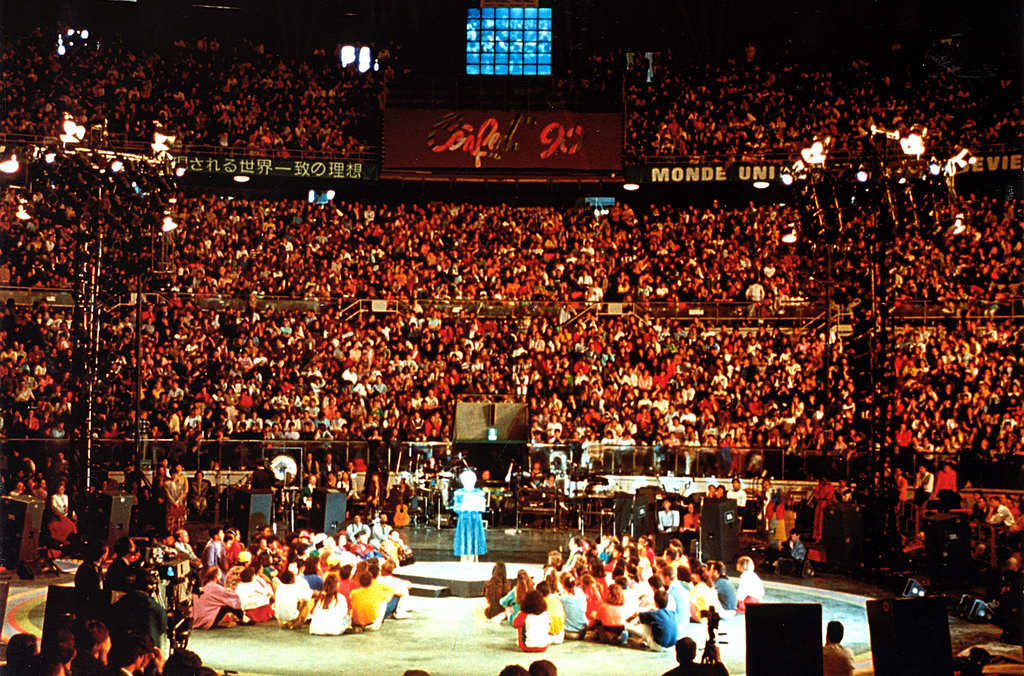 During adolescence, going with the Gen and the young people from the united world project, and the any experiences we shared, opened my heart far beyond the walls I knew. It made me hope and think big, of a truly united world. It wasn’t a fantasy, but a new way of thinking, of moving in a new direction, taking little steps, but made of real and authentic brotherhood. I took part in the 1990 Genfest with them. It was an unforgettable experience. For the first time, there was an explosion of happiness, young people from east and west looked in each other’s eyes and squeezed each other’s hands as television cameras broadcasted the scene in the Paleur Stadium to millions of television viewers around the world. We were given a mandate: to bring love back into the world. “Friendship and kindness aren’t enough,” said Chiara Lubich. “Philanthropy isn’t enough, neither are solidarity or non-violence. We have to change from being people focused on their own small interests, to being small daily heroes who are at the loving service of their brothers and sisters in every neighbor.” The next year I left for Moscow. The iron wall that separated East and West may have fallen, but at a great price, pulverizing ideals and an entire social system. There were no winners, nor losers, only the disillusioned, suffering and widespread poverty. It was clear to me: It’s not enough to bring down a wall to create a free and just society. Now, those words that I heard at the Genfest are the only way forward for me: “Only in harmony with each other and forgiveness toward each other can you build a real future.”
Chiara Favotti
22 Feb 2018 | Non categorizzato
At the mechanic’s I had brought my car to the mechanic’s for a small repair. The young mechanic said he would call me when it was ready. After six hours, no phone call came. I went to the workshop and strangely he pretended not to remember the job to be done and went on to serve other clients. After waiting for an hour he returned with the bill. It was exorbitant for such a small job. Being black, I felt this was evidently an act of discrimination. I paid, but anger and sharp pain got hold of me. When I was about to explode, I stopped to think and wonder how I could live the Gospel in a moment like this. I calmed down and patiently explained the facts to the person in charge. He listened to me and got the message, and ordered a reimbursement. That reimbursement seemed to me like the fulfilment of the promises of the Gospel. Welile – South Africa
Hunger and thirst for justice I was a revolutionary, and hungered and thirsted for justice and I said it in a loud voice, everywhere I went. At a certain point I found an answer in God, and for him, I left everything. One day I was asked to speak in a factory, but now there was a difference: it was no longer I but Jesus who spoke through me, because I tried to find love in my brothers. Looking at all those restless faces on the revolt, thirsty for justice, I got the confirmation that only love can achieve the miracle of changing people, their ideas, and the structures. This love is God in us and among us. Maria Teresa – Brazil Change of plans With my husband’s consent, I thought of enrolling in a course that would have been useful for my work. I was enthusiastic, because I saw that slowly the difficulties smoothed out and all seemed to confirm that I was on the right road. I had started to gather the necessary documents when I discovered I was pregnant, and this confused me. I would have wanted to set aside my project for some time. Upon reading the Gospel with my husband, we understood that God had other plans for us and we prepared to welcome the baby with joy. D.T.B. – Croatia The trump card I am a sales agent. One day I entered the office of a big company to present my products to the head of the purchasing office. Since he showed very little interest, I prepared to leave his office. But during that brief meeting I noticed that I was dealing with a person in suffering. I was already at the door when I felt I had to go back and simply asked: “Are you sure you’re feeling ok?” Wide eyed he asked me: “Why are you asking this?” I answered that I just had that sensation, greeted him again and left. The next day, I received a phone call from him. “I want to thank you, because after you left, your question rang in my mind. So that evening I went to my doctor who confirmed that I could have collapsed at any minute and there was immediate need to intervene with a strong therapy.” That same day, the company made a big order. So I not only found a big client, but had also helped a person to feel better. Putting love before all else in our actions is always the trump card. From Focolare website www.flest.it – Italy
21 Feb 2018 | Non categorizzato
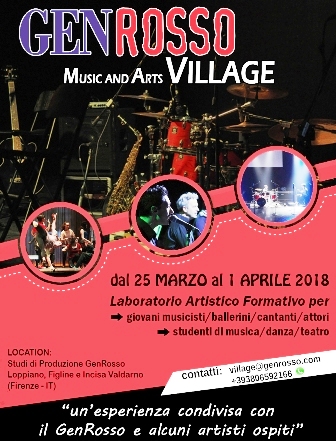
The GEN ROSSO (INTERNATIONAL PERFORMING ARTS GROUP) is presenting the 1st edition of the Gen Rosso Music and Arts Village, a residential in-depth artistic experience with the sharing of values in the light of the charism of unity. The project addresses young professionals and students preferably from 18 to 30 years of age, in disciplines such as music, dance, singing and theatre. The didactic method is designed and handled by Gen Rosso tutors having the qualified artistic capacities and experience. The program will include the study of specific themes. Exchange of experiences, dialogue sessions and practical labs will be exhibited in a final performance. The evening sessions will be enriched with interesting artistic contributions. The first edition of the Village will take place from 25 March (arrivals in the afternoon) to 1 April 2018. A participation certificate will be issued at the conclusion. Gen Rosso, through the Village secretariat, is at everyone’s disposal for further information and all the documentation needed for enrolment. (limited number). Contacts Secreteriat VILLAGE: +39 0558339821 (9.00-13.00, Italian time) Franco Gallelli cell +39 3806592166 Email secretariat VILLAGE: village@genrosso.com
20 Feb 2018 | Non categorizzato
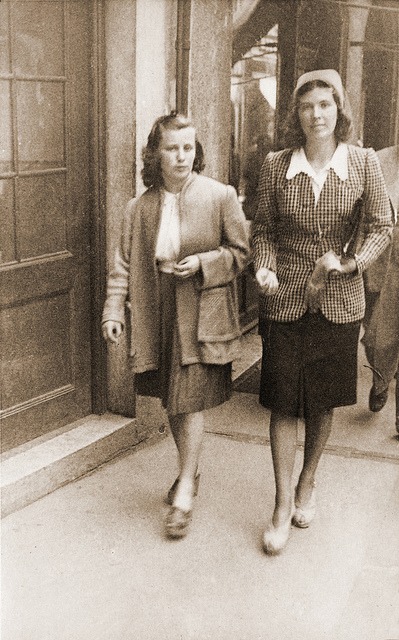
Gis and Ginetta
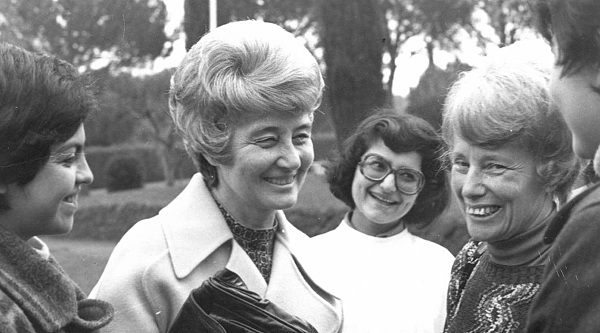 When the war ended Gis and Ginetta asked their mother to let them live in the focolare. Ginetta got permission, but the little one no. She didn’t give up: she knew that her decision was final and it would only be a matter of time. The solution was found by Igino Giordani who, knowing Mamma Calliari to be one of his passionate readers, offered Gis a job in Rome. On December 6, 1949, the mother was happy to opt for Giordani. She let Gis leave for Rome, oblivious to the fact that besides being the judges secretary, she would open the first focolare at the capital of Italy with Chiara and others. From then on Gis lived at Chiara’s side with a few short interruptions to start up focolares in several places around Italy. Speaking of those 25 years with Chiara, in 2005 she confided: “It’s very simple, limpid, profound: all that is hers is mine, all that is mine is hers.” It was a remark that fully represented who Chiara was for everyone in her focolare: “Philadelphia is more than a reality,” says Chiara. “It’s here where I take strength to face the daily crosses (after the personal union with Jesus). Here you go from Divine Wisdom that’s shared spontaneously, to practical advice on health, a dress, the house, the food; to constant little helps, every day, with sacrifices that could never be counted. Here […] The blood that flows between us is of a home, but a heavenly home.” “In her office,” Gabri Fallacara recalls, “she telephoned everybody, building a network of love, incisive, open and understanding. With absolute trust she placed herself in the most favorable conditions for discerning what the charism of unity asked, day after day, of Chiara and of us.” Following Chiara’s death Gis continued living for everyone, in spite of her failing capacities, she was a gushing fountain of tenderness and affection. In July 2017 her worsening health transformed her room into a crossroads of heavenly encounters. On January 2018, Gis peacefully left this world. “Right to the end she continued to give of herself in order to make Chiara continue to live in the Movement today. She gave me a big lesson of simplicity, radicality, trust in God’s plan and unity with all.”
20 Feb 2018 | Non categorizzato
In remembrance of persecuted Christians around the world, on Saturday 24th of February the Help to the Suffering Church (ACS) will colour the Roman Colosseum red. In the same context, two other symbols of the recent persecutions of Christians will be painted the same colour: St Paul Cathedral in Mosul, Iraq, and the Maronite Church of St Elia in Aleppo, Syria. After the Trevi Fountain lit up in red on April 29, 2016, ACS returns again to offer this “sober provocation” in the capital, as the director of ACS-Italia, Alessandro Monteduro explained during the press conference held for the event. The main event will be held in Rome, in Largo Gaetana Agnesi, starting at 6 pm. The general secretary of the Italian Bishops’ Conference, Mgr. Nunzio Galantino, and the president of the European Parliament, Antonio Tajani confirmed that they will be present. Source: SIR
17 Feb 2018 | Non categorizzato
Since the deadline is set for 1 March, there is still time to participate in the #FraterniTALES contest organised by the United World Project, and become “United World Ambassadors.” The Ambassadors selected will cooperate with UNESCO’s National Commissions in the presentation of the good practices promoted during the United World Week in their respective countries. “Besides promoting peace actions and projects, the youths will have to show their talents in tracking down facts and choices for brotherhood,” explained Marco Desalvo, president of the NGO New Humanity, promoter of the contest, and the more extensive United World Project together with the Youth for a United World of the Focolare. Young people aged 18 to 24 may participate in the selection, and must have the skills, passion and interest in issues like universal brotherhood, global citizenship, sustainable development, education in human rights, functions of international institutions and ethical leadership. All the #FraterniTALES will be published on the contest’s Facebook and Instagram pages. The 30 most outstanding candidates will become true and proper spokespersons of the United World Project in their countries of origin after a training course to be held in two phases, the second of which will be at the Genfest in Manila. For information and sending of documents (video or text) see United World Project
