28 Feb 2018 | Non categorizzato
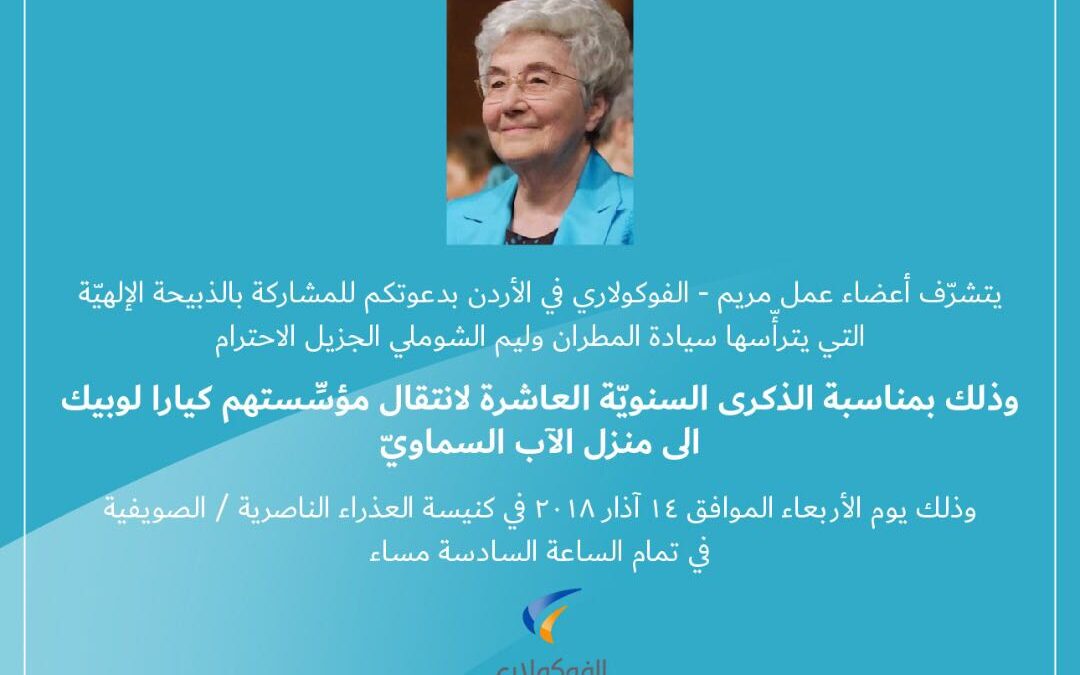
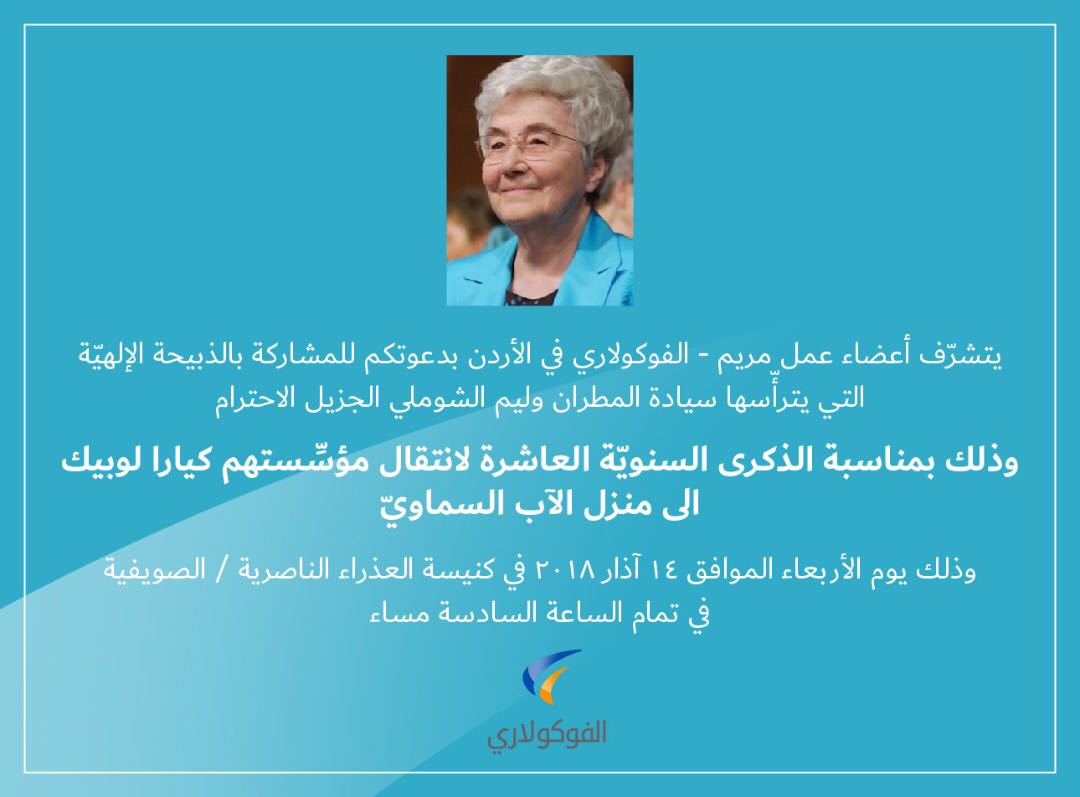
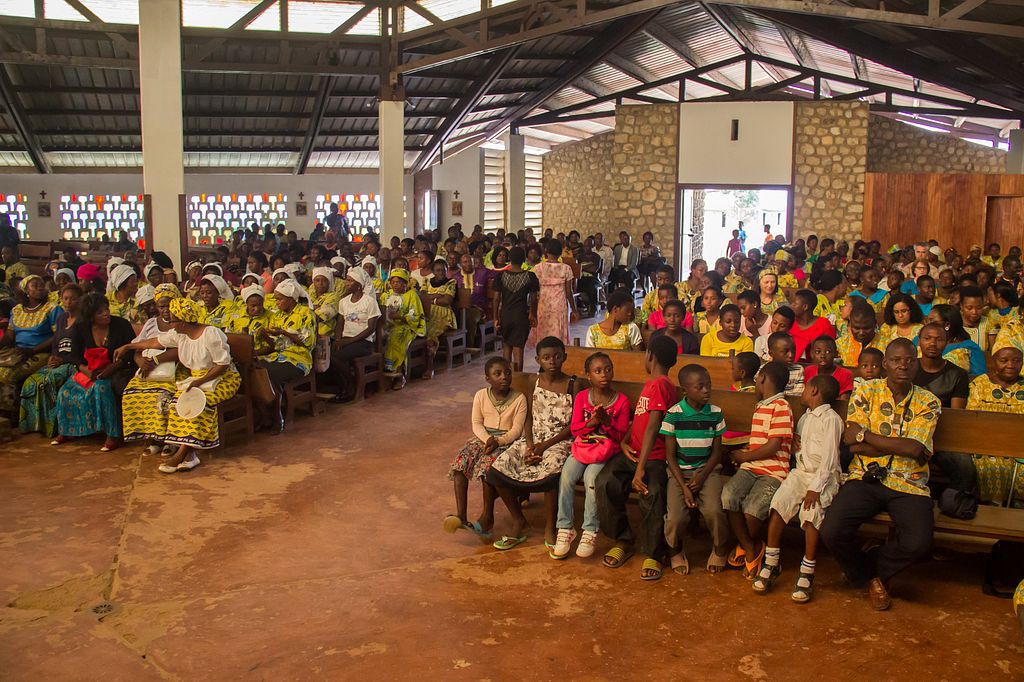 March 14, 2018 marks the 10th anniversary of Chiara Lubich’s passing away. Focolare communities throughout the world will commemorate this anniversary through a varied number of events that mark the charism’s contribution to social change. On March 3, 800 people are expected to participate in a conference held at Maria Hall of the Catholic University Hospital in Seoul, Korea. “Mary: a ‘yes’ that changes society” is the theme chosen for a meeting to be held on March 11 at Goma, Democratic Republic. Of Congo. A conference on “Chiara Lubich: a life of dialogue for peace” is scheduled to take place also on March 11, at Chicago, USA. “Conoscenze plurali” is the title of the convention which will take place on March 17 at the Salone dei Cinquecento of Palazzo Vecchio, in Florence, Italy. On March 18, a multi-ethnic day of social action is being organized in a tribal village at Chiang Mai, Thailand. A day’s meeting on “Chiara Lubich and social actions” will be held on March 24 at Chisinau, Republic of Moldova. These are some of the many initiatives planned. A 360º overview of the social dimension of Chiara Lubich’s charism will be presented through an artistic event scheduled for March 3, at the Mariapolis Centre, Castel Gandolfo, Rome. 2000 participants from the five continents are expected to attend. The Secretary of State, Cardinal Pietro Parolin and personalities from the fields of culture, communication and institutions are also expected to be present. This event can be followed in English, Spanish, Portugese, French and Italian via internet (http://live.focolare.org/chiaralubich/).
  For Chiara Lubich, the greatest attraction of modern times was “to penetrate to the highest contemplation while mingling with everyone, one person alongside others”. Sergio Zavoli, who was a very close friend of Chiara, defined her as a mystic of unity between heaven and earth. While speaking about the change she brought about in Trinitarian mysticism, he said: «Allowing God to dwell in the intimacy of one’s soul is making him live among men through communication between – I repeat her words – God in me and God in my brother. It is not by chance that Chiara Lubich’s thought appeals to us to put together the fragments of the inseparable, that is man, and to recompose the fractures of what is shareable, that is the community». Since the very beginning of Lubich’s experience in her native city of Trent, the social change that stemmed from her thought, gave rise to initiatives that have a very strong social hallmark. Today, these actions and works are found practically in all the world; they have the characteristics of each region and culture and they seek to give an answer to specific situations of individuals, groups and communities in need (see link). When confronted with the question about the Focolare’s focal aim today, ten years after the death of its founder, Maria Voce answered that the Movement “must definitely maintain unity with its source, that is Chiara, hence fidelity to the charism as originally passed on; it must return to its beginnings to discover the radicality and totality required from us, may be even more today. The Movement has to be developed so that it can be that instrument designed by God to spread the spirituality of communion and build the unity of the human family. It has to deepen its knowledge about the great charism God entrusted to Chiara and about ways of transmitting it to everyone, since besides its spiritual aspects, the charism has also doctrinal, social and political ones that can influence all areas”. Maria Voce expresses her conviction that today’s visibility of the Focolare Movement, where incidence on human and social realities is concerned, albeit good, “is still too localized”. Then she affirms: “I think that this visibility needs to be more effective and more extensive. May be the Movement needs to become more known even on a worldwide level. We are present almost in every country, but this, perhaps, is not evident enough. It will happen through our life: the more we live according to the charism, the more we will influence the world around, and hence become more visible”. SIF
Follow the live streaming event on 3 March at Castel Gandolfo, from 4.00pm – 7.00 pm: http://live.focolare.org/chiaralubich (in English, French, Spanish, Portuguese, German)
27 Feb 2018 | Non categorizzato
https://vimeo.com/257451488 Choose subtitles: English, Spanish and Italian
26 Feb 2018 | Non categorizzato, Word of
for ages 4-8 | for ages 9-17 | Print | Audio https://www.focolare.org/gb/files/2018/03/201803WOL.mp3 King David, who was also a prophet, wrote this psalm at a time when he felt weighed down by anguish and poverty and in danger from his enemies. He wanted to find a way out of his painful situation, but realized he was completely unable to do so. Therefore he looked up, with hope, toward the God of Israel, who had always protected his people, and implored him to come to his aid. This month’s Word of Life draws our attention to the fact that he was asking to know the ways and paths of the Lord, to shed light on the choices he had to make, especially at difficult times. “Make me to know your ways, O Lord; teach me your paths.” Sometimes in life we too have to make decisive choices. It can be totally absorbing to have to do so, and it can help us to think deeply about what our conscience suggests is the right way forward. It could be that we have many paths to choose from and are uncertain about which is the best. At other times, we may feel there is no path at all. Wanting to find a way ahead is a strong human need, and so sometimes we ask help from those we consider our friends. Christian faith makes us become friends with God. He is a Father who loves us; he knows us through and through and wants to accompany us on our journey. Every day, God invites us to set out freely on an adventure. Our compass is unselfish love for him and all his children. The ways and paths are opportunities to meet other travelers and find new goals that can be shared. Christians are never isolated individuals, but part of a people travelling towards the fulfilment of the plan of God the Father for humankind. Through all he said and did, Jesus revealed God’s plan to bring about universal fraternity, the civilization of love. “Make me to know your ways, O Lord; teach me your paths.” The Lord’s ways can be daring and, at times, may seem too challenging for us, like rope bridges stretching between high cliffs. They challenge our selfish habits, our prejudices and false humility, and instead create opportunities for dialogue, encounter and commitment to the common good. Above all, they call for a love that is ever new and capable of forgiving, because it is founded on the rock of God’s love and faithfulness to us. This ever-new love is essential if we are to build just and peaceful relationships among peoples and nations. Even the witness given by a simple kind deed, done with love, can give others the light to see their way forward. At a gathering in Nigeria, when both children and adults were sharing their experiences of loving according to the Gospel, a little girl called Maya said, “Yesterday, when we were playing, a boy pushed me and I fell over. He said ‘sorry’ and I forgave him.” Those words touched the heart of a man whose father was killed by Boko Haram. “I looked at Maya. If a little girl like her can forgive, it means that I can do the same.” “Make me to know your ways, O Lord; teach me your paths.” If we want a sure guide on our journey, let’s remember that Jesus said, “I am the Way…” (Jn 14:6). When Chiara Lubich spoke to young people gathered in Santiago de Compostela during the 1989 World Youth Day, she encouraged them: “By describing himself as ‘the Way’, Jesus was saying we must take the same way as he did. We could therefore say that the way Jesus followed has a name: it is love. The love that Jesus lived and brought on earth is special and unique. It is the same ardent love that burns in God … “But who should we love? Our first duty of course, is to love God. Then, to love our neighbor, every neighbor … From the moment we wake up in the morning until we go to sleep at night, every relationship with our neighbor should be lived with this love. Whether we are at home, at college, at work, on a sports field, on vacation, in church or on the street, we should take advantage of every opportunity to love, seeing Jesus in our neighbors, neglecting no one, being the first to love … “This means entering as far as possible into the minds and hearts of others, truly understanding their problems, needs and troubles — as well as their joys, so that we can share everything with them … “In a way, we have to become that other person, just as Jesus, who was God, became a man out of love. Then our neighbors will feel understood and supported because someone is helping them bear their burdens and pain and share in their joys. ‘Living the other person,’ ‘living the others’ – this is a great ideal; this is amazing.” Letizia Magri
25 Feb 2018 | Non categorizzato
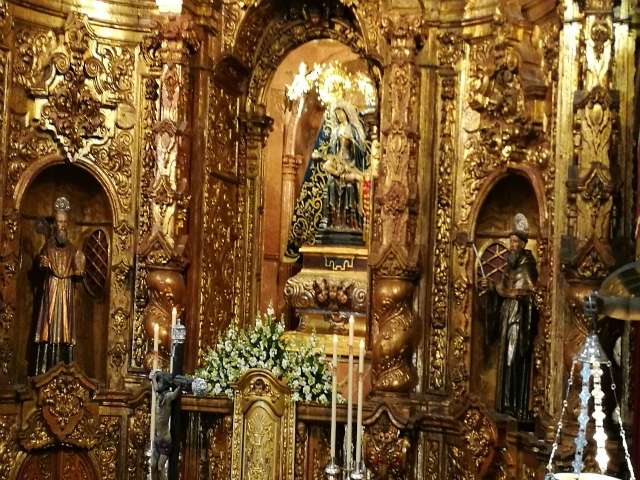
Facing the Mediterranean, to the southeast of the Strait of Gibraltar – a bridge between the two continents and one time end of the world – the city of Ceuta rises, which, along with the nearby Melilla, represents Spanish colonial remnants on the continent of Africa. Because of its strategic location on a piece of privileged coastland, the two cities have for decades have been considered possible entry ways into Europe, in spite of the dividing wall. Every day, men, women and children from the most diverse collection of African countries, escaping wars, poverty and persecutions of every kind, cross entire countries in an attempt to find a shore near the city on which to disembark. Right on this strip of land which, since 1851 has been under the Diocese of Cadice, which is in the midst of getting ready for the 600th anniversary of the arrival of the one who has been called the “Virgin of Africa,” a single block of wood representing the Blessed Virgin seated with the body of the dead Christ between her arms. In 1949, Pope Pius XII wanted her to be named the patroness of the city.
24 Feb 2018 | Non categorizzato
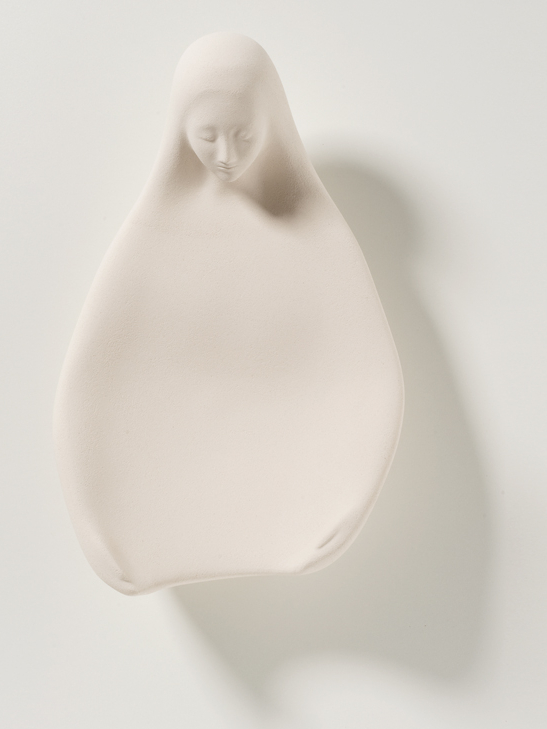
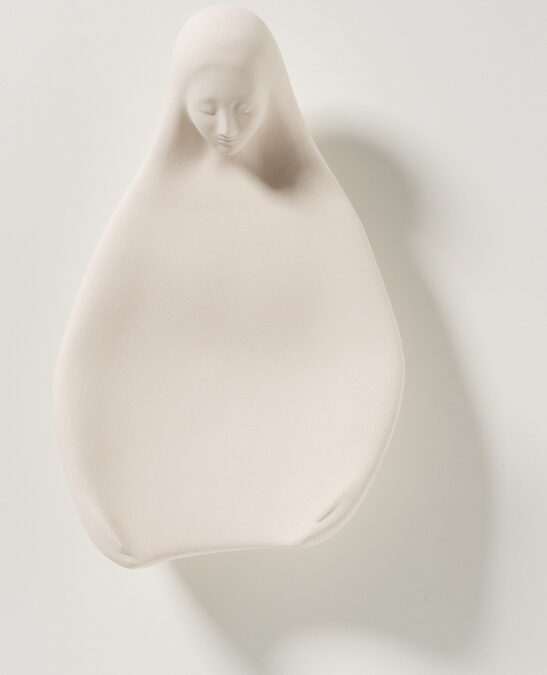
“Madonna della bella-accoglienza” © Centro Ave Ceramica
23 Feb 2018 | Non categorizzato
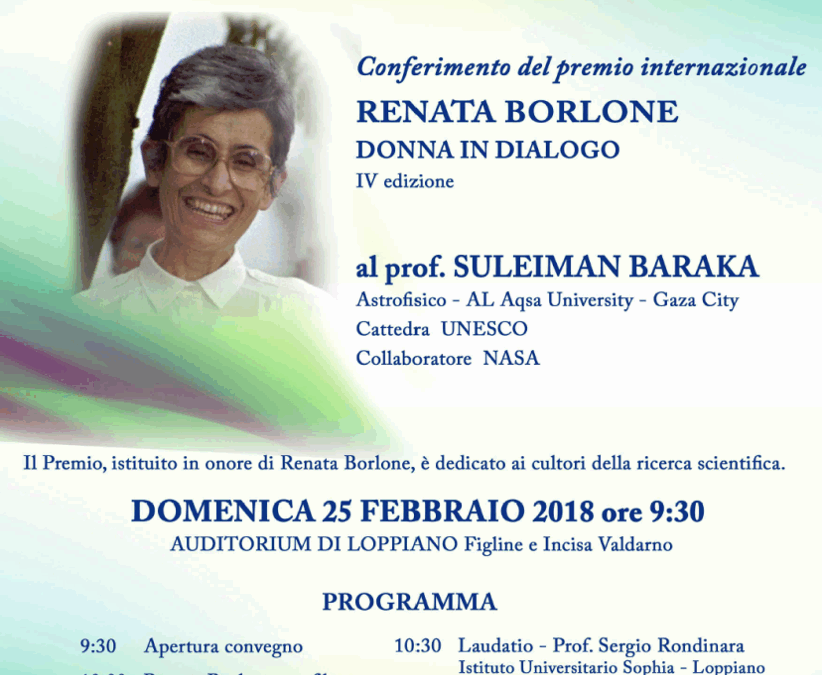
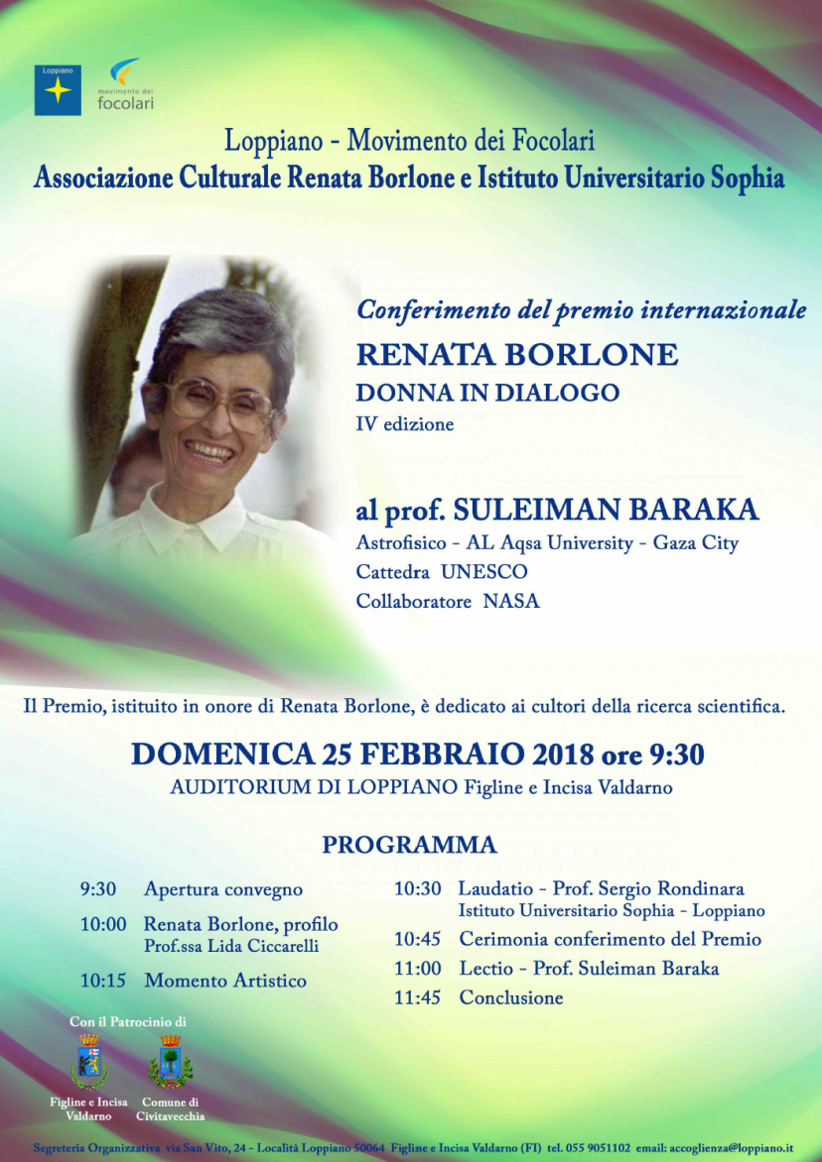 The “Renata Borlone Prize” will be awarded to Prof. Suleiman Baraka, a native of Gaza and an internationally renowned astrophysicist on Sunday 25 February, in the Auditorium of the International Centre of Loppiano (Florence), in the presence of the representatives of the scientific world and civil authorities. Now on its 4th edition, the Prize was instituted by the Cultural Association bearing the same name, to honour the memory of Renata Borlone (1930-1990), who for over 20 years was co-director of the town of Loppiano and is now a Servant of God. Full of human and spiritual values, Renata nurtured a special passion for science, intended as the privileged tool for the construction of unity of the human family. The Prize’s Scientific Committee conferred this recognition to Prof. Baraka for “his scientific research which focuses on human values and peace”. The awardee stated “This prize in honour of Renata Borlone who worked for the good of society – is a further incentive and encouragement to place science and its beauty at the service of humanity, promote peace among peoples, and enable the young generations to open their horizons to hope, despite the difficulties and obstacles they may have to face.”
