4 Sep 2017 | Non categorizzato
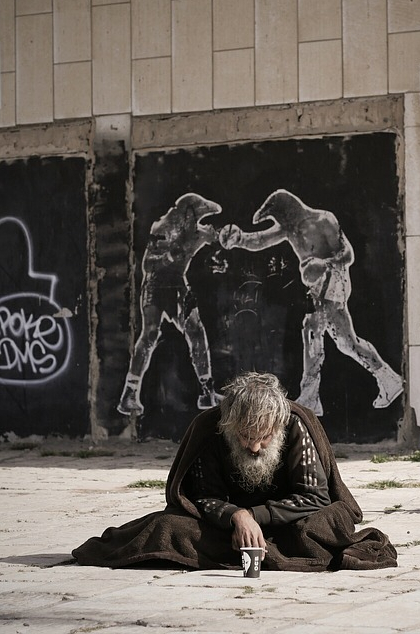
The Drunken Man I saw a rift between a drunk man and a group of kids who were disturbed by him. They suddenly pounced upon and began to beat him. It all happened so quickly. With a lot of difficulty, he managed to get back on his feet. He was spitting blood, and lost two teeth. He became hostile and threatened revenge. Then, it was just me and that despised, badly reduced and discarded man in whom Jesus was asking to be loved. I overcame a bit of fear. What if he turned on me, infuriated as he was? I provided him with hadkerchief to stop the bleeding. Then, I tried to show some concern for him. He told me about his health problems and other woes. I got him the cigarette he was trying to get; but mostly I tried to steer him away from the idea of taking revenge on those boys. It wasn’t easy to calm him down. I was also worried that those guys might come back and there would be more violence. I sat there and listened to him until he decided to go home. O. (Italy) Sick Sometimes I go through moments of rebellion, but then the desire to believe in the love of God and of my brothers and sisters prevails. I try not to let myself be beaten by the suffering. I try not to stop and focus only on me and be a burden on others. When I lost my hair because of the chemo, my friend Bruna said: “Your hairs are counted. Give them to Jesus like flowers, as a sign of your love.” Even my illness has meaning and for that I thank God. Brigitte (Germany) Peace My father worked in a shipyard. During a strike, in the 1980s, he was clubbed to death. After that, our life changed, although I was too young to realize it. We only bring it up with my Mum when some award arrives or on the anniversary of some historical anniversary. She had instilled in us the value of peace and of never taking revenge. Now, as an adult, I know that the value to be transmitted to the new generations is precisely this treasure that comes from God, but begins in me, from me. S. K. (Poland) Surprising Serenity Perfino la bidella, che aveva cambiato modo di rivolgersi a me, è diventata oggetto di nuova stima. A una collega che mi ha chiesto come facevo a mantenermi serena dopo tutto quello che mi era capitato, ho spiegato che come cristiana trovo nella verità una forza e una fonte di pace che mi dà il coraggio di ricominciare. I giorni successivi ero sorpresa io stessa dall’atmosfera distesa che regnava fra tutti.I had forgotten to inform the school office that I was going away with the children, and when I would return. Therefore, upon our return, a series of rebukes would be awaiting. It was humiliating to admit my mistake in front of my colleagues and director, also because they were all looking on me with hostility, even the ones who had always been so pleasant towards me. But drawing strength from the Gospel, I accepted defeat, trying to tranform it into love for everyone. I imagined how I would feel if I were in their shoes, and I understood their disapproval. Even J.L. – Ungheria
2 Sep 2017 | Non categorizzato
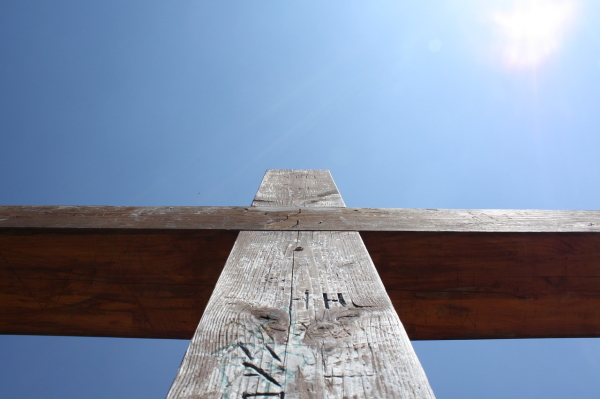
“That all may be one,” Those are amazing words! I believe it is impossible to think of words more beautiful and sublime than these. They make you dream of a world different from the one around us. It stirs your imagination to wonder what society would be like if this great ideal were fulfilled. Imagine a world where people love one another and where everyone shares the same feelings, where prisons have disappeared and the police are no longer needed. Imagine newspapers that do not report bad news – which is now out of fashion – but ‘golden news’ about divinely beautiful and deeply human events. It is a world where people sing, Yes, where they play, study, and work, but everything is done in harmony, where everyone does what they do to please God and their neighbours. I think we shall only see this world in Paradise. Yet Jesus spoke those words for us here, on earth. … I opened the Gospel and found another phrase that seemed uncannily like this one, as though a secret bond exists between it and our motto. It says, “When I am lifted up from the earth, I will draw all people to myself.” (Jn 12:32). “When I am lifted up from the earth…”. So Jesus did not make us “all one” through his wonderful words or his extraordinary miracles. The Cross was his secret. It was His suffering that solved the problem of making us all children of God and one amongst us. Could suffering, then, be the way, the key, and the secret to bringing unity among all people? Could it be the way to transform a boring and often wicked world into one that is joyful, shining with love and a foretaste of heaven? Yes, it is. As far as we know, the saints, who were genuinely intelligent, placed great value on suffering and the cross. They attracted huge numbers of followers and often left their mark on history — continuing to do good in future centuries. When I was a small child, a priest told me, “There is an empty place on the cross.” Turning over the crucifix that was on his table, he showed me the back and added, “This place is for you!” Okay then! If this is how it is, we are ready! What are we waiting for? In any case, large or small sufferings, accepted well or badly, will always be part of our life. We do not want to be opportunists! We are Christians! Is Jesus on the cross? I want to be there too. I will accept all the little crosses in my life joyfully. Yes, joyfully, even if I shed some tears. Nevertheless, deep down in my heart, I will tell Him who is listening to me: “I am happy. By suffering with You, I can help you draw all people to Yourself. In this way, we shall draw closer to the day when your great desire, ‘That all may be one,’ shall be fulfilled.”
Chiara Lubich
From “Conversations with the Gen” 1966-1969, Citta’ Nuova, Roma, 1998 pp 35-36

29 Aug 2017 | Non categorizzato
We received this message from a member of the Focolare community in Houston: “We live near downtown Houston. Many of our streets have become like rivers. Images of our neighbourhood are shown with the city centre skyline in the background. Fortunately we live on an elevated street, but the people who live below are all being evacuated. Many of the homes of our community members are destroyed. One of us who is a nurse is stranded at the hospital, along with four others, and no one can have access because the streets around the district are flooded. Emergency teams are working round the clock, taking turns to eat and rest. The saddest thing is that many of the people who are affected are elderly. There is nothing we can do to help at the moment because we are totally isolated. Thank you for your prayers.”
29 Aug 2017 | Non categorizzato
At the invitation of the Columbian bishops and of President of the Republic, Juan Manuel Santos Calderón, who received Nobel Peace Prize in 2016, Pope Francis will make an apostolic visit to the South American nation on September 6 – 11. The visit is a sign of support during the difficult peace process in a land that has been proven by years of civil war, and a gesture in favour of reconciliation. “The Pope’s presence will help discover that it is possible to come together as a nation learn how to see one another with new eyes of hope and forgiveness,” said Bishop Fabio Suescún Mutis, who heads the preperatory commitee. The symbolic dimension of the trip is provided by the Pope himself as he takes the first step, encouraging everyone to begin dreaming of and building a future of peace.
28 Aug 2017 | Non categorizzato
A fourth interfaith summer school is underway from August 25th to August 30th in Tonadico, Italy. The title of the course is “Interfaith Engagement in Theory and Practice.” It os promoted by Sophia University Institute (SUI) in collaboration with the Islamic Institute of England and the Risalat Institute in Qum, Iran. Forty two Christian, Muslim and Shiite students have come together for the school, and instructors include SUI president, Dr Piero Coda and Mohammad Shomali, Director of the London Islamic Centre. The goal of the school is to provide a space for sharing and reflection on the cultural and religious patrimony of Christianity and Islam, as well as future plans for dialogue and mutual collaboration in the light of current challenges.
28 Aug 2017 | Non categorizzato, Word of
Jesus was in the midst of his public life, proclaiming the kingdom of God was near, and he was preparing to go to Jerusalem. His disciples had some insight into the greatness of his mission. They realized he was the one sent by God, whom the whole people of Israel was waiting for. They looked forward to being freed from Roman rule, to the dawn of a better world where there would be peace and prosperity. But Jesus did not want to encourage these illusions. He said clearly that his journey to Jerusalem would not lead to triumph but rather to rejection, suffering and death. He also revealed that he would rise again on the third day. Those words were so hard to understand and accept that Peter protested and opposed such an absurd idea. He tried, in fact, to dissuade Jesus. After a firm rebuke to Peter, Jesus turned to the disciples with a shocking invitation. “If any want to become my followers, let them deny themselves and take up their cross and follow me.” (Mt 16:24) With these words, what was Jesus really asking from his disciples both then and now? Does he want us to despise ourselves? Does he want us to devote ourselves to a life of austerity and discipline? Is he asking us to seek out suffering so as to be more pleasing to God? This Word of Life exhorts us rather to walk in Jesus’ footsteps, to accept the values and demands of the Gospel in order to be ever more like him. This means living all of life fully, as he did, even when the shadow of the cross appears on our path. “If any want to become my followers, let them deny themselves and take up their cross and follow me.” We cannot deny it: each of us has our own cross. Suffering in its various forms is part of human life. Yet it seems beyond our understanding, the opposite of our desire for happiness. But it is precisely in this that Jesus teaches us to discover an unexpected light. It is like those times when you go into a dark church and discover how the stained-glass windows look so wonderful and bright, rather than dull and dreary as they did from the outside. If we want to follow him, Jesus asks us to reverse our value system, shifting ourselves away from the center of our world and rejecting the logic that seeks our own good. He suggests that we pay more attention to other people’s needs than our own, spending our energy in making them happy, as he did. He did not miss a chance to comfort and give hope to those he met. Following this path of liberation from egoism, we can grow in humanity, we can win the freedom that allows our personality to be completely fulfilled. “If any want to become my followers, let them deny themselves and take up their cross and follow me.” Jesus invites us to be witnesses to the Gospel, even when this faithfulness is tested by little or big misunderstandings within our social environments. Jesus is with us, and he wants us to be with him in staking our lives on the boldest of ideals: universal brotherhood and sisterhood, the civilization of love. This radicalness in love is a deep need of the human heart. We see it in key figures of non- Christian religions who followed the voice of their conscience right to the end. Gandhi wrote, as preserved in his secretary Pyarelal’s book, Gandhi: The Last Phase, vol. II: “If someone killed me and I died with prayer for the assassin on my lips, and God’s remembrance and consciousness of his living presence in the sanctuary of my heart, then alone would I be said to have had the non-violence of the brave” Chiara Lubich found, in the mystery of Jesus crucified and forsaken, the remedy for every personal wound and every disunity among persons, groups and peoples. She shared her discovery with many people. “Each one of us experiences sufferings in life that are at least a little like his,” she wrote in 2007 for an event organized by movements and communities from various churches held in Stuttgart, Germany. “When we feel these sufferings, we can remember that he made them his own. They are almost his presence, a sharing in his suffering. “Let us do what Jesus did. He was not paralyzed by suffering, but added these words to his cry, ‘Father, into your hands I commend my spirit’ (Lk 23:46), re-abandoning himself to the Father. Like him, we too can go beyond suffering and overcome trial by saying: ‘I love you in this, Jesus forsaken. I love you; it reminds me of you and is an expression of you, one of your faces.’ “And, if in the next moment we throw ourselves into loving our brother or sister and doing what God asks of us, we will almost always experience that suffering is transformed into joy… “In the small groups where we live … we can experience greater or smaller divisions. Even in these sufferings we can recognize his face, overcome the pain within ourselves, and do everything possible to become brothers and sisters again … The pathway and model of the culture of communion is Jesus crucified and forsaken.” Letizia Magri 1 M.K. Gandhi, Antiche come le montagne, Ed. di Comunità, Milano 1965, pp. 95-96. 2 C. Lubich, Per una cultura di comunione – Incontro Internazionale “Insieme per l’Europa” – Stoccarda, 12 maggio 2007 – sito web http://www.together4europe.org/
