27 Aug 2017 | Non categorizzato
 After describing the points of the Art of Loving, with the expressions that Chiara Lubich was fond of using, Maria Voce asked: “But how do you live this art which is not based on feelings or good intentions, but is practiced according to the measure intended by Jesus, which is to lay down one’s life? Is there a key, a secret that would help in making us more and more capable of living up to that measure?” Then she talked about the “culminating moment” of Jesus’s passion when he felt abandoned by the Father (Mt 27:46). Nevertheless, he placed himself in the Father’s hands (Lk 23:46), overcoming “that immense pain and with that he brought humankind into the bosom of the Father and into communion with one another.” “How can we live this mystery of the Forsaken-Risen Jesus? How are we to progress on the ecumenical journey when we clash over questions about truth? The Apostle Paul writes to the Philippians: ‘Have the same sentiments as Christ Jesus who even though he was in the form of God, did not consider equality with God something to be grasped at, but emptied himself and took on the form of a slave, being made in human likeness’ (cf Phil 2:5). With this attitude we are able to convey the truth of Christ in a way that is credible. Christ emptied himself of everything, as a gift of love.” She quoted from Pope Francis at the conclusion of the Week of Prayer for the Unity of Christians, on January 25th: “If we live this death to ourselves for Jesus, out old lifestyle is relegated to the past and, as happened to Paul, we enter into a new manner of life and of communion.” “Chiara Lubich calls this new manner of life: Jesus in our midst. She refers to Jesus’s promise to be in the midst of any who are united in his name, which means in his love (Mt 18:20). This presence of the Risen Lord amongst his own is determining for ecumenism.” From 1996, following an encounter with a thousand Anglicans and Catholics, Chiara began to talk about an “ecumenism of the people”. It was on that spirit that the journey of Together for Europe was begun, communion and collaboration among more than 300 movements and communities from different Churches. “Without authentic reconciliation,” Maria Voce affirmed, “we’ll never progress on the way towards unity. And this reconciliation characterizes the communion among the movements still today.” Finally, the president concludes: “In the light of the events in Lund on October 31, 2016 when Pope Francis and the President of the Lutheran World Federation, Bishop Dr Munib Younan, commemorated the beginning of the 500 years of the Reform, I felt I had to give a new push to the ecumenical involvement that marks our Movement.” The Declaration of Ottmaring was drawn up in the ecumenical community near Augsburg to “help us to think ecumenically, to remember that any brother or sister I meet, be they from my own Church or another Church, belong to the Body of Christ, to that body for which Christ gave his life. This is an absolute commitment we take on as Focolare Movement, and which can make us enter today into every aspect of human life. Ecumenism is a necessity of the times. It has to go forward. Because it corresponds to the need for God that everyone has, even unknowingly. If people are given the opportunity of an encounter with Jesus in the midst of Christians who love one another, their faith will be enkindled in them and their way of acting will change, they will seek justice and peace, and will work for solidarity among peoples. Only if we Christians are united will the world encounter God. See the full Italian text
26 Aug 2017 | Non categorizzato
“In today’s globalised and interdependent world, dialogue seems to be the only way that humankind can survive. Either we fight one another to the point of mutual destruction, or we dialogue. In fact, only openness to others and dialogue create life and bring life, because every action is then founded on having recognised one another as brothers and sisters, as children of God. I feel the Holy Spirit is at work everywhere, pushing our Churches in this direction: to dialogue so as to re-establish the unity broken over the centuries, so that Christians can give a shared witness to the world according to Jesus’ prayer: “Father, that they may all be one, so that the world may believe” (Cf Jn 17:21-22)” This was Focolare president, Maria Voce’s, strong encouragement in her presentation. She began from her own personal ecumenical testimony up until her encounter with the spirituality of unity; “In the 1960’s, through the experience of Chiara Lubich, who had come into contact with members of the Brotherhood of the Common Life Germany, dialogue was opened to the Movement. The ecumenical community of Ottmaring was established in Germany, where Catholics and Evangelical Lutherans live together.” During the Second Vatican Council, Chiara entered into contact with several Observers from other Churches. This gave rise to the so-called “Ecumenical Weeks” in which Christians from different Churches gathered yearly to share their experiences of living the Word with particular emphasis on Jesus’s New Commandment: “This is my command: Love one another as I have loved you’” (Jn 13:34). At the historic encounter between the Ecumenical Patriarch Athenagoras I and Chiara Lubich, on June 13, 1967, Maria Voce was head of the local Focolare community in Istanbul. “It was the first of 25 meetings that Chiara would have with that charismatic figure. Athenagoras announced that he was “her disciple” and wanted a focolare to be established in Constantinople.” Other important ecumenical meetings would follow. “Christians from the most varied Churches have wished to share the spirituality of unity and many have embraced specific vocations of the Movement. In fact, Maria Voce recalled, “you don’t dialogue with cultures, but with people. Or rather, we live in dialogue.” She continues: “God is the foundation of dialogue, God who is Love and the Father of all of us and makes us is sons and daughters in the Son, all brothers and sisters in one big family. Right from the start, Chiara took Jesus’s prayer that all be one – which we can translate as ‘making humankind into one family – as her motto in life. She invited millions of people from around the world to live it and make it happen.” So, for the Focolare, “dialogue is a lifestyle, a new culture that the Movement can and wants to offer to all the people of today.” And it has to be “sustained and substantiated by mercy, compassion and love.” Maria Voce cited Chiara Lubich who writes in 1970: “If we don’t have love and charity, we’ll never have the light of God and dialogue. Generic dialogue can become sterile, unfruitful…”[i]. Chiara Lubich continues: “The [person] near me has been created as a gift given to me. On this earth everything is in loving relationship with everything…every thing with every thing. But you need to be Love in order to discover the golden thread among beings” [ii]. Then the Focolare president described the so-called Art of Loving, which is summarized in a few points: love everyone; love always; be the first to love; and make yourself one with your neighbor (see 1 Cor 9:22). (Part 1) [i] C. LUBICH, Discorso ai focolarini,1970. Testo non pubblicato cit. in Vera Araújo, Il quinto dialogo del Movimento dei Focolari. Cosa è, cosa vuole, cosa fa, 7 [ii] C. LUBICH, Scritti Spirituali 1, “L’attrattiva del tempo moderno”, Città Nuova, Rome 1978, 140.
25 Aug 2017 | Non categorizzato
The annual meeting of the Zone Directors of the Movement from all over the world, as well as the people responsible for 4 of the Focolare “little cities”.
25 Aug 2017 | Non categorizzato
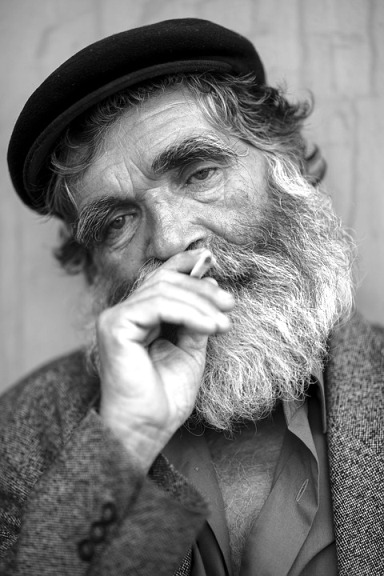
The waiting room at the clinic was packed, and a number of doctors were taking in patients. There were only two free seats, one next to a stylishly dressed lady and the other near a man who smelled really bad – his clothes let on that his hygiene was questionable. Perhaps he was there taking shelter from the intense cold out on the street. My first instinct was to sit next to the lady, since that smell was making me nauseous. All the same, I couldn’t help but think that if Jesus is present in every neighbor, surely he was also in that poor man. There was no excuse: my place was next to him, and he was the person to favor, precisely because he was unkempt, because he was someone “rejected.” So I sat there, overcoming the natural disgust I felt, with people watching in surprise. The man immediately began to talk to me. “What a nice sweater, what nice pants! How nice it would be to have clothes like that!” I must admit, when he started to touch my pants to admire their quality and spoke even more enthusiastically about my clothes, I started to feel uncomfortable. People were watching and expected me to react. At that point I gave him all my attention, treating him with dignity, without judging him, and seeing him as a brother. It wasn’t important whether or not what he was telling me about his life was plausible… I gathered that he needed someone who would listen, value and make him feel important. I tried not to mind that, as we talked, he was spraying saliva all over my clothes. I felt that this effort took me out of my comfortable life, and by doing so I’d be able to be compassionate toward that person. I proposed we meet the next day for a coffee. My new friend was surprised and happy. The many people around us obviously heard all of this. In the end, I heard my name called and went in for my medical visit. When I came out, “my” poor person was no longer there. By now the waiting room was almost empty, and only the stylish lady was left. She came up to me smiling. “I hope I’m not disturbing,” she said, “but I followed your entire conversation with that man. It seemed to me that your patience was unlimited. I would have liked to do the same, but I was not brave enough. I heard every word, and you really seemed interested in that unusual conversation. “When you went into the doctor, he got up and thanked all of us for our patience and told us: ‘He is a true friend. I had never seen him before, but he truly cared. For him, I am truly important!’ “Then he left. Tell me, why did you act that way with him?” I told her that I am a Christian, and that I would like to love and serve every neighbor, especially those who suffer most, like a father would to his son. The lady seemed surprised. She reflected a while and then told me, smiling, “If that is what living as a Christian means, perhaps I can too find myself once again in that faith I lost so long ago.” The day after, I went to have coffee with my new friend. I brought him some clean clothes. When we said goodbye, he hugged me. Through the tears he said, “It has been some time since someone treated me like a human being who needs love and affection.” Excerpted from Urs Kerber, La vida se hace camino (“Life goes ahead”), Buenos Aires: Ciudad Nueva, 2016, pp. 15–16.
23 Aug 2017 | Non categorizzato
Entitled “Neither victims nor brigands. Changing the rules of the game”, the much awaited LoppianoLab event will be held in Loppiano from 30 September to 1 October 2017. The expo, which focuses on the economy, culture, communication, training and innovation, is promoted annually by Città Nuova, Lionello Bonfanti Industrial Park, Sophia University Institute and the international town of Loppiano. Immigration, work, poverty, social integration, fighting corruption, commitment to the common good, family, youth, education and other topics will be discussed during the 8th edition of LoppianoLab.
23 Aug 2017 | Non categorizzato
Established by the United Nations in 2005, with the intention of raising awareness of those who are disadvantaged, International Solidarity Day, which is celebrated on 31 August each year, reminds the international community that humanity’s innate attitude is not about hate, discrimination or indifference towards those unable to live with dignity and in freedom, but that of unconditional collaboration and support.
