23 Aug 2017 | Non categorizzato
Established by the United Nations in 2005, with the intention of raising awareness of those who are disadvantaged, International Solidarity Day, which is celebrated on 31 August each year, reminds the international community that humanity’s innate attitude is not about hate, discrimination or indifference towards those unable to live with dignity and in freedom, but that of unconditional collaboration and support.
23 Aug 2017 | Non categorizzato
During the week 26 August – 2 September, in Amatrice and Borbona, the two central Italian regions badly hit by the earthquake, various initiatives will be held for children, teenages and senior citizens. These are being organised by the young people of the Focolare Movement as part of an aid program promoted by Caritas which aims to give support to the local community. 25 young organisers are expected to arrive from around Italy.
20 Aug 2017 | Non categorizzato
The World Day of Prayer for the Care of Creation (September 1) was instituted by the Orthodox Church in 1989. Since then, many other Christian Churches have joined the celebration, including the Catholic Church in the wake of Pope Francis’ Encyclical Letter Laudato Si’ on the care of our common home. The protection and safeguarding of the environment, the care and attention given to all people and to the environment which they inhabit, with particular regard to the poor and marginalized members of society, will be the central theme of the various initiatives and joint prayer meetings that will take place in different countries.

19 Aug 2017 | Non categorizzato
Praying does not consist specifically in dedicating time to meditation during the day, or in reading some passages of the Holy Scriptures or the writings of saints, and in trying to think of God or of ourselves for our own interior renewal. This is not the essence of prayer. Neither is it only the recitation of the rosary or morning and evening prayers. These are certainly expressions that help us to come in contact with God and express this intimate reality, which however never coincides completely with it. At most, a person can do all this during the day and may not have even prayed for an instant. In fact, there’s a substantial difference between prayer and prayers, which I shall try to explain, starting from the prayer that is mostly unconscious, but not less essential because of this. When, at night, we look up to watch the starry sky, we see a universe of unending beauty which enchants and amazes us in its silent obedience to a law: the law of life and harmony which from the beginning created it and sustains it in every moment: This law alone testifies to the Creator. The same goes for the stars in the sky, and the plants and flowers that “know” when it is time to blossom, when to bear fruit and die. A profound rapport thus binds all living creatures to God, a relation that – I dare say – is also a profound prayer because, with their beings and their sole existence, they unconsciously recognise and follow that law, “narrating the glory.” (Psalm 18.2). But this hidden prayer finds its highest expression – because it is free and conscious – also in man. It is that prayer which arises when man, even before entering into a dialogue with God, acknowledges him as the Father who created and sustains his being, on par with the entire universe. The relationship with God therefore stands out in its reality as the vital and together healing fundament all in one. And so, a relationship which man is called to establish daily with him, or to request from him, as some masters of the spirit do, in an original interpretation of the Our Father: “Give us today our daily bread,” is the request. Prayer, in order to be such, firstly demands a relationship with Jesus: to go with him, in spirit beyond our human condition, our worries, our prayers, though beautiful and necessary, and establish this intimate relationship with him. […] Let us now see some other ways through which this relationship can develop. I shall start from a type of prayer which apparently may not seem to such, and this is the prayer of offering. This is experienced by those who, prostrated by physical or spiritual sufferings, are unable to do anything, even to speak, and who offer to God, even if for the span of just an instant, all their existence. This type of prayer may thus be considered as the deepest type, since it embeds the soul in that point where our contact with God is immediate and direct. But also work can assume the type of a prayer of offering. I am thinking particularly of those who, during the day, are overcome by physical fatigue, and are almost unable to gather the necessary energy to dedicate themselves to prayer. Well, also they, if in the morning place an intention to offer their day to God, will feel that they are living in a continual dialogue with him, and in the evening, in the silence of even a brief moment of reflection will find union with him. And in the end, this is what humanity today is particularly sensitive to, the fact that the entire universe and all that it does, can be transformed into an immense, unceasing prayer that lifts up to God. Pasquale Foresi, from “Luce che si incarna” ( “Incarnated Light ”)– Ed.Città Nuova, Rome 2014, p. 31-32-33.
15 Aug 2017 | Non categorizzato
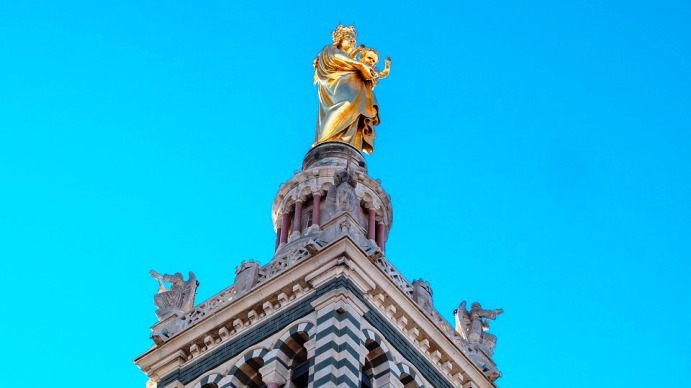
“The very thought of talking about Mary makes my soul tremble and my heart patter. This is a topic that lies beyond our faculties and silence would be more appropriate than words. Mary! The most extraordinary among all created beings, exalted to the point of being clothed with the title and reality Mother of God and therefore Immaculate, Assumed into Heaven, Queen and Mother of the Church. Mary is closer to God than to human creatures, and yet she’s a creature just like us, and that’s how she stands in front of the Creator. This is why it’s possible for her to be like an inclined plane for us, which touches heaven and earth. And so, even in her extraordinary state, she can be: a girl, young woman, fiance, mother, spouse, widow… just like us who at any age or in any condition in life can find a connection with her and therefore a model. […] As for having a true devotion to her – while recognizing the many devotions that have blossomed down through the ages to provide the Christian people with the sense of her maternal love, bearing in mind all the large and small woes in life – I would advise a way that brings to life in our hearts a love for Mary that’s like the kind Jesus has for her. While Mary has all those magnificent and extraordinary qualities that you know about, she’s also ‘the perfect Christian’. And, as you can see from the Gospel, she doesn’t live her own life but lets God’s law live in her. She’s the one who can say better than any other: ‘It is no longer I who live, but Christ living in me” (Gal 2:20). Mary is the living Word of God. If you really want to love her, ‘imitate her’. You be living Word of God! Imitating her makes you similar to her and leads you to love her because, as the saying goes, ‘Love either finds or makes equals,’ and it’s also true that equals love each other. […] So let’s imitate Mary, let’s become like her and love for her will suddenly blossom in our own hearts.” Chiara Lubich “Dialogo aperto”. Pubblicato in Città Nuova, 1976, n. 9, p. 33. See Centro Chiara Lubich
13 Aug 2017 | Non categorizzato
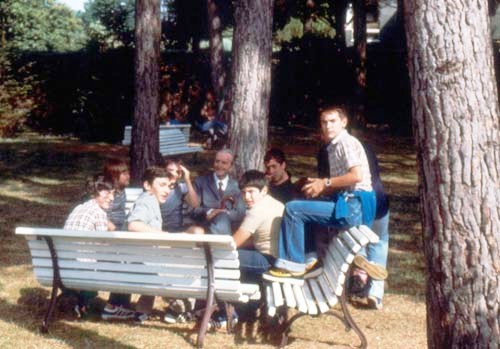
Igino Giordani treated young people with the love that emerges from the unity among generations. He was a brother to everyone, child or grown-up, because fraternity gathers us into one in the sight of the one Father: “Jesus used very vivid words to express his close kinship with people. One can only imagine how he loved his mother and cousins, childhood friends and the confidants of his youth. Yet, one time, when their arrival was announced to him as he was teaching, he responded: ‘Who is my mother and who are my brothers and sisters?’ And extending his hand towards his disciples, he said: ‘There is my mother, there are my brothers: whoever does the will of my Father in heaven is my brother, sister and mother’ (see Mt 12:48-50). The meaning of his answer is obvious: whoever accepts God’s fatherhood, becomes brother, sister and mother of Jesus. Christianity relates us to Christ and, through Him, to God, with the first degree of kinship which is brotherhood” [Igino Giordani, Il messaggio sociale del cristianesimo, 2001, p. 87]. Giordani compared the unity among generations to driving a car: youth is like the engine; old age like a prudent guide; both of them are required for arriving at the goal! From among his many letters, in 1979, a year before his death, there is one from a nine year old boy nicknamed Sandokan, who establishes a profound relationship with Igino, whom he calls ‘Little Grandpa with the heart of a Gen.” “Dear Grandpa, ever since I heard that you were sick, I’ve been trying to pray more for you. Today Mom, Dad and I asked the priest to remember you at Mass. And I asked Jesus in my heart to help and be close to you in this moment. I remember that in one letter I told you I’d visit you at home, but I couldn’t – but the important thing is to have you in my heart and [for me to be] in yours. When you’ve left us all, would you say hi to Jesus for us? You know, I’m sad that you’re going because I love you very much – but I’m glad that you’re going to be able to see Jesus who was everything for you. A big kiss from your Sandokan.” “Dearest Sandokan, also known as Fernando, I remember you very well. You and I are sons of the same Father, Jesus. And I spend my days alongside you, without a care for the fact that we live far from one another. Dad told you well: I’m a grandpa with the heart of a Gen. So that means we’re the same age as brothers. Just remember me to your little brothers who are also Jesus’s sons; and love them as you love Mom and Dad and as you love Jesus… A kiss on the nose from your Grandpa.” On the benches of the Mariapolis Centre, during the congresses that were offered to them by the Focolare Movement, the young people crowded around him, singing, dancing and discussing their lives with him. Each of them felt loved and made pacts with him to follow and live the Ideal of unity that Chiara Lubich had proposed. Giordani made a note of one of those joyful encounters in his diary: “Even though I’m without voice today, they asked me to say something at the school for the Gen boys and girls – three hundred people. I improvised, talking about different things, but focusing them on the mystery of love that is contained in the God-Brother-Me triad. There was an explosion of enthusiasm among the Gen boys and girls that was enhanced by songs and demonstrations of joy and unity among all” [from: Diario di fuoco, April 25, 1979].
