11 Aug 2017 | Non categorizzato
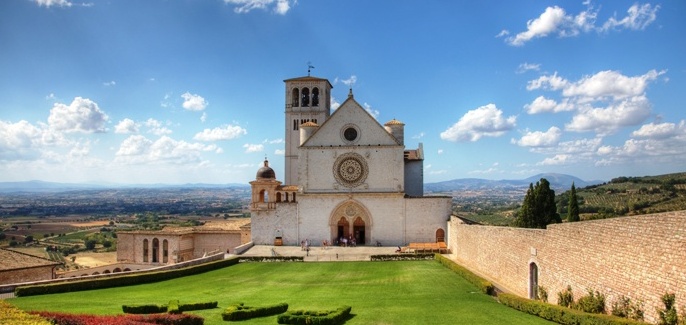
The first event in Mary’s life mentioned in the New Testament is the Annunciation (cf. Lk 1:25ff). Mary had been chosen by God from eternity, but something very special happened to her at the Annunciation. The angel appeared to her with a message from God, and Mary accepted it. Because of her yes, a new reality was immediately born within her: the incarnation of Jesus in her womb. If we try to understand the lives of some saints, we can see that something analogous to what took place in Mary happens spiritually in them as well, when, for example, they come across a charism that God has given for the good of the Church. We know the story of Saint Clare of Assisi, the most perfect disciple of Saint Francis. It sometimes happens that, while visiting the Church of Saint Damian in Assisi, where she lived, the tour guide describes that sacred place by saying, “Here is where Christ was incarnated in the heart of Clare.” And these are not just words; they reveal a profound truth. Even though Clare of Assisi had, we may assume, lived in a state of grace, her meeting with Francis brought about something new in her. Francis was the personification of a word of God addressed to the world anew — the word “poverty.” Meeting him caused Christ to develop and grow in Clare, to the extent that she became one of the greatest saints of the universal Church. And is it not indeed the thought of popes, saints and Church Fathers, that the Word generates Christ in souls? Likewise, when at a certain point in our lives we come to know the charism of unity, through another person, a publication or a meeting, and we feel God’s call to make it our own, if we say our yes, something similar to that which happened to Mary and the saints happens to us. Christ can truly begin to develop and grow spiritually in our hearts, as though by an actualization of our baptism. I read that Clare of Assisi before dying said these marvellous words, “I thank you, Lord, for having created me,” meaning, by creating me you have acquired your own glory. Hers was a death of love. If only heaven would wish something like this for us! If we remain faithful, our own death too will not be simply a physical death, but a death of love. We too will rise up to meet our mother, our saint, our model, the one who on this earth was our head, our queen, and our mother. And we will see the glory of Mary, queen of heaven and of earth. Above all, we will see her surrounded by those who loved her in a special way. From Chiara Lubich, “Mary – Transparency of God”, New City, London, 2003 – pp. 52-53, 67.
5 Aug 2017 | Non categorizzato
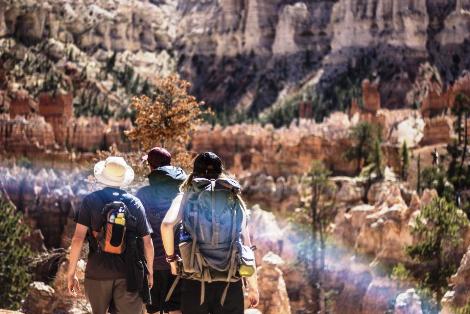
“Contemplating the immensity of the universe, the extraordinary beauty and power of nature, my mind rose spontaneously to the Creator of it all, to a new sort of understanding of the immensity of God. It made a new and strong impression on me; I felt like falling on my knees to adore, praise, and glorify God. I felt a great need of this, as if it were my actual vocation. It was as if my eyes had been opened, to understand as never before who it is that we have chosen as our ideal; or rather, who has chosen us. I saw that he is so great, so great, so great, that it seemed impossible that he thinks of us. This impression of God’s immensity stayed in my heart for several days. Now, saying, “Hallowed be thy name,” or “Glory be to the Father and to the Son and to the Holy Spirit,” is different for me: it has become a need of the heart. (Rocca di Papa, 22.1.87) “… Contemplating perhaps an endless stretch of sea, a high mountain range, an impressive glacier or the night sky dotted with stars. What majesty! The immen¬sity of it! And through the dazzling splendour of nature, we would find our way to its author: God, the King of the universe, the Lord of the galaxies, the Infinite. … He is everywhere: beneath the sparkle of a glittering stream, within the blossoming of a flower, in a bright dawn or a red sunset, on a snow-covered peak. Nature is rarely preserved in our concrete cities, built by human hands in the midst of the noise of the world. Yet, if we want, a glimpse of blue sky between the skyscrap¬er peaks is enough to remind us of God; a ray of sunlight, which does not fail to pierce even through the bars of a prison, is enough; a flower is enough, a meadow, a child’s face. … This will help us go back into the midst of humanity, which is where we belong, strengthened, as Jesus certainly was when having prayed all night to the Father on the mountainside under the starry sky, he went back among people to do good. (Mollens, 22.9.88) From Chiara Lubich – “Cercando le cose di lassù” [Seeking the things that are above]– Città Nuova Editrice, Roma 1992, pagg. 5 – 111,112.
4 Aug 2017 | Non categorizzato
2 Aug 2017 | Non categorizzato
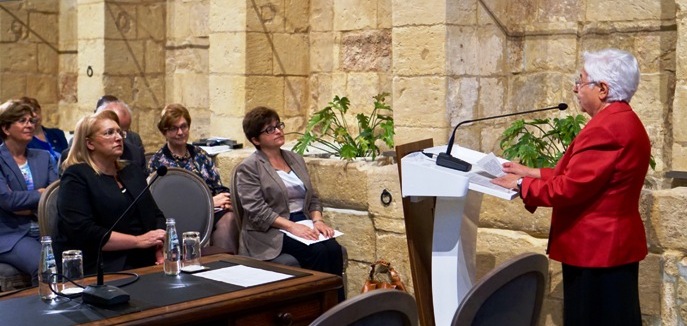
Photo A. Dimech – © CSC Audiovisivi
28 Jul 2017 | Non categorizzato, Word of
This psalm is a hymn of glory that celebrates the kingly nature of the Lord who governs the whole of history. He is eternal and majestic, yet he expresses himself in justice and goodness, more like the closeness of a father than the power of ruler. God is the focus of this hymn, which reveals his tenderness, superabundant like a mother’s. He is merciful, compassionate, slow to anger, great in love, good to all … The goodness of God was shown to the people of Israel, but it extends over all that his hands have made, over each person and all of creation. At the end of the psalm, the author invites all living beings to make this hymn their own, thus adding a harmonious chorus of voices to his own proclamation: “The Lord is good to all, and his compassion is over all that he has made.” God himself entrusted creation to the hands of men and women, as if it were like an open book in which his goodness is written. We are called to cooperate with the Creator’s work, adding pages that speak of justice and peace, acting according to his plan of love. Unfortunately, however, what we actually see around us are the many wounds inflicted upon people, often the defenseless, and upon the natural environment. This happens because of many people’s indifference, and the selfishness and greed of those who exploit the great wealth of the environment purely for their own ends and at the expense of the common good. In recent years, the Christian community has developed a new awareness and sensitivity in its respect for creation. In this context, we can recall the many appeals of church leaders encouraging us to rediscover nature as the mirror of divine goodness and the heritage of all humankind. In his message for the Day of Prayer for the Protection of the Environment, on September 1 last year, Ecumenical Patriarch Bartholomew of Constantinople said: “We need to have constant vigilance, information and education in order to understand clearly the relationship between today’s ecological crisis and our human passions … which result in and lead to the current crisis that we face. “Therefore, the only way out of this impasse is our return to the original beauty … of frugality and asceticism, which can guide us toward a more careful management of the natural environment. “In fact, the voracious need to satisfy our material needs assuredly causes spiritual poverty, which in turn culminates in the destruction of the environment.” And in his encyclical Laudato Si’, Pope Francis wrote: “Care for nature is part of a lifestyle which includes the capacity for living together and communion. Jesus reminded us that we have God as our common Father and that this makes us brothers and sisters. “Fraternal love can only be gratuitous … This same gratuitousness inspires us to love and accept the wind, the sun and the clouds, even though we cannot control them … We must regain the conviction that we need one another, that we have a shared responsibility for others and the world, and that being good and decent are worth it” (228–9). Let’s take advantage of time we have off work, or all our our chances during the day, to lift our gaze to the depths of the sky, the majesty of the mountaintops and the vastness of the oceans, or even just to see a tiny blade of grass sprouting by the roadside. This will help us to recognize the Creator’s greatness, the one who is “lover of life,” and to find hope again in his infinite goodness, which surrounds all things and accompanies them. Let’s choose a modest style of life for ourselves and for our families, a lifestyle that respects the demands of the environment and is in keeping with the needs of others. Let’s share the goods of the earth and of our work with the poorest of our brothers and sisters. And let’s give witness to the fullness of life and joy by becoming bearers of tenderness, kindness and reconciliation to the world around us. Letizia Magri Each month the Focolare offers a Scripture passage as a guide and inspiration for daily living. Focolare’s founder, Chiara Lubich (1920–2008), wrote these commentaries for many years. Now an international commission continues this tradition, faithful to her spirituality of unity. Letizia Magri, an expert in marriage and family from the John Paul II Institute in Rome, is head of this commission and part of the Focolare’s center for the family. This Word of Life is translated into 96 different languages and reaches several million people worldwide through the media. This monthly leaflet is also a supplement to Living City, the Focolare magazine (livingcitymagazine.com). For information and to subscribe to this leaflet or to the magazine, write to: Living City, 202 Comforter Blvd, Hyde Park, NY 12538; tel: 845-229-0496; e-mail: livingcity@livingcitymagazine.com. Visit focolare.org (international) or focolare.us (U.S.). © 2017 by Living City of the Focolare Movement, Inc. Read more Coda, Piero (2015) “God and Creation: Trinity and Creation out of Nothing,” Claritas: Journal of Dialogue and Culture: Vol. 4 : No. 1 , Article 3. http://docs.lib.purdue.edu/claritas/vol4/iss1/3 Masters, Thomas and Amy Uelman, “Perspectives on money and material goods,” Focolare. New City Press: Hyde Park, New York, 2011, pp. 146-148. Rondinara, Sergio (2014) “The “Book of Nature”: Connecting Science and Wisdom,” Claritas: Journal of Dialogue and Culture: Vol. 3 : No. 1 , Article 5. http://docs.lib.purdue.edu/claritas/vol3/iss1/5
27 Jul 2017 | Non categorizzato
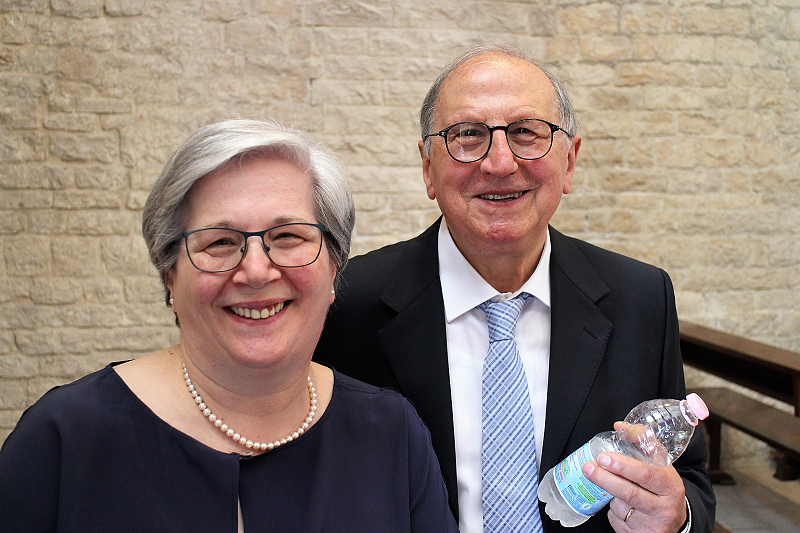
It began in April 2013. My wife Lucia and I were taking a walk when we noticed a five-cent coin on the ground. We were a bit embarrassed to pick it up. Then, walking along another stretch of the street, a man was tactfully asking those passing by for help. He held a five-cent piece in his hand, as if to say that he would be happy with even that. We’re not sure how best to say this, but let’s just say we felt ourselves blush. Some days later, thinking about what had happened, we felt an inspiring spark emerge – to start a project in our small circle. We decided to call it “Operation 1-2-5 in Freedom.” The idea is to freely consider the one-, two- or five-cent coins we get during our daily shopping as change, then invest it as a gesture of fraternity to alleviate situations of poverty locally and in poor countries abroad. The operation had come from an undeniable need to love. We received proof of this when we timidly brought the first 150 one-cent coins, 36 two-cent coins and 64 five-cent coins to the owner of a supermarket. Curious, he asked where they came from, and we explained it to him, asking whether he too would like to do something as well to meet the needs of the poor. From that day on, Antonio began to give something on top of whatever coins we brought him. Encouraged by his gesture, and beyond our families and at our condominium, we started to speak about it to even more friends of ours. The project went on to involve a number of families in Andria and then went beyond our borders: Lecce, Bari, Brindisi, Santa Maria a Vico, Naples, Rome, Spinazzola, Trani, Corato, Barletta Bolzano, Varese and Trent! This tangible good of collecting coins also brought something beautiful with it. Handing over the coins inspired many to wrap them: coins were collected in a tiny bag of white tulle, elegant envelopes and with flowers. We’ve even heard that this started happening in schools and between colleagues at work. Close to four years after the start of the operation, the collected coins now total $5,225 euros, all of which have been donated. Humanly speaking, a few cents might seem insignificant. But we feel that there’s something sacred about them, because they stimulate us to love others. They also recall a number of Gospel passages: the widow’s offering, the five loaves and two fishes, the few crumbs that the Canaanite woman begged Jesus for. It seems to us that little by little these ones, twos and fives, beyond any final figure, might contribute to increasing communion between people, placing talents and abilities in communion. Speaking of communion, it deeply touched us how, at the beginning of the project we uncovered, in an old notebook from 1991, something from our focolarino friend and sociologist Professor Tommaso Sorgi. Speaking about the Economy of Communion, he put it in these words: “The concept of communion is something deeper than the concept of solidarity. Communion brings it to life, illuminates it, puts it in motion and makes it possible. If this communion of souls is not a part of it, communion in the economy will never happen.” To sum up, we feel a special joy. Today Operation 1-2-5 in Freedom – which the Centro Igino Giordani in Andria has adopted – is more than ever motivated by love. That love that is like a tiny ray of light passing through a prism that refracts in the colors of the rainbow. In the same way, Operation 1-2-5 does this with the colors of fraternity and communion. Gennaro and Lucia Piccolo Centro Igino Giordani
