26 Jul 2017 | Non categorizzato
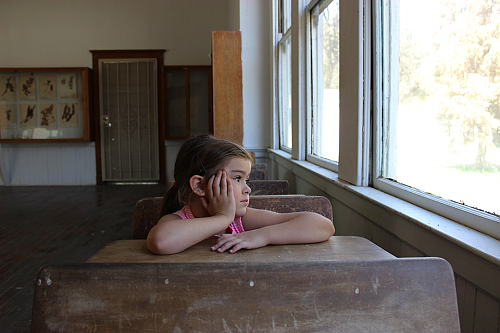
At preschool Sonia is 5 years old. One day she says to her mother, “I don’t want to go to school anymore; no one there is my friend.” After a day or two her attitude changes and she goes to preschool voluntarily. “What changed?” her mother asks. “I saw that there was a girl who was always quiet and by herself. No one wanted to play with her, so I went to her and told her I loved her. She smiled and then started playing with me. You know, Mum, love really warms the heart.” (Sonia – Slovakia) My poorest friend “As I left Rome, I left Nicu, the poorest of my friends, who is forced to beg as he waits to get a liver transplant. We stay in touch by phone. Often I’d wonder how I could continue helping him, seeing that I could only come up with a small monthly “income” of 20 Euros. Remembering the story of Zacchaeus, who gave half of his goods to the poor, I started each day to set aside 10 Euros for Nico. After I had collected 70, I sent the money to him via a friend. I heard that he was quite happy – more about the fact that I had remembered him than the amount he received. (Angiolino – Italy) A generosity competition The economy has not been doing well for some time. In a meeting at our condominium, after two hours of complaints, I proposed that we start a “communion of goods” in our building. One lady who lived alone offered her apartment to collect the food and clothing. We contribute whatever we feel is superfluous or even give away some things we need. A true competition of generosity began and an atmosphere of optimism came into our homes. (L.D. C. – Argentina) Work and home My wife and I met a family of immigrants. The husband lost his job, then found another, but it was not a secure position. They needed to be helped with food and money. Three months ago, I had the opportunity to find him better work. After a while this family called me back; their sister’s house had been flooded after torrential rain. I went over to give some immediate aid and see what they needed. The owners of the house had made them pay two months’ rent in advance and a month deposit. On my own I could not help them, but with the Focolare community we were able to collect the money they needed in just three days. (Juan Ignacio – Spain)

24 Jul 2017 | Non categorizzato
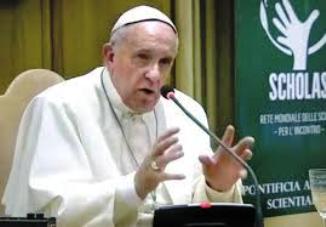 Giving all children and teenagers the education they need, to restore their dignity and allow them to build their own futures. This is the commitment of the many activities carried out by Scholas Occurentes (schools of dialogue) and the Focolare non-profit New Families Association (AFN) with programmes that focus on children and teenagers from around the world, with a teaching method based on values. The roots of Scholas, an international organisation that last June began operations in Italy with an official inauguration ceremony at their new base in Palazzo San Calisto in Rome, go back twenty years. George Mario Bergoglio was archbishop of Buenos Aires, and he perceived the importance of the so-called escuelas de vecinos. In 2013 Pope Francis transformed those schools of the quarter into a Pontifical Foundation so that they could promote their educational model on a global level. Currently the network has more than 400 million schools that are connected with each other from the five continents, from every religious and secular background and also public and private institutions in 900 countries. The pope attended the ceremony which was conducted by Lorena Bianchetti from Rai1. Our reporters were on hand as the Pope spoke off the cuff in Spanish with the young people from around the world who were linked up via internet. “In this society, ‘teaching’ often becomes ‘selecting,’” he stressed. “Instead, we need to ‘join hands, embrace, never attack or say that any human being is a ‘no’. Everyone is a ‘yes’ and has significant role.” Sometimes in education “we select badly, we create closed groups.” “We’re incapable of thinking with the other, incapable of working with the other,” the pope said. Instead, education is the capacity to speak “the language of the mind, heart and hands.” Therefore, “unity is needed within each one of us” said Francis: “If I believe what I feel, what I think, what I love – then I’m beginning.” “We’re living in a world where globalisation dominates, and globalization is good,” the pope explained, “but the danger is that of understanding, perceiving globalisation as a billiard ball – all of them are the same – a sphere in which everything is equidistant from the centre, but a sphere in which the personal characteristics of a boy or girl are obliterated.” Instead, “authentic globalization is more like a polyhedron where we seek unity, but each of us maintains his and her own peculiarity their own richness.” The president of Scholas, José María Del Corral, explained how fundamental that step was for the international growth of the foundation.” Moreover the closeness of the Holy Father is a stimulus to “intensify efforts on the educational front where young people are involved.” Also in Italy, he added, “Scholas appeals to all the sane forces of society to unite their efforts and to offer constructive collaboration.” This is the challenge for Scholas and for the Focolare AFNonlus who are project partners of some hundred activities in fifty countries around the world, as well as educational programmes for disadvantaged youth. “It’s a demanding project,” said president of the AFNonlus, Andrea Turatti. “The global classroom being created by the web will help to develop educational strategies, human and social development projects in a spirit of solidarity and in view of universal brotherhood.” Giovanna Pieroni Source: AFNonlus online
19 Jul 2017 | Non categorizzato
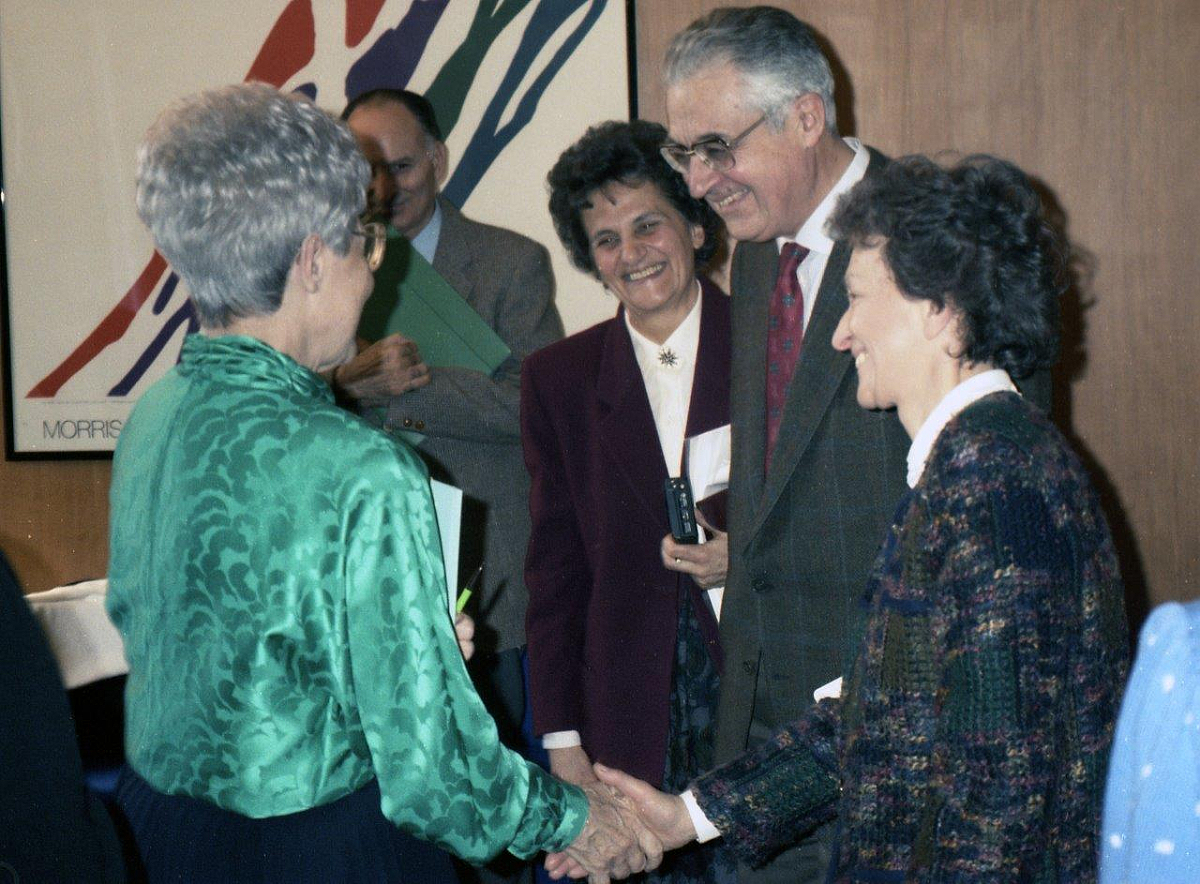 During the first school for married focolarini, Chiara Lubich paraphrased what Pope Paul VI had said a day earlier at the General Audience. Chiara announced on that July 19, 1967, that “an explosive, apostolic and diffusive Movement” for families would be born at the very heart of the Focolare. Fifty years later it is easy to see that those words were proven to be true. Married and engaged couples and many others who have a part in the world of the family have seen their love for one another grow through their contact with the charism of unity, transforming it into a living witness of love for God and for the human family. That love has also resulted in the Movement spreading in a large part of the world’s countries. New Families is committed to giving an answer to the needs of today’s family that is in line with “Amoris Laetitia” (“The Joy of Love”). They don’t do it with words, but with the concrete fruit of the real life experiences by a multitude of families with their testimonies of unity, and with their hundreds of projects of international cooperation and at-a-distance support. They work for the renewal of society and for the realization of Jesus’s testament: “that all may be one.”

18 Jul 2017 | Non categorizzato
The mayor Against my wishes, my husband became a mayoral candidate, not out of ambition, but purely for the sake of of serving the community. My resistance to the idea came from the fear that, since our town can be a difficult place, such a committment could have negative repercussions for our family. But any argument or ultimatum of mine had no effect. One Saturday morning I saw in the paper that he had signed up to be a candidate. I started feeling really sick. The day after at mass, the Gospel spoke of the fruitless fig tree. In that moment I felt like that fig tree, not able to bear fruit. And not just that: my attitude was also blocking my husband from bearing fruit for the community. I understood that Jesus was asking me to give him even my family, despite my fears. When I returned home, I told my husband and our daughters my experience, and we all agreed to support him. Ever since that moment I have been at this side for all the rallies and speeches, and now that he is mayor I continue to do so for all his official visits. (F.D. – Italy) Tensions at home My husband and I had just got home, tired and stressed. Losing control, we got into a violent argument, to the point that it seemed that our marriage had come to an end. I then tried to mend the situation, but he remained quite angry at my way of doing things. The day after we were meant to go to help a poor family. But wouldn’t that have just been an easy way out if we didn’t first reestablish peace and harmony with my husband? Even though all my good reasons kept coming to mind continually, I tried to overcome them. On top of that, he was going to an important meeting that same day. Overcoming my fear of how he would react, I called him and asked his forgiveness. All was forgotten, and I felt free and loved, and this also gave meaning to my giving to others. (F. – Panama) Shards I can see the street from my office, and one day I saw Michael pass by. He’s homeless and usually argues with everyone when he’s drunk. This time he stopped and picked up the remains of a broken bottle and put it in the garbage. Then he moved on. I had noticed the glass too, but had not gathered up the pieces because I was in a hurry. What a lesson, and from someone who is on the margins of society! I imagined Michael at the Gospel’s Last Judgment, with Jesus saying: “Enter into my kingdom: you gathered the glass that could have hurt one of my brothers – you did it for me!” (P.O. – ltaly) Dirty socks In the locker room at the pool a disheveled elderly lady was seated on a bench, with some socks next to her that were pretty dirty. Everyone stayed clear of her, including me. She was having a hard time putting on a singlet because her body was still wet, so I went over to help. Thankful, she asked me if I could also help her with her socks. Oh my. Really? Then I immediately had a thought: “Jesus, it is you in her who are coming to meet me.” I kneeled down and helped her with her socks and shoes. Even today I can still remember the joy I felt. (Rosemarie – Switzerland)
15 Jul 2017 | Non categorizzato
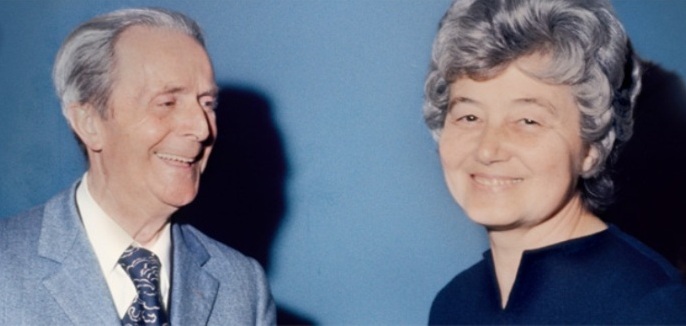
«While playing games in the shade of the fir trees beneath the rocks, Chiara continued to speak to her companions about God, the Virgin, and supernatural life, the nature of which was supranature. She co-inhabited always with the Lord, an effect of charity which was edified, atom upon atom.. And so when they would go to the countryside, those alpine forests were transformed into cathedrals, treetops seemed like the heights of holy cities, and flowers and grass were coloured by the presence of angels and saints: all were enlivened in God. The material barriers were removed. This was also a form of reconciliation between the sacred and the profane, due to which, once the ugly, the evil, and the deformed were eliminated, everywhere the values of the life of nature were recovered in all its aspects. Her words, like her works seemed to be an assiduous clearance of mortal debris to reestablish communication. In itself it was simply a merging of nature and the supernatural, of matter with the spirit, and of the earth with heaven. It was a duplication of the values of life on earth, to open a gateway to Paradise. It was the summer of 1949. That enjoyable holiday was enhanced by the inheritance of a cottage in Tonadico di Primiero from Lia Brunet. In July, Chiara Lubich, Foco (Igino Giordani) and the focolarine had gone there to bask in the sunlight and take some personal rest, after the works achieved all year round for the poor. The cottage consisted of an upper barn which they entered through a winding ladder from the ground floor, and was composed of a room and small kitchen. They set up some cot beds and a cupboard that was hauled up by a winch, and the place acted as their dorm. Foco went to the Orsinger Hotel and had the chance to speak before the hall of Capuchins. In their Church he felt the desire to bind himself “tightly” with a vow of obedience, which Chiara felt, however, did not conform to Focolare customs. Instead she proposed making a pact of untiy, in the sense that at the next Eucharistic communion, on the nothingness of their souls, Jesus in her would seal the pact with Jesus in him. That morning at mass, upon receiving communion the two of them made Jesus seal the pact with Jesus. It was then that she started to experience a series of enlightening insights». Igino Giordani, History of the Focolare Movement, an unedited piece.
14 Jul 2017 | Non categorizzato
On July 12th the Venezuelan bishops sent out an “urgent message to Catholics and all people of good will.” They ask the government to “retract the proposal of a constituent assembly and allow the elections that are authorized by the Constitution,” and to “recognize the autonomy of the public authorities, abandoning the inhuman repression of those who show dissent, to dismantle armed groups” and free “the people that were deprived of their freedom for political reasons.” The bishops called upon political leaders to be committed “solely to the people and never to their own self interests,” respecting “the democratic will of the Venezuelan people.” Moreover, to work at “solving the very serious problems of the people and to allow humanitarian aid to reach those who need it most.” They asked the National Armed Forces to “perform their duty of serving the people with respect and in accordance with the constitution.” They ask educational and cultural institutions to collaborate in “bringing down the walls that divide the country,” encouraging “every effort in favour of peace and coexistence, based on the law of brotherly love.” The message concludes with an invitation to “our brothers in the faith and other believers, to a Day of Prayer and Fasting on July 21st, to ask God to bless the efforts of the Venezuelan people in favour of freedom, justice and peace.”
