28 Apr 2017 | Non categorizzato
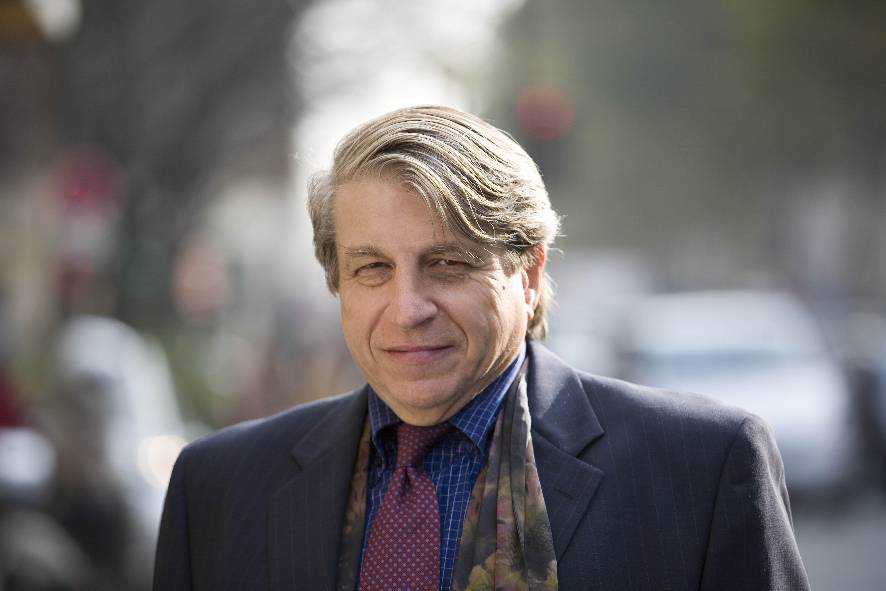
On April 24, 2017, Dr Benjamin Barber passed away at the age of 77, following a brief illness in New York. He leaves behind his wife Leah and daughter Cornelia. A political philosopher, author of several books, including the best-seller Jihad Vs. McWorld, Barber dedicated his entire life to the ideas of citizenship and democracy. He was convinced that the great challenges of interdependance could be resolved in a constructive way if citizens made an effort to live civic virtues and become actively involved in politics. He was sceptical of the ability of the nation-states to give sufficient answers to the contemporary global challenges (from climate change to terrorism; from immigration to poverty). In his last years, Barber emphasized the indispensible involvement of cities. In his book, If Mayors Rule the World, he demonstrated how cities respond in a more efficacious way than states to the problems of our interdependant world. Therefore, in his last years with the tenacity and passion that had always distinguished him, Barber gave life to the Global Parliament of Mayors, which 49 mayors joined, including the Italians Leouca Orlando amd Virginio Merola. I met Barber in the aftermath of September 11th at the New York home of Italian journalist, Antonio Monda. We were at a dinner together along with Leoluca Orlando, and Barber told us about a new project of his: to launch a World Interdependence Day that would be celebrated every September 12th, the day after the anniversary of the Twin Towers and Pentagon attacks. In fact, for Barber, the response to those attacks couldn’t be military, but had to rise from a common commitment to find sustainable solutions to all the great global challenges that could never be faced in an isolated way. Remembering that the United States had been born with the Declaration of Independance, Barber emphasized the need for a new declaration of interdependance. I worked closely with Barber to set up the first Interdependance Day that was symbolically celebrated in Philadelphia. With him, we thought up and put together the second edition of the day in Rome, Italy, in 2004, with the support of the Focolare Movement. It was on that occasion that I had the privilege of introducing Dr Barber to Chiara Lubich and be a witness to the various encounters and discussions that they had between 2003 and 2004. I recall during the conclusion of the first meeting between them, in June 2003 at Rocca di Papa, Italy, where I listened to him closely, Chiara observed that the idea of interdependance was important, but not enough. Chiara told Barber during that first meeting: “Not only do we need interdependance, but then communion. The goods have to move. But goods can’t move on their own, and this is why we need to move hearts. Therefore, I talk about the universal brotherhood that we achieve among individuals and individual groups, but if we begin to remake this brotherhood among the nations, we’ll resolve the problem of terrorism at its roots.” Barber responded: “Yes. The term “interdependance” is the lite version of the word “communion”. It’s the first step towards communion.” He went on to say: “Democracy is also a matter of the spirit; it begins with the habit of the heart and then is expressed in secular terms. So, oftentimes the separation between spirit and secular is a stretch . . .” That dialogue between Barber and Lubich is something that is still vibrating today, beause of its absolute timeliness. What remains of Barber as a most precious legacy is his intellectual and civic commitment to giving life to a global citizenry that leads us nearer to unity.” Aldo Civico Source: Città Nuova
27 Apr 2017 | Non categorizzato, Word of
https://www.focolare.org/gb/files/2017/04/201705WoL.mp3
Matthew ends his Gospel with the final events of Jesus’ life on earth. Jesus has risen from the dead, having fulfilled his mission. He had proclaimed God’s healing love for all, reopening the way that leads to fraternity. Matthew sees Jesus as Emmanuel, “God with us,” the one promised by the prophets and awaited by the people of Israel. Before returning to the Father, Jesus gathers together his disciples, the group who had most closely shared in his mission. He entrusts them with continuing his work — a tough assignment! But Jesus reassures them. He will not leave them on their own. Indeed, he promises to be with them every day, to support, accompany and encourage them “to the end of the age.” With his help, they will bear witness to meeting him, to his word and his acts of welcome and mercy toward all. In this way, many others will meet him and together form the new people of God, founded upon the commandment of love. We could say that God’s joy is to be with me, with you, with us every day to the end of our individual lives and to the end of human history. But is that true? Can we really encounter him? In a Word of Life commentary from 1982, Focolare founder Chiara Lubich wrote, “He is around the corner; he is next to me and to you. He hides himself in the poor, the despised, little ones, the sick, the person seeking advice, or deprived of freedom. He is in the ugly and the marginalized … As he said, ‘I was hungry and you gave me food’ (Mt 25:35) … Let’s learn how to find him where he is.” He is in his Word, which, if put into practice, renews our lives. All over the world he is in the Eucharist. He also works through his ministers, the servants of his people. He is present when we are in agreement among us (see Mt 18:20). Our prayer to the Father then becomes more effective, and we find light for our daily decisions. “I am with you always, to the end of the age.” How much hope this promise gives us! It encourages us to find him as we go along our way. Let’s open our hearts, and our arms too, to be welcoming and to share. Let’s do this personally and as communities, in our families and our churches, in our workplaces and on festive occasions, in our civil and religious associations. We will meet Jesus, and he will amaze us with joy and with light, the signs of his presence. If we start each morning thinking, “Today I want to discover where God wants to meet me!” we too will have wonderful experiences like this one shared in Glimpses of Gospel Life: “My husband’s mother deeply cared about her son, even to the point of being jealous. A year ago she was diagnosed with cancer, and her only daughter was not able to give her the level of care and help she needed. “During that time, I went to a summer gathering of the Focolare called a Mariapolis, where I encountered God’s love in a way that changed my life. “The first fruit of this conversion was the decision to ask my mother-in-law to come and live with us, setting aside all my fears about it. The light that had been lit in my heart made me see her with new eyes. Now I knew that it was Jesus in her that I cared for and helped. “To my surprise, she responded to all I did with just as much love. Months of sacrifice went by, but when my mother-in-law passed gently on to the next life, she left us all with a deep sense of peace. “It was around that time that I realized I was pregnant, after nine years of waiting! This child was a tangible sign of God’s love for us.”
Letizia Magri
________________________________________________ Read more: • Lubich, Chiara. “Jesus in our neighbor,” The Art of Loving. New City Press: Hyde Park, New York, 2010, pp. 103-110. • Lubich, Chiara. “The Word that gives life,” Essential Writings. New City Press: Hyde Park, New York, 2007, pp. 120-128.
26 Apr 2017 | Non categorizzato
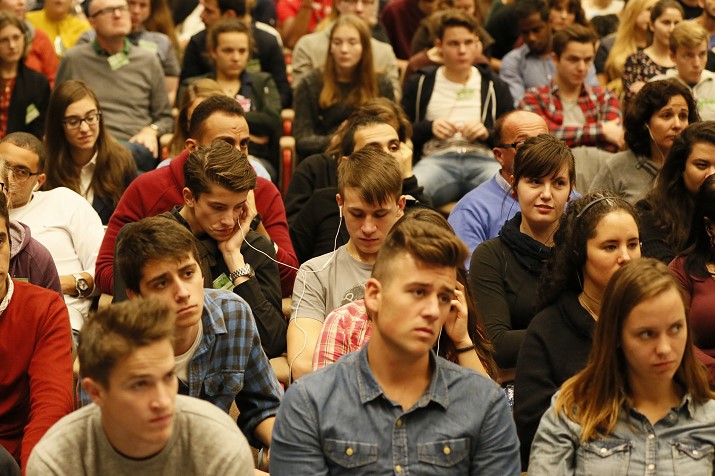
Only three days remain until the opening of the United World Week with the long awaited International Meeting of Youth for a United World in Loppiano, Italy. Five hundred young people are the starting blocks. “United World Project” is their slogan that will carry them through the race they are spreading by every possible means of communication. They are all directly involved in the project, a network of numberless concrete and courageous gestures that build bridges and open paths of dialogue and solidarity. The main working document of the Meeting, entitled “Universal Brotherhood: An Opportunity for the World” states: “The financial, economic and, above all, cultural crisis the has spread in every country poses epochal questions”. How can a future of justice, freedom and peace be given to all the peoples of the earth? We would like to begin from unity, the unity of the human family and to aim towards a horizon of the universal brotherhood among all peoples. This is our project.” The border that extends from the Gulf of Mexico to the Pacific Ocean, with its 3,169 kilometres of metal barriers and barbed wire and control towers, representation of the broken dreams of many immigrants in search of a better future. In the same vicinity, in Mexicali and in Calexico, a group of young people have believed in a world without walls and have been keeping busy. “We began singing in one of our city parks which is located right next to the border wall. It was a way of offering a bit of relief to the people who were passing through that area. The second step was to go inside the city’s maximum security prison where 4 thousand people are living, to offer them some music and song. After going through a lot of security controls, we were given permission to spend a few hours with 130 inmates inside a big hall. During lunch they told us that our visit was the only one they had received in two years.” The 2016 Worldwide Run4Unity Relay was held right next to the wall. “We wanted to plant our flag along the border wall as a sign of the unity that we’re committed to building with the people living on the other side.”
24 Apr 2017 | Non categorizzato
Program: 2 May – Communion & Law Seminar: “Law as a Tool for Integration in a Multicultural Society” 5 May – Meeting with His Grace Msgr. Charles J. Scicluna, Archbishop of Malta – “Dialogue or Dialogues? A style of life” : a talk to to commemorate the 40th anniversary of the foundation of the Diocesan Ecumenical Commission. 7 May – Participation in the Forum: “The State of Europe”
24 Apr 2017 | Non categorizzato
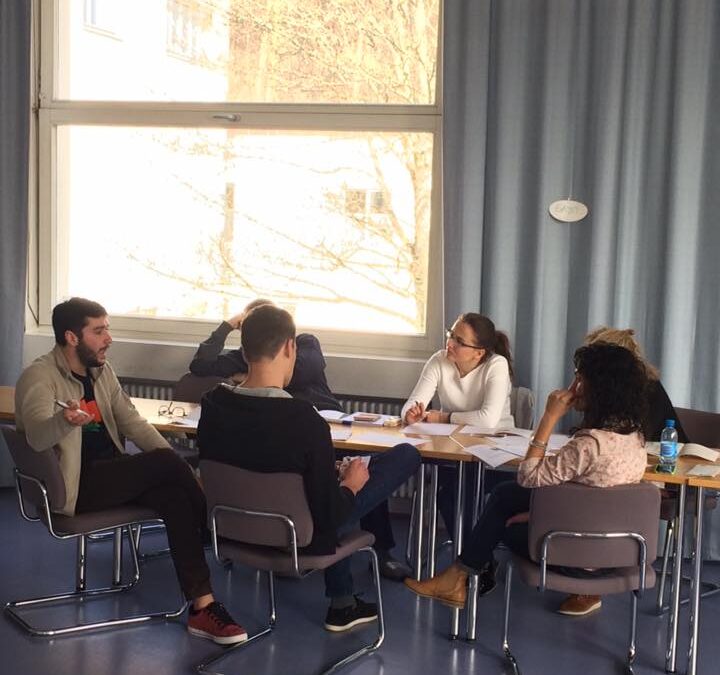
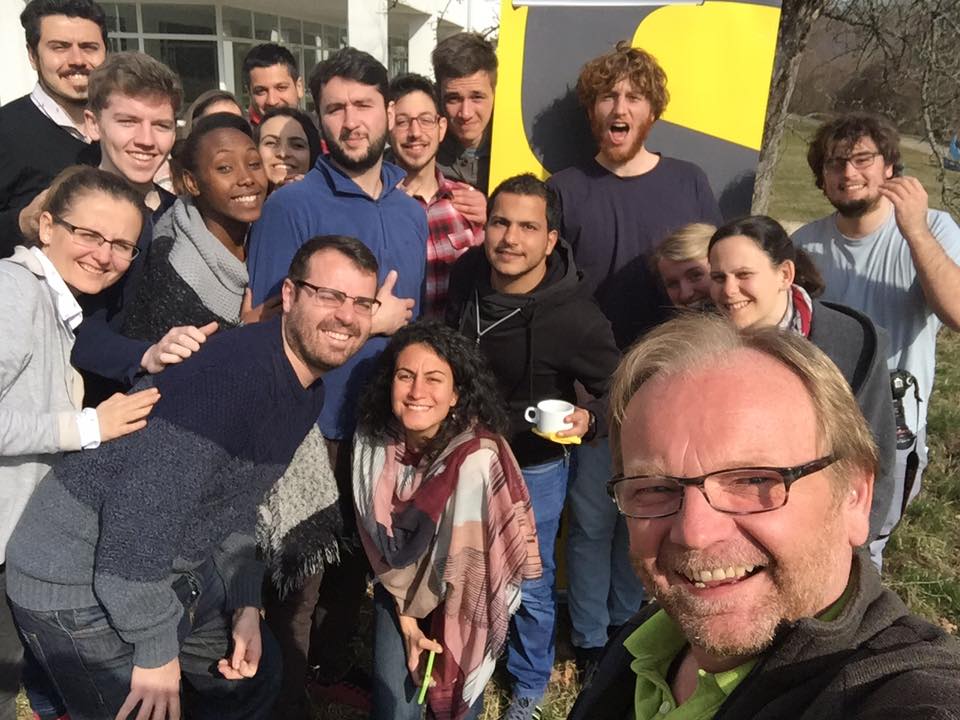 “The refugees are not numbers that fill the news but are people to be welcomed in their human dimensions as women and men who have been denied sentiments and projects.” This was the conviction reached by the 18 youths of five European and Middle East countries that gathered in Bad Urach (Germany) from 12 to 17 March for the second phase of the Host Spot project, promoted by New Humanity and Starckmacher together with other associations, and co-financed by the Erasmus+ (EU) programme. Host Spot targets two objectives: Host focuses on hosting programmes, and Spot on the achievement of brief video-documents to influence public opinion.
 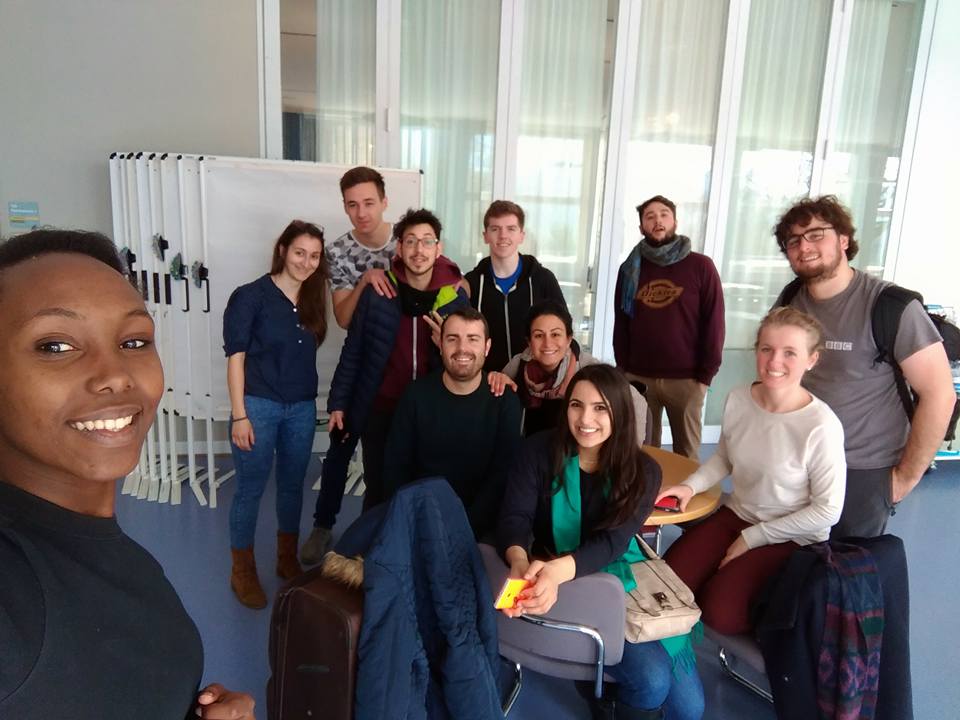 In the first phase of the project held in Jordan in August 2016, the youths had gathered from the live recounts of the Syrian and Iraqi refugees – guests of the Jordan Caritas – the dramatic stories of their forced migration, documented with video shoots. It was an experience that made them realize the true reasons that had pushed them to leave their own countries, the risks they had incurred during the exodus, and the precarious arrival in the new land. The idea of spreading this painful situation had already dawned in the days of Amman. The youths began to be convinced that bringing this information to light could give the undergoing discussion, centred mostly on political strategies and economic-social costs, a truthful vision of the migration phenomenon, and that they could give their concrete contribution through a public awareness campaign. The Bad Urach meeting focused on developing in the youth, the technical competences in the field of communication and production of social documentaries. Some experts were present and worked in direct contact with the refugees. The refugees furnished them with a lot of information on the situation in Germany, and the European hosting system. This was an important contribution to the diffusion of correct knowledge of the situation, often reported by the media in a partial and manipulated way.
 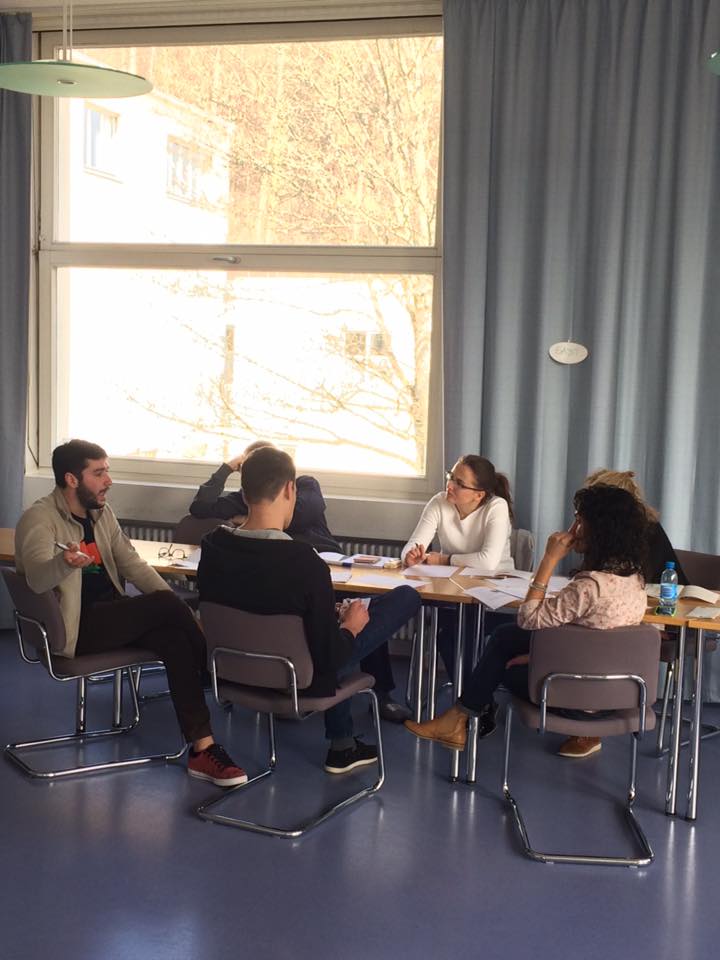 The young participants had brought with them their own cultural heritage and the vision of migration lived and faced in their countries. They got involved in the game through an exercise of reflection and listening, to receive and comprehend the philosophy of the others, convinced that the contribution they could have given in those days, though small, could have brought about some changes. The success of this phase of the program consisted in the achievement of an international learning session in an atmosphere of sharing among youths of various languages and cultures. Through workshops, seminars, and debates, a lot of prejudice and stereotypes were disproved, with the discovery that despite the diversities, there are many values in common. As a concrete result, three video spots were produced to be shared with the peers of their countries, to encourage them to make similar experiences, and thus become promoters of change. The third and last step of the project will be held in Egypt at the end of October 2017. On Facebook

 On April 24, 2017, Dr Benjamin Barber passed away at the age of 77, following a brief illness in New York. He leaves behind his wife Leah and daughter Cornelia. A political philosopher, author of several books, including the best-seller Jihad Vs. McWorld, Barber dedicated his entire life to the ideas of citizenship and democracy. He was convinced that the great challenges of interdependance could be resolved in a constructive way if citizens made an effort to live civic virtues and become actively involved in politics. He was sceptical of the ability of the nation-states to give sufficient answers to the contemporary global challenges (from climate change to terrorism; from immigration to poverty). In his last years, Barber emphasized the indispensible involvement of cities. In his book, If Mayors Rule the World, he demonstrated how cities respond in a more efficacious way than states to the problems of our interdependant world. Therefore, in his last years with the tenacity and passion that had always distinguished him, Barber gave life to the Global Parliament of Mayors, which 49 mayors joined, including the Italians Leouca Orlando amd Virginio Merola. I met Barber in the aftermath of September 11th at the New York home of Italian journalist, Antonio Monda. We were at a dinner together along with Leoluca Orlando, and Barber told us about a new project of his: to launch a World Interdependence Day that would be celebrated every September 12th, the day after the anniversary of the Twin Towers and Pentagon attacks. In fact, for Barber, the response to those attacks couldn’t be military, but had to rise from a common commitment to find sustainable solutions to all the great global challenges that could never be faced in an isolated way. Remembering that the United States had been born with the Declaration of Independance, Barber emphasized the need for a new declaration of interdependance. I worked closely with Barber to set up the first Interdependance Day that was symbolically celebrated in Philadelphia. With him, we thought up and put together the second edition of the day in Rome, Italy, in 2004, with the support of the Focolare Movement. It was on that occasion that I had the privilege of introducing Dr Barber to Chiara Lubich and be a witness to the various encounters and discussions that they had between 2003 and 2004. I recall during the conclusion of the first meeting between them, in June 2003 at Rocca di Papa, Italy, where I listened to him closely, Chiara observed that the idea of interdependance was important, but not enough. Chiara told Barber during that first meeting: “Not only do we need interdependance, but then communion. The goods have to move. But goods can’t move on their own, and this is why we need to move hearts. Therefore, I talk about the universal brotherhood that we achieve among individuals and individual groups, but if we begin to remake this brotherhood among the nations, we’ll resolve the problem of terrorism at its roots.” Barber responded: “Yes. The term “interdependance” is the lite version of the word “communion”. It’s the first step towards communion.” He went on to say: “Democracy is also a matter of the spirit; it begins with the habit of the heart and then is expressed in secular terms. So, oftentimes the separation between spirit and secular is a stretch . . .” That dialogue between Barber and Lubich is something that is still vibrating today, beause of its absolute timeliness. What remains of Barber as a most precious legacy is his intellectual and civic commitment to giving life to a global citizenry that leads us nearer to unity.” Aldo Civico Source: Città Nuova