
9 Mar 2017 | Non categorizzato
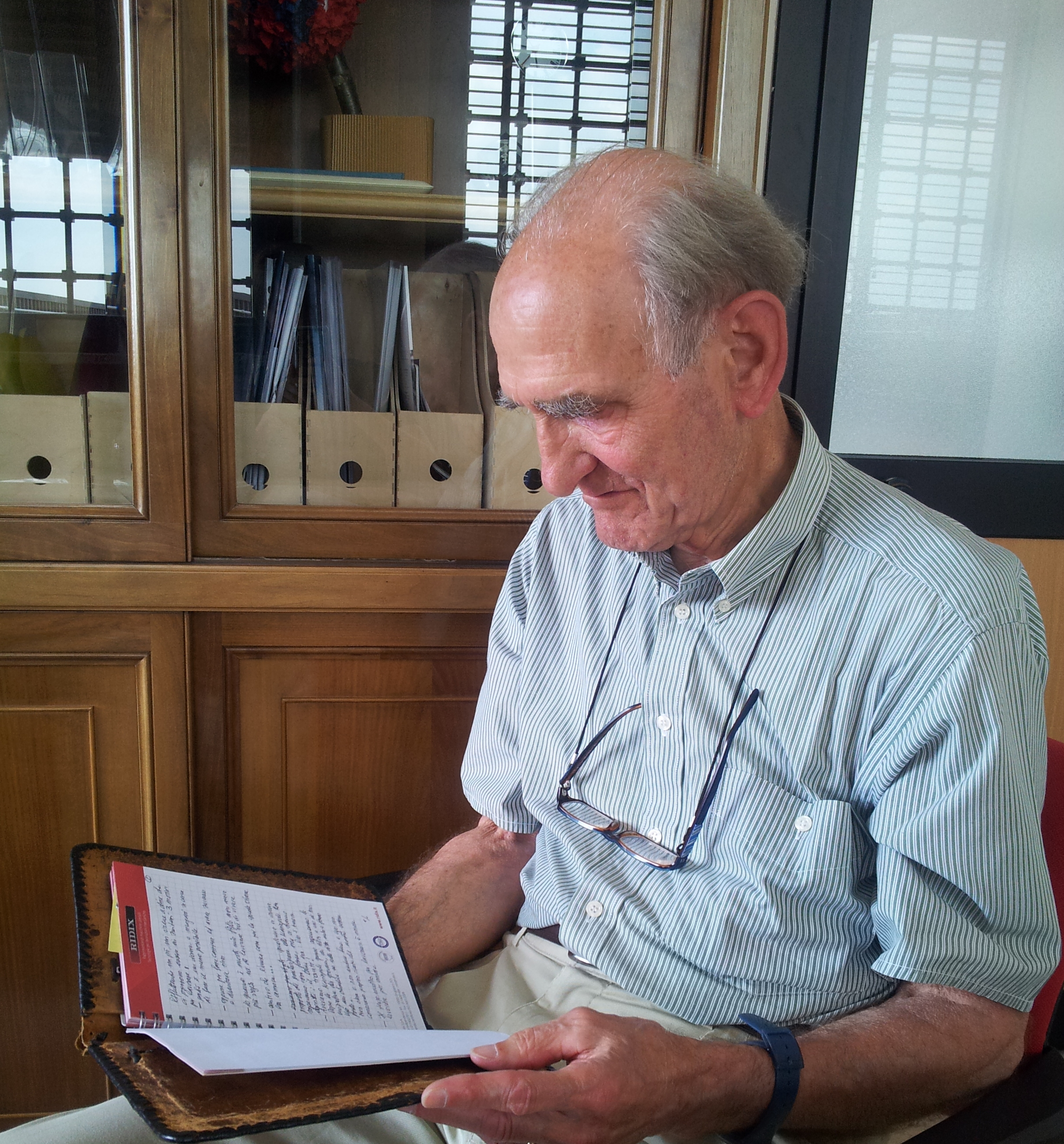 While waiting to meet Pope Francis in Paul VI Hall the anticipation of the 1200 members of the Economy of Communion (EoC) was calmed by several testimonies from entrepreneurs including Clem Fritschi who began like this: “Mine is not the story of a successful man of business, but a love story. After finishing my studies in Switzerland I worked as a warehouseman in London, to learn English. That’s where I met Margherita. We fell in love and, since she’s from Turin, I decided to find work in Italy. Two years later we got married and had two children. All of a sudden the company I was working for decided to close down. Then a few colleagues and I put together our settlements in order to keep the place going.” That’s how Ridix began, a company that has been offering cutting-edge products on the Italian market in the field of precision engineering since 1969. “In 1974 my family and I took part in a Focolare Meeting in Bergamo, Italy. It wasn’t a happy time, we had just lost our first son10 years old, in an accident. The encounter with the spirituality of unity was like a cure-all for us, to the point that even amidst our tears Margherita and I said to each other that we had met God-Love. We went home with only one word in mind, the verb: LOVE. Love everyone, love even at work. One of the young men that I met in Bergamo asked if there would be a position for him in the business I started. That’s how Ugo, then Paolo, and then Michele got on board. All three became associates. The company slogan is: “Seek first the Kingdom of God and his riteousness, and the rest will be given to you as well.” All of us want our relationship to be deep and sincere. We allow each other to make mistakes and to argue, but to experience the presence of God we also have to hurry ourselves to recompose unity with one another. The success is overwhelming: Today there are 9 associates and 70 collaborators, many highly qualified in selling, contract signing, commissioning, maintenance and management. We have an annual turnover of more than 30 million Euros. Loving one another and trying to love everyone, even our enemies: that’s the success of Ridix that I will try to describe with a few short phrases.
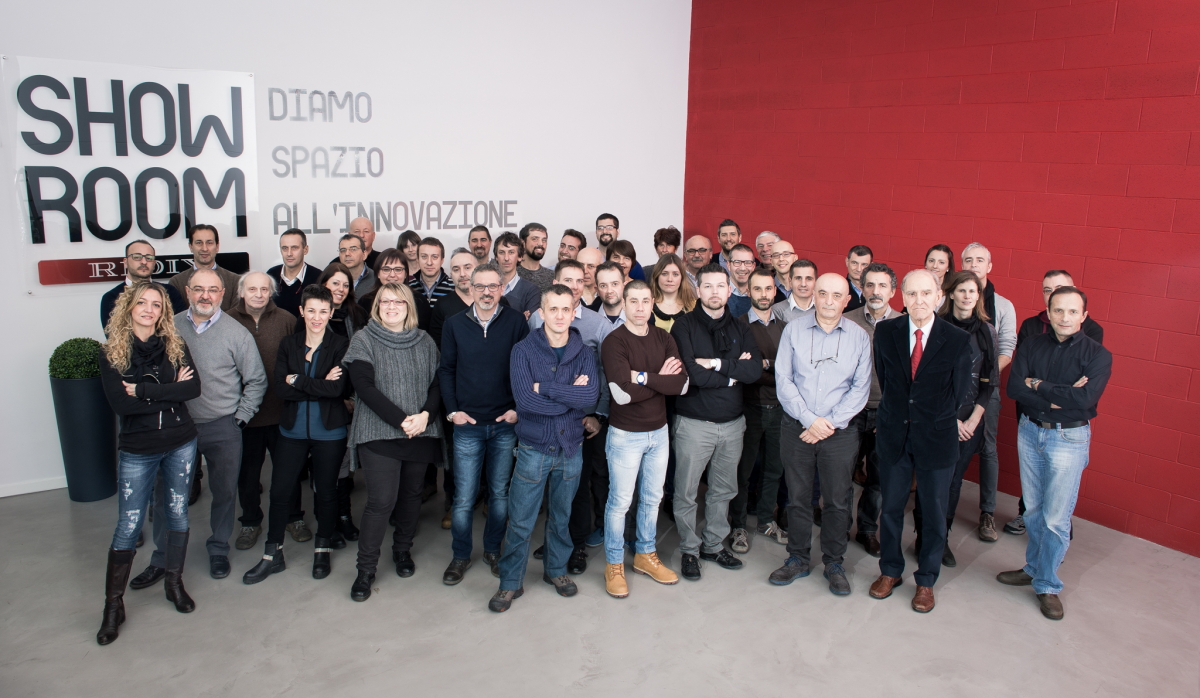 Inclusion of people affected by addiction or in difficult relationship problems, people from immimgrant backgrounds and from poor countries.
- Stable employment opportunities for young people.
- Overcoming moments of crisis through a 20% reduction in everyone’s salary, partners included, so that jobs don’t have to be lost. The sense of belonging that is generated with this practice always turns out to be a factor of success.
- Following the takeover of a client by a multinational, there was a loss of 20% of the annual turnover. Because of a totally unforseen occurance, in one week the entire amount was recovered without losing a single employee.
- In seemingly irresovlable situations, the correct inspiration arrived at just the right moment to simplify everything and overcome the difficulty.
- The ability to support and carry out new entrepreneurial initiatives.
One part of the profit is donated to the poor. Thanks to this sharing, Muslim teachers on the outskirts of Tangeri, Morocco opened a kindergarten in a garage that allowed 40 children to be ready for primary school. The secret to our success? Communion. Which means transparency, sincerity, truth even when it is hard to say, devoting time to building positive relationships. The “promised land” we’re all heading for is a company where everyone is happy. Happy employees because the company is healty and the atmosphere collaborative. Happy clients because of just relationship betewen quality and product pricing, and purchasing services. Happy providers, because of long and prolific collaboration. We may be tired at the end of a day, but we’re happy and satisfied because we’ve done our job well.
8 Mar 2017 | Non categorizzato
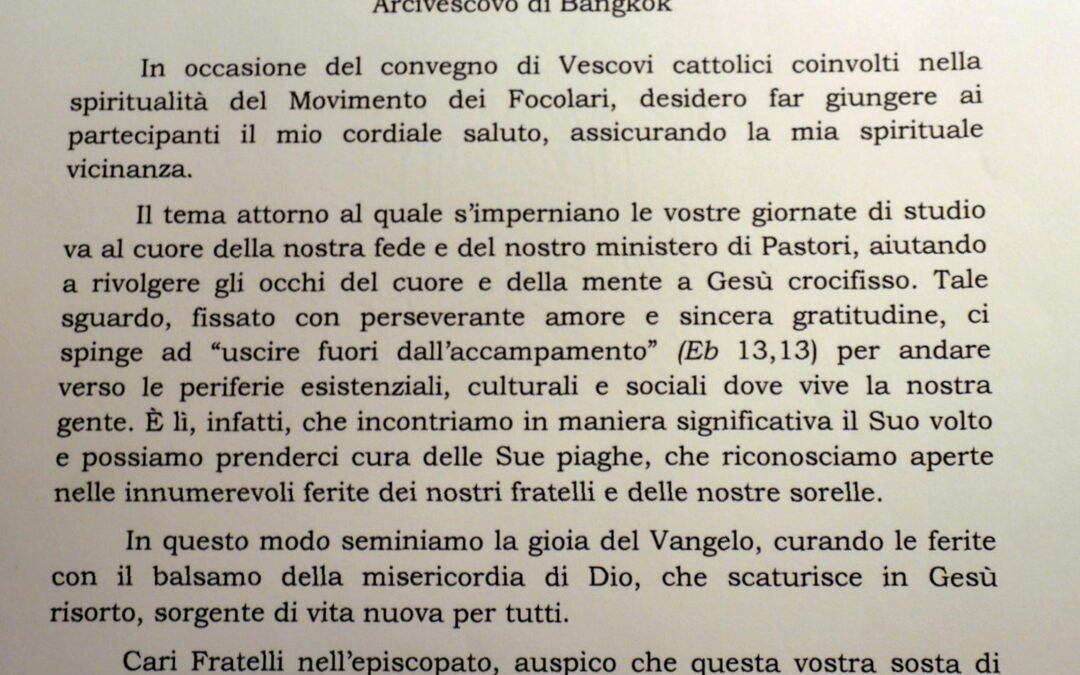
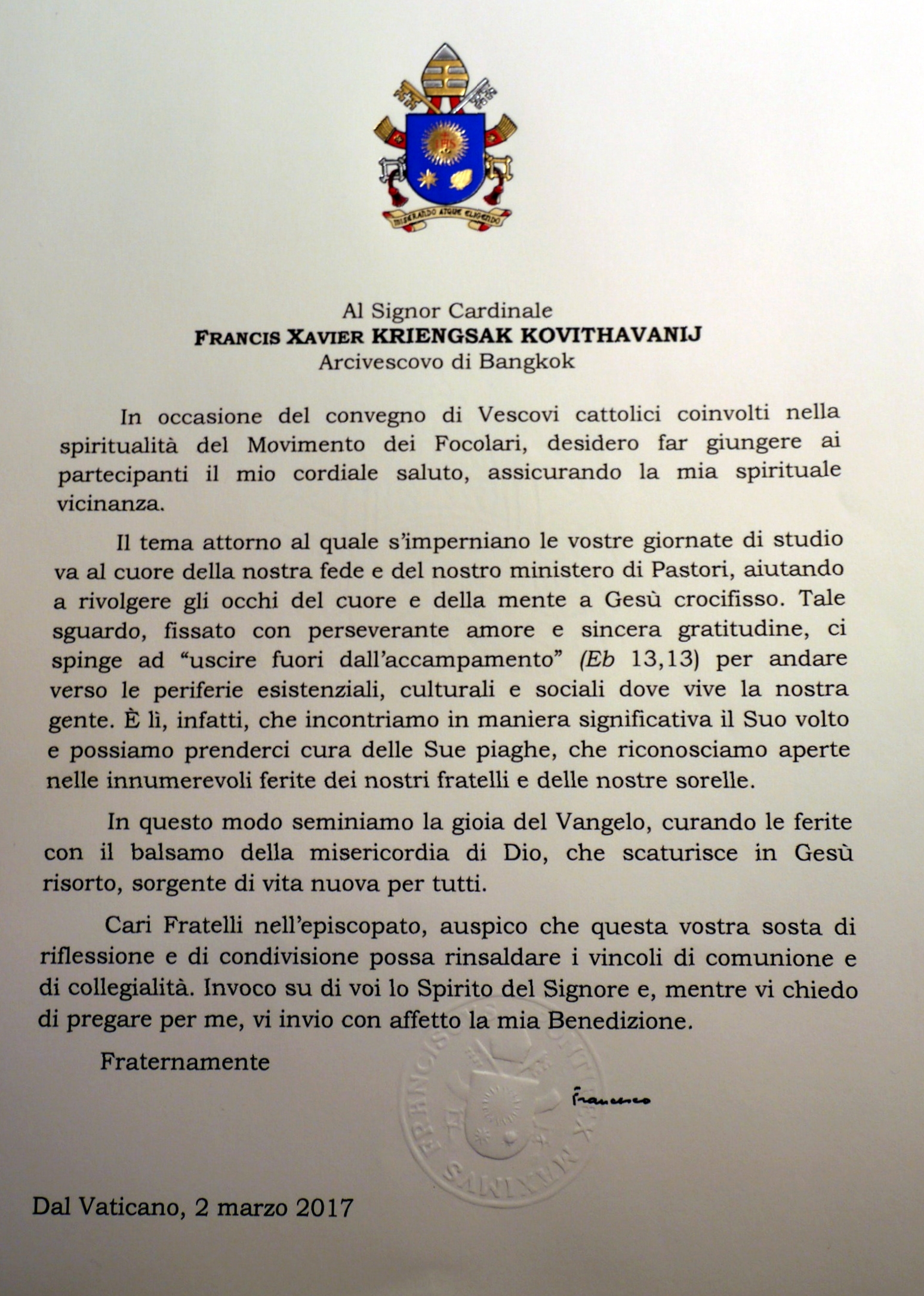 The conference of Bishop Friends of the Focolare, which is currently underway at the Mariapolis Centre of Castel Gandolfo, is titled: “If the world only knew him…” referring to the mystery of the abandonment of Jesus on the cross as the key to encounter among cultures. In a hand-signed message Pope Francis wished to express his closeness and encouragement to entering more deeply into this topic that urges us to “go towards the existential, cultural and social peripheries” and to “strengthen the bonds of communion and collegiality.” The message, which is addressed to the moderator of the gathering, Archbishop Francis X. Kovithavanij, had great impact and aroused much gratitude among the bishops. _____________________________________
To Cardinal
FRANCIS XAVIER KRIENGSAK KOVITHAVANIJ
Archbishop of Bangkok
“On the occasion of the meeting of Catholic Bishops engaged with the spirituality of the Focolare Movement, I wish to extend my cordial greetings to all of you, assuring you of my spiritual closeness. The theme around which your days together revolve goes to the very heart of our faith and ministry as pastors, helping to turn the eyes of the heart and of the mind to Jesus crucified. This gaze, fixed with persevering love and sincere gratitude, urges us to “go to him outside the camp” (Heb 13:13), to the existential, cultural and social peripheries where our people live. It is there, in fact, that we meet His face in a way that is significant, and take care of His wounds which we find gaping in the countless wounds of our brothers and sisters. In this way we will sow the joy of the Gospel, caring for the wounds with the balm of God’s mercy which flows from the Risen Jesus, who is the source of life for everybody. Dear Brothers in the episcopate, I wish you that this pause for reflection and sharing may strengthen the bonds of communion and collegiality. I invoke the Spirit of the Lord upon you and, as I ask you to pray for me, I affectionately extend my Blessing to you.”
Fraternally,
Francis
Vatican, 2 March 2017
8 Mar 2017 | Non categorizzato
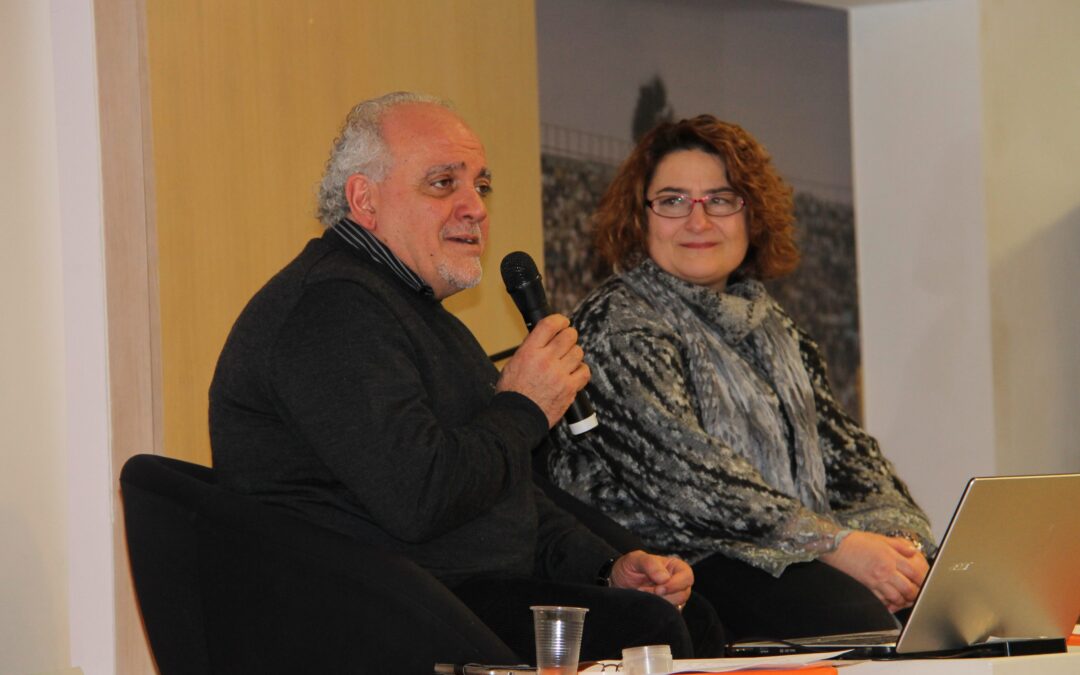
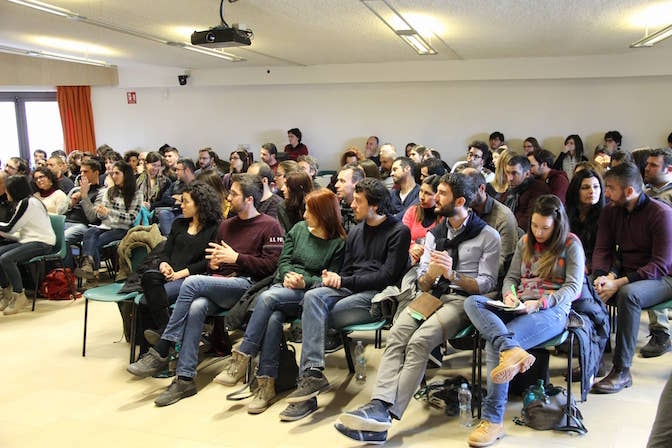 Should anyone have their doubts, they should watch some video from the past few days to re-find their faith. They would see people who still want a family, can make a serious commitment to a “forever love,” search for solid values and share them, and hold the deep, touching feelings that young people have. Here were the ingredients for a remarkable three-day event: 75 engaged couples, 11 families, a special place, an openness to look to the future and put it in play, sharing experiences and dreams, consulting with experts, and points of light from the words of Pope Francis and the spirituality of unity. The February 10–12 meeting brought engaged couples from all over Italy (with some representatives from Spain, England, Belgium and Serbia) to Loppiano, the Focolare little city near Florence. This was just one course in a program for young couples by the New Families Movement (part of the larger Focolare Movement) in Italy. The challenge taken up by the course organizers was not a simple one; the well-conceived program aimed to throw some light on the difficulties that come with living as a couple. Participants were able to take in a number of reflections, starting from the words of Chiara Lubich on the possibility that a couple could be “seeds of communion for the third millennium.”
 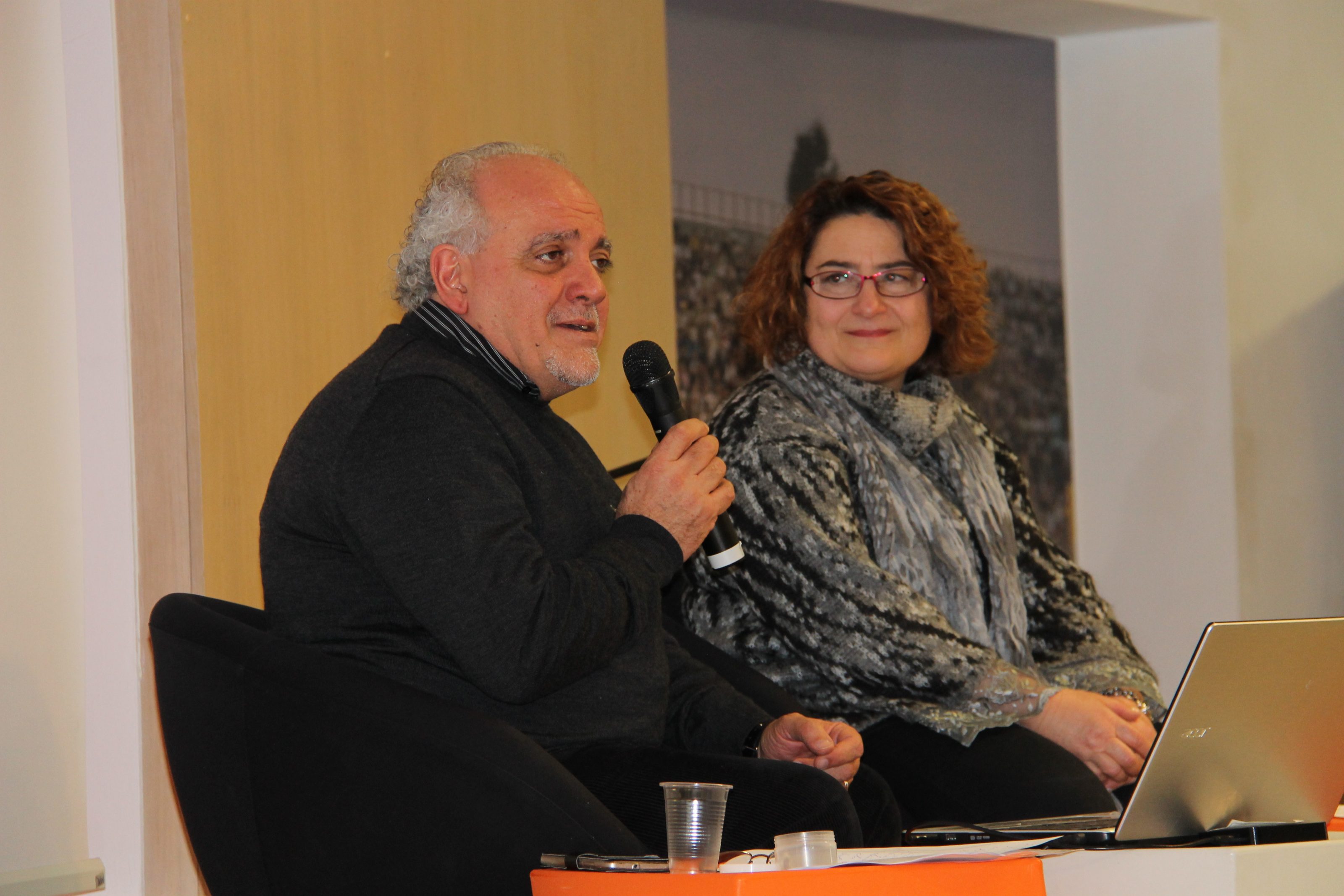 Experts covered themes such as engagement, the sacrament of marriage and family life. Among them were Rino and Rita Ventriglia, neurologist-psychotherapist and gynecologist-sex specialist; the Vacchers, a married couple from the Forum delle Associazioni Familiari of Treviso; theologian Father Stefano Isolan; and psychologist Inaki Guerrero. These topics were enriched by experiences from the experts and some of the families hosting the event. Experiences particularly resonated from a number of international families attending a course at Loppiano’s Loreto School for a few months. Their stories of a lifestyle that is simple, Gospel-inspired, and full of faith in God’s providence showed that it could be widely imitated and accessible to many. There were many opportunities for exchange and dialogue, both for each couple and with other participants. There were also special evenings that included a romantic dinner, a festive paella and a tour of the little city. By the end of the three days, it became hard to leave, for everyone to return to their cities. Many people’s impressions, other than a deep joy, were to have experienced something fundamental, both personally and as a couple. Many said they found new energy and tools to build a future on solid foundations, and to give the world a taste of the beauty that it is to be family. Source: Famiglie Nuove online
https://vimeo.com/207262255
7 Mar 2017 | Non categorizzato
Every 14 March, the death anniversary of Chiara Lubich is for the Focolare communities an occasion to get together, celebrate, bear witness, and renew their commitment. This event will be echoed worldwide also in 2017, from Singapore to Vilnius (Lithuania), Sydney (Australia) to Houston (USA), and Manaus (Brazil) to Bujumbura (Burundi). It will be a sort of constellation that will literally embrace the world and revive Chiara’s testament to «Be a family.» The theme that will be taken up this year is precisely that of the family, against the background of the dynamics opened by the Bishop’s Synod and subsequent apostolic exhortation Amoris laetitia of Pope Francis. Chiara saw the family as a «seed of communion for humanity of the third millennium,» as she said in her message at the Family fest of 1993, in the hope that «the inherent values that are part of its nature – gratuitousness, spirit of service, and reciprocity – may be transferred to the entire human family.» It is in this light that we can interpret the initiatives that will be undertaken throughout 2017 in various parts of the world. The finality is to gather the pathway of life and ideas during the 50 years of the New Family Moviment, and uphold the anthropological and universal value of the families in the perspective of the “human family.” The first meeting on the theme The family as a source of hope and joy was held in Cairo, Egypt, with over 300 participants: a programme of joy and testimonials, which evidenced the leading role of the youth and relationships between the generations in families. The event in Panama Being a family always took place on 12 February: in a society characterised by fast-paced activities, over 400 people decided to meet in the city park for a day of dialogue, games and walks. An event with a global atmosphere will take place in the international town of Loppiano (Italy), from 10 to 12 March 2017, with the participation of families from all five continents. The main highlights will be the activities on Saturday, 11 March, which will be aired in live streaming (from 3 – 6 pm). See the press release and the news: Chiara Lubich and the Family 2017 Live streaming from Loppiano: http://live.focolare.org/FamilyHighlights
7 Mar 2017 | Non categorizzato
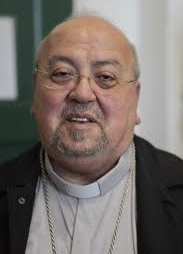
A large group of Catholic Bishop-friends of the Focolare are currently having their convention on March 7-12 at the Mariapolis Centre in Castelgandolfo (Italy). They come from a significant collection of countries, including a good 26 from African and the Middle East. Among them is also Maronite Archbishop Samir Nassar from Damascus whom was asked to tell us about his country. Archbishop Nassar, after six years of war, what does Syria look like today? It’s an immense site of ruins. Apocalyptic scenes – burned out buildings, homes burned to the ground, ghost towns, villages razed to the ground. More than 2 million Syrians (50% of the population) don’t have a roof over their heads. Many Syrians – in the millions – have left their country, forming the largest mass of refugees since World War II. And now they’re stuck in refugee camps waiting for someone to notice them. Others drowned escaping, or are lined up in front of embassies like nomads in search of a country to that will take them in. Life for Syrians, wherever they may be, has turned into a torment. The family, the cornerstone of the Church and of the nation, is seriously shaken. It’s now rare to find a complete family, and the few that have stayed are completely deprived of support, buried in misery, in anguish and depression. Fiancés can’t marry because they’re separated by the mobilisation of the military, and the lack of housing does the rest. Their future hopes have all crumbled. In your opinion, who are the most vulnerable? The children are the ones who are most at risk. They are paying dearly for this merciless violence. UNESCO reports that more than 3 million Syrian children are not in school, which is also due to the priority of staying alive. The few schools that are operating are over-crowded, and the level of instruction is suffering because of the exodus of teachers. The psychological support centres are hopelessly overwhelmed by the huge numbers and by the types of psychological blocks that that mostly the children suffer from. One of the concerns for the Church is the exodus of Christians… The parishes are reporting a drastic drop in the number of faithful, and of pastoral activity. The Church of Damascus has seen one third of its priests (27 priests), a hard blow that weakens even more the declining role of the Christian minority. The priests who stay don’t feel safe and try to find ways to leave. Meanwhile, they offer themselves as socio-humanitarian workers for families. What is life like for Syrians today? Syrians don’t run after freedom anymore. Every day is a struggle to find bread, water, gas and oil that are becoming scarcer and scarcer. The frequent and prolonged electrical outages bring melancholy and dwindling social life. The search for scattered brothers and sisters, parents and friends is done discretely and in much distress. Finding a small dwelling place, any kind of refuge for living in has become the impossible dream of every family, especially young couples. The Syrian people is living this torment in great bitterness, which can be seen in the silent gazes and the tears. Lent 2017 offers all of us an opportunity for profound reflection on the commitment of the Church that wishes to be beside our faithful in the trial of this journey towards the Risen Lord, who said: ‘Come to me, all who are burdened and oppressed…” (Mt 11:28). What urged you to get yourself to this meeting with other bishops? Ever since 2008 I found in the Focolare a type of listening and dialogue that helps me to accept my episcopal solitude and physical isolation in a country at war. In these gatherings at Castel Gandolfo I experience a discreet, respectful fraternal acceptance, an atmosphere and spiritual tone that nourishes my soul and confirms the spirit. An oasis of friendship, of mission and of renewal.

6 Mar 2017 | Non categorizzato
The situation seemed absurd. I was taking the items I needed off the shelf at the supermarket, when I felt a trolley bumping into me, hitting me in the leg. I felt a stabbing pain but I managed not to cry out. I had a look around to see what was happening. A woman with a little boy in her arms was angrily staring at me, without a trace of regret or apology. There was certainly enough room for her to go by me without bumping into me but, between the cell phone and the screaming baby, the carriage and the box she was dropping, it was in some way understandable that such an accident could have happened. There and then I responded with words that weren’t exactly polite and let her go by. Only that things don’t always go as you would suppose they would: I turned into another aisle and we crossed paths again: “You again?” she said to me in a tone that was anything but friendly. “Oh, yeah, me again! I’m shopping just like you; maybe we’ll see each other again… Wouldn’t it be better to finish your telephone conversation and do one thing at a time?” At that point she really lost it – big time! She suddenly felt the right to launch comments and insults towards complete strangers like me, and so forth. No one was spared. Just to make things worse the little one began to shout, the cell phone fell to the ground and the box fell and emptied its contents all over the floor. It was too much for the woman who ended up sitting on the floor in tears. Without hesitation I began to gather her things and calm the little boy, by trying to distract him with a set of keys I had in my pocket. In the end the little one began to laugh, and the lady calmed down. Naturally, shoppers, sale clerks and all kinds of other people drew near to see what all the chaos was about, but finding that things had calmed down, they walked away and left us alone. Who knows what they were thinking! The fact is that I helped the woman to stand up and I asked her if she still had to buy many things. She answered by showing me a shopping list she was holding in her hand. I asked her to wait there while I went to buy the things she was still missing. Of course, I did have to change some items two or three times before finding the right brand but, in the end, I did it. Once all the items on the shopping list were in the carriage, the woman looked at me with her big eyes and spoke timidly: “Thank you, and forgive me for acting the way I did before. I don’t know which way to turn. My husband lost his job and we don’t know how we’re going to make it to the end of the month. It feels like the world is falling down around us. So I’ve become angry and aggressive.” I obviously didn’t have an immediate solution, but it came to me spontaneously to tell her: “Look, I don’t have an answer, but what I can do is pray for you and your husband, asking that he can find a job.” She looked at me a bit surprised and answered: “I’m not able to believe in God, but, anyway… thank you!” In the days that followed I prayed frequently and intensely for that family. One morning, I met the woman again at the supermarket. She saw me from afar and came up to me: “Imagine, against all odds, my husband was able to get an interview with a company and, yes, they hired him! It’s not the ideal position, but it’s permanent with a reasonable salary. Could it be because of your promise to pray for us? When my husband told me I immediately thought of you, of your prayers. Thank you so much! Could it be that God does exist?” “I firmly believe so and hope that one day you’ll get to meet him!” I told her. We said goodbye and each of us went her own way. A sudden gratitude began to fill my heart and a prayer to God that one day she would get to meet him too. From: Kerber, Urs. La vida se hace camino, (Buenos Aires, Ciudad Nueva, 2016), 16-17.
