4 Mar 2017 | Non categorizzato
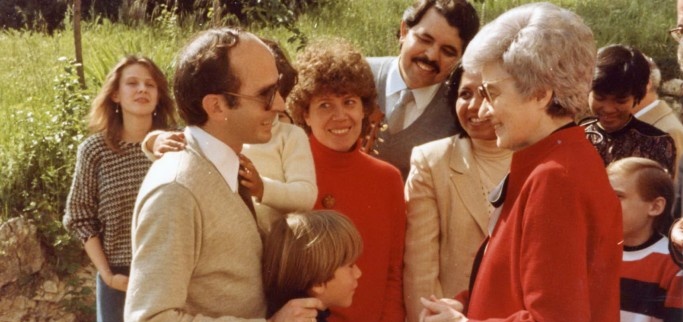
(…) Jesus said, “For where two or three are gathered together in my name,” (which means in my love), “there am I in the midst of them” (Mt. 18:30). Becoming the dwelling place of God’s presence is a splendid possibility offered also to families. A family that lives in this way is actively involved in all that happens around it. Simply by being what it is, it can witness, proclaim and therefore heal the social fabric around it, because life in itself speaks and works. I have seen from experience that this kind of family is able to open home and heart to the urgent needs and issues in society and to various forms of loneliness and alienation. They can even practice and organize solidarity in ever-widening circles, to the point of promoting effective actions to influence institutions, block wrongful laws and measures, and guide politicians. Through the presence and activity of its members in the various sectors of society, the family is also able to enter into dialogue with institutions, channelling resources towards real needs, creating awareness and the necessary conditions for improved policies in favour of the family and fostering public opinion based on values. I believe that nothing could be more beautiful than families like this. Because, let’s ask ourselves, what do people really want? They want happiness. Where do they seek happiness? In love, in beauty, and they are willing to do anything to obtain it. In these families, there is the fullness of human love and the beauty of supernatural love. I have seen families like this, and they are truly wonderful. Everyone finds them fascinating. From the outside, they look like any other family, but they have a secret, a secret of love. “Suffering that is loved” unites them to Christ who dwells in their homes. He is attracted by the mutual love that unites them, and through these families, he is transforming the world. I wanted to share these thoughts with you, which come from the depths of my heart and from the experience of many families. I would like to encourage all of us to greater practical engagement in doing everything possible for the true good of the family. In fact, the health of the first cell of society is of the utmost importance for the future of all humanity. The great Catholic writer Igino Giordani wrote: “To save the family means to save society. The state is made up mostly of families. If families break down, society weakens.” He also said, “Married couples become God’s collaborators in giving life and love to humanity… Love extends outwards from the family to professional life, to the city, the nation and humanity. It is like a wave opening in ever-widening circles, onwards to infinity. For two thousand years there has been a restless longing, set in motion by the Gospel, it calls for love.” Chiara Lubich Watch the complete video
3 Mar 2017 | Non categorizzato
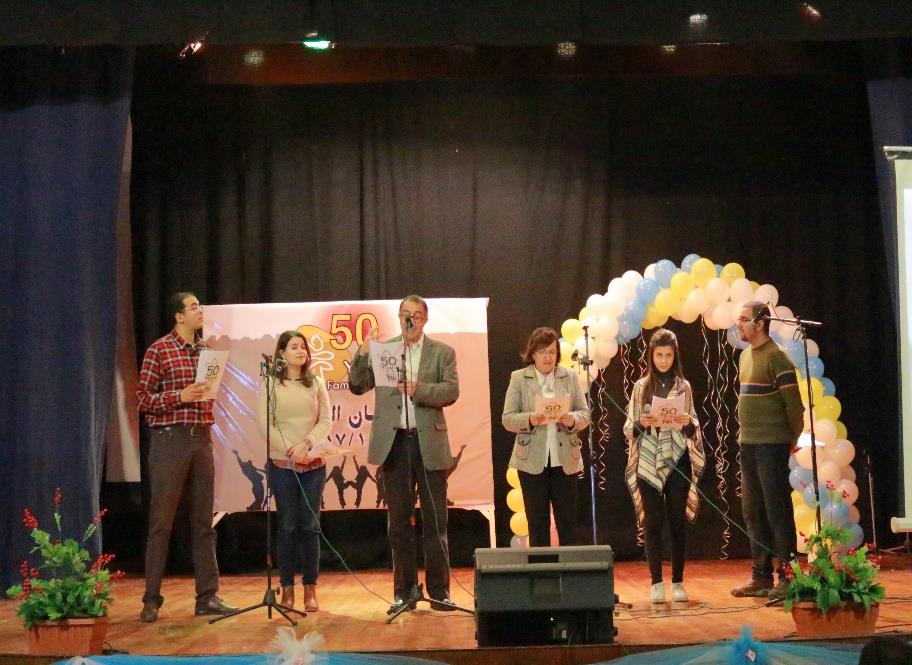
Seven years have passed since the Arab Spring and the unforgettable Tahrir Square, symbol of all the squares of Egypt, Tunisia, Libya, Yemen, crowded with women, men and many youths forcefully invoking the demise of the autocratic regimes, respect of human rights, transparency, freedom of information and social justice. Seven long years in which Egypt, the historical and cultural reference point for the Arab world, has been marked by an unprecedented political crisis. There is still a strong internal instability, caused by sporadic outbreaks of terrorism, that have resulted in the drop of tourism and foreign investments. And despite the efforts of the government to invest in infrastructures (such as the inauguration of the new Suez canal) and heal its international relationships, the onset of the economic crisis is weighing heavily on the country’s 90 million inhabitants. The great urban areas are concentrated along the banks of the Nile (5% of the territory). Ten million are in the capital city of Cairo (which become 12 during the day), the second most populated African city. 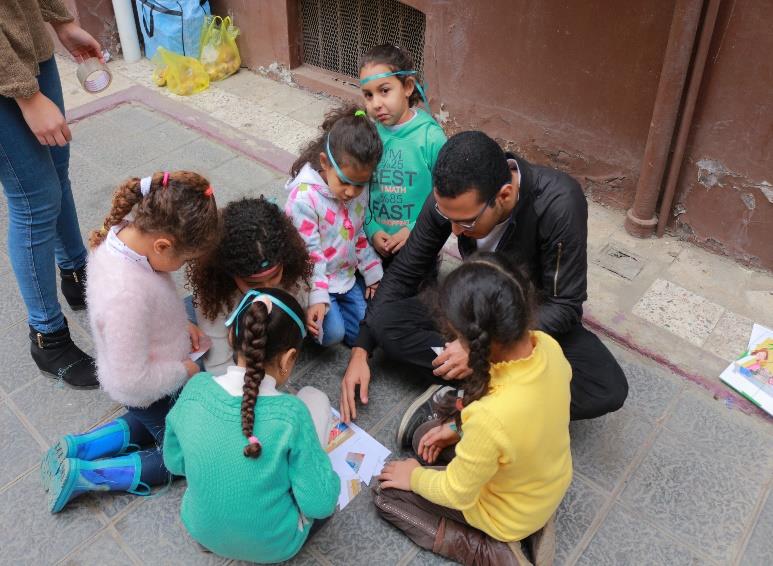 Immersed in this metropolis, the families that live the spirituality of the focolare, come from every social category and belong to various Christian churches. They have the same difficulties as all the others: growing unemployment, the crisis of parental roles in a society that is increasingly moving away from religious and social values and which is dazzling the new generation with the temptations of consumerism. Families that are trying however to go “against the current,” helping one another mutually and working hard to serve the schools, churches and institutions. The convention on the family entitled “Source of hope and joy” was held last 27 January, with the participation of about 300 people. It was a feast, with songs and dance, sharing sessions, moment of reflection on the theme of dialogue between husband and wife, parent-children relationships, suffering, illness, and divisions and difficulties of families. Many were testimonials of tangible love that heals suffering, like that that of Wagih and his wife, who suffered a stroke and is confined to a wheelchair; or that of a couple which, through dialogue, recomposed the pieces of their almost broken family; or that of another couple which understood that children not only need to be loved but above all, need parents who love one another. “The families of the focolare,” the letter from Cairo says, “give a great contribution to families also through the St. Joseph Institute and the Pro Vita, created in March 1994, incarnating the Gospel in family life and in the heart of society. The Institute engages in the preparation of young couples for marriage and as a family counseling service, with branches in various dioceses. They give strength and courage, amid many difficulties to couples also in the Muslim world. In these years the number of marriage annulment cases has dropped to the minimum, despite the great number of couples with problems that go for consultation. The Institute gives its contribution in the various events in the family sector, and represents the Holy See in the international conventions of the Muslim world.» The Koz Kazah Foundation has been active since 2007 in the Shubra community, one of the most populated districts of Cairo, and last 25 February, inaugurated a new office in Fagala. The aim is to work, in cooperation with AMU, on social projects, educational programmes for children at risk, create events to awaken the sense of belonging to one’s own city (cleaning of roads, murals, conferences, shows). In a society which, not only in Egypt, sees no reason for hope and joy, these constructive actions seem to emit the perfume of another spring. AMU: Project CHANCE FOR TOMORROW
2 Mar 2017 | Non categorizzato
1 Mar 2017 | Non categorizzato
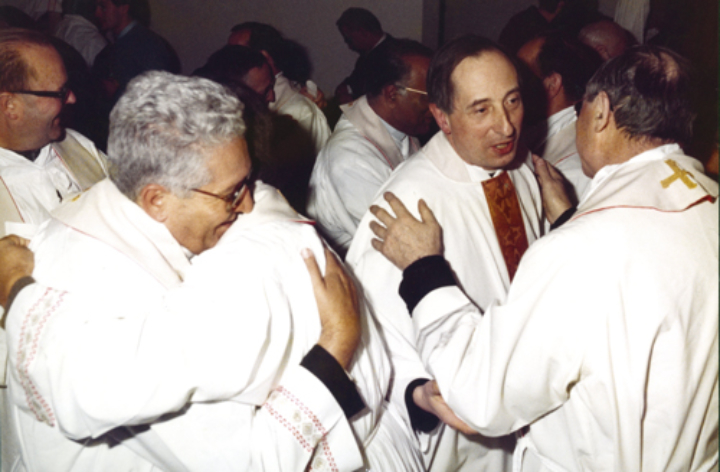
Klaus Hemmerle played an essential part alongside Chiara Lubich in introducing the life of communion among the bishops who follow the spirituality of unity. We present some passages taken from his book, Klaus Hemmerle, La luce dentro le cose (The Light Within Things,) published by Città Nuova (Rome, 1998). “Even after the radical conversion of our life that takes place once and for all in Baptism, all of us are unceasingly in need of converting. Even in those cases where the baptized does not separate from God, the claims that life makes on him and the temptations of daily life are likely to chain him to his own ego so much that the unique Word that the baptized has become thanks to the grace of Christ, sails along and is modified and cracks. The wound inflicted on God’s life in us is in constant need of healing” (p 82). “Forgive us our debts as we forgive our debtors.” Jesus is a realist. He knows our weaknesses. He never judges, nor does he ever say: Whatever way you live is the same. He calls us to repentance, to conversion, to constantly begin again. He forgives us and invites us to forgive others. Our friendship with him runs aground if our life is not this constant conversion” (p 73). “For each one of us, today, a cross is waiting that we are to carry along with us.” But it has to be carried this very day! Otherwise it is the cross that carries us, and then we feel totally oppressed, tormented and annihilated, and we never realize that it was the cross that carried us away. But if we ourselves have the courage to take up the cross, then it becomes the most precious thing in the world” (p 89). “When the disciples see the great and powerful God in Jesus, they are not able to find him. They have to bow down to the ground, to look into the dust: Jesus is there, washing the feet of those who are his own. Self-giving, abasement, service, mature awareness of the banality of human needs, becoming little, renouncing, the endurance of total giving, not appearing, hiddenness – all of these qualities that have absolutely nothing to do with the radiant splendour of God, lie at the deepest central core of the cult and worship we offer to God – the Eucharist” (p 101). “Someone like me who continues to fail every time, cannot but live on God’s forgiveness. But this forgiveness proves itself in fraternal pardon. This is the underlying substance of God’s forgiveness, it rebounds onto the community in which we link up to that mercy that makes us ever free and new so that we can be sons of the Father with the Lord, the only Lord – in the midst of them” (p 74).
27 Feb 2017 | Non categorizzato
Watercolour © A.M Baumgarten
27 Feb 2017 | Non categorizzato, Word of
for ages 4-8 | for ages 9-14 | for ages 15-17 | MP3 Audio | Print
We can live like the first Christians and witness in our lives to God’s overwhelming love. If we, his followers, are truly reconciled among ourselves, we can speak convincingly of God’s reconciling love for the world. “Be reconciled to God” (2 Cor 5:20). All over the world, there are blood-soaked wars. They seem endless, and they embroil families, tribes and peoples. Twenty-year-old Gloria told this story: “We got news of a village that’d been burnt down. Lots of people lost everything. With my friends I collected some useful things: mattresses, clothes, food. We set out and after an eight hour journey we met all those people in such terrible need. We listened to them, dried their tears, hugged them and tried to comfort them. One family told us, ‘Our little girl was in the house they burnt down. It felt like we were dying with her. Now, through your love, we have the strength to forgive the men who did this!’” The Apostle Paul also experienced this kind of forgiveness, and it completely changed his life. He, the very one who was persecuting Christians,1 met God’s free-given love. It came in a completely unexpectedly way as he was travelling. God then sent him out in his name 2 as an ambassador of reconciliation. This is how Paul became a passionate and credible witness to the mystery of Jesus who died and rose again. He spoke of Jesus who had reconciled the world to himself so that everyone could know and experience a life of communion with him and one another.3 Through Paul the Gospel message reached and fascinated even pagans, those thought to be furthest from salvation: “Be reconciled to God!” he said. Despite our failings that discourage us or the false certainties that fool us into thinking we have no need, we too can meet God’s mercy. His love is so excessive! We can let it heal our hearts and in the end set us free to share this treasure with others. Like this we will give our contribution to God’s plan of peace for all humanity and the whole of creation. This plan overcomes the contradictions of history, as Chiara Lubich suggests in this passage: “On the cross, in the death of his Son, God gave us the highest proof of his love. Through Christ’s cross, he reconciled us to himself. This fundamental truth of our faith is fully relevant today. “It is the revelation all humankind awaits. Yes, God is close to all people with his love and he loves each person passionately. Our world needs to hear this proclamation, but we can proclaim God’s love if first we proclaim it, again and again, to ourselves — until we feel surrounded by this love, even when everything would make us think the opposite.… All our behaviour should make this truth credible. “Jesus said clearly that before bringing our offering to the altar we should be reconciled with a brother or sister if they have anything against us (see Mt 5:23-24) … So let’s love one another as he loved us, without being closed or prejudiced, but being open to welcome and appreciate the positive in our neighbour, ready to give our lives for one another. This is Jesus’ main command, the mark of Christians, valid today just as it was at the time of Christ’s first followers. Living this word means becoming reconcilers.” Living like this we will enrich our days with acts of friendship and reconciliation: in our own family and among families, in our own Church and among Churches, in every civil and religious community to which we belong. Letizia Magri
- See Acts 22:4 ff.
- See 2 Cor 5:
- See Eph 2:13 f
