23 Sep 2016 | Non categorizzato
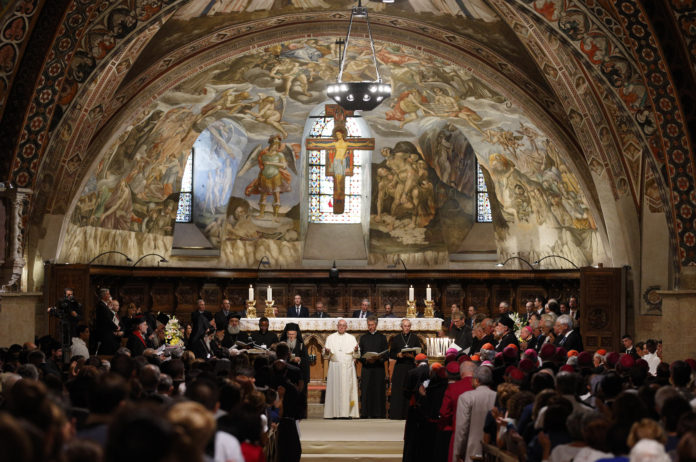
 Organized by the Umbria Diocese with the Franciscan family and the St. Egidio Community, the event gathered the religious leaders of the world, and was also attended by cultured men and women and representatives of institutions. Also the Focolare Movement was present in both the preparatory and participation phases, especially the communities in Umbria and in the persons of Rita Moussalem and Roberto Catalano, heads of the Focolare’s interreligious dialogue. With his presence on 20 September, Pope Francis continued the work of John Paul II who had felt the need in 1986 to institute a day of prayer for peace, and had foreseen the role religions could play to avoid conflicts and also contribute to resolving them. In 2011, Benedict XVI had presented peace not only as a commitment of men of faith, but also as a cultural project. But the world is no longer that of the 1980s, the bipolar world of the Cold war. The world is now globalized and multipolar, where the wars have multiplied without ever being wars of religion. Pope Francis greeted each of the leaders personally, starting from a group of refugees who represented the challenges of the world today. It was not only a formal act. There were deep moments of intense bonding that were able to establish important ties for the future. A second moment was the luncheon at the Holy Convent, to which the Pope had invited all to be by his side. Having a meal together under the same roof was in itself an act of peace, after which, a common moment of prayer followed, but not together. Each religion had a facility where members could go to pray for world peace, according to their own religious tradition. Each did so distinctly; this fact aimed to cancel the doubt that these moments were an attempt to amalgamate all religions together. The Christians prayed together to demonstrate that unity among the Churches is fundamental in giving important contribution to peace, as followers of Christ. The concluding ceremony took place in the square in front of the Basilica of St. Francis. The leaders of each religion sat in a semicircle around Pope Francis, as a sign that nobody claimed superiority, notwithstanding the esteem and recognition of the Pope of Rome. His name, his example of a measured life, his words and gestures were constantly cited in the course of the 29 panels or round tables that were held during the prior two days in every corner of Assisi. The conclusion was marked by profound and vital considerations by the Christian, Buddhist and Muslim leaders, and also by moving testimonials: that of a young Syrian mother who arrived in Italy through the humanitarian corridors and that of an elderly Jewish Rabbi, who survived the Nazi concentration camps. The evening was heightened by the speech of Pope Francis who traced a peace roadmap. In fact, «Only peace is holy, not war!» The Pope expressed the meaning of peace by speaking of forgiveness, acceptance, collaboration and education as the fundamental elements to make it possible. «Our future is to live together», he affirmed. It is an idea that universalises the interpretation of the great Bauman who, in the opening ceremony, had underlined how humanity is called today to live the dimension of “we,” and forget the “they.” Once again the framework of Assisi was a decisive element. In fact, peace here is present even in the air we breathe. During these days the Franciscan family offered an example of humble, intelligent and respectful hospitality, constantly at the service of the leaders of the different faiths. It was an evident demonstration of how the humbleness of Francis of Assisi spoke out and asked his followers to make this a fundamental condition for dialogue and peace. It was a sign that peace is built by all of us together, and that each one brings a unique and indispensable gift for the processes of peace. by Roberto Catalano Source: New City
22 Sep 2016 | Non categorizzato
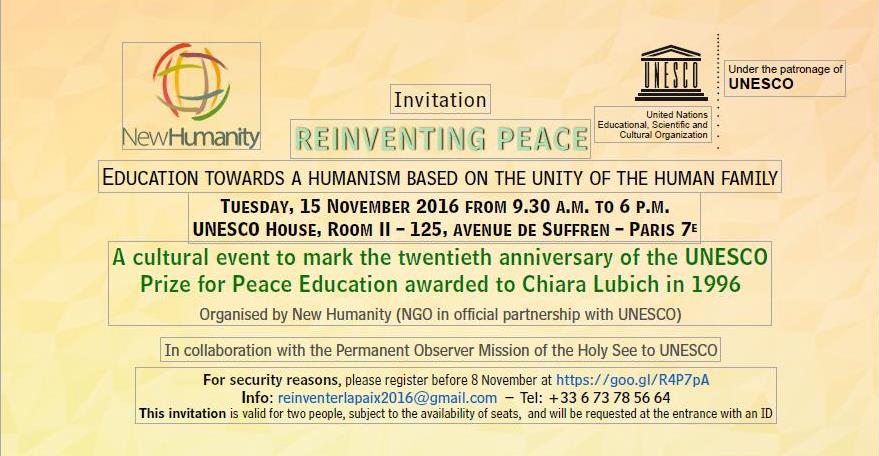
“EDUCATION TOWARDS A HUMANISM BASED ON THE UNITY OF THE HUMAN FAMILY” Paris, 19 December 1996: UNESCO awarded the prestigious Prize for Peace Education to Chiara Lubich, Founder of the Focolare Movement, in recognition of her lifelong efforts in the building of Peace, and education of thousands of people of every creed and latitude, towards this goal. The theme of peace education is more than ever actual today. Promoted by the UNESCO and the New Humanity Movement, the event will be celebrated at the UNESCO Headquarters (Paris, France) on 15 November, from 10.00 am to 6.00 pm. A representative from UNESCO will open the session, to be followed by the speeches of Bishop Francesco Follo, Permanent Observer of the Holy See to UNESCO, and Maria Voce and Jesús Morán, President and Co-President of the Focolare Movement, respectively. Other two focal points will follow: five ideas for peace education today, and dialogue in a united and plural world. Invitation: Unesco Event Registration “Reinventing Peace” event Read Chiara Lubich’s speech in 1996 Watch video (Italian) https://vimeo.com/77226264
21 Sep 2016 | Non categorizzato
20 Sep 2016 | Non categorizzato
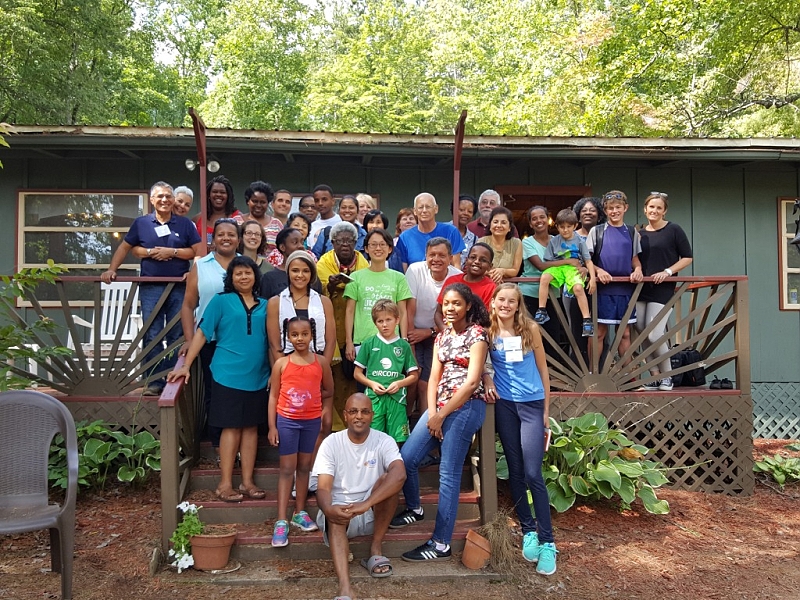
Members of the Focolare community in Atlanta
19 Sep 2016 | Non categorizzato
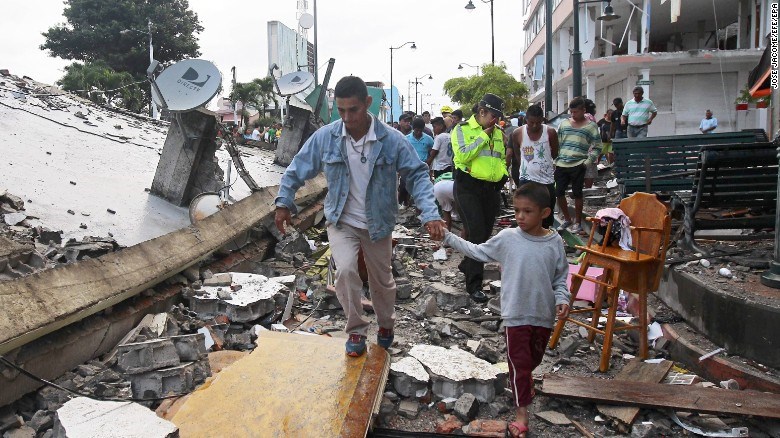
As the news media reported, a magnitude 7.8 earthquake hit Ecuador on April 16, especially the provinces of Manabi, Esmeraldas, Santo Domingo and Pichincha, leaving nearly 30 people without a roof.
The Focolare Movement immediately got to work in many ways: beginning from the early relief efforts with the many spontaneous volunteers, and morning on to a large-scale fundraiser coordinated by AMU and AFN. Meanwhile a local commission was set up to identify the main priorities for the relief effort and to coordinate over a long term. They write from the commission: “In the past months several of us have gone to visit the different sites of the earthquake, meeting with the communities and seeking to collaborate with agencies that had similar goals. By the end of August the first proposals were ready and we began to collaborate with the Ecuadoran Popolorum Progressio Fund (FEPP) and the Fundación Amiga.” 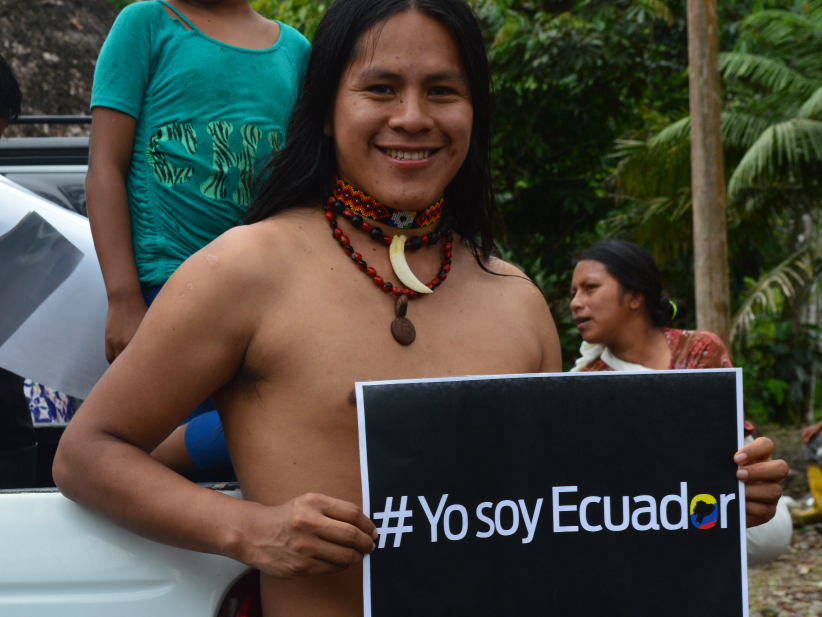 At this stage, the post-emergency interventions that were deemed most serious regarded the production of goods that could be sold and provide economic support for the local populations, and psychological support in overcoming the trauma which – as they write – “is still very quite strong after 5 months.” They also underscored another important point: “We saw the need to offer training in the procedure for applying for assistance from the Ecuador Government for the reconstruction of housing. At first, relief efforts concentrated on three localities, all located in the Province of Esmeraldas: Salima, “10 de Agosto” and Macara, “where projects will carried out to alleviate the consequences of trauma and to reinforce the organizational skills of the community,” they explain. “Moreover, a cooperative bread bakery and a training course in making fishing nets, involving the elderly fishermen as trainers. In the locality known as “10 de Agosto”, handicraft workshops will be held and a group of mothers will be helped in setting up a nursery.” The local commission writes: “this represents the first stage of the project, which corresponds to current funds. As we work with the community, we’ll delve more deeply into the future needs of the people and be able to respond to them. As of today: € 35.502 have been donated by AMU for the Ecuador emergency, € 10.000 of which have already been paid out, whereas the sum of € 10.000 has been donated to the cause by AFN (Action for New Families). Read earlier news: – Ecuador Emergency – Two months after the Ecuador earthquake
18 Sep 2016 | Non categorizzato
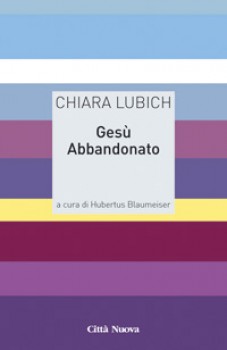
“I’d like to console Him, to run through the world, gathering hearts for Him.” This was Chiara Lubich’s first impulse on January 24, 1944 when she became aware of Jesus’s abysmal cry from the cross: “My God, my God, why have you abandoned me?” If that was the moment when he suffered most,” she reasoned, “then it was the moment when he loved us most. Let’s make Him the ideal of our life!” And to think that back then theology did not take into consideration the abandonment experienced by Jesus! Catholic piety focused its attention on the physical suffering, the agony in the Garden of Gethsemane. But World War II and the Holocaust in particular dug a hole in the human conscience that only Jesus’s experience of extreme abandonment could fill. While still young Chiara chose to love the abandoned Jesus in the innumerable faces of personal and collective human suffering, so that the Abandoned One would not be alone in His abandonment. Very soon, however, she experienced something quite unexpected: “You throw yourself into a sea of pain and find yourself swimming in a sea of love.” The agony subsides into joy and transforms relationships, creating communion: “They are two sides of the same medal. To all the souls I show the face of Unity. For me and the souls that are on the front lines of Unity: the abandoned Jesus is all for us.” The years 1949-1951 were a well-spring of new intuitions. The wound of the abandonment as the expression of maximum Love becomes for Chiara the keystone of her vision of human history, of life itself and of God. She contemplates His abandonment as “the pupil of God’s Eye [through which he looks] on the world: an Infinite Emptiness through which God looks at us: God’s window thrown open onto the world, and the window through which humanity sees God.” Years of trial followed as the Church carried out its close examination of the new charism, a time of suspension that Chiara experienced in the light of the Son who was abandoned by the Father, convinced that through it all the Church was being a Mother. Stage by stage, the book traces the trajectory of Chiara’s spiritual adventure, through her letters, notes, diaries and talks that are compiled in six chapters. Its 160 pages, including an introduction by theologian Hubertus Blausmeiser, could accompany and illuminate our daily life. – and includes an introduction by theologian Hubertus Blaumeiser. With the Church’s official approval of the Focolare in early 1960, a new perspective is opened: Abandoned Jesus becomes the motivating drive behind the thrust to move out and face the social challenges, in every form of suffering. He is the “Teacher of dialogue” in the ecumenical and interreligious environment. He presents Himself as the God of today, who is even able to talk to non-believers and be a source of cultural change. The author takes up the “Holy Journey” with Him, a communitarian journey to holiness that has included hundreds and thousands of people from around the world: “He is the supreme Master of the spiritual life, of detachment from self, detachment from everything, from what is of God, but not God.” “Loving abandoned Jesus,’ she writes, “we find the reason and the strength to not escape from these evils, these divisions, but to accept them and consume them and bring to them our own personal and collective remedy.” And she states with certitude: “If we manage to encounter Him in every suffering, if we love Him, if we turn to the Father like Jesus on the cross: “Father, into your hands I commend my spirit” (Lk. 23:46), then with Him the night will be a thing of the past, and light will illuminate us.”
