18 Sep 2016 | Non categorizzato
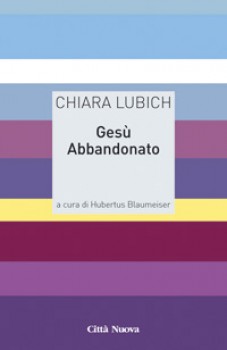
“I’d like to console Him, to run through the world, gathering hearts for Him.” This was Chiara Lubich’s first impulse on January 24, 1944 when she became aware of Jesus’s abysmal cry from the cross: “My God, my God, why have you abandoned me?” If that was the moment when he suffered most,” she reasoned, “then it was the moment when he loved us most. Let’s make Him the ideal of our life!” And to think that back then theology did not take into consideration the abandonment experienced by Jesus! Catholic piety focused its attention on the physical suffering, the agony in the Garden of Gethsemane. But World War II and the Holocaust in particular dug a hole in the human conscience that only Jesus’s experience of extreme abandonment could fill. While still young Chiara chose to love the abandoned Jesus in the innumerable faces of personal and collective human suffering, so that the Abandoned One would not be alone in His abandonment. Very soon, however, she experienced something quite unexpected: “You throw yourself into a sea of pain and find yourself swimming in a sea of love.” The agony subsides into joy and transforms relationships, creating communion: “They are two sides of the same medal. To all the souls I show the face of Unity. For me and the souls that are on the front lines of Unity: the abandoned Jesus is all for us.” The years 1949-1951 were a well-spring of new intuitions. The wound of the abandonment as the expression of maximum Love becomes for Chiara the keystone of her vision of human history, of life itself and of God. She contemplates His abandonment as “the pupil of God’s Eye [through which he looks] on the world: an Infinite Emptiness through which God looks at us: God’s window thrown open onto the world, and the window through which humanity sees God.” Years of trial followed as the Church carried out its close examination of the new charism, a time of suspension that Chiara experienced in the light of the Son who was abandoned by the Father, convinced that through it all the Church was being a Mother. Stage by stage, the book traces the trajectory of Chiara’s spiritual adventure, through her letters, notes, diaries and talks that are compiled in six chapters. Its 160 pages, including an introduction by theologian Hubertus Blausmeiser, could accompany and illuminate our daily life. – and includes an introduction by theologian Hubertus Blaumeiser. With the Church’s official approval of the Focolare in early 1960, a new perspective is opened: Abandoned Jesus becomes the motivating drive behind the thrust to move out and face the social challenges, in every form of suffering. He is the “Teacher of dialogue” in the ecumenical and interreligious environment. He presents Himself as the God of today, who is even able to talk to non-believers and be a source of cultural change. The author takes up the “Holy Journey” with Him, a communitarian journey to holiness that has included hundreds and thousands of people from around the world: “He is the supreme Master of the spiritual life, of detachment from self, detachment from everything, from what is of God, but not God.” “Loving abandoned Jesus,’ she writes, “we find the reason and the strength to not escape from these evils, these divisions, but to accept them and consume them and bring to them our own personal and collective remedy.” And she states with certitude: “If we manage to encounter Him in every suffering, if we love Him, if we turn to the Father like Jesus on the cross: “Father, into your hands I commend my spirit” (Lk. 23:46), then with Him the night will be a thing of the past, and light will illuminate us.”
17 Sep 2016 | Non categorizzato
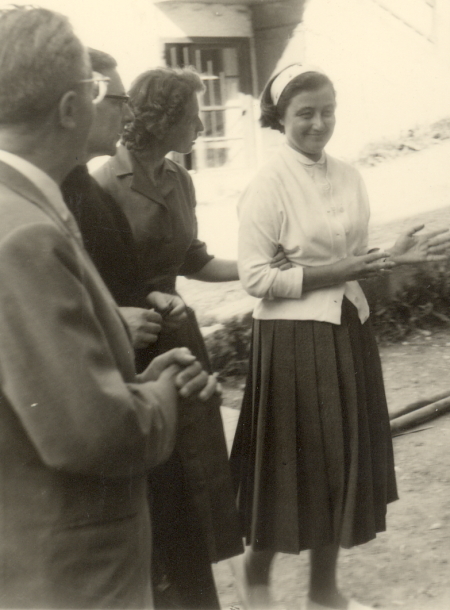
The following is recorded in the personal diary of Igino Giordani: “17 September 1948. This morning at Montecitorio I was called upon by angels: a Capuchin, a Friar Minor, a Conventual, a Third Order man and a Third Order woman, Silvia Lubig (sic!), who is beginning a community in Trent. She spoke like a saint inspired by the Holy Spirit.” Recounting the event: “One day I was urged to listen to an apostle – as they said – of unity. It was in September 1948. I exhibited the usual courtesy of any deputy towards possible electors when some Religious came to Montecitorio, representatives of different branches of the Franciscan family, a young lay woman and a young layman. To see a Conventual, a Friar Minor, a Capuchin, and a woman and man from the Third Order of Saint Francis all united together already looked like a miracle of unity to me: and I said so. The young lady spoke: I was sure I’d hear a sentimental propagandist tell me about some utopian welfare. Instead, right from the first words I felt something new. A half hour later when she had finished talking, I was taken by the enchanting atmosphere: I would have liked that voice to continue on. Without realizing it, it was the voice that I had been waiting for. She placed holiness within everyone’s reach; she took away the grates that separated the lay world from the mystical life. She made public the treasures of a castle that only a few were admitted to. She brought God near: she made him feel like a Father, brother, friend, present to humankind. I wanted to look into it: and getting familiar with the life of the Focolare of unity – as they called it – I recognized in their experience the realization of the desire that overwhelmed Saint John Chrysostom: that the laity would live as monks, minus celibacy. I had much cultivated that desire. What happened was that the idea of God had yielded its place to God’s love, the ideal image of the living God. In Chiara I had found someone who didn’t talk about God, but someone who spoke with God: a daughter speaking in loving conversation with the Father. If I did a critical examination of it, I found that I hadn’t discovered anything new. In the way of life that was opening to my soul, I found all the same names, characters and doctrines that I had loved. All my study, my ideals, the very events of my life all seemed directed to this goal. Nothing new: yet everything was new: the elements of my cultural and spiritual formation began to come together in accordance with God’s plan. They took their rightful place. All was old and all was new. The key that unlocked the mystery had been discovered: love was allowed to pass, which had too often been barricaded: and it burst forth spreading like fire and becoming a blaze. A collective, socialized holiness – to use terms that were later popularized by the Second Vatican Council – drawn out of the individualism that had accustomed everyone to become holy on one’s own, meticulously caring for one’s own soul, with endless analyses in order not to lose that soul. A piety, an interior life that came from Religious houses, from a certain exclusiveness of the privileged classes was now poured out into the public, into offices and factories, into houses and fields – and into convents – because wherever you find people, you find candidates for the perfection of holiness. And to live this new life, to be born in God, I didn’t have to renounce my doctrines: I only had to place them in the fire of love so that they would come alive. Through my neighbour I began to live God. Life became a total adventure, consciously lived in union with the Creator, which is what life is. Mary was resplendent with a new beauty; the saints entered among the relatives; Heaven became a common home. This was the discovery, this the experience. This made me a new man.”
16 Sep 2016 | Non categorizzato
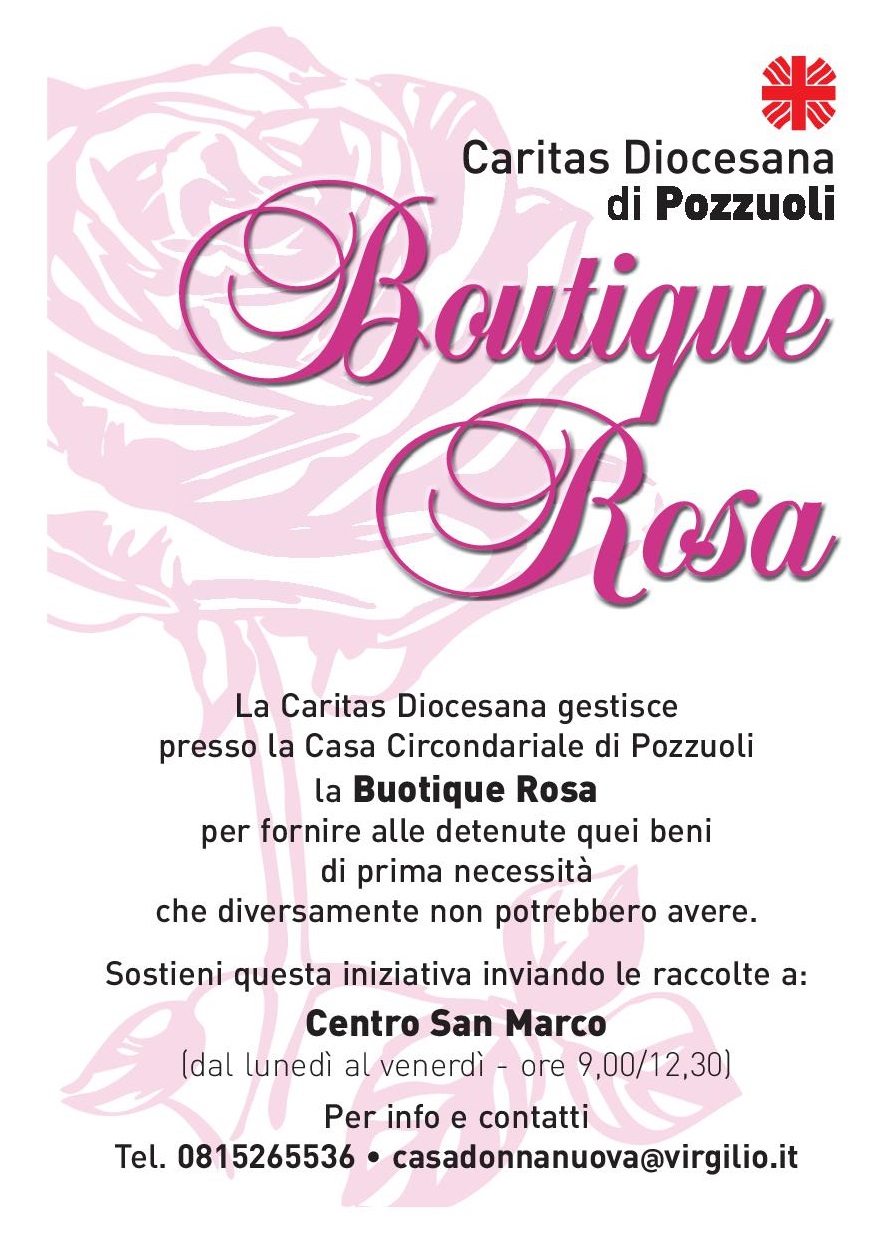 In 2011, Maria Clara who had just retired, transferred her services to the women’s jail of Pozzuoli (Naples-Italy), a huge jail, and one of the most overcrowded in Italy. Struck by the cries of pain that reached her ears from the barred windows, she discussed it with her friends of the local Focolare community and 25 of them (boys, girls, families…) decided to respond to the appeal. In collaboration with the diocesan Caritas and other Movements, the group thus immersed themselves into that suffering humanity behind bars. It was not an easy experience, but one that led to refine, in the name of mercy, every gesture and word, so as to be really that presence of love the world awaits. Each one became more aware that they did not go there to “absolve,” judge, or just to carry out social work, but only to give love, focusing on the reconstruction of the person. And probably because of this attitude, very soon they saw the positive aspects emerge in each person. “When I get out of here I want to be a new person,” one of them confided. And another said: “Now I know what it means to be a Christian, and I want to live by the Gospel, loving my cellmates, even if they make life impossible.” Still another said: “I understood that the real help comes from Jesus in the Eucharist and not from the “power–wielding people of the world.” This flow of light and grace was not earned with a magic wand. It was the fruit of continual attention to the needs of the inmates, helping them to rediscover their own dignity through living the Gospel. It consisted in going with them to Sunday Mass, enlivening it with songs, and placing oneself at their disposal to renovate the chapel. It meant asking and obtaining the permit from the jail administration to organise a series of workshops on health education, cooking, yoga, sewing courses, etc., in the Family Home “Donna Nuova” which hosts women under alternative detention regimes. One of the things the inmates needed – not expressed but which immediately came to the fore – was self-care. This inspired the establishment of the “Pink boutique,” a free facility within the jail, with pink walls, curtains and coloured shelves in contrast with the greyness of the cells. It is a point where the inmates, often abandoned or far from their own families, can weekly receive products for their personal hygiene, clothes, underwear, etc., and in short, all that serves to boost their own self-esteem. In the meantime, they could talk to one another or to the wardens and listen to each other’s difficulties, to comfort one another in their regret for not being able to care for their children at home, thus building really close relationships. It was also the occasion to share big and small joys, such as a reduced prison sentence, an unexpected visit, and the steps taken in starting again. All of them are from different ethnic groups and cultures, and belong to various Christian churches and religions. “I remember an Orthodox woman,” Maria Clara recounts, “who during the Unity of Christians Prayer Week, wanted to contribute with a prayer-song. Crying, she told me that she was offering the immense suffering of her prison term for the unity of the churches. We then went to Naples to meet her husband and five children, with some aid for them. We share this experience with some people belonging to Christian churches of various denominations, with which an ecumenical dialogue was opened in the diocese. This was exactly what they were waiting for! Now also four evangelical sisters have started working with us. Thanks to them, inmates of various churches have established really close relationships that at times, continue even when they leave the jail.”
15 Sep 2016 | Non categorizzato
https://www.youtube.com/watch?v=8Asjy1-9mxI After We Are Coming To You (1972), Wherever You Are (1982), Se siamo uniti (1987) and – with Gen Verde – Come fuoco vivo (1998) and Messa della Concordia (2004), Gen Rosso releases a new DVD for the Year of Mercy: Voce del mio canto. We are led into the music by Lito Amuchastegui, from Argentina, who has been with Gen Rosso for 20 years. He composed most of the songs that led to the composition of a complete Mass. He was helped by Beni Enderle for the music, Valerio Lode Ciprì for the lyrics and Emanuele Chirco for the final mixing. Lito has loved music all his life and began singing in public at the age of five. With Gen Rosso he worked as a sound engineer. Voce del mio canto (Voice of my song) is his legacy to the group, as he returns to the place he was born in Córdoba, Argentina. “Writing a Mass is no joke,” he declares. “It requires awareness: you’re talking about who God is for you. In front of every piece I had to place myself in front of Him and ask: are You truly the voice of my song? Are You my only treasure? When there are crosses, are You my Simon of Cyrene? Il Cielo è con noi is one my favourite pieces. It was inspired by a writing of Chiara Lubich in which she says that Heaven has been poured on us, Heaven in all its infiniteness: “you were born among us/ you brought with you the fragrance of Heaven/ you died for us, you are pure love/ you are Divine love. It asks about God not on the theological or historical level, but on the personal level: Who is God for me? So, Voce del mio canto is most of all about an experience: prayer, the joy of experiencing that you are loved by God…. But where did the idea of a sung Mass come from? “The reason behind it was the desire to make music. I took guitar along on vacation and wrote Quelli che amono te (Those that love you) in one sitting. Then I put it to music and shared it with the people who were with me and they liked it. Then I kept going and ended up with eleven pieces, plus two more that we already had. Why a Mass? Perhaps it shows that God was saying to me: ‘I want to help you to give more glory to me.’ I set off from there. What is the story behind each of the songs? Lito revealed that he had put a bit of his own roots into each piece: “One song talks about Pane della Madre Terra (Bread of Mother Earth). We South Americans have strong feelings towards Mother Earth which stem from indigenous tradition. Moreover, I was in Uruguay where I got to know about the ‘candombe’ which has Afro-American features, and I wanted to leave a mark of the experience I had had with the Uruguayan musicians in the Santo. They are a people of singing and praising God, a people of the streets, with tambourines like King David who sang and danced in front of the Ark of the Covenant. Then there was Niña de Nazareth (Girl from Nazareth), a song I wrote before joining Gen Rosso but was never able to put it to music. I worked on it with Beni Henderle, and we came out with the song. Other pieces were a bit more difficult: for the Kyrie Eleison, for example, I had come with 7 different versions. I was trying to convey the experience that God loves us; His mercy is also born from being Love. The rest is relative; whereas, for me, this is like a splinter in my mind.” What suggestions could you give to those who want to play these songs? “I would suggest to them that these songs aren’t meant to be sung, but lived. I would wish to anyone who would like to use them – in a group, a parish, a choir – that they would be able to have this experience of God: to “enter” the songs. I would wish that they could be able to enter the songs with their souls, so that the correct interpretation of each piece would come out.” Song List:
- Verso di te (Towards You)
- Kyrie Eleison
- Gloria
- Loda il Signore anima mia (Praise the Lord, my soul)
- Alleluia
- Quelli che amano te (Those that love you)
- Santo, Candombe rhythm (Holy, holy, holy)
- Agnello di Dio (Lamb of God)
- Il cielo è con noi (Heaven is here with us)
- Voce del mio canto (Voice of my song)
- Come un fiume (Like a river)
- Ave Maria
- Niña de Nazareth.
Complete texts and musical scores are included with the CD Where to buy Voce del mio canto CD

13 Sep 2016 | Non categorizzato
Dr Tarunjit Singh Butalia
13 Sep 2016 | Non categorizzato
Monday and Tuesday 19th and 20th of September 2016: different arrivals in Rome Wednesday 21st September 2016: Participation in an Audience with the Holy Father – Pope Francis in the Vatican – after the Audience, visit of the Tomb of Saint Peter the Apostles and the Popes – Visits of some selected holy sites of Rome Thursday 22nd September 2016: Touristic visit of Rome – Catacombs, Colosseum and Basilicas of Rome. Departure to Loppiano (Florence – first Focolare Citadel in the World created by Chiara Lubich) night at Loppiano. Friday 23rd of September 2016: Visit of Loppiano and meeting with the inhabitants of Loppiano Saturday 24th of September 2016: Departure from Loppiano to Trento – Chiara’s native town and citadel. A stop in Florence town – touristic visit. Night at Trento Sunday 25th of September 2016: Visit of Trent and inhabitants, Institutions, Municipality (Mayor) and Bishop of Trent. Monday 26th September 2016: departure from Trento to Rome – a touristic stop at Venice. Night in Rome – Castel Gandolfo . Focolare International Mariapolis Centre. Tuesday 27th September 2016: visit to the tomb of Mafua Ndem Chiara Lubich, at the Focolare Headquarters in Rocca di Papa. A meeting with the Centre of the Focolare Movement. Wednesday 28th September 2016: Departure and end of the Pilgrimage.
